Chapter 2:
Theories of Development
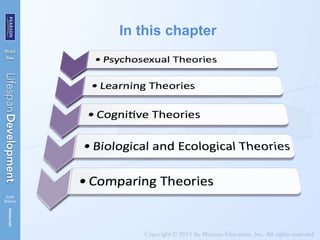
In this chapter
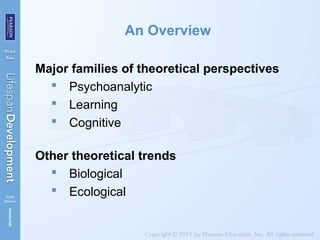
An Overview
Major families of theoretical perspectives
 Psychoanalytic
 Learning
 Cognitive
Other theoretical trends
 Biological
 Ecological
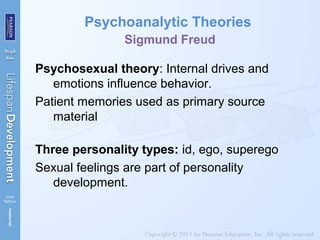
Psychoanalytic Theories
Sigmund Freud
Psychosexual theory: Internal drives and
emotions influence behavior.
Patient memories used as primary source
material
Three personality types: id, ego, superego
Sexual feelings are part of personality
development.
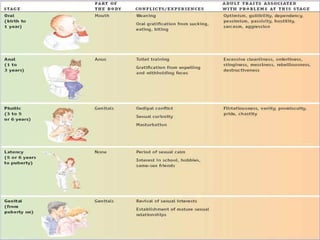
Freud’s Psychosexual Stages
Psychosocial Theory
Erik Erikson (Neo-Freudian)
Psychosocial theory: Development influenced
by common cultural demands and internal
drives
 Each psychosocial stage requires solution of
a crisis.
 Healthy development requires a favorable
ratio of positive to negative experiences.
Psychosocial Theory
Erik Erikson (Neo-Freudian)
Stages
 First four stages form adult personality
foundation
 Childhood-adulthood transition influential
Ages
 Adult stages not strongly tied to age
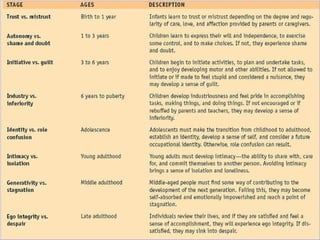
Erikson’s Psychosocial Theory
Learning Theories
Classical Conditioning: Ivan Pavlov
Classical Conditioning: Learning process that
occurs through associations between
environmental stimulus and naturally
occurring stimulus
Reflex: Stimulus–response connection
Learned: Conditioned stimulus elicits
conditioned response.
Learning Theories
Operant Conditioning: B.F. Skinner
Operant conditioning: Deals with modification
of voluntary behavior
 Behaviors dependent on reinforcement
• Positive reinforcement
• Negative reinforcement
 Punishment
 Extinction
Learning Theories
Hints for Parents and Caregivers
 Positive and negative reinforcement interact
in complex ways in real life.
 The best chance for behavioral change
exists when an appropriate consequence
administered first after the behavior occurs.
Learning Theories
Social Cognitive Theory: Albert Bandura
Observational learning or modeling: Learning
results from seeing a model reinforced or
punished for behavior.
Dependent on four factors:
 Attention
 Memory
 Physical capabilities
 Motivation
Learning Theories
Social Cognitive Theory: Self-Efficacy
Perceived self-efficacy: People's beliefs about
their capabilities to produce effects
Learning
 Influenced by perceived similarity to
model
 Not limited to overt behavior
 Comes also from ideas, expectations,
internal standards, and self-concepts
Cognitive Theories
Jean Piaget
Piaget’s cognitive theory: Development
involves processes based upon actions and
later progresses into changes in mental
operations.
 Scheme
 Assimilation
 Accommodation
 Equilibration
Cognitive Theories
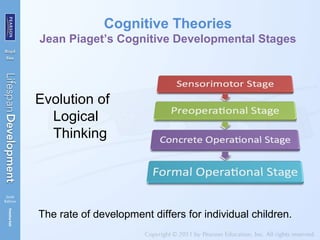
Jean Piaget’s Cognitive Developmental Stages
Evolution of
Logical
Thinking
The rate of development differs for individual children.
Cognitive Theories
Vygotsky’s Socio-Cultural Theory
Socio-cultural theory: Complex forms of
thinking have their origins in social
interactions, not private explorations.
Children learn new cognitive skills guided by a
more skilled partner.
 Zone of Proximal Development (ZPD)
 Scaffolding
Cognitive Theories
Importance of Assisted Discovery
Assisted discovery: Child integrates results of
independent discoveries with new
knowledge taught in systematic and
structured way.
What are the educational applications of this
kind of learning?
Cognitive Theories
Importance of Assisted Discovery
Educational Applications
 Supports active exploration opportunities
 Discovery of what knowledge, skills, and
understandings have not yet surfaced for
learner but are on edge of emergence
Cognitive Theories
Information-Processing Theory
Information-processing theory: Computer
used as model to explain how mind
manages information
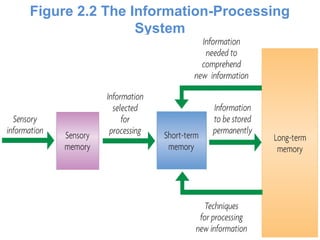
Three-stage theory of memory
 Sensory memory
 Short-term or working memory
 Long-term memory
Figure 2.2 The Information-Processing
System
Cognitive Theories
Neo-Piagetian Theories
Piagetian information-processing hybrid
 Uses IP to explain Piaget’s stages
 Expands (not contradicts) Piaget’s theory
 Agrees that children's thinking reflects
developing internal mental structures
 Draws on linguistic theories about content
domain specificity of cognition
Give an example each of a positive
reinforcement and a punishment in your
work or academic life.
Looking at ecological systems theory, describe
your personal exosystem, macrosystem, and
microsystem influences.
Questions To PonderQuestions To PonderQuestions To PonderQuestions To Ponder
Biological Theories
Behavioral Genetics
Behavioral genetics: Examines genetic
underpinnings of behavioral phenotypes
Can you think of questions that might be
addressed using this theoretical
perspective?
Did you list twin studies in your
response?
Look at these findings from several studies of Dutch
twins. What does this tell you about the influence
of heredity and age?
Figure 2.3 IQs of Fraternal and Identical Twins
Other Biological Theories
Ethology and Sociobiology
Ethology: Examines genetically determined
mechanisms that promote survival through
natural selection
 Imprinting
Sociobiology: Application of evolutionary
theory to social behavior
 “Genetic selfishness”
Bioecological Theory
Urie Bronfenbrenner
Bioecological theory: Explains development in
terms of relationships between people and
their environments
Contexts
 Macrosystem
 Exosystem
 Microsystem
 Mesosystem
 Biological context
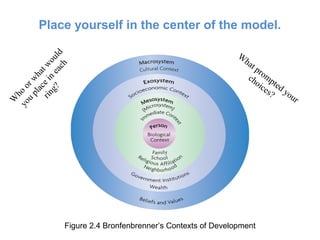
Place yourself in the center of the model.
Figure 2.4 Bronfenbrenner’s Contexts of Development
W
ho
orw
hatw
ould
you
placein
each
ring? W
hat prompted your
choices?
Why asking which theory is RIGHT
may be wrong!
 Instead of right/wrong, try useful/not useful.
 Evaluation of usefulness of each theory
• Generate predictions that can be tested.
• Heuristic value
• Practical value
• Explanation of basic developmental facts
Multiple Theoretical Approaches
Eclecticism
 Interdisciplinary; builds on ideas from
multiple sources
 Avoids rigid adherence to single theory
 Contributes to development of more
comprehensive theories

Bee & Boyd, Lifespan Development, Chapter 2

  • 1.
  • 2.
  • 3.
    An Overview Major familiesof theoretical perspectives  Psychoanalytic  Learning  Cognitive Other theoretical trends  Biological  Ecological
  • 4.
    Psychoanalytic Theories Sigmund Freud Psychosexualtheory: Internal drives and emotions influence behavior. Patient memories used as primary source material Three personality types: id, ego, superego Sexual feelings are part of personality development.
  • 5.
  • 6.
    Psychosocial Theory Erik Erikson(Neo-Freudian) Psychosocial theory: Development influenced by common cultural demands and internal drives  Each psychosocial stage requires solution of a crisis.  Healthy development requires a favorable ratio of positive to negative experiences.
  • 7.
    Psychosocial Theory Erik Erikson(Neo-Freudian) Stages  First four stages form adult personality foundation  Childhood-adulthood transition influential Ages  Adult stages not strongly tied to age
  • 8.
  • 9.
    Learning Theories Classical Conditioning:Ivan Pavlov Classical Conditioning: Learning process that occurs through associations between environmental stimulus and naturally occurring stimulus Reflex: Stimulus–response connection Learned: Conditioned stimulus elicits conditioned response.
  • 10.
    Learning Theories Operant Conditioning:B.F. Skinner Operant conditioning: Deals with modification of voluntary behavior  Behaviors dependent on reinforcement • Positive reinforcement • Negative reinforcement  Punishment  Extinction
  • 11.
    Learning Theories Hints forParents and Caregivers  Positive and negative reinforcement interact in complex ways in real life.  The best chance for behavioral change exists when an appropriate consequence administered first after the behavior occurs.
  • 12.
    Learning Theories Social CognitiveTheory: Albert Bandura Observational learning or modeling: Learning results from seeing a model reinforced or punished for behavior. Dependent on four factors:  Attention  Memory  Physical capabilities  Motivation
  • 13.
    Learning Theories Social CognitiveTheory: Self-Efficacy Perceived self-efficacy: People's beliefs about their capabilities to produce effects Learning  Influenced by perceived similarity to model  Not limited to overt behavior  Comes also from ideas, expectations, internal standards, and self-concepts
  • 14.
    Cognitive Theories Jean Piaget Piaget’scognitive theory: Development involves processes based upon actions and later progresses into changes in mental operations.  Scheme  Assimilation  Accommodation  Equilibration
  • 15.
    Cognitive Theories Jean Piaget’sCognitive Developmental Stages Evolution of Logical Thinking The rate of development differs for individual children.
  • 16.
    Cognitive Theories Vygotsky’s Socio-CulturalTheory Socio-cultural theory: Complex forms of thinking have their origins in social interactions, not private explorations. Children learn new cognitive skills guided by a more skilled partner.  Zone of Proximal Development (ZPD)  Scaffolding
  • 17.
    Cognitive Theories Importance ofAssisted Discovery Assisted discovery: Child integrates results of independent discoveries with new knowledge taught in systematic and structured way. What are the educational applications of this kind of learning?
  • 18.
    Cognitive Theories Importance ofAssisted Discovery Educational Applications  Supports active exploration opportunities  Discovery of what knowledge, skills, and understandings have not yet surfaced for learner but are on edge of emergence
  • 19.
    Cognitive Theories Information-Processing Theory Information-processingtheory: Computer used as model to explain how mind manages information Three-stage theory of memory  Sensory memory  Short-term or working memory  Long-term memory
  • 20.
    Figure 2.2 TheInformation-Processing System
  • 21.
    Cognitive Theories Neo-Piagetian Theories Piagetianinformation-processing hybrid  Uses IP to explain Piaget’s stages  Expands (not contradicts) Piaget’s theory  Agrees that children's thinking reflects developing internal mental structures  Draws on linguistic theories about content domain specificity of cognition
  • 22.
    Give an exampleeach of a positive reinforcement and a punishment in your work or academic life. Looking at ecological systems theory, describe your personal exosystem, macrosystem, and microsystem influences. Questions To PonderQuestions To PonderQuestions To PonderQuestions To Ponder
  • 23.
    Biological Theories Behavioral Genetics Behavioralgenetics: Examines genetic underpinnings of behavioral phenotypes Can you think of questions that might be addressed using this theoretical perspective?
  • 24.
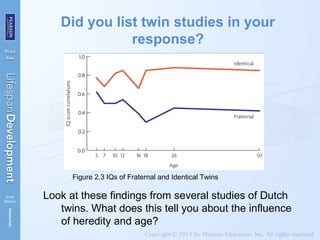
    Did you listtwin studies in your response? Look at these findings from several studies of Dutch twins. What does this tell you about the influence of heredity and age? Figure 2.3 IQs of Fraternal and Identical Twins
  • 25.
    Other Biological Theories Ethologyand Sociobiology Ethology: Examines genetically determined mechanisms that promote survival through natural selection  Imprinting Sociobiology: Application of evolutionary theory to social behavior  “Genetic selfishness”
  • 26.
    Bioecological Theory Urie Bronfenbrenner Bioecologicaltheory: Explains development in terms of relationships between people and their environments Contexts  Macrosystem  Exosystem  Microsystem  Mesosystem  Biological context
  • 27.
    Place yourself inthe center of the model. Figure 2.4 Bronfenbrenner’s Contexts of Development W ho orw hatw ould you placein each ring? W hat prompted your choices?
  • 28.
    Why asking whichtheory is RIGHT may be wrong!  Instead of right/wrong, try useful/not useful.  Evaluation of usefulness of each theory • Generate predictions that can be tested. • Heuristic value • Practical value • Explanation of basic developmental facts
  • 29.
    Multiple Theoretical Approaches Eclecticism Interdisciplinary; builds on ideas from multiple sources  Avoids rigid adherence to single theory  Contributes to development of more comprehensive theories

Editor's Notes

  • #5 Libido: unconscious process; internal drive for physical pleasure Defense mechanisms
  • #6 At each stage, the libido centers on different part of body; Figure 2.1 (p. 26)
  • #9 Development continues throughout the entire lifespan. Each new crisis appears because of changes in social demands that accompany changes in age.
  • #10 ReflexStimulus–Response connection Unlearned Unconditioned Stimulus elicits Unconditioned Response. Food automatically elicits salivation. Learned Conditioned Stimulus elicits Conditioned Response. Smell of food (bacon) elicits salivation.
  • #11 Positive and negative reinforcement interact in complex ways in real life.
  • #13 Learning from model not always automatic Self-efficacy
  • #14 Learning from model not always automatic
  • #15 Scheme internal cognitive structure Assimilation process of using schemes to make sense of experiences Accommodation changing a scheme to incorporate new information Equilibration balancing assimilation and accommodation
  • #16 See Table 2.5 Sequential, universal, invariant
  • #24 Heredity affects a broad range of traits and behaviors, and its influence is seen throughout the lifespan. Some of the questions addressed: How does heredity affects individual differences? How are similar traits of related people influenced by genes? Can a child’s pattern of inherited qualities influence how she behaves with others?
  • #26 Development results from the degree to which genes help or hinder individuals’ efforts to adapt to the environment. Emphasizes genes that aid in group survival
  • #27 Biological context: child’s makeup and developmental stage
  • #29 Generate predictions that can be tested. Heuristic value: degree to which it stimulates research Practical value Explain the basic facts of development.
  • #30 Contributes to development of more comprehensive theories to support future research questions and hypotheses