California: A History Part. 1By: Twyla Gollery
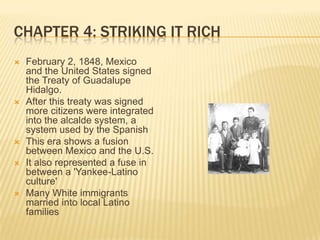
Chapter 4: Striking It RichFebruary 2, 1848, Mexico and the United States signed the Treaty of Guadalupe Hidalgo.After this treaty was signed more citizens were integrated into the alcalde system, a system used by the SpanishThis era shows a fusion between Mexico and the U.S.It also represented a fuse in between a 'Yankee-Latino culture'Many White immigrants married into local Latino families
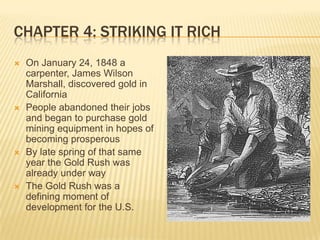
Chapter 4: Striking It RichOn January 24, 1848 a carpenter, James Wilson Marshall, discovered gold in CaliforniaPeople abandoned their jobs and began to purchase gold mining equipment in hopes of becoming prosperousBy late spring of that same year the Gold Rush was already under wayThe Gold Rush was a defining moment of development for the U.S.
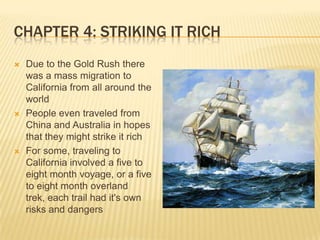
Chapter 4: Striking It RichDue to the Gold Rush there was a mass migration to California from all around the worldPeople even traveled from China and Australia in hopes that they might strike it richFor some, traveling to California involved a five to eight month voyage, or a five to eight month overland trek, each trail had it's own risks and dangers
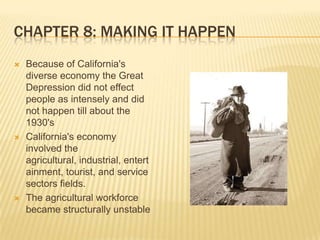
Chapter 8: Making It HappenBecause of California's diverse economy the Great Depression did not effect people as intensely and did not happen till about the 1930'sCalifornia's economy involved the agricultural, industrial, entertainment, tourist, and service sectors fields.The agricultural workforce became structurally unstable
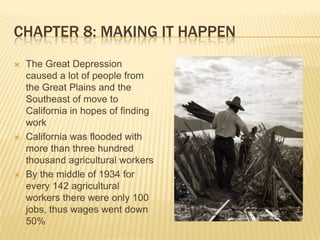
Chapter 8: Making It HappenThe Great Depression caused a lot of people from the Great Plains and the Southeast of move to California in hopes of finding workCalifornia was flooded with more than three hundred thousand agricultural workersBy the middle of 1934 for every 142 agricultural workers there were only 100 jobs, thus wages went down 50%
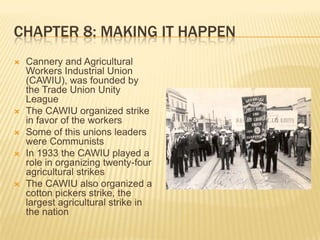
Chapter 8: Making It HappenCannery and Agricultural Workers Industrial Union (CAWIU), was founded by the Trade Union Unity LeagueThe CAWIU organized strike in favor of the workersSome of this unions leaders were CommunistsIn 1933 the CAWIU played a role in organizing twenty-four agricultural strikesThe CAWIU also organized a cotton pickers strike, the largest agricultural strike in the nation
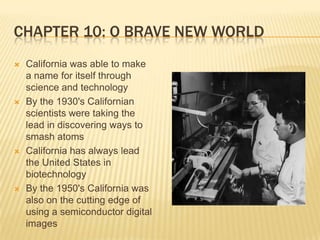
Chapter 10: O Brave New WorldCalifornia was able to make a name for itself through science and technologyBy the 1930's Californian scientists were taking the lead in discovering ways to smash atomsCalifornia has always lead the United States in biotechnology By the 1950's California was also on the cutting edge of using a semiconductor digital images
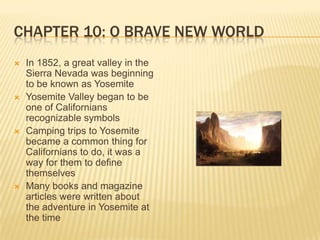
Chapter 10: O Brave New WorldIn 1852, a great valley in the Sierra Nevada was beginning to be known as YosemiteYosemite Valley began to be one of Californians recognizable symbolsCamping trips to Yosemite became a common thing for Californians to do, it was a way for them to define themselvesMany books and magazine articles were written about the adventure in Yosemite at the time
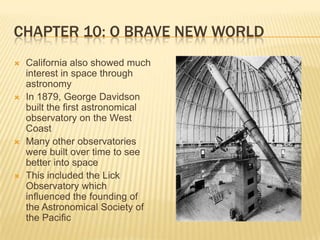
Chapter 10: O Brave New WorldCalifornia also showed much interest in space through astronomyIn 1879, George Davidson built the first astronomical observatory on the West Coast Many other observatories were built over time to see better into spaceThis included the Lick Observatory which influenced the founding of the Astronomical Society of the Pacific

California p.1

  • 1.
    California: A HistoryPart. 1By: Twyla Gollery
  • 2.
    Chapter 4: StrikingIt RichFebruary 2, 1848, Mexico and the United States signed the Treaty of Guadalupe Hidalgo.After this treaty was signed more citizens were integrated into the alcalde system, a system used by the SpanishThis era shows a fusion between Mexico and the U.S.It also represented a fuse in between a 'Yankee-Latino culture'Many White immigrants married into local Latino families
  • 3.
    Chapter 4: StrikingIt RichOn January 24, 1848 a carpenter, James Wilson Marshall, discovered gold in CaliforniaPeople abandoned their jobs and began to purchase gold mining equipment in hopes of becoming prosperousBy late spring of that same year the Gold Rush was already under wayThe Gold Rush was a defining moment of development for the U.S.
  • 4.
    Chapter 4: StrikingIt RichDue to the Gold Rush there was a mass migration to California from all around the worldPeople even traveled from China and Australia in hopes that they might strike it richFor some, traveling to California involved a five to eight month voyage, or a five to eight month overland trek, each trail had it's own risks and dangers
  • 5.
    Chapter 8: MakingIt HappenBecause of California's diverse economy the Great Depression did not effect people as intensely and did not happen till about the 1930'sCalifornia's economy involved the agricultural, industrial, entertainment, tourist, and service sectors fields.The agricultural workforce became structurally unstable
  • 6.
    Chapter 8: MakingIt HappenThe Great Depression caused a lot of people from the Great Plains and the Southeast of move to California in hopes of finding workCalifornia was flooded with more than three hundred thousand agricultural workersBy the middle of 1934 for every 142 agricultural workers there were only 100 jobs, thus wages went down 50%
  • 7.
    Chapter 8: MakingIt HappenCannery and Agricultural Workers Industrial Union (CAWIU), was founded by the Trade Union Unity LeagueThe CAWIU organized strike in favor of the workersSome of this unions leaders were CommunistsIn 1933 the CAWIU played a role in organizing twenty-four agricultural strikesThe CAWIU also organized a cotton pickers strike, the largest agricultural strike in the nation
  • 8.
    Chapter 10: OBrave New WorldCalifornia was able to make a name for itself through science and technologyBy the 1930's Californian scientists were taking the lead in discovering ways to smash atomsCalifornia has always lead the United States in biotechnology By the 1950's California was also on the cutting edge of using a semiconductor digital images
  • 9.
    Chapter 10: OBrave New WorldIn 1852, a great valley in the Sierra Nevada was beginning to be known as YosemiteYosemite Valley began to be one of Californians recognizable symbolsCamping trips to Yosemite became a common thing for Californians to do, it was a way for them to define themselvesMany books and magazine articles were written about the adventure in Yosemite at the time
  • 10.
    Chapter 10: OBrave New WorldCalifornia also showed much interest in space through astronomyIn 1879, George Davidson built the first astronomical observatory on the West Coast Many other observatories were built over time to see better into spaceThis included the Lick Observatory which influenced the founding of the Astronomical Society of the Pacific