
The French
Revolution
By group 2(the French revolution)
IX B group activity
Names Of Students In Group
 Souradipta Ganguly (gr. Leader)
 Vriksh Panditpautra
 Gaurav Nagvekar
 Tanmay Salunke
 Paarth Kambley
 Mansi Mogaveera
 Sakshi Kedia
 Deepta Menon
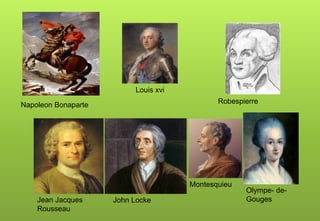
Napoleon Bonaparte
Louis xvi
Robespierre
Jean Jacques
Rousseau
John Locke
Montesquieu
Olympe- de-
Gouges
Topics
 Important characters
 Discrimination in estate system.
 The subsistence crisis.
 The outbreak of the revolution.
 Important symbols.
 France becomes Republic.
 The three estates.
 Jacobin club –the rise and the fall.?
 The reign of terror.
 The guillotine
 Effects of French revolution in daily life and literature
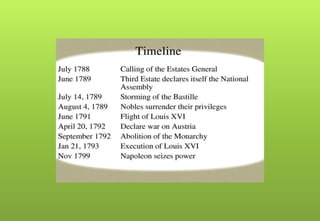
 Timeline
The Subsistence Crisis
The population of France rose from 23 million to 28 million between
1715-1789. This created a great demand for food grains and thus the
price of bread rose and prices did not live in equilibrium with the
wages and thus the poor could no longer buy bread leading to the
formation of a wide rift between the rich and the poor.
This lead to a subsistence crisis which became a common
phenomenon in France.
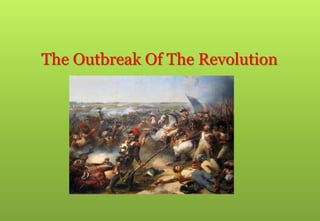
The Outbreak Of The Revolution
The Discrimination In The Estate
System In France
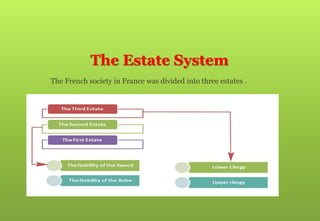
 The clergy comprised of only4-5% of the population in France yet
they were exempted from paying taxes and moreover extracted
tithes from the peasants.
 The nobility comprised of only 6-7% of the population but were
exempted from paying taxes too and extracted feudal dues and
services from the 3rd estate.
 The third estate comprised of-
1.The bourgeoisie
2.City workers
3. peasants
The Formation Of National
Assembly
 As the taxes were imposed only on the third estate, the poor people
suffered and this lead to widespread resentment and anger.
 This lead to the formation of the national assembly by the tennis
court oath where the people had sworn to end this dictatorship of
Louis XIV.
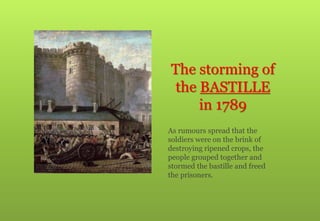
The storming of
the BASTILLE
in 1789
As rumours spread that the
soldiers were on the brink of
destroying ripened crops, the
people grouped together and
stormed the bastille and freed
the prisoners.
Some Important Symbols
Now some symbols will be observed.
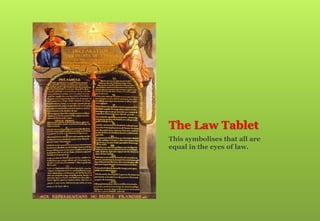
The Law Tablet
This symbolises that all are
equal in the eyes of law.
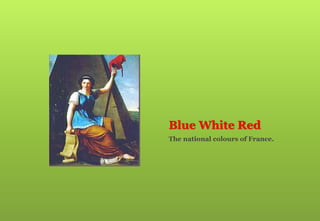
Blue White Red
The national colours of France.
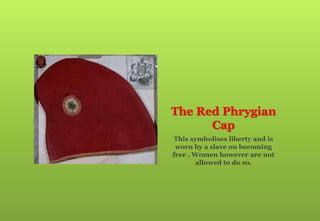
The Red Phrygian
Cap
This symbolises liberty and is
worn by a slave on becoming
free . Women however are not
allowed to do so.
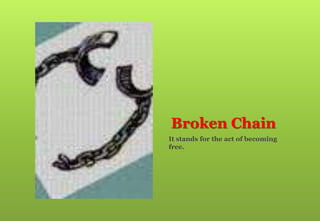
Broken Chain
It stands for the act of becoming
free.
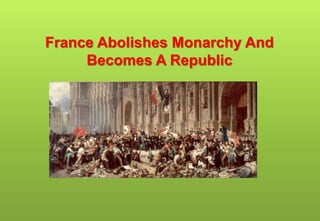
France Abolishes Monarchy And
Becomes A Republic
The Estate System
 The French society in France was divided into three estates .
The Meeting Of The Estates
General And The Rejection
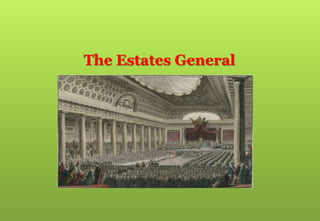
 Increasing of taxes was done with the estates general where people
voted whether to increase the tax or not but the system included each
estate one vote.
 Women children and poor were denied entrance to the estates
general.
 The third estate representatives desired for voting as a whole but was
rejected by Louis XVI which led to a lot of resentment and anger.
The Estates General
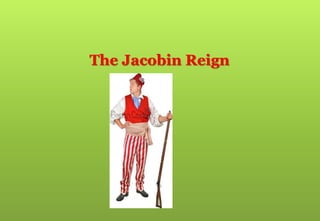
The Jacobin Reign
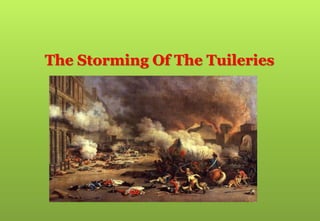
The Storming Of The Tuileries
Removal Of Monarchy In
France
 Jacobin club and the national assembly voted to imprison Louis
XVI and his family on coming to know about the secret ally Louis
xvi had made to attack his own people.
 He and Marie Antoinette were guillotined on the charges of
treason.
The Introduction To Reign Of
Terror
 As the injustices of the monarchy prevailed, political clubs became
an important rallying point.
 One of the important clubs were that of the Jacobin’s named after
the former convent of St. Jacob in Paris.
 Their leader was Maximmillan Robespierre.
The Reign Of Terror
 Maximillian Robespierre followed a policy of severe control and
punishment and those who opposed him such as opposition
members and even his own allies were arrested, tried by a
revolutionary tribunal and if found guilty were guillotined.
 He made a maximum sealing on wages and prices and the peasants
were forced to sell their produce at rates fixed by the government.
 The people were not allowed to buy any other bread but the plain
de’ eaglet(equality bread) and all citizens were started being called
“citoyen” and “citoyenne” meaning citizen instead of the traditional
“sir” and “Madame.”
The fall of Jacobin club and the
formation of the directory
 Maximillian Robespierre didn’t even hear to his own people before
his policies.
 This lead to his imprisonment and guillotining .
 Therefore this led to the seizure of power by the middle class who
formed the legislature and the directory.
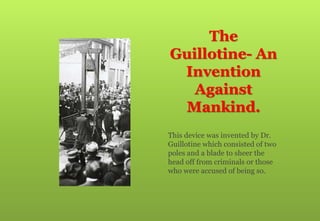
The
Guillotine- An
Invention
Against
Mankind.
This device was invented by Dr.
Guillotine which consisted of two
poles and a blade to sheer the
head off from criminals or those
who were accused of being so.
Effects Of French Revolution In
Literature
 The age of Wordsworth was an age of revolution in the field of
poetry as well as of politics. In both these fields the age had started
expressing its impatience of set formulas and traditions, the
tyranny of rules and the bondage of convention.
 The doctrinaire phase of the French Revolution was dominated by
the each thinker Rousseau. His teachings and philosophic
doctrines were the germs that brought about an intellectual and
literary revolution all over England.
Impact Of The French
Revolution In Human Life.
 It overthrew the Old Regime and set or reaffirmed France.
 It changed the structure of society, rather than simply replacing the
existing ruler or even the political regime, and created new
ideologies.
 The French Revolution also provided the empirical origin of
modern theories of revolution, including that of Marx, as well as an
important model for subsequent revolutions.
The french revolution pptx

The french revolution pptx

  • 1.
    The French Revolution By group2(the French revolution) IX B group activity
  • 2.
    Names Of StudentsIn Group  Souradipta Ganguly (gr. Leader)  Vriksh Panditpautra  Gaurav Nagvekar  Tanmay Salunke  Paarth Kambley  Mansi Mogaveera  Sakshi Kedia  Deepta Menon
  • 3.
    Napoleon Bonaparte Louis xvi Robespierre JeanJacques Rousseau John Locke Montesquieu Olympe- de- Gouges
  • 4.
    Topics  Important characters Discrimination in estate system.  The subsistence crisis.  The outbreak of the revolution.  Important symbols.  France becomes Republic.  The three estates.  Jacobin club –the rise and the fall.?  The reign of terror.  The guillotine  Effects of French revolution in daily life and literature  Timeline
  • 5.
    The Subsistence Crisis Thepopulation of France rose from 23 million to 28 million between 1715-1789. This created a great demand for food grains and thus the price of bread rose and prices did not live in equilibrium with the wages and thus the poor could no longer buy bread leading to the formation of a wide rift between the rich and the poor. This lead to a subsistence crisis which became a common phenomenon in France.
  • 6.
    The Outbreak OfThe Revolution
  • 7.
    The Discrimination InThe Estate System In France  The clergy comprised of only4-5% of the population in France yet they were exempted from paying taxes and moreover extracted tithes from the peasants.  The nobility comprised of only 6-7% of the population but were exempted from paying taxes too and extracted feudal dues and services from the 3rd estate.  The third estate comprised of- 1.The bourgeoisie 2.City workers 3. peasants
  • 8.
    The Formation OfNational Assembly  As the taxes were imposed only on the third estate, the poor people suffered and this lead to widespread resentment and anger.  This lead to the formation of the national assembly by the tennis court oath where the people had sworn to end this dictatorship of Louis XIV.
  • 9.
    The storming of theBASTILLE in 1789 As rumours spread that the soldiers were on the brink of destroying ripened crops, the people grouped together and stormed the bastille and freed the prisoners.
  • 10.
    Some Important Symbols Nowsome symbols will be observed.
  • 11.
    The Law Tablet Thissymbolises that all are equal in the eyes of law.
  • 12.
    Blue White Red Thenational colours of France.
  • 13.
    The Red Phrygian Cap Thissymbolises liberty and is worn by a slave on becoming free . Women however are not allowed to do so.
  • 14.
    Broken Chain It standsfor the act of becoming free.
  • 15.
    France Abolishes MonarchyAnd Becomes A Republic
  • 16.
    The Estate System The French society in France was divided into three estates .
  • 17.
    The Meeting OfThe Estates General And The Rejection  Increasing of taxes was done with the estates general where people voted whether to increase the tax or not but the system included each estate one vote.  Women children and poor were denied entrance to the estates general.  The third estate representatives desired for voting as a whole but was rejected by Louis XVI which led to a lot of resentment and anger.
  • 18.
  • 19.
  • 20.
    The Storming OfThe Tuileries
  • 21.
    Removal Of MonarchyIn France  Jacobin club and the national assembly voted to imprison Louis XVI and his family on coming to know about the secret ally Louis xvi had made to attack his own people.  He and Marie Antoinette were guillotined on the charges of treason.
  • 22.
    The Introduction ToReign Of Terror  As the injustices of the monarchy prevailed, political clubs became an important rallying point.  One of the important clubs were that of the Jacobin’s named after the former convent of St. Jacob in Paris.  Their leader was Maximmillan Robespierre.
  • 23.
    The Reign OfTerror  Maximillian Robespierre followed a policy of severe control and punishment and those who opposed him such as opposition members and even his own allies were arrested, tried by a revolutionary tribunal and if found guilty were guillotined.  He made a maximum sealing on wages and prices and the peasants were forced to sell their produce at rates fixed by the government.  The people were not allowed to buy any other bread but the plain de’ eaglet(equality bread) and all citizens were started being called “citoyen” and “citoyenne” meaning citizen instead of the traditional “sir” and “Madame.”
  • 24.
    The fall ofJacobin club and the formation of the directory  Maximillian Robespierre didn’t even hear to his own people before his policies.  This lead to his imprisonment and guillotining .  Therefore this led to the seizure of power by the middle class who formed the legislature and the directory.
  • 25.
    The Guillotine- An Invention Against Mankind. This devicewas invented by Dr. Guillotine which consisted of two poles and a blade to sheer the head off from criminals or those who were accused of being so.
  • 26.
    Effects Of FrenchRevolution In Literature  The age of Wordsworth was an age of revolution in the field of poetry as well as of politics. In both these fields the age had started expressing its impatience of set formulas and traditions, the tyranny of rules and the bondage of convention.  The doctrinaire phase of the French Revolution was dominated by the each thinker Rousseau. His teachings and philosophic doctrines were the germs that brought about an intellectual and literary revolution all over England.
  • 27.
    Impact Of TheFrench Revolution In Human Life.  It overthrew the Old Regime and set or reaffirmed France.  It changed the structure of society, rather than simply replacing the existing ruler or even the political regime, and created new ideologies.  The French Revolution also provided the empirical origin of modern theories of revolution, including that of Marx, as well as an important model for subsequent revolutions.