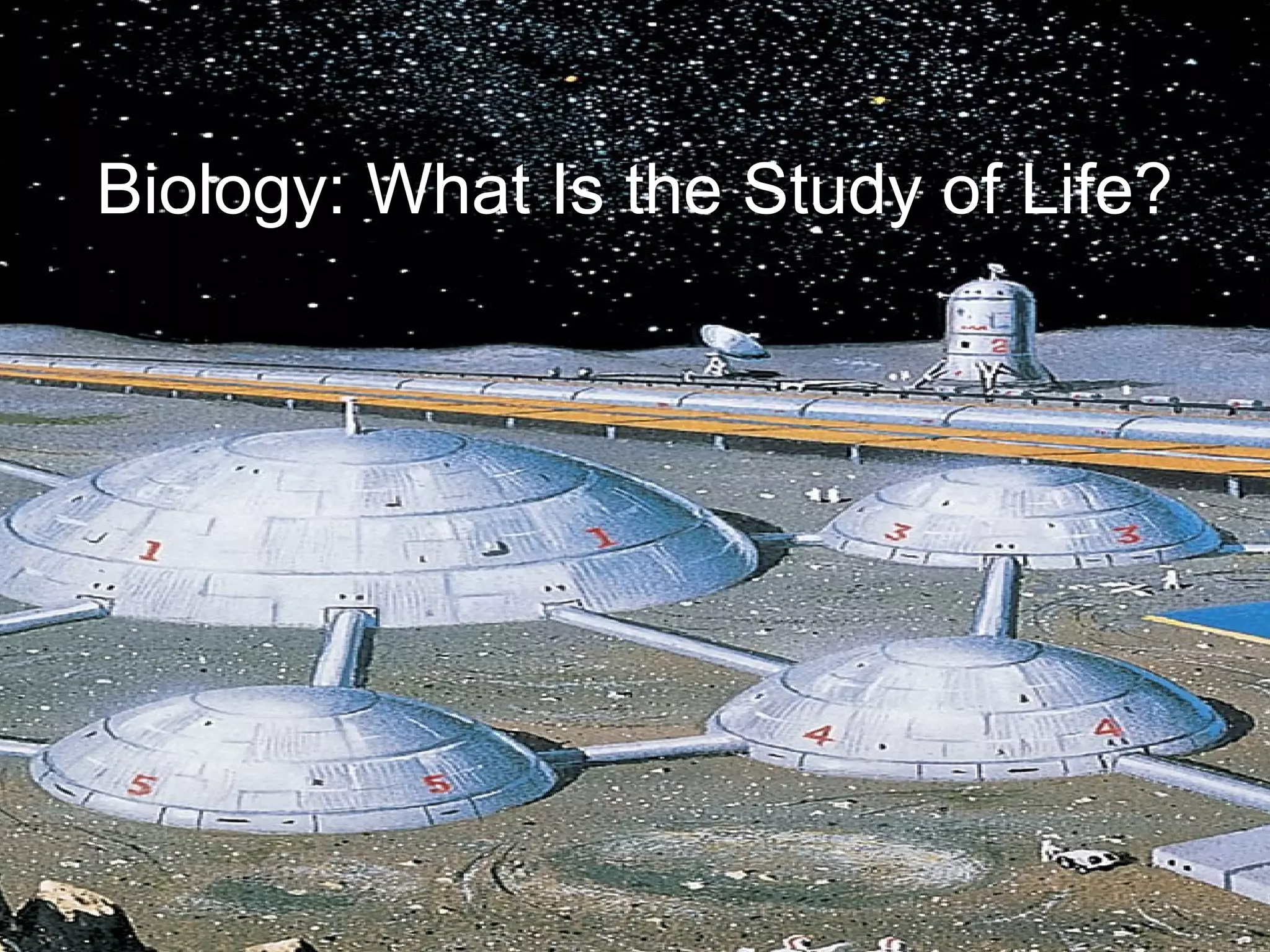
Biology: What Is the Study of Life?
Why Study Biology?
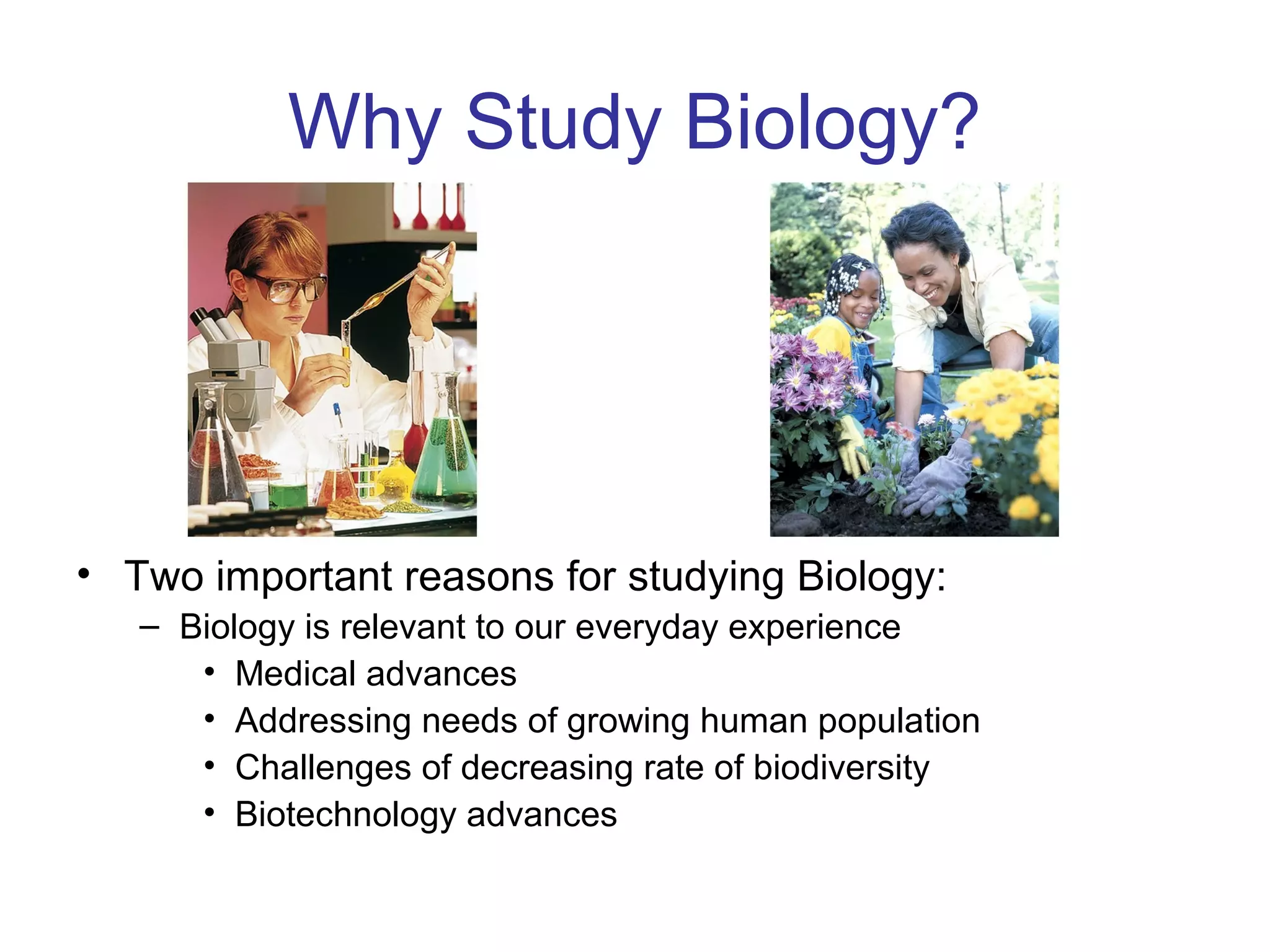
• Two important reasons for studying Biology:
– Biology is relevant to our everyday experience
• Medical advances
• Addressing needs of growing human population
• Challenges of decreasing rate of biodiversity
• Biotechnology advances
Why Study Biology?
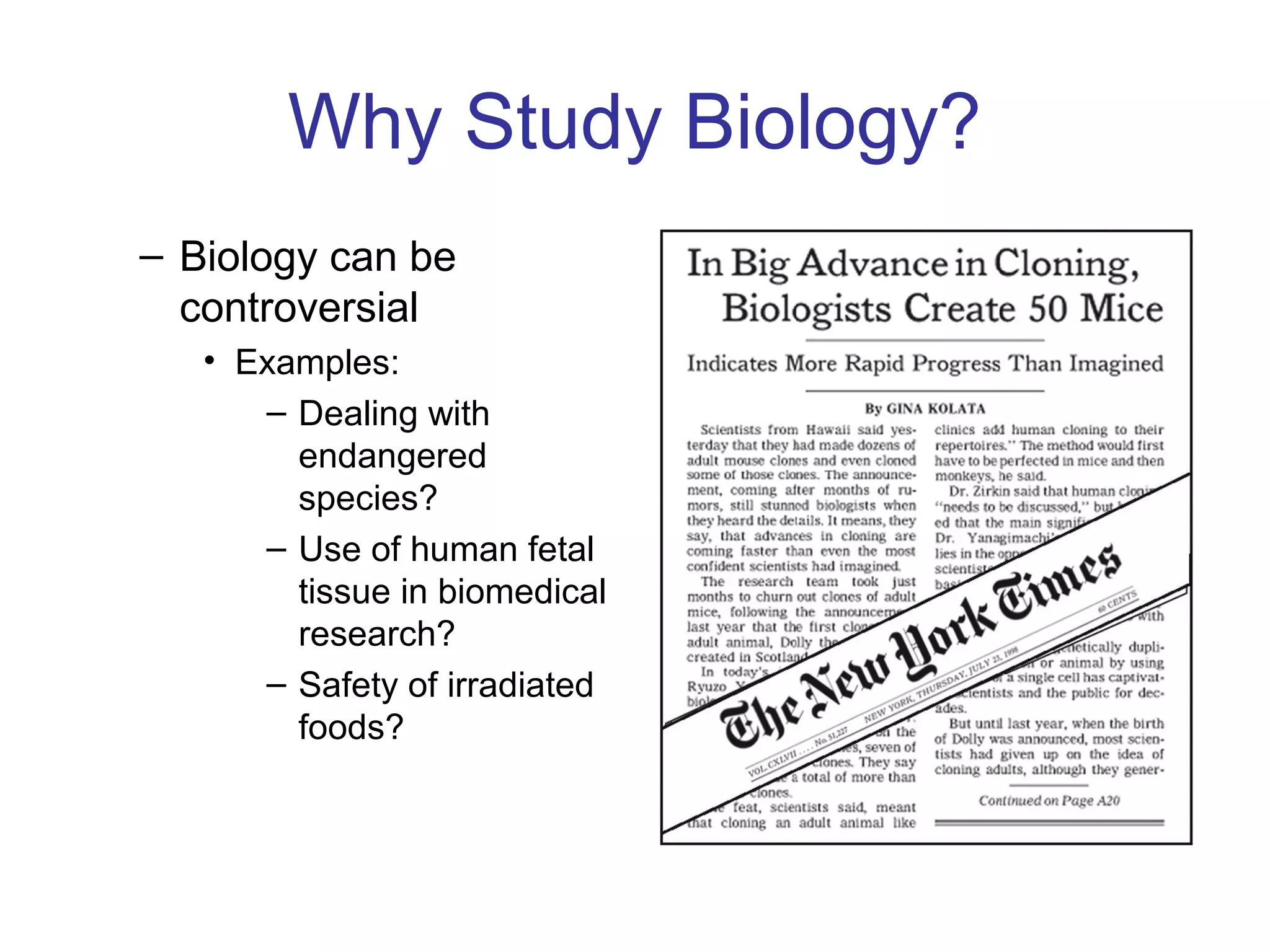
– Biology can be
controversial
• Examples:
– Dealing with
endangered
species?
– Use of human fetal
tissue in biomedical
research?
– Safety of irradiated
foods?
Figure 1-1c
What is Biology?
• It is the study of life.
• Branch of science
– A way of understanding nature.
• A human endeavor
– An attempt to understand, explain, integrate
and describe the world of living things.
What is Life?
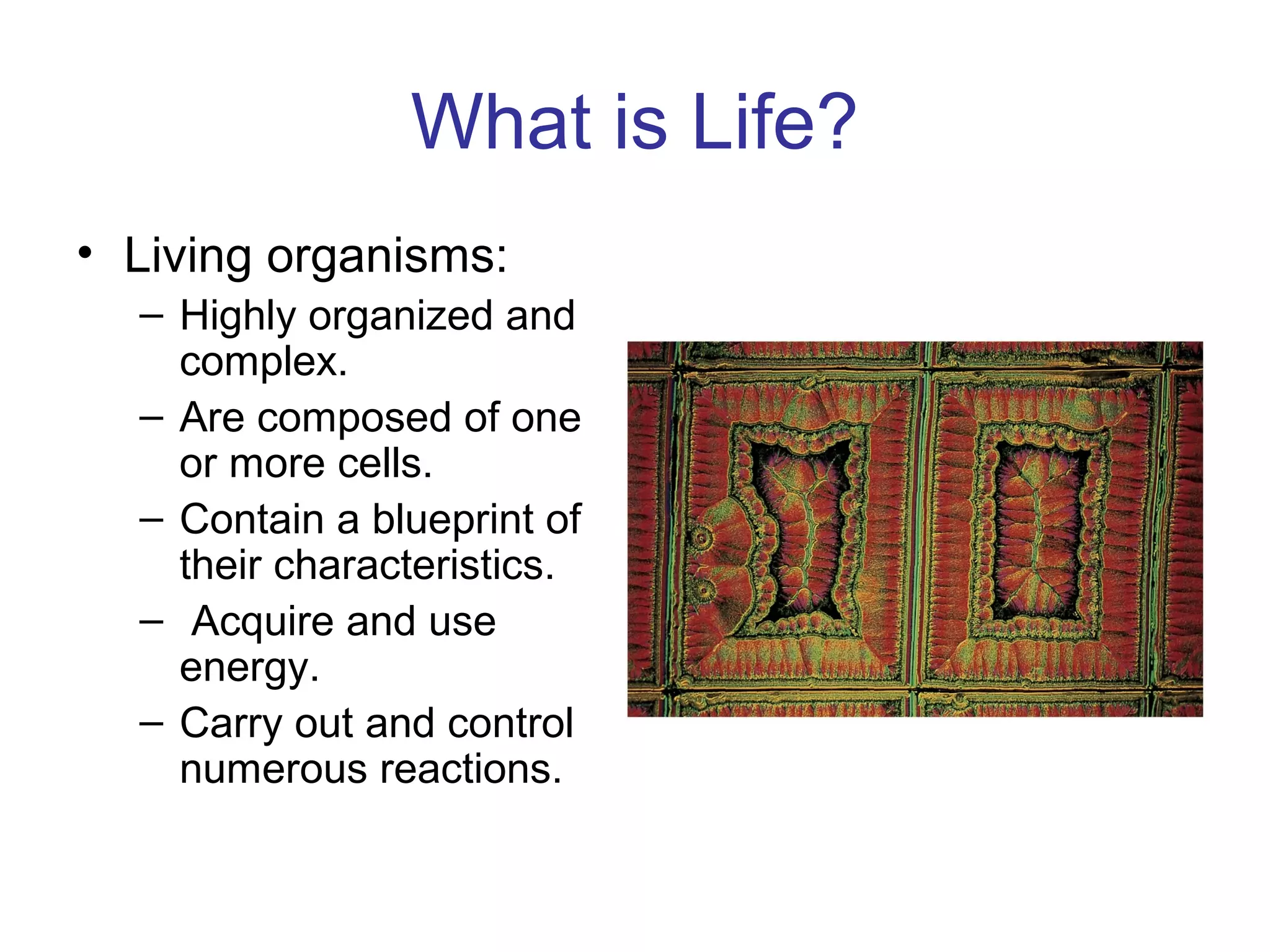
• Living organisms:
– Highly organized and
complex.
– Are composed of one
or more cells.
– Contain a blueprint of
their characteristics.
– Acquire and use
energy.
– Carry out and control
numerous reactions.
What is Life?
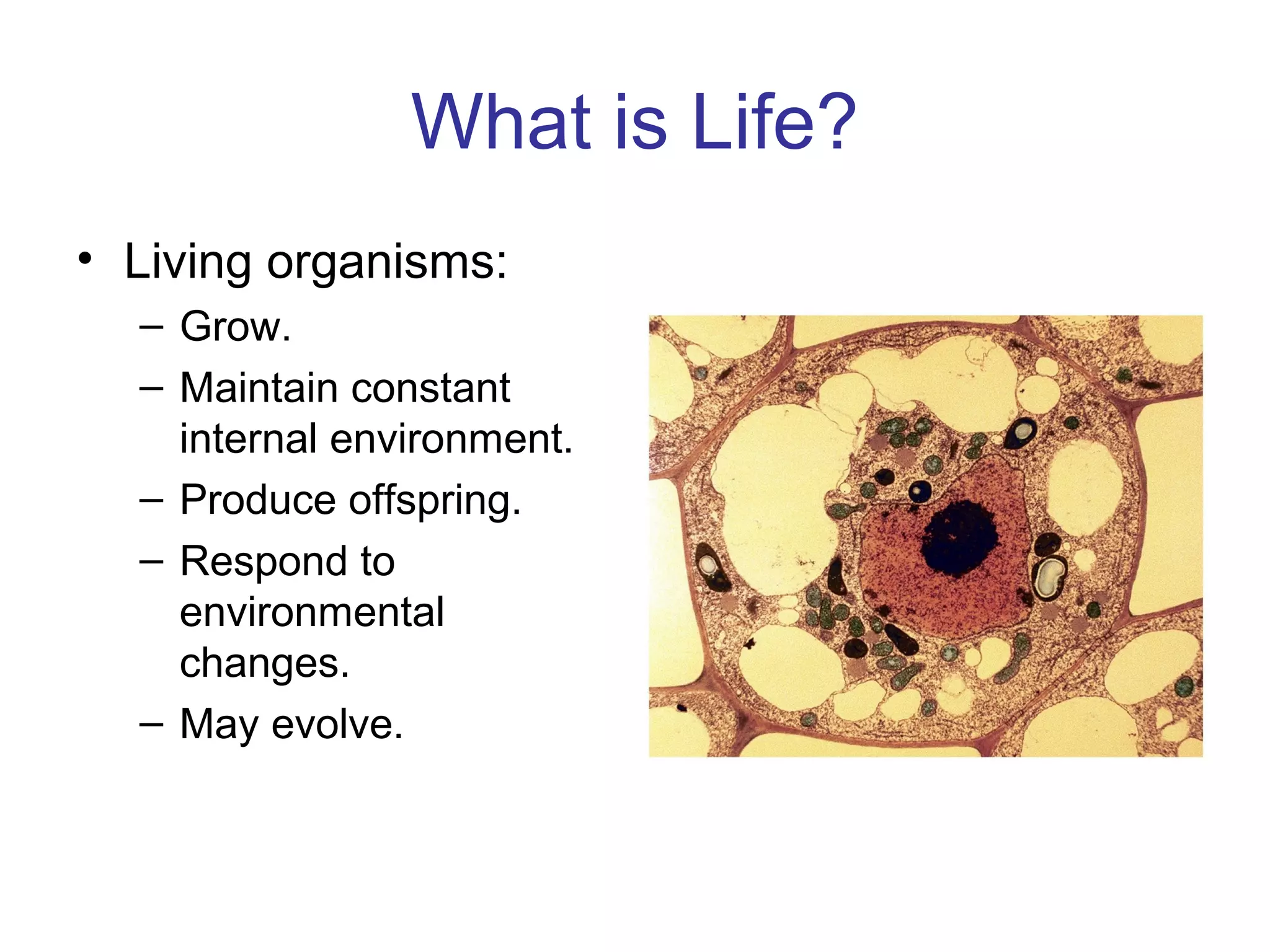
• Living organisms:
– Grow.
– Maintain constant
internal environment.
– Produce offspring.
– Respond to
environmental
changes.
– May evolve.
Insert F01_03b
Biology is a Branch of Science
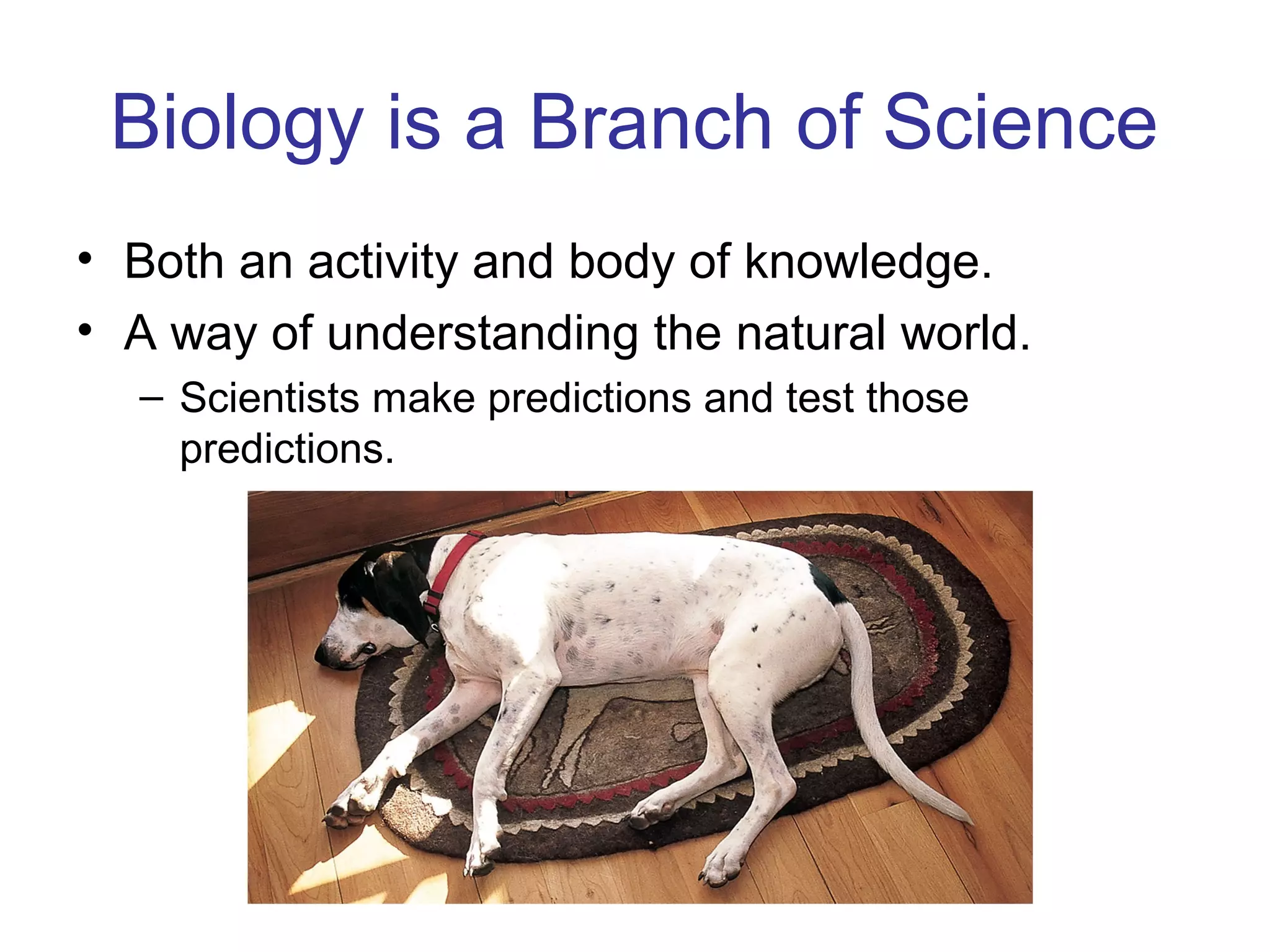
• Both an activity and body of knowledge.
• A way of understanding the natural world.
– Scientists make predictions and test those
predictions.
Major Themes in Biology
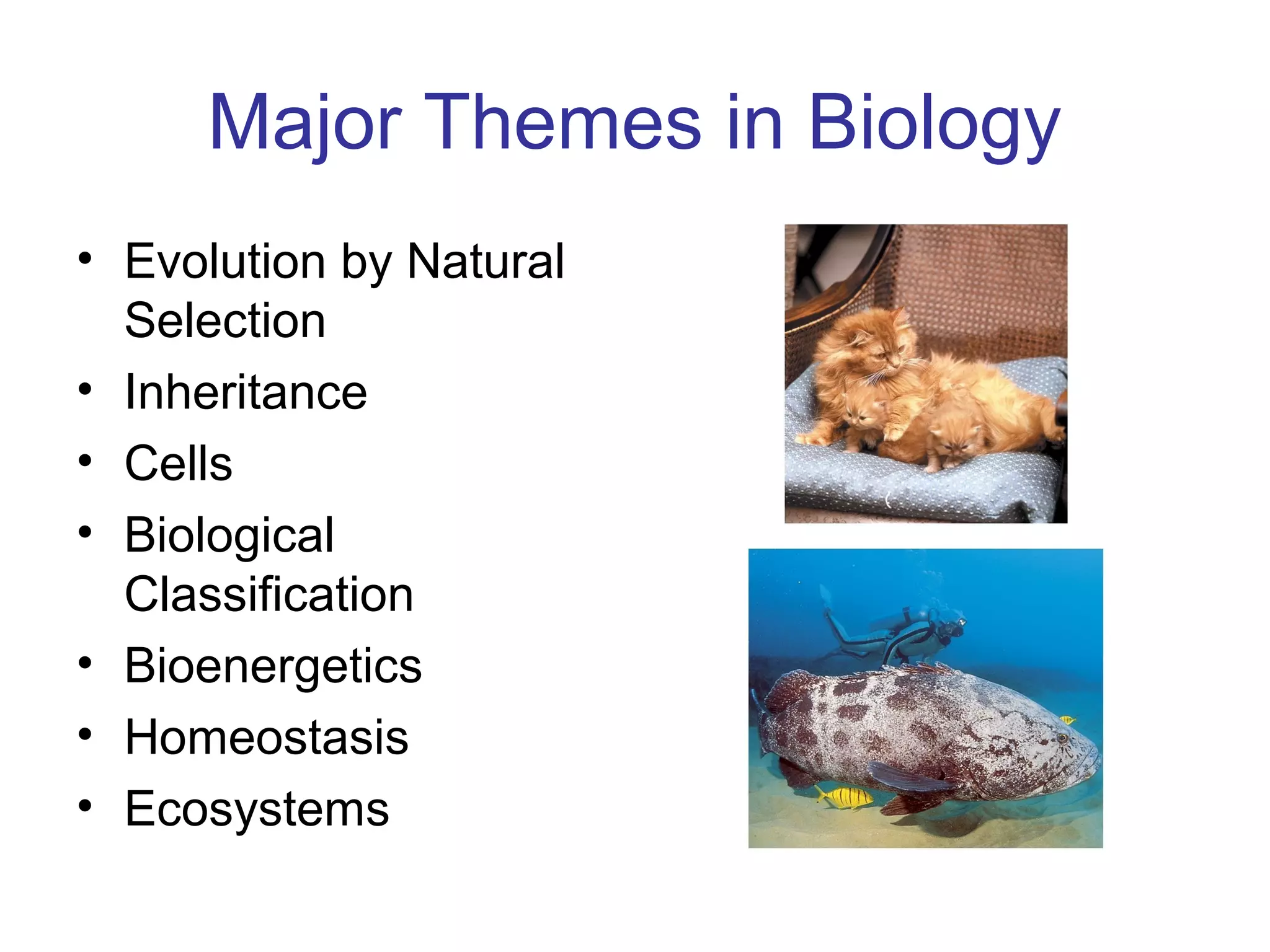
• Evolution by Natural
Selection
• Inheritance
• Cells
• Biological
Classification
• Bioenergetics
• Homeostasis
• Ecosystems
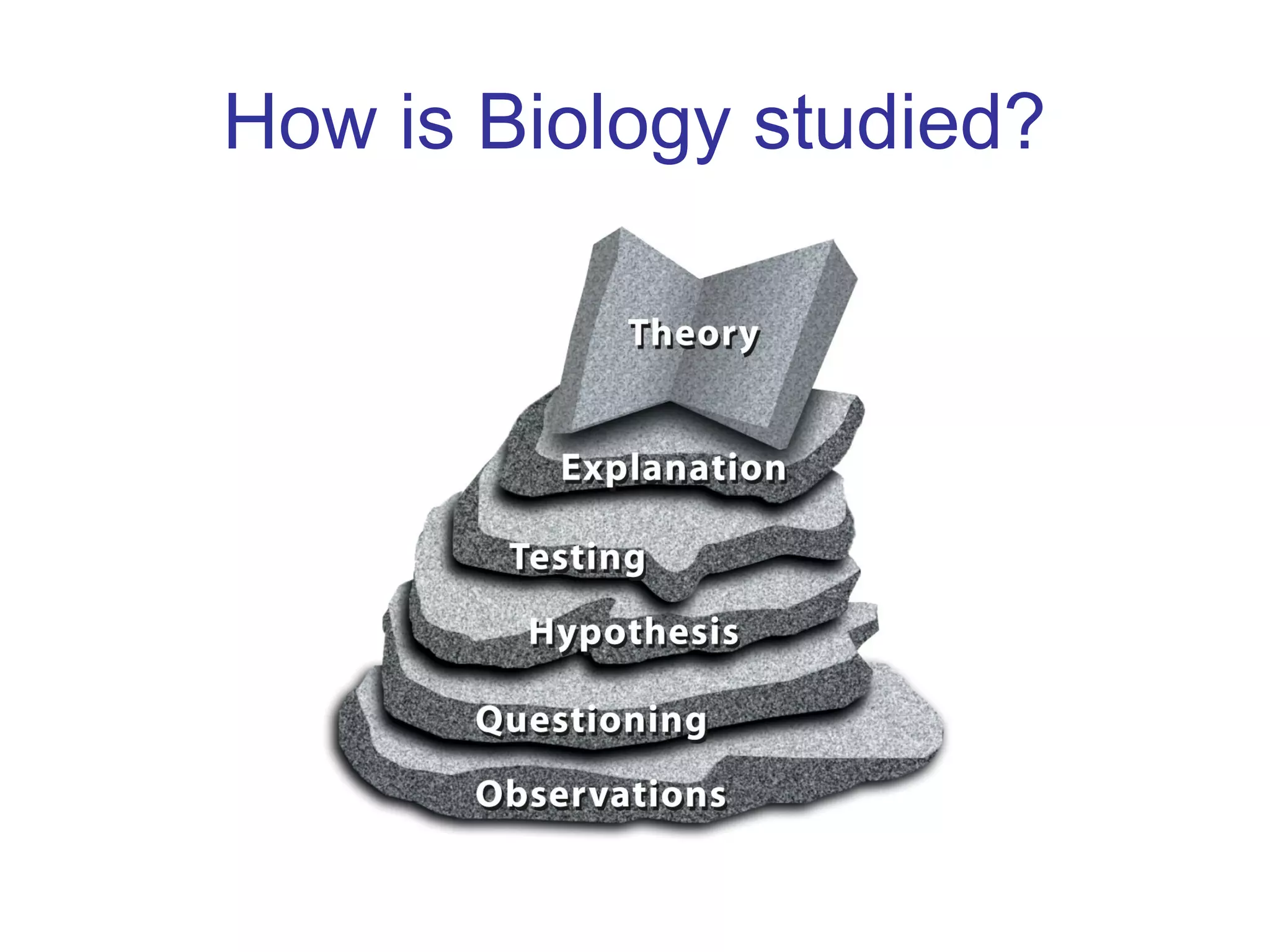
How is Biology studied?
Insert F01-06
Scientific Method
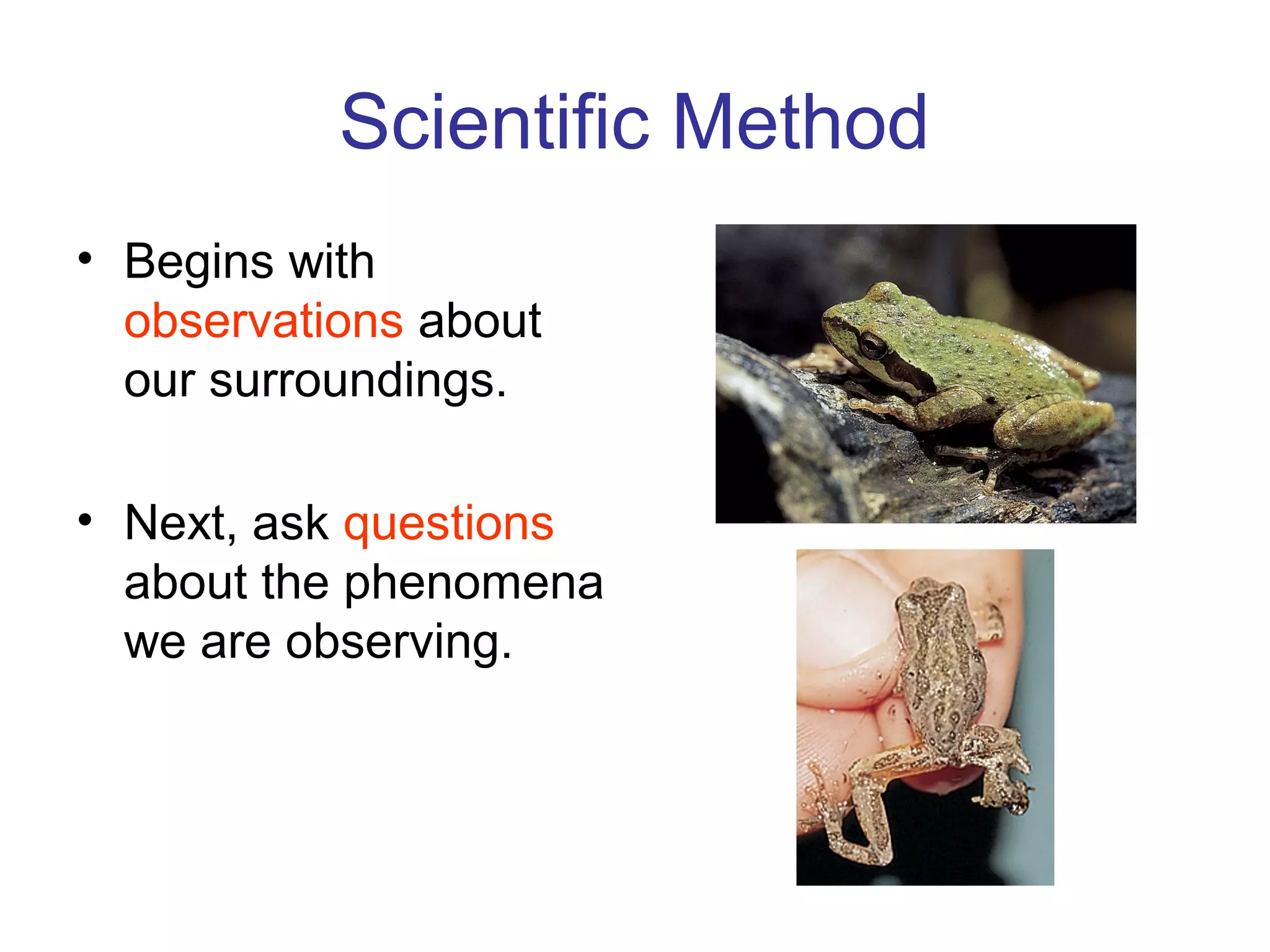
• Begins with
observations about
our surroundings.
• Next, ask questions
about the phenomena
we are observing.
Scientific Method
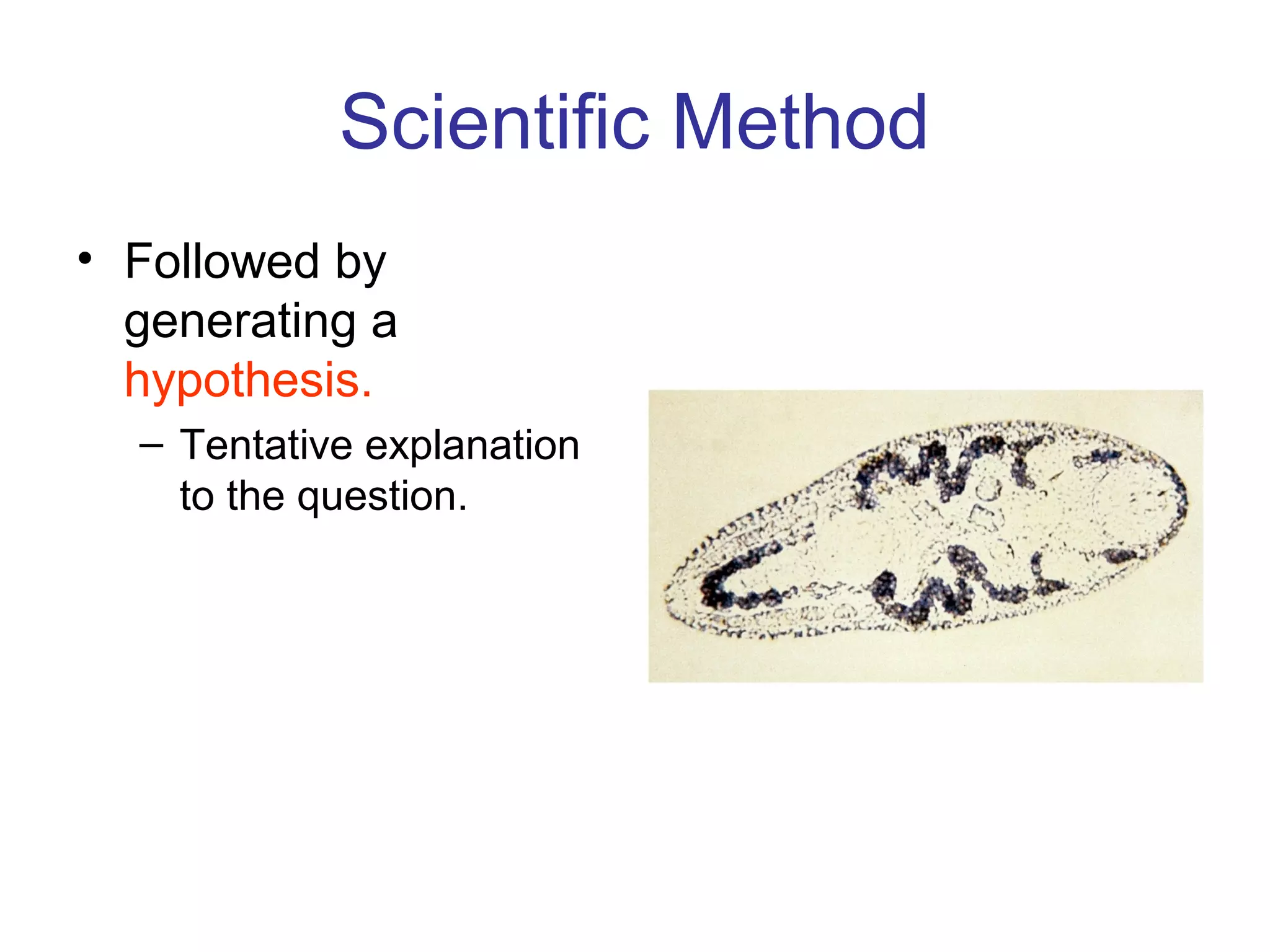
• Followed by
generating a
hypothesis.
– Tentative explanation
to the question.
Scientific Method
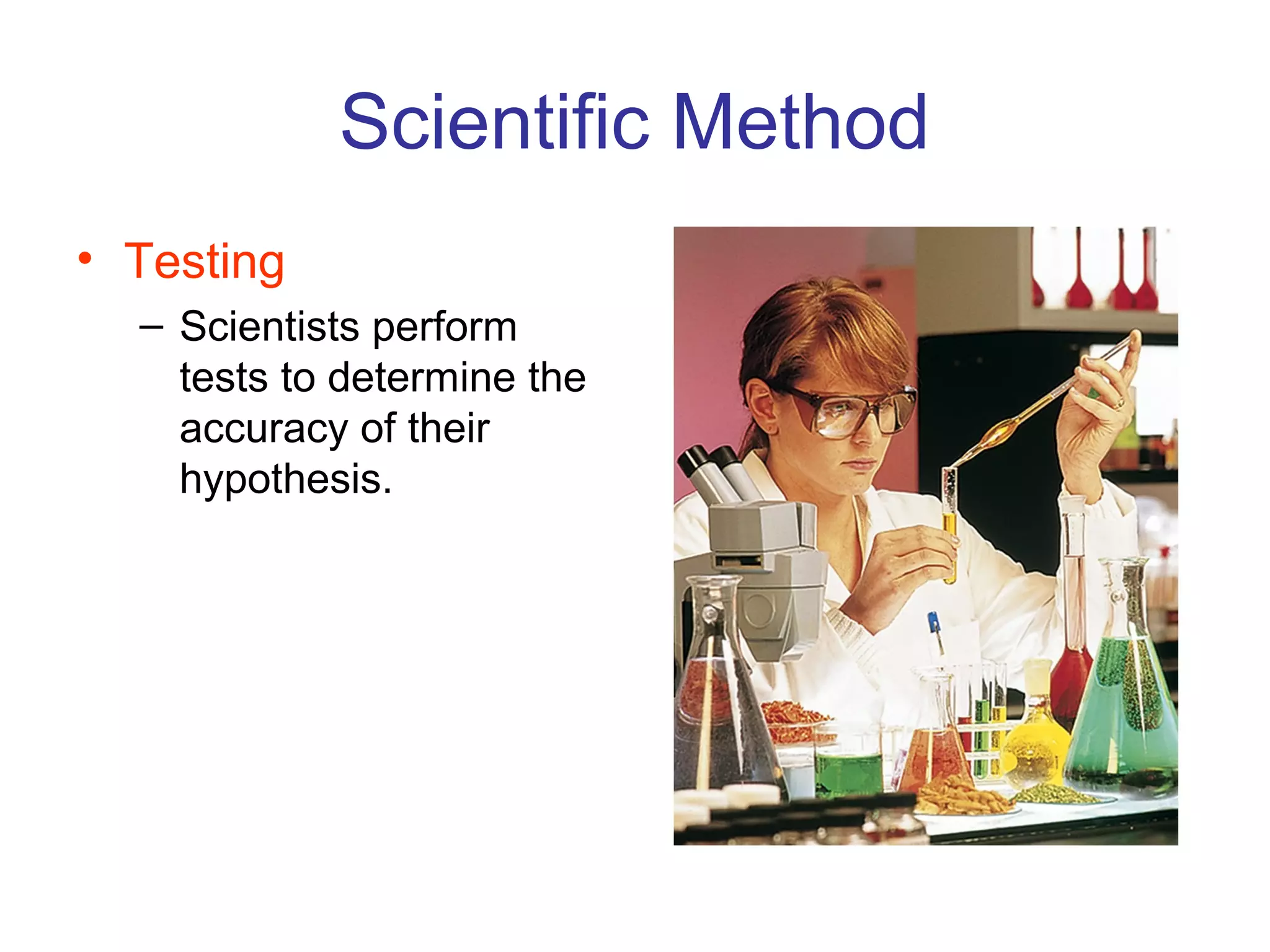
• Testing
– Scientists perform
tests to determine the
accuracy of their
hypothesis.
Scientific Method
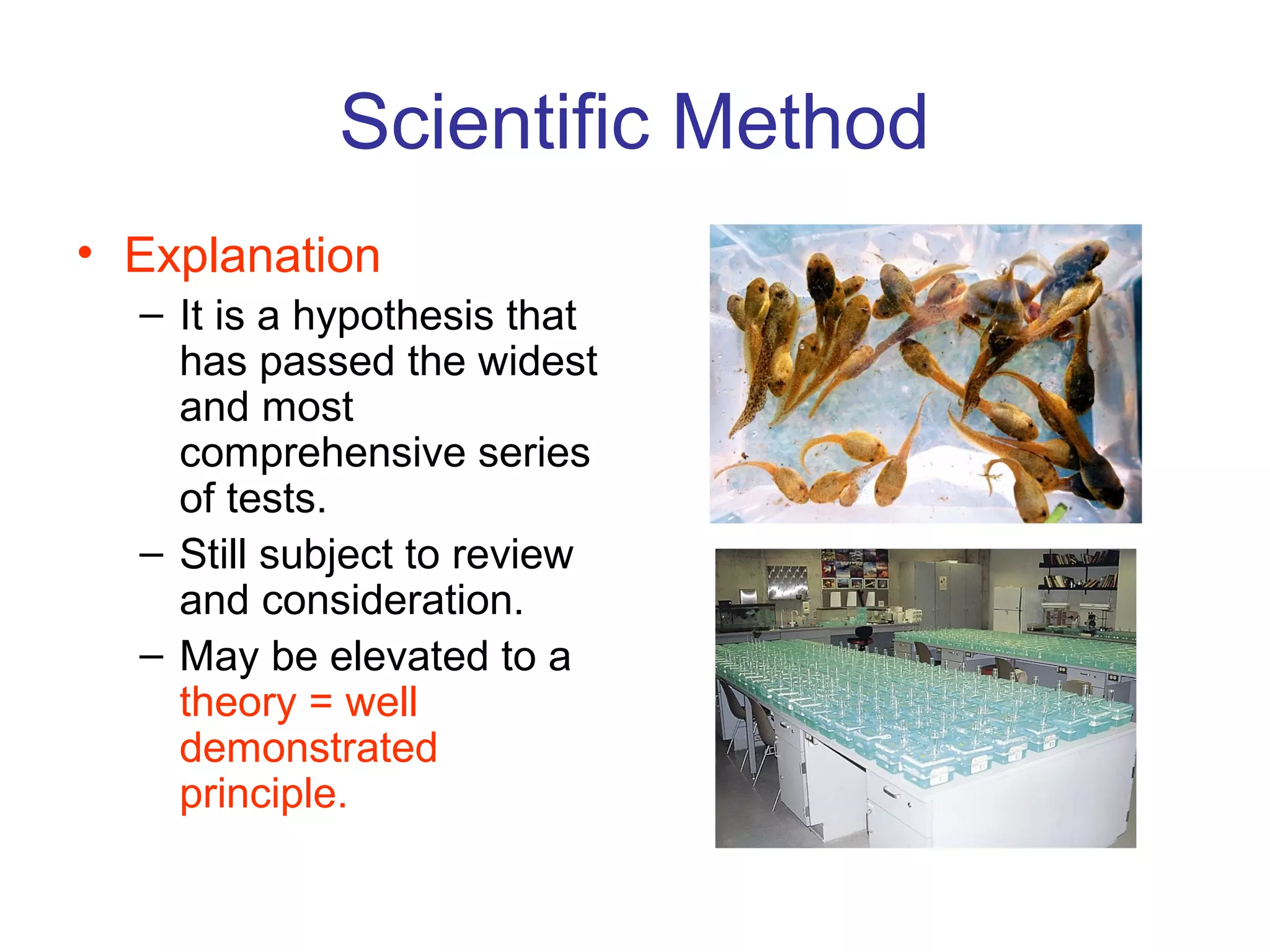
• Explanation
– It is a hypothesis that
has passed the widest
and most
comprehensive series
of tests.
– Still subject to review
and consideration.
– May be elevated to a
theory = well
demonstrated
principle.

Chapter 1(1)

  • 1.
    Biology: What Isthe Study of Life?
  • 2.
    Why Study Biology? •Two important reasons for studying Biology: – Biology is relevant to our everyday experience • Medical advances • Addressing needs of growing human population • Challenges of decreasing rate of biodiversity • Biotechnology advances
  • 3.
    Why Study Biology? –Biology can be controversial • Examples: – Dealing with endangered species? – Use of human fetal tissue in biomedical research? – Safety of irradiated foods? Figure 1-1c
  • 4.
    What is Biology? •It is the study of life. • Branch of science – A way of understanding nature. • A human endeavor – An attempt to understand, explain, integrate and describe the world of living things.
  • 5.
    What is Life? •Living organisms: – Highly organized and complex. – Are composed of one or more cells. – Contain a blueprint of their characteristics. – Acquire and use energy. – Carry out and control numerous reactions.
  • 6.
    What is Life? •Living organisms: – Grow. – Maintain constant internal environment. – Produce offspring. – Respond to environmental changes. – May evolve. Insert F01_03b
  • 7.
    Biology is aBranch of Science • Both an activity and body of knowledge. • A way of understanding the natural world. – Scientists make predictions and test those predictions.
  • 8.
    Major Themes inBiology • Evolution by Natural Selection • Inheritance • Cells • Biological Classification • Bioenergetics • Homeostasis • Ecosystems
  • 9.
    How is Biologystudied? Insert F01-06
  • 10.
    Scientific Method • Beginswith observations about our surroundings. • Next, ask questions about the phenomena we are observing.
  • 11.
    Scientific Method • Followedby generating a hypothesis. – Tentative explanation to the question.
  • 12.
    Scientific Method • Testing –Scientists perform tests to determine the accuracy of their hypothesis.
  • 13.
    Scientific Method • Explanation –It is a hypothesis that has passed the widest and most comprehensive series of tests. – Still subject to review and consideration. – May be elevated to a theory = well demonstrated principle.