Thermal Properties of
Matter
• Boiling & Condensation
• Melting & Solidification
• Evaporation
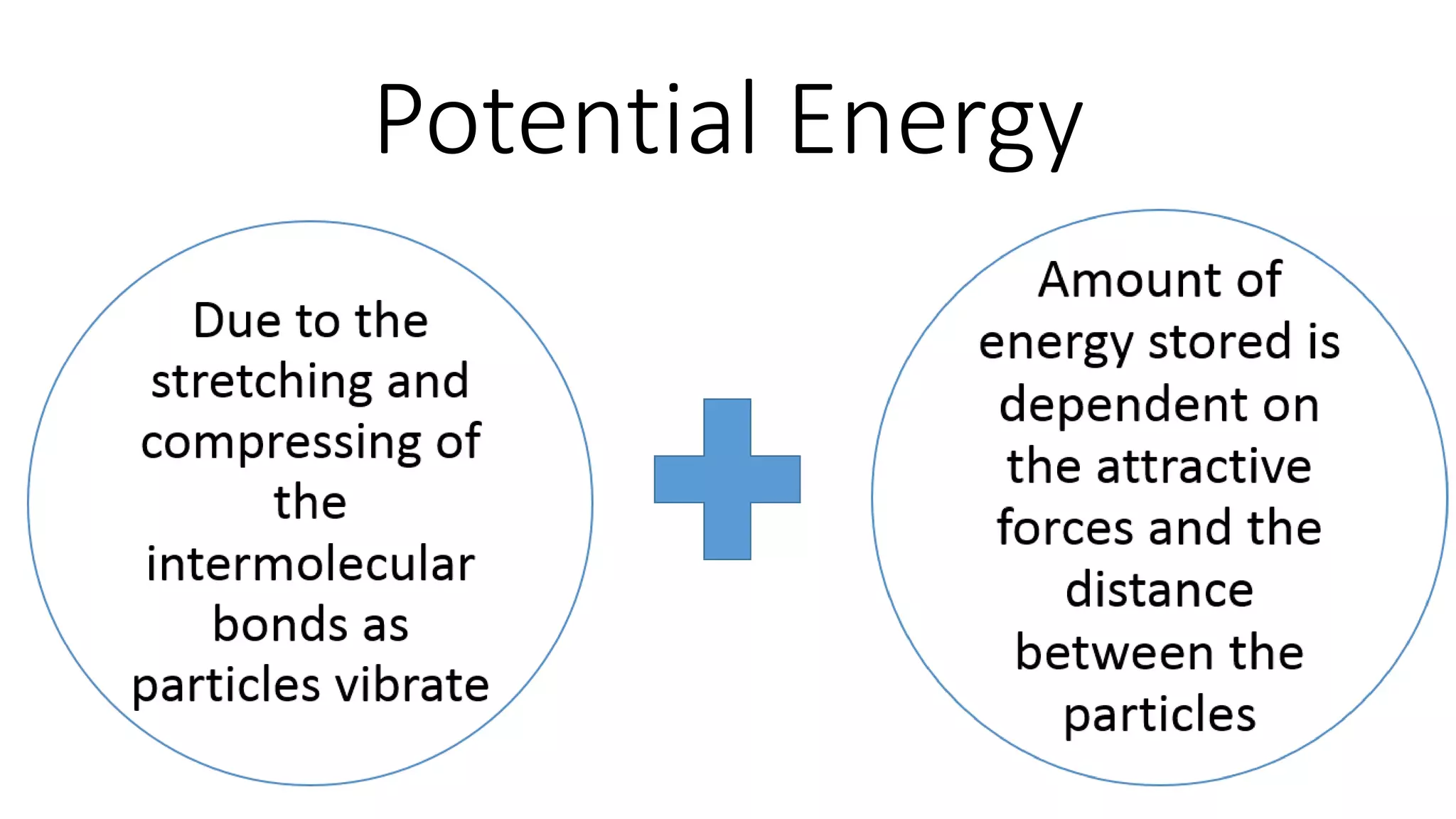
Potential Energy
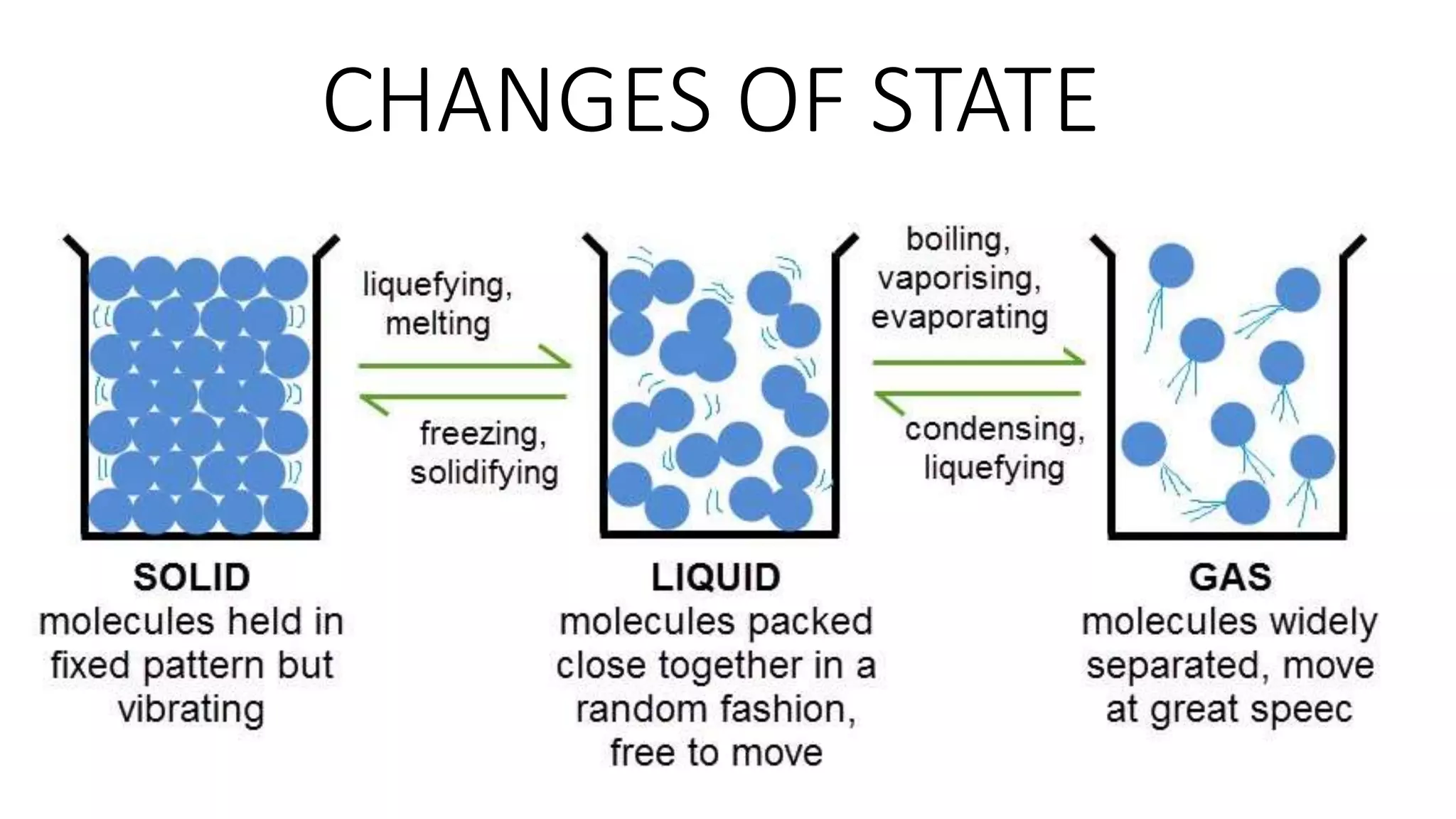
CHANGES OF STATE
Learning Objectives
• give an account of boiling and
condensation as processes of thermal
energy transfer without a change in
temperature
Boiling and Condensation
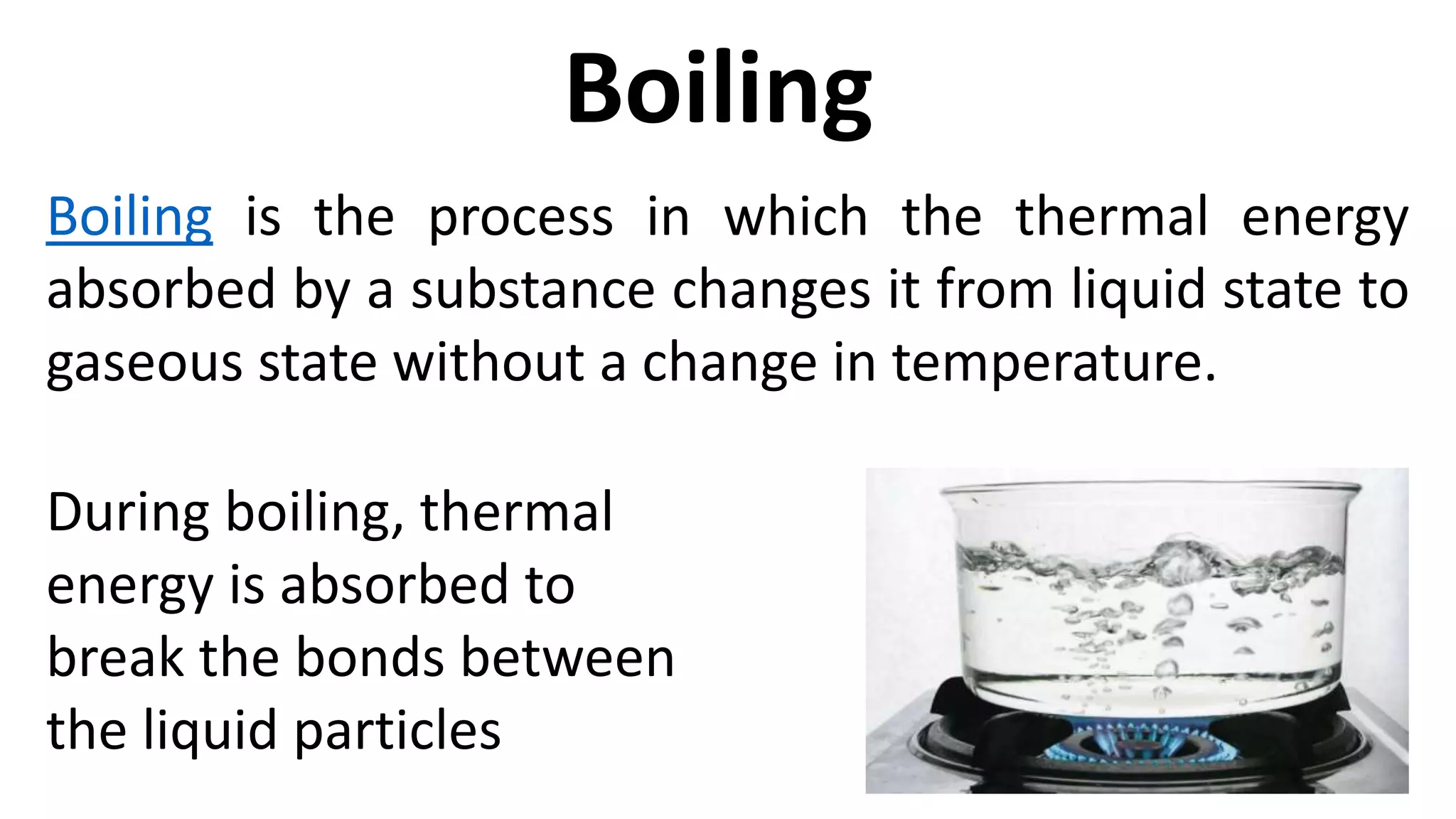
Boiling is the process in which the thermal energy
absorbed by a substance changes it from liquid state to
gaseous state without a change in temperature.
Boiling
During boiling, thermal
energy is absorbed to
break the bonds between
the liquid particles
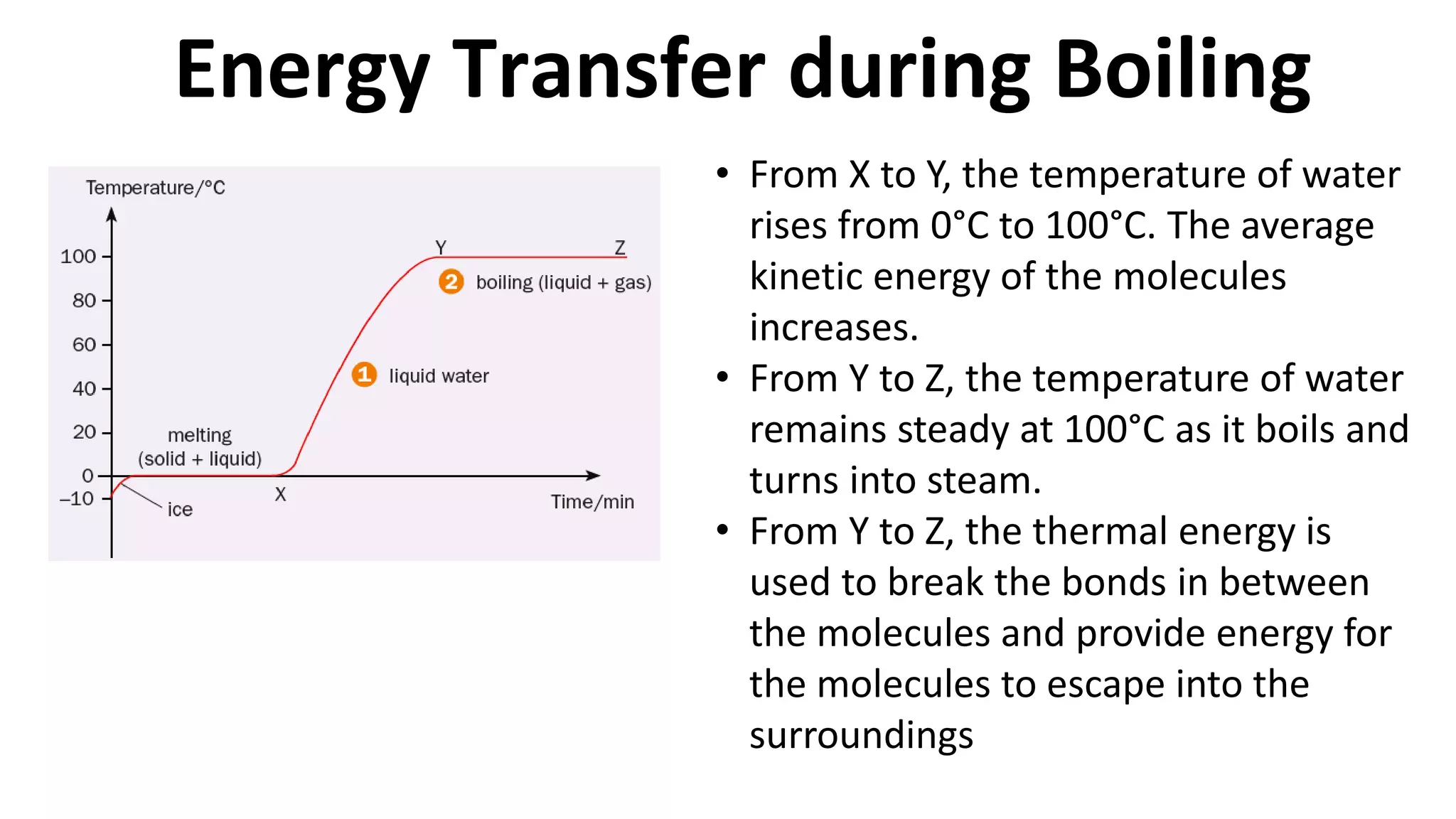
Energy Transfer during Boiling
• From X to Y, the temperature of water
rises from 0°C to 100°C. The average
kinetic energy of the molecules
increases.
• From Y to Z, the temperature of water
remains steady at 100°C as it boils and
turns into steam.
• From Y to Z, the thermal energy is
used to break the bonds in between
the molecules and provide energy for
the molecules to escape into the
surroundings
Condensation is the process in which the thermal
energy taken away from a substance changes it
from gaseous state to liquid state without a
change in temperature. At condensation point,
the substance releases thermal energy as bonds
between the particles are being formed.
Condensation
Melting & Solidification
Learning Outcomes
• give an account of melting and solidification as
processes of thermal energy transfer without a
change in temperature
• draw and explain a cooling curve;
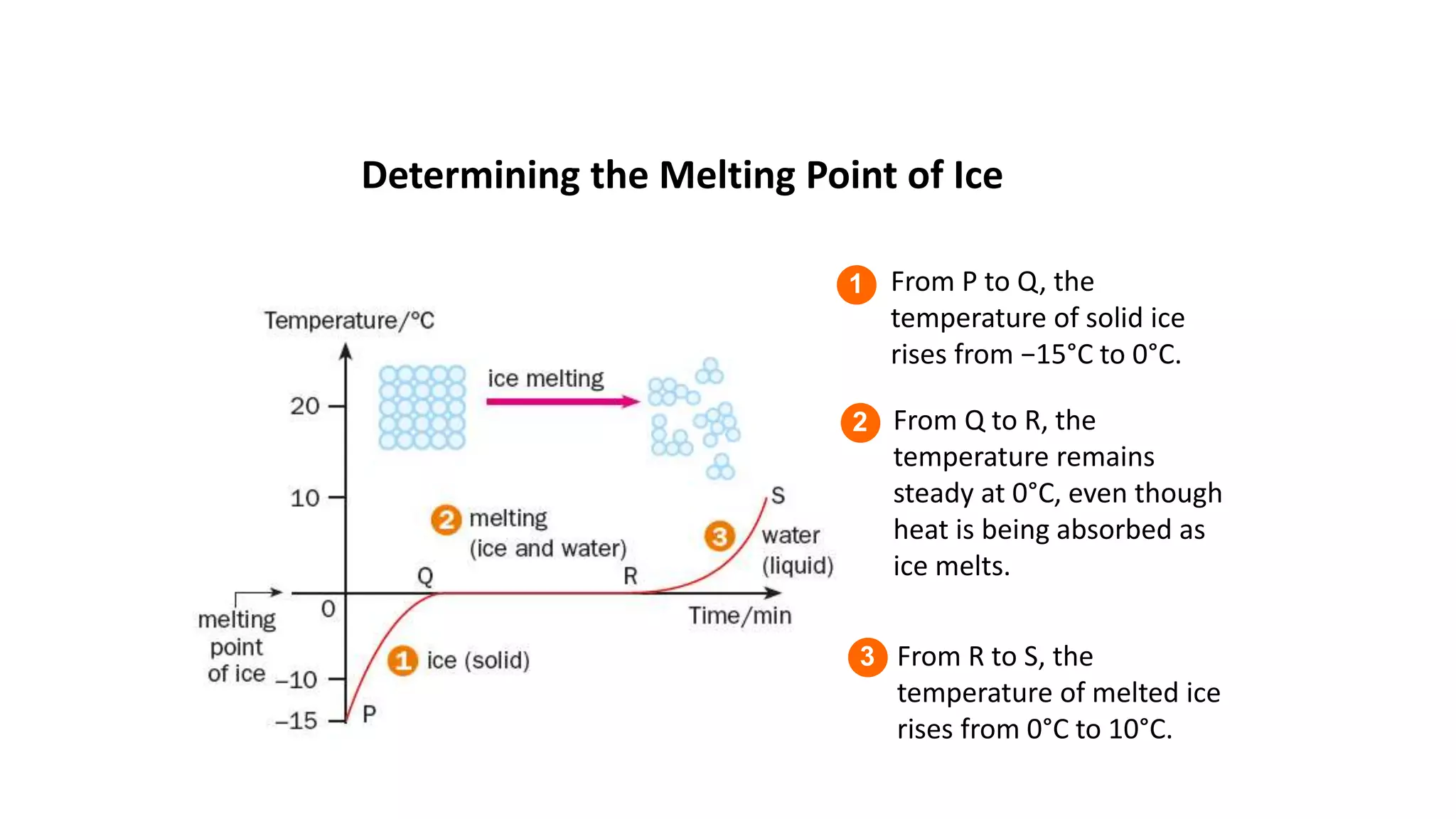
From P to Q, the
temperature of solid ice
rises from −15°C to 0°C.
From Q to R, the
temperature remains
steady at 0°C, even though
heat is being absorbed as
ice melts.
From R to S, the
temperature of melted ice
rises from 0°C to 10°C.
Determining the Melting Point of Ice
1
2
3
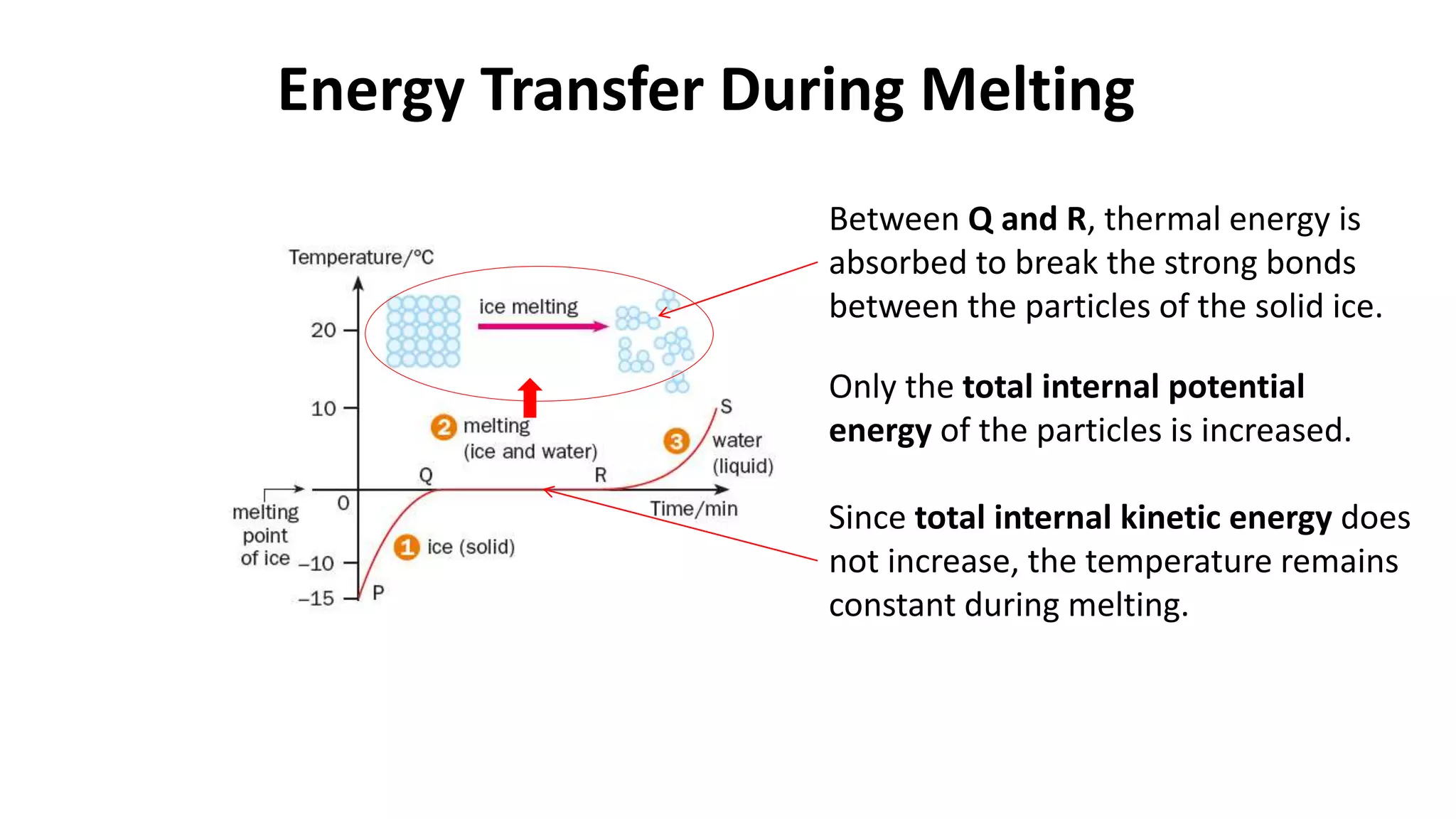
Energy Transfer During Melting
Between Q and R, thermal energy is
absorbed to break the strong bonds
between the particles of the solid ice.
Only the total internal potential
energy of the particles is increased.
Since total internal kinetic energy does
not increase, the temperature remains
constant during melting.
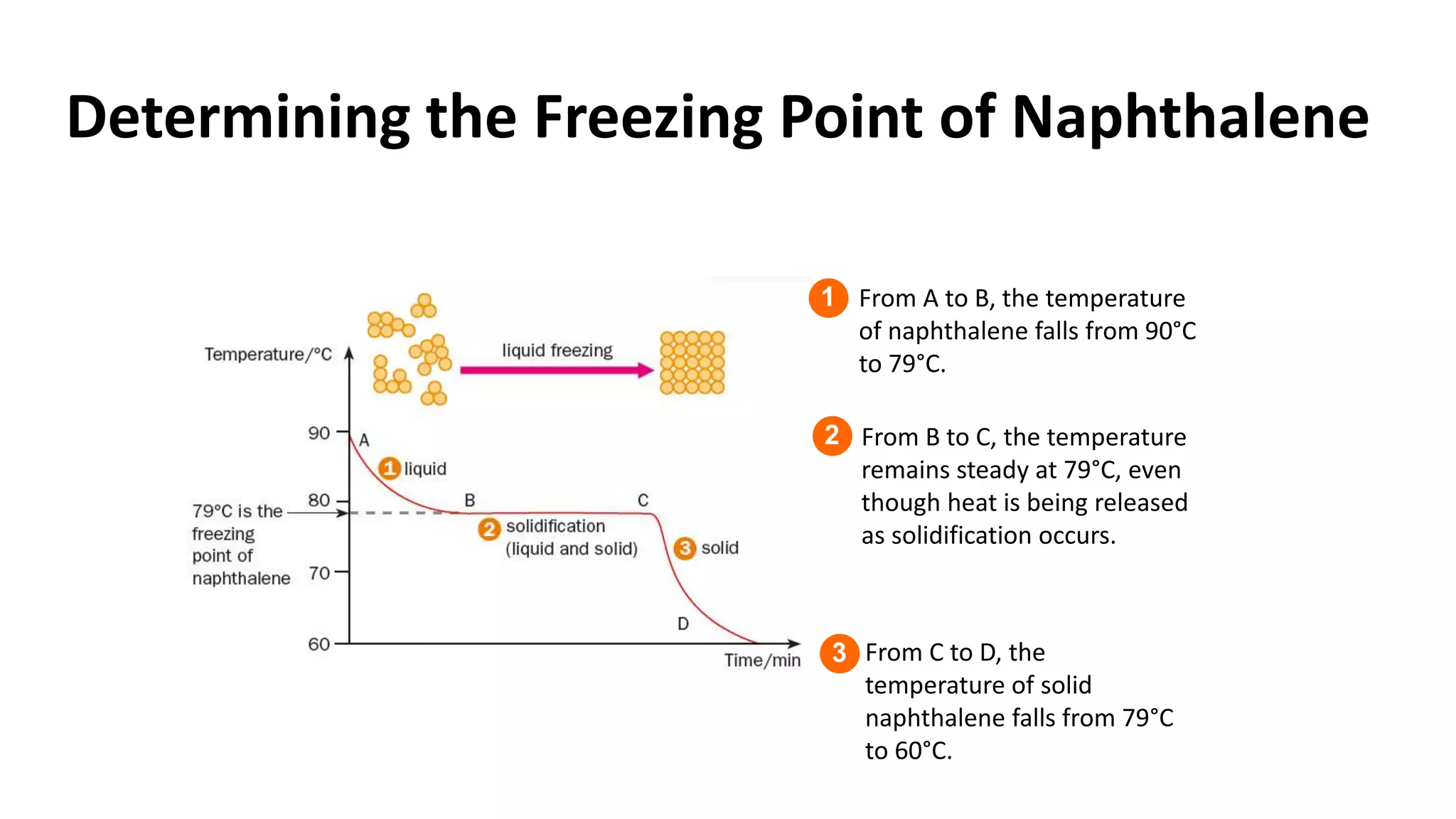
Determining the Freezing Point of Naphthalene
From A to B, the temperature
of naphthalene falls from 90°C
to 79°C.
From B to C, the temperature
remains steady at 79°C, even
though heat is being released
as solidification occurs.
From C to D, the
temperature of solid
naphthalene falls from 79°C
to 60°C.
1
2
3
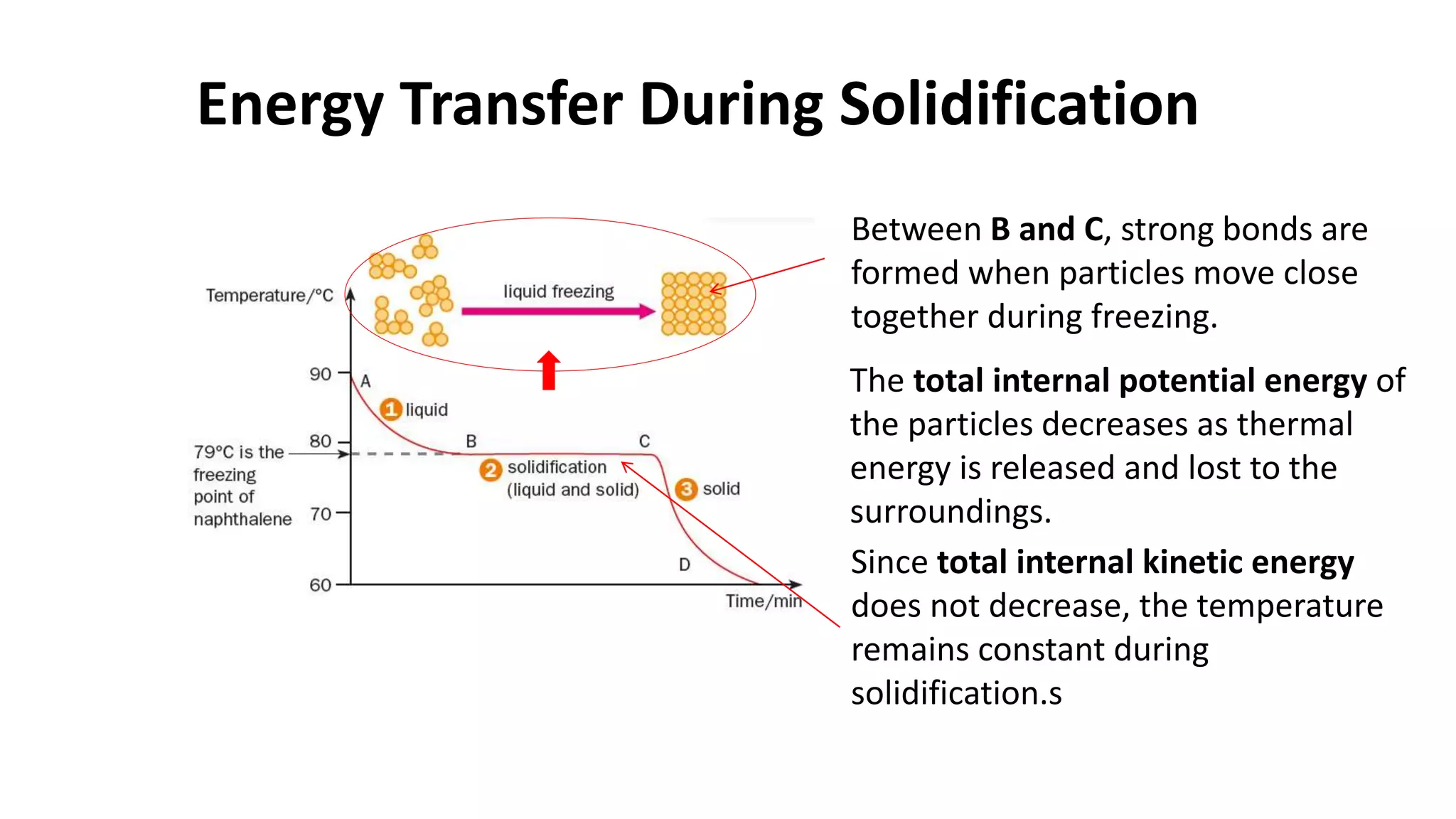
Energy Transfer During Solidification
Between B and C, strong bonds are
formed when particles move close
together during freezing.
The total internal potential energy of
the particles decreases as thermal
energy is released and lost to the
surroundings.
Since total internal kinetic energy
does not decrease, the temperature
remains constant during
solidification.s
Learning Objective
• distinguish between boiling
and evaporation
Evaporation
• Evaporation requires thermal energy from the
surroundings.
• In other words, it absorbs heat from the
surroundings to change the state of the
substance from liquid to gas.
• If you step out of a swimming pool on a dry and
sunny day, your body feels cold. Why?
Evaporation
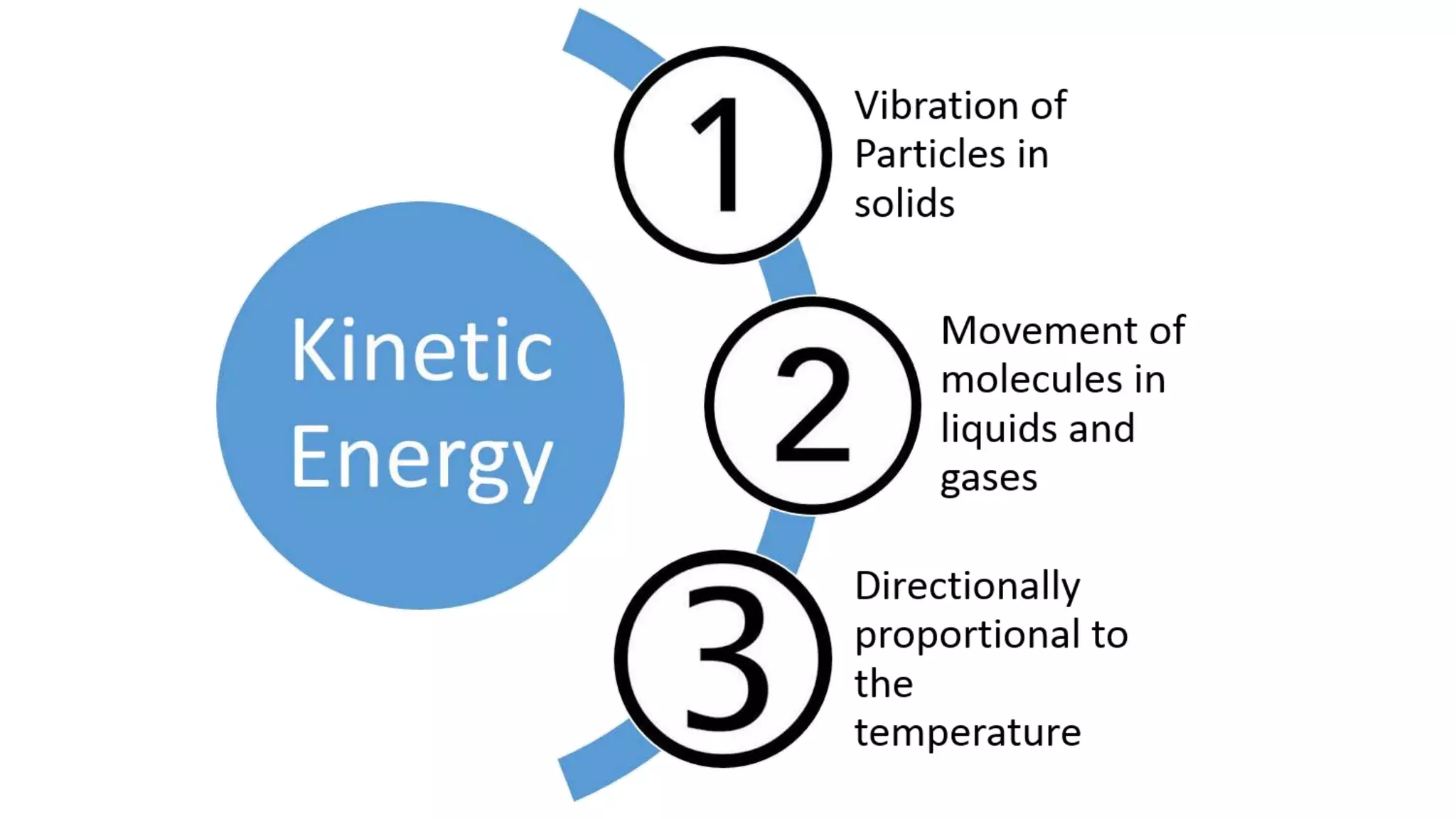
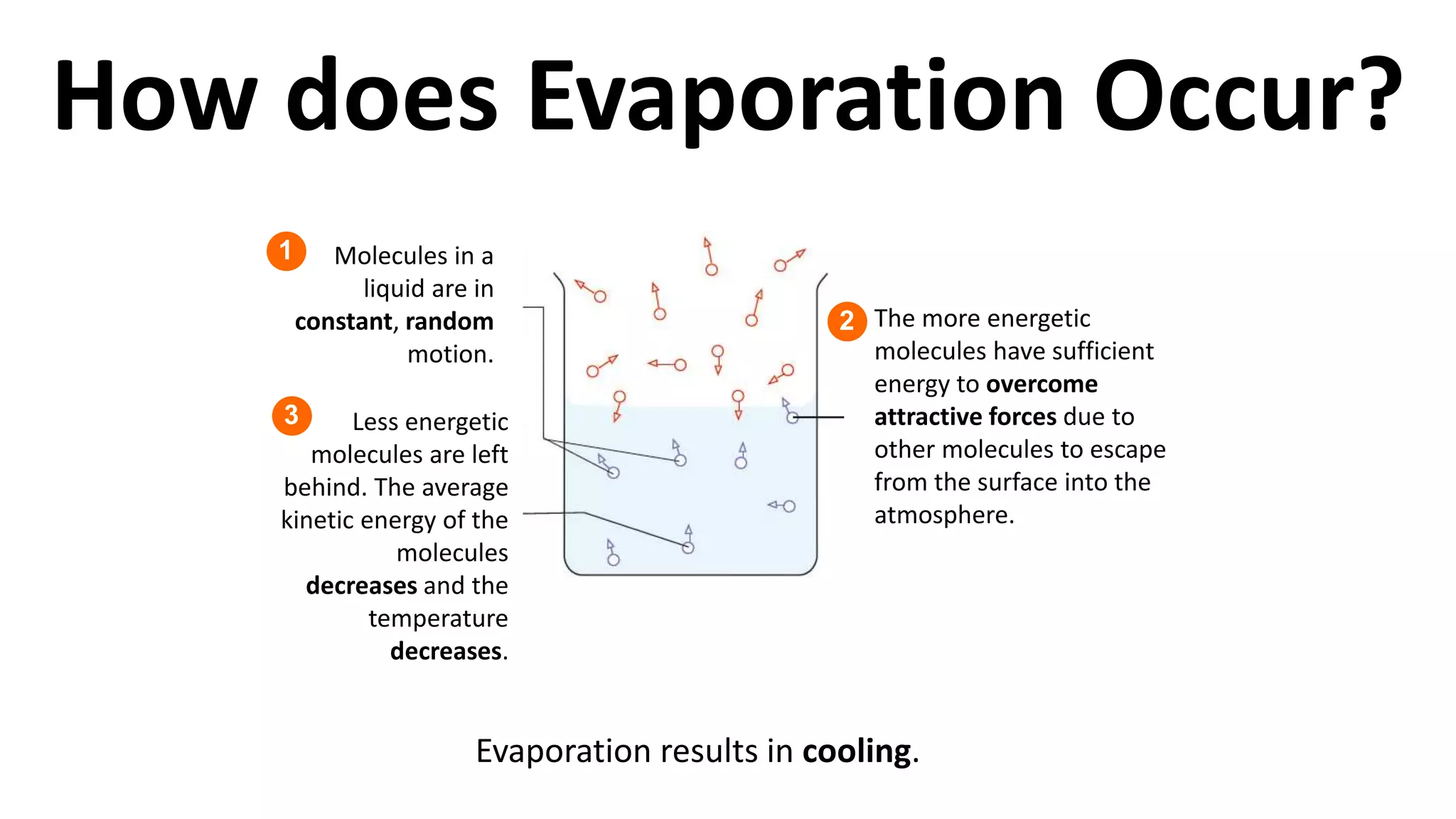
Molecules in a
liquid are in
constant, random
motion.
The more energetic
molecules have sufficient
energy to overcome
attractive forces due to
other molecules to escape
from the surface into the
atmosphere.
Less energetic
molecules are left
behind. The average
kinetic energy of the
molecules
decreases and the
temperature
decreases.
Evaporation results in cooling.
1
2
3
How does Evaporation Occur?
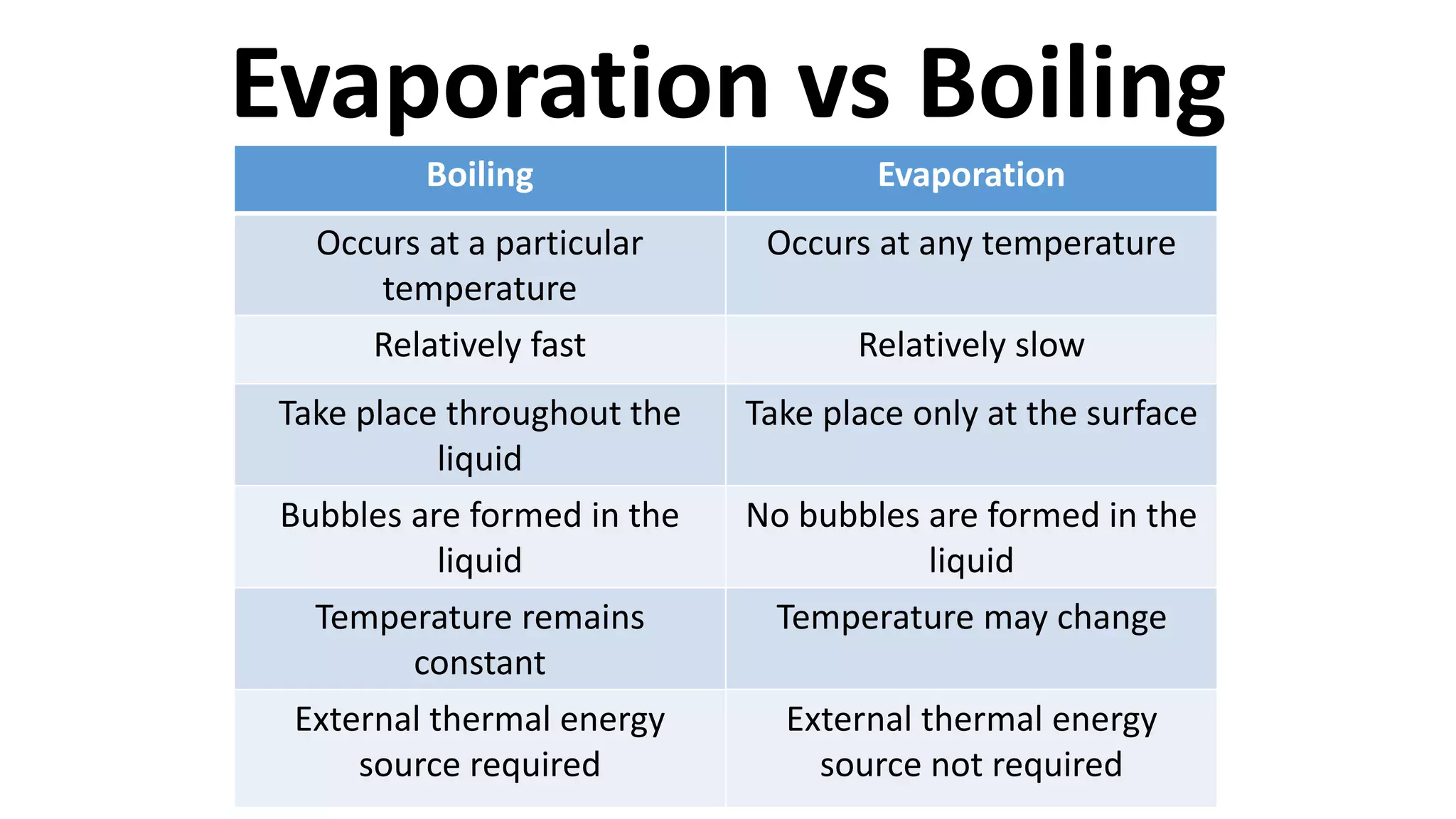
Evaporation vs Boiling
Boiling Evaporation
Occurs at a particular
temperature
Occurs at any temperature
Relatively fast Relatively slow
Take place throughout the
liquid
Take place only at the surface
Bubbles are formed in the
liquid
No bubbles are formed in the
liquid
Temperature remains
constant
Temperature may change
External thermal energy
source required
External thermal energy
source not required
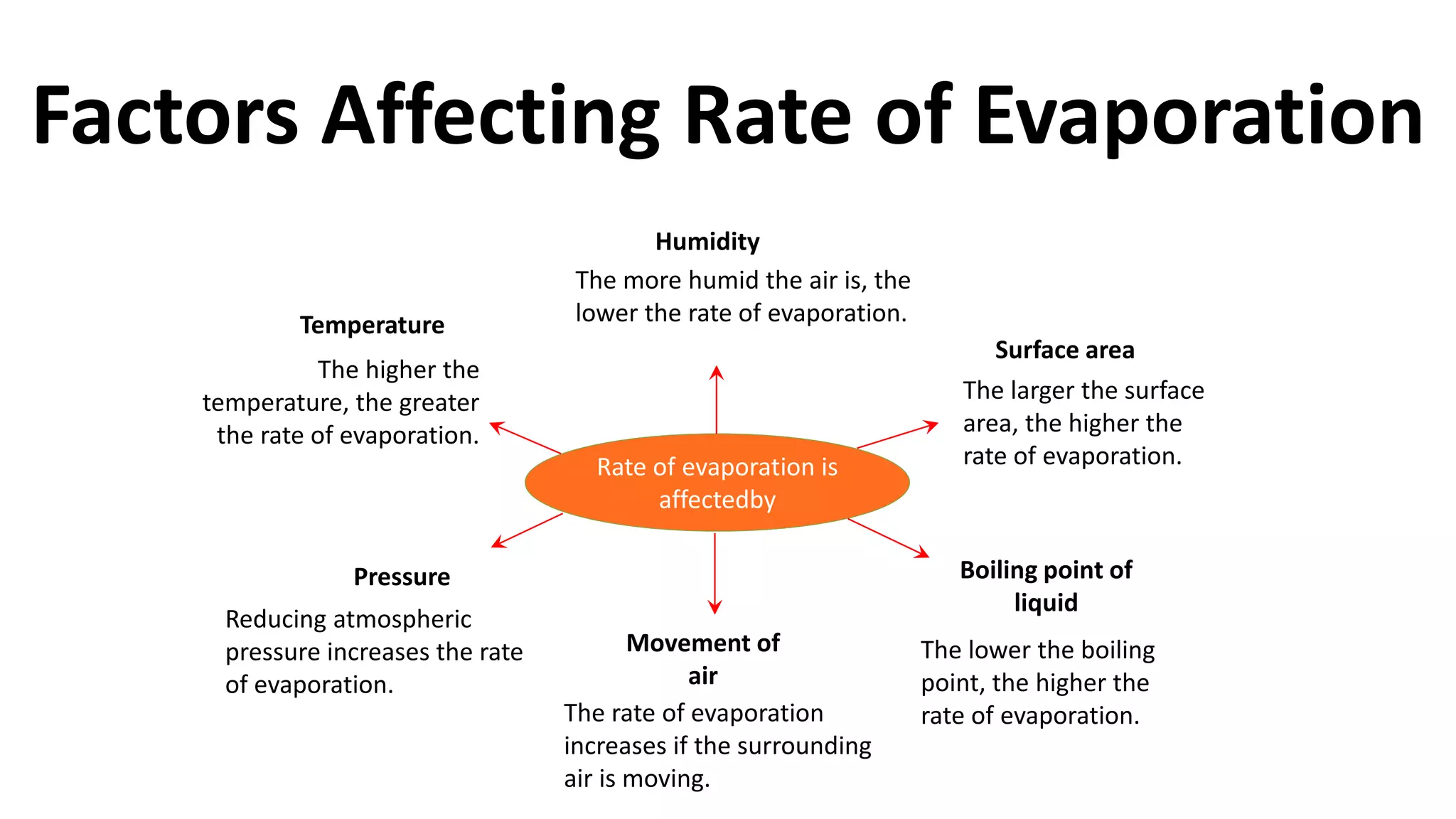
Rate of evaporation is
affectedby
Temperature
Pressure
Humidity
Movement of
air
Surface area
Boiling point of
liquid
The more humid the air is, the
lower the rate of evaporation.
The larger the surface
area, the higher the
rate of evaporation.
The lower the boiling
point, the higher the
rate of evaporation.The rate of evaporation
increases if the surrounding
air is moving.
Reducing atmospheric
pressure increases the rate
of evaporation.
The higher the
temperature, the greater
the rate of evaporation.
Factors Affecting Rate of Evaporation
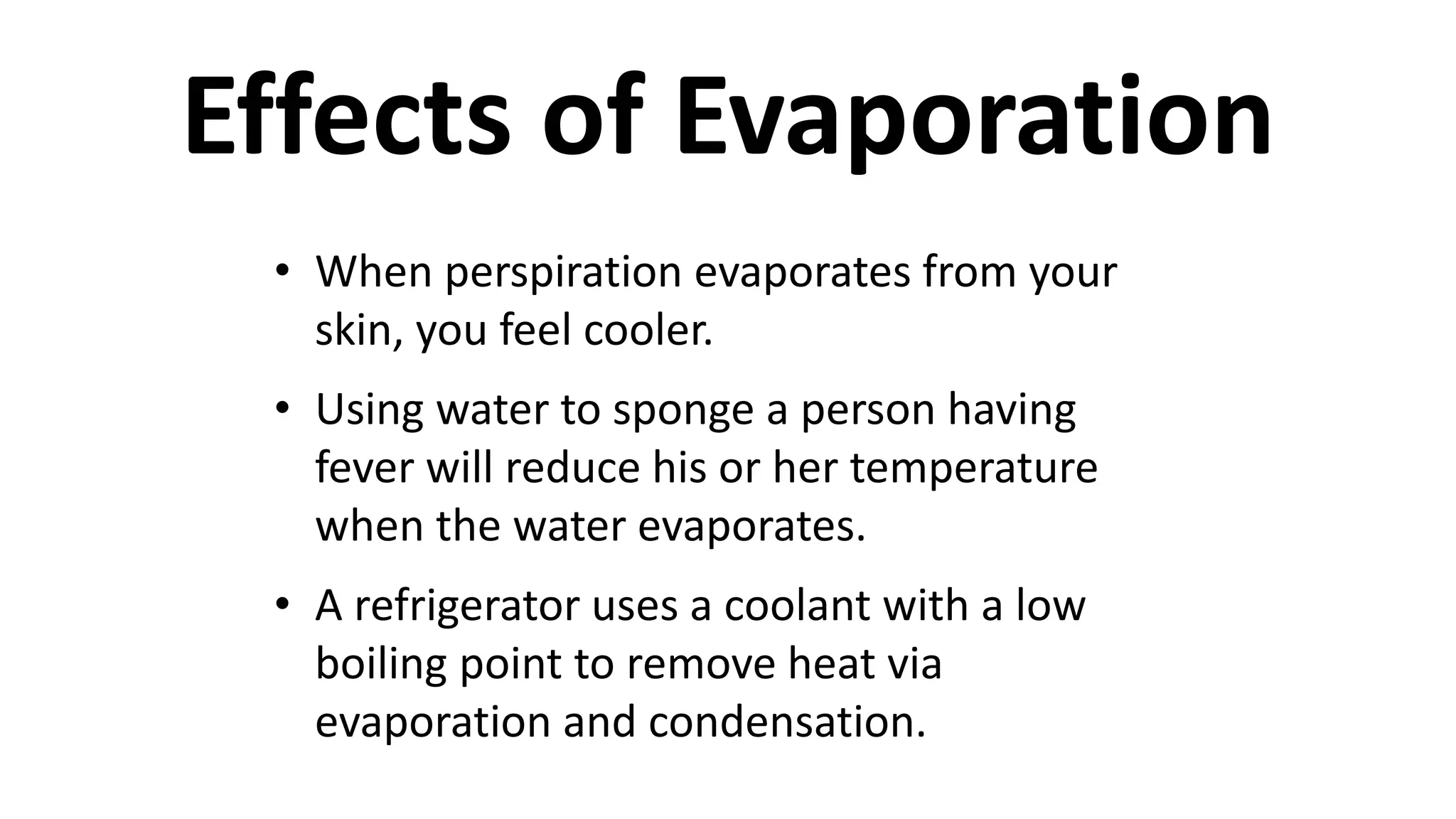
• When perspiration evaporates from your
skin, you feel cooler.
• Using water to sponge a person having
fever will reduce his or her temperature
when the water evaporates.
• A refrigerator uses a coolant with a low
boiling point to remove heat via
evaporation and condensation.
Effects of Evaporation
Explain why putting a layer of perfume on the skin produces a
cooling effect.
Solution
• Perfume usually contains alcohol (which has a low specific
heat capacity) and evaporates easily.
• As evaporation removes heat from the skin, the skin feels
cool.
Evaporation
Learning Points
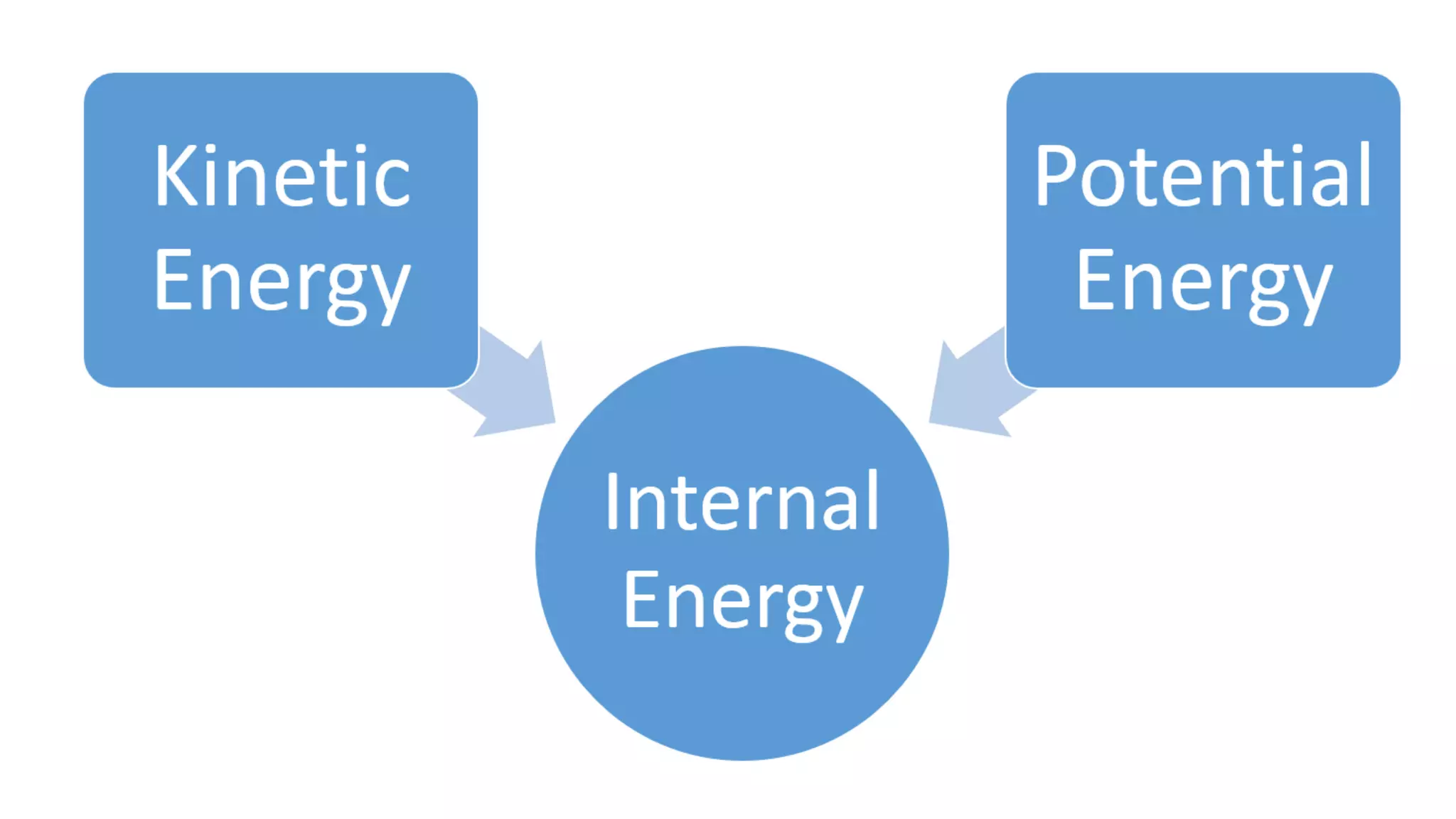
• Internal Energy is made up of kinetic and
potential energy
• Thermal Energy is absorbed during boiling
and melting; without a change in
temperature
• Thermal Energy is released during
condensation and solidification, without a
change in temperature
• Evaporation takes place at any temperature
and reduces thermal energy as a result

Thermal properties of matter

  • 1.
    Thermal Properties of Matter •Boiling & Condensation • Melting & Solidification • Evaporation
  • 4.
  • 5.
  • 6.
    Learning Objectives • givean account of boiling and condensation as processes of thermal energy transfer without a change in temperature Boiling and Condensation
  • 7.
    Boiling is theprocess in which the thermal energy absorbed by a substance changes it from liquid state to gaseous state without a change in temperature. Boiling During boiling, thermal energy is absorbed to break the bonds between the liquid particles
  • 8.
    Energy Transfer duringBoiling • From X to Y, the temperature of water rises from 0°C to 100°C. The average kinetic energy of the molecules increases. • From Y to Z, the temperature of water remains steady at 100°C as it boils and turns into steam. • From Y to Z, the thermal energy is used to break the bonds in between the molecules and provide energy for the molecules to escape into the surroundings
  • 9.
    Condensation is theprocess in which the thermal energy taken away from a substance changes it from gaseous state to liquid state without a change in temperature. At condensation point, the substance releases thermal energy as bonds between the particles are being formed. Condensation
  • 10.
    Melting & Solidification LearningOutcomes • give an account of melting and solidification as processes of thermal energy transfer without a change in temperature • draw and explain a cooling curve;
  • 11.
    From P toQ, the temperature of solid ice rises from −15°C to 0°C. From Q to R, the temperature remains steady at 0°C, even though heat is being absorbed as ice melts. From R to S, the temperature of melted ice rises from 0°C to 10°C. Determining the Melting Point of Ice 1 2 3
  • 12.
    Energy Transfer DuringMelting Between Q and R, thermal energy is absorbed to break the strong bonds between the particles of the solid ice. Only the total internal potential energy of the particles is increased. Since total internal kinetic energy does not increase, the temperature remains constant during melting.
  • 13.
    Determining the FreezingPoint of Naphthalene From A to B, the temperature of naphthalene falls from 90°C to 79°C. From B to C, the temperature remains steady at 79°C, even though heat is being released as solidification occurs. From C to D, the temperature of solid naphthalene falls from 79°C to 60°C. 1 2 3
  • 14.
    Energy Transfer DuringSolidification Between B and C, strong bonds are formed when particles move close together during freezing. The total internal potential energy of the particles decreases as thermal energy is released and lost to the surroundings. Since total internal kinetic energy does not decrease, the temperature remains constant during solidification.s
  • 15.
    Learning Objective • distinguishbetween boiling and evaporation Evaporation
  • 16.
    • Evaporation requiresthermal energy from the surroundings. • In other words, it absorbs heat from the surroundings to change the state of the substance from liquid to gas. • If you step out of a swimming pool on a dry and sunny day, your body feels cold. Why? Evaporation
  • 17.
    Molecules in a liquidare in constant, random motion. The more energetic molecules have sufficient energy to overcome attractive forces due to other molecules to escape from the surface into the atmosphere. Less energetic molecules are left behind. The average kinetic energy of the molecules decreases and the temperature decreases. Evaporation results in cooling. 1 2 3 How does Evaporation Occur?
  • 18.
    Evaporation vs Boiling BoilingEvaporation Occurs at a particular temperature Occurs at any temperature Relatively fast Relatively slow Take place throughout the liquid Take place only at the surface Bubbles are formed in the liquid No bubbles are formed in the liquid Temperature remains constant Temperature may change External thermal energy source required External thermal energy source not required
  • 19.
    Rate of evaporationis affectedby Temperature Pressure Humidity Movement of air Surface area Boiling point of liquid The more humid the air is, the lower the rate of evaporation. The larger the surface area, the higher the rate of evaporation. The lower the boiling point, the higher the rate of evaporation.The rate of evaporation increases if the surrounding air is moving. Reducing atmospheric pressure increases the rate of evaporation. The higher the temperature, the greater the rate of evaporation. Factors Affecting Rate of Evaporation
  • 20.
    • When perspirationevaporates from your skin, you feel cooler. • Using water to sponge a person having fever will reduce his or her temperature when the water evaporates. • A refrigerator uses a coolant with a low boiling point to remove heat via evaporation and condensation. Effects of Evaporation
  • 21.
    Explain why puttinga layer of perfume on the skin produces a cooling effect. Solution • Perfume usually contains alcohol (which has a low specific heat capacity) and evaporates easily. • As evaporation removes heat from the skin, the skin feels cool. Evaporation
  • 22.
    Learning Points • InternalEnergy is made up of kinetic and potential energy • Thermal Energy is absorbed during boiling and melting; without a change in temperature • Thermal Energy is released during condensation and solidification, without a change in temperature • Evaporation takes place at any temperature and reduces thermal energy as a result

Editor's Notes

  • #10 Click on the URL button to play a time lapse video that shows condensation taking place. Students may have the misconception that the liquid that forms on the outer surface of the glass is from the liquid in the glass. It is actually formed when water vapour from the surroundings condenses and form a layer of moisture on the glass. Ask students if condensation has to take place at a fixed temperature (like boiling).
  • #13 Recall from the kinetic model of matter (Chapter 9) what happens during a change of state in terms of the motion and forces between particles.
  • #15 Recall from the kinetic model of matter (Chapter 9) what happens during a change of state in terms of the motion and forces between particles.
  • #18 Tell students to take note that they need to follow the sequence above when describing the process of evaporation.
  • #21 There are many other applications of evaporation. Give students key terms such as coal-fired power plants, instant coffee and orange juice in crystal form. Students are encouraged to read up and find out on their own how evaporation is applied.