Challenging Behaviour
Introduction
This course enables candidates to have an understanding of
how to deal effectively with a situation where someone is
presenting them with challenging behaviour.
Candidates will benefit from having knowledge of how to
recognise signs and symptoms of challenging behaviour
within their working environment.
Candidates will also be able to identify causes and deal with
situations using simple interventions to diffuse difficult and
potentially aggressive situations.
Aims
 Defining challenging
behaviour
 Types of challenging
behaviour
 Causes of challenging
behaviour
 How to effectively deal with
challenging situations
 Understanding challenging
behaviour
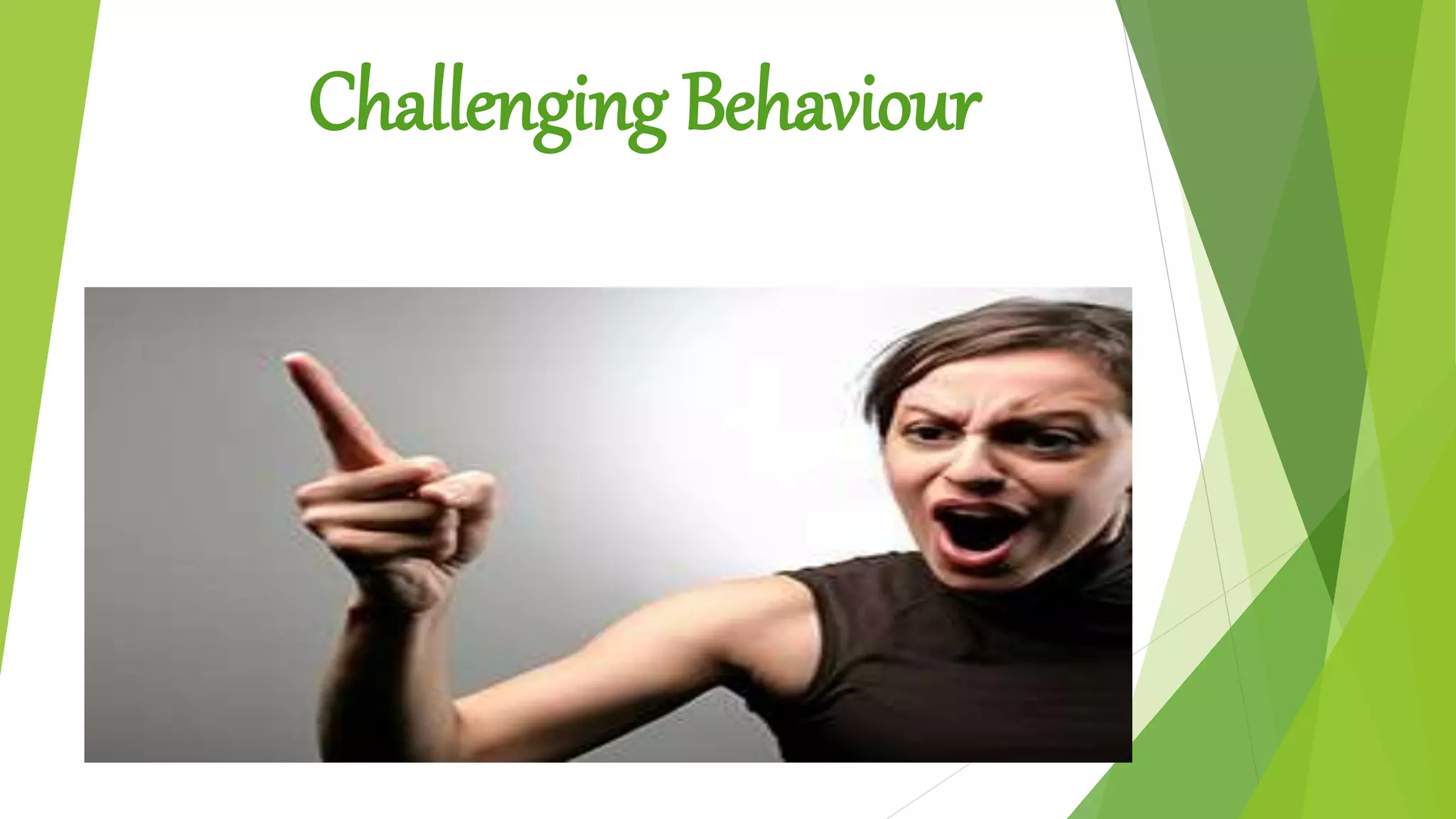
Challenging Behaviour
“It was originated by advocates of people with disabilities who
were tired of terms like "behavior disorder", "disturbed behavior",
"inappropriate behaviour" and "behavior problem". They argued
that such terms wrongly attributed ownership and blame to the
person, as if they carried the behavior around as "symptoms" of
their disability. Instead, the advocates argued, their behavior was
a very understandable response to often unstimulating, inflexible,
dehumanising and unresponsive services. Their behaviours in fact
represented "symptoms" of a "sick system" and in this way
"challenged" the system to improve and to become more
responsive.” Radler 1990
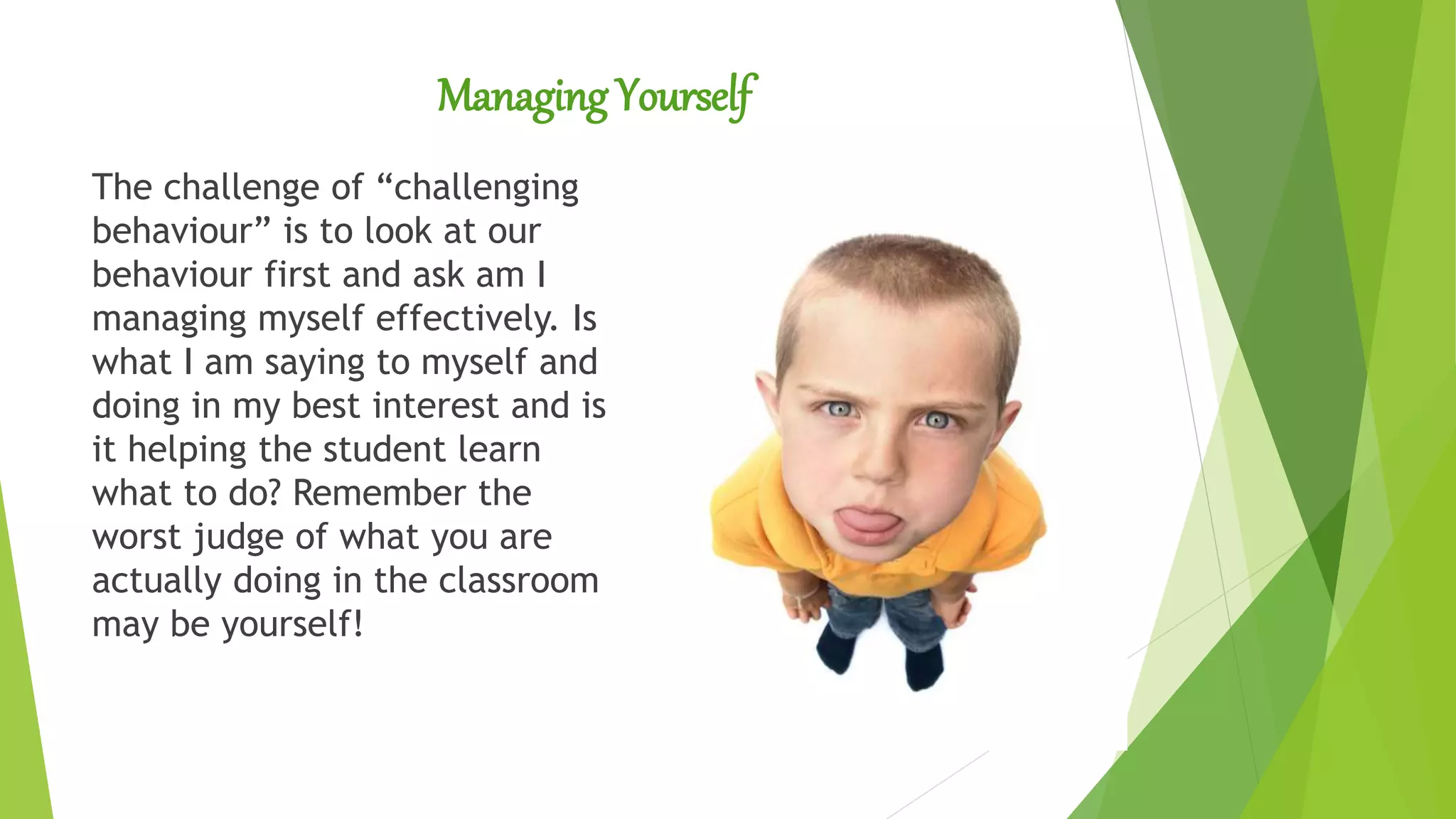
Managing Yourself
The challenge of “challenging
behaviour” is to look at our
behaviour first and ask am I
managing myself effectively. Is
what I am saying to myself and
doing in my best interest and is
it helping the student learn
what to do? Remember the
worst judge of what you are
actually doing in the classroom
may be yourself!
Common Examples of Challenging Behaviour
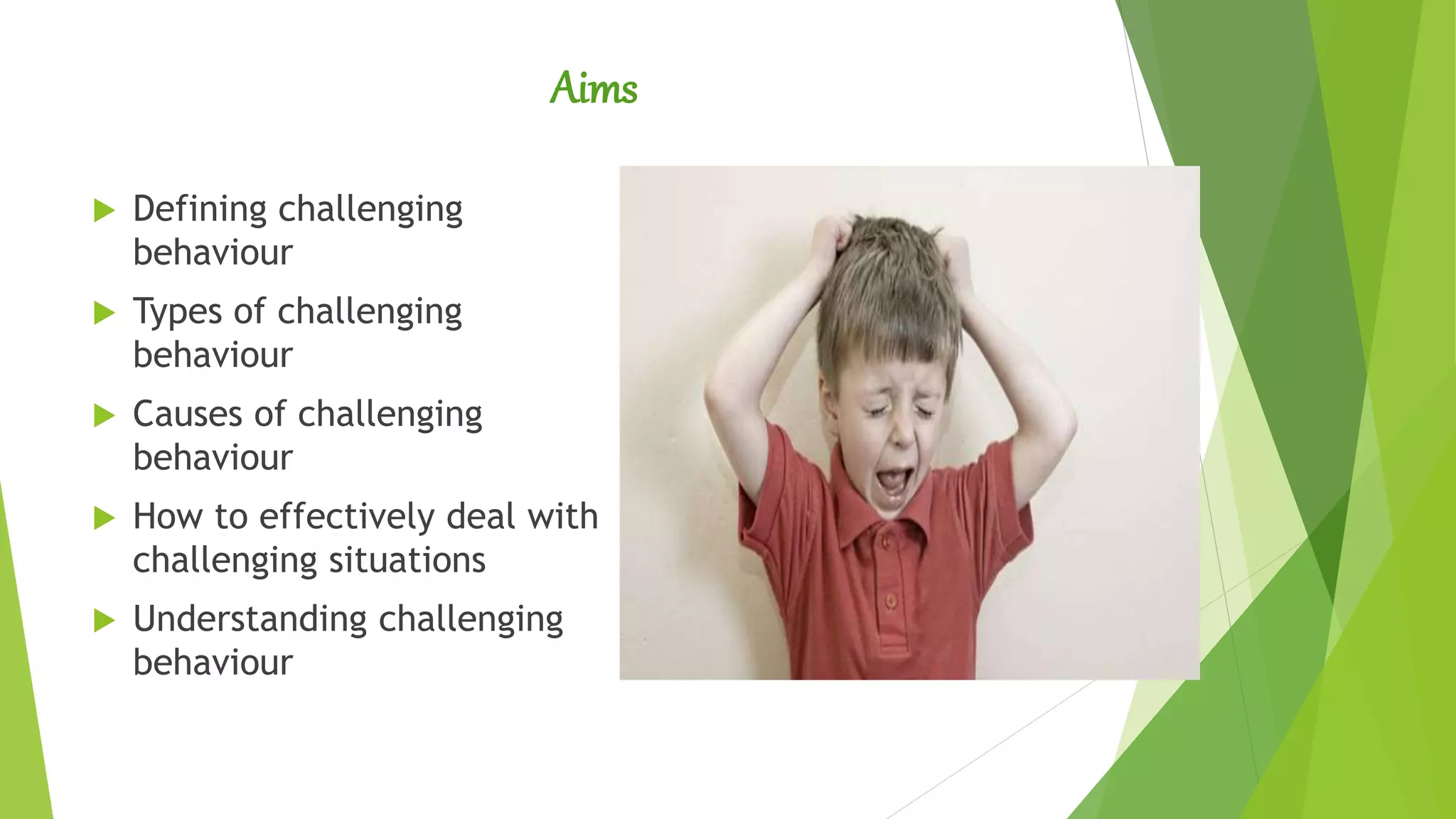
 Self stimulation - eye poking, picking skin, pulling hair,
slapping self.
 Self harm/self injurious behaviour - cutting, biting, head
banging. Abuse towards others - hitting, scratching,
punching, verbal abuse.
 Property destruction - throwing furniture, tearing
magazines, breaking chairs.

Challenging Behaviour

  • 1.
  • 2.
    Introduction This course enablescandidates to have an understanding of how to deal effectively with a situation where someone is presenting them with challenging behaviour. Candidates will benefit from having knowledge of how to recognise signs and symptoms of challenging behaviour within their working environment. Candidates will also be able to identify causes and deal with situations using simple interventions to diffuse difficult and potentially aggressive situations.
  • 3.
    Aims  Defining challenging behaviour Types of challenging behaviour  Causes of challenging behaviour  How to effectively deal with challenging situations  Understanding challenging behaviour
  • 4.
    Challenging Behaviour “It wasoriginated by advocates of people with disabilities who were tired of terms like "behavior disorder", "disturbed behavior", "inappropriate behaviour" and "behavior problem". They argued that such terms wrongly attributed ownership and blame to the person, as if they carried the behavior around as "symptoms" of their disability. Instead, the advocates argued, their behavior was a very understandable response to often unstimulating, inflexible, dehumanising and unresponsive services. Their behaviours in fact represented "symptoms" of a "sick system" and in this way "challenged" the system to improve and to become more responsive.” Radler 1990
  • 5.
    Managing Yourself The challengeof “challenging behaviour” is to look at our behaviour first and ask am I managing myself effectively. Is what I am saying to myself and doing in my best interest and is it helping the student learn what to do? Remember the worst judge of what you are actually doing in the classroom may be yourself!
  • 6.
    Common Examples ofChallenging Behaviour  Self stimulation - eye poking, picking skin, pulling hair, slapping self.  Self harm/self injurious behaviour - cutting, biting, head banging. Abuse towards others - hitting, scratching, punching, verbal abuse.  Property destruction - throwing furniture, tearing magazines, breaking chairs.