child abuse
Definition of child abuse
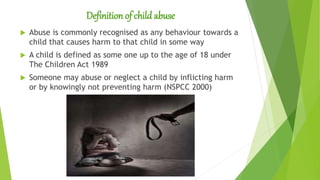
 Abuse is commonly recognised as any behaviour towards a
child that causes harm to that child in some way
 A child is defined as some one up to the age of 18 under
The Children Act 1989
 Someone may abuse or neglect a child by inflicting harm
or by knowingly not preventing harm (NSPCC 2000)
Definition of child abuse
 Children may be abused in the family, community,
institutional setting, or more rarely by a stranger
 Most children know the person abusing them
 There are four categories of abuse; physical, emotional,
sexual & neglect (Working Together to Safeguard Children
2013)
 Significant harm is how The Children Act views &
determines whether there is any harm to a child
Abuse and neglect
 Are forms of maltreatment of a child. Somebody may
abuse or neglect a child by inflicting harm or by failing to
act to prevent harm.
Children may be abused in a family or in an
institutional or community setting by those known to
them or, more rarely, by others (e.g. via the
internet).
They may be abused by an adult or adults or another
child or children.
types of abuse
 Physical
 Emotional (neglect/rejection/terrorisation)
 Neglect (failing to provide love, care, food or physical
circumstances that will allow a child to grow and develop
normally. Intentionally exposing a child to any kind of
danger)
 Sexual
 Of note harm includes impairment suffered from seeing or
hearing ill treatment of another
5 important outcomes
 Essential to a child’s well being
 Staying safe (from abuse, accidents, bullying,
discrimination, crime and antisocial behaviour, having
security, stability and being cared for)
 Being healthy (physically, mentally, sexually)
 Enjoying and achieving (basically being stretched at
school)
 Making a positive contribution (developing self
confidence, choosing not to be involved in crime and
bullying)
 Achieving economic well-being (ready for life of work, but
also being off the poverty line)
Assessment framework
 Where a child or young person is suffering or likely to
suffer significant harm, then the following considerations
need to be made
 1. assessment of child’s developmental needs
 2. parent’s or caregiver’s capacity to meet these needs
 3. wider family and environmental factors
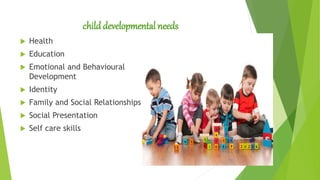
childdevelopmental needs
 Health
 Education
 Emotional and Behavioural
Development
 Identity
 Family and Social Relationships
 Social Presentation
 Self care skills
Parental capacity
 Basic care
 Ensuring Safety
 Emotional warmth
 Stimulation
 Guidance and Boundaries
 Stability
Family andenvironmental factors
 Community Resources
 Family’s Social Integration
 Employment
 Housing
 Wider Family
 Family History and Functioning
Predisposingfactors of child abuse and neglect- child’s
developmental needs
 <1 year of age
 Mental or physical disability
 Behavioural problems
 Prematurity
 Developmental Delay
 Communication

Child protection 5

  • 1.
  • 2.
    Definition of childabuse  Abuse is commonly recognised as any behaviour towards a child that causes harm to that child in some way  A child is defined as some one up to the age of 18 under The Children Act 1989  Someone may abuse or neglect a child by inflicting harm or by knowingly not preventing harm (NSPCC 2000)
  • 3.
    Definition of childabuse  Children may be abused in the family, community, institutional setting, or more rarely by a stranger  Most children know the person abusing them  There are four categories of abuse; physical, emotional, sexual & neglect (Working Together to Safeguard Children 2013)  Significant harm is how The Children Act views & determines whether there is any harm to a child
  • 4.
    Abuse and neglect Are forms of maltreatment of a child. Somebody may abuse or neglect a child by inflicting harm or by failing to act to prevent harm. Children may be abused in a family or in an institutional or community setting by those known to them or, more rarely, by others (e.g. via the internet). They may be abused by an adult or adults or another child or children.
  • 5.
    types of abuse Physical  Emotional (neglect/rejection/terrorisation)  Neglect (failing to provide love, care, food or physical circumstances that will allow a child to grow and develop normally. Intentionally exposing a child to any kind of danger)  Sexual  Of note harm includes impairment suffered from seeing or hearing ill treatment of another
  • 6.
    5 important outcomes Essential to a child’s well being  Staying safe (from abuse, accidents, bullying, discrimination, crime and antisocial behaviour, having security, stability and being cared for)  Being healthy (physically, mentally, sexually)  Enjoying and achieving (basically being stretched at school)  Making a positive contribution (developing self confidence, choosing not to be involved in crime and bullying)  Achieving economic well-being (ready for life of work, but also being off the poverty line)
  • 7.
    Assessment framework  Wherea child or young person is suffering or likely to suffer significant harm, then the following considerations need to be made  1. assessment of child’s developmental needs  2. parent’s or caregiver’s capacity to meet these needs  3. wider family and environmental factors
  • 8.
    childdevelopmental needs  Health Education  Emotional and Behavioural Development  Identity  Family and Social Relationships  Social Presentation  Self care skills
  • 9.
    Parental capacity  Basiccare  Ensuring Safety  Emotional warmth  Stimulation  Guidance and Boundaries  Stability
  • 10.
    Family andenvironmental factors Community Resources  Family’s Social Integration  Employment  Housing  Wider Family  Family History and Functioning
  • 11.
    Predisposingfactors of childabuse and neglect- child’s developmental needs  <1 year of age  Mental or physical disability  Behavioural problems  Prematurity  Developmental Delay  Communication