McClelland’s Achievement
Motivation Theory
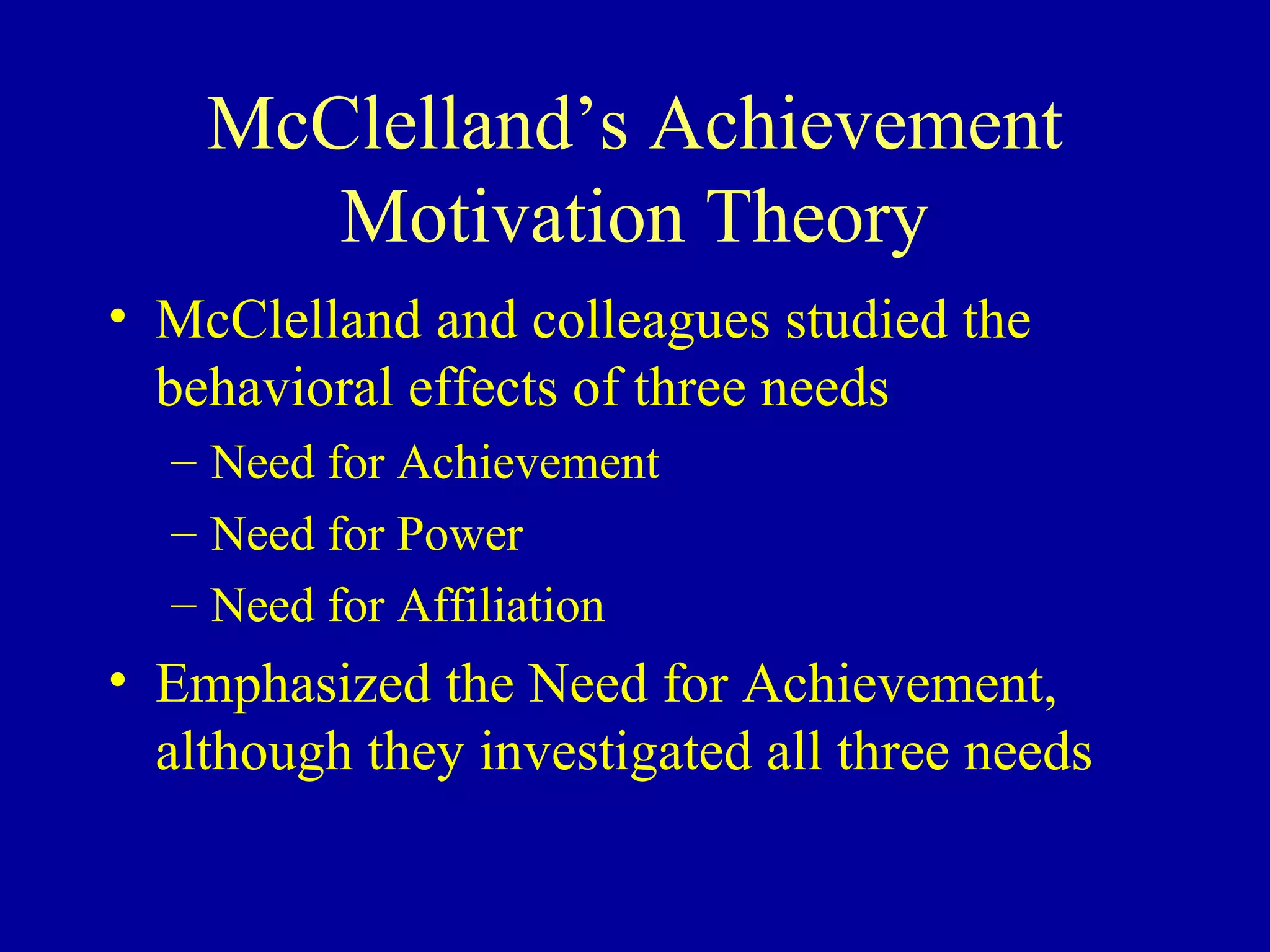
• McClelland and colleagues studied the
behavioral effects of three needs
– Need for Achievement
– Need for Power
– Need for Affiliation
• Emphasized the Need for Achievement,
although they investigated all three needs
McClelland’s Achievement
Motivation Theory (Cont.)
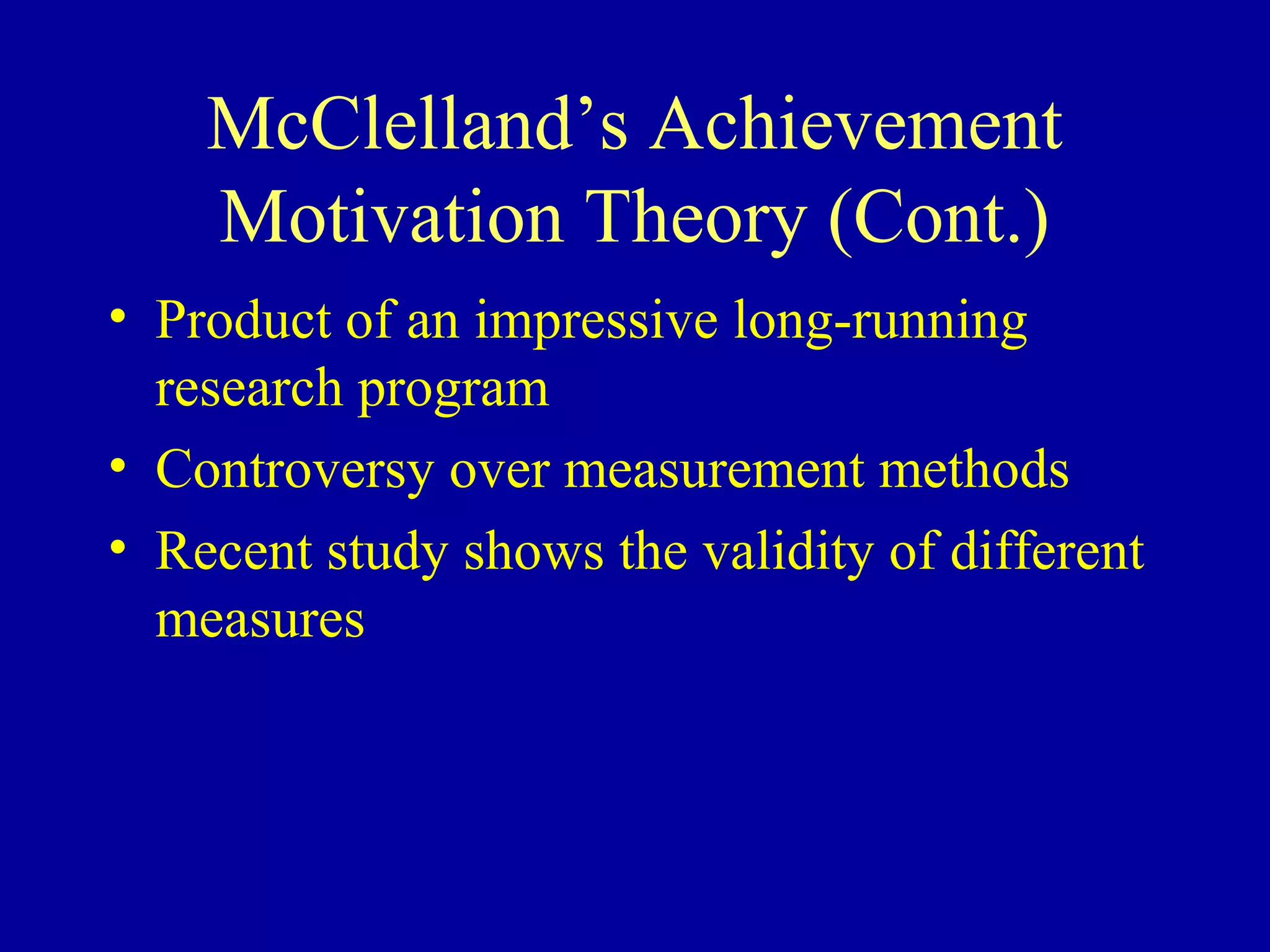
• Product of an impressive long-running
research program
• Controversy over measurement methods
• Recent study shows the validity of different
measures
McClelland’s Achievement
Motivation Theory (Cont.)
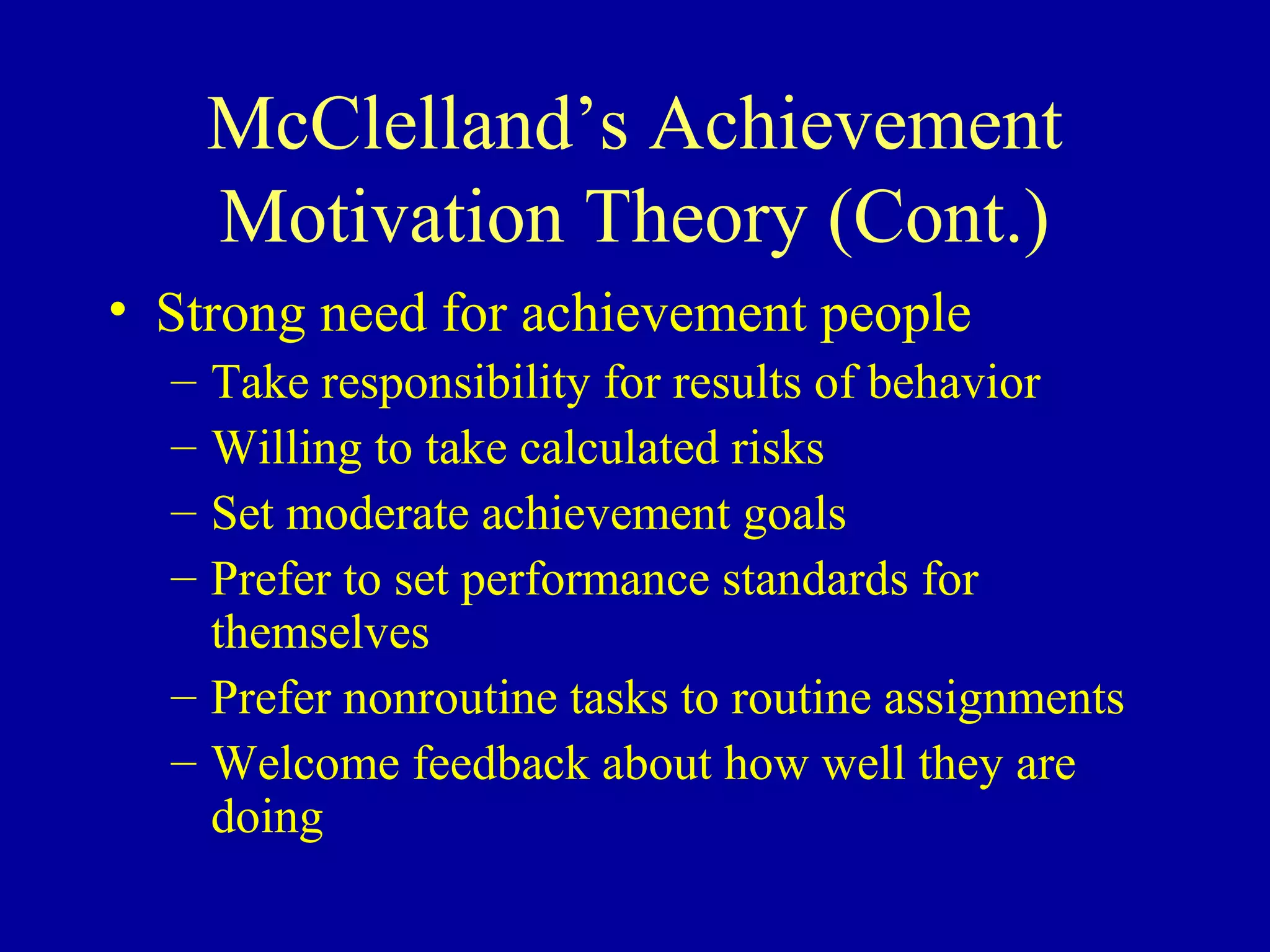
• Strong need for achievement people
– Take responsibility for results of behavior
– Willing to take calculated risks
– Set moderate achievement goals
– Prefer to set performance standards for
themselves
– Prefer nonroutine tasks to routine assignments
– Welcome feedback about how well they are
doing
McClelland’s Achievement
Motivation Theory (Cont.)
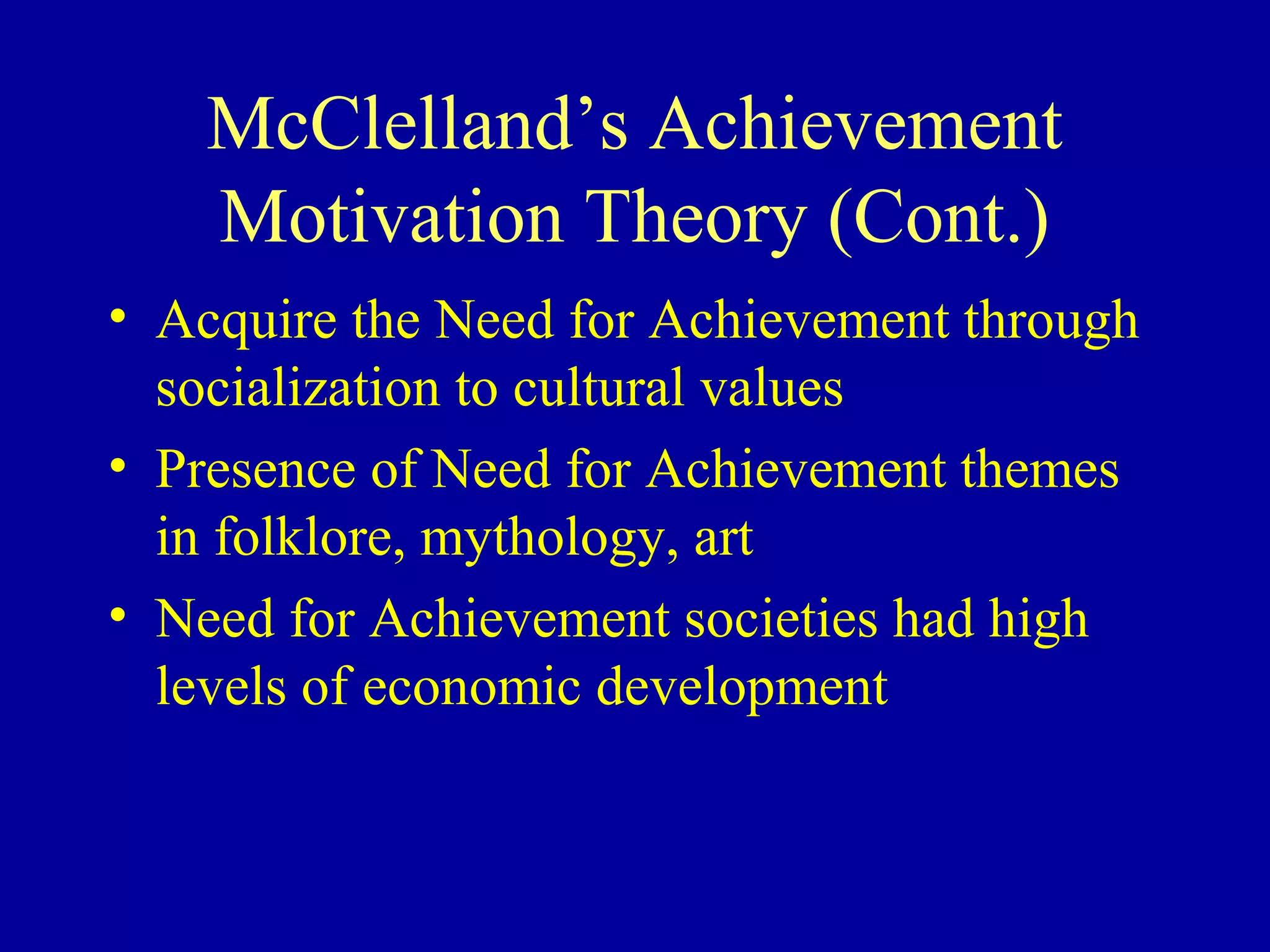
• Acquire the Need for Achievement through
socialization to cultural values
• Presence of Need for Achievement themes
in folklore, mythology, art
• Need for Achievement societies had high
levels of economic development
McClelland’s Achievement
Motivation Theory (Cont.)
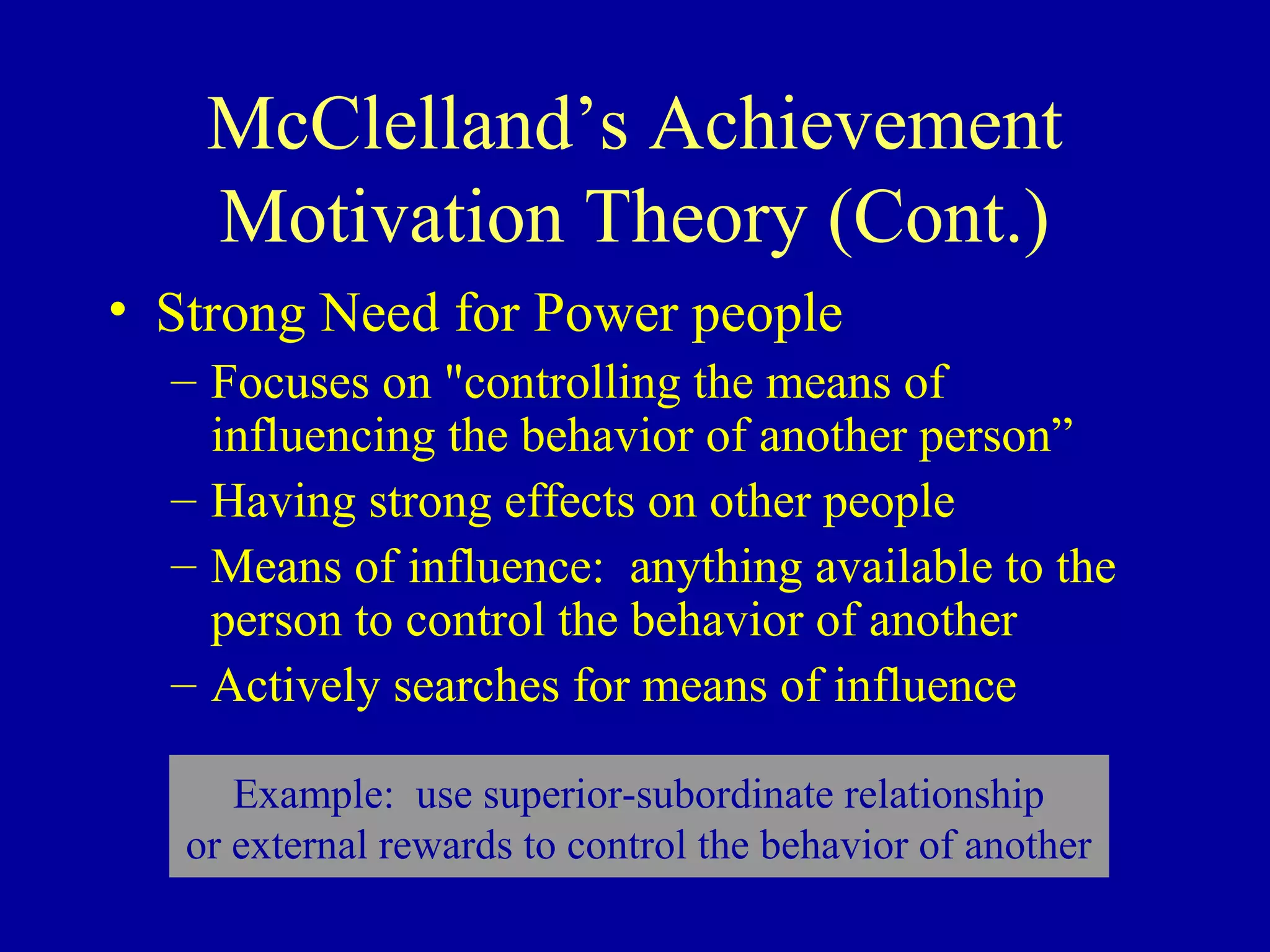
• Strong Need for Power people
– Focuses on "controlling the means of
influencing the behavior of another person”
– Having strong effects on other people
– Means of influence: anything available to the
person to control the behavior of another
– Actively searches for means of influence
Example: use superior-subordinate relationship
or external rewards to control the behavior of another
McClelland’s Achievement
Motivation Theory (Cont.)
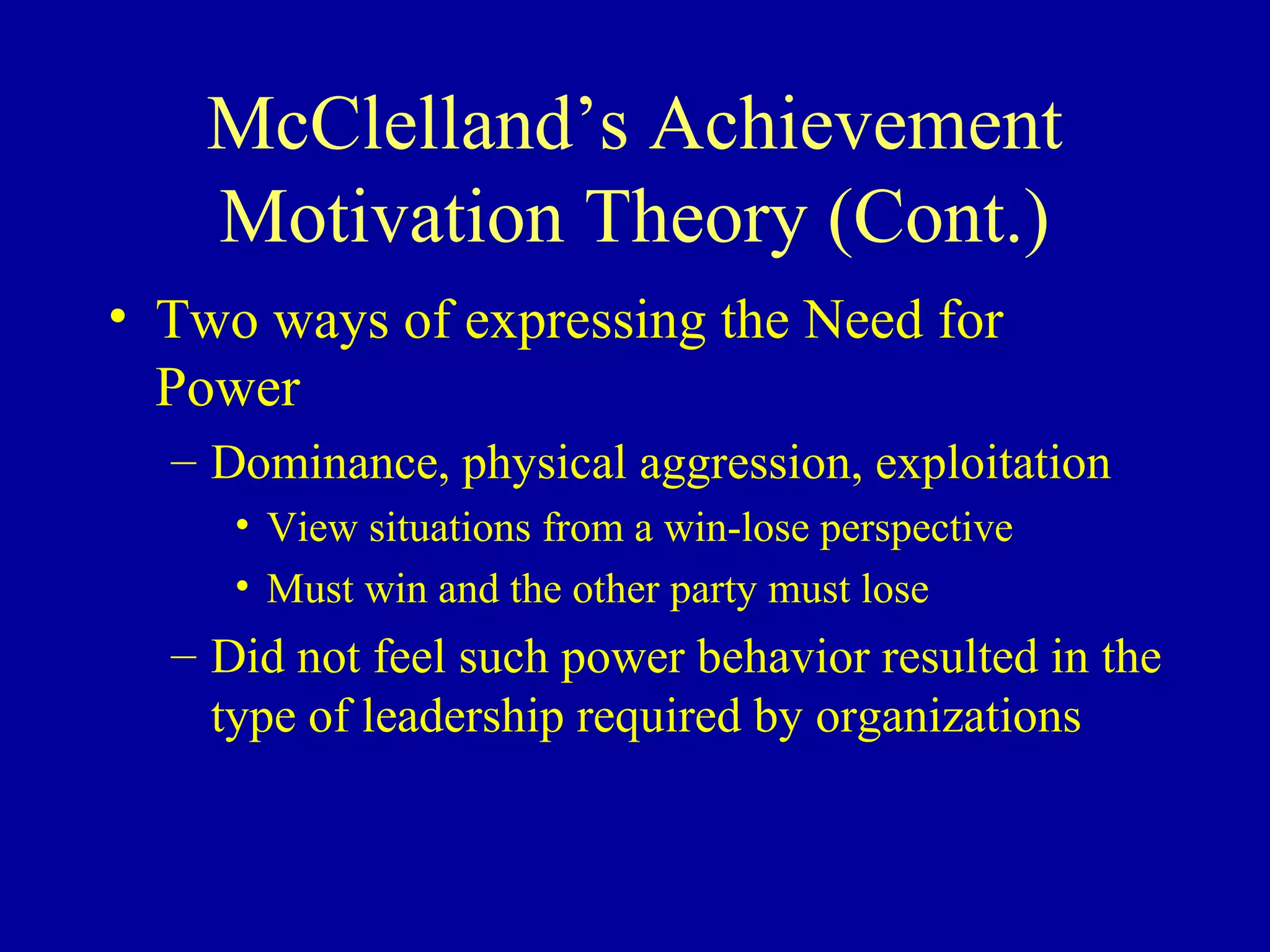
• Two ways of expressing the Need for
Power
– Dominance, physical aggression, exploitation
• View situations from a win-lose perspective
• Must win and the other party must lose
– Did not feel such power behavior resulted in the
type of leadership required by organizations
McClelland’s Achievement
Motivation Theory (Cont.)
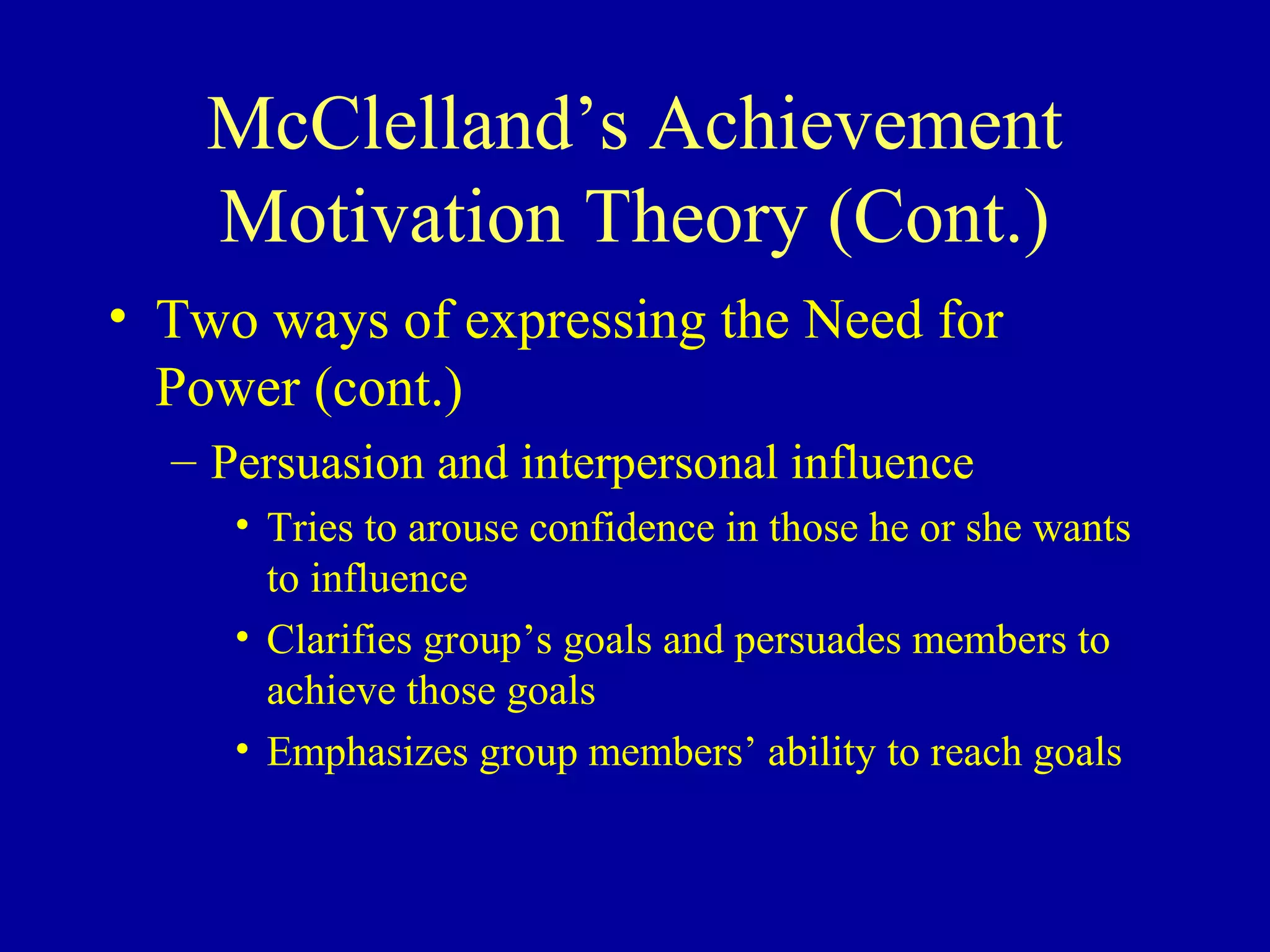
• Two ways of expressing the Need for
Power (cont.)
– Persuasion and interpersonal influence
• Tries to arouse confidence in those he or she wants
to influence
• Clarifies group’s goals and persuades members to
achieve those goals
• Emphasizes group members’ ability to reach goals
McClelland’s Achievement
Motivation Theory (Cont.)
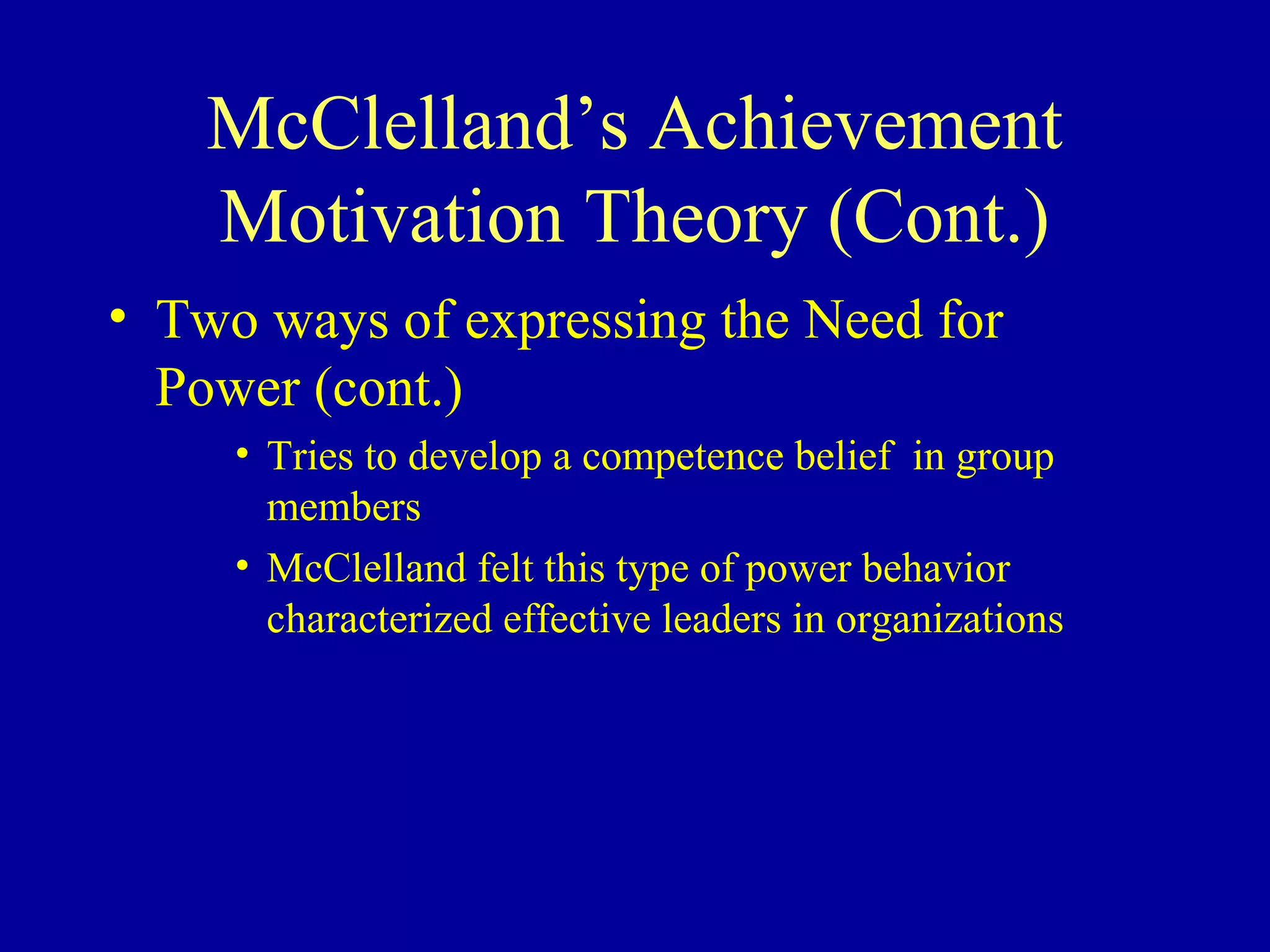
• Two ways of expressing the Need for
Power (cont.)
• Tries to develop a competence belief in group
members
• McClelland felt this type of power behavior
characterized effective leaders in organizations
McClelland’s Achievement
Motivation Theory (Cont.)
• Strong Need for Affiliation people
– Focuses on "establishing, maintaining, and
restoring positive affective relations with
others"
– Want close, warm interpersonal relationships
– Seek the approval of others, especially those
about whom they care
– Like other people, want other people to like
them, and want to be in the company of others
McClelland’s Achievement
Motivation Theory (Cont.)
• Need for achievement and behavior
– Money: important to both high and low
achievers, but for different reasons
• High achiever wants concrete feedback about
performance
• Making a profit, or receiving a bonus, is a statement
about success or failure
• Symbol of success and feedback about job
performance
McClelland’s Achievement
Motivation Theory (Cont.)
• Need for achievement and behavior (cont.)
• High achiever wants a challenging job and
responsibility for work
• Want to feel successful at doing something over
which they have control
McClelland’s Achievement
Motivation Theory (Cont.)
• Need for achievement and behavior (cont.)
– Low achiever views monetary reward as an end
in itself
– Get increased performance from low Need for
Achievement person by rewarding with money
McClelland’s Achievement
Motivation Theory (Cont.)
• Managers and executives usually have a
stronger Need for Achievement than people
in other occupations
• Evidence points to strong Need for
Achievement as an entrepreneur
characteristic
• Nature of Need for Achievement behavior
fits well with such role demands
McClelland’s Achievement
Motivation Theory (Cont.)
• Need for Achievement and Need for Power:
some relationships
– Strong Need for Achievement person
• Task centered
• Future oriented
• Performs to internal standard of excellence
McClelland’s Achievement
Motivation Theory (Cont.)
• Need for Achievement and Need for Power:
some relationships (cont.)
– Strong Need for Power person
• Draws attention
• Risk taking
• Present oriented
• Assesses situations for change potential
McClelland’s Achievement
Motivation Theory (Cont.)
• Need for Achievement and Need for Power:
some relationships (cont.)
– Both types of people important for successful
organizations
– Strong Need for Achievement managers keep
an organization going
– Strong Need for Power people bring dramatic
change and innovation

mcclelland theory of motivation

  • 1.
    McClelland’s Achievement Motivation Theory •McClelland and colleagues studied the behavioral effects of three needs – Need for Achievement – Need for Power – Need for Affiliation • Emphasized the Need for Achievement, although they investigated all three needs
  • 2.
    McClelland’s Achievement Motivation Theory(Cont.) • Product of an impressive long-running research program • Controversy over measurement methods • Recent study shows the validity of different measures
  • 3.
    McClelland’s Achievement Motivation Theory(Cont.) • Strong need for achievement people – Take responsibility for results of behavior – Willing to take calculated risks – Set moderate achievement goals – Prefer to set performance standards for themselves – Prefer nonroutine tasks to routine assignments – Welcome feedback about how well they are doing
  • 4.
    McClelland’s Achievement Motivation Theory(Cont.) • Acquire the Need for Achievement through socialization to cultural values • Presence of Need for Achievement themes in folklore, mythology, art • Need for Achievement societies had high levels of economic development
  • 5.
    McClelland’s Achievement Motivation Theory(Cont.) • Strong Need for Power people – Focuses on "controlling the means of influencing the behavior of another person” – Having strong effects on other people – Means of influence: anything available to the person to control the behavior of another – Actively searches for means of influence Example: use superior-subordinate relationship or external rewards to control the behavior of another
  • 6.
    McClelland’s Achievement Motivation Theory(Cont.) • Two ways of expressing the Need for Power – Dominance, physical aggression, exploitation • View situations from a win-lose perspective • Must win and the other party must lose – Did not feel such power behavior resulted in the type of leadership required by organizations
  • 7.
    McClelland’s Achievement Motivation Theory(Cont.) • Two ways of expressing the Need for Power (cont.) – Persuasion and interpersonal influence • Tries to arouse confidence in those he or she wants to influence • Clarifies group’s goals and persuades members to achieve those goals • Emphasizes group members’ ability to reach goals
  • 8.
    McClelland’s Achievement Motivation Theory(Cont.) • Two ways of expressing the Need for Power (cont.) • Tries to develop a competence belief in group members • McClelland felt this type of power behavior characterized effective leaders in organizations
  • 9.
    McClelland’s Achievement Motivation Theory(Cont.) • Strong Need for Affiliation people – Focuses on "establishing, maintaining, and restoring positive affective relations with others" – Want close, warm interpersonal relationships – Seek the approval of others, especially those about whom they care – Like other people, want other people to like them, and want to be in the company of others
  • 10.
    McClelland’s Achievement Motivation Theory(Cont.) • Need for achievement and behavior – Money: important to both high and low achievers, but for different reasons • High achiever wants concrete feedback about performance • Making a profit, or receiving a bonus, is a statement about success or failure • Symbol of success and feedback about job performance
  • 11.
    McClelland’s Achievement Motivation Theory(Cont.) • Need for achievement and behavior (cont.) • High achiever wants a challenging job and responsibility for work • Want to feel successful at doing something over which they have control
  • 12.
    McClelland’s Achievement Motivation Theory(Cont.) • Need for achievement and behavior (cont.) – Low achiever views monetary reward as an end in itself – Get increased performance from low Need for Achievement person by rewarding with money
  • 13.
    McClelland’s Achievement Motivation Theory(Cont.) • Managers and executives usually have a stronger Need for Achievement than people in other occupations • Evidence points to strong Need for Achievement as an entrepreneur characteristic • Nature of Need for Achievement behavior fits well with such role demands
  • 14.
    McClelland’s Achievement Motivation Theory(Cont.) • Need for Achievement and Need for Power: some relationships – Strong Need for Achievement person • Task centered • Future oriented • Performs to internal standard of excellence
  • 15.
    McClelland’s Achievement Motivation Theory(Cont.) • Need for Achievement and Need for Power: some relationships (cont.) – Strong Need for Power person • Draws attention • Risk taking • Present oriented • Assesses situations for change potential
  • 16.
    McClelland’s Achievement Motivation Theory(Cont.) • Need for Achievement and Need for Power: some relationships (cont.) – Both types of people important for successful organizations – Strong Need for Achievement managers keep an organization going – Strong Need for Power people bring dramatic change and innovation