ESSENTIALS OF  BUSINESS COMMUNICATION 4 TH  CANADIAN EDITION Mary Ellen Guffey, Brendan Nagle ISBN 0-17-622414-9
CHAPTER 1 Facing Today’s Communication Challenges Ch. 1-
TRENDS IN THE NEW WORKPLACE Flattened management hierarchies More participatory management Increased emphasis on teams Heightened global competition Innovative communication technologies New work environments Focus on information as a corporate asset Ch. 1-
TRENDS IN THE NEW WORKPLACE Ch. 1- Communication Skills: Essential for succeeding in the new  world of work.
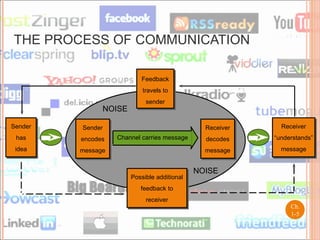
THE PROCESS OF COMMUNICATION Ch. 1- Receiver “ understands” message Sender has idea Possible additional feedback to receiver Sender encodes message Receiver decodes message Channel carries message Feedback travels to sender NOISE NOISE
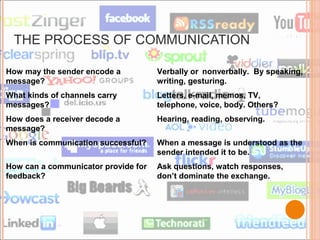
THE PROCESS OF COMMUNICATION Ch. 1-
BARRIERS TO EFFECTIVE LISTENING Physical barriers—hearing disabilities, noisy surroundings Psychological barriers—tuning out ideas that counter our barriers Language problems—unfamiliar or charged words Nonverbal distractions—clothing, mannerisms, appearance Ch. 1-
BARRIERS TO EFFECTIVE LISTENING Thought speed—our minds process thoughts faster than speakers express them Faking attention—pretending to listen Grandstanding—talking all the time or listening only for the next pause Ch. 1-
TEN MISCONCEPTIONS  ABOUT LISTENING Listening is a matter of intelligence. Fact : Careful listening is a learned behaviour. Speaking is more important than listening in the communication process. Fact : Speaking and listening are equally important. Listening is easy and requires little energy. Fact : Active listeners incur physiological changes similar to a person engaged in intense physical activity such as long distance running. Listening and hearing are the same process. Fact : Listening is a conscious, selective process. Hearing is an involuntary act. Speakers are able to command listening. Fact : Speakers cannot make a person actually listen. Ch. 1-
TEN MISCONCEPTIONS  ABOUT LISTENING Hearing ability determines listening ability. Fact : Listening happens mentally—between the ears. Speakers are totally responsible for communication success. Fact : Communication is a two-way street. Listening is only a matter of understanding a speaker’s words. Fact :   Nonverbal signals also help listeners gain understanding. Daily practice eliminates the need for listening training. Fact : Without effective listening training, most practice merely reinforces negative behaviours. Competence in listening develops naturally. Fact : Untrained people listen at only 25 percent efficiency. Ch. 1-
TIPS FOR BECOMING AN ACTIVE LISTENER Stop talking. Control your surroundings. Establish a receptive mind-set. Listen for main points. Capitalize on lag time. Listen between the lines. Ch. 1-
TIPS FOR BECOMING AN ACTIVE LISTENER Judge ideas, not appearances. Hold your fire. Take selective notes. Provide feedback. Ch. 1-
NONVERBAL COMMUNICATION The eyes, face, and body send silent messages. Eye contact Facial expression Posture and gestures Appearance sends silent messages. Appearance of business documents Appearance  of people Ch. 1-
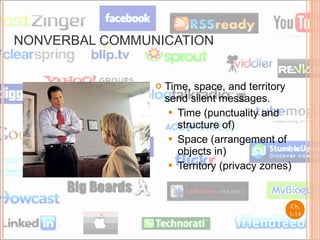
NONVERBAL COMMUNICATION Time, space, and territory send silent messages. Time (punctuality and structure of) Space (arrangement of objects in) Territory (privacy zones) Ch. 1-
TIPS FOR IMPROVING YOUR NONVERBAL SKILLS Establish and maintain eye contact. Use posture to show interest. Improve your decoding skills. Probe for more information. Avoid assigning nonverbal meanings out of context. Associate with people from diverse cultures. Appreciate the power of appearance. Observe yourself on videotape. Enlist friends and family. Ch. 1-
CULTURE AND COMMUNICATION Good communication demands special sensitivity and skills when communicators are from different cultures. Ch. 1-
CULTURE AND COMMUNICATION Key North American Beliefs: Individualism Initiative, self-assertion, personal achievement Informality Less emphasis on rituals, ceremonies, rank; preference for informal dress, direct business dealings Direct communication style Straightforward, literal, suspicious of evasiveness Importance of time Precious, correlates with productivity Ch. 1-
CULTURAL VALUES COMPARISON Compared to Americans, Canadians tend to be more collective conforming  conservative supportive of civil and political institutions and collective decision making Ch. 1-
REFLECTING CULTURAL VALUES What do these common expressions indicate about this culture and what it values? “ The squeaking wheel gets the grease.” “ Waste not, want not.” “ He who holds the gold makes the rules.” “ If at first you don’t succeed, try, try again.” “ The early bird gets the worm.” Ch. 1-
REFLECTING CULTURAL VALUES What do these expressions indicate about these cultures and what they value? “ No one is either rich or poor who has not helped himself to be so.” (German) “ Words do not make flour.” (Italian) “ The nail that sticks up gets pounded down.” (Japanese) Ch. 1-
CULTURE AND COMMUNICATION Misconceptions and misunderstanding between business communicators can be caused by: Ethnocentrism belief in the superiority of one’s own culture and group Stereotype  an oversimplified behavioural pattern applied to an entire group Ch. 1-
CULTURE AND COMMUNICATION Overcome misunderstanding by developing tolerance. Empathize with others. Try to see the world through another person’s eyes. Accept others’ contributions in solving problems. Ch. 1-
IMPROVING COMMUNICATION WITH MULTICULTURAL AUDIENCES Oral Messages Use simple English. Speak slowly and enunciate clearly. Observe eye messages. Encourage accurate feedback. Check frequently for comprehension. Accept blame. Listen without interrupting. Remember to smile! Follow up in writing. Ch. 1-
IMPROVING COMMUNICATION WITH MULTICULTURAL AUDIENCES Written Messages Adopt local formats. Consider using a translator. Use short sentences and short paragraphs. Avoid ambiguous expressions. Cite numbers carefully. Ch. 1-
EFFECTIVE COMMUNICATION WITH DIVERSE WORKPLACE AUDIENCES Understand the value of differences. Don’t expect total conformity. Create zero tolerance for bias and stereotypes. Practise focused, thoughtful, and open-minded listening. Invite, use, and give feedback. Make fewer workplace assumptions. Learn about your own cultural self. Learn about other cultures and identity groups. Seek common ground. Ch. 1-

Facing Today's Communication Challenges

  • 1.
    ESSENTIALS OF BUSINESS COMMUNICATION 4 TH CANADIAN EDITION Mary Ellen Guffey, Brendan Nagle ISBN 0-17-622414-9
  • 2.
    CHAPTER 1 FacingToday’s Communication Challenges Ch. 1-
  • 3.
    TRENDS IN THENEW WORKPLACE Flattened management hierarchies More participatory management Increased emphasis on teams Heightened global competition Innovative communication technologies New work environments Focus on information as a corporate asset Ch. 1-
  • 4.
    TRENDS IN THENEW WORKPLACE Ch. 1- Communication Skills: Essential for succeeding in the new world of work.
  • 5.
    THE PROCESS OFCOMMUNICATION Ch. 1- Receiver “ understands” message Sender has idea Possible additional feedback to receiver Sender encodes message Receiver decodes message Channel carries message Feedback travels to sender NOISE NOISE
  • 6.
    THE PROCESS OFCOMMUNICATION Ch. 1-
  • 7.
    BARRIERS TO EFFECTIVELISTENING Physical barriers—hearing disabilities, noisy surroundings Psychological barriers—tuning out ideas that counter our barriers Language problems—unfamiliar or charged words Nonverbal distractions—clothing, mannerisms, appearance Ch. 1-
  • 8.
    BARRIERS TO EFFECTIVELISTENING Thought speed—our minds process thoughts faster than speakers express them Faking attention—pretending to listen Grandstanding—talking all the time or listening only for the next pause Ch. 1-
  • 9.
    TEN MISCONCEPTIONS ABOUT LISTENING Listening is a matter of intelligence. Fact : Careful listening is a learned behaviour. Speaking is more important than listening in the communication process. Fact : Speaking and listening are equally important. Listening is easy and requires little energy. Fact : Active listeners incur physiological changes similar to a person engaged in intense physical activity such as long distance running. Listening and hearing are the same process. Fact : Listening is a conscious, selective process. Hearing is an involuntary act. Speakers are able to command listening. Fact : Speakers cannot make a person actually listen. Ch. 1-
  • 10.
    TEN MISCONCEPTIONS ABOUT LISTENING Hearing ability determines listening ability. Fact : Listening happens mentally—between the ears. Speakers are totally responsible for communication success. Fact : Communication is a two-way street. Listening is only a matter of understanding a speaker’s words. Fact : Nonverbal signals also help listeners gain understanding. Daily practice eliminates the need for listening training. Fact : Without effective listening training, most practice merely reinforces negative behaviours. Competence in listening develops naturally. Fact : Untrained people listen at only 25 percent efficiency. Ch. 1-
  • 11.
    TIPS FOR BECOMINGAN ACTIVE LISTENER Stop talking. Control your surroundings. Establish a receptive mind-set. Listen for main points. Capitalize on lag time. Listen between the lines. Ch. 1-
  • 12.
    TIPS FOR BECOMINGAN ACTIVE LISTENER Judge ideas, not appearances. Hold your fire. Take selective notes. Provide feedback. Ch. 1-
  • 13.
    NONVERBAL COMMUNICATION Theeyes, face, and body send silent messages. Eye contact Facial expression Posture and gestures Appearance sends silent messages. Appearance of business documents Appearance of people Ch. 1-
  • 14.
    NONVERBAL COMMUNICATION Time,space, and territory send silent messages. Time (punctuality and structure of) Space (arrangement of objects in) Territory (privacy zones) Ch. 1-
  • 15.
    TIPS FOR IMPROVINGYOUR NONVERBAL SKILLS Establish and maintain eye contact. Use posture to show interest. Improve your decoding skills. Probe for more information. Avoid assigning nonverbal meanings out of context. Associate with people from diverse cultures. Appreciate the power of appearance. Observe yourself on videotape. Enlist friends and family. Ch. 1-
  • 16.
    CULTURE AND COMMUNICATIONGood communication demands special sensitivity and skills when communicators are from different cultures. Ch. 1-
  • 17.
    CULTURE AND COMMUNICATIONKey North American Beliefs: Individualism Initiative, self-assertion, personal achievement Informality Less emphasis on rituals, ceremonies, rank; preference for informal dress, direct business dealings Direct communication style Straightforward, literal, suspicious of evasiveness Importance of time Precious, correlates with productivity Ch. 1-
  • 18.
    CULTURAL VALUES COMPARISONCompared to Americans, Canadians tend to be more collective conforming conservative supportive of civil and political institutions and collective decision making Ch. 1-
  • 19.
    REFLECTING CULTURAL VALUESWhat do these common expressions indicate about this culture and what it values? “ The squeaking wheel gets the grease.” “ Waste not, want not.” “ He who holds the gold makes the rules.” “ If at first you don’t succeed, try, try again.” “ The early bird gets the worm.” Ch. 1-
  • 20.
    REFLECTING CULTURAL VALUESWhat do these expressions indicate about these cultures and what they value? “ No one is either rich or poor who has not helped himself to be so.” (German) “ Words do not make flour.” (Italian) “ The nail that sticks up gets pounded down.” (Japanese) Ch. 1-
  • 21.
    CULTURE AND COMMUNICATIONMisconceptions and misunderstanding between business communicators can be caused by: Ethnocentrism belief in the superiority of one’s own culture and group Stereotype an oversimplified behavioural pattern applied to an entire group Ch. 1-
  • 22.
    CULTURE AND COMMUNICATIONOvercome misunderstanding by developing tolerance. Empathize with others. Try to see the world through another person’s eyes. Accept others’ contributions in solving problems. Ch. 1-
  • 23.
    IMPROVING COMMUNICATION WITHMULTICULTURAL AUDIENCES Oral Messages Use simple English. Speak slowly and enunciate clearly. Observe eye messages. Encourage accurate feedback. Check frequently for comprehension. Accept blame. Listen without interrupting. Remember to smile! Follow up in writing. Ch. 1-
  • 24.
    IMPROVING COMMUNICATION WITHMULTICULTURAL AUDIENCES Written Messages Adopt local formats. Consider using a translator. Use short sentences and short paragraphs. Avoid ambiguous expressions. Cite numbers carefully. Ch. 1-
  • 25.
    EFFECTIVE COMMUNICATION WITHDIVERSE WORKPLACE AUDIENCES Understand the value of differences. Don’t expect total conformity. Create zero tolerance for bias and stereotypes. Practise focused, thoughtful, and open-minded listening. Invite, use, and give feedback. Make fewer workplace assumptions. Learn about your own cultural self. Learn about other cultures and identity groups. Seek common ground. Ch. 1-