Chapter 1
  Teaching Students with
Special Educational Needs:
     Professional Roles and
        Responsibilities

  Based on: Special Education for Today’s Teachers: An Introduction,
    by Rosenberg, Westling, and McLeskey (second edition)
Chapter 1 Questions
• What is special education about “special education?”
• Who do special education teachers teach?
• Where do they teach?
• What other professionals provide services to students
  with special needs?
• What are the keys to be a successful teacher for all
  students?
Perspectives on Special Education
• Parent: A hard-fought civil rights victory for
  access to a free appropriate education.
• Administrator: Concern about expense of
  delivering services as required by federal law.
• General Ed Teacher: Inclusion of students with
  disabilities who need content enhancements.
• Special Ed Teacher: Providing individualized
  instruction and support to students.
• Student: Receiving assistance and equipment that
  allow participation in activities with classmates.
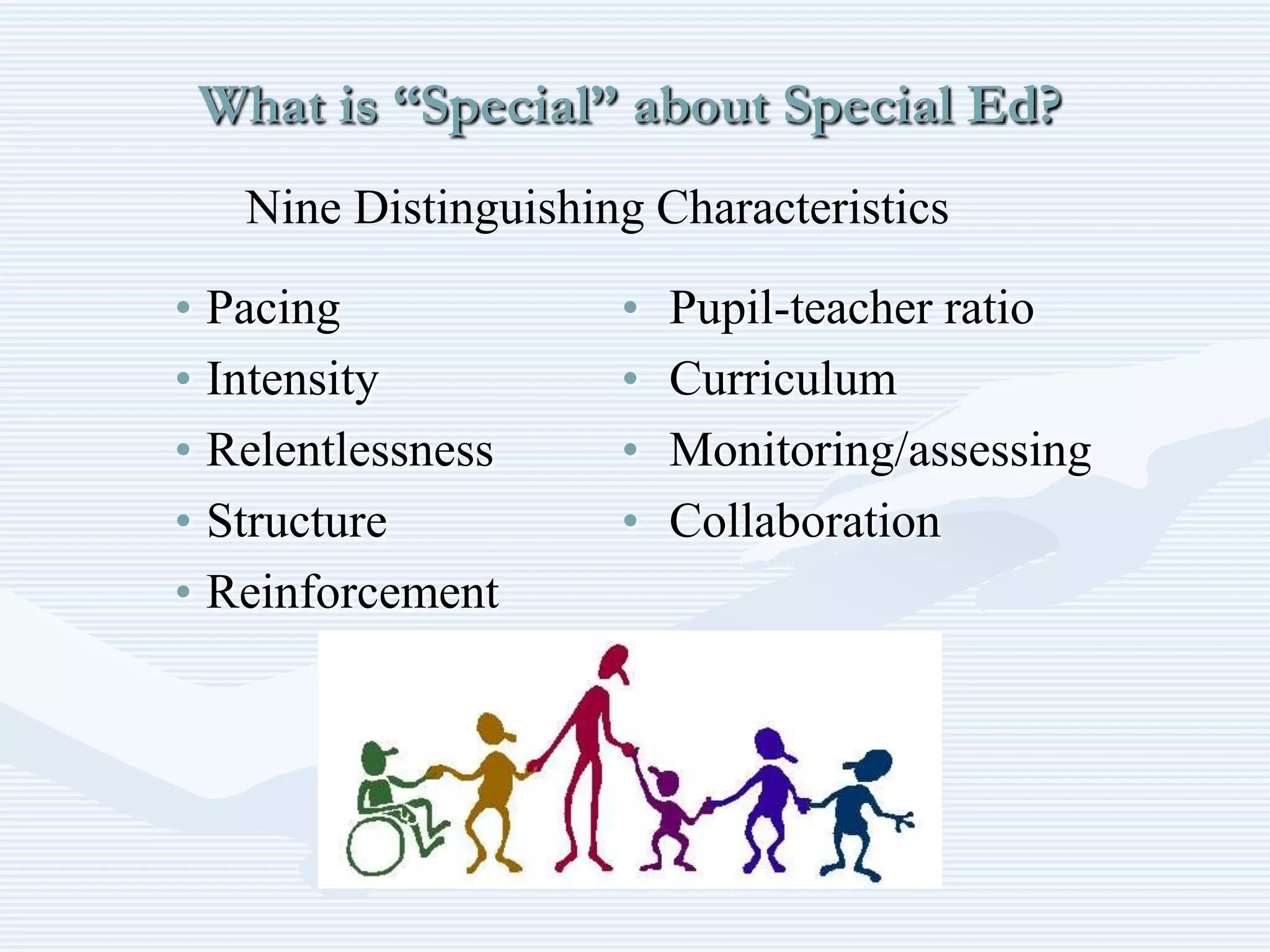
What is “Special” about Special Ed?
   Nine Distinguishing Characteristics

• Pacing             •   Pupil-teacher ratio
• Intensity          •   Curriculum
• Relentlessness     •   Monitoring/assessing
• Structure          •   Collaboration
• Reinforcement
Public School Disability Categories

•   Autism                         • Multiple disabilities
•   Deaf-blindness                 • Orthopedic impairments
•   Deafness                       • Other health impairments
•   Emotional disturbance          • Speech or language
•   Hearing impairments              impairments
•   Learning disabilities          • Traumatic brain injury
•   Intellectual disability        • Visual impairments and
    (i.e., mental retardation)       blindness

        How many students with disabilities receive services?
Special Education Settings
• General education classroom (co-teaching)
• Part-time special class/resource room
• Full-time self-contained special classroom in
  regular school
• Full-time, self-contained class in separate school
  for students with disabilities
• Residential school for students with disabilities
• Student’s home or hospital
What percentage of students with disabilities are educated in regular
classrooms?
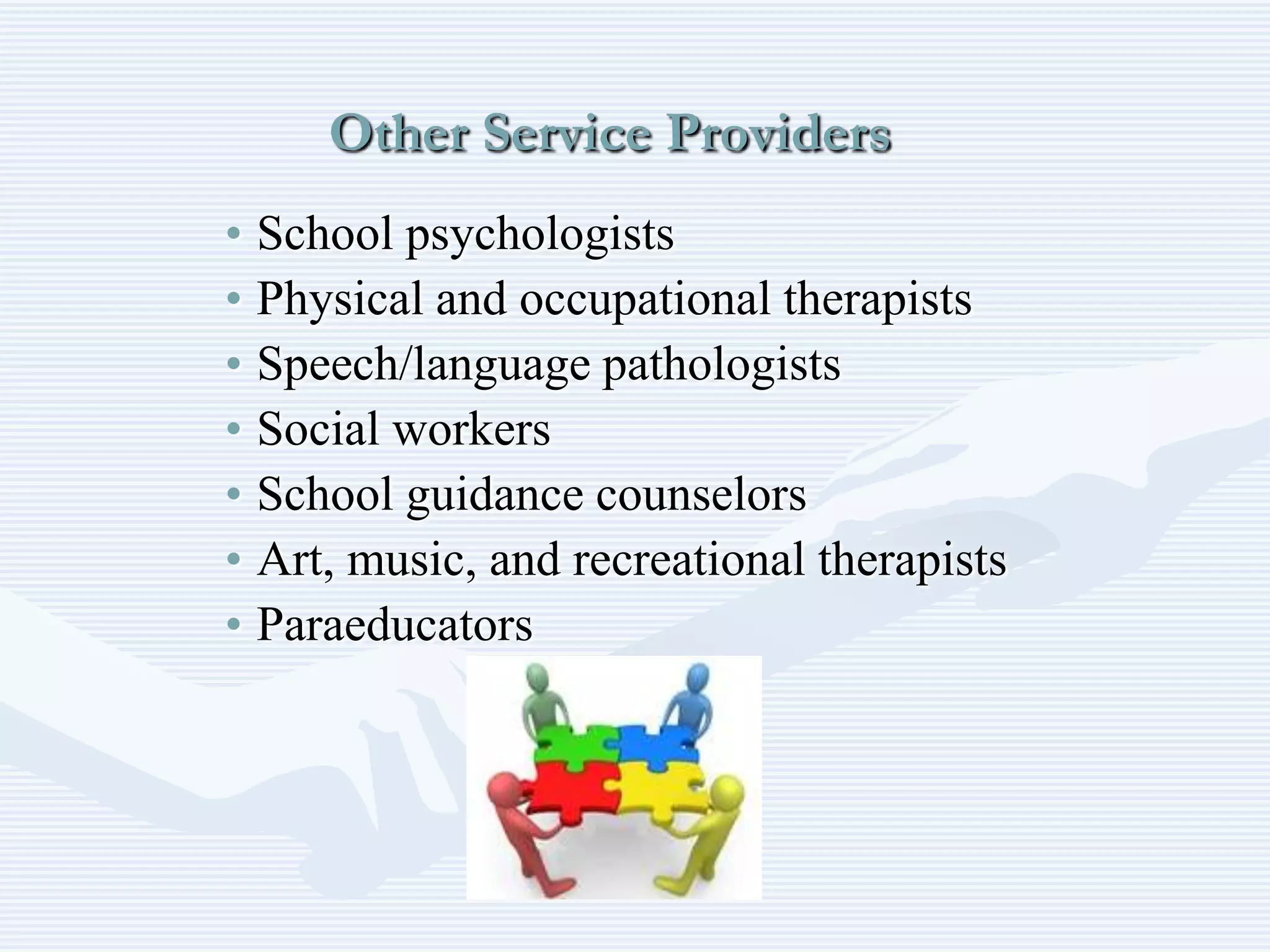
Other Service Providers
• School psychologists
• Physical and occupational therapists
• Speech/language pathologists
• Social workers
• School guidance counselors
• Art, music, and recreational therapists
• Paraeducators
Being a Good Teacher of ALL Students
  • Respect and value human differences
  • Commitment and positive attitude
  • Caring, fairness, and respect
  • Enthusiasm, motivation, and dedication
  • Personal teaching efficacy
  • Evidence-based teaching approaches