
PARENT-
PROFESSIONAL
RELATIONSHIP
Abdul Aziz Ch
Certified Success Coach
Certified Youth Trainer
Certified Wellness Coach
Special Educationist
Parent participation
 The involvement of parents in the education of
children with special needs is considered not
only a right, but also a necessary component
of the delivery of effective and efficient
provision
Parent participation
Parent participation in the special education
decision-making process is vitally important.
The most important thing parents can do is
ensure they are involved with and take an
active role as a member of the Individual
Education Program (IEP) team that determines
a student's path.
Parents May Underestimate Their Importance to the IEP
Team
 Despite their importance in education decision
making, parents sometimes feel overwhelmed
by the IEP team process.
 They may believe team members perceive
them as less knowledgeable about teaching or
as obstacles to the decision-making process,
especially if they disagree with the educators.
Parents Provide Critical Input
 Parents and guardians know their children
better than anyone else and have the most
complete understanding of a child's physical,
social, developmental, and family history.
 Parents are the only adults in the educational
process who have been and will continue to be
deeply involved throughout the child's school
career; and while they may not be educators
themselves, they bring their years of
experience in other professions and aspects of
life to the process.
Parents Work More Closely With
Their Children Than Other Adults
Can
 While kids attend school about six hours a day,
they only have a few minutes of teachers'
undivided attention in a class.
 Parents have the opportunity to sit side-by-
side with them, working through homework
and other learning activities for extended
periods.
 Parents may be the only adults who closely
observe students' work and get feedback from
their children. Consequently, no one else has
the perspective of a parent in a meeting.
The Role of the Parent on the IEP
Team
 Parents are vital to the IEP team process.
They provide information on the child's
strengths and weaknesses at home,
background information on the child's history
and development, and information on any
family factors that may affect the child's
learning.
Parents Provide Comprehensive
Insight for Transition Meetings
 Transition meetings are held to discuss
movement from one school level to another,
from one program to another.
 Only the parent accompanies the child
throughout these important school and life
transitions. The parents' input at each
transition can ensure that appropriate services
and supports are in place and increase the
chances of the child's success in the new
program.
Parents Are the Best Advocates for
Their Child
 There is no one as interested in and motivated
to see a child succeed and thrive than her own
parents, and this alone places the parent in a
crucial role on the IEP team.
Successful Parenting
 Celebrate the Positive
 Take Time to Talk and Really Listen
 Use Discipline, Not Punishment
 Teach Responsibility Constructively
 Separate the Child from the Behavior
 Actions Speak Louder than Words
 Use Natural and Logical Consequences
 . Spend Quality Time with Your Child and Leave the Stress of
Work at Work
 Give Children Input into the Decisions that Affect Them and
Hold Family Meetings
 Be Kind Although Firm and Consistent
Parenting Tips for Children with Special
Needs
 Stop blaming yourself:
 Educate yourself
 Try natural methods of treatment first:
 Take care of yourself:
 Enjoy your child:
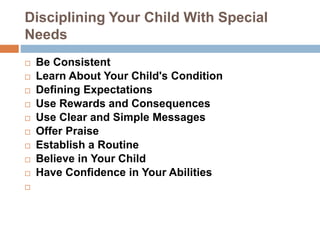
Disciplining Your Child With Special
Needs
 Be Consistent
 Learn About Your Child's Condition
 Defining Expectations
 Use Rewards and Consequences
 Use Clear and Simple Messages
 Offer Praise
 Establish a Routine
 Believe in Your Child
 Have Confidence in Your Abilities

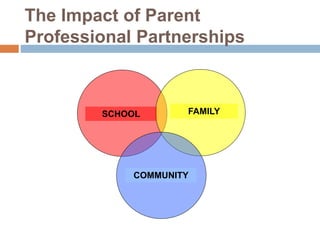
The Impact of Parent
Professional Partnerships
SCHOOL FAMILY
COMMUNITY
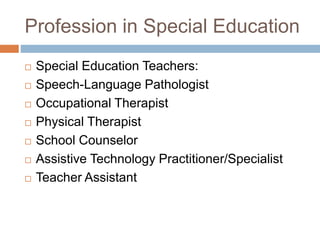
Profession in Special Education
 Special Education Teachers:
 Speech-Language Pathologist
 Occupational Therapist
 Physical Therapist
 School Counselor
 Assistive Technology Practitioner/Specialist
 Teacher Assistant
Conclusion:
 Teachers who value partnership work to make it happen.
They realise that there is nothing to lose and much to gain by
sharing and collaborating. They learn to listen carefully and
attend courses that enable them to become more effective
communicators.
 They value the input of parents and other professionals and
seek to keep the focus on the students and their needs and
strengths.
 Some parents of children with special needs are
becoming tired about the notion of parent
professional partnership as they do not believe
professionals are open or willing to change.
 Partnership between home and school, which impacts
so strongly on the child .
Parent  professional relationship

Parent professional relationship

  • 1.
    PARENT- PROFESSIONAL RELATIONSHIP Abdul Aziz Ch CertifiedSuccess Coach Certified Youth Trainer Certified Wellness Coach Special Educationist
  • 2.
    Parent participation  Theinvolvement of parents in the education of children with special needs is considered not only a right, but also a necessary component of the delivery of effective and efficient provision
  • 3.
    Parent participation Parent participationin the special education decision-making process is vitally important. The most important thing parents can do is ensure they are involved with and take an active role as a member of the Individual Education Program (IEP) team that determines a student's path.
  • 4.
    Parents May UnderestimateTheir Importance to the IEP Team  Despite their importance in education decision making, parents sometimes feel overwhelmed by the IEP team process.  They may believe team members perceive them as less knowledgeable about teaching or as obstacles to the decision-making process, especially if they disagree with the educators.
  • 5.
    Parents Provide CriticalInput  Parents and guardians know their children better than anyone else and have the most complete understanding of a child's physical, social, developmental, and family history.  Parents are the only adults in the educational process who have been and will continue to be deeply involved throughout the child's school career; and while they may not be educators themselves, they bring their years of experience in other professions and aspects of life to the process.
  • 6.
    Parents Work MoreClosely With Their Children Than Other Adults Can  While kids attend school about six hours a day, they only have a few minutes of teachers' undivided attention in a class.  Parents have the opportunity to sit side-by- side with them, working through homework and other learning activities for extended periods.  Parents may be the only adults who closely observe students' work and get feedback from their children. Consequently, no one else has the perspective of a parent in a meeting.
  • 7.
    The Role ofthe Parent on the IEP Team  Parents are vital to the IEP team process. They provide information on the child's strengths and weaknesses at home, background information on the child's history and development, and information on any family factors that may affect the child's learning.
  • 8.
    Parents Provide Comprehensive Insightfor Transition Meetings  Transition meetings are held to discuss movement from one school level to another, from one program to another.  Only the parent accompanies the child throughout these important school and life transitions. The parents' input at each transition can ensure that appropriate services and supports are in place and increase the chances of the child's success in the new program.
  • 9.
    Parents Are theBest Advocates for Their Child  There is no one as interested in and motivated to see a child succeed and thrive than her own parents, and this alone places the parent in a crucial role on the IEP team.
  • 10.
    Successful Parenting  Celebratethe Positive  Take Time to Talk and Really Listen  Use Discipline, Not Punishment  Teach Responsibility Constructively  Separate the Child from the Behavior  Actions Speak Louder than Words  Use Natural and Logical Consequences  . Spend Quality Time with Your Child and Leave the Stress of Work at Work  Give Children Input into the Decisions that Affect Them and Hold Family Meetings  Be Kind Although Firm and Consistent
  • 11.
    Parenting Tips forChildren with Special Needs  Stop blaming yourself:  Educate yourself  Try natural methods of treatment first:  Take care of yourself:  Enjoy your child:
  • 12.
    Disciplining Your ChildWith Special Needs  Be Consistent  Learn About Your Child's Condition  Defining Expectations  Use Rewards and Consequences  Use Clear and Simple Messages  Offer Praise  Establish a Routine  Believe in Your Child  Have Confidence in Your Abilities 
  • 14.
    The Impact ofParent Professional Partnerships SCHOOL FAMILY COMMUNITY
  • 15.
    Profession in SpecialEducation  Special Education Teachers:  Speech-Language Pathologist  Occupational Therapist  Physical Therapist  School Counselor  Assistive Technology Practitioner/Specialist  Teacher Assistant
  • 16.
    Conclusion:  Teachers whovalue partnership work to make it happen. They realise that there is nothing to lose and much to gain by sharing and collaborating. They learn to listen carefully and attend courses that enable them to become more effective communicators.  They value the input of parents and other professionals and seek to keep the focus on the students and their needs and strengths.
  • 17.
     Some parentsof children with special needs are becoming tired about the notion of parent professional partnership as they do not believe professionals are open or willing to change.  Partnership between home and school, which impacts so strongly on the child .