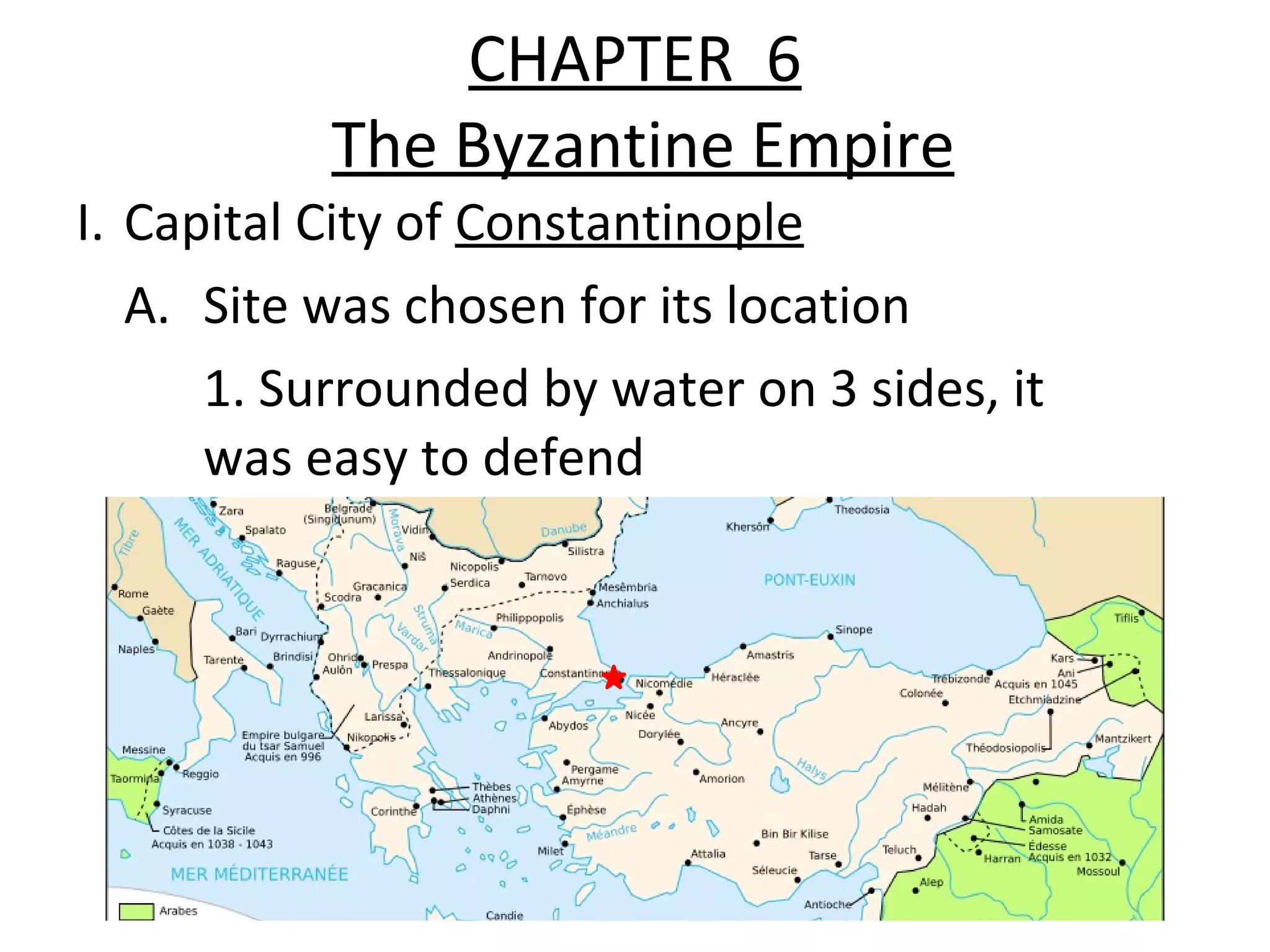
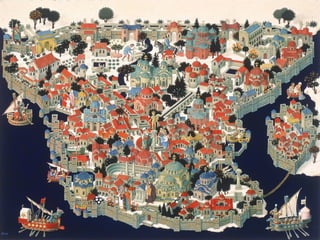
CHAPTER  6   The Byzantine Empire I. Capital City of  Constantinople A. Site was chosen for its location 1. Surrounded by water on 3 sides, it was easy to defend
 
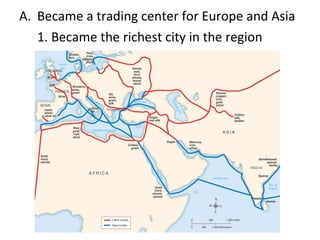
Became a trading center for Europe and Asia 1. Became the richest city in the region
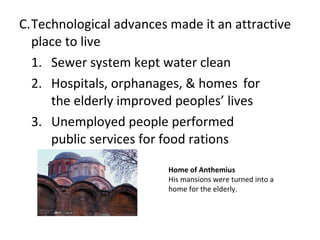
C. Technological advances made it an attractive place to live 1. Sewer system kept water clean  2. Hospitals, orphanages, & homes  for the elderly improved peoples ’ lives 3.  Unemployed people performed  public services for food rations Home of Anthemius His mansions were turned into a home for the elderly.
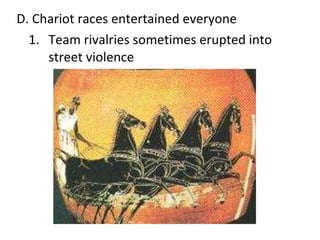
D. Chariot races entertained everyone 1. Team rivalries sometimes erupted into  street violence
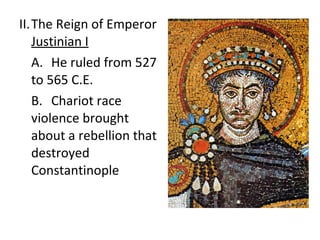
II. The Reign of Emperor  Justinian I A. He ruled from 527 to 565 C.E. B. Chariot race violence brought about a rebellion that destroyed Constantinople
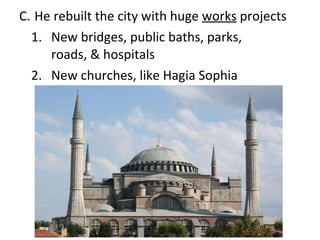
C.  He rebuilt the city with huge  works  projects 1.  New bridges, public baths, parks,  roads, & hospitals 2. New churches, like Hagia Sophia
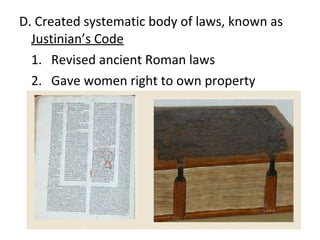
D. Created systematic body of laws, known as  Justinian ’s Code 1. Revised ancient Roman laws 2.  Gave women right to own property
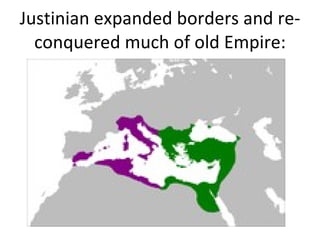
Justinian expanded borders and re-conquered much of old Empire:
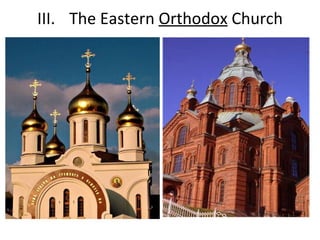
III. The Eastern  Orthodox  Church
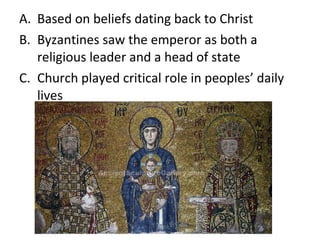
Based on beliefs dating back to Christ Byzantines saw the emperor as both a religious leader and a head of state Church played critical role in peoples ’ daily lives
D. Orthodox clergy had ranks, like Catholics Emperor had all religious authority Patriarch of Constantinople was next Other patriarchs were equal to him Bishops served under the patriarchs Priests served under patriarchs and bishops a. Priests could marry, but bishops could not
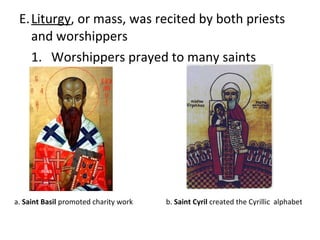
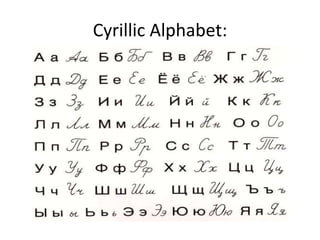
E. Liturgy , or mass, was recited by both priests and worshippers 1. Worshippers prayed to many saints a.  Saint Basil  promoted charity work b.  Saint Cyril  created the Cyrillic  alphabet
Cyrillic Alphabet:
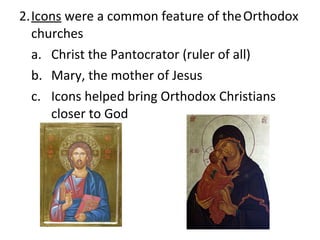
2. Icons  were a common feature of the Orthodox churches a. Christ the Pantocrator (ruler of all) b. Mary, the mother of Jesus c.  Icons helped bring Orthodox Christians  closer to God
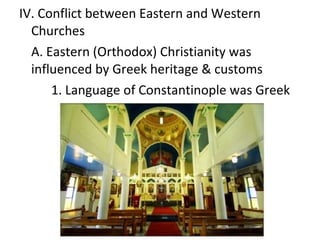
IV. Conflict between Eastern and Western Churches A. Eastern (Orthodox) Christianity was influenced by Greek heritage & customs 1. Language of Constantinople was Greek
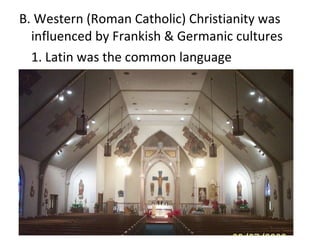
B. Western (Roman Catholic) Christianity was influenced by Frankish & Germanic cultures 1. Latin was the common language
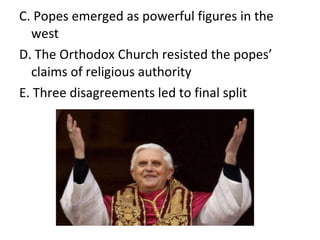
C. Popes emerged as powerful figures in the west D. The Orthodox Church resisted the popes ’ claims of religious authority E. Three disagreements led to final split
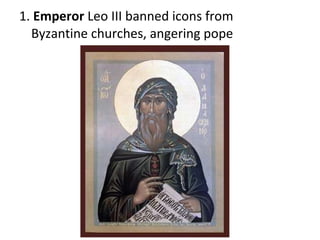
1.  Emperor  Leo III banned icons from Byzantine churches, angering pope
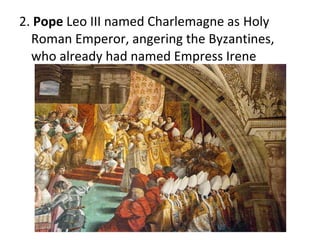
2.  Pope  Leo III named Charlemagne as Holy Roman Emperor, angering the Byzantines, who already had named Empress Irene
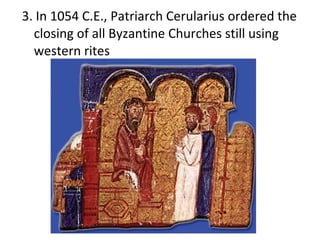
3. In 1054 C.E., Patriarch Cerularius ordered the closing of all Byzantine Churches still using western rites
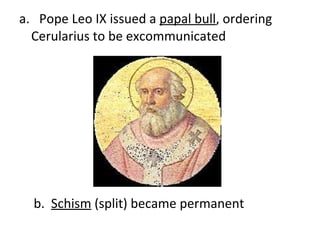
a.  Pope Leo IX issued a  papal bull , ordering Cerularius to be excommunicated b.  Schism  (split) became permanent

Ch. 6: The Byzantine Empire

  • 1.
    CHAPTER 6 The Byzantine Empire I. Capital City of Constantinople A. Site was chosen for its location 1. Surrounded by water on 3 sides, it was easy to defend
  • 2.
  • 3.
    Became a tradingcenter for Europe and Asia 1. Became the richest city in the region
  • 4.
    C. Technological advancesmade it an attractive place to live 1. Sewer system kept water clean 2. Hospitals, orphanages, & homes for the elderly improved peoples ’ lives 3. Unemployed people performed public services for food rations Home of Anthemius His mansions were turned into a home for the elderly.
  • 5.
    D. Chariot racesentertained everyone 1. Team rivalries sometimes erupted into street violence
  • 6.
    II. The Reignof Emperor Justinian I A. He ruled from 527 to 565 C.E. B. Chariot race violence brought about a rebellion that destroyed Constantinople
  • 7.
    C. Herebuilt the city with huge works projects 1. New bridges, public baths, parks, roads, & hospitals 2. New churches, like Hagia Sophia
  • 8.
    D. Created systematicbody of laws, known as Justinian ’s Code 1. Revised ancient Roman laws 2. Gave women right to own property
  • 9.
    Justinian expanded bordersand re-conquered much of old Empire:
  • 10.
    III. The Eastern Orthodox Church
  • 11.
    Based on beliefsdating back to Christ Byzantines saw the emperor as both a religious leader and a head of state Church played critical role in peoples ’ daily lives
  • 12.
    D. Orthodox clergyhad ranks, like Catholics Emperor had all religious authority Patriarch of Constantinople was next Other patriarchs were equal to him Bishops served under the patriarchs Priests served under patriarchs and bishops a. Priests could marry, but bishops could not
  • 13.
    E. Liturgy ,or mass, was recited by both priests and worshippers 1. Worshippers prayed to many saints a. Saint Basil promoted charity work b. Saint Cyril created the Cyrillic alphabet
  • 14.
  • 15.
    2. Icons were a common feature of the Orthodox churches a. Christ the Pantocrator (ruler of all) b. Mary, the mother of Jesus c. Icons helped bring Orthodox Christians closer to God
  • 16.
    IV. Conflict betweenEastern and Western Churches A. Eastern (Orthodox) Christianity was influenced by Greek heritage & customs 1. Language of Constantinople was Greek
  • 17.
    B. Western (RomanCatholic) Christianity was influenced by Frankish & Germanic cultures 1. Latin was the common language
  • 18.
    C. Popes emergedas powerful figures in the west D. The Orthodox Church resisted the popes ’ claims of religious authority E. Three disagreements led to final split
  • 19.
    1. Emperor Leo III banned icons from Byzantine churches, angering pope
  • 20.
    2. Pope Leo III named Charlemagne as Holy Roman Emperor, angering the Byzantines, who already had named Empress Irene
  • 21.
    3. In 1054C.E., Patriarch Cerularius ordered the closing of all Byzantine Churches still using western rites
  • 22.
    a. PopeLeo IX issued a papal bull , ordering Cerularius to be excommunicated b. Schism (split) became permanent