Chapter 3 
Introduction to Basic Pharmacology 
and Other Common Therapies
Pharmacology 
 Integrated medical science involving 
chemistry, biochemistry, anatomy, 
physiology, microbiology, and more 
 Study of drugs, their actions, dosage, 
therapeutic uses, adverse effects 
 Drug therapy is directly linked to the 
pathophysiology of a particular disease. 
 Drugs may come from natural sources. 
 Plants, animals, microorganisms 
 Drugs also may be synthesized. 
•Copyright © 2014, 2011, 2006 by Saunders, an imprint of Elsevier, Inc. •2
Drugs 
 Promote healing 
 Anti-inflammatory 
 Cure disease 
 Antibacterial 
 Control or slow progress of a disease 
 Cancer chemotherapy 
 Prevent disease 
 Vaccine 
•Copyright © 2014, 2011, 2006 by Saunders, an imprint of Elsevier, Inc. •3
Drugs (Cont.) 
 Alter neurotransmission 
 Antidepressants 
 Decrease risk of complications 
 Anticoagulants 
 Increase function and comfort 
 Analgesics for pain 
 Provide replacement therapy 
•Copyright © 2014, 2011, 2006 by Saunders, an imprint of Elsevier, Inc. •4 
 Insulin 
 Reduce excessive activity in the body 
 Proton pump inhibitors
Disciplines of Pharmacology 
 Pharmacodynamics 
 Pharmacokinetics 
 Pharmacotherapeutics 
 Toxicology 
 Pharmacy 
•Copyright © 2014, 2011, 2006 by Saunders, an imprint of Elsevier, Inc. •5
Drug Effects 
 Therapeutic (desired) action may be: 
 Stimulating or inhibiting cell function 
 Blocking biochemical actions in tissues 
 Classification 
 Grouped by their primary pharmacologic action 
and effect 
 Indications 
 Approved for uses to treat conditions for which the 
drug has been proved to be effective 
•Copyright © 2014, 2011, 2006 by Saunders, an imprint of Elsevier, Inc. •6
Drug Effects (Cont.) 
Generally, drugs possess more than one effect 
on the body. 
 Contraindications 
 Circumstances under which a drug should not be 
administered 
 Side effects 
 Mild, undesirable effects of a drug, even at 
recommended dose 
 Adverse or toxic effects 
 Drug effects that are dangerous, cause significant 
tissue damage, or are life-threatening 
•Copyright © 2014, 2011, 2006 by Saunders, an imprint of Elsevier, Inc. •7
Specific Adverse Drug Effects 
 Hypersensitivity―allergic reactions 
 Reactions may be mild or can result in 
anaphylaxis. 
 Idiosyncratic reactions 
 Unusual responses to a drug 
 Iatrogenic 
 Negative effect associated with administration of 
•Copyright © 2014, 2011, 2006 by Saunders, an imprint of Elsevier, Inc. •8 
drug 
 Teratogenic 
 Harmful effect on fetus, developmental defects
Specific Adverse Drug Effects 
(Cont.) 
 Interactions: drug effect modified by 
combination with another drug 
 Synergism 
• Effect of drug combination may be greater than the sum 
of the effects of the individual drugs. 
 Antagonism 
• Combination greatly decreases the effect of each drug. 
 Potentiation 
• One drug enhances the effect of a second drug. 
•Copyright © 2014, 2011, 2006 by Saunders, an imprint of Elsevier, Inc. •9
Administration and Distribution of 
Drugs 
•Copyright © 2014, 2011, 2006 by Saunders, an imprint of Elsevier, Inc. •10 
 Dose 
 Amount of drug required to produce the desired 
effect in adult 
 Expressed by a weight or measure 
 Expressed by time factor (e.g., twice a day) 
 Child’s dose 
 Best calculated by child’s weight, not age 
 “Loading dose” 
 Larger dose may be administered initially to raise 
blood levels to an effective level
Administration and Distribution of 
Drugs (Cont.) 
 Frequency of dosing 
 Important to maintain effective blood levels of the 
drug without reaching toxic levels 
 Optimum dosing schedule 
 Established for each drug based on 
• Absorption, transport in the blood, half-life of the drug 
•Copyright © 2014, 2011, 2006 by Saunders, an imprint of Elsevier, Inc. •11 
 Timing 
 Directions regarding 
• Timing related to meals 
• Daily events 
• Sleep
Factors Affecting Blood 
Levels of Drugs 
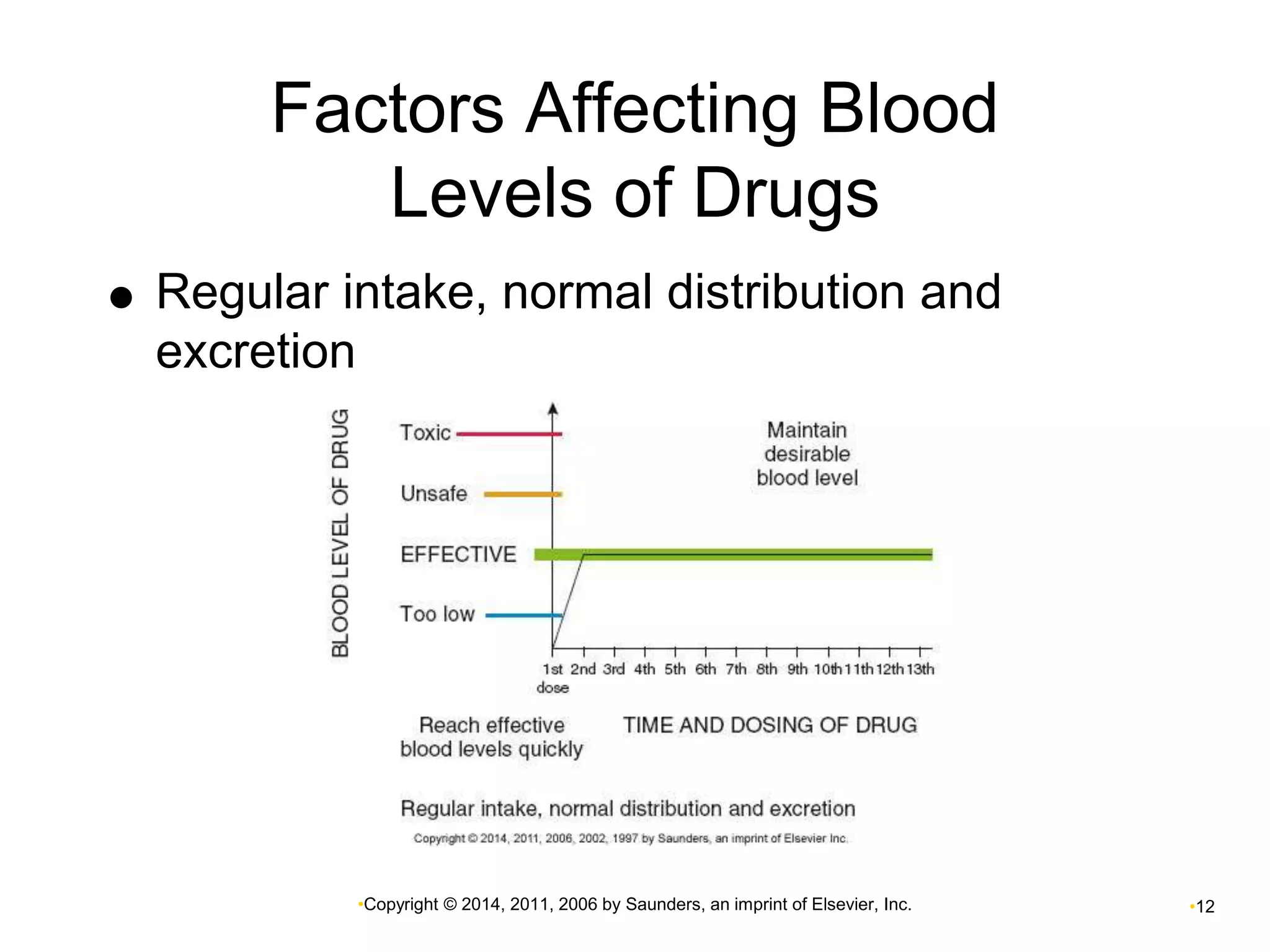
 Regular intake, normal distribution and 
•Copyright © 2014, 2011, 2006 by Saunders, an imprint of Elsevier, Inc. •12 
excretion
Factors Affecting Blood Levels of 
Drugs (Cont.) 
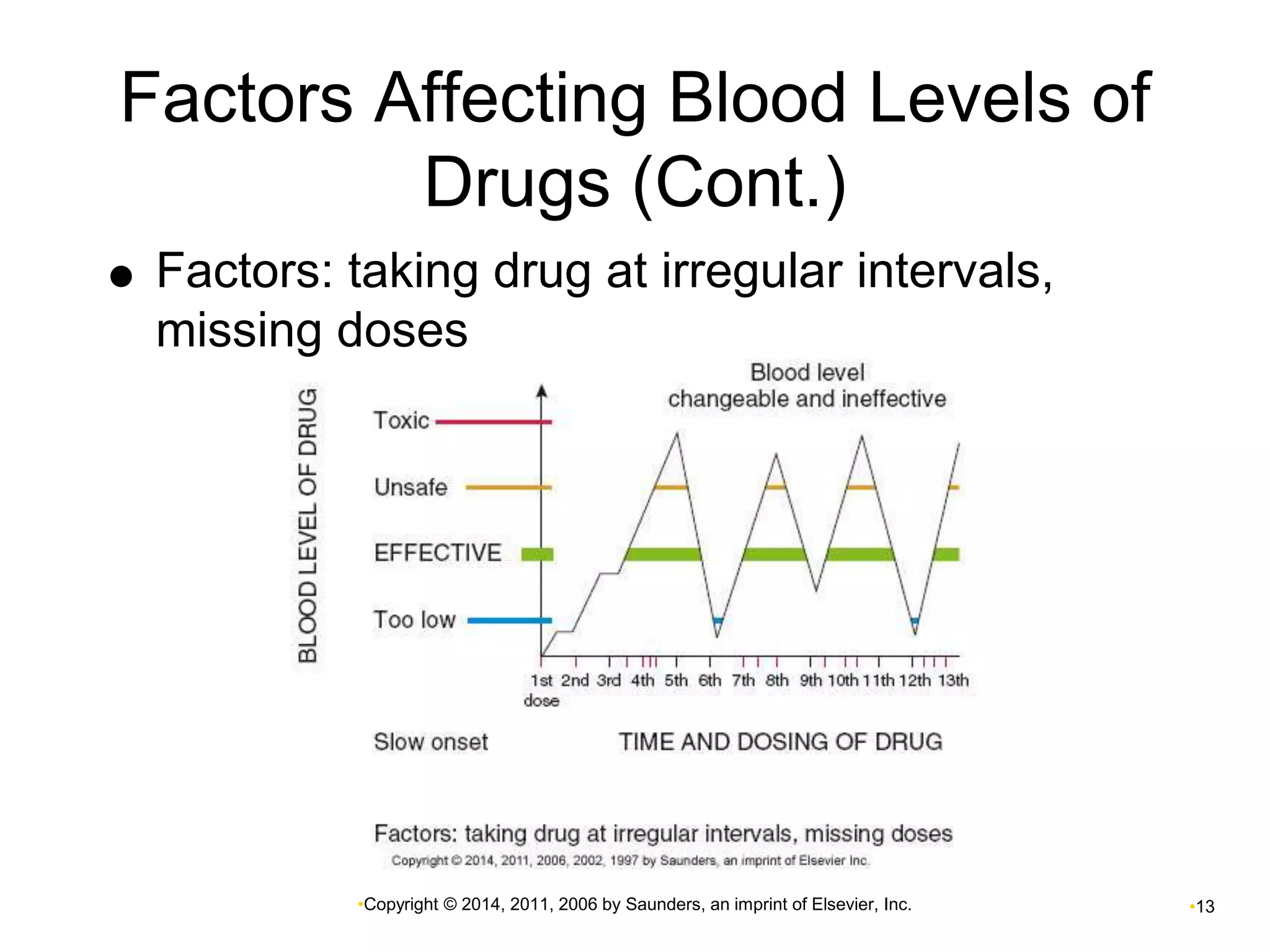
 Factors: taking drug at irregular intervals, 
missing doses 
•Copyright © 2014, 2011, 2006 by Saunders, an imprint of Elsevier, Inc. •13
Factors Affecting Blood 
Levels of Drugs (Cont.) 
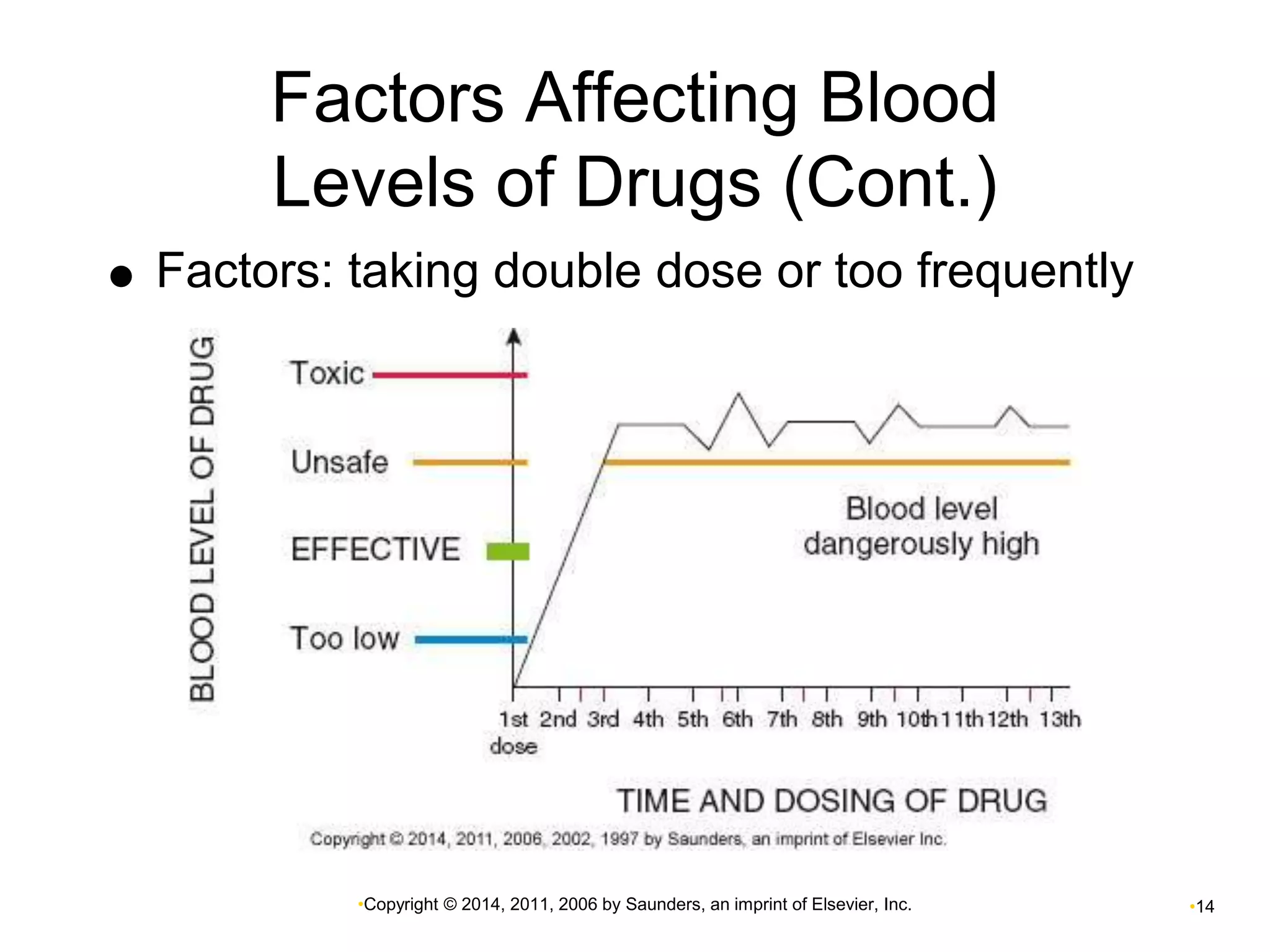
 Factors: taking double dose or too frequently 
•Copyright © 2014, 2011, 2006 by Saunders, an imprint of Elsevier, Inc. •14
Factors Influencing 
Blood Levels of a Drug 
 Liver and kidney function 
 Absorption and excretion 
 Circulation and cardiovascular function 
•Copyright © 2014, 2011, 2006 by Saunders, an imprint of Elsevier, Inc. •15 
 Age 
 Body weight and proportion of fatty tissue 
 Activity level, exercise 
 Food and fluid intake 
 Genetic factors 
 Health status, presence of other diseases, 
chronic or acute
Administration and Distribution 
of Drugs 
Drugs can be administered for acting locally or 
have a systemic action. 
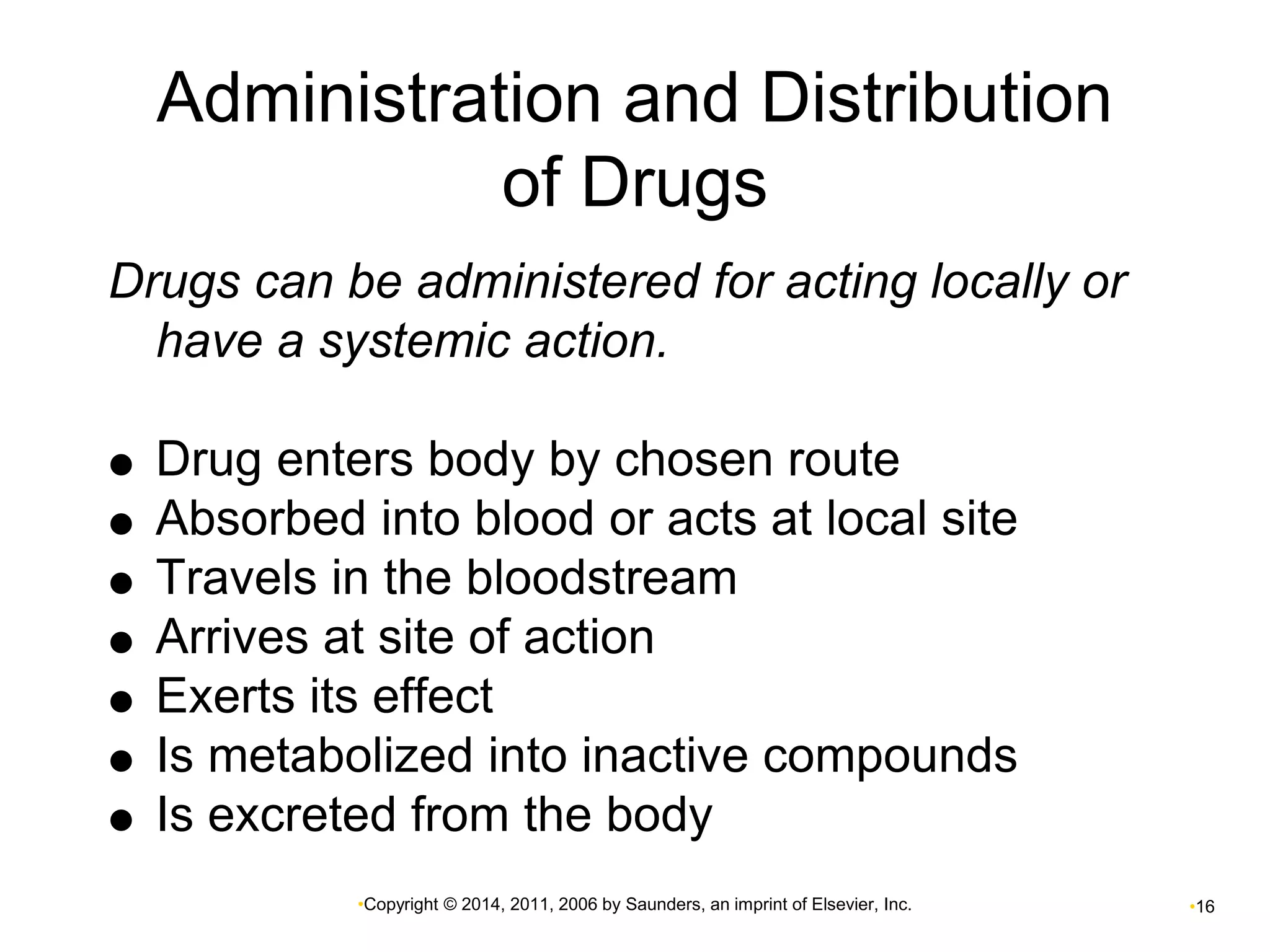
 Drug enters body by chosen route 
 Absorbed into blood or acts at local site 
 Travels in the bloodstream 
 Arrives at site of action 
 Exerts its effect 
 Is metabolized into inactive compounds 
 Is excreted from the body 
•Copyright © 2014, 2011, 2006 by Saunders, an imprint of Elsevier, Inc. •16
Routes of Drug Administration 
 Oral tablet, capsule, liquid 
 Sublingual 
 Subcutaneous injection 
 Intramuscular injection 
 Intravenous injection 
 Inhalation 
 Topical (gel, cream, spray, liquid) 
 Suppository 
•Copyright © 2014, 2011, 2006 by Saunders, an imprint of Elsevier, Inc. •17
Administration and Distribution 
of Drugs (Cont.) 
 Some drugs can only be taken via one route. 
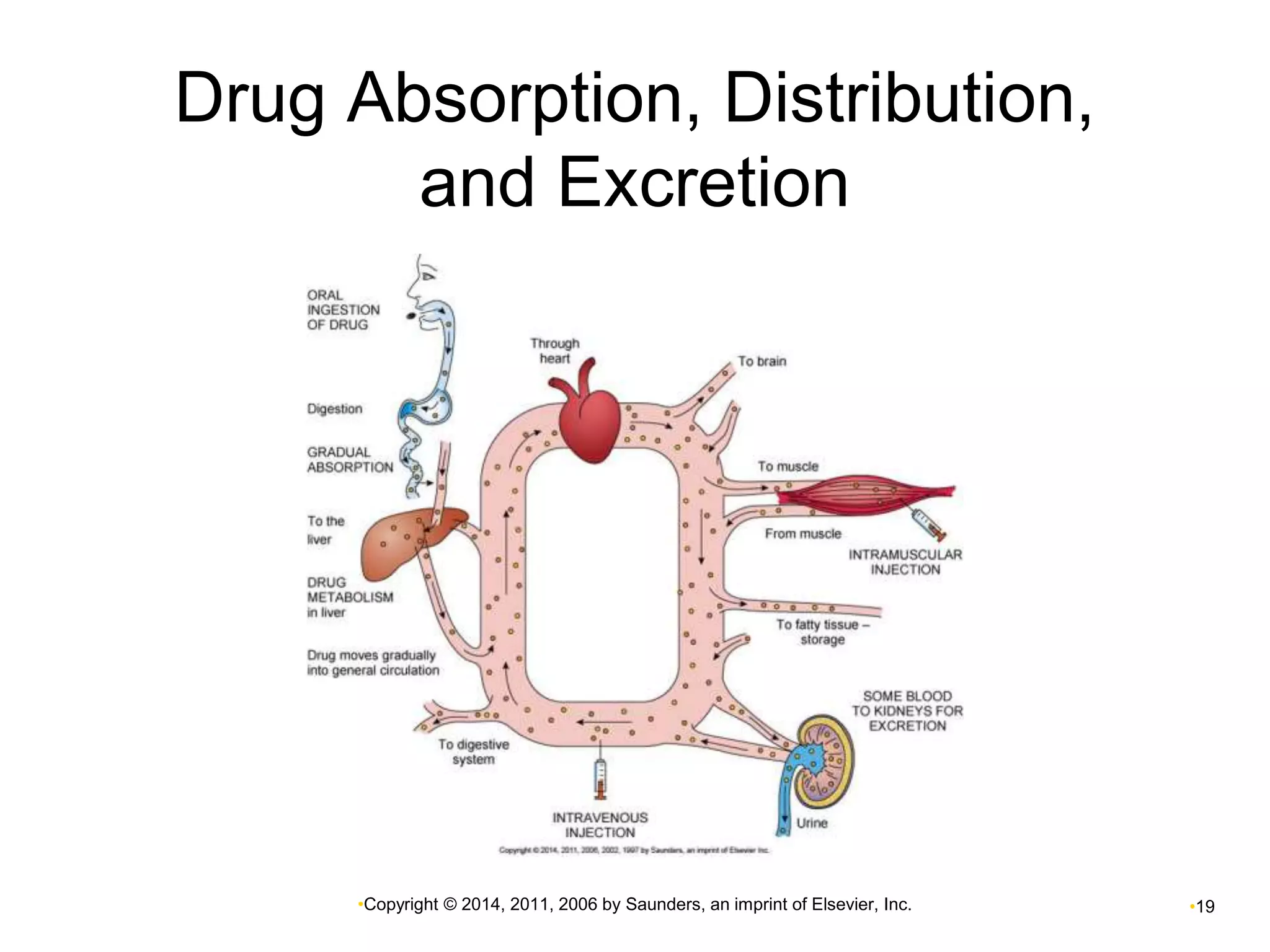
 Oral medication 
 Absorbed from stomach or intestine 
 Transported to the liver 
 Released into general circulation 
 Intramuscular injection 
 Gradually absorbed into the blood 
 Blood transports drug 
•Copyright © 2014, 2011, 2006 by Saunders, an imprint of Elsevier, Inc. •18
Drug Absorption, Distribution, 
and Excretion 
•Copyright © 2014, 2011, 2006 by Saunders, an imprint of Elsevier, Inc. •19
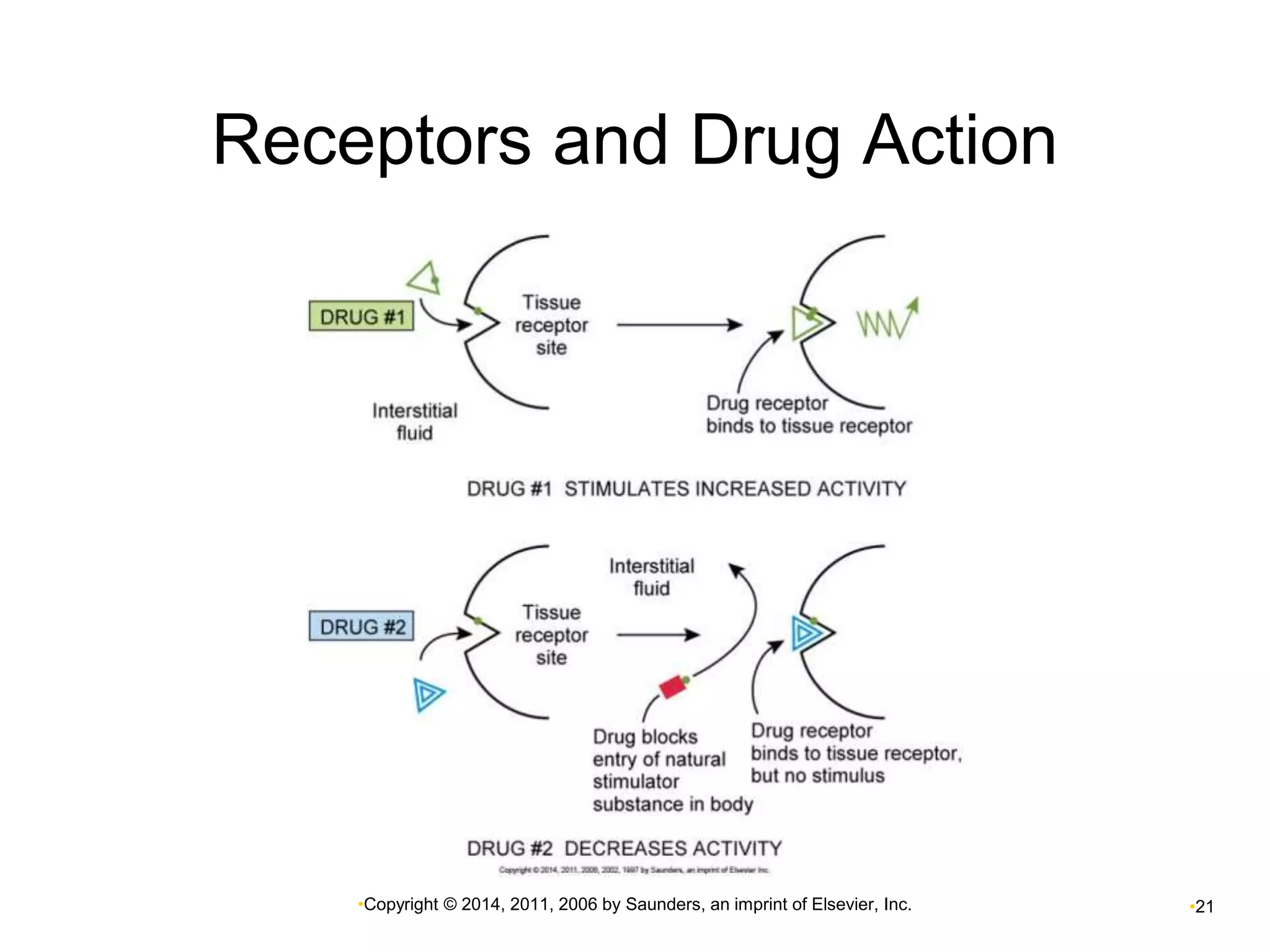
Drug Mechanisms and Receptors 
 Common pharmacologic action requires drug-receptor 
interaction. 
 Drugs may stimulate receptors directly. 
 Drugs may block receptor site for normal 
chemicals of the body 
 Specificity of drug dependent on mode of 
•Copyright © 2014, 2011, 2006 by Saunders, an imprint of Elsevier, Inc. •20 
action 
 Drugs that interact with several metabolic 
pathways or common functions are likely to 
have greater side effects.
Receptors and Drug Action 
•Copyright © 2014, 2011, 2006 by Saunders, an imprint of Elsevier, Inc. •21
Prescriptions 
 Prescription―a signed legal document that 
must include the following: 
 Patient’s name, address, and age (if significant) 
 Prescriber’s name, address, and identification 
•Copyright © 2014, 2011, 2006 by Saunders, an imprint of Elsevier, Inc. •22 
number 
 Date 
 Name and amount of the drug 
 Dosage 
 Route and directions for using the drug 
 Permission for additional quantities
Drug Nomenclature and 
Classification 
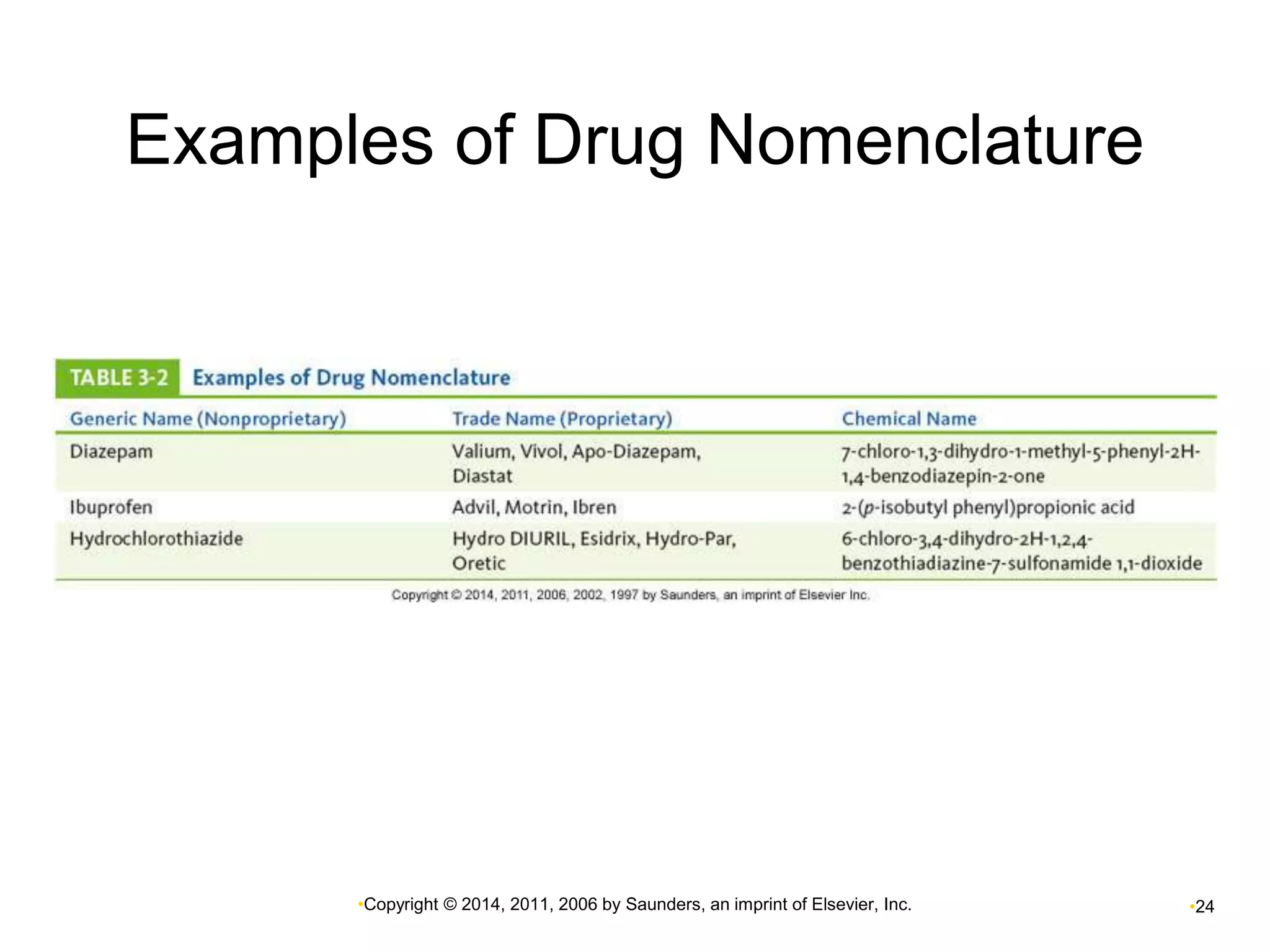
 Each drug has a generic name, a trade 
name, and a chemical name 
 Generic name: unique, official, simple name 
for a specific drug 
 For example, ASA 
 Trade, proprietary, or brand name 
 For example, aspirin 
 Chemical name: chemical component 
 For example, acetylsalicylic acid 
•Copyright © 2014, 2011, 2006 by Saunders, an imprint of Elsevier, Inc. •23
Examples of Drug Nomenclature 
•Copyright © 2014, 2011, 2006 by Saunders, an imprint of Elsevier, Inc. •24
Drug Regulation 
 U.S. Food and Drug Administration* 
 Regulates the production, labeling, distribution, 
and other aspects of drug control 
 Scheduled drugs 
 Drugs considered to have a risk for potential 
adverse side effects, abuse, or dependency 
 Over-the-counter (OTC) drugs 
 Available without prescription 
*Food and Drug Directorate in Canada. 
•Copyright © 2014, 2011, 2006 by Saunders, an imprint of Elsevier, Inc. •25
Traditional Forms of Therapy 
•Copyright © 2014, 2011, 2006 by Saunders, an imprint of Elsevier, Inc. •26
Physiotherapy 
 Assesses physical function 
 Works to reduce pain, restore any deficit and 
prevent further physical dysfunction 
 Involves individualized treatment and 
rehabilitation 
 Physiotherapy may include the following: 
 Appropriate exercise 
 Use of ultrasound 
 Transcutaneous electrical nerve stimulation 
•Copyright © 2014, 2011, 2006 by Saunders, an imprint of Elsevier, Inc. •27 
(TENS) 
 Other methods to alleviate pain, increase function
Physiotherapist 
 Treats acute injuries as well as chronic 
conditions 
 Practice includes the following: 
 Pain disorders 
 Acute neurologic disorders 
 Musculoskeletal disorders 
 Cardiopulmonary disorders 
 Infants with congenital abnormalities 
 Children and adults with injuries that affect 
•Copyright © 2014, 2011, 2006 by Saunders, an imprint of Elsevier, Inc. •28 
mobility
Occupational Therapist 
 Provides functional assessment related to 
normal activities of daily living 
 Provides guidance and practical assistance to 
maintain independence 
 Integrates remediation of motor control, 
cognition, and visual-spatial perception 
 Necessary for patient safety 
 Teaches use of adaptations for specific 
•Copyright © 2014, 2011, 2006 by Saunders, an imprint of Elsevier, Inc. •29 
needs 
 Assesses technologies available for use in 
home and workplace
Speech and Language 
Pathologist 
 Assesses and treats those with 
communication or swallowing problems 
 Patients may include the following: 
 Infant with swallowing and feeding problems 
 Child with hearing deficit who is mute 
 Adult with aphasia following a stroke 
 Child with delayed speech 
 Individual with dysarthria 
•Copyright © 2014, 2011, 2006 by Saunders, an imprint of Elsevier, Inc. •30
Nutritionist-Dietitian 
 Expert in nutritional needs of the body in 
health and illness 
 Advises on nutritional needs and food 
management suited to a specific diagnosis 
 Example: diabetes 
 Supervises food services in hospitals and 
other health care institutions 
 May consult on the dangers of extreme diets 
and eating disorders 
•Copyright © 2014, 2011, 2006 by Saunders, an imprint of Elsevier, Inc. •31
Registered Massage Therapist 
 Uses a variety of massage techniques to: 
 Increase circulation 
 Reduce pain 
 Increase flexibility for patients with joint pain or 
problems with body alignment 
 May use: 
• Soothing aromatics 
• Acupuncture 
• Other modalities 
•Copyright © 2014, 2011, 2006 by Saunders, an imprint of Elsevier, Inc. •32
Osteopath 
 Osteopaths are medically licensed doctors in 
many jurisdictions. 
 Uses many medical treatment methods 
 In addition, an osteopath: 
 Promotes body’s natural healing processes by 
incorporating manipulations of the musculoskeletal 
system (e.g., use of chest percussion to relief 
respiratory congestion) 
•Copyright © 2014, 2011, 2006 by Saunders, an imprint of Elsevier, Inc. •33
Chiropractic 
 Based on the concept that one’s health status 
is dependent on the state of the nervous 
system 
 Frequently involves manipulations of the 
vertebral column 
 May involve deep tissue massage, 
acupressure, and/or acupuncture 
 Radiology may be used for diagnosis. 
 No drugs or surgery 
•Copyright © 2014, 2011, 2006 by Saunders, an imprint of Elsevier, Inc. •34
Complementary or 
Alternative Therapies 
•Copyright © 2014, 2011, 2006 by Saunders, an imprint of Elsevier, Inc. •35
Principles 
 These therapies are used in conjunction with 
medically related therapies. 
 All practitioners should know about various 
therapies that the client is using. 
 Use of complementary therapy does not 
require abandoning medical therapy. 
•Copyright © 2014, 2011, 2006 by Saunders, an imprint of Elsevier, Inc. •36
Noncontact Therapeutic Touch 
 Energy is exchanged between people for 
relief of pain and anxiety and to promote 
healing. 
 Consciously forms a positive intent to heal 
 Location of problem areas by scanning body 
with the hands 
 Healing is promoted by lightly touching the skin or 
moving the hands just above the body surface. 
 Imagery, light, or colors may be incorporated. 
•Copyright © 2014, 2011, 2006 by Saunders, an imprint of Elsevier, Inc. •37
Naturopathy 
 Treatment based on the following: 
 Promoting natural foods 
 Massage 
 Exercise 
 Fresh air 
 Acupuncture 
 Herbal compounds 
 Nutrition 
 Physical manipulations 
•Copyright © 2014, 2011, 2006 by Saunders, an imprint of Elsevier, Inc. •38
Homeopathy 
 Goal is to stimulate the immune system and 
natural healing powers of the body by use of 
the following: 
 Plant products 
 Animal products 
 Mineral products 
 Offending toxic substance is identified for each 
disease state. 
• Diluted several thousand-fold 
• The diluted toxin is then administered to treat the 
problem. 
•Copyright © 2014, 2011, 2006 by Saunders, an imprint of Elsevier, Inc. •39
Herbalism 
 First documented in ancient Egypt 
 Use of herbs and plants for treatment of acute 
conditions or prevention of disease 
 Efforts are being focused on the following: 
 Providing standardized content 
 Providing efficacy 
 Improving purity 
•Copyright © 2014, 2011, 2006 by Saunders, an imprint of Elsevier, Inc. •40
Aromatherapy 
 Uses essential oils that have therapeutic 
•Copyright © 2014, 2011, 2006 by Saunders, an imprint of Elsevier, Inc. •41 
effects 
 Thought to act on neural pathways through 
the olfactory system 
 Oils may be 
 Absorbed through the skin into the general 
circulation 
• When bathing 
• With massage 
 Inhaled
Asian Concepts of Disease 
and Healing 
 Based on balance or imbalance of life 
energy―qi 
 Disease is caused by a deficit or excess of qi. 
 Qi is derived from three sources: 
 Inherited or ancestral factors 
 Food ingested 
 Air breathed in 
 Qi flows along specific channels―meridians. 
 All organs and body parts are connected. 
•Copyright © 2014, 2011, 2006 by Saunders, an imprint of Elsevier, Inc. •42
Asian Concepts of Disease 
and Healing (Cont.) 
 Acupuncture 
 Increases energy, function; blocks pain pathways 
 Involves Inserting fine needles into the various 
meridian acupoints (365) 
• Each point has specific and generalized therapeutic 
actions. 
 Treatment on average uses 5 to 15 needles. 
•Copyright © 2014, 2011, 2006 by Saunders, an imprint of Elsevier, Inc. •43 
 Shiatsu 
 Japanese―acupuncture without needles 
 Uses slow, deep, gentle pressure to specific points 
 Often used for stress-related illness and back pain; 
provides relaxation
Asian Concepts of Disease 
and Healing (Cont.) 
•Copyright © 2014, 2011, 2006 by Saunders, an imprint of Elsevier, Inc. •44 
 Yoga 
 Combines physical activity in the form of 
stretching postures with meditation 
 Improves flexibility, muscle tone, endurance, 
overall health; reduces stress 
 Reflexology 
 Relates points on feet and hands to 10 
longitudinal zones in the body 
 Practitioner uses varying degrees of pressure. 
 Relieves stress and muscle tension
Asian Concepts of Disease 
and Healing (Cont.) 
 Craniosacral therapy 
 Used by a variety of health care practitioners 
 Therapy deals with the pulsing rhythm of 
cerebrospinal fluid around brain and spinal cord 
 Gentle palpation and manipulation of skull and 
vertebrae 
 Ayurveda 
 Special dietary plans, yoga, and herbal remedies 
are commonly used. 
 Balance of body factors results in healthy mind 
and body 
•Copyright © 2014, 2011, 2006 by Saunders, an imprint of Elsevier, Inc. •45
Chapter 4 
Pain
Pain 
 Unpleasant sensation 
 Discomfort caused by stimulation of pain receptors 
 Body defense mechanism 
 Warning of a problem 
 Complex mechanisms 
 Many not totally understood 
 Subjective scales 
 Developed to compare pain levels over time 
•Copyright © 2014, 2011, 2006 by Saunders, an imprint of Elsevier, Inc. •47
Causes of Pain 
 Inflammation 
•Copyright © 2014, 2011, 2006 by Saunders, an imprint of Elsevier, Inc. •48 
 Infection 
 Ischemia and tissue necrosis 
 Stretching of tissue 
 Stretching of tendons, ligaments, joint 
capsule 
 Chemicals 
 Burns 
 Muscle spasm
Somatic Versus Visceral Pain 
 Somatic pain 
 From skin (cutaneous) 
 Bone muscle 
 Conducted by sensory fibers 
 Visceral pain 
 Originates in organs 
 Conducted by sympathetic fibers 
 May be acute or chronic 
•Copyright © 2014, 2011, 2006 by Saunders, an imprint of Elsevier, Inc. •49
Pain Pathways 
 Nociceptors (pain receptors) are free sensory 
nerve endings. 
 May be stimulated by: 
 Temperature 
• Extremes of temperature 
 Chemicals 
• Examples: acids, bradykinin, histamine, prostaglandin 
 Physical means 
• Example: pressure 
•Copyright © 2014, 2011, 2006 by Saunders, an imprint of Elsevier, Inc. •50
Pain (Cont.) 
 Pain threshold 
 Level of stimulation required to elicit a pain 
response 
 Usually does not vary among individuals 
 Pain tolerance 
 Ability to cope with pain 
 Culturally related 
 Varies among individuals 
•Copyright © 2014, 2011, 2006 by Saunders, an imprint of Elsevier, Inc. •51
Pain Pathways 
 Nociceptors 
 Stimulated by 
• Thermal means: extreme temperatures 
• Chemical: For example, acids or chemicals produced by 
body (e.g., bradykinin, histamine, prostaglandin) 
• Physical: pressure 
•Copyright © 2014, 2011, 2006 by Saunders, an imprint of Elsevier, Inc. •52
Pain Fibers 
 Afferent fibers 
 Myelinated A delta fibers 
 Transmit impulses very rapidly 
 Acute pain 
• Sudden, sharp, localized 
 Unmyelinated C fibers 
 Transmit impulses slowly 
 Chronic pain 
• Diffuse, dull, burning, or aching sensation 
•Copyright © 2014, 2011, 2006 by Saunders, an imprint of Elsevier, Inc. •53
Pain Pathways (Cont.) 
 Dermatome 
 Area of skin innervated by a specific spinal nerve 
 Somatosensory cortex → “mapped” 
• Corresponds to source of pain stimuli 
 Reflex response 
 Involuntary muscle contraction away from pain 
•Copyright © 2014, 2011, 2006 by Saunders, an imprint of Elsevier, Inc. •54 
source 
 Involuntary muscle contraction to guard against 
movement
Pain Pathways (Cont.) 
 Spinothalamic bundle in the spinal cord 
 Neospinothalamic tract → fast impulses; acute 
•Copyright © 2014, 2011, 2006 by Saunders, an imprint of Elsevier, Inc. •55 
pain 
 Paleospinothalamic tract → slow impulses; 
chronic, dull pain 
 Spinothalamic tracts connect with reticular 
formation of brain
Pain Pathways (Cont.) 
 Somatic sensory area in the cerebral cortex 
located in the parietal lobe 
 Perception and localization of sensation 
 Hypothalamus and limbic system 
 Emotional factors 
 Communication with other regions of the 
brain to integrate responses 
 Reticular activating system (RAS) 
 Reticular formation in the pons and medulla 
 Awareness of incoming brain stimuli 
•Copyright © 2014, 2011, 2006 by Saunders, an imprint of Elsevier, Inc. •56
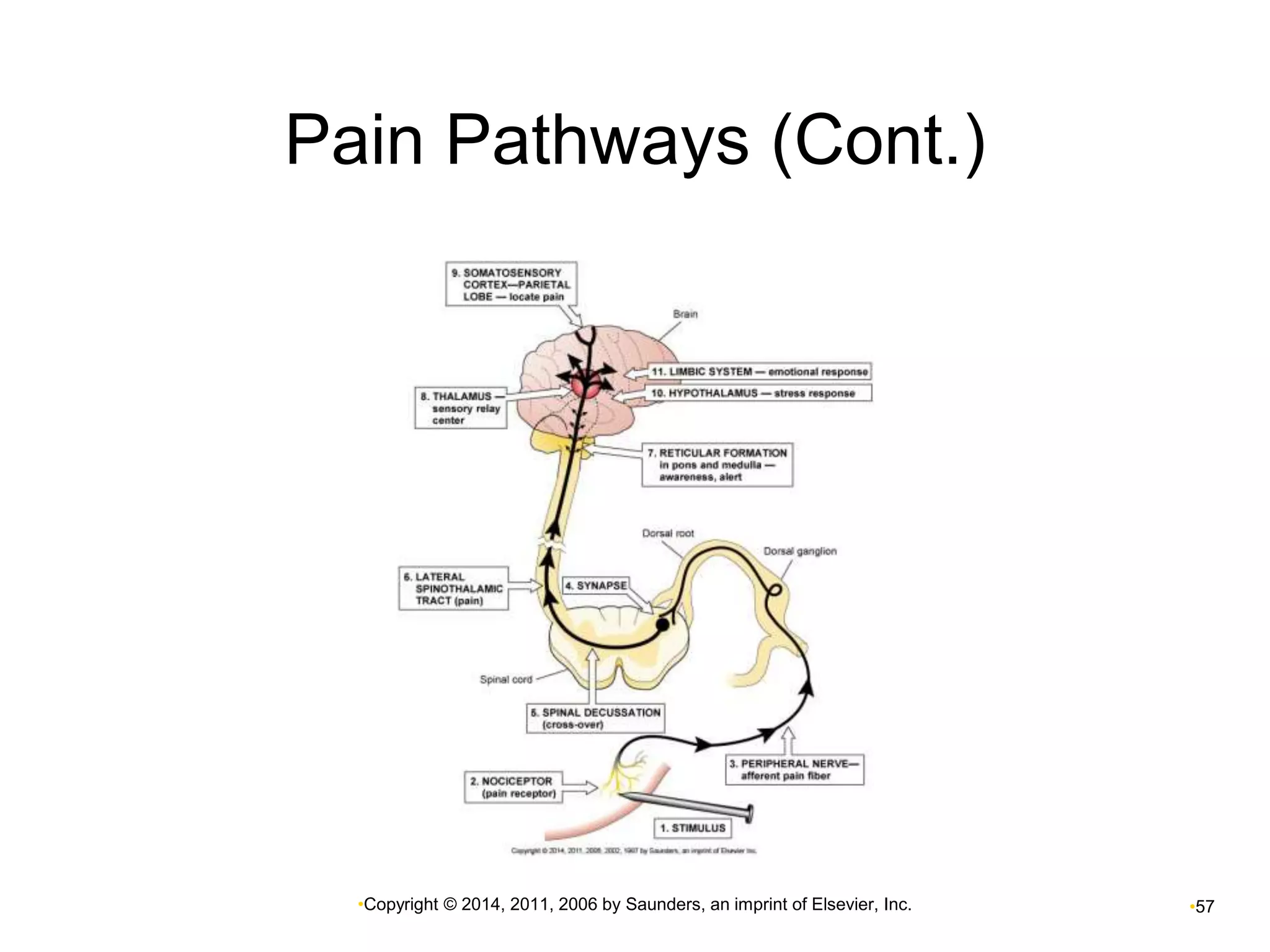
Pain Pathways (Cont.) 
•Copyright © 2014, 2011, 2006 by Saunders, an imprint of Elsevier, Inc. •57
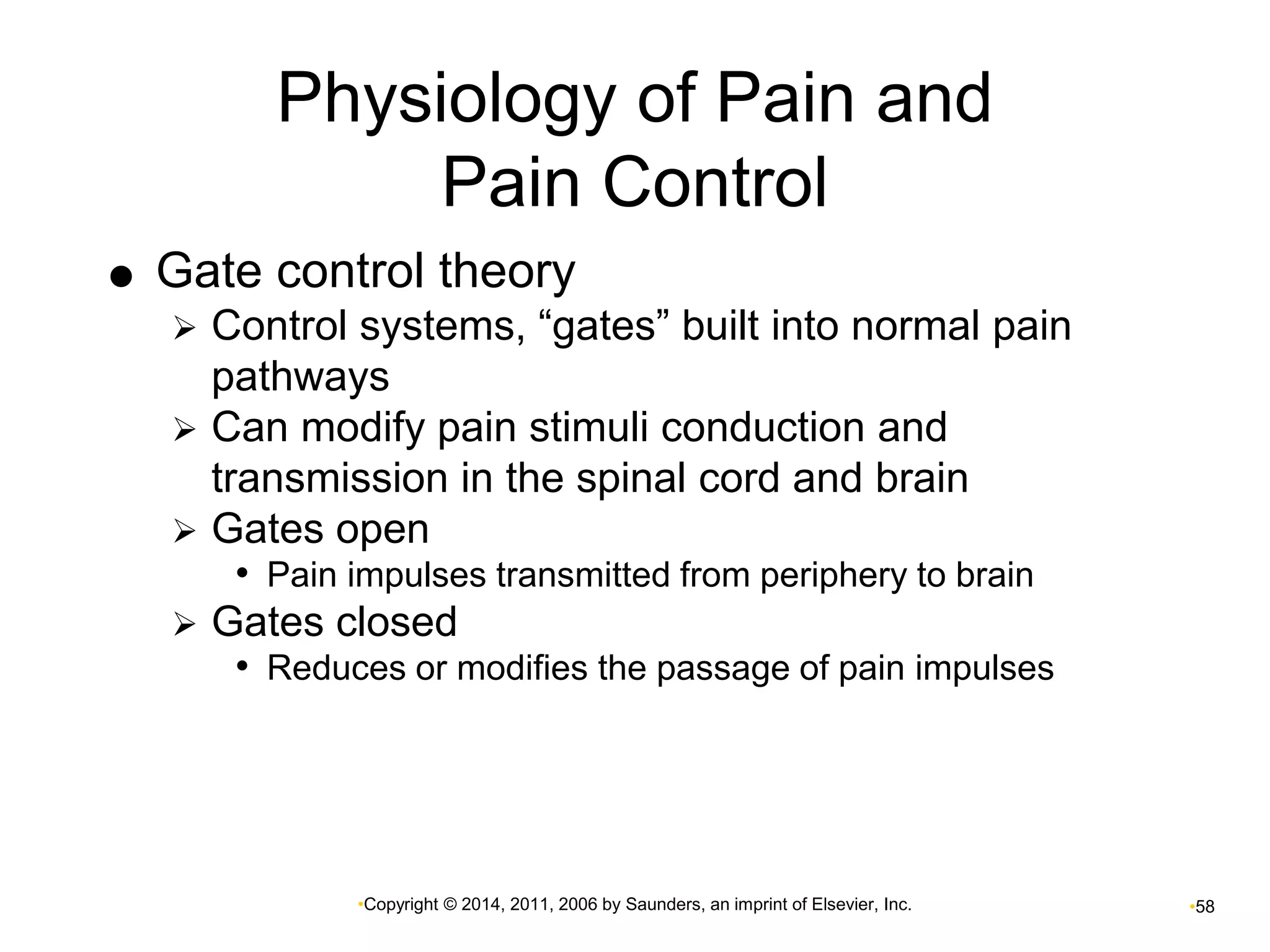
Physiology of Pain and 
Pain Control 
 Gate control theory 
 Control systems, “gates” built into normal pain 
pathways 
 Can modify pain stimuli conduction and 
transmission in the spinal cord and brain 
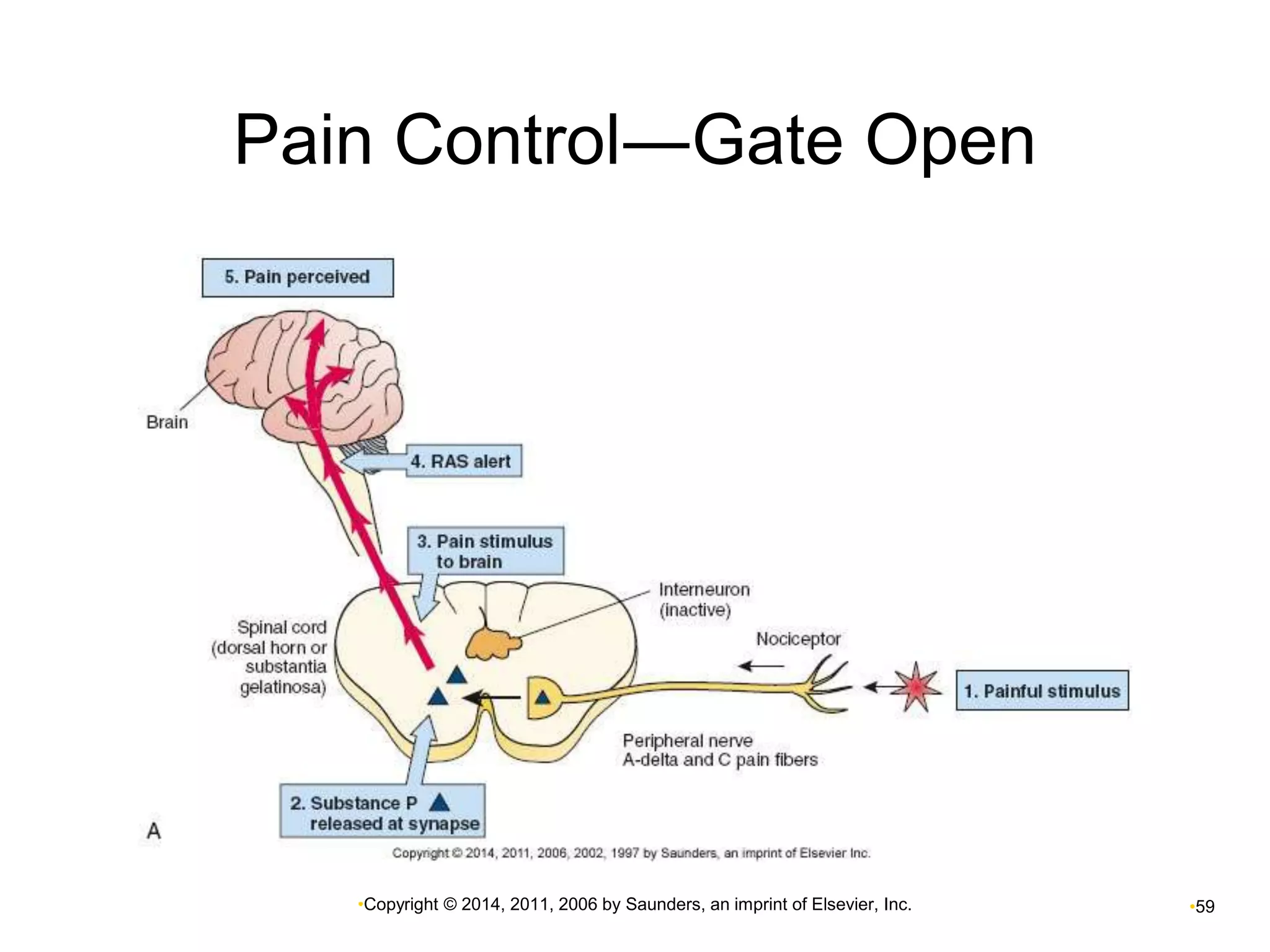
 Gates open 
• Pain impulses transmitted from periphery to brain 
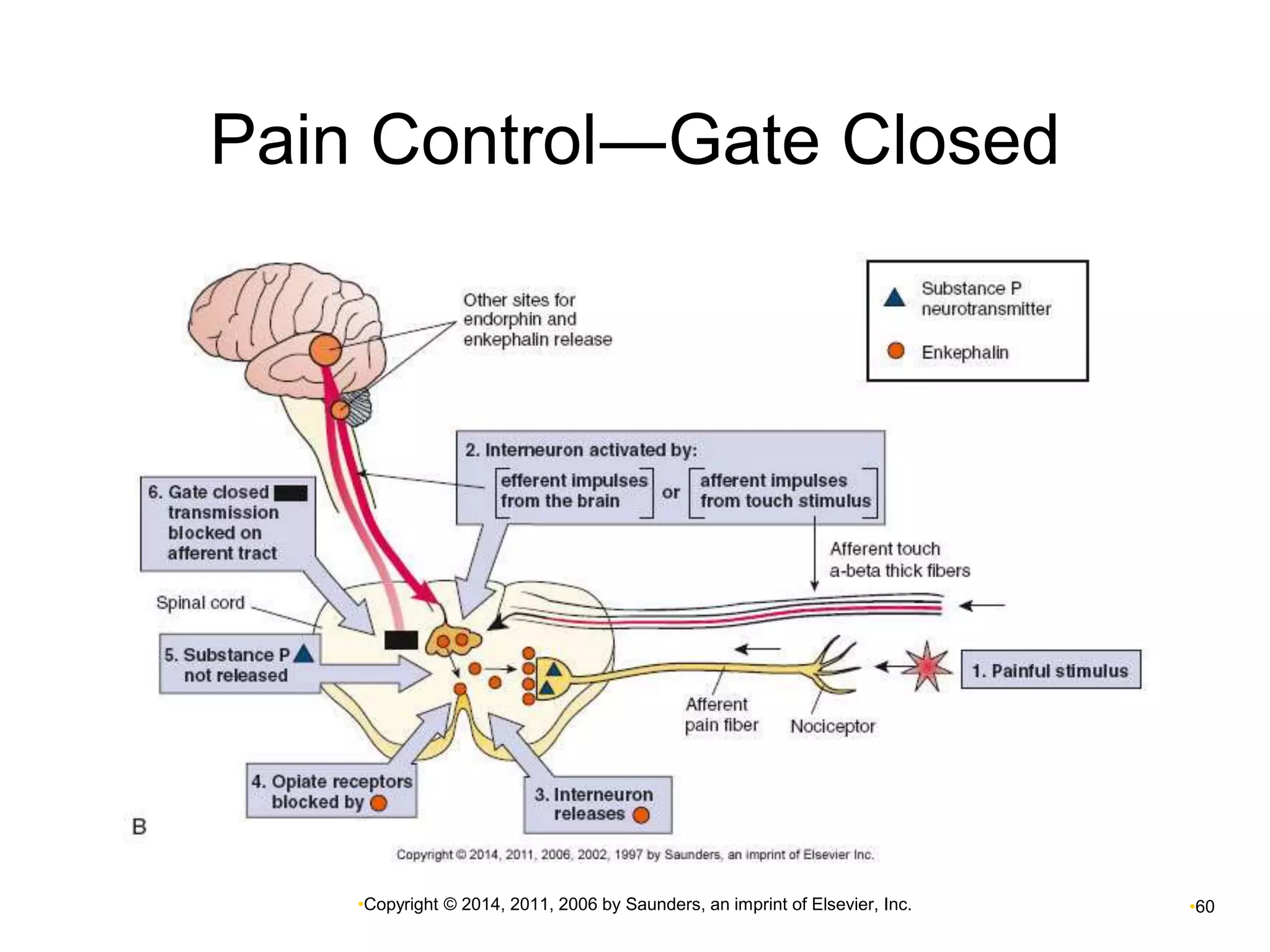
 Gates closed 
• Reduces or modifies the passage of pain impulses 
•Copyright © 2014, 2011, 2006 by Saunders, an imprint of Elsevier, Inc. •58
Pain Control―Gate Open 
•Copyright © 2014, 2011, 2006 by Saunders, an imprint of Elsevier, Inc. •59
Pain Control―Gate Closed 
•Copyright © 2014, 2011, 2006 by Saunders, an imprint of Elsevier, Inc. •60
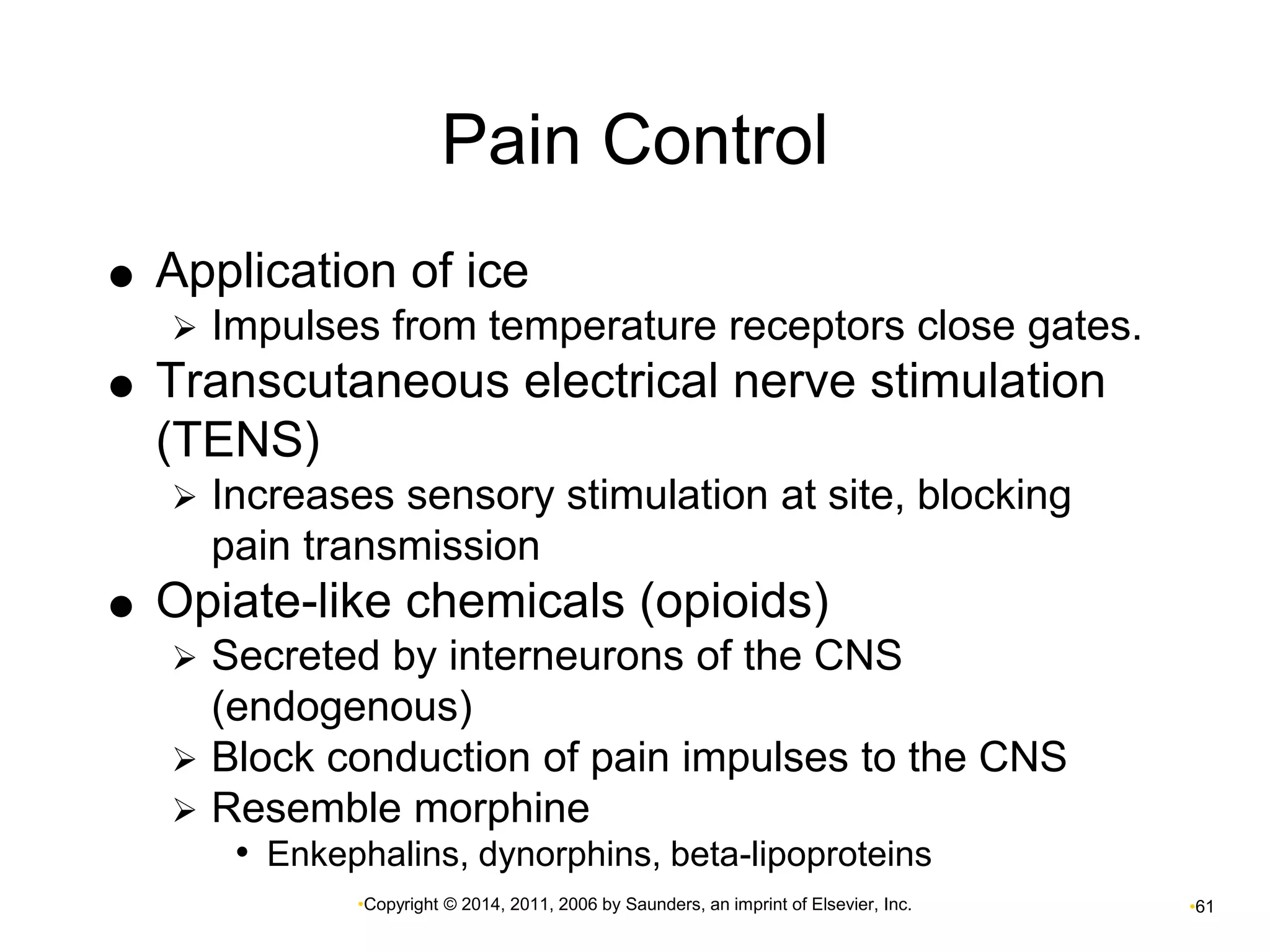
Pain Control 
 Application of ice 
 Impulses from temperature receptors close gates. 
 Transcutaneous electrical nerve stimulation 
(TENS) 
 Increases sensory stimulation at site, blocking 
pain transmission 
 Opiate-like chemicals (opioids) 
 Secreted by interneurons of the CNS 
(endogenous) 
 Block conduction of pain impulses to the CNS 
 Resemble morphine 
• Enkephalins, dynorphins, beta-lipoproteins 
•Copyright © 2014, 2011, 2006 by Saunders, an imprint of Elsevier, Inc. •61
Signs, Symptoms, and 
Diagnosis of Pain 
 Location of pain 
 Descriptive terms 
 Aching, burning, sharp, throbbing, widespread, 
cramping, constant, periodic, unbearable, 
moderate 
 Timing of pain 
 Association with an activity 
 Physical evidence of pain 
 Pallor and sweating 
 High blood pressure, tachycardia 
•Copyright © 2014, 2011, 2006 by Saunders, an imprint of Elsevier, Inc. •62
Signs, Symptoms, and 
Diagnosis of Pain (Cont.) 
 Nausea and vomiting 
 May occur with acute pain 
 Fainting and dizziness 
 May occur with acute pain 
 Anxiety and fear 
 Frequently evident in people with chest pain or 
•Copyright © 2014, 2011, 2006 by Saunders, an imprint of Elsevier, Inc. •63 
trauma
Signs, Symptoms, and 
Diagnosis of Pain (Cont.) 
 Clenched fists or rigid faces 
 Restlessness or constant motion 
 Guarding area to prevent stimulation of 
receptors 
•Copyright © 2014, 2011, 2006 by Saunders, an imprint of Elsevier, Inc. •64
Young Children and Pain 
 Infants respond physiologically 
 Examples: tachycardia, increased blood pressure, 
facial expressions 
 Great variations in different developmental 
stages: 
 Different coping mechanisms 
 Range of behavior 
 Often have difficulty describing the pain 
 Withdrawal and lack of communication in older 
children 
•Copyright © 2014, 2011, 2006 by Saunders, an imprint of Elsevier, Inc. •65
Referred Pain 
 Source may be difficult to determine. 
 Pain may be perceived at site distant from 
source 
 Characteristic of visceral damage in the abdominal 
•Copyright © 2014, 2011, 2006 by Saunders, an imprint of Elsevier, Inc. •66 
organs 
 Heart attack or ischemia in the heart
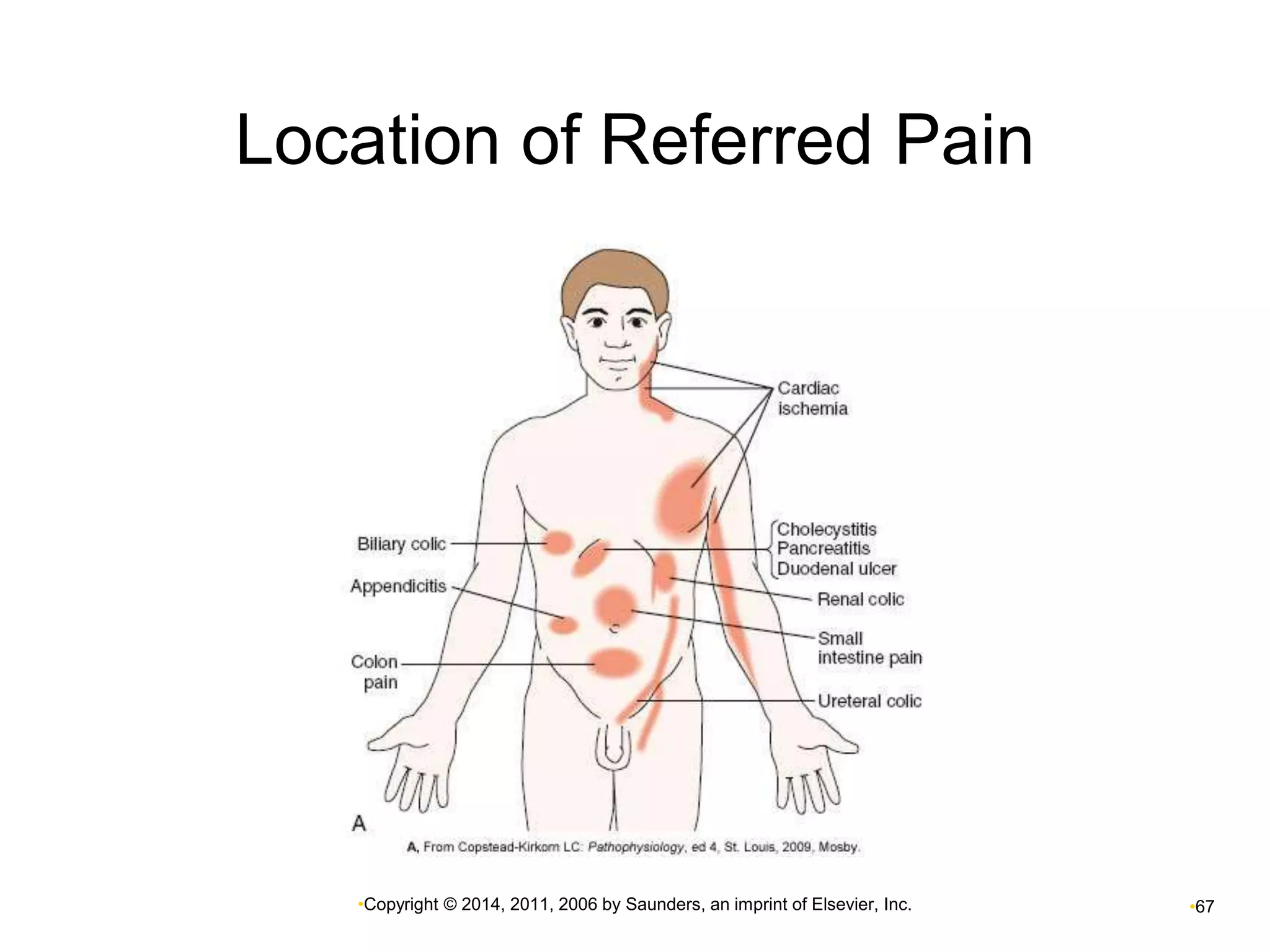
Location of Referred Pain 
•Copyright © 2014, 2011, 2006 by Saunders, an imprint of Elsevier, Inc. •67
Phantom Pain 
 Usually in adults 
 More common if chronic pain has occurred 
 Can follow an amputation 
 Pain, itching, tingling 
 Usually does not respond to common pain 
therapies 
 May resolve within weeks to months 
 Phenomenon not fully understood 
•Copyright © 2014, 2011, 2006 by Saunders, an imprint of Elsevier, Inc. •68
Pain Perception and Response 
 Pain tolerance 
 Degree of pain, intensity, or duration 
 May be increased by endorphin release 
 May be reduced because of fatigue or stress 
 Varies among people in different situations 
 Pain perception 
 Subjective but can be compared from day to day 
in same person 
 Response to pain 
 Influenced by personality, emotions, and cultural 
•Copyright © 2014, 2011, 2006 by Saunders, an imprint of Elsevier, Inc. •69 
norms
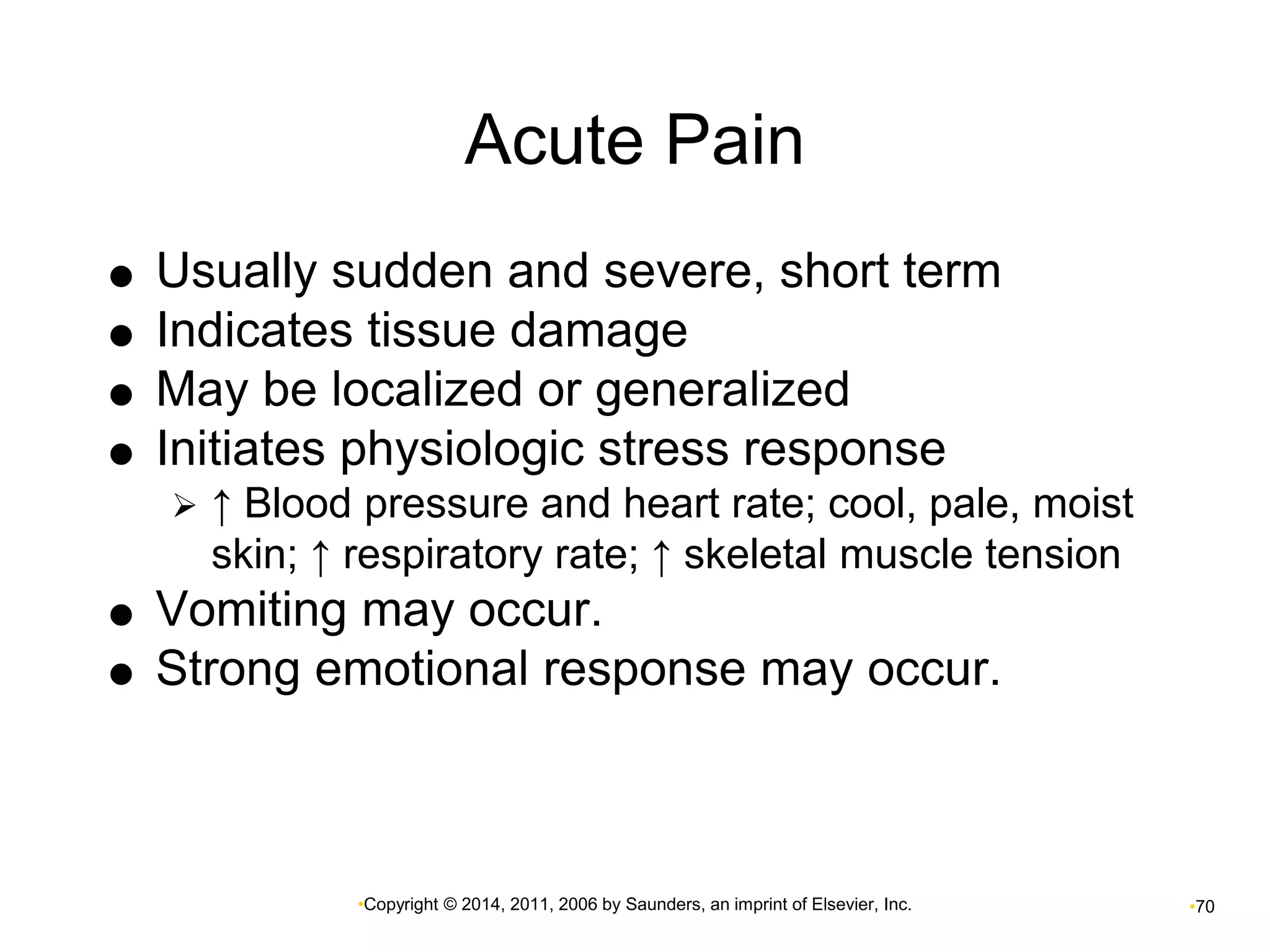
Acute Pain 
 Usually sudden and severe, short term 
 Indicates tissue damage 
 May be localized or generalized 
 Initiates physiologic stress response 
 ↑ Blood pressure and heart rate; cool, pale, moist 
skin; ↑ respiratory rate; ↑ skeletal muscle tension 
 Vomiting may occur. 
 Strong emotional response may occur. 
•Copyright © 2014, 2011, 2006 by Saunders, an imprint of Elsevier, Inc. •70
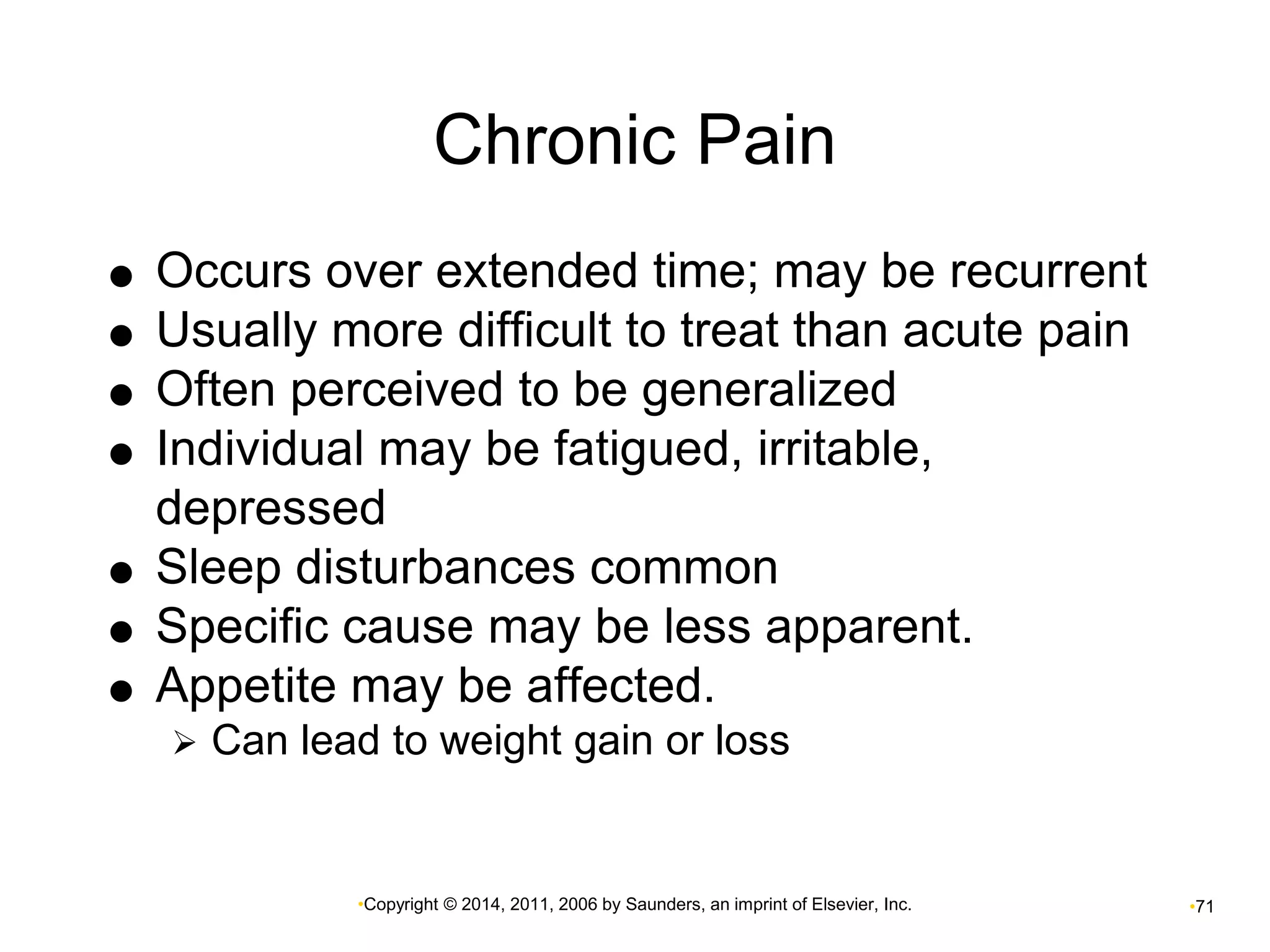
Chronic Pain 
 Occurs over extended time; may be recurrent 
 Usually more difficult to treat than acute pain 
 Often perceived to be generalized 
 Individual may be fatigued, irritable, 
depressed 
 Sleep disturbances common 
 Specific cause may be less apparent. 
 Appetite may be affected. 
 Can lead to weight gain or loss 
•Copyright © 2014, 2011, 2006 by Saunders, an imprint of Elsevier, Inc. •71
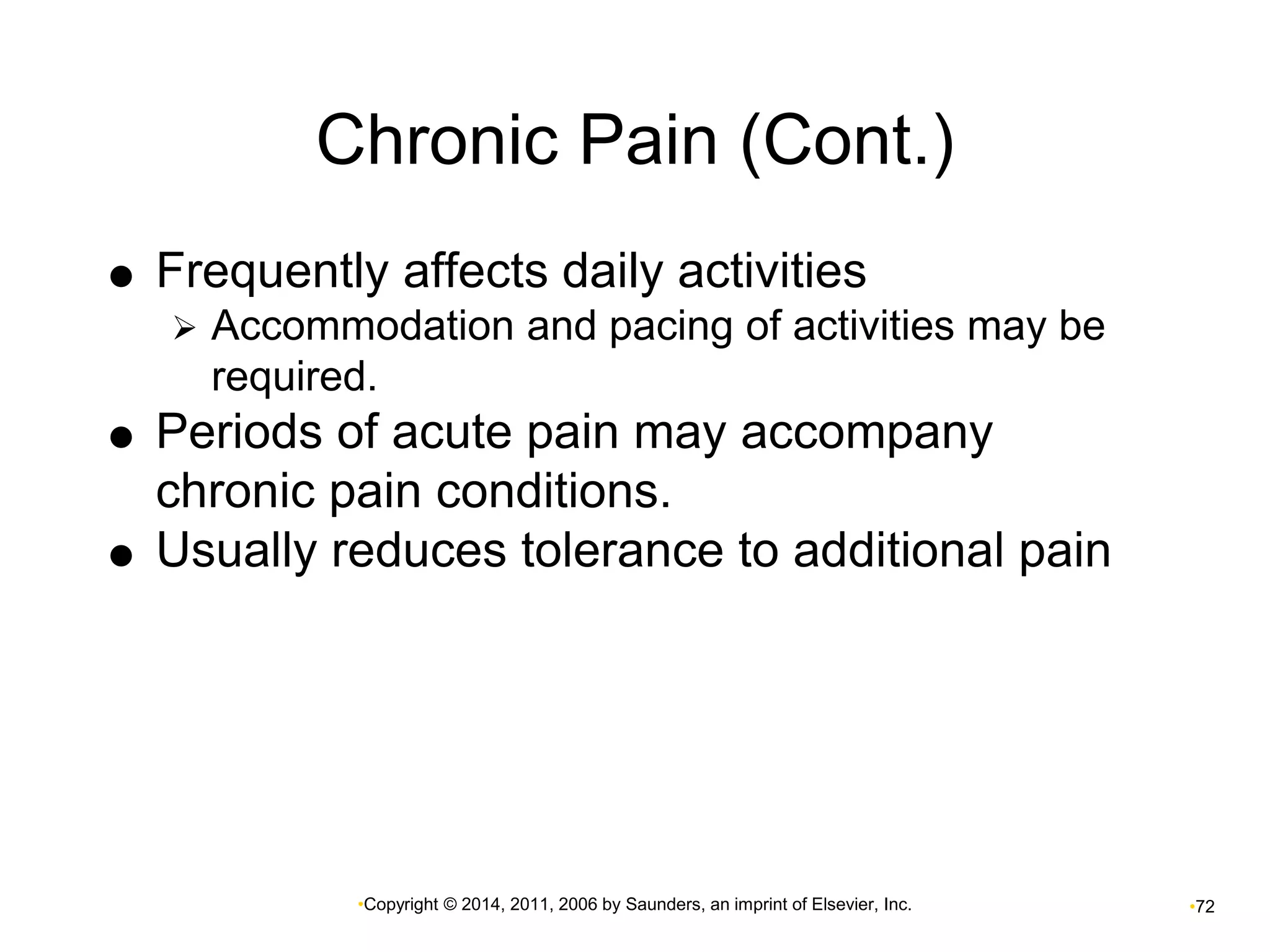
Chronic Pain (Cont.) 
 Frequently affects daily activities 
 Accommodation and pacing of activities may be 
required. 
 Periods of acute pain may accompany 
chronic pain conditions. 
 Usually reduces tolerance to additional pain 
•Copyright © 2014, 2011, 2006 by Saunders, an imprint of Elsevier, Inc. •72
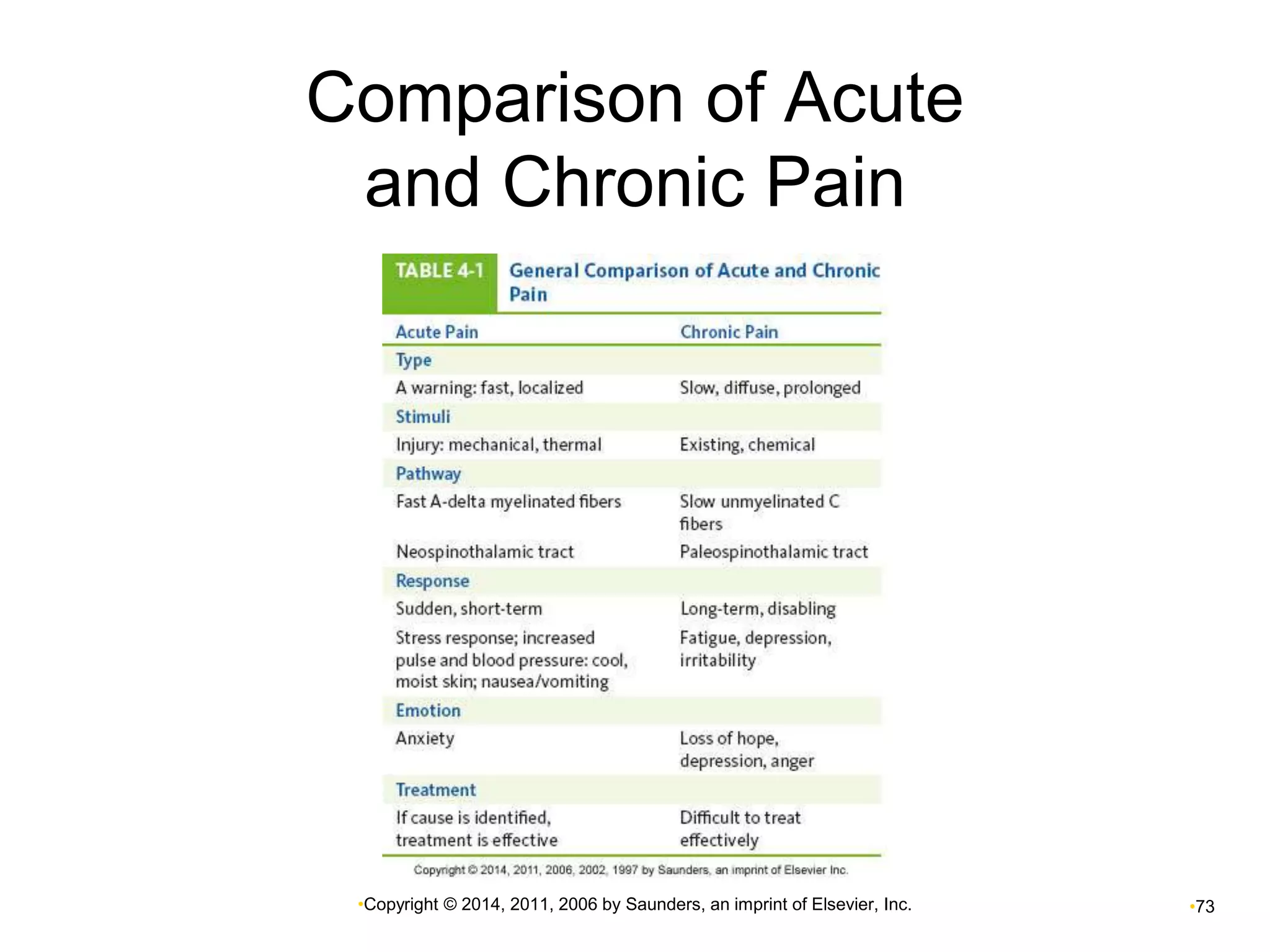
Comparison of Acute 
and Chronic Pain 
•Copyright © 2014, 2011, 2006 by Saunders, an imprint of Elsevier, Inc. •73
Headache: Types and Causes 
 Congested sinuses, nasal congestion, eye 
•Copyright © 2014, 2011, 2006 by Saunders, an imprint of Elsevier, Inc. •74 
strain 
 Muscle spasm and tension 
 From emotional stress 
 In temporal area 
 Temporomandibular joint syndrome 
 Migraine 
 Abnormal blood flow and metabolism in the brain 
 Intracranial headaches 
 Increased pressure inside the skull
Headache: Types and 
Causes (Cont.) 
 Central pain 
 Caused by dysfunction or damage to the brain or 
spinal cord 
 Neuropathic pain 
 Caused by trauma or disease involving the 
peripheral nerves 
 Ischemic pain 
 Results from a profound, sudden loss of blood flow 
to an organ or tissue 
 Cancer-related pain 
 Caused by advance of the disease; pain associated 
with treatment; result of coexisting disease 
•Copyright © 2014, 2011, 2006 by Saunders, an imprint of Elsevier, Inc. •75
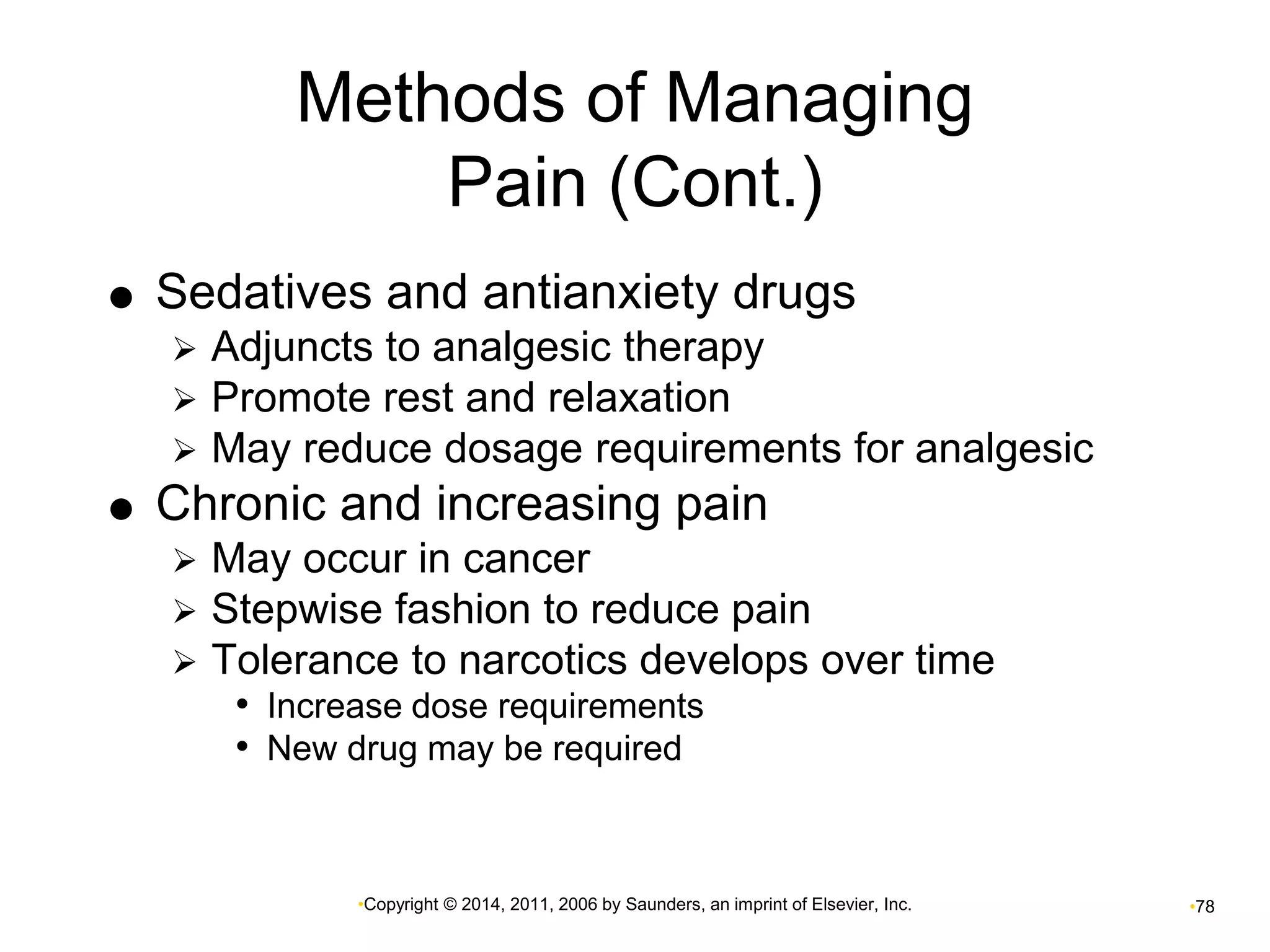
Methods of Managing Pain 
 Remove cause of pain as soon as possible 
 Use of analgesic medications 
 Orally 
 Parenterally (injection) 
 Transdermal patch 
 Classified by ability to relieve 
• Mild pain 
• Moderate pain 
• Severe pain 
•Copyright © 2014, 2011, 2006 by Saunders, an imprint of Elsevier, Inc. •76
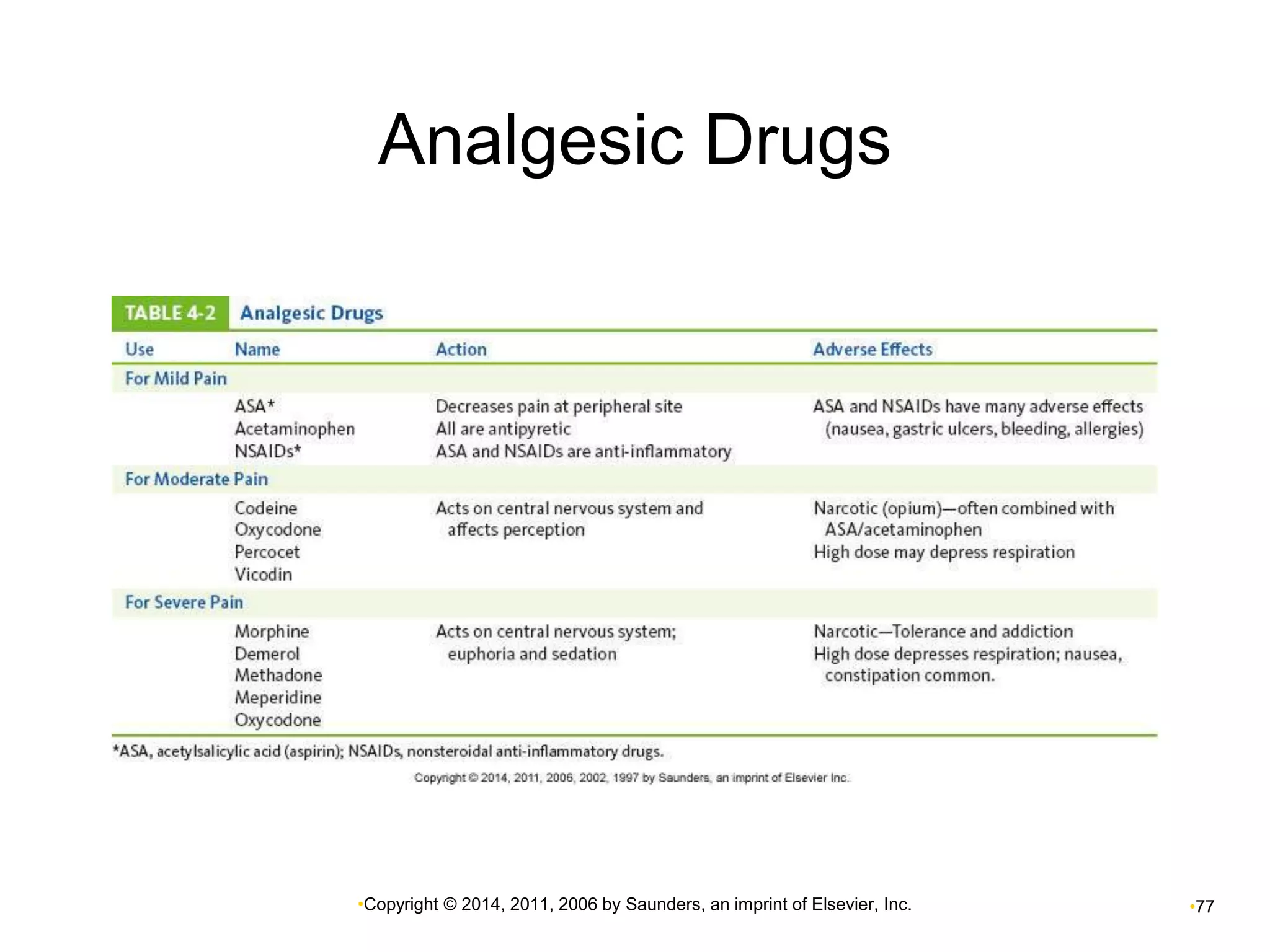
Analgesic Drugs 
•Copyright © 2014, 2011, 2006 by Saunders, an imprint of Elsevier, Inc. •77
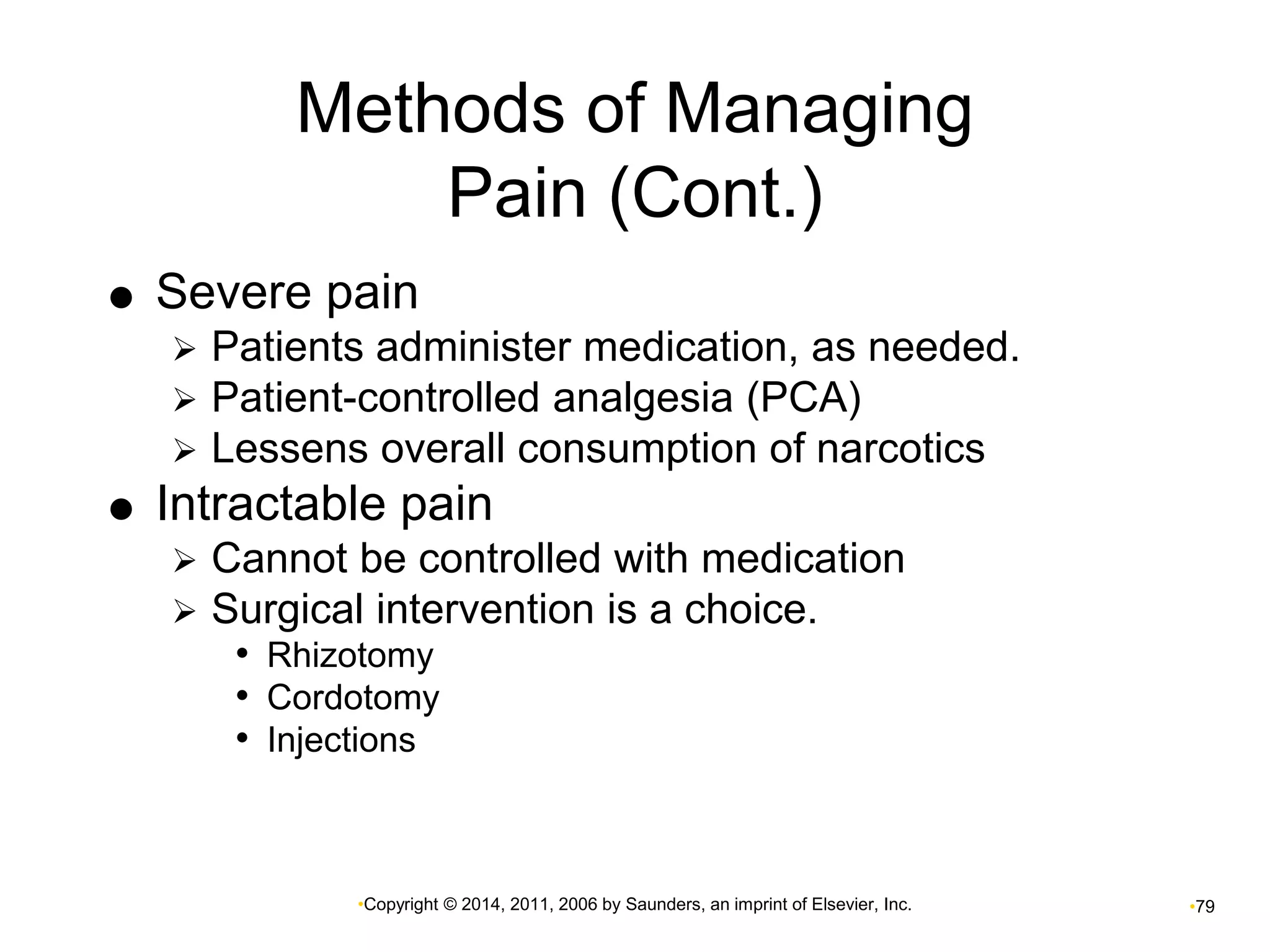
Methods of Managing 
Pain (Cont.) 
 Sedatives and antianxiety drugs 
 Adjuncts to analgesic therapy 
 Promote rest and relaxation 
 May reduce dosage requirements for analgesic 
 Chronic and increasing pain 
 May occur in cancer 
 Stepwise fashion to reduce pain 
 Tolerance to narcotics develops over time 
• Increase dose requirements 
• New drug may be required 
•Copyright © 2014, 2011, 2006 by Saunders, an imprint of Elsevier, Inc. •78
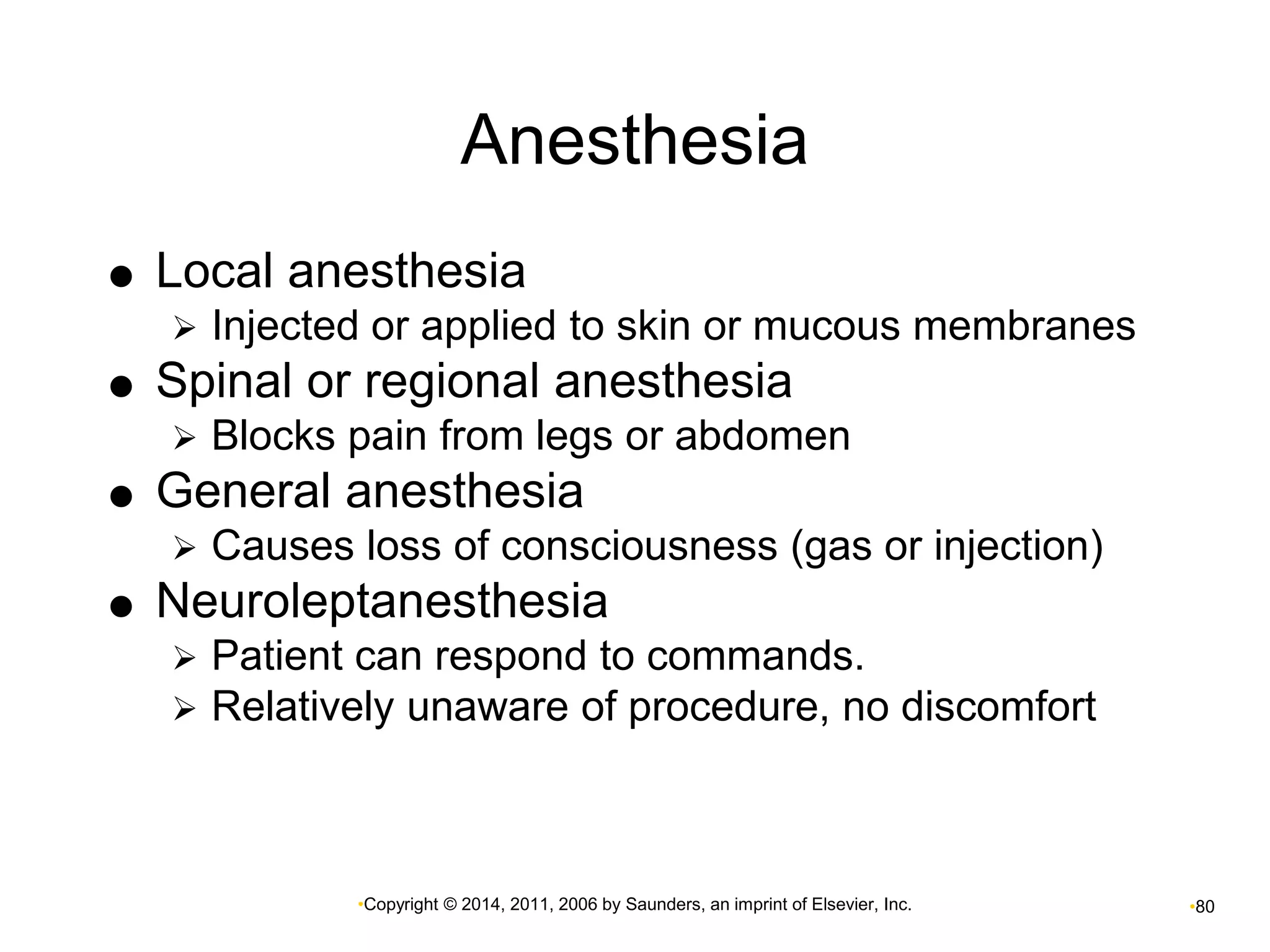
Methods of Managing 
Pain (Cont.) 
 Severe pain 
 Patients administer medication, as needed. 
 Patient-controlled analgesia (PCA) 
 Lessens overall consumption of narcotics 
 Intractable pain 
 Cannot be controlled with medication 
 Surgical intervention is a choice. 
• Rhizotomy 
• Cordotomy 
• Injections 
•Copyright © 2014, 2011, 2006 by Saunders, an imprint of Elsevier, Inc. •79
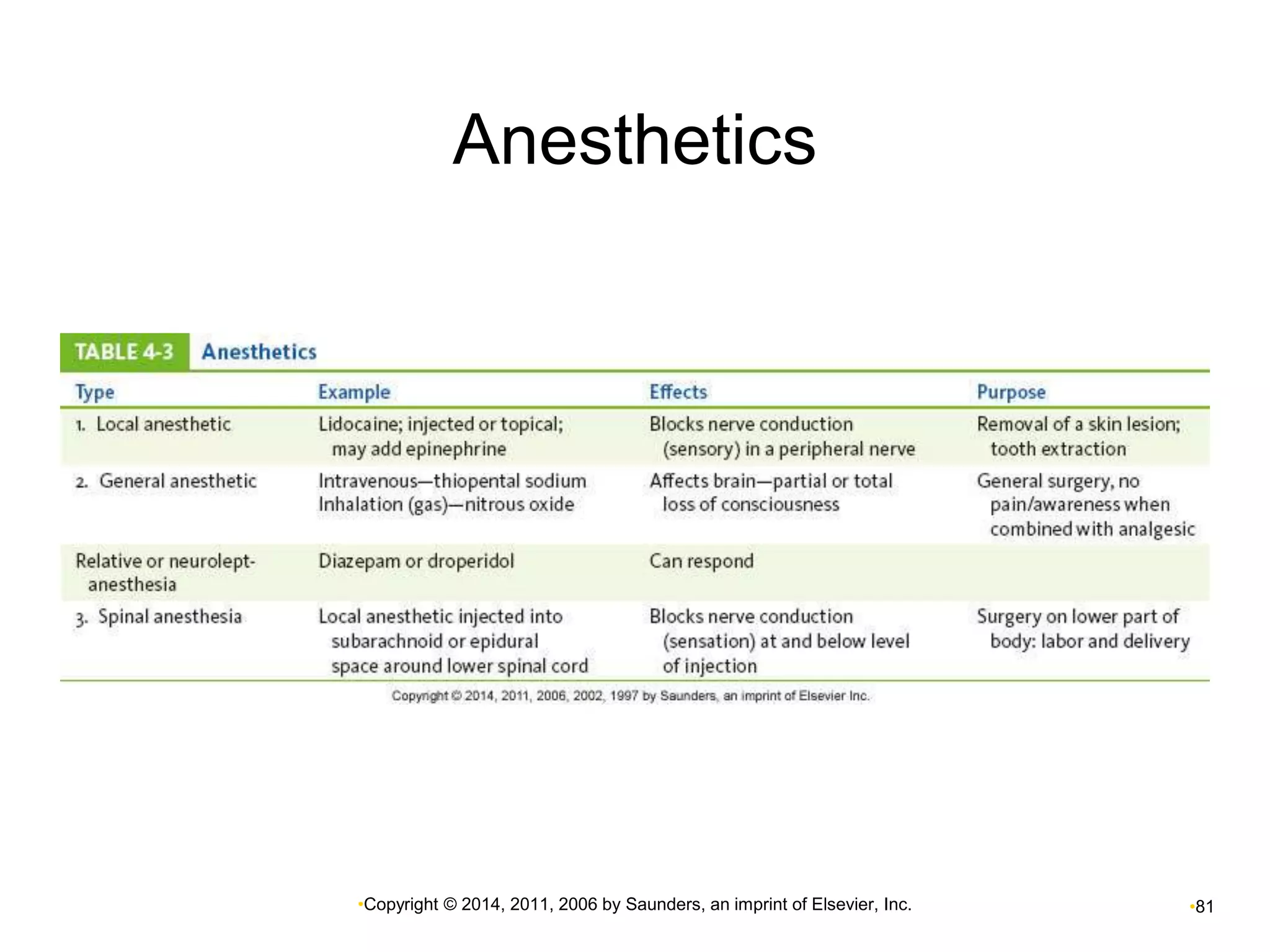
Anesthesia 
 Local anesthesia 
 Injected or applied to skin or mucous membranes 
 Spinal or regional anesthesia 
 Blocks pain from legs or abdomen 
 General anesthesia 
 Causes loss of consciousness (gas or injection) 
 Neuroleptanesthesia 
 Patient can respond to commands. 
 Relatively unaware of procedure, no discomfort 
•Copyright © 2014, 2011, 2006 by Saunders, an imprint of Elsevier, Inc. •80
Anesthetics 
•Copyright © 2014, 2011, 2006 by Saunders, an imprint of Elsevier, Inc. •81

Chapters 3 and 4 Pathology

  • 1.
    Chapter 3 Introductionto Basic Pharmacology and Other Common Therapies
  • 2.
    Pharmacology  Integratedmedical science involving chemistry, biochemistry, anatomy, physiology, microbiology, and more  Study of drugs, their actions, dosage, therapeutic uses, adverse effects  Drug therapy is directly linked to the pathophysiology of a particular disease.  Drugs may come from natural sources.  Plants, animals, microorganisms  Drugs also may be synthesized. •Copyright © 2014, 2011, 2006 by Saunders, an imprint of Elsevier, Inc. •2
  • 3.
    Drugs  Promotehealing  Anti-inflammatory  Cure disease  Antibacterial  Control or slow progress of a disease  Cancer chemotherapy  Prevent disease  Vaccine •Copyright © 2014, 2011, 2006 by Saunders, an imprint of Elsevier, Inc. •3
  • 4.
    Drugs (Cont.) Alter neurotransmission  Antidepressants  Decrease risk of complications  Anticoagulants  Increase function and comfort  Analgesics for pain  Provide replacement therapy •Copyright © 2014, 2011, 2006 by Saunders, an imprint of Elsevier, Inc. •4  Insulin  Reduce excessive activity in the body  Proton pump inhibitors
  • 5.
    Disciplines of Pharmacology  Pharmacodynamics  Pharmacokinetics  Pharmacotherapeutics  Toxicology  Pharmacy •Copyright © 2014, 2011, 2006 by Saunders, an imprint of Elsevier, Inc. •5
  • 6.
    Drug Effects Therapeutic (desired) action may be:  Stimulating or inhibiting cell function  Blocking biochemical actions in tissues  Classification  Grouped by their primary pharmacologic action and effect  Indications  Approved for uses to treat conditions for which the drug has been proved to be effective •Copyright © 2014, 2011, 2006 by Saunders, an imprint of Elsevier, Inc. •6
  • 7.
    Drug Effects (Cont.) Generally, drugs possess more than one effect on the body.  Contraindications  Circumstances under which a drug should not be administered  Side effects  Mild, undesirable effects of a drug, even at recommended dose  Adverse or toxic effects  Drug effects that are dangerous, cause significant tissue damage, or are life-threatening •Copyright © 2014, 2011, 2006 by Saunders, an imprint of Elsevier, Inc. •7
  • 8.
    Specific Adverse DrugEffects  Hypersensitivity―allergic reactions  Reactions may be mild or can result in anaphylaxis.  Idiosyncratic reactions  Unusual responses to a drug  Iatrogenic  Negative effect associated with administration of •Copyright © 2014, 2011, 2006 by Saunders, an imprint of Elsevier, Inc. •8 drug  Teratogenic  Harmful effect on fetus, developmental defects
  • 9.
    Specific Adverse DrugEffects (Cont.)  Interactions: drug effect modified by combination with another drug  Synergism • Effect of drug combination may be greater than the sum of the effects of the individual drugs.  Antagonism • Combination greatly decreases the effect of each drug.  Potentiation • One drug enhances the effect of a second drug. •Copyright © 2014, 2011, 2006 by Saunders, an imprint of Elsevier, Inc. •9
  • 10.
    Administration and Distributionof Drugs •Copyright © 2014, 2011, 2006 by Saunders, an imprint of Elsevier, Inc. •10  Dose  Amount of drug required to produce the desired effect in adult  Expressed by a weight or measure  Expressed by time factor (e.g., twice a day)  Child’s dose  Best calculated by child’s weight, not age  “Loading dose”  Larger dose may be administered initially to raise blood levels to an effective level
  • 11.
    Administration and Distributionof Drugs (Cont.)  Frequency of dosing  Important to maintain effective blood levels of the drug without reaching toxic levels  Optimum dosing schedule  Established for each drug based on • Absorption, transport in the blood, half-life of the drug •Copyright © 2014, 2011, 2006 by Saunders, an imprint of Elsevier, Inc. •11  Timing  Directions regarding • Timing related to meals • Daily events • Sleep
  • 12.
    Factors Affecting Blood Levels of Drugs  Regular intake, normal distribution and •Copyright © 2014, 2011, 2006 by Saunders, an imprint of Elsevier, Inc. •12 excretion
  • 13.
    Factors Affecting BloodLevels of Drugs (Cont.)  Factors: taking drug at irregular intervals, missing doses •Copyright © 2014, 2011, 2006 by Saunders, an imprint of Elsevier, Inc. •13
  • 14.
    Factors Affecting Blood Levels of Drugs (Cont.)  Factors: taking double dose or too frequently •Copyright © 2014, 2011, 2006 by Saunders, an imprint of Elsevier, Inc. •14
  • 15.
    Factors Influencing BloodLevels of a Drug  Liver and kidney function  Absorption and excretion  Circulation and cardiovascular function •Copyright © 2014, 2011, 2006 by Saunders, an imprint of Elsevier, Inc. •15  Age  Body weight and proportion of fatty tissue  Activity level, exercise  Food and fluid intake  Genetic factors  Health status, presence of other diseases, chronic or acute
  • 16.
    Administration and Distribution of Drugs Drugs can be administered for acting locally or have a systemic action.  Drug enters body by chosen route  Absorbed into blood or acts at local site  Travels in the bloodstream  Arrives at site of action  Exerts its effect  Is metabolized into inactive compounds  Is excreted from the body •Copyright © 2014, 2011, 2006 by Saunders, an imprint of Elsevier, Inc. •16
  • 17.
    Routes of DrugAdministration  Oral tablet, capsule, liquid  Sublingual  Subcutaneous injection  Intramuscular injection  Intravenous injection  Inhalation  Topical (gel, cream, spray, liquid)  Suppository •Copyright © 2014, 2011, 2006 by Saunders, an imprint of Elsevier, Inc. •17
  • 18.
    Administration and Distribution of Drugs (Cont.)  Some drugs can only be taken via one route.  Oral medication  Absorbed from stomach or intestine  Transported to the liver  Released into general circulation  Intramuscular injection  Gradually absorbed into the blood  Blood transports drug •Copyright © 2014, 2011, 2006 by Saunders, an imprint of Elsevier, Inc. •18
  • 19.
    Drug Absorption, Distribution, and Excretion •Copyright © 2014, 2011, 2006 by Saunders, an imprint of Elsevier, Inc. •19
  • 20.
    Drug Mechanisms andReceptors  Common pharmacologic action requires drug-receptor interaction.  Drugs may stimulate receptors directly.  Drugs may block receptor site for normal chemicals of the body  Specificity of drug dependent on mode of •Copyright © 2014, 2011, 2006 by Saunders, an imprint of Elsevier, Inc. •20 action  Drugs that interact with several metabolic pathways or common functions are likely to have greater side effects.
  • 21.
    Receptors and DrugAction •Copyright © 2014, 2011, 2006 by Saunders, an imprint of Elsevier, Inc. •21
  • 22.
    Prescriptions  Prescription―asigned legal document that must include the following:  Patient’s name, address, and age (if significant)  Prescriber’s name, address, and identification •Copyright © 2014, 2011, 2006 by Saunders, an imprint of Elsevier, Inc. •22 number  Date  Name and amount of the drug  Dosage  Route and directions for using the drug  Permission for additional quantities
  • 23.
    Drug Nomenclature and Classification  Each drug has a generic name, a trade name, and a chemical name  Generic name: unique, official, simple name for a specific drug  For example, ASA  Trade, proprietary, or brand name  For example, aspirin  Chemical name: chemical component  For example, acetylsalicylic acid •Copyright © 2014, 2011, 2006 by Saunders, an imprint of Elsevier, Inc. •23
  • 24.
    Examples of DrugNomenclature •Copyright © 2014, 2011, 2006 by Saunders, an imprint of Elsevier, Inc. •24
  • 25.
    Drug Regulation U.S. Food and Drug Administration*  Regulates the production, labeling, distribution, and other aspects of drug control  Scheduled drugs  Drugs considered to have a risk for potential adverse side effects, abuse, or dependency  Over-the-counter (OTC) drugs  Available without prescription *Food and Drug Directorate in Canada. •Copyright © 2014, 2011, 2006 by Saunders, an imprint of Elsevier, Inc. •25
  • 26.
    Traditional Forms ofTherapy •Copyright © 2014, 2011, 2006 by Saunders, an imprint of Elsevier, Inc. •26
  • 27.
    Physiotherapy  Assessesphysical function  Works to reduce pain, restore any deficit and prevent further physical dysfunction  Involves individualized treatment and rehabilitation  Physiotherapy may include the following:  Appropriate exercise  Use of ultrasound  Transcutaneous electrical nerve stimulation •Copyright © 2014, 2011, 2006 by Saunders, an imprint of Elsevier, Inc. •27 (TENS)  Other methods to alleviate pain, increase function
  • 28.
    Physiotherapist  Treatsacute injuries as well as chronic conditions  Practice includes the following:  Pain disorders  Acute neurologic disorders  Musculoskeletal disorders  Cardiopulmonary disorders  Infants with congenital abnormalities  Children and adults with injuries that affect •Copyright © 2014, 2011, 2006 by Saunders, an imprint of Elsevier, Inc. •28 mobility
  • 29.
    Occupational Therapist Provides functional assessment related to normal activities of daily living  Provides guidance and practical assistance to maintain independence  Integrates remediation of motor control, cognition, and visual-spatial perception  Necessary for patient safety  Teaches use of adaptations for specific •Copyright © 2014, 2011, 2006 by Saunders, an imprint of Elsevier, Inc. •29 needs  Assesses technologies available for use in home and workplace
  • 30.
    Speech and Language Pathologist  Assesses and treats those with communication or swallowing problems  Patients may include the following:  Infant with swallowing and feeding problems  Child with hearing deficit who is mute  Adult with aphasia following a stroke  Child with delayed speech  Individual with dysarthria •Copyright © 2014, 2011, 2006 by Saunders, an imprint of Elsevier, Inc. •30
  • 31.
    Nutritionist-Dietitian  Expertin nutritional needs of the body in health and illness  Advises on nutritional needs and food management suited to a specific diagnosis  Example: diabetes  Supervises food services in hospitals and other health care institutions  May consult on the dangers of extreme diets and eating disorders •Copyright © 2014, 2011, 2006 by Saunders, an imprint of Elsevier, Inc. •31
  • 32.
    Registered Massage Therapist  Uses a variety of massage techniques to:  Increase circulation  Reduce pain  Increase flexibility for patients with joint pain or problems with body alignment  May use: • Soothing aromatics • Acupuncture • Other modalities •Copyright © 2014, 2011, 2006 by Saunders, an imprint of Elsevier, Inc. •32
  • 33.
    Osteopath  Osteopathsare medically licensed doctors in many jurisdictions.  Uses many medical treatment methods  In addition, an osteopath:  Promotes body’s natural healing processes by incorporating manipulations of the musculoskeletal system (e.g., use of chest percussion to relief respiratory congestion) •Copyright © 2014, 2011, 2006 by Saunders, an imprint of Elsevier, Inc. •33
  • 34.
    Chiropractic  Basedon the concept that one’s health status is dependent on the state of the nervous system  Frequently involves manipulations of the vertebral column  May involve deep tissue massage, acupressure, and/or acupuncture  Radiology may be used for diagnosis.  No drugs or surgery •Copyright © 2014, 2011, 2006 by Saunders, an imprint of Elsevier, Inc. •34
  • 35.
    Complementary or AlternativeTherapies •Copyright © 2014, 2011, 2006 by Saunders, an imprint of Elsevier, Inc. •35
  • 36.
    Principles  Thesetherapies are used in conjunction with medically related therapies.  All practitioners should know about various therapies that the client is using.  Use of complementary therapy does not require abandoning medical therapy. •Copyright © 2014, 2011, 2006 by Saunders, an imprint of Elsevier, Inc. •36
  • 37.
    Noncontact Therapeutic Touch  Energy is exchanged between people for relief of pain and anxiety and to promote healing.  Consciously forms a positive intent to heal  Location of problem areas by scanning body with the hands  Healing is promoted by lightly touching the skin or moving the hands just above the body surface.  Imagery, light, or colors may be incorporated. •Copyright © 2014, 2011, 2006 by Saunders, an imprint of Elsevier, Inc. •37
  • 38.
    Naturopathy  Treatmentbased on the following:  Promoting natural foods  Massage  Exercise  Fresh air  Acupuncture  Herbal compounds  Nutrition  Physical manipulations •Copyright © 2014, 2011, 2006 by Saunders, an imprint of Elsevier, Inc. •38
  • 39.
    Homeopathy  Goalis to stimulate the immune system and natural healing powers of the body by use of the following:  Plant products  Animal products  Mineral products  Offending toxic substance is identified for each disease state. • Diluted several thousand-fold • The diluted toxin is then administered to treat the problem. •Copyright © 2014, 2011, 2006 by Saunders, an imprint of Elsevier, Inc. •39
  • 40.
    Herbalism  Firstdocumented in ancient Egypt  Use of herbs and plants for treatment of acute conditions or prevention of disease  Efforts are being focused on the following:  Providing standardized content  Providing efficacy  Improving purity •Copyright © 2014, 2011, 2006 by Saunders, an imprint of Elsevier, Inc. •40
  • 41.
    Aromatherapy  Usesessential oils that have therapeutic •Copyright © 2014, 2011, 2006 by Saunders, an imprint of Elsevier, Inc. •41 effects  Thought to act on neural pathways through the olfactory system  Oils may be  Absorbed through the skin into the general circulation • When bathing • With massage  Inhaled
  • 42.
    Asian Concepts ofDisease and Healing  Based on balance or imbalance of life energy―qi  Disease is caused by a deficit or excess of qi.  Qi is derived from three sources:  Inherited or ancestral factors  Food ingested  Air breathed in  Qi flows along specific channels―meridians.  All organs and body parts are connected. •Copyright © 2014, 2011, 2006 by Saunders, an imprint of Elsevier, Inc. •42
  • 43.
    Asian Concepts ofDisease and Healing (Cont.)  Acupuncture  Increases energy, function; blocks pain pathways  Involves Inserting fine needles into the various meridian acupoints (365) • Each point has specific and generalized therapeutic actions.  Treatment on average uses 5 to 15 needles. •Copyright © 2014, 2011, 2006 by Saunders, an imprint of Elsevier, Inc. •43  Shiatsu  Japanese―acupuncture without needles  Uses slow, deep, gentle pressure to specific points  Often used for stress-related illness and back pain; provides relaxation
  • 44.
    Asian Concepts ofDisease and Healing (Cont.) •Copyright © 2014, 2011, 2006 by Saunders, an imprint of Elsevier, Inc. •44  Yoga  Combines physical activity in the form of stretching postures with meditation  Improves flexibility, muscle tone, endurance, overall health; reduces stress  Reflexology  Relates points on feet and hands to 10 longitudinal zones in the body  Practitioner uses varying degrees of pressure.  Relieves stress and muscle tension
  • 45.
    Asian Concepts ofDisease and Healing (Cont.)  Craniosacral therapy  Used by a variety of health care practitioners  Therapy deals with the pulsing rhythm of cerebrospinal fluid around brain and spinal cord  Gentle palpation and manipulation of skull and vertebrae  Ayurveda  Special dietary plans, yoga, and herbal remedies are commonly used.  Balance of body factors results in healthy mind and body •Copyright © 2014, 2011, 2006 by Saunders, an imprint of Elsevier, Inc. •45
  • 46.
  • 47.
    Pain  Unpleasantsensation  Discomfort caused by stimulation of pain receptors  Body defense mechanism  Warning of a problem  Complex mechanisms  Many not totally understood  Subjective scales  Developed to compare pain levels over time •Copyright © 2014, 2011, 2006 by Saunders, an imprint of Elsevier, Inc. •47
  • 48.
    Causes of Pain  Inflammation •Copyright © 2014, 2011, 2006 by Saunders, an imprint of Elsevier, Inc. •48  Infection  Ischemia and tissue necrosis  Stretching of tissue  Stretching of tendons, ligaments, joint capsule  Chemicals  Burns  Muscle spasm
  • 49.
    Somatic Versus VisceralPain  Somatic pain  From skin (cutaneous)  Bone muscle  Conducted by sensory fibers  Visceral pain  Originates in organs  Conducted by sympathetic fibers  May be acute or chronic •Copyright © 2014, 2011, 2006 by Saunders, an imprint of Elsevier, Inc. •49
  • 50.
    Pain Pathways Nociceptors (pain receptors) are free sensory nerve endings.  May be stimulated by:  Temperature • Extremes of temperature  Chemicals • Examples: acids, bradykinin, histamine, prostaglandin  Physical means • Example: pressure •Copyright © 2014, 2011, 2006 by Saunders, an imprint of Elsevier, Inc. •50
  • 51.
    Pain (Cont.) Pain threshold  Level of stimulation required to elicit a pain response  Usually does not vary among individuals  Pain tolerance  Ability to cope with pain  Culturally related  Varies among individuals •Copyright © 2014, 2011, 2006 by Saunders, an imprint of Elsevier, Inc. •51
  • 52.
    Pain Pathways Nociceptors  Stimulated by • Thermal means: extreme temperatures • Chemical: For example, acids or chemicals produced by body (e.g., bradykinin, histamine, prostaglandin) • Physical: pressure •Copyright © 2014, 2011, 2006 by Saunders, an imprint of Elsevier, Inc. •52
  • 53.
    Pain Fibers Afferent fibers  Myelinated A delta fibers  Transmit impulses very rapidly  Acute pain • Sudden, sharp, localized  Unmyelinated C fibers  Transmit impulses slowly  Chronic pain • Diffuse, dull, burning, or aching sensation •Copyright © 2014, 2011, 2006 by Saunders, an imprint of Elsevier, Inc. •53
  • 54.
    Pain Pathways (Cont.)  Dermatome  Area of skin innervated by a specific spinal nerve  Somatosensory cortex → “mapped” • Corresponds to source of pain stimuli  Reflex response  Involuntary muscle contraction away from pain •Copyright © 2014, 2011, 2006 by Saunders, an imprint of Elsevier, Inc. •54 source  Involuntary muscle contraction to guard against movement
  • 55.
    Pain Pathways (Cont.)  Spinothalamic bundle in the spinal cord  Neospinothalamic tract → fast impulses; acute •Copyright © 2014, 2011, 2006 by Saunders, an imprint of Elsevier, Inc. •55 pain  Paleospinothalamic tract → slow impulses; chronic, dull pain  Spinothalamic tracts connect with reticular formation of brain
  • 56.
    Pain Pathways (Cont.)  Somatic sensory area in the cerebral cortex located in the parietal lobe  Perception and localization of sensation  Hypothalamus and limbic system  Emotional factors  Communication with other regions of the brain to integrate responses  Reticular activating system (RAS)  Reticular formation in the pons and medulla  Awareness of incoming brain stimuli •Copyright © 2014, 2011, 2006 by Saunders, an imprint of Elsevier, Inc. •56
  • 57.
    Pain Pathways (Cont.) •Copyright © 2014, 2011, 2006 by Saunders, an imprint of Elsevier, Inc. •57
  • 58.
    Physiology of Painand Pain Control  Gate control theory  Control systems, “gates” built into normal pain pathways  Can modify pain stimuli conduction and transmission in the spinal cord and brain  Gates open • Pain impulses transmitted from periphery to brain  Gates closed • Reduces or modifies the passage of pain impulses •Copyright © 2014, 2011, 2006 by Saunders, an imprint of Elsevier, Inc. •58
  • 59.
    Pain Control―Gate Open •Copyright © 2014, 2011, 2006 by Saunders, an imprint of Elsevier, Inc. •59
  • 60.
    Pain Control―Gate Closed •Copyright © 2014, 2011, 2006 by Saunders, an imprint of Elsevier, Inc. •60
  • 61.
    Pain Control Application of ice  Impulses from temperature receptors close gates.  Transcutaneous electrical nerve stimulation (TENS)  Increases sensory stimulation at site, blocking pain transmission  Opiate-like chemicals (opioids)  Secreted by interneurons of the CNS (endogenous)  Block conduction of pain impulses to the CNS  Resemble morphine • Enkephalins, dynorphins, beta-lipoproteins •Copyright © 2014, 2011, 2006 by Saunders, an imprint of Elsevier, Inc. •61
  • 62.
    Signs, Symptoms, and Diagnosis of Pain  Location of pain  Descriptive terms  Aching, burning, sharp, throbbing, widespread, cramping, constant, periodic, unbearable, moderate  Timing of pain  Association with an activity  Physical evidence of pain  Pallor and sweating  High blood pressure, tachycardia •Copyright © 2014, 2011, 2006 by Saunders, an imprint of Elsevier, Inc. •62
  • 63.
    Signs, Symptoms, and Diagnosis of Pain (Cont.)  Nausea and vomiting  May occur with acute pain  Fainting and dizziness  May occur with acute pain  Anxiety and fear  Frequently evident in people with chest pain or •Copyright © 2014, 2011, 2006 by Saunders, an imprint of Elsevier, Inc. •63 trauma
  • 64.
    Signs, Symptoms, and Diagnosis of Pain (Cont.)  Clenched fists or rigid faces  Restlessness or constant motion  Guarding area to prevent stimulation of receptors •Copyright © 2014, 2011, 2006 by Saunders, an imprint of Elsevier, Inc. •64
  • 65.
    Young Children andPain  Infants respond physiologically  Examples: tachycardia, increased blood pressure, facial expressions  Great variations in different developmental stages:  Different coping mechanisms  Range of behavior  Often have difficulty describing the pain  Withdrawal and lack of communication in older children •Copyright © 2014, 2011, 2006 by Saunders, an imprint of Elsevier, Inc. •65
  • 66.
    Referred Pain Source may be difficult to determine.  Pain may be perceived at site distant from source  Characteristic of visceral damage in the abdominal •Copyright © 2014, 2011, 2006 by Saunders, an imprint of Elsevier, Inc. •66 organs  Heart attack or ischemia in the heart
  • 67.
    Location of ReferredPain •Copyright © 2014, 2011, 2006 by Saunders, an imprint of Elsevier, Inc. •67
  • 68.
    Phantom Pain Usually in adults  More common if chronic pain has occurred  Can follow an amputation  Pain, itching, tingling  Usually does not respond to common pain therapies  May resolve within weeks to months  Phenomenon not fully understood •Copyright © 2014, 2011, 2006 by Saunders, an imprint of Elsevier, Inc. •68
  • 69.
    Pain Perception andResponse  Pain tolerance  Degree of pain, intensity, or duration  May be increased by endorphin release  May be reduced because of fatigue or stress  Varies among people in different situations  Pain perception  Subjective but can be compared from day to day in same person  Response to pain  Influenced by personality, emotions, and cultural •Copyright © 2014, 2011, 2006 by Saunders, an imprint of Elsevier, Inc. •69 norms
  • 70.
    Acute Pain Usually sudden and severe, short term  Indicates tissue damage  May be localized or generalized  Initiates physiologic stress response  ↑ Blood pressure and heart rate; cool, pale, moist skin; ↑ respiratory rate; ↑ skeletal muscle tension  Vomiting may occur.  Strong emotional response may occur. •Copyright © 2014, 2011, 2006 by Saunders, an imprint of Elsevier, Inc. •70
  • 71.
    Chronic Pain Occurs over extended time; may be recurrent  Usually more difficult to treat than acute pain  Often perceived to be generalized  Individual may be fatigued, irritable, depressed  Sleep disturbances common  Specific cause may be less apparent.  Appetite may be affected.  Can lead to weight gain or loss •Copyright © 2014, 2011, 2006 by Saunders, an imprint of Elsevier, Inc. •71
  • 72.
    Chronic Pain (Cont.)  Frequently affects daily activities  Accommodation and pacing of activities may be required.  Periods of acute pain may accompany chronic pain conditions.  Usually reduces tolerance to additional pain •Copyright © 2014, 2011, 2006 by Saunders, an imprint of Elsevier, Inc. •72
  • 73.
    Comparison of Acute and Chronic Pain •Copyright © 2014, 2011, 2006 by Saunders, an imprint of Elsevier, Inc. •73
  • 74.
    Headache: Types andCauses  Congested sinuses, nasal congestion, eye •Copyright © 2014, 2011, 2006 by Saunders, an imprint of Elsevier, Inc. •74 strain  Muscle spasm and tension  From emotional stress  In temporal area  Temporomandibular joint syndrome  Migraine  Abnormal blood flow and metabolism in the brain  Intracranial headaches  Increased pressure inside the skull
  • 75.
    Headache: Types and Causes (Cont.)  Central pain  Caused by dysfunction or damage to the brain or spinal cord  Neuropathic pain  Caused by trauma or disease involving the peripheral nerves  Ischemic pain  Results from a profound, sudden loss of blood flow to an organ or tissue  Cancer-related pain  Caused by advance of the disease; pain associated with treatment; result of coexisting disease •Copyright © 2014, 2011, 2006 by Saunders, an imprint of Elsevier, Inc. •75
  • 76.
    Methods of ManagingPain  Remove cause of pain as soon as possible  Use of analgesic medications  Orally  Parenterally (injection)  Transdermal patch  Classified by ability to relieve • Mild pain • Moderate pain • Severe pain •Copyright © 2014, 2011, 2006 by Saunders, an imprint of Elsevier, Inc. •76
  • 77.
    Analgesic Drugs •Copyright© 2014, 2011, 2006 by Saunders, an imprint of Elsevier, Inc. •77
  • 78.
    Methods of Managing Pain (Cont.)  Sedatives and antianxiety drugs  Adjuncts to analgesic therapy  Promote rest and relaxation  May reduce dosage requirements for analgesic  Chronic and increasing pain  May occur in cancer  Stepwise fashion to reduce pain  Tolerance to narcotics develops over time • Increase dose requirements • New drug may be required •Copyright © 2014, 2011, 2006 by Saunders, an imprint of Elsevier, Inc. •78
  • 79.
    Methods of Managing Pain (Cont.)  Severe pain  Patients administer medication, as needed.  Patient-controlled analgesia (PCA)  Lessens overall consumption of narcotics  Intractable pain  Cannot be controlled with medication  Surgical intervention is a choice. • Rhizotomy • Cordotomy • Injections •Copyright © 2014, 2011, 2006 by Saunders, an imprint of Elsevier, Inc. •79
  • 80.
    Anesthesia  Localanesthesia  Injected or applied to skin or mucous membranes  Spinal or regional anesthesia  Blocks pain from legs or abdomen  General anesthesia  Causes loss of consciousness (gas or injection)  Neuroleptanesthesia  Patient can respond to commands.  Relatively unaware of procedure, no discomfort •Copyright © 2014, 2011, 2006 by Saunders, an imprint of Elsevier, Inc. •80
  • 81.
    Anesthetics •Copyright ©2014, 2011, 2006 by Saunders, an imprint of Elsevier, Inc. •81

Editor's Notes

  • #77 You may wish to discuss non-pharmacological methods of pain control as well.