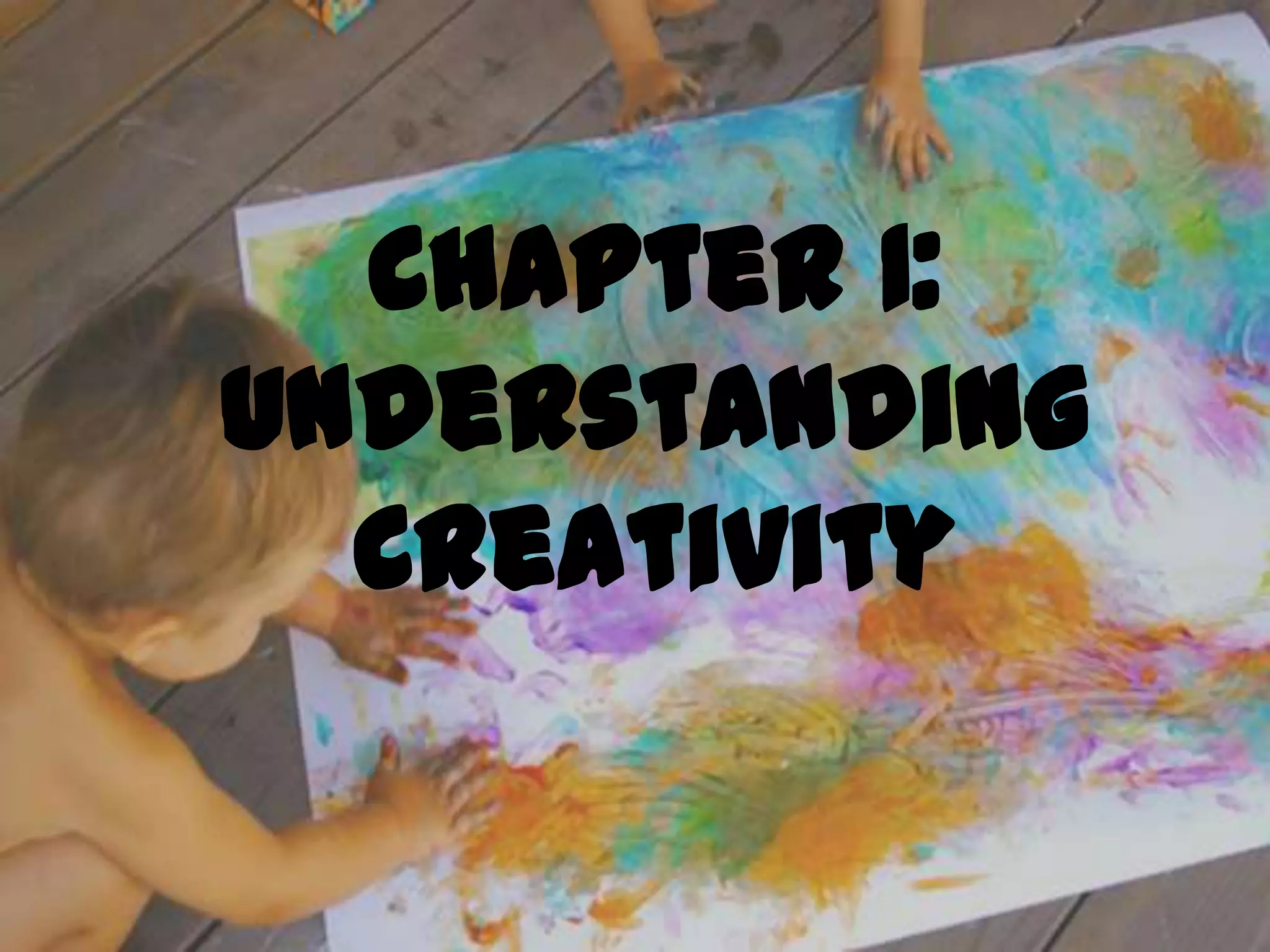
Chapter 1:
Understanding
  Creativity
Objectives
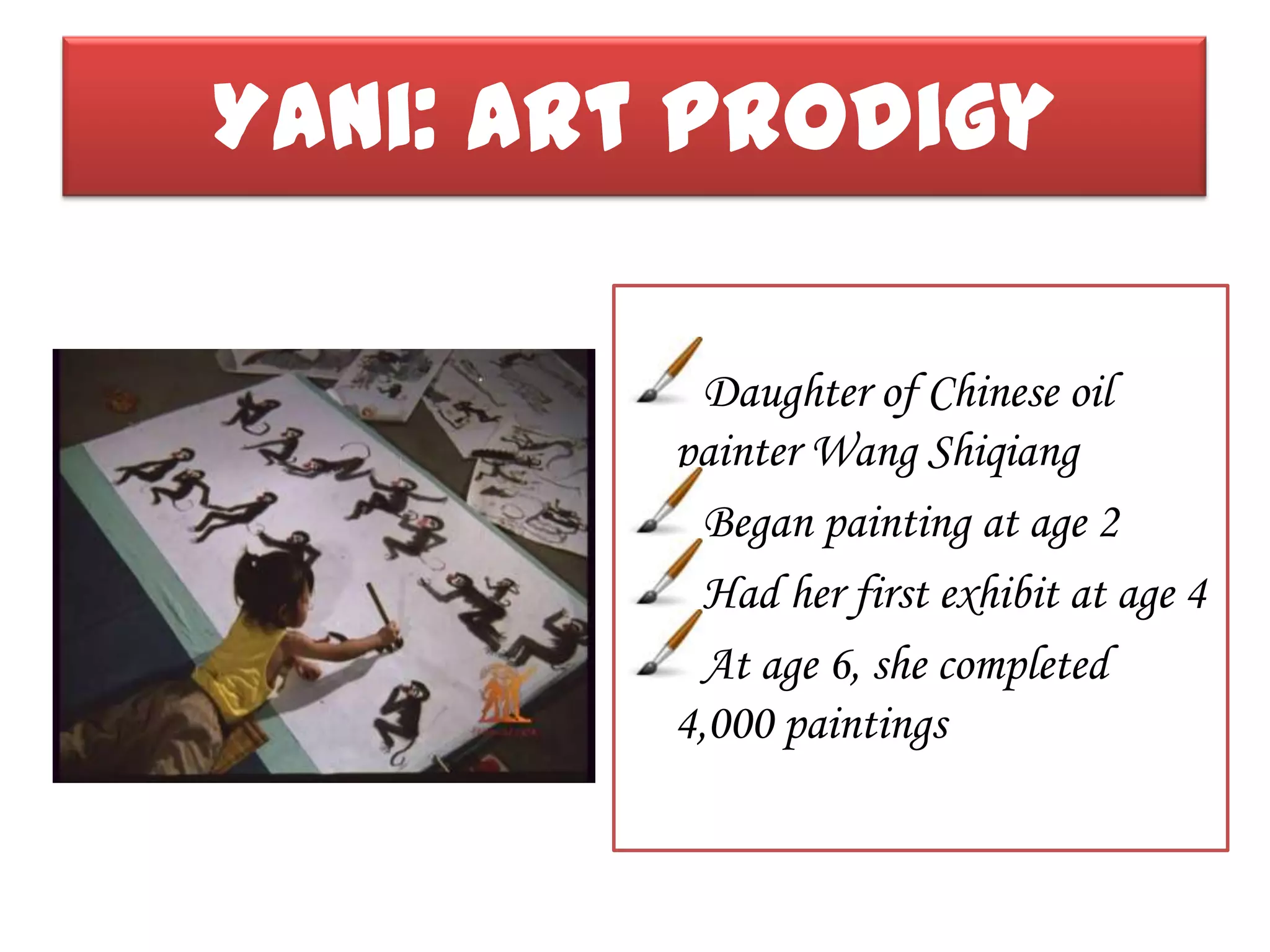
                    Yani: Art Prodigy
                        Creativity
                 Explaining Creativity
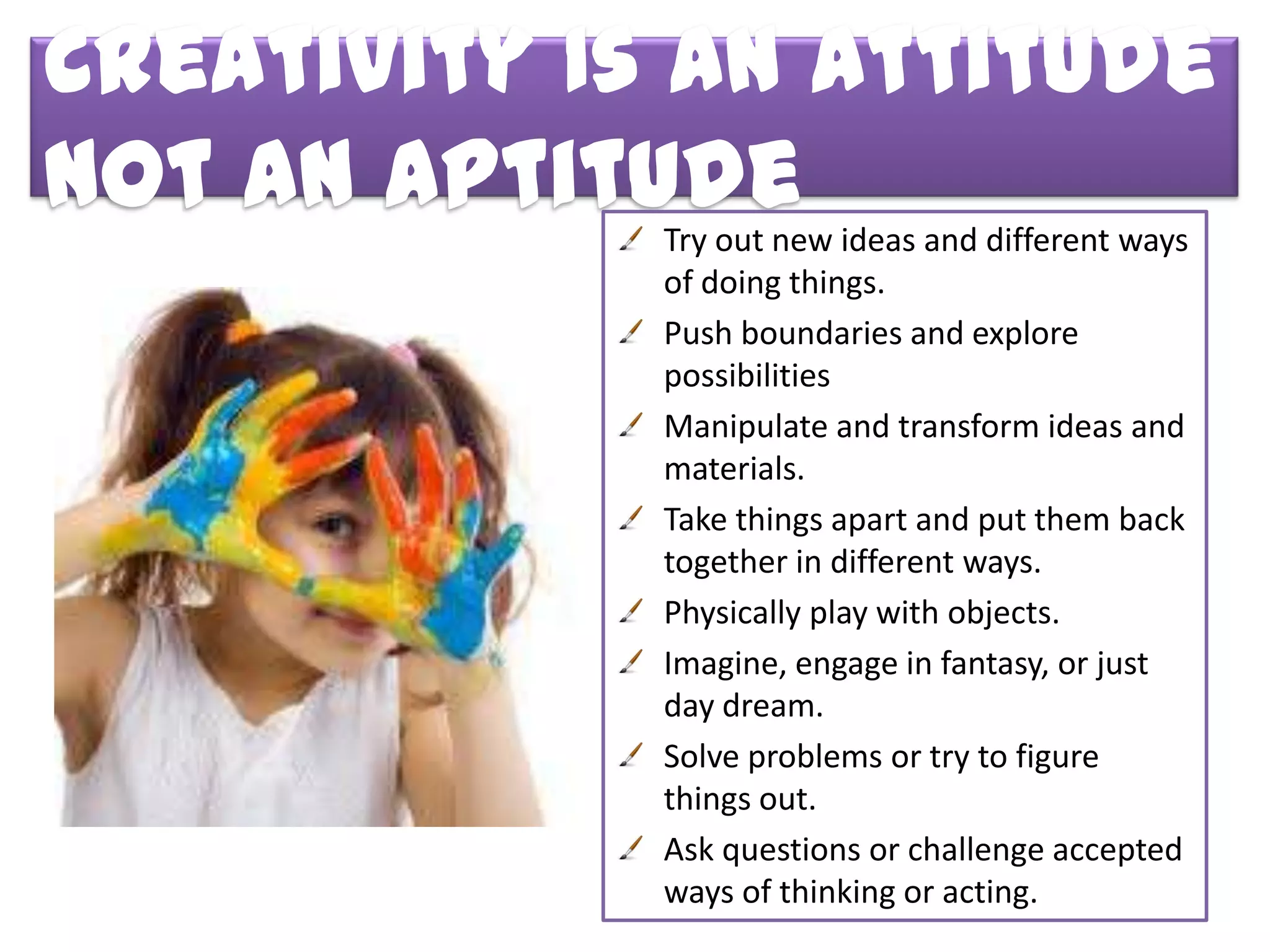
       Creativity Is an Attitude Not an Aptitude
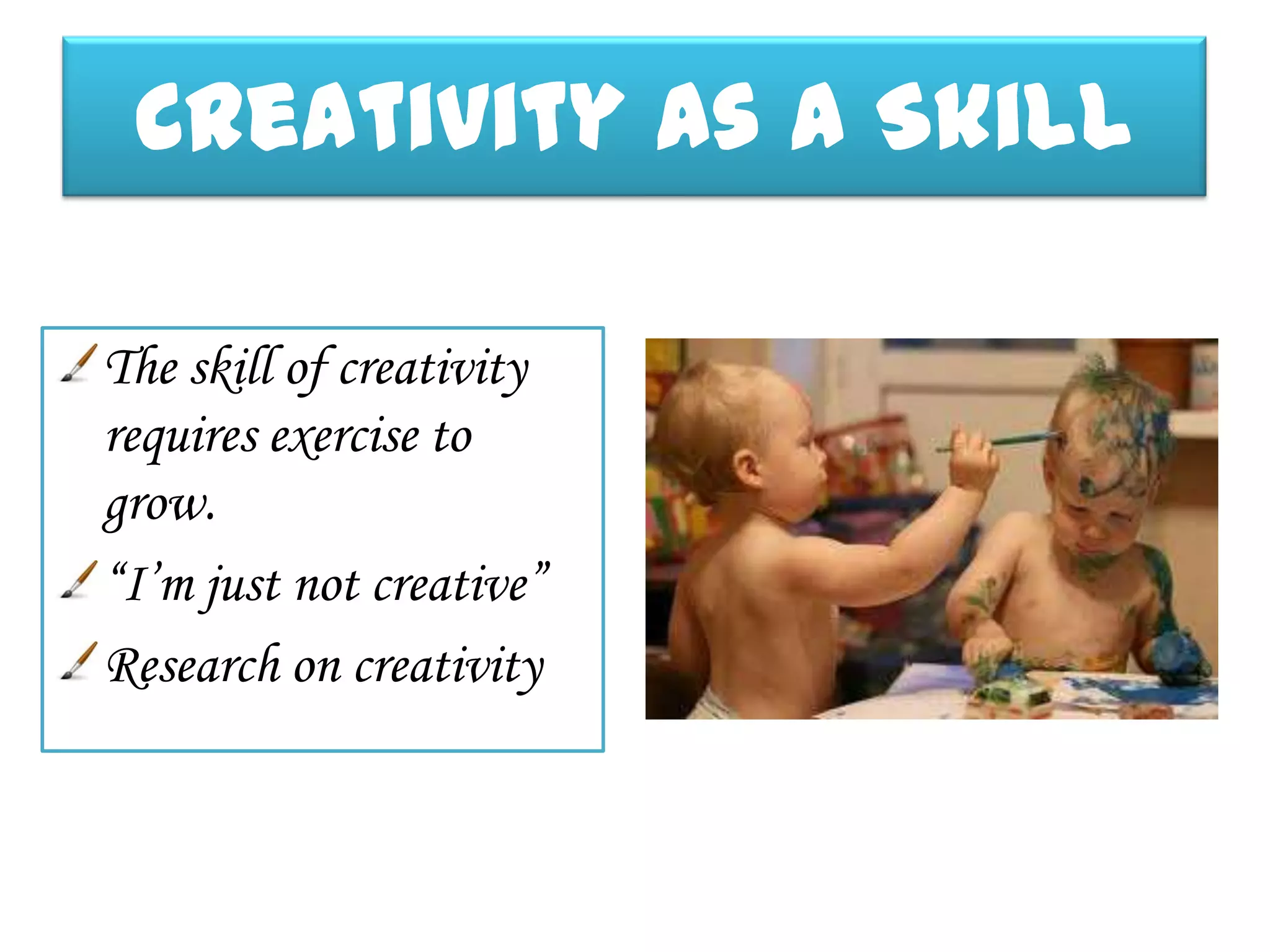
                   Creativity as a skill
        Creativity As a Set of Personality Traits
    Creativity As a Set of Environmental Conditions
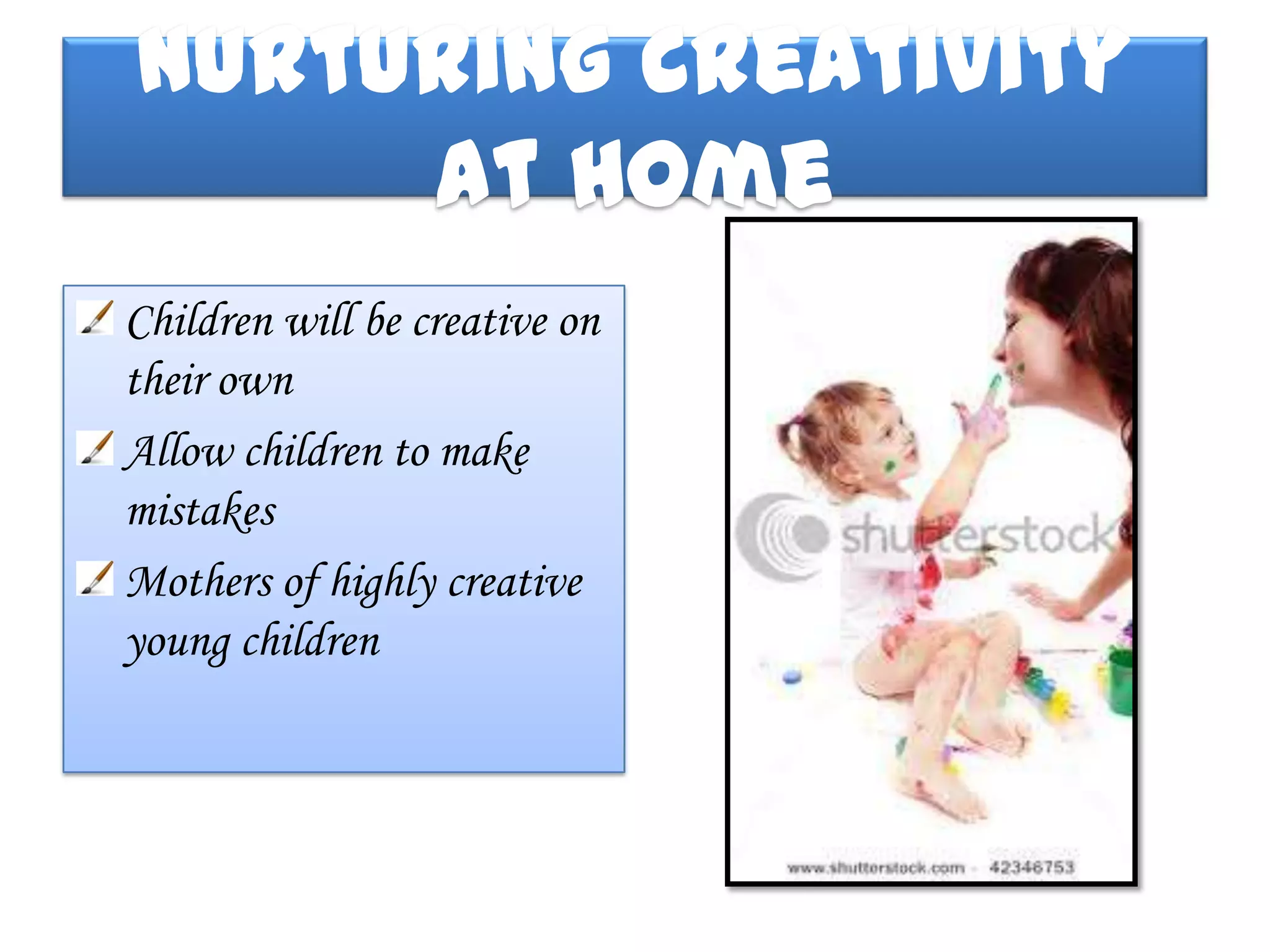
             Nurturing Creativity at Home
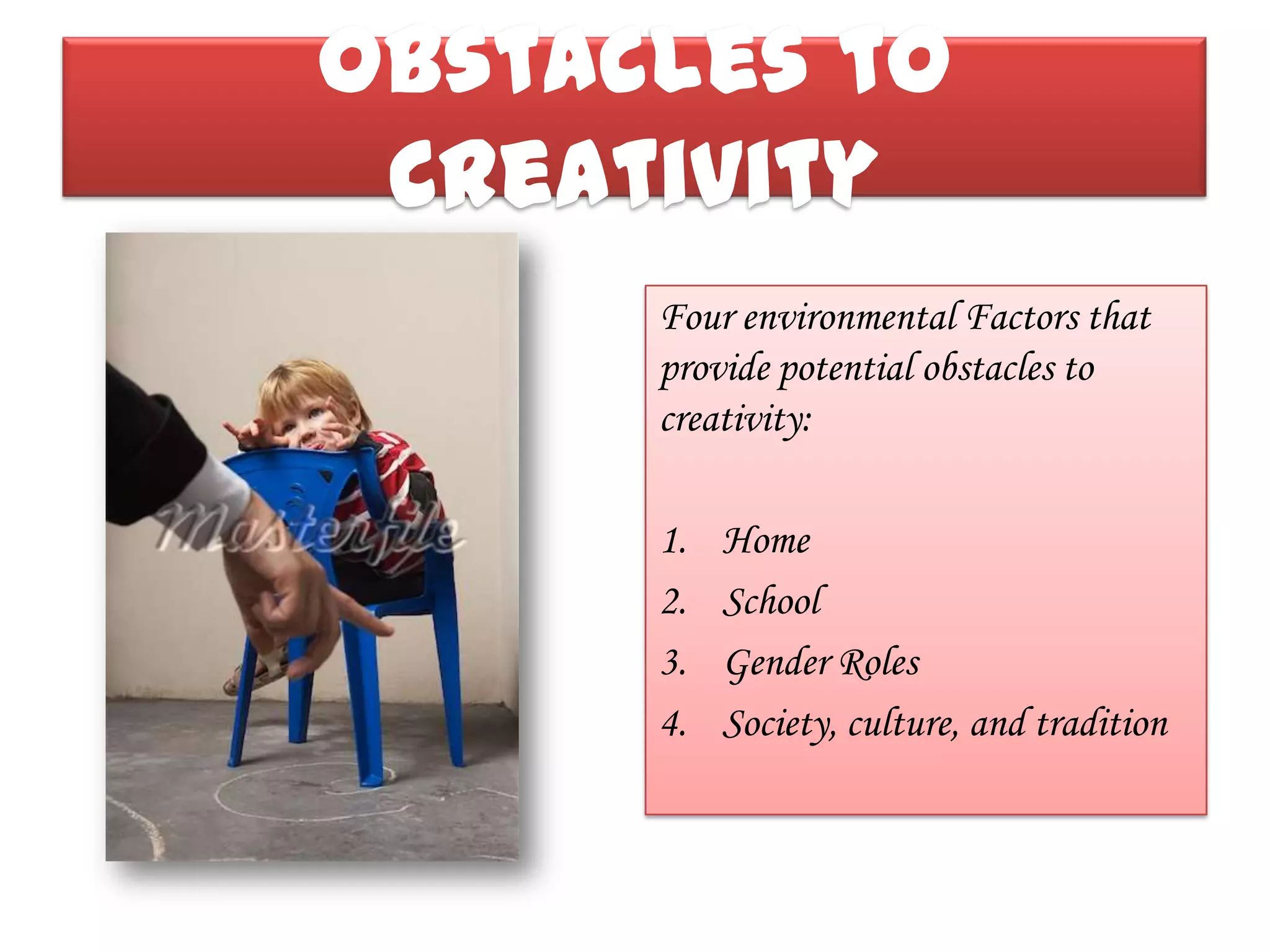
                 Obstacles to Creativity
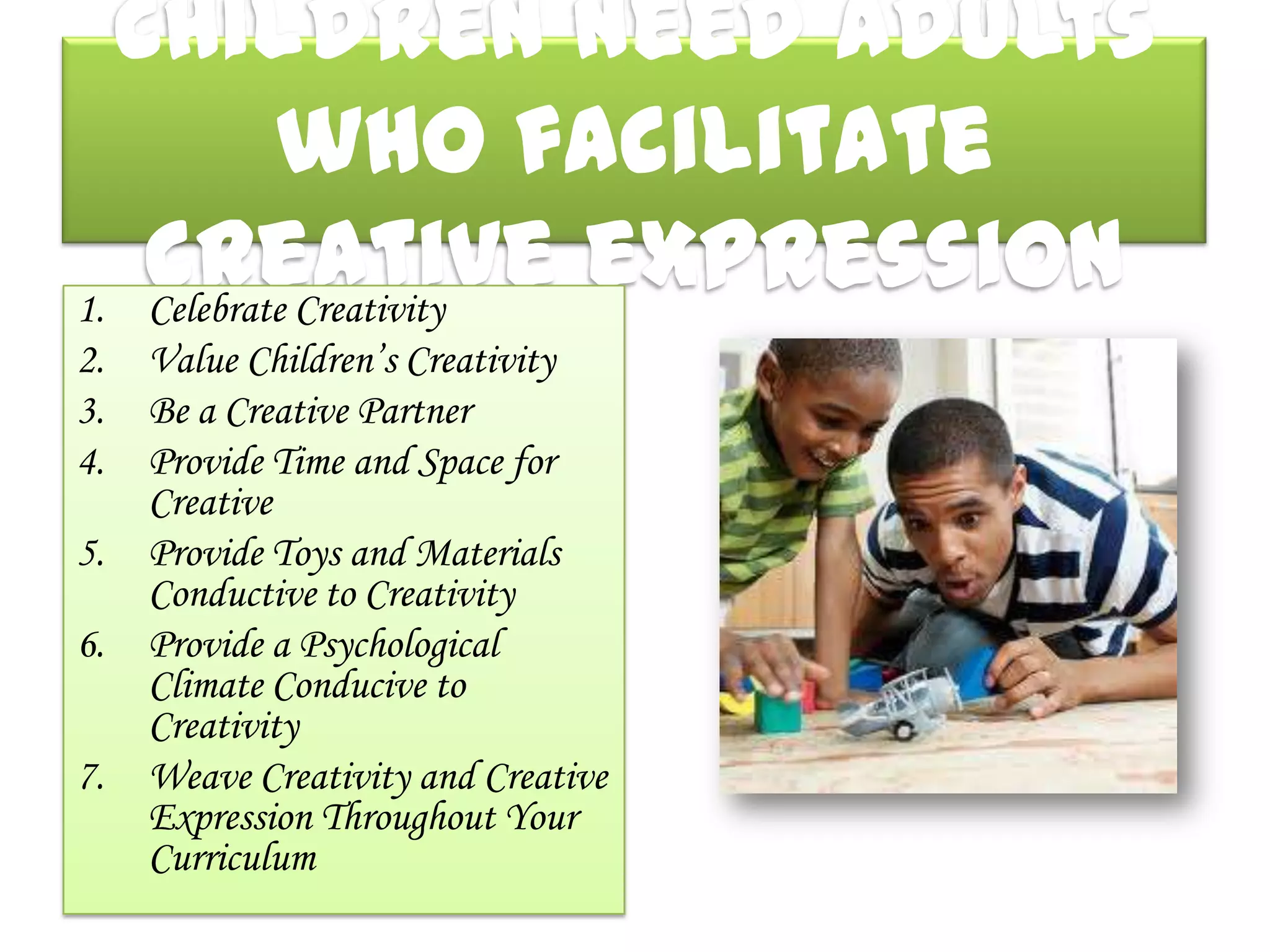
Children Need Adults who Facilitate Creative Expression
                Creativity vs. Intelligence
                  Multiple Intelligence
Yani: Art Prodigy

           Daughter of Chinese oil
         painter Wang Shiqiang
           Began painting at age 2
           Had her first exhibit at age 4
           At age 6, she completed
         4,000 paintings
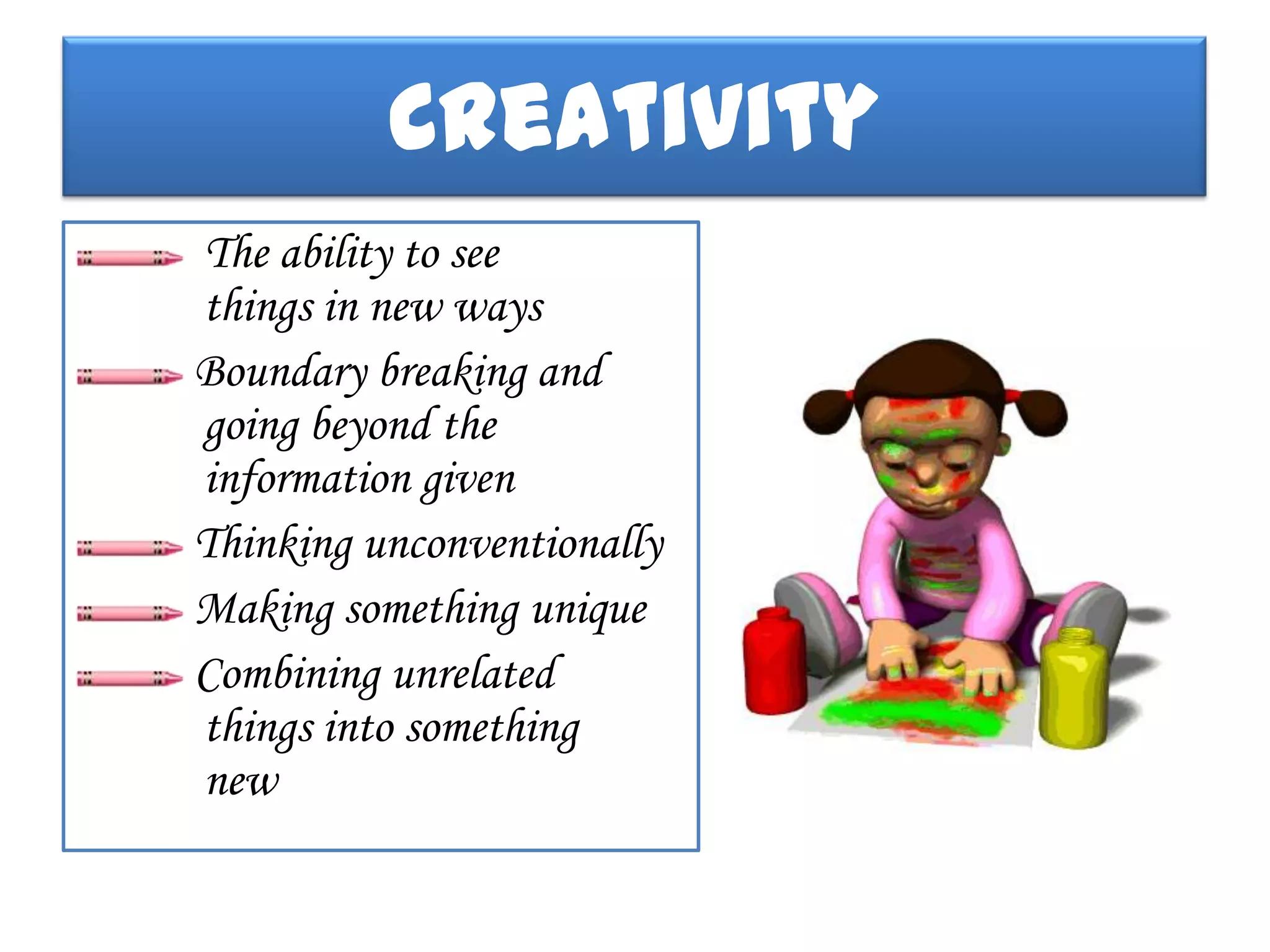
Creativity
The ability to see
things in new ways
Boundary breaking and
going beyond the
information given
Thinking unconventionally
Making something unique
Combining unrelated
things into something
new
Explaining Creativity
1.   Attitude
2.   Process
3.   Product
4.   Skill
5.   Set of personality
6.   Traits
7.   Set of environmental
     conditions
Creativity Is an Attitude
Not an Aptitude
             Try out new ideas and different ways
             of doing things.
             Push boundaries and explore
             possibilities
             Manipulate and transform ideas and
             materials.
             Take things apart and put them back
             together in different ways.
             Physically play with objects.
             Imagine, engage in fantasy, or just
             day dream.
             Solve problems or try to figure
             things out.
             Ask questions or challenge accepted
             ways of thinking or acting.
Creativity As a Skill

The skill of creativity
requires exercise to
grow.
“I’m just not creative”
Research on creativity
Creativity As a Set
of Personality Traits
Curiosity
Flexibility
Sensitivity to Problems
Redefinition
Self-feeling
Originality
Insight
Creativity As a Set of
   Environmental
     Conditions
            Creative expression, the
            greater the one’s
            background of experience
            with people, places, and
            objects, the greater the
            range of possibilities to
            draw from in creative
            activity.
Nurturing Creativity
     at Home
Children will be creative on
their own
Allow children to make
mistakes
Mothers of highly creative
young children
Obstacles to
 Creativity
      Four environmental Factors that
      provide potential obstacles to
      creativity:

      1.   Home
      2.   School
      3.   Gender Roles
      4.   Society, culture, and tradition
Children need adults
           who facilitate
   creative expression
1. Celebrate Creativity
2.   Value Children’s Creativity
3.   Be a Creative Partner
4.   Provide Time and Space for
     Creative
5.   Provide Toys and Materials
     Conductive to Creativity
6.   Provide a Psychological
     Climate Conducive to
     Creativity
7.   Weave Creativity and Creative
     Expression Throughout Your
     Curriculum
Creativity vs.
Intelligence
       Four patterns:
       1. High intelligence and high
          creativity
       2. Low intelligence and high
          creativity
       3. Low intelligence and low
          creativity
       4. High intelligence and low
          creativity
Multiple Intelligence
1.   Bodily-kinesthetic
2.   Musical-rhythmic
3.   Interpersonal
4.   Visual-spatial
5.   Verbal-linguistic
6.   Logical-mathematical
7.   Intrapersonal
8.   Naturalist
Ch. 1 ed.333

Ch. 1 ed.333

  • 1.
  • 2.
    Objectives Yani: Art Prodigy Creativity Explaining Creativity Creativity Is an Attitude Not an Aptitude Creativity as a skill Creativity As a Set of Personality Traits Creativity As a Set of Environmental Conditions Nurturing Creativity at Home Obstacles to Creativity Children Need Adults who Facilitate Creative Expression Creativity vs. Intelligence Multiple Intelligence
  • 3.
    Yani: Art Prodigy Daughter of Chinese oil painter Wang Shiqiang Began painting at age 2 Had her first exhibit at age 4 At age 6, she completed 4,000 paintings
  • 4.
    Creativity The ability tosee things in new ways Boundary breaking and going beyond the information given Thinking unconventionally Making something unique Combining unrelated things into something new
  • 5.
    Explaining Creativity 1. Attitude 2. Process 3. Product 4. Skill 5. Set of personality 6. Traits 7. Set of environmental conditions
  • 6.
    Creativity Is anAttitude Not an Aptitude Try out new ideas and different ways of doing things. Push boundaries and explore possibilities Manipulate and transform ideas and materials. Take things apart and put them back together in different ways. Physically play with objects. Imagine, engage in fantasy, or just day dream. Solve problems or try to figure things out. Ask questions or challenge accepted ways of thinking or acting.
  • 7.
    Creativity As aSkill The skill of creativity requires exercise to grow. “I’m just not creative” Research on creativity
  • 8.
    Creativity As aSet of Personality Traits Curiosity Flexibility Sensitivity to Problems Redefinition Self-feeling Originality Insight
  • 9.
    Creativity As aSet of Environmental Conditions Creative expression, the greater the one’s background of experience with people, places, and objects, the greater the range of possibilities to draw from in creative activity.
  • 10.
    Nurturing Creativity at Home Children will be creative on their own Allow children to make mistakes Mothers of highly creative young children
  • 11.
    Obstacles to Creativity Four environmental Factors that provide potential obstacles to creativity: 1. Home 2. School 3. Gender Roles 4. Society, culture, and tradition
  • 12.
    Children need adults who facilitate creative expression 1. Celebrate Creativity 2. Value Children’s Creativity 3. Be a Creative Partner 4. Provide Time and Space for Creative 5. Provide Toys and Materials Conductive to Creativity 6. Provide a Psychological Climate Conducive to Creativity 7. Weave Creativity and Creative Expression Throughout Your Curriculum
  • 13.
    Creativity vs. Intelligence Four patterns: 1. High intelligence and high creativity 2. Low intelligence and high creativity 3. Low intelligence and low creativity 4. High intelligence and low creativity
  • 14.
    Multiple Intelligence 1. Bodily-kinesthetic 2. Musical-rhythmic 3. Interpersonal 4. Visual-spatial 5. Verbal-linguistic 6. Logical-mathematical 7. Intrapersonal 8. Naturalist