Developing Your
Spokesperson
Skills
with Thom Clark
President
Community Media Workshop
What Will We Talk About?
Turnout
(Attendance at an event)
Awareness
(Usually traces back to money)
Advocacy
(Best to engage audience)
Why we communicate
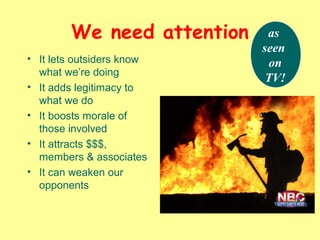
We need attention
• It lets outsiders know
what we’re doing
• It adds legitimacy to
what we do
• It boosts morale of
those involved
• It attracts $$$,
members & associates
• It can weaken our
opponents
as
seen
on
TV!
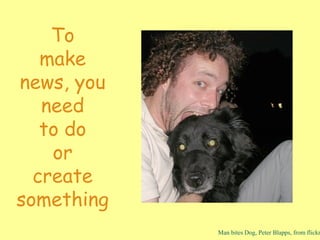
To
make
news, you
need
to do
or
create
something
Man bites Dog, Peter Blapps, from flickr
Is it news?
• Famous faces
• Timeliness
• Impacts large group
• Issue recognition
• Trendy
• Little guy beats odds
• Person bites dog
• Big money
• First, last, biggest
• Conflict
• Human interest
• Visuals
• Powerful institution
• Emotional
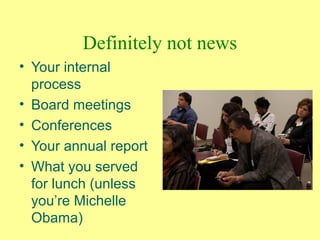
Definitely not news
• Your internal
process
• Board meetings
• Conferences
• Your annual report
• What you served
for lunch (unless
you’re Michelle
Obama)
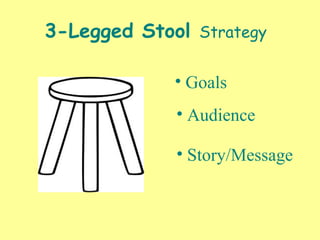
3-Legged Stool Strategy
• Goals
• Audience
• Story/Message
GOAL
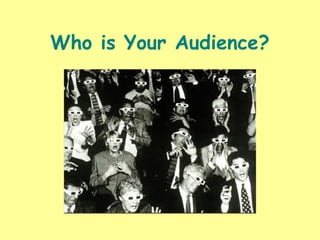
Who is Your Audience?
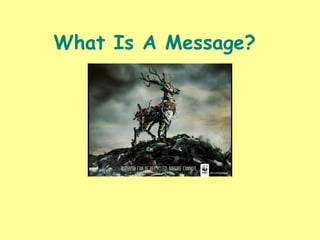
What Is A Message?
People receive every
message
in terms of what they
already know and
believe.
Facts
Are
Meaningless
Why Do We Need Messages?
• Create recognition with target audiences
• Teach new audiences quickly
• Educate and influence audiences
• Frame stories we tell reporters
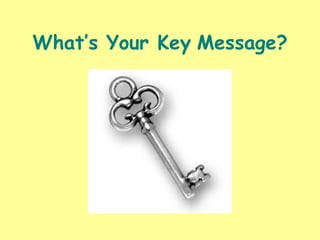
What’s Your Key Message?
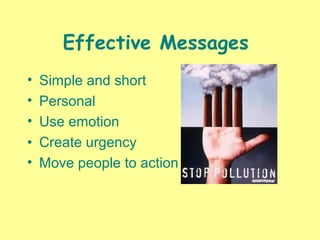
Effective Messages
• Simple and short
• Personal
• Use emotion
• Create urgency
• Move people to action
Skeleton of an Effective Message
• Goal
• Audience
• Call to Action
• Delivery
• Visual
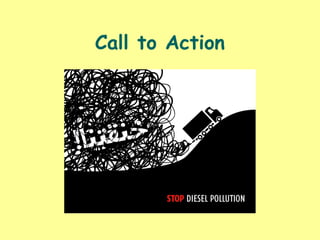
Call to Action
Delivering Your Message
Spokesperson Tips: Bridging
Asked a question not on your agenda?
Bridging
is the
best way
to respond.
Spokesperson Tips: Bridging
Some simple bridges to use:
• 'Don't know' to 'Do know'
"I don't know the answer to that question.
What I do know is … "
• Time—
"Historically, that was the case.
Today, this is what's happening…
or it's made us have to … ”
Spokesperson Tips: Bridging
• Importance-
"That used to be important. But what's
changed is … and now we… "
• Others:
"No, let me explain … "
"My primary concern is … "
"The most important part is …
Spokesperson Tips: Flagging
Help the audience remember
what you would like them to remember.
Spokesperson Tips: Flagging
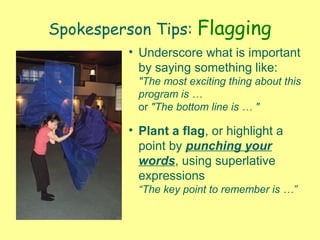
• Underscore what is important
by saying something like:
"The most exciting thing about this
program is …
or "The bottom line is … "
• Plant a flag, or highlight a
point by punching your
words, using superlative
expressions
“The key point to remember is …”
More Spokesperson Tips
• Use Examples: Case studies, victim or
expert stories, help get a more general point
across.
• 3Cs: Use colorful words, clichés, and
contemporary references.
• I statements:
Tell personal stories—cite yourself as an
expert. What’s your journey on this issue?
Interviewing Tips
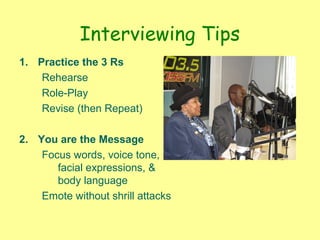
1. Practice the 3 Rs
Rehearse
Role-Play
Revise (then Repeat)
2. You are the Message
Focus words, voice tone,
facial expressions, &
body language
Emote without shrill attacks
Interviewing Tips
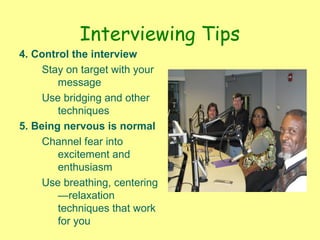
4. Control the interview
Stay on target with your
message
Use bridging and other
techniques
5. Being nervous is normal
Channel fear into
excitement and
enthusiasm
Use breathing, centering
—relaxation
techniques that work
for you
Interviewing Tips
6. It's OK not to know
Say I don't know in a way that adds to your credibility
For example, use the ‘don't know’ to ‘do know’ bridge
7. Be prepared (repeat step 4)
8. Anticipate
Be ready for questions from the interviewer
See number 2
9. Create a relationship with the interviewer & audience
Use interviewer's first name, anecdotes and succinct,
colorful sound bites to connect
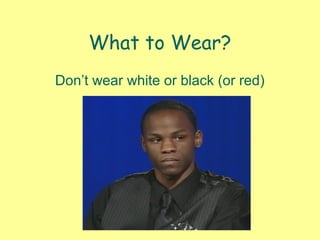
What to Wear?
Don’t wear white or black (or red)
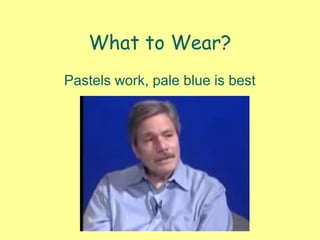
What to Wear?
Pastels work, pale blue is best
What to Wear?
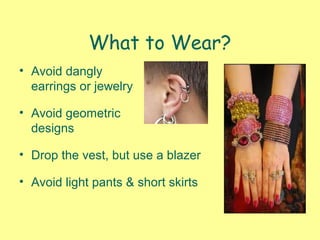
• Avoid dangly
earrings or jewelry
• Avoid geometric
designs
• Drop the vest, but use a blazer
• Avoid light pants & short skirts
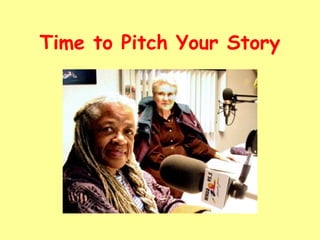
Time to Pitch Your Story
THE THREE P’s OF
PITCHING
• PACKAGE
• PRACTICE
• PITCH
PACKAGING YOUR STORY
SKELETON OF A PITCH
• Who
• What
• When
• Where
• Why
• SO WHAT?
• IS IT NEWSWORTHY?
PRACTICE
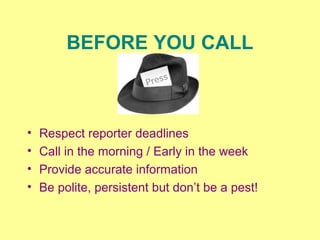
BEFORE YOU CALL
• Respect reporter deadlines
• Call in the morning / Early in the week
• Provide accurate information
• Be polite, persistent but don’t be a pest!
PITCH YOUR STORY
Questions, final thoughts?
ContactContact

Cfw spokesperson skills

  • 1.
    Developing Your Spokesperson Skills with ThomClark President Community Media Workshop
  • 2.
    What Will WeTalk About?
  • 3.
    Turnout (Attendance at anevent) Awareness (Usually traces back to money) Advocacy (Best to engage audience) Why we communicate
  • 4.
    We need attention •It lets outsiders know what we’re doing • It adds legitimacy to what we do • It boosts morale of those involved • It attracts $$$, members & associates • It can weaken our opponents as seen on TV!
  • 5.
    To make news, you need to do or create something Manbites Dog, Peter Blapps, from flickr
  • 6.
    Is it news? •Famous faces • Timeliness • Impacts large group • Issue recognition • Trendy • Little guy beats odds • Person bites dog • Big money • First, last, biggest • Conflict • Human interest • Visuals • Powerful institution • Emotional
  • 7.
    Definitely not news •Your internal process • Board meetings • Conferences • Your annual report • What you served for lunch (unless you’re Michelle Obama)
  • 8.
    3-Legged Stool Strategy •Goals • Audience • Story/Message
  • 9.
  • 10.
    Who is YourAudience?
  • 11.
    What Is AMessage?
  • 12.
    People receive every message interms of what they already know and believe.
  • 13.
  • 16.
    Why Do WeNeed Messages? • Create recognition with target audiences • Teach new audiences quickly • Educate and influence audiences • Frame stories we tell reporters
  • 17.
  • 18.
    Effective Messages • Simpleand short • Personal • Use emotion • Create urgency • Move people to action
  • 19.
    Skeleton of anEffective Message • Goal • Audience • Call to Action • Delivery • Visual
  • 20.
  • 21.
  • 22.
    Spokesperson Tips: Bridging Askeda question not on your agenda? Bridging is the best way to respond.
  • 23.
    Spokesperson Tips: Bridging Somesimple bridges to use: • 'Don't know' to 'Do know' "I don't know the answer to that question. What I do know is … " • Time— "Historically, that was the case. Today, this is what's happening… or it's made us have to … ”
  • 24.
    Spokesperson Tips: Bridging •Importance- "That used to be important. But what's changed is … and now we… " • Others: "No, let me explain … " "My primary concern is … " "The most important part is …
  • 25.
    Spokesperson Tips: Flagging Helpthe audience remember what you would like them to remember.
  • 26.
    Spokesperson Tips: Flagging •Underscore what is important by saying something like: "The most exciting thing about this program is … or "The bottom line is … " • Plant a flag, or highlight a point by punching your words, using superlative expressions “The key point to remember is …”
  • 27.
    More Spokesperson Tips •Use Examples: Case studies, victim or expert stories, help get a more general point across. • 3Cs: Use colorful words, clichés, and contemporary references. • I statements: Tell personal stories—cite yourself as an expert. What’s your journey on this issue?
  • 28.
    Interviewing Tips 1. Practicethe 3 Rs Rehearse Role-Play Revise (then Repeat) 2. You are the Message Focus words, voice tone, facial expressions, & body language Emote without shrill attacks
  • 29.
    Interviewing Tips 4. Controlthe interview Stay on target with your message Use bridging and other techniques 5. Being nervous is normal Channel fear into excitement and enthusiasm Use breathing, centering —relaxation techniques that work for you
  • 30.
    Interviewing Tips 6. It'sOK not to know Say I don't know in a way that adds to your credibility For example, use the ‘don't know’ to ‘do know’ bridge 7. Be prepared (repeat step 4) 8. Anticipate Be ready for questions from the interviewer See number 2 9. Create a relationship with the interviewer & audience Use interviewer's first name, anecdotes and succinct, colorful sound bites to connect
  • 31.
    What to Wear? Don’twear white or black (or red)
  • 32.
    What to Wear? Pastelswork, pale blue is best
  • 33.
    What to Wear? •Avoid dangly earrings or jewelry • Avoid geometric designs • Drop the vest, but use a blazer • Avoid light pants & short skirts
  • 34.
    Time to PitchYour Story
  • 35.
    THE THREE P’sOF PITCHING • PACKAGE • PRACTICE • PITCH
  • 36.
  • 37.
    SKELETON OF APITCH • Who • What • When • Where • Why • SO WHAT? • IS IT NEWSWORTHY?
  • 38.
  • 39.
    BEFORE YOU CALL •Respect reporter deadlines • Call in the morning / Early in the week • Provide accurate information • Be polite, persistent but don’t be a pest!
  • 40.
  • 41.
  • 42.

Editor's Notes

  • #2 Teachers and students will be hosting events, designing fliers, brochures and display boards, as well as public announcements.   provide suggestions around maximizing impact through these outreach methods, as well as other tips for crafting an outreach message/strategy.  
  • #3 Whom has been interviewed by the media before? Are you the chief spokesperson or have to prepare the person who is? Has PR office called you to speak w/ a reporter and you panic? We’re going to learn how to manage THAT conversation To tell stories about your work, not mission statements or research tomes.

  • #4 Land Use Stories (4-21-2008) But before we can get into the specifics, we have to take a step back to understand why communicate at all?
  • #5 60% of news comes from someone calling a journalist and asking, do you have a minute for me to pitch you a story? Being proactive not reactive.
  • #6 We’re going to talk for a few minutes about what makes a story newsworthy. Not just business as usual New programs New people New places New actions/ activities New Information New Stories
  • #7 QUESTION: What did you see in the news this morning? Does it fit in one of these categories?
  • #8 QUESTION: What did you see in the news this morning? Does it fit in one of these categories?
  • #11 Who is your audience? How do they get their information?
  • #12 The one or two things everyone knows about your organization or issue with a call to action
  • #13 Land Use Stories (4-21-2008) We ’re all pre-set, hard wired based on the experiences we’ve already had. You’re not communicating with a clean slate.
  • #14 Land Use Stories (4-21-2008) Facts are important, and it ’s crucial to have them right. But they’re meaningless
  • #15 Land Use Stories (4-21-2008) QUESTION: What do you think this says?
  • #16 Land Use Stories (4-21-2008)
  • #17 You have 30 seconds to get people’s attention and tell them about what you do in a concise manner.
  • #19 Tell a compelling/memorable story
  • #21 What do you want people to do?
  • #22 Write down three ways your audience gets information
  • #23 Answer the question briefly, then move, or bridge, to what you want to discuss.
  • #25 "Yes, and furthermore … ” " "My message is … "
  • #27 or repetition throughout the interview.
  • #28 Quote your 'enemy:’ Recognize that there are two sides to the story and give a journalist the sense of what the opposite side is. Not only does this promote better understanding of complex issues, it allows you to ‘spin’ the opposition before they get a chance to respond.
  • #31 9. Remember Your point of view is the most important thing at the moment You got here because what you know and think is of value
  • #36 PLAN AHEAD - Don’t wait until the day before to try to pitch a reporter
  • #37 Who is it going to? How will we deliver it? What’s inside? What kind of story are we going to send?
  • #39 Leave plenty of time to practice with a co-worker Anticipate any questions or hesitations a reporter might have And if there is hesitation to yoru story what will your rebuttle be ?
  • #41 Make sure you are pitching the right reporter Read their articles or familiar with the news outlet Pick Up The Phone Call at the right time Be Prepared Make Calls In Front of a computer Be Ready W/Specifics Be persistent but don’t be a pest Offer to make their job easier Be pleasant PRINT PITCHING BY PHONE HANDOUT – How will folks pitch blogs? Relationship building PITCHING EXERCISE