successful
7 steps
interviews
to
media
Step 1
Look the part
How you look is more
important than what you
say.
LOOK THE PART
People get 70% of their
information visually, not
verbally
LOOK THE PART
Dress appropriately for the
situation – smart or casual
Avoid distractions:
• Messy hair
• Loud ties or blouses
• Dangling earrings
LOOK THE PART
Step 2
Be brief
People have very short
attention spans.
zzzzzz
Be brief
They are probably only half
watching you.
87% of people use their
phones while watching TV
Be brief
Keep your answers short
Be brief
Step 3
Be simple
be simple
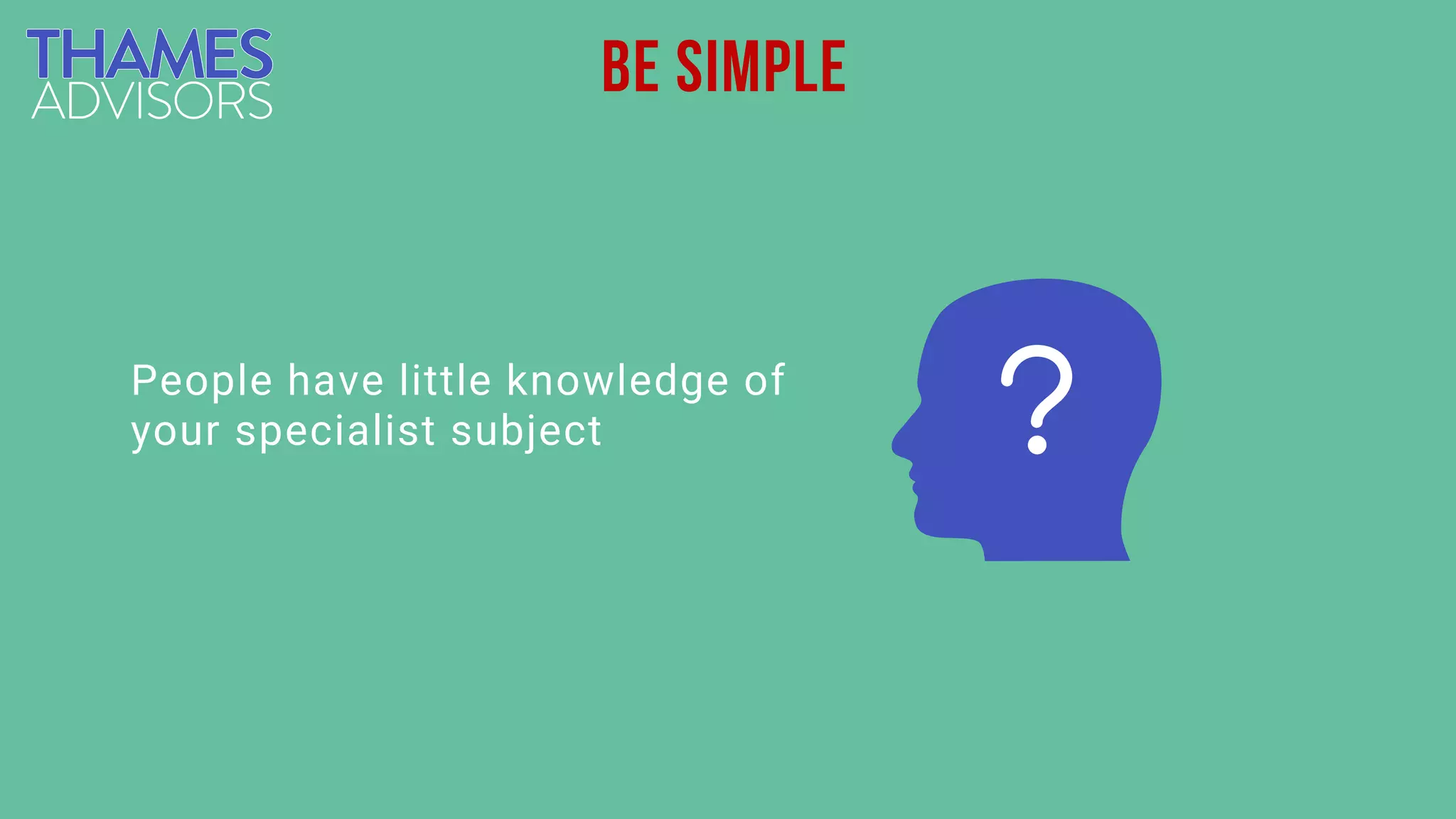
People have little knowledge of
your specialist subject
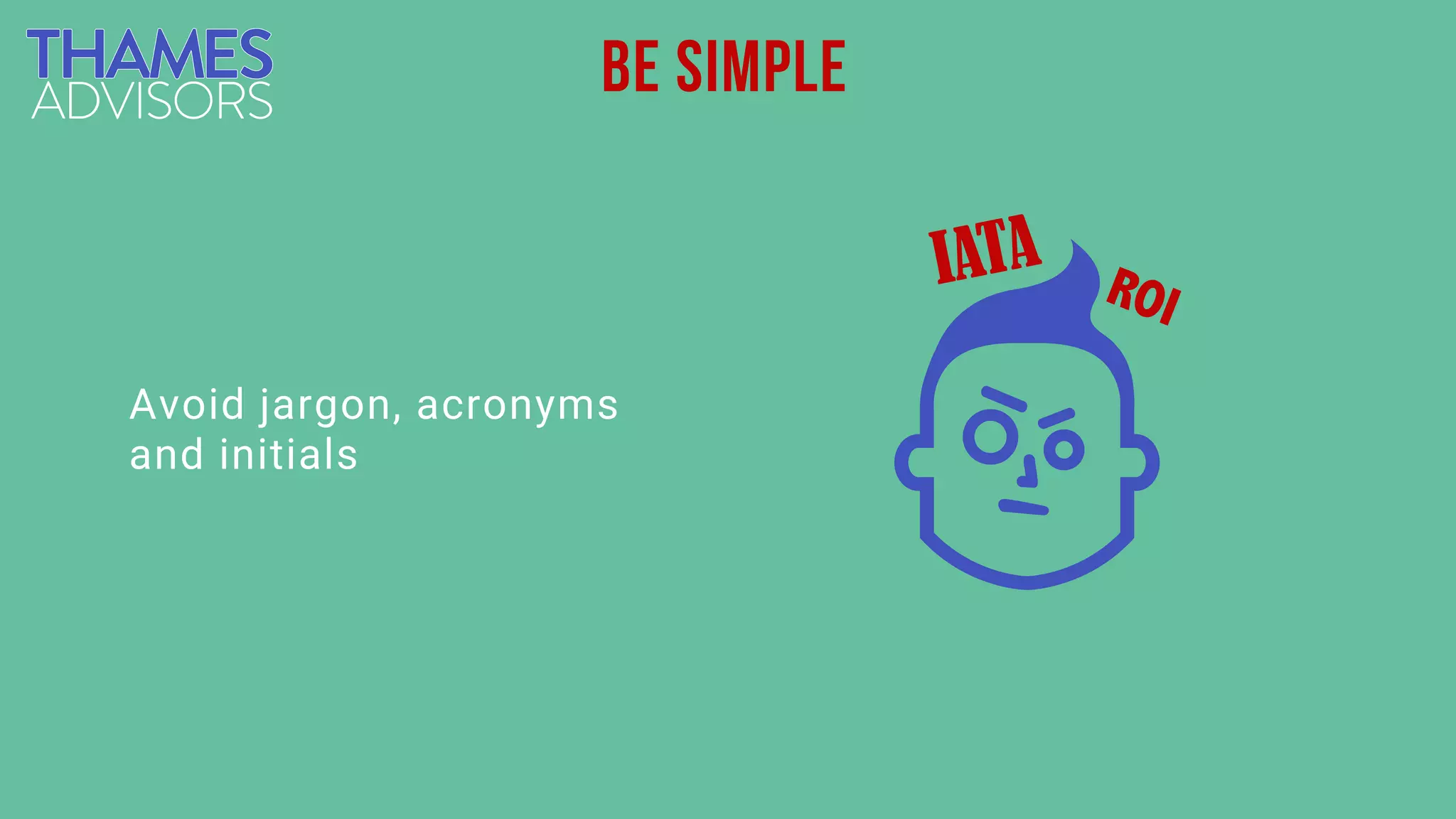
Avoid jargon, acronyms
and initials
be simple
Step 4
Avoid numbers
Numbers stated verbally are
hard to understand
Avoid numbers
Use few statistics
Make them as simple as
you can
Avoid numbers
Step 5
Be easy to edit
Even live interviews will be
edited to make clips for later
news bulletins
Whatever you say will be edited
before most people see or hear it
Be easy to edit
In the US it is seven seconds
The usual length of a soundbite
on UK TV or radio is 30 seconds
Be easy to edit
Craft your own soundbites:
pithy summaries of your
position
Use these appropriately in
your answers
Help the journalist choose
which clips to use
Be easy to edit
Step 6
Be relevant
People listen more
closely to things
relating to their own
lives
Be relevant
Evolution has hardwired
us to give more attention
to matters affecting
ourselves, our family and
broader ‘tribe’
Be relevant
Take the trouble to
explain why it affects
them
Relate your issue to
people’s everyday lives
Be relevant
Step 7
Be likeable
be likeable
People listen more to
people they like
Express understanding
and concern
Be empathetic
Don’t be hostile or
defensive
be likeable
Cheat sheet
• Look the part
• Be brief
• Be simple
• Avoid numbers
• Be easy to edit
• Be relevant
• Be likeable
For professional help preparing for a media
interview, contact us.
info@thamesadvisors.com
www.thamesadvisors.com
Based London, UK

Seven steps to successful media interviews