Carcinoma cervix
Divya Devakumar
Assistant Professor
Govt. college of nursing
Kottayam
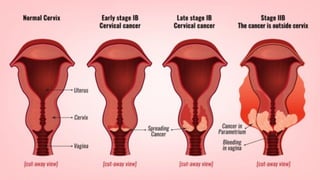
Cervical cancer:
• Cervical cancer develops in a woman's cervix (the entrance to the uterus from
the vagina).
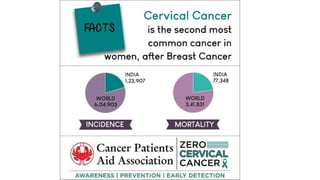
• Cervical cancer is the fourth most common cancer in women.
• In 2022, an estimated 660,000 women were diagnosed with cervical cancer
worldwide and about 350 000 women died from the disease.
• Almost all cervical cancer cases (99%) are linked to infection with high-risk
human papilloma virus (HPV), an extremely common virus transmitted through
sexual contact. Source: WHO
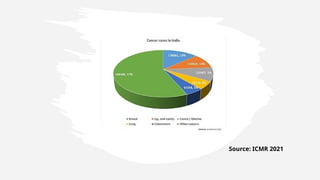
Source: ICMR 2021
Epidemiology:
• Worldwide servitor Cancer is 12th, the most common and
fifth most deadly cancer in women.
• It affects about 16 per hundred thousand women per year
and kills about nine per hundred thousand each year.
• Approximately 80 percentage of cervical cancer occur in
developing countries.
Causes:
• Human papilloma virus (HPV) infection.
• Other co-factors and risk factors include
• HIV infection.
• chlamydia infection
• hormonal contraception.
• exposure to the hormonal Drug Diethylstilbesterol (DES).
• family history of cervical cancer.
• Early age at first intercourse and first pregnancy are also
considered.
Signs and symptoms:
• Patients are usually multiparous, premenopausal age group.
• Early stages are usually asymptomatic.
• May have previous history of post-or inter menstrual
bleeding.
Signs and symptoms:
• Vaginal bleeding: irregular or continued or contact bleeding.
• Offensive vaginal discharge.
• Pelvic pain of varying degree due to involvement of uterosacral
ligament or sacral plexus.
• Leg edema, due to progressive obstruction of lymphatics oral vein by
the tumour.
• Back pain and leg pain.
• Bladder symptoms, such as frequency of micturition, Dysuria,
hematuria or true incontinence due to fistula formation.
Signs and symptoms:
• Rectal involvement symptoms such as diarrhea, recital pain, bleeding
per rectum or even recto-vaginal fistula.
• Frequent attacks of pyelonephritis due to ureteric obstruction.
• In late stages, patient may be cachetic and anemic with edema of legs.
• Uremia in advanced stage.
Diagnosis:
• Pap smear.
• Speculum examination reveals the nature of growth.
• Bimanual examination, reveals the duration and extent of
growth to the vagina and the sides.
• Rectal examination to note the involvement of parametrium
and extent to the lateral pelvic wall.
• Biopsy for confirmation of diagnosis.
Diagnosis:
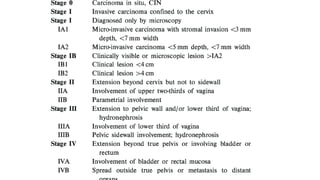
• Ancillary aids for staging are cystoscopy, chest, x-ray,
intravenous pyelography, and proctoscopy.
• Scanning such as MRI and PET scanning are used to detect
parameter extension, and to define the tumour volume.
Complications:
• Hemorrhage.
• Frequent attacks of ureteric pain due to pyometra especially with
endocervical variety.
• Vesico-vaginal fistula.
• Recto-vaginal fistula.
• Cystitis, pyelonephritis and bladder dysfunction.
Management
Primary prevention:
• Identifying high-risk women:
• History of early sexual intercourse.
• History of age of first pregnancy.
• History of too many or too frequent birth.
• Low socio-economic status.
• Poor maintainance of local hygiene.
• Sexually transmitted oncogenes,
Primary prevention:
• Identifying high risk men (spouses):
• Multiple sex partners.
• Previous wife died of cancer.
Primary prevention:
• Employing positive measures:
• Use of condom during early intercourse.
• Raise the age of marriage and first child birth.
• Limitation of family size.
• Maintenance of local hygiene.
• Effective treatment of sexually transmitted diseases.
Secondary prevention:
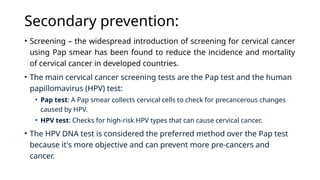
• Screening – the widespread introduction of screening for cervical cancer
using Pap smear has been found to reduce the incidence and mortality
of cervical cancer in developed countries.
• The main cervical cancer screening tests are the Pap test and the human
papillomavirus (HPV) test:
• Pap test: A Pap smear collects cervical cells to check for precancerous changes
caused by HPV.
• HPV test: Checks for high-risk HPV types that can cause cervical cancer.
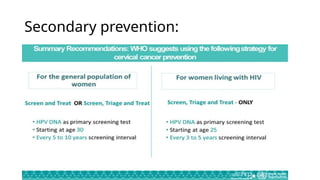
• The HPV DNA test is considered the preferred method over the Pap test
because it's more objective and can prevent more pre-cancers and
cancer.
Secondary prevention:
Treatment:
• Primary surgery.
• Primary radiotherapy.
• Chemotherapy.
• Combination therapy.
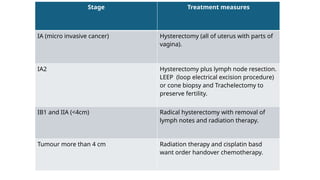
Stage Treatment measures
IA (micro invasive cancer) Hysterectomy (all of uterus with parts of
vagina).
IA2 Hysterectomy plus lymph node resection.
LEEP (loop electrical excision procedure)
or cone biopsy and Trachelectomy to
preserve fertility.
IB1 and IIA (<4cm) Radical hysterectomy with removal of
lymph notes and radiation therapy.
Tumour more than 4 cm Radiation therapy and cisplatin basd
want order handover chemotherapy.
Prognosis:
• Depends on the stage of cancer.
• With treatment, the five-year relative survival rate for the early stage
of invasive cancer is 92% and overall five year survival rate is 72%.
• As the cancer metastasizes to other parts of the body prognosis drops
drastically because treatment of local lesions is generally more
effective than the whole body treatment such as chemotherapy.

Carcinoma Cervix.pptx- Divya Devakumar APN

  • 1.
    Carcinoma cervix Divya Devakumar AssistantProfessor Govt. college of nursing Kottayam
  • 2.
    Cervical cancer: • Cervicalcancer develops in a woman's cervix (the entrance to the uterus from the vagina). • Cervical cancer is the fourth most common cancer in women. • In 2022, an estimated 660,000 women were diagnosed with cervical cancer worldwide and about 350 000 women died from the disease. • Almost all cervical cancer cases (99%) are linked to infection with high-risk human papilloma virus (HPV), an extremely common virus transmitted through sexual contact. Source: WHO
  • 3.
  • 6.
    Epidemiology: • Worldwide servitorCancer is 12th, the most common and fifth most deadly cancer in women. • It affects about 16 per hundred thousand women per year and kills about nine per hundred thousand each year. • Approximately 80 percentage of cervical cancer occur in developing countries.
  • 7.
    Causes: • Human papillomavirus (HPV) infection. • Other co-factors and risk factors include • HIV infection. • chlamydia infection • hormonal contraception. • exposure to the hormonal Drug Diethylstilbesterol (DES). • family history of cervical cancer. • Early age at first intercourse and first pregnancy are also considered.
  • 8.
    Signs and symptoms: •Patients are usually multiparous, premenopausal age group. • Early stages are usually asymptomatic. • May have previous history of post-or inter menstrual bleeding.
  • 9.
    Signs and symptoms: •Vaginal bleeding: irregular or continued or contact bleeding. • Offensive vaginal discharge. • Pelvic pain of varying degree due to involvement of uterosacral ligament or sacral plexus. • Leg edema, due to progressive obstruction of lymphatics oral vein by the tumour. • Back pain and leg pain. • Bladder symptoms, such as frequency of micturition, Dysuria, hematuria or true incontinence due to fistula formation.
  • 10.
    Signs and symptoms: •Rectal involvement symptoms such as diarrhea, recital pain, bleeding per rectum or even recto-vaginal fistula. • Frequent attacks of pyelonephritis due to ureteric obstruction. • In late stages, patient may be cachetic and anemic with edema of legs. • Uremia in advanced stage.
  • 11.
    Diagnosis: • Pap smear. •Speculum examination reveals the nature of growth. • Bimanual examination, reveals the duration and extent of growth to the vagina and the sides. • Rectal examination to note the involvement of parametrium and extent to the lateral pelvic wall. • Biopsy for confirmation of diagnosis.
  • 12.
    Diagnosis: • Ancillary aidsfor staging are cystoscopy, chest, x-ray, intravenous pyelography, and proctoscopy. • Scanning such as MRI and PET scanning are used to detect parameter extension, and to define the tumour volume.
  • 15.
    Complications: • Hemorrhage. • Frequentattacks of ureteric pain due to pyometra especially with endocervical variety. • Vesico-vaginal fistula. • Recto-vaginal fistula. • Cystitis, pyelonephritis and bladder dysfunction.
  • 16.
  • 17.
    Primary prevention: • Identifyinghigh-risk women: • History of early sexual intercourse. • History of age of first pregnancy. • History of too many or too frequent birth. • Low socio-economic status. • Poor maintainance of local hygiene. • Sexually transmitted oncogenes,
  • 18.
    Primary prevention: • Identifyinghigh risk men (spouses): • Multiple sex partners. • Previous wife died of cancer.
  • 19.
    Primary prevention: • Employingpositive measures: • Use of condom during early intercourse. • Raise the age of marriage and first child birth. • Limitation of family size. • Maintenance of local hygiene. • Effective treatment of sexually transmitted diseases.
  • 20.
    Secondary prevention: • Screening– the widespread introduction of screening for cervical cancer using Pap smear has been found to reduce the incidence and mortality of cervical cancer in developed countries. • The main cervical cancer screening tests are the Pap test and the human papillomavirus (HPV) test: • Pap test: A Pap smear collects cervical cells to check for precancerous changes caused by HPV. • HPV test: Checks for high-risk HPV types that can cause cervical cancer. • The HPV DNA test is considered the preferred method over the Pap test because it's more objective and can prevent more pre-cancers and cancer.
  • 21.
  • 22.
    Treatment: • Primary surgery. •Primary radiotherapy. • Chemotherapy. • Combination therapy.
  • 23.
    Stage Treatment measures IA(micro invasive cancer) Hysterectomy (all of uterus with parts of vagina). IA2 Hysterectomy plus lymph node resection. LEEP (loop electrical excision procedure) or cone biopsy and Trachelectomy to preserve fertility. IB1 and IIA (<4cm) Radical hysterectomy with removal of lymph notes and radiation therapy. Tumour more than 4 cm Radiation therapy and cisplatin basd want order handover chemotherapy.
  • 24.
    Prognosis: • Depends onthe stage of cancer. • With treatment, the five-year relative survival rate for the early stage of invasive cancer is 92% and overall five year survival rate is 72%. • As the cancer metastasizes to other parts of the body prognosis drops drastically because treatment of local lesions is generally more effective than the whole body treatment such as chemotherapy.