Cellular Immune Therapy
with Allogeneic Stem Cell
Transplantation
Richard Champlin, M.D.
HSCT
D
RL
R
RL
R
R
D
D
D
D
D
D
D
D
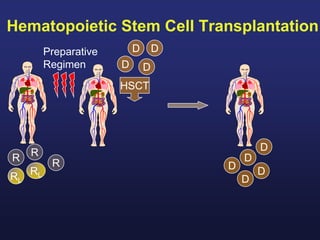
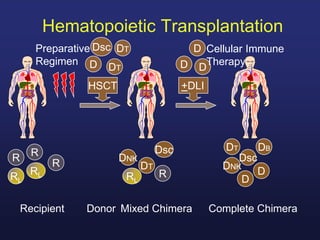
Hematopoietic Stem Cell Transplantation
Preparative
Regimen
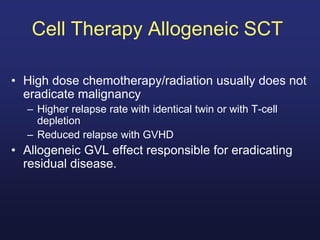
Cell Therapy Allogeneic SCT
• High dose chemotherapy/radiation usually does not
eradicate malignancy
– Higher relapse rate with identical twin or with T-cell
depletion
– Reduced relapse with GVHD
• Allogeneic GVL effect responsible for eradicating
residual disease.
HSCT +DLI
DT
DNK
D
RLRL
R
RL R
R
DB
Dsc
DT
DNK
D
DD
Dsc
D
DT
DT
Dsc
D
Complete ChimeraRecipient Donor Mixed Chimera
Hematopoietic Transplantation
Preparative
Regimen
R
Cellular Immune
Therapy
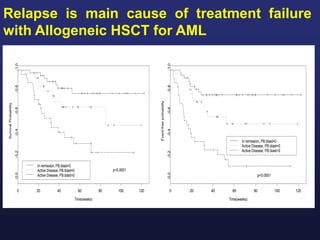
Time(weeks)
SurvivalProbability
0 20 40 60 80 100 120
0.00.20.40.60.81.0
In remission, PB.blast=0
Active Disease, PB.blast=0
Active Disease, PB.blast>0
p<0.0001
Time(weeks)
Event-freeprobability
0 20 40 60 80 100 120
0.00.20.40.60.81.0
In remission, PB.blast=0
Active Disease, PB.blast=0
Active Disease, PB.blast>0
p<0.0001
Relapse is main cause of treatment failure
with Allogeneic HSCT for AML
Fundamental Problems with
HSCT
• Graft-vs.-malignancy which naturally
occurs post transplant is relatively weak
• Graft vs. Malignancy associated with
GVHD
• Relapse remains the major cause of
treatment failure
• Resistant infections can occur due to
post transplant immune deficiency
Prevention of GVHD
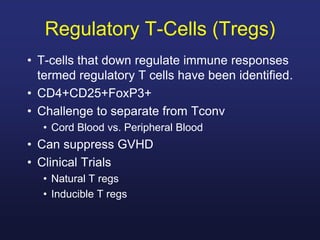
• T-cells that down regulate immune responses
termed regulatory T cells have been identified.
• CD4+CD25+FoxP3+
• Challenge to separate from Tconv
• Cord Blood vs. Peripheral Blood
• Can suppress GVHD
• Clinical Trials
• Natural T regs
• Inducible T regs
Regulatory T-Cells (Tregs)
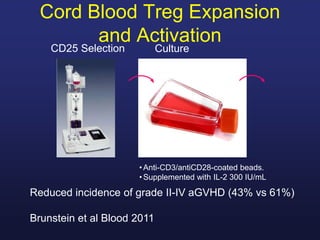
Cord Blood Treg Expansion
and Activation
•Anti-CD3/antiCD28-coated beads.
•Supplemented with IL-2 300 IU/mL
Reduced incidence of grade II-IV aGVHD (43% vs 61%)
Brunstein et al Blood 2011
CD25 Selection Culture
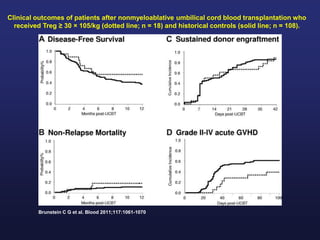
Clinical outcomes of patients after nonmyeloablative umbilical cord blood transplantation who
received Treg ≥ 30 × 105/kg (dotted line; n = 18) and historical controls (solid line; n = 108).
Brunstein C G et al. Blood 2011;117:1061-1070
Questions with Tregs
• Production process, separation of Tregs
from Tconv
• Cell Dose
• Administration with calcineurin inhibitors
vs. sirolimus
• Impact on GVL effects?
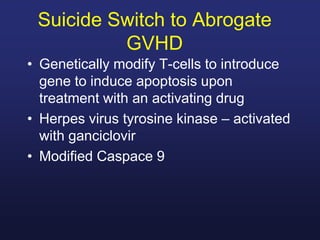
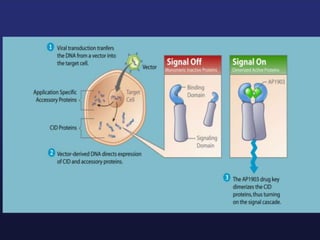
Suicide Switch to Abrogate
GVHD
• Genetically modify T-cells to introduce
gene to induce apoptosis upon
treatment with an activating drug
• Herpes virus tyrosine kinase – activated
with ganciclovir
• Modified Caspace 9
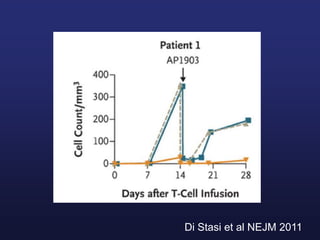
Di Stasi et al NEJM 2011
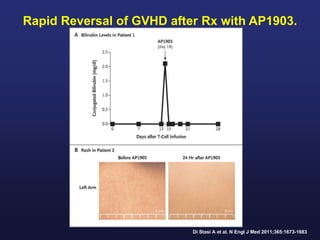
Rapid Reversal of GVHD after Rx with AP1903.
Di Stasi A et al. N Engl J Med 2011;365:1673-1683
Anti viral T-cells
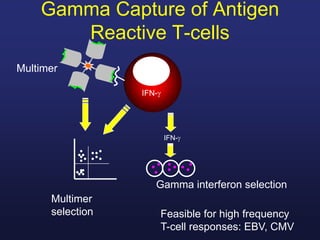
CTLMultimer
Multimer
selection
IFN-
Gamma interferon selection
IFN-
Gamma Capture of Antigen
Reactive T-cells
Feasible for high frequency
T-cell responses: EBV, CMV
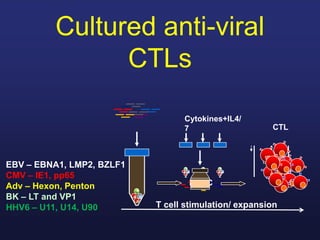
T cell stimulation/ expansion
PBMC
CTL
Cytokines+IL4/
7
EBV – EBNA1, LMP2, BZLF1
CMV – IE1, pp65
Adv – Hexon, Penton
BK – LT and VP1
HHV6 – U11, U14, U90
Cultured anti-viral
CTLs
Anti Viral T-cells
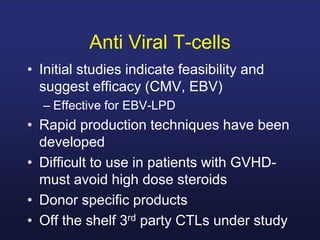
• Initial studies indicate feasibility and
suggest efficacy (CMV, EBV)
– Effective for EBV-LPD
• Rapid production techniques have been
developed
• Difficult to use in patients with GVHD-
must avoid high dose steroids
• Donor specific products
• Off the shelf 3rd party CTLs under study
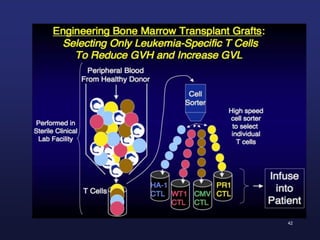
Induction of Graft-vs-
Malignancy Effects
Donor lymphocyte Infusions
Antigen specific CTLs
Chimeric Antigen Receptor T-
cells
Donor Lymphocyte Infusion
• Effective treatment for EBV-LPD,
relapsed CML, CLL, indolent NHL; less
effective for relapsed AML and ALL
• Planned DLI studied to enhance GVM
effects
• Frequently complicated by GVHD
– Related to cell dose, time post transplant
– Escalating cell dose
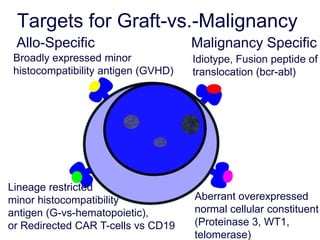
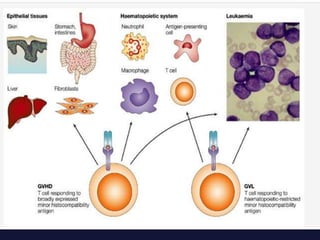
Targets for Graft-vs.-Malignancy
Broadly expressed minor
histocompatibility antigen (GVHD)
Lineage restricted
minor histocompatibility
antigen (G-vs-hematopoietic),
or Redirected CAR T-cells vs CD19
Aberrant overexpressed
normal cellular constituent
(Proteinase 3, WT1,
telomerase)
Allo-Specific Malignancy Specific
Idiotype, Fusion peptide of
translocation (bcr-abl)
Shared Resources
Flow Cytometry and Cellular Imaging Facility, Genetically Engineered Mouse
Facility, Monoclonal Antibody Facility; Clinical Trials Support Resource
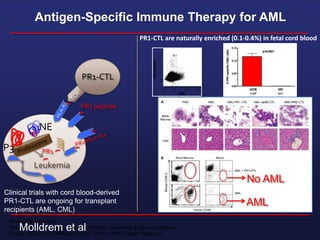
Antigen-Specific Immune Therapy for AML
P3
NE
Leukemia
PR1 peptide
PR1
PR1-CTL
Clinical trials with cord blood-derived
PR1-CTL are ongoing for transplant
recipients (AML, CML)
PR1-CTL are naturally enriched (0.1-0.4%) in fetal cord blood
AML
No AML
Molldrem et al
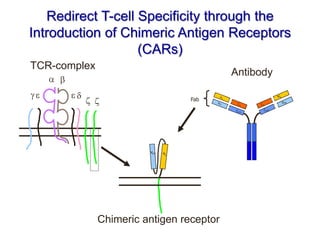
Redirect T-cell Specificity through the
Introduction of Chimeric Antigen Receptors
(CARs)
vL
vH
CH1
CL
Antibody
Fab
vH vL
Chimeric antigen receptor
TCR-complex
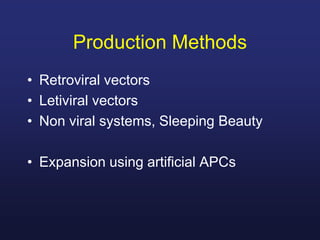
Production Methods
• Retroviral vectors
• Letiviral vectors
• Non viral systems, Sleeping Beauty
• Expansion using artificial APCs
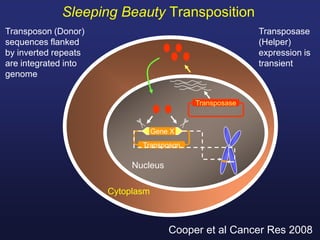
Sleeping Beauty Transposition
Cytoplasm
Nucleus
Transposase
Transposon
Gene X
Transposase
(Helper)
expression is
transient
Transposon (Donor)
sequences flanked
by inverted repeats
are integrated into
genome
Cooper et al Cancer Res 2008
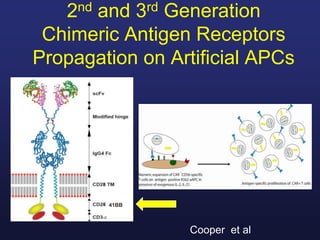
2nd and 3rd Generation
Chimeric Antigen Receptors
Propagation on Artificial APCs
Cooper et al
41BB
Chimeric Antigen Receptor T-cells
• Can target nonimmunogenic targets,
tissue/tumor specific antigens. Most
experience targeting CD19 for B-cell
lymphomas, CLL and ALL
• First, second and third generation constructs
including costimulatory molecules CD28,
CD137 enhance survival of the cells in vivo
and their proliferation
• Optimal design of CAR not established
– Affinity of antibody receptor, spacer, costimulatory
molecules, coexpressed receptors, homing
molecules
Clinical Trials of CAR T-cells
• lymphodepleting chemotherapy and
autologous CAR T-cells
• some complete remissions, eradicating
CD19+ cells (reported studies N=32;
CR-3 PR-10)
• Small number of HSCT patients treated
with autologous or allogeneic CAR+
cells
• Durable elimination of CD19+ normal B-
cells
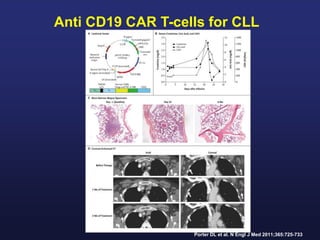
Anti CD19 CAR T-cells for CLL
Porter DL et al. N Engl J Med 2011;365:725-733
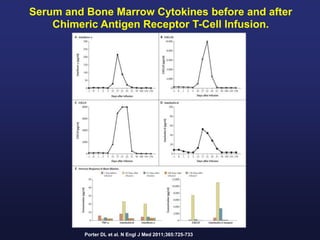
Serum and Bone Marrow Cytokines before and after
Chimeric Antigen Receptor T-Cell Infusion.
Porter DL et al. N Engl J Med 2011;365:725-733
CAR Problem Areas
• Autologous vs. Allogeneic
• Survival, homing in vivo
• In vivo expansion needed for activity
• Toxicity, “cytokine storm” may occur,
particularly with CD137 containing
CARs- can produce respiratory failure
• Time/ expense in producing patient
specific products
• Complex, regulatory considerations
make multicenter studies difficult
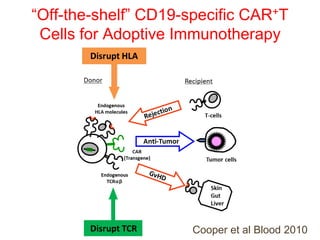
“Off-the-shelf” CD19-specific CAR+T
Cells for Adoptive Immunotherapy
Cooper et al Blood 2010
NK Cells
NK Cells
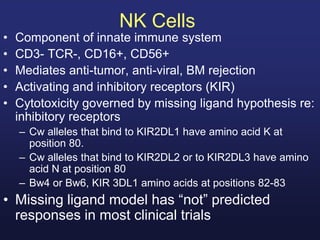
• Component of innate immune system
• CD3- TCR-, CD16+, CD56+
• Mediates anti-tumor, anti-viral, BM rejection
• Activating and inhibitory receptors (KIR)
• Cytotoxicity governed by missing ligand hypothesis re:
inhibitory receptors
– Cw alleles that bind to KIR2DL1 have amino acid K at
position 80.
– Cw alleles that bind to KIR2DL2 or to KIR2DL3 have amino
acid N at position 80
– Bw4 or Bw6, KIR 3DL1 amino acids at positions 82-83
• Missing ligand model has “not” predicted
responses in most clinical trials
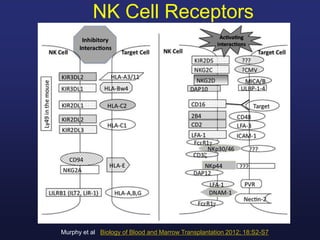
NK Cell Receptors
Murphy et al Biology of Blood and Marrow Transplantation 2012; 18:S2-S7
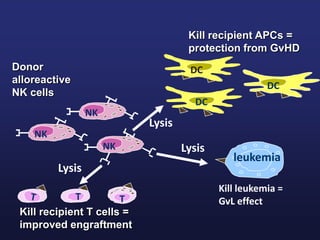
Lysis
Lysis
leukemia
DC
NK
DC
DC
NK
NK
Donor
alloreactive
NK cells
Lysis
T TT
Kill recipient APCs =
protection from GvHD
Kill recipient T cells =
improved engraftment
Kill leukemia =
GvL effectTT
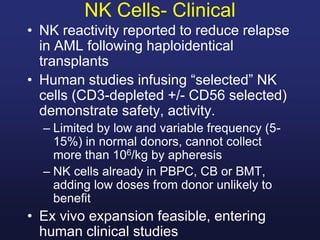
NK Cells- Clinical
• NK reactivity reported to reduce relapse
in AML following haploidentical
transplants
• Human studies infusing “selected” NK
cells (CD3-depleted +/- CD56 selected)
demonstrate safety, activity.
– Limited by low and variable frequency (5-
15%) in normal donors, cannot collect
more than 106/kg by apheresis
– NK cells already in PBPC, CB or BMT,
adding low doses from donor unlikely to
benefit
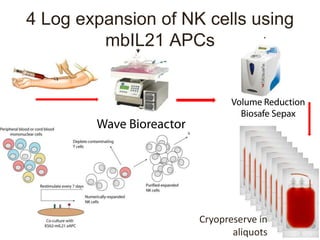
• Ex vivo expansion feasible, entering
human clinical studies
4 Log expansion of NK cells using
mbIL21 APCs
Cryopreserve in
aliquots
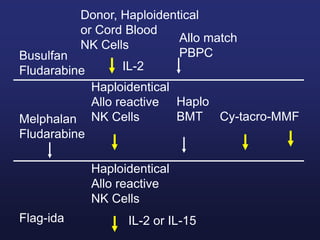
IL-2 or IL-15
Haploidentical
Allo reactive
NK Cells
Busulfan
Fludarabine
Donor, Haploidentical
or Cord Blood
NK Cells
IL-2
Allo match
PBPC
Melphalan
Fludarabine
Haploidentical
Allo reactive
NK Cells
Haplo
BMT Cy-tacro-MMF
Flag-ida
42
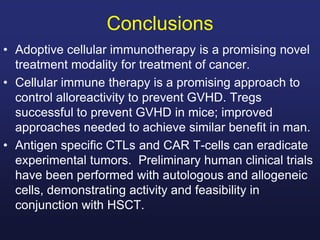
Conclusions
• Adoptive cellular immunotherapy is a promising novel
treatment modality for treatment of cancer.
• Cellular immune therapy is a promising approach to
control alloreactivity to prevent GVHD. Tregs
successful to prevent GVHD in mice; improved
approaches needed to achieve similar benefit in man.
• Antigen specific CTLs and CAR T-cells can eradicate
experimental tumors. Preliminary human clinical trials
have been performed with autologous and allogeneic
cells, demonstrating activity and feasibility in
conjunction with HSCT.
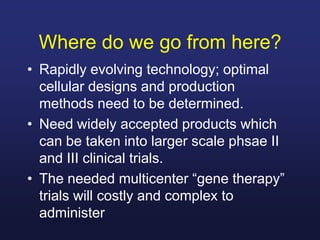
Where do we go from here?
• Rapidly evolving technology; optimal
cellular designs and production
methods need to be determined.
• Need widely accepted products which
can be taken into larger scale phsae II
and III clinical trials.
• The needed multicenter “gene therapy”
trials will costly and complex to
administer

Cellular Immune Therapy with Allogeneic Stem Cell Transplantation

  • 1.
    Cellular Immune Therapy withAllogeneic Stem Cell Transplantation Richard Champlin, M.D.
  • 2.
  • 3.
    Cell Therapy AllogeneicSCT • High dose chemotherapy/radiation usually does not eradicate malignancy – Higher relapse rate with identical twin or with T-cell depletion – Reduced relapse with GVHD • Allogeneic GVL effect responsible for eradicating residual disease.
  • 4.
    HSCT +DLI DT DNK D RLRL R RL R R DB Dsc DT DNK D DD Dsc D DT DT Dsc D CompleteChimeraRecipient Donor Mixed Chimera Hematopoietic Transplantation Preparative Regimen R Cellular Immune Therapy
  • 5.
    Time(weeks) SurvivalProbability 0 20 4060 80 100 120 0.00.20.40.60.81.0 In remission, PB.blast=0 Active Disease, PB.blast=0 Active Disease, PB.blast>0 p<0.0001 Time(weeks) Event-freeprobability 0 20 40 60 80 100 120 0.00.20.40.60.81.0 In remission, PB.blast=0 Active Disease, PB.blast=0 Active Disease, PB.blast>0 p<0.0001 Relapse is main cause of treatment failure with Allogeneic HSCT for AML
  • 6.
    Fundamental Problems with HSCT •Graft-vs.-malignancy which naturally occurs post transplant is relatively weak • Graft vs. Malignancy associated with GVHD • Relapse remains the major cause of treatment failure • Resistant infections can occur due to post transplant immune deficiency
  • 7.
  • 8.
    • T-cells thatdown regulate immune responses termed regulatory T cells have been identified. • CD4+CD25+FoxP3+ • Challenge to separate from Tconv • Cord Blood vs. Peripheral Blood • Can suppress GVHD • Clinical Trials • Natural T regs • Inducible T regs Regulatory T-Cells (Tregs)
  • 9.
    Cord Blood TregExpansion and Activation •Anti-CD3/antiCD28-coated beads. •Supplemented with IL-2 300 IU/mL Reduced incidence of grade II-IV aGVHD (43% vs 61%) Brunstein et al Blood 2011 CD25 Selection Culture
  • 10.
    Clinical outcomes ofpatients after nonmyeloablative umbilical cord blood transplantation who received Treg ≥ 30 × 105/kg (dotted line; n = 18) and historical controls (solid line; n = 108). Brunstein C G et al. Blood 2011;117:1061-1070
  • 11.
    Questions with Tregs •Production process, separation of Tregs from Tconv • Cell Dose • Administration with calcineurin inhibitors vs. sirolimus • Impact on GVL effects?
  • 12.
    Suicide Switch toAbrogate GVHD • Genetically modify T-cells to introduce gene to induce apoptosis upon treatment with an activating drug • Herpes virus tyrosine kinase – activated with ganciclovir • Modified Caspace 9
  • 14.
    Di Stasi etal NEJM 2011
  • 15.
    Rapid Reversal ofGVHD after Rx with AP1903. Di Stasi A et al. N Engl J Med 2011;365:1673-1683
  • 16.
  • 17.
    CTLMultimer Multimer selection IFN- Gamma interferon selection IFN- GammaCapture of Antigen Reactive T-cells Feasible for high frequency T-cell responses: EBV, CMV
  • 18.
    T cell stimulation/expansion PBMC CTL Cytokines+IL4/ 7 EBV – EBNA1, LMP2, BZLF1 CMV – IE1, pp65 Adv – Hexon, Penton BK – LT and VP1 HHV6 – U11, U14, U90 Cultured anti-viral CTLs
  • 19.
    Anti Viral T-cells •Initial studies indicate feasibility and suggest efficacy (CMV, EBV) – Effective for EBV-LPD • Rapid production techniques have been developed • Difficult to use in patients with GVHD- must avoid high dose steroids • Donor specific products • Off the shelf 3rd party CTLs under study
  • 20.
    Induction of Graft-vs- MalignancyEffects Donor lymphocyte Infusions Antigen specific CTLs Chimeric Antigen Receptor T- cells
  • 21.
    Donor Lymphocyte Infusion •Effective treatment for EBV-LPD, relapsed CML, CLL, indolent NHL; less effective for relapsed AML and ALL • Planned DLI studied to enhance GVM effects • Frequently complicated by GVHD – Related to cell dose, time post transplant – Escalating cell dose
  • 22.
    Targets for Graft-vs.-Malignancy Broadlyexpressed minor histocompatibility antigen (GVHD) Lineage restricted minor histocompatibility antigen (G-vs-hematopoietic), or Redirected CAR T-cells vs CD19 Aberrant overexpressed normal cellular constituent (Proteinase 3, WT1, telomerase) Allo-Specific Malignancy Specific Idiotype, Fusion peptide of translocation (bcr-abl)
  • 24.
    Shared Resources Flow Cytometryand Cellular Imaging Facility, Genetically Engineered Mouse Facility, Monoclonal Antibody Facility; Clinical Trials Support Resource Antigen-Specific Immune Therapy for AML P3 NE Leukemia PR1 peptide PR1 PR1-CTL Clinical trials with cord blood-derived PR1-CTL are ongoing for transplant recipients (AML, CML) PR1-CTL are naturally enriched (0.1-0.4%) in fetal cord blood AML No AML Molldrem et al
  • 25.
    Redirect T-cell Specificitythrough the Introduction of Chimeric Antigen Receptors (CARs) vL vH CH1 CL Antibody Fab vH vL Chimeric antigen receptor TCR-complex
  • 26.
    Production Methods • Retroviralvectors • Letiviral vectors • Non viral systems, Sleeping Beauty • Expansion using artificial APCs
  • 27.
    Sleeping Beauty Transposition Cytoplasm Nucleus Transposase Transposon GeneX Transposase (Helper) expression is transient Transposon (Donor) sequences flanked by inverted repeats are integrated into genome Cooper et al Cancer Res 2008
  • 28.
    2nd and 3rdGeneration Chimeric Antigen Receptors Propagation on Artificial APCs Cooper et al 41BB
  • 29.
    Chimeric Antigen ReceptorT-cells • Can target nonimmunogenic targets, tissue/tumor specific antigens. Most experience targeting CD19 for B-cell lymphomas, CLL and ALL • First, second and third generation constructs including costimulatory molecules CD28, CD137 enhance survival of the cells in vivo and their proliferation • Optimal design of CAR not established – Affinity of antibody receptor, spacer, costimulatory molecules, coexpressed receptors, homing molecules
  • 30.
    Clinical Trials ofCAR T-cells • lymphodepleting chemotherapy and autologous CAR T-cells • some complete remissions, eradicating CD19+ cells (reported studies N=32; CR-3 PR-10) • Small number of HSCT patients treated with autologous or allogeneic CAR+ cells • Durable elimination of CD19+ normal B- cells
  • 31.
    Anti CD19 CART-cells for CLL Porter DL et al. N Engl J Med 2011;365:725-733
  • 32.
    Serum and BoneMarrow Cytokines before and after Chimeric Antigen Receptor T-Cell Infusion. Porter DL et al. N Engl J Med 2011;365:725-733
  • 33.
    CAR Problem Areas •Autologous vs. Allogeneic • Survival, homing in vivo • In vivo expansion needed for activity • Toxicity, “cytokine storm” may occur, particularly with CD137 containing CARs- can produce respiratory failure • Time/ expense in producing patient specific products • Complex, regulatory considerations make multicenter studies difficult
  • 34.
    “Off-the-shelf” CD19-specific CAR+T Cellsfor Adoptive Immunotherapy Cooper et al Blood 2010
  • 35.
  • 36.
    NK Cells • Componentof innate immune system • CD3- TCR-, CD16+, CD56+ • Mediates anti-tumor, anti-viral, BM rejection • Activating and inhibitory receptors (KIR) • Cytotoxicity governed by missing ligand hypothesis re: inhibitory receptors – Cw alleles that bind to KIR2DL1 have amino acid K at position 80. – Cw alleles that bind to KIR2DL2 or to KIR2DL3 have amino acid N at position 80 – Bw4 or Bw6, KIR 3DL1 amino acids at positions 82-83 • Missing ligand model has “not” predicted responses in most clinical trials
  • 37.
    NK Cell Receptors Murphyet al Biology of Blood and Marrow Transplantation 2012; 18:S2-S7
  • 38.
    Lysis Lysis leukemia DC NK DC DC NK NK Donor alloreactive NK cells Lysis T TT Killrecipient APCs = protection from GvHD Kill recipient T cells = improved engraftment Kill leukemia = GvL effectTT
  • 39.
    NK Cells- Clinical •NK reactivity reported to reduce relapse in AML following haploidentical transplants • Human studies infusing “selected” NK cells (CD3-depleted +/- CD56 selected) demonstrate safety, activity. – Limited by low and variable frequency (5- 15%) in normal donors, cannot collect more than 106/kg by apheresis – NK cells already in PBPC, CB or BMT, adding low doses from donor unlikely to benefit • Ex vivo expansion feasible, entering human clinical studies
  • 40.
    4 Log expansionof NK cells using mbIL21 APCs Cryopreserve in aliquots
  • 41.
    IL-2 or IL-15 Haploidentical Alloreactive NK Cells Busulfan Fludarabine Donor, Haploidentical or Cord Blood NK Cells IL-2 Allo match PBPC Melphalan Fludarabine Haploidentical Allo reactive NK Cells Haplo BMT Cy-tacro-MMF Flag-ida
  • 42.
  • 43.
    Conclusions • Adoptive cellularimmunotherapy is a promising novel treatment modality for treatment of cancer. • Cellular immune therapy is a promising approach to control alloreactivity to prevent GVHD. Tregs successful to prevent GVHD in mice; improved approaches needed to achieve similar benefit in man. • Antigen specific CTLs and CAR T-cells can eradicate experimental tumors. Preliminary human clinical trials have been performed with autologous and allogeneic cells, demonstrating activity and feasibility in conjunction with HSCT.
  • 44.
    Where do wego from here? • Rapidly evolving technology; optimal cellular designs and production methods need to be determined. • Need widely accepted products which can be taken into larger scale phsae II and III clinical trials. • The needed multicenter “gene therapy” trials will costly and complex to administer
Editor's Notes

  • #12 Q6. retroviral vector issues.Adenoviral vector used for transient transfection situations Retroviral vector for stably transfected situations with low oncogenic risk (e.g. T cells)Lentivirus for stem cells (in development)