Cellular
Adaptations &
Cell Injury
Presented By,
Shruthi Vasan S
Assistant Professor,
Sree Abirami College of Allied Health Sciences
Shruthivasanprof97@gmail.com
Response to cell injury and causes
The cellular response to a stress may vary depending upon following two:
Host Factor
Agent
Cell Injury is defined as the functional and morphologic effects of a variety
of stresses on the cell from various etiologic agents which result in changes
in its internal and external environment.
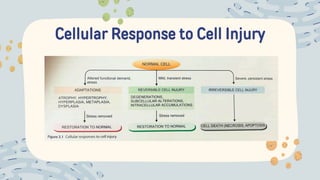
Cellular Response to Cell Injury
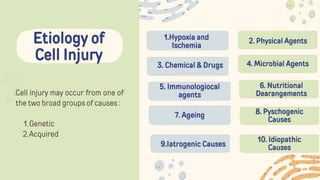
Cell injury may occur from one of
the two broad groups of causes :
Genetic
1.
Acquired
2.
Etiology of
Cell Injury
1.Hypoxia and
Ischemia
2. Physical Agents
3. Chemical & Drugs 4. Microbial Agents
5. Immunologiocal
agents
7. Ageing
6. Nutritional
Dearangements
9.Iatrogenic Causes
8. Pyschogenic
Causes
10. Idiopathic
Causes
1.Hypoxia & Ischemia
Cells of Different tissues require oxygen to generate energy and perform
metabolic function.
Deficiency of oxygen or hypoxia results in failure to carry out these activities by
the cells.
Hypoxia is the most common cause of cell injury. It results From two ways:
Interruption (Ischemia)
Impaired Blood Supply (Disorders of Oxygen Carrying RBCs - Anaemia, Carbon
Monoxide Poisoning)
2. Physical Agents
Mechanical trauma (Road Accidents)
Thermal Trauma (Heat and Cold)
Electricity
Radiation (UV Rays & Ionising)
Rapid changes in the atmospheric pressure
3. Chemical & Drugs
Chemical Poisoning (Cyanide, Arsenic, Mercuric)
Strong Acids and Alkalis
Environmental Pollutants
Insecticides & Pesticides
Oxygen at High Concentrations
Hypertonic glucose and salts
Alcohols
Narcotic drugs
Therapeutic administration of drugs
4. Microbial Agents
Bacteria
Rickettsiae
Viruses
Fungi
Protozoa
Metazoa
Other parasites
5. Immunologic Causes
Hypersensitivity Reactions
Anaphylactic Reaction
Autoimmune Disease
6. Nutritional Dearangments
A Deficiency or an excess of nutrient may result in nutritional imbalances.
Nutritional Deficiency disease may be due to;
Overall deficiency of nutrients (Starvation)
Protein Calorie (Marasmas, Kwashiorkor)
Minerals (Anaemia)
Trace Elements
Nutritional Excess - Obesity, atherosclerosis, heart disease and
hypertension.
7. Ageing
Cellular ageing or senescence leads to impaired ability of the cells to
undergo replication & repair and ultimately lead to cell death culminating
in death of the individual.
8. Psychogenic Causes
There are no specific biochemical or morphological changes in common
acquired mental diseases due to mental stress, strain, anxiety, overwork and
frustration.
Example: Depression, Schizophrenia
However drug addiction, alcoholism and smoking result in various organic
disease such as liver damage, chronic bronchitis, lung cancer, peptic ulcer,
hypertension, ischemic heart disease.
9. Iatrogenic Causes
Every Physician is bound not to do or administer anything that causes harm
to the patient, there are some disease as well as deaths attributed to
iatrogenic causes (Owing to physician).
Example:
Include Occurrences of disease or death due to error in judgement by the
physician.
Toward effects of administered therapy (Drugs, Radiation)
10. Idiopathic Disease
Unknown Cause
Although So much is known about the etiology of disease, there's still many
disease for which exacy cause is unknown.
Example:
Hypertension - 90% Idiopathic
Etiology of many cancers is unknown.
Take Home Points!
Cell injury is the functional and morphological effects of a variety of stresses on the cell
from various etiologic agents which results in Changes its internal & external environment.
Cellular response to stress depends upon the type of cell and tissue involved and
the type of dose of injurious agent.
When exposed to mild stress or due to altered functional demand, the cells adjust and
adapt to a limit (Cellular adaptation) and revert back to normal
Mild to moderate stress for a short duration may cause reversible cell injury, severe
persistent stress causes cell death.
Among various etiologic factors, Hypoxia - Ischaemia is most important other
chemicals and physical agents, microbes, immunity, Ageing etc
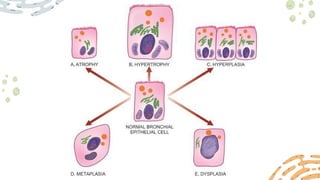
Cellular Adaptation
Cellular adaptations are the adjustment which the cells make in
response to stress. They are;
Physiological needs
(Physiological Adaptation)
0r
Response to non lethal pathologic injury
(Pathological Adaptation)
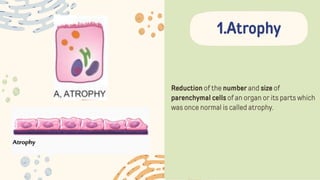
Reduction of the number and size of
parenchymal cells of an organ or its parts which
was once normal is called atrophy.
1.Atrophy
Physiologic Atrophy
Atrophy with Lymphoid tissue with age.
1.
Atrophy of Thymus in adult life.
2.
Atrophy of gonads after menopause.
3.
Atrophy of Brain with Ageing.
4.
Osteoporosis with reduction in size of bony
trabeculae due to aging.
5.
Pathologic Atrophy
Starvation Atrophy
1.
Neuropathic Atrophy - Poliomyelitis, Motor
Neuron Disease, Nerve section
2.
Endocrine Atrophy - Hypopituitarism,
Hypothyroidism
3.
Pressure Atrophy - Erosion of Spine,
Erosion of skull, Erosion of sternum
4.
Development disorders - Cryptorchid testis.
5.
Idiopathic atrophy - Myopathies
6.
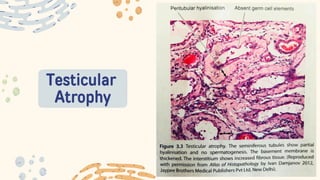
Testicular
Atrophy
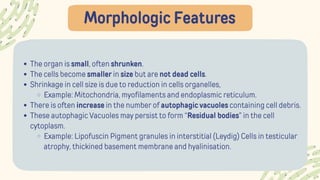
Morphologic Features
The organ is small, often shrunken.
The cells become smaller in size but are not dead cells.
Shrinkage in cell size is due to reduction in cells organelles,
Example: Mitochondria, myofilaments and endoplasmic reticulum.
There is often increase in the number of autophagic vacuoles containing cell debris.
These autophagic Vacuoles may persist to form “Residual bodies” in the cell
cytoplasm.
Example: Lipofuscin Pigment granules in interstitial (Leydig) Cells in testicular
atrophy, thickined basement membrane and hyalinisation.
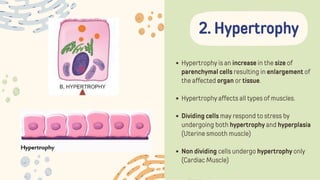
Hypertrophy is an increase in the size of
parenchymal cells resulting in enlargement of
the affected organ or tissue.
Hypertrophy affects all types of muscles.
Dividing cells may respond to stress by
undergoing both hypertrophy and hyperplasia
(Uterine smooth muscle)
Non dividing cells undergo hypertrophy only
(Cardiac Muscle)
2. Hypertrophy
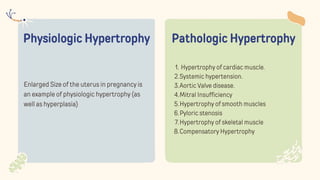
Physiologic Hypertrophy
Enlarged Size of the uterus in pregnancy is
an example of physiologic hypertrophy (as
well as hyperplasia)
Hypertrophy of cardiac muscle.
1.
Systemic hypertension.
2.
Aortic Valve disease.
3.
Mitral Insufficiency
4.
Hypertrophy of smooth muscles
5.
Pyloric stenosis
6.
Hypertrophy of skeletal muscle
7.
Compensatory Hypertrophy
8.
Pathologic Hypertrophy
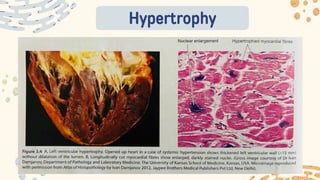
Hypertrophy
Morphologic Features
Grossly, the affected organ is enlarged and heavy.
For Example: A Hypertrophied heart of a patient with systemic
Hypertension may weigh 700 - 800g as compared to average normal
adult weight of 350g.
Microscopically, there is enlargement of muscle fibres as well as of
nuclei.
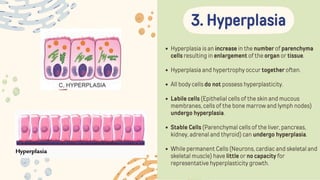
Hyperplasia is an increase in the number of parenchyma
cells resulting in enlargement of the organ or tissue.
Hyperplasia and hypertrophy occur together often.
All body cells do not possess hyperplasticity.
Labile cells (Epithelial cells of the skin and mucous
membranes, cells of the bone marrow and lymph nodes)
undergo hyperplasia.
Stable Cells (Parenchymal cells of the liver, pancreas,
kidney, adrenal and thyroid) can undergo hyperplasia.
While permanent Cells (Neurons, cardiac and skeletal and
skeletal muscle) have little or no capacity for
representative hyperplasticity growth.
3. Hyperplasia
Physiologic Hyperplasia
Hormonal Hyperplasia
1.
Hyperplasia - Pregnancy, Lactation,
2.
Uterus
3. Compensatory Hyperplasia
Pathologic Hyperplasia
Endometrial hyperplasia following
oestrogen excess.
1.
Usual ductal hyperplasia in fibrocystic
changes of the breast.
2.
Benign prostatic hyperplasia in old age.
3.
Hyperplasia of the skin in non healing
ulcers, viral warts.
4.
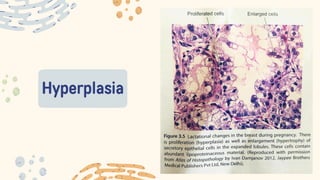
Hyperplasia
Morphologic Features
There is enlargement of the affected organ or tissue and increase in
the number of cells, often accompained with hypertrophy.
The is due to increased rate of a DNA Synthesis and hence increased
mitosis of the cells.
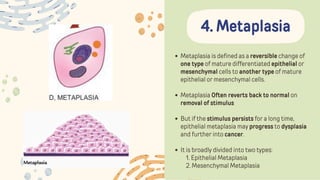
Metaplasia is defined as a reversible change of
one type of mature differentiated epithelial or
mesenchymal cells to another type of mature
epithelial or mesenchymal cells.
Metaplasia Often reverts back to normal on
removal of stimulus
But if the stimulus persists for a long time,
epithelial metaplasia may progress to dysplasia
and further into cancer.
It is broadly divided into two types:
1. Epithelial Metaplasia
2. Mesenchymal Metaplasia
4. Metaplasia
Epithelial Metaplasia
It is more common.
1.
Depending upon the epithelial transformed it is
divided into two types:
2.
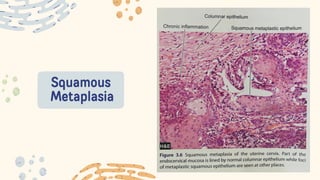
Squamous Metaplasia:
a.
In Bronchus (Heavy Smokers)
i.
In Uterine (Old Age)
ii.
Columnar Metaplasia
b.
Intestinal Metaplasia in healed chronic
gastric ulcer.
i.
Change of Pseudostratified ciliated
Columnar epithelium in chronic
bronchitis and bronchiectasis to
columnar type.
ii.
Mesenchymal Metaplasia
Less Often.
1.
Often it is Osseous metaplasia.
2.
Formation of bone in fibrous tissue
a.
Cartilage
b.
Myxoid tissue
c.
Example:
3.
In arterial wall of old age.
a.
In cartilage of larynx and bronchi in elderly
people.
b.
In the fibrous stroma of tumour.
(leiomyoma)
c.
Squamous
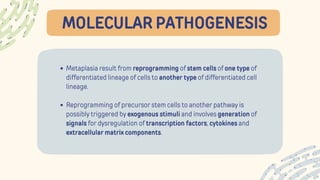
Metaplasia
MOLECULAR PATHOGENESIS
Metaplasia result from reprogramming of stem cells of one type of
differentiated lineage of cells to another type of differentiated cell
lineage.
Reprogramming of precursor stem cells to another pathway is
possibly triggered by exogenous stimuli and involves generation of
signals for dysregulation of transcription factors, cytokines and
extracellular matrix components.
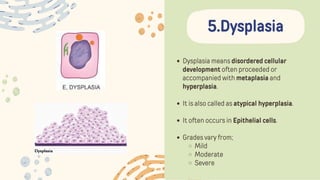
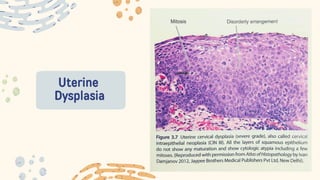
Dysplasia means disordered cellular
development often proceeded or
accompanied with metaplasia and
hyperplasia.
It is also called as atypical hyperplasia.
It often occurs in Epithelial cells.
Grades vary from;
Mild
Moderate
Severe
5.Dysplasia
It is characterised by cellular proliferation and cytologic changes of varying
degree as under:
Increased Number of layers of epithelial cells
Disorderly arrangement of cells from basal layer to the surface layer.
Loss of basal polarity (Nuclei lying away from basement membrane)
Cellular and nuclear pleomorphism.
Increased nuclear cytoplasmic ratio.
Nuclear Hyperchromatism.
Increased mitotic activity due to accelerated cell proliferation.
Common Examples;
1. Uterine Cervix
2. Respiratory tract
3. Other Sites:
- Oral Cavity
- Oesophagus
In cervix Dysplasia of mild moderate and severe is also called as “Cervical Intraepithelial
Neoplasia” CIN - I, II, III Grades.
Causes :
Chronic Irritation
Prolonged Inflammation
On Removing the stimulus the dysplastic changes may disappear.
If the stimulus persists so long it may proceed to severe grade or to Carcinoma or to
Invasive Cancer
Dysplasia may be precursor to cancer but not always.
Uterine
Dysplasia
Take Home Points!
These are adjustments which cells make in repsonse to exogenous inciting
stimuli;
Atrophy is reduction of the number and size of parenchymal cells of an organ or
its part which was once normal.
Hypertrophy is an increase in the size of parenchymal cells resulting in enlargement
of the organ or tissue. it affects both dividing and non dividing cells.
Hyperplasia is an increase in the number of parenchymal cells resulting in
enlargement of the organ or tissue. It involves dividing cells only.
Hypertrophy and hyperplasia may coexist. Example: Uterus in pregnancy,
Lactating breast.
Take Home Points!
Metaplasia is defined as a reversible change of one type of mature epithelial
or mesenchymal cells to another type of mature epithelial or mesenchymal
cells, usually in response to abnormal stimuli and often reverts back to
normal on removal of stimuli
Dysplasia is Disordered cellular development often preceded or accompanied
with metaplasia and hyperplasia; most common sites being uterine cervix and
bronchus. Mild and moderate grades may be reversible on withdrawal of
inciting stimuli. Persistence of stimuli may cause progression to higher
gradesor to carcinoma In Situ.
What
Happens to
cell during
cell injury?
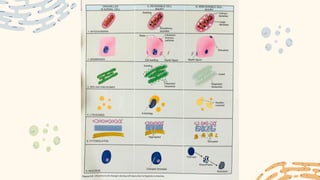
Morphology of
Reversible cell
injury
1.Hydropic change
2. Hyaline Change
3. Mucoid Change
4. Fatty Change
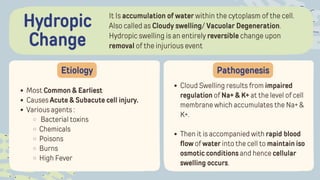
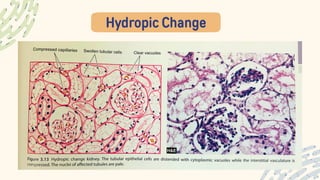
It Is accumulation of water within the cytoplasm of the cell.
Also called as Cloudy swelling/ Vacuolar Degeneration.
Hydropic swelling is an entirely reversible change upon
removal of the injurious event
Hydropic
Change
Etiology Pathogenesis
Most Common & Earliest
Causes Acute & Subacute cell injury.
Various agents :
Bacterial toxins
Chemicals
Poisons
Burns
High Fever
Cloud Swelling results from impaired
regulation of Na+ & K+ at the level of cell
membrane which accumulates the Na+ &
K+.
Then it is accompanied with rapid blood
flow of water into the cell to maintain iso
osmotic conditions and hence cellular
swelling occurs.
Hydropic Change
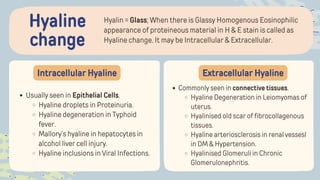
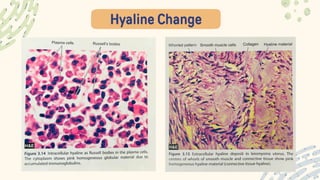
Hyalin = Glass; When there is Glassy Homogenous Eosinophilic
appearance of proteineous material in H & E stain is called as
Hyaline change. It may be Intracellular & Extracellular.
Hyaline
change
Intracellular Hyaline Extracellular Hyaline
Usually seen in Epithelial Cells.
Hyaline droplets in Proteinuria.
Hyaline degeneration in Typhoid
fever.
Mallory’s hyaline in hepatocytes in
alcohol liver cell injury.
Hyaline inclusions in Viral Infections.
Commonly seen in connective tissues.
Hyaline Degeneration in Leiomyomas of
uterus.
Hyalinised old scar of fibrocollagenous
tissues.
Hyaline arteriosclerosis in renal vessesl
in DM & Hypertension.
Hyalinised Glomeruli in Chronic
Glomerulonephritis.
Hyaline Change
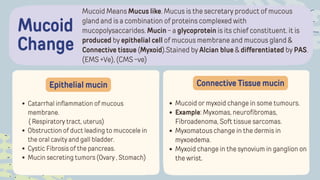
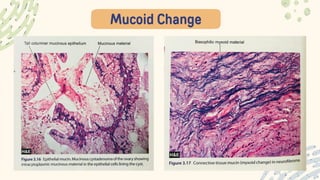
Mucoid Means Mucus like. Mucus is the secretary product of mucous
gland and is a combination of proteins complexed with
mucopolysaccarides. Mucin - a glycoprotein is its chief constituent. it is
produced by epithelial cell of mucous membrane and mucous gland &
Connective tissue (Myxoid).Stained by Alcian blue & differentiated by PAS.
(EMS +Ve), (CMS -ve)
Mucoid
Change
Epithelial mucin Connective Tissue mucin
Catarrhal inflammation of mucous
membrane.
( Respiratory tract, uterus)
Obstruction of duct leading to mucocele in
the oral cavity and gall bladder.
Cystic Fibrosis of the pancreas.
Mucin secreting tumors (Ovary , Stomach)
Mucoid or myxoid change in some tumours.
Example: Myxomas, neurofibromas,
Fibroadenoma, Soft tissue sarcomas.
Myxomatous change in the dermis in
myxoedema.
Myxoid change in the synovium in ganglion on
the wrist.
Mucoid Change
Take Home Points!
Degenerations or reversible cell injury depicts the light microscopic appearance of
changes occuring at ultrastructural level.
Hydropic swelling is the earliest form of cell injury from various etiologies and its
main features are cellular swelling due to cytoplasmic vacuoles.
Hyaline change is intra and extracellular deposition of pink, Proteineous material.
Mucoid change is deposition of mucinous material in epithelial and connective
tissues in excessive amounts
Morphology of
Irreversible
cell injury
1.Necrosis
2. Apoptosis
Cell Death is the state of
Irreversible cell injury.
It may occur in the living tissue
as a local or focal changed cause
by external factors (Necrosis).
Or by Mediated by intracellular
genetic programmes (Apoptosis)
Necrosis is distinct from autolysis.
Necrosis may be superimposed by
some pathologic changes.
Example :
Gangrene
Pathologic Calcification
Necrosis is defined as a localised
area of death of tissue followed
later by degradation of tissue by
hydrolytic enzymes liberated from
dead cells; it is invariably
accompanied by inflammatory
reaction.
Necrosis
Agents
Necrosis can be caused by various
agents such as;
Hypoxia
Chemical Agents
Physical Agents
Microbial Agents
Immunological Injury
Classification
of Necrosis
1.Coagulative Necrosis
2. Liquefactive Necrosis
3. Caseous Necrosis
4. Fat Necrosis
5.Fibroid Necrosis
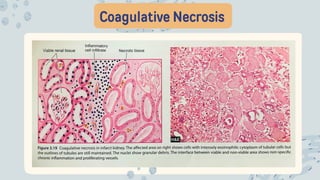
1.Coagulative
Necrosis
Most Common type of Necrosis caused by
Irreversible Focal Injury.
Mostly from sudden cessation of blood
flow (Ischaemic necrosis)
Less often from bacterial and chemical
agents.
The organs commonly affected are the;
Heart
Kidney
Spleen
Coagulative Necrosis
2. Liquefactive
Necrosis
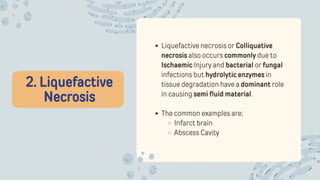
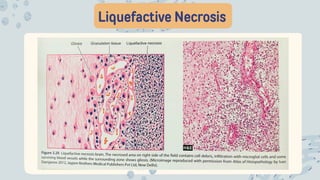
Liquefactive necrosis or Colliquative
necrosis also occurs commonly due to
Ischaemic Injury and bacterial or fungal
infections but hydrolytic enzymes in
tissue degradation have a dominant role
in causing semi fluid material.
The common examples are;
Infarct brain
Abscess Cavity
Liquefactive Necrosis
3. Caseous
Necrosis
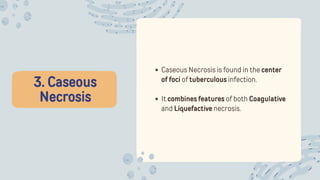
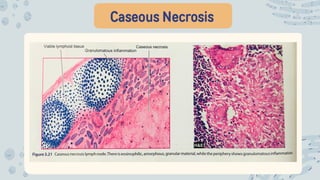
Caseous Necrosis is found in the center
of foci of tuberculous infection.
It combines features of both Coagulative
and Liquefactive necrosis.
Caseous Necrosis
4. Fat
Necrosis
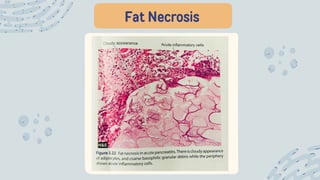
Fat necrosis is a special form of cell death
occurring mainly fat rich anatomic location in
the body.
Example:
Traumatic fat necrosis of the breast.
Especially in heavy and pendulous breast
Mesenteric fat necrosis due to acute
pancreatitis
Fat Necrosis
5. Fibrinoid
Necrosis
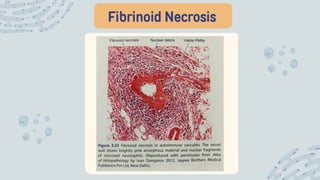
Fibrinoid necrosis is characterized by
deposition of the Fibrin Like material which has
the staining properties of fibrin such as
phosphotungstic acid hematoxylin (PTAH)
stain. It is encountered in various example of
immunologic tissue injury.
Example:
Autoimmune Vasculitis
Autoimmune Disease
Arthus Reaction
Arteioles in hypertension
Peptic Ulcer
Fibrinoid Necrosis
Take Home Points!
Cell Death is the state of Irreversible cell injury. Ex: Autolysis, Necrosis, Apoptosis.
Term autolysis or self Digestion is generally used for post mortem changes in
tissue.
Protype of cell death is necrosis; it is defined as a localised area of death in living tissue
and accompanied by inflammatory reaction (Vital reaction)
Coagulative necrosis is caused by sudden cessation of blood flow (Ischaemic necrosis)
Ex: Infarcts of the heart, kidney and spleen, or occurs by reduced supply of blood from
other causes.
Take Home Points!
Liquefactive necrosis also occurs due to ischemic injury and bacterial or fungal
infections but the hydrolytic enzymes in tissue degradation have a dominant role in
causing semi fluid material. Ex: Infarct brain and abscess cavity.
Caseous necrosis combines features of both Coagulative and Liquefactive necrosis.
It is found in the centres of foci of tuberculous infection and is accompained by
granulomatous inflammation.
Fat necrosis is seen in the breast and acute pancreatitis.
Fibrinoid Necrosis occurs due to immunologic tissue injury. Ex: Hypersensitivity
vasculitis.
Gangrene
Gangrene is associated with Necrosis with Superadded putrefaction,
Most often following Coagulative necrosis due to ischaemia.
Example :
Gangrene of the bowel,
Gangrene of the limb
On the other hand, Gangrenous or necrotising inflammation is
characterised primarily by inflammation provoked by virulent bacteria
resulting in massive tissue necrosis.
Example :
Gangrenous Appendicitis
Gangrenous Stomatitis
There are two types of Gangrene :
Dry Gangrene
Wet Gangrene
Gas Gangrene (A Variant of Wet Gangrene)
In all types of Gangrene Necrosis undergoes liquefaction by the action of
Putrefactive Bacteria.
Dry
Gangrene
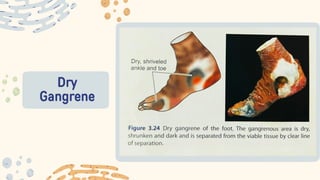
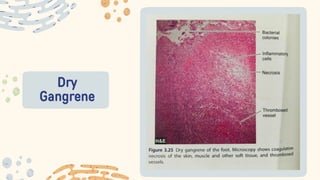
This part of Gangrene begins in the distal parts of a
limb due to Ischaemia.
This Typical Example is Dry Gangrene in the toes and
feet of an old patient due to Severe Atherosclerosis of
arteries supplying blood to the lower limb.
Other Causes of dry Gangrene foot includes
Thromboangitis obliterans (Buegers’s Disease,
Raynaud’s Disease, Trauma, Ergot Poisoning)
It is Usually initiated containing so little blood that
even the invading bacteria find it hard to grow in the
necrosed Tissue.
The Gangrene spreads slowly upwards to the point
where the blood supply is adequate to keep the tissue
viable.
A line of Seperation is formed at this point between the
gangrenous part and the viable part.
Dry
Gangrene
Dry
Gangrene
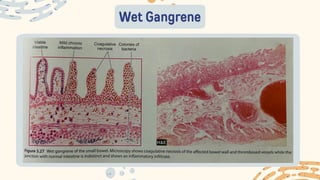
Wet
Gangrene
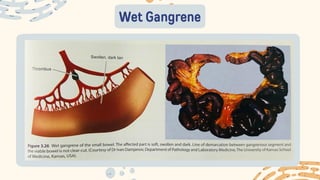
Wet Gangrene occurs in naturally moist tissue and organs such as the
Bowel, lung, mouth, Cervix, Vulva etc.
Example:
Diabetic Foot - Which is due to high glucose content in the
necrosed tissue which favours growth of bacteria.
Bed Sores Occurring in the bed ridden patients due to pressure on
sites like the sacrum, Buttocks & Heel.
May occur from the blockage of both venous (More often) and arterial
blood flow.
The affected part is stuffed with blood which favours the rapid growth
of putrefactive bacteria.
The toxic products formed from the bacteria are absorbed in the
circulation causing profound systemic manifestations of septicaemia
and finally death.
Wet Gangrene generally lacks clear cut line of demarcation and may
spread to Peritoneal Cavity Causing Peritonitis.
Wet Gangrene
Wet Gangrene
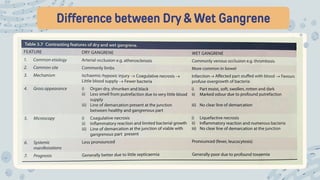
Difference between Dry & Wet Gangrene
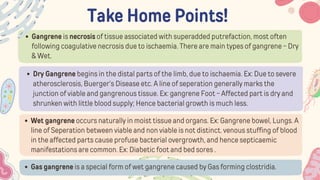
Take Home Points!
Gangrene is necrosis of tissue associated with superadded putrefaction, most often
following coagulative necrosis due to ischaemia. There are main types of gangrene - Dry
& Wet.
Dry Gangrene begins in the distal parts of the limb, due to ischaemia. Ex: Due to severe
atherosclerosis, Buerger’s Disease etc. A line of seperation generally marks the
junction of viable and gangrenous tissue. Ex: gangrene Foot - Affected part is dry and
shrunken with little blood supply; Hence bacterial growth is much less.
Wet gangrene occurs naturally in moist tissue and organs. Ex: Gangrene bowel, Lungs. A
line of Seperation between viable and non viable is not distinct. venous stuffing of blood
in the affected parts cause profuse bacterial overgrowth, and hence septicaemic
manifestations are common. Ex: Diabetic foot and bed sores .
Gas gangrene is a special form of wet gangrene caused by Gas forming clostridia.
Deposition of Calcium salts in the tissues
other than osteoid or enamel is called
Pathologic or Heterotopic calcification.
Two distinct types of pathologic
calcification are recognised:
Dystrophic
Metastatic
Although Etiology & Pathogenesis of the
two are different but morphologically the
deposits in both resemble normal minerals
of the bone.
Pathologic
Calcification
Dystrophic
Calcification
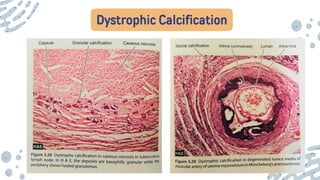
Dystrophic Calcification is characterised by
deposition of calcium salts in necrotic or
degenerated tissue with normal calcium
metabolism and normal serum calcium level.
Since Dystrophic calcification occurs both in death
and degenerated tissues; its causes is broadly
divided into two groups:
A. Calcification in Death tissue:
Caseous necrosis in tuberculosis.
Liquefaction necrosis in chronic abscesses.
Fat necrosis following acute pancreatitis
B. Calcification in degenerated tissues:
Stroma of tumor.
Dense old scar.
Nodular Goitre of thyroid.
Dystrophic Calcification
Metastatic
Calcification
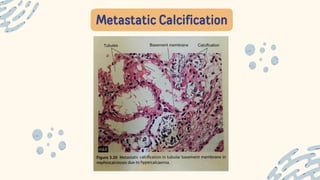
Metastatic calcification occurs in Normal tissues
and is associated with Deranged calcium
Metabolism and hypercalcaemia.
Common sites of metastatic calcification are;
Kidney
Lungs
Stomach
Blood Vessels
Cornea
Synovium
Etiology:
Excessive Mobilisation of calcium levels from
the bone. (Hyperparathyroidism,
hypercalcaemia)
Excessive absorption of calcium from the gut.
(Hypervitaminosis D, Renal Failure)
Metastatic Calcification
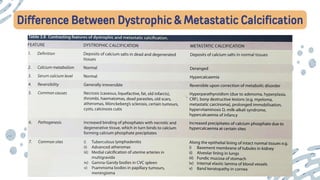
Difference Between Dystrophic & Metastatic Calcification
Take Home Points!
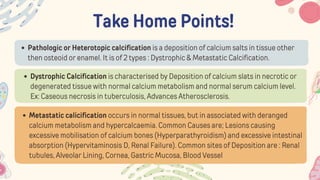
Pathologic or Heterotopic calcification is a deposition of calcium salts in tissue other
then osteoid or enamel. It is of 2 types : Dystrophic & Metastatic Calcification.
Dystrophic Calcification is characterised by Deposition of calcium slats in necrotic or
degenerated tissue with normal calcium metabolism and normal serum calcium level.
Ex: Caseous necrosis in tuberculosis, Advances Atherosclerosis.
Metastatic calicification occurs in normal tissues, but in associated with deranged
calcium metabolism and hypercalcaemia. Common Causes are; Lesions causing
excessive mobilisation of calcium bones (Hyperparathyroidism) and excessive intestinal
absorption (Hypervitaminosis D, Renal Failure). Common sites of Deposition are : Renal
tubules, Alveolar Lining, Cornea, Gastric Mucosa, Blood Vessel
Apoptosis
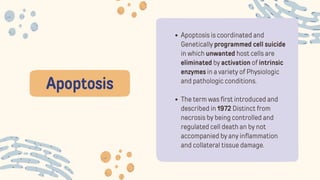
Apoptosis is coordinated and
Genetically programmed cell suicide
in which unwanted host cells are
eliminated by activation of intrinsic
enzymes in a variety of Physiologic
and pathologic conditions.
The term was first introduced and
described in 1972 Distinct from
necrosis by being controlled and
regulated cell death an by not
accompanied by any inflammation
and collateral tissue damage.
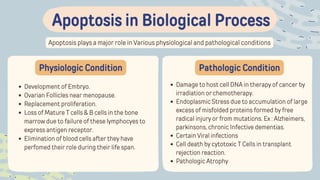
Apoptosis plays a major role in Various physiological and pathological conditions
Apoptosis in Biological Process
Physiologic Condition Pathologic Condition
Development of Embryo.
Ovarian Follicles near menopause.
Replacement proliferation.
Loss of Mature T cells & B cells in the bone
marrow due to failure of these lymphocyes to
express antigen receptor.
Elimination of blood cells after they have
perfomed their role during their life span.
Damage to host cell DNA in therapy of cancer by
irradiation or chemotherapy.
Endoplasmic Stress due to accumulation of large
excess of misfolded proteins formed by free
radical injury or from mutations. Ex : Alzheimers,
parkinsons, chronic Infective dementias.
Certain Viral infections
Cell death by cytotoxic T Cells in transplant
rejection reaction.
Pathologic Atrophy
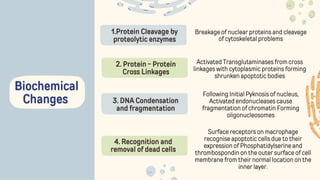
Biochemical
Changes
1.Protein Cleavage by
proteolytic enzymes
2. Protein - Protein
Cross Linkages
3. DNA Condensation
and fragmentation
4. Recognition and
removal of dead cells
Breakage of nuclear proteins and cleavage
of cytoskeletal problems
Activated Transglutaminases from cross
linkages with cytoplasmic proteins forming
shrunken apoptotic bodies
Following Initial Pyknosis of nucleus,
Activated endonucleases cause
fragmentation of chromatin Forming
oligonucleosomes
Surface receptors on macrophage
recognise apoptotic cells due to their
expression of Phosphatidylserine and
thrombospondin on the outer surface of cell
membrane from their normal location on the
inner layer.
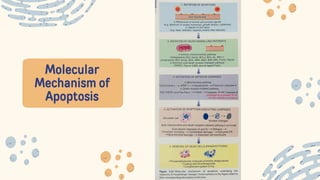
Molecular
Mechanism of
Apoptosis
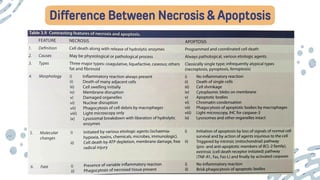
Difference Between Necrosis & Apoptosis
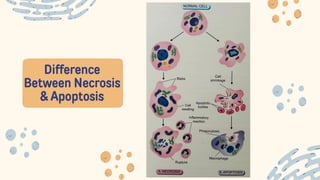
Difference
Between Necrosis
& Apoptosis
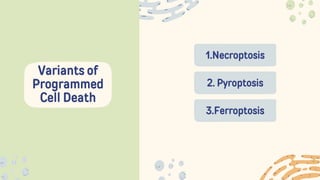
1.Necroptosis
Variants of
Programmed
Cell Death
2. Pyroptosis
3.Ferroptosis
1.Necroptosis
Necroptosis is a cross between necrosis and apoptosis (Programmed Necrosis).
There is a leakage of cell’s content into extracellular compartment after cell death,
while in necroptosis the process of leaking of the membrane is internally regulated or
programmed.
Necroptosis is Biochemically and morphologically similar to necrosis.
Example:
Physiologic Condition such as in the formation of bony growth plate.
Viral Defence Mechanism.
Inflammatory Disease Ex: Crohn’s Disease, Pancreatitis
2.Pyroptosis
It is a form of apoptosis in which there is release of fever producing cytokine Interleukin - I.
Pyroptosis is triggered by cytoplasmic entry of microbial products which activates inflammasomes.
Inflammasomes are multi protein cytosolic protein formed in a cell death that regulate the
activation of caspases and induce inflammation by expression of pro inflammatory cytokines when
exposed to microbes.
In Pyroptosis, cell death is brought about by activation of caspase -I.
Pyroptosis differs from classic apoptosis in having;
Cellular Swelling..
Damage to plasma membrane.
By release of fever producing cytokine interleukin - I
3.Ferroptosis
Ferroptosis is cell death triggered by Iron - Dependent (By Fenton Reaction)
Accumulation of Reactive oxygen species in the cell.
Cell death in these cases can be suppressed by iron chelating agent,
Desferrioxamine.
AUTOPHAGY
Autophagy is a form of catabolic mechanism by which the cell degrades its own
dysfunctional and worn out components by way of cannabilism.
These includes:
Outlived proteins
Malformed Proteins Synthesised by lysosomes, and worn out organelles.
Autophagic cell death is also called as Type II Programmed Cell Death.
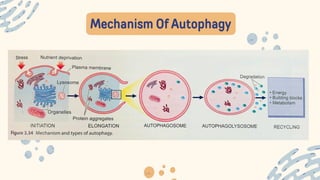
Mechanism Of Autophagy
Take Home Points!
Apoptosis is Classical Example of Cooordinated and genetically programmed
cell sucide.
Apoptosis has significance in a variety of Physiologic (Endometrial shredding)
and Pathologic Conditions (Viral Infections).
Abnormality in apoptosis may cause too Little apoptosis or too much apoptosis.
Ex: In Neurodegenerative disease.
Morphologically, Apoptotic cells appear as round to oval shrunken masses of
intensely eosinophilic cytoplasm containing pyknotic nucleus, it is not accompanied
by any inflammation.
Special Techniques can by employed to identify apoptotic cells by antibody
specific for caspase - 3.
Take Home Points!
Biochemical process underlying apoptosis are protein cleavage, protein Cross
linkages and DNA Damage.
Pathogenically Apoptosis is initiate by loss of signals of normal cell survival and
by action of agents injurious to the cell.
Molecular Mechanism of apoptosis is under genetic control which may be
intrinsic & extrinsic pathway and finally activated by caspases. This is followed
by Phagocytosis of apoptotic bodies.
Necroptosis is a form of programmed Necrosis having biochemical and
morphological similarity with necrosis but like apoptosis it is triggered by ligand
proteins.
Other forms of apoptosis are : Pyroptosis (Fever Producing Interleukin - I) and
Ferroptosis (Fenton Reaction Dependent).
Take Home Points!
Autophagy is a Lysosome mediated mechanism of self eating of worn out
organelles and malformed proteins in the cell.
Autophagy is involved in responses to stress, ageing and in many pathologic
conditions. Example: Cancer, Neurodegenerative disease etc.
THANK YOU!

Cellular Adaptation & Cell Injury - Pathology

  • 1.
    Cellular Adaptations & Cell Injury PresentedBy, Shruthi Vasan S Assistant Professor, Sree Abirami College of Allied Health Sciences Shruthivasanprof97@gmail.com
  • 2.
    Response to cellinjury and causes The cellular response to a stress may vary depending upon following two: Host Factor Agent Cell Injury is defined as the functional and morphologic effects of a variety of stresses on the cell from various etiologic agents which result in changes in its internal and external environment.
  • 3.
  • 4.
    Cell injury mayoccur from one of the two broad groups of causes : Genetic 1. Acquired 2. Etiology of Cell Injury 1.Hypoxia and Ischemia 2. Physical Agents 3. Chemical & Drugs 4. Microbial Agents 5. Immunologiocal agents 7. Ageing 6. Nutritional Dearangements 9.Iatrogenic Causes 8. Pyschogenic Causes 10. Idiopathic Causes
  • 5.
    1.Hypoxia & Ischemia Cellsof Different tissues require oxygen to generate energy and perform metabolic function. Deficiency of oxygen or hypoxia results in failure to carry out these activities by the cells. Hypoxia is the most common cause of cell injury. It results From two ways: Interruption (Ischemia) Impaired Blood Supply (Disorders of Oxygen Carrying RBCs - Anaemia, Carbon Monoxide Poisoning)
  • 6.
    2. Physical Agents Mechanicaltrauma (Road Accidents) Thermal Trauma (Heat and Cold) Electricity Radiation (UV Rays & Ionising) Rapid changes in the atmospheric pressure
  • 7.
    3. Chemical &Drugs Chemical Poisoning (Cyanide, Arsenic, Mercuric) Strong Acids and Alkalis Environmental Pollutants Insecticides & Pesticides Oxygen at High Concentrations Hypertonic glucose and salts Alcohols Narcotic drugs Therapeutic administration of drugs
  • 8.
  • 9.
    5. Immunologic Causes HypersensitivityReactions Anaphylactic Reaction Autoimmune Disease
  • 10.
    6. Nutritional Dearangments ADeficiency or an excess of nutrient may result in nutritional imbalances. Nutritional Deficiency disease may be due to; Overall deficiency of nutrients (Starvation) Protein Calorie (Marasmas, Kwashiorkor) Minerals (Anaemia) Trace Elements Nutritional Excess - Obesity, atherosclerosis, heart disease and hypertension.
  • 11.
    7. Ageing Cellular ageingor senescence leads to impaired ability of the cells to undergo replication & repair and ultimately lead to cell death culminating in death of the individual.
  • 12.
    8. Psychogenic Causes Thereare no specific biochemical or morphological changes in common acquired mental diseases due to mental stress, strain, anxiety, overwork and frustration. Example: Depression, Schizophrenia However drug addiction, alcoholism and smoking result in various organic disease such as liver damage, chronic bronchitis, lung cancer, peptic ulcer, hypertension, ischemic heart disease.
  • 13.
    9. Iatrogenic Causes EveryPhysician is bound not to do or administer anything that causes harm to the patient, there are some disease as well as deaths attributed to iatrogenic causes (Owing to physician). Example: Include Occurrences of disease or death due to error in judgement by the physician. Toward effects of administered therapy (Drugs, Radiation)
  • 14.
    10. Idiopathic Disease UnknownCause Although So much is known about the etiology of disease, there's still many disease for which exacy cause is unknown. Example: Hypertension - 90% Idiopathic Etiology of many cancers is unknown.
  • 15.
    Take Home Points! Cellinjury is the functional and morphological effects of a variety of stresses on the cell from various etiologic agents which results in Changes its internal & external environment. Cellular response to stress depends upon the type of cell and tissue involved and the type of dose of injurious agent. When exposed to mild stress or due to altered functional demand, the cells adjust and adapt to a limit (Cellular adaptation) and revert back to normal Mild to moderate stress for a short duration may cause reversible cell injury, severe persistent stress causes cell death. Among various etiologic factors, Hypoxia - Ischaemia is most important other chemicals and physical agents, microbes, immunity, Ageing etc
  • 16.
    Cellular Adaptation Cellular adaptationsare the adjustment which the cells make in response to stress. They are; Physiological needs (Physiological Adaptation) 0r Response to non lethal pathologic injury (Pathological Adaptation)
  • 18.
    Reduction of thenumber and size of parenchymal cells of an organ or its parts which was once normal is called atrophy. 1.Atrophy
  • 19.
    Physiologic Atrophy Atrophy withLymphoid tissue with age. 1. Atrophy of Thymus in adult life. 2. Atrophy of gonads after menopause. 3. Atrophy of Brain with Ageing. 4. Osteoporosis with reduction in size of bony trabeculae due to aging. 5. Pathologic Atrophy Starvation Atrophy 1. Neuropathic Atrophy - Poliomyelitis, Motor Neuron Disease, Nerve section 2. Endocrine Atrophy - Hypopituitarism, Hypothyroidism 3. Pressure Atrophy - Erosion of Spine, Erosion of skull, Erosion of sternum 4. Development disorders - Cryptorchid testis. 5. Idiopathic atrophy - Myopathies 6.
  • 20.
  • 21.
    Morphologic Features The organis small, often shrunken. The cells become smaller in size but are not dead cells. Shrinkage in cell size is due to reduction in cells organelles, Example: Mitochondria, myofilaments and endoplasmic reticulum. There is often increase in the number of autophagic vacuoles containing cell debris. These autophagic Vacuoles may persist to form “Residual bodies” in the cell cytoplasm. Example: Lipofuscin Pigment granules in interstitial (Leydig) Cells in testicular atrophy, thickined basement membrane and hyalinisation.
  • 22.
    Hypertrophy is anincrease in the size of parenchymal cells resulting in enlargement of the affected organ or tissue. Hypertrophy affects all types of muscles. Dividing cells may respond to stress by undergoing both hypertrophy and hyperplasia (Uterine smooth muscle) Non dividing cells undergo hypertrophy only (Cardiac Muscle) 2. Hypertrophy
  • 23.
    Physiologic Hypertrophy Enlarged Sizeof the uterus in pregnancy is an example of physiologic hypertrophy (as well as hyperplasia) Hypertrophy of cardiac muscle. 1. Systemic hypertension. 2. Aortic Valve disease. 3. Mitral Insufficiency 4. Hypertrophy of smooth muscles 5. Pyloric stenosis 6. Hypertrophy of skeletal muscle 7. Compensatory Hypertrophy 8. Pathologic Hypertrophy
  • 24.
  • 25.
    Morphologic Features Grossly, theaffected organ is enlarged and heavy. For Example: A Hypertrophied heart of a patient with systemic Hypertension may weigh 700 - 800g as compared to average normal adult weight of 350g. Microscopically, there is enlargement of muscle fibres as well as of nuclei.
  • 26.
    Hyperplasia is anincrease in the number of parenchyma cells resulting in enlargement of the organ or tissue. Hyperplasia and hypertrophy occur together often. All body cells do not possess hyperplasticity. Labile cells (Epithelial cells of the skin and mucous membranes, cells of the bone marrow and lymph nodes) undergo hyperplasia. Stable Cells (Parenchymal cells of the liver, pancreas, kidney, adrenal and thyroid) can undergo hyperplasia. While permanent Cells (Neurons, cardiac and skeletal and skeletal muscle) have little or no capacity for representative hyperplasticity growth. 3. Hyperplasia
  • 27.
    Physiologic Hyperplasia Hormonal Hyperplasia 1. Hyperplasia- Pregnancy, Lactation, 2. Uterus 3. Compensatory Hyperplasia Pathologic Hyperplasia Endometrial hyperplasia following oestrogen excess. 1. Usual ductal hyperplasia in fibrocystic changes of the breast. 2. Benign prostatic hyperplasia in old age. 3. Hyperplasia of the skin in non healing ulcers, viral warts. 4.
  • 28.
  • 29.
    Morphologic Features There isenlargement of the affected organ or tissue and increase in the number of cells, often accompained with hypertrophy. The is due to increased rate of a DNA Synthesis and hence increased mitosis of the cells.
  • 30.
    Metaplasia is definedas a reversible change of one type of mature differentiated epithelial or mesenchymal cells to another type of mature epithelial or mesenchymal cells. Metaplasia Often reverts back to normal on removal of stimulus But if the stimulus persists for a long time, epithelial metaplasia may progress to dysplasia and further into cancer. It is broadly divided into two types: 1. Epithelial Metaplasia 2. Mesenchymal Metaplasia 4. Metaplasia
  • 31.
    Epithelial Metaplasia It ismore common. 1. Depending upon the epithelial transformed it is divided into two types: 2. Squamous Metaplasia: a. In Bronchus (Heavy Smokers) i. In Uterine (Old Age) ii. Columnar Metaplasia b. Intestinal Metaplasia in healed chronic gastric ulcer. i. Change of Pseudostratified ciliated Columnar epithelium in chronic bronchitis and bronchiectasis to columnar type. ii. Mesenchymal Metaplasia Less Often. 1. Often it is Osseous metaplasia. 2. Formation of bone in fibrous tissue a. Cartilage b. Myxoid tissue c. Example: 3. In arterial wall of old age. a. In cartilage of larynx and bronchi in elderly people. b. In the fibrous stroma of tumour. (leiomyoma) c.
  • 32.
  • 33.
    MOLECULAR PATHOGENESIS Metaplasia resultfrom reprogramming of stem cells of one type of differentiated lineage of cells to another type of differentiated cell lineage. Reprogramming of precursor stem cells to another pathway is possibly triggered by exogenous stimuli and involves generation of signals for dysregulation of transcription factors, cytokines and extracellular matrix components.
  • 34.
    Dysplasia means disorderedcellular development often proceeded or accompanied with metaplasia and hyperplasia. It is also called as atypical hyperplasia. It often occurs in Epithelial cells. Grades vary from; Mild Moderate Severe 5.Dysplasia
  • 35.
    It is characterisedby cellular proliferation and cytologic changes of varying degree as under: Increased Number of layers of epithelial cells Disorderly arrangement of cells from basal layer to the surface layer. Loss of basal polarity (Nuclei lying away from basement membrane) Cellular and nuclear pleomorphism. Increased nuclear cytoplasmic ratio. Nuclear Hyperchromatism. Increased mitotic activity due to accelerated cell proliferation.
  • 36.
    Common Examples; 1. UterineCervix 2. Respiratory tract 3. Other Sites: - Oral Cavity - Oesophagus In cervix Dysplasia of mild moderate and severe is also called as “Cervical Intraepithelial Neoplasia” CIN - I, II, III Grades. Causes : Chronic Irritation Prolonged Inflammation On Removing the stimulus the dysplastic changes may disappear. If the stimulus persists so long it may proceed to severe grade or to Carcinoma or to Invasive Cancer Dysplasia may be precursor to cancer but not always.
  • 37.
  • 38.
    Take Home Points! Theseare adjustments which cells make in repsonse to exogenous inciting stimuli; Atrophy is reduction of the number and size of parenchymal cells of an organ or its part which was once normal. Hypertrophy is an increase in the size of parenchymal cells resulting in enlargement of the organ or tissue. it affects both dividing and non dividing cells. Hyperplasia is an increase in the number of parenchymal cells resulting in enlargement of the organ or tissue. It involves dividing cells only. Hypertrophy and hyperplasia may coexist. Example: Uterus in pregnancy, Lactating breast.
  • 39.
    Take Home Points! Metaplasiais defined as a reversible change of one type of mature epithelial or mesenchymal cells to another type of mature epithelial or mesenchymal cells, usually in response to abnormal stimuli and often reverts back to normal on removal of stimuli Dysplasia is Disordered cellular development often preceded or accompanied with metaplasia and hyperplasia; most common sites being uterine cervix and bronchus. Mild and moderate grades may be reversible on withdrawal of inciting stimuli. Persistence of stimuli may cause progression to higher gradesor to carcinoma In Situ.
  • 40.
  • 41.
    Morphology of Reversible cell injury 1.Hydropicchange 2. Hyaline Change 3. Mucoid Change 4. Fatty Change
  • 42.
    It Is accumulationof water within the cytoplasm of the cell. Also called as Cloudy swelling/ Vacuolar Degeneration. Hydropic swelling is an entirely reversible change upon removal of the injurious event Hydropic Change Etiology Pathogenesis Most Common & Earliest Causes Acute & Subacute cell injury. Various agents : Bacterial toxins Chemicals Poisons Burns High Fever Cloud Swelling results from impaired regulation of Na+ & K+ at the level of cell membrane which accumulates the Na+ & K+. Then it is accompanied with rapid blood flow of water into the cell to maintain iso osmotic conditions and hence cellular swelling occurs.
  • 43.
  • 44.
    Hyalin = Glass;When there is Glassy Homogenous Eosinophilic appearance of proteineous material in H & E stain is called as Hyaline change. It may be Intracellular & Extracellular. Hyaline change Intracellular Hyaline Extracellular Hyaline Usually seen in Epithelial Cells. Hyaline droplets in Proteinuria. Hyaline degeneration in Typhoid fever. Mallory’s hyaline in hepatocytes in alcohol liver cell injury. Hyaline inclusions in Viral Infections. Commonly seen in connective tissues. Hyaline Degeneration in Leiomyomas of uterus. Hyalinised old scar of fibrocollagenous tissues. Hyaline arteriosclerosis in renal vessesl in DM & Hypertension. Hyalinised Glomeruli in Chronic Glomerulonephritis.
  • 45.
  • 46.
    Mucoid Means Mucuslike. Mucus is the secretary product of mucous gland and is a combination of proteins complexed with mucopolysaccarides. Mucin - a glycoprotein is its chief constituent. it is produced by epithelial cell of mucous membrane and mucous gland & Connective tissue (Myxoid).Stained by Alcian blue & differentiated by PAS. (EMS +Ve), (CMS -ve) Mucoid Change Epithelial mucin Connective Tissue mucin Catarrhal inflammation of mucous membrane. ( Respiratory tract, uterus) Obstruction of duct leading to mucocele in the oral cavity and gall bladder. Cystic Fibrosis of the pancreas. Mucin secreting tumors (Ovary , Stomach) Mucoid or myxoid change in some tumours. Example: Myxomas, neurofibromas, Fibroadenoma, Soft tissue sarcomas. Myxomatous change in the dermis in myxoedema. Myxoid change in the synovium in ganglion on the wrist.
  • 47.
  • 48.
    Take Home Points! Degenerationsor reversible cell injury depicts the light microscopic appearance of changes occuring at ultrastructural level. Hydropic swelling is the earliest form of cell injury from various etiologies and its main features are cellular swelling due to cytoplasmic vacuoles. Hyaline change is intra and extracellular deposition of pink, Proteineous material. Mucoid change is deposition of mucinous material in epithelial and connective tissues in excessive amounts
  • 50.
  • 51.
    Cell Death isthe state of Irreversible cell injury. It may occur in the living tissue as a local or focal changed cause by external factors (Necrosis). Or by Mediated by intracellular genetic programmes (Apoptosis) Necrosis is distinct from autolysis. Necrosis may be superimposed by some pathologic changes. Example : Gangrene Pathologic Calcification
  • 52.
    Necrosis is definedas a localised area of death of tissue followed later by degradation of tissue by hydrolytic enzymes liberated from dead cells; it is invariably accompanied by inflammatory reaction. Necrosis
  • 53.
    Agents Necrosis can becaused by various agents such as; Hypoxia Chemical Agents Physical Agents Microbial Agents Immunological Injury
  • 54.
    Classification of Necrosis 1.Coagulative Necrosis 2.Liquefactive Necrosis 3. Caseous Necrosis 4. Fat Necrosis 5.Fibroid Necrosis
  • 55.
    1.Coagulative Necrosis Most Common typeof Necrosis caused by Irreversible Focal Injury. Mostly from sudden cessation of blood flow (Ischaemic necrosis) Less often from bacterial and chemical agents. The organs commonly affected are the; Heart Kidney Spleen
  • 56.
  • 57.
    2. Liquefactive Necrosis Liquefactive necrosisor Colliquative necrosis also occurs commonly due to Ischaemic Injury and bacterial or fungal infections but hydrolytic enzymes in tissue degradation have a dominant role in causing semi fluid material. The common examples are; Infarct brain Abscess Cavity
  • 58.
  • 59.
    3. Caseous Necrosis Caseous Necrosisis found in the center of foci of tuberculous infection. It combines features of both Coagulative and Liquefactive necrosis.
  • 60.
  • 61.
    4. Fat Necrosis Fat necrosisis a special form of cell death occurring mainly fat rich anatomic location in the body. Example: Traumatic fat necrosis of the breast. Especially in heavy and pendulous breast Mesenteric fat necrosis due to acute pancreatitis
  • 62.
  • 63.
    5. Fibrinoid Necrosis Fibrinoid necrosisis characterized by deposition of the Fibrin Like material which has the staining properties of fibrin such as phosphotungstic acid hematoxylin (PTAH) stain. It is encountered in various example of immunologic tissue injury. Example: Autoimmune Vasculitis Autoimmune Disease Arthus Reaction Arteioles in hypertension Peptic Ulcer
  • 64.
  • 65.
    Take Home Points! CellDeath is the state of Irreversible cell injury. Ex: Autolysis, Necrosis, Apoptosis. Term autolysis or self Digestion is generally used for post mortem changes in tissue. Protype of cell death is necrosis; it is defined as a localised area of death in living tissue and accompanied by inflammatory reaction (Vital reaction) Coagulative necrosis is caused by sudden cessation of blood flow (Ischaemic necrosis) Ex: Infarcts of the heart, kidney and spleen, or occurs by reduced supply of blood from other causes.
  • 66.
    Take Home Points! Liquefactivenecrosis also occurs due to ischemic injury and bacterial or fungal infections but the hydrolytic enzymes in tissue degradation have a dominant role in causing semi fluid material. Ex: Infarct brain and abscess cavity. Caseous necrosis combines features of both Coagulative and Liquefactive necrosis. It is found in the centres of foci of tuberculous infection and is accompained by granulomatous inflammation. Fat necrosis is seen in the breast and acute pancreatitis. Fibrinoid Necrosis occurs due to immunologic tissue injury. Ex: Hypersensitivity vasculitis.
  • 67.
    Gangrene Gangrene is associatedwith Necrosis with Superadded putrefaction, Most often following Coagulative necrosis due to ischaemia. Example : Gangrene of the bowel, Gangrene of the limb On the other hand, Gangrenous or necrotising inflammation is characterised primarily by inflammation provoked by virulent bacteria resulting in massive tissue necrosis. Example : Gangrenous Appendicitis Gangrenous Stomatitis There are two types of Gangrene : Dry Gangrene Wet Gangrene Gas Gangrene (A Variant of Wet Gangrene) In all types of Gangrene Necrosis undergoes liquefaction by the action of Putrefactive Bacteria.
  • 68.
    Dry Gangrene This part ofGangrene begins in the distal parts of a limb due to Ischaemia. This Typical Example is Dry Gangrene in the toes and feet of an old patient due to Severe Atherosclerosis of arteries supplying blood to the lower limb. Other Causes of dry Gangrene foot includes Thromboangitis obliterans (Buegers’s Disease, Raynaud’s Disease, Trauma, Ergot Poisoning) It is Usually initiated containing so little blood that even the invading bacteria find it hard to grow in the necrosed Tissue. The Gangrene spreads slowly upwards to the point where the blood supply is adequate to keep the tissue viable. A line of Seperation is formed at this point between the gangrenous part and the viable part.
  • 69.
  • 70.
  • 71.
    Wet Gangrene Wet Gangrene occursin naturally moist tissue and organs such as the Bowel, lung, mouth, Cervix, Vulva etc. Example: Diabetic Foot - Which is due to high glucose content in the necrosed tissue which favours growth of bacteria. Bed Sores Occurring in the bed ridden patients due to pressure on sites like the sacrum, Buttocks & Heel. May occur from the blockage of both venous (More often) and arterial blood flow. The affected part is stuffed with blood which favours the rapid growth of putrefactive bacteria. The toxic products formed from the bacteria are absorbed in the circulation causing profound systemic manifestations of septicaemia and finally death. Wet Gangrene generally lacks clear cut line of demarcation and may spread to Peritoneal Cavity Causing Peritonitis.
  • 72.
  • 73.
  • 74.
    Difference between Dry& Wet Gangrene
  • 75.
    Take Home Points! Gangreneis necrosis of tissue associated with superadded putrefaction, most often following coagulative necrosis due to ischaemia. There are main types of gangrene - Dry & Wet. Dry Gangrene begins in the distal parts of the limb, due to ischaemia. Ex: Due to severe atherosclerosis, Buerger’s Disease etc. A line of seperation generally marks the junction of viable and gangrenous tissue. Ex: gangrene Foot - Affected part is dry and shrunken with little blood supply; Hence bacterial growth is much less. Wet gangrene occurs naturally in moist tissue and organs. Ex: Gangrene bowel, Lungs. A line of Seperation between viable and non viable is not distinct. venous stuffing of blood in the affected parts cause profuse bacterial overgrowth, and hence septicaemic manifestations are common. Ex: Diabetic foot and bed sores . Gas gangrene is a special form of wet gangrene caused by Gas forming clostridia.
  • 76.
    Deposition of Calciumsalts in the tissues other than osteoid or enamel is called Pathologic or Heterotopic calcification. Two distinct types of pathologic calcification are recognised: Dystrophic Metastatic Although Etiology & Pathogenesis of the two are different but morphologically the deposits in both resemble normal minerals of the bone. Pathologic Calcification
  • 77.
    Dystrophic Calcification Dystrophic Calcification ischaracterised by deposition of calcium salts in necrotic or degenerated tissue with normal calcium metabolism and normal serum calcium level. Since Dystrophic calcification occurs both in death and degenerated tissues; its causes is broadly divided into two groups: A. Calcification in Death tissue: Caseous necrosis in tuberculosis. Liquefaction necrosis in chronic abscesses. Fat necrosis following acute pancreatitis B. Calcification in degenerated tissues: Stroma of tumor. Dense old scar. Nodular Goitre of thyroid.
  • 78.
  • 79.
    Metastatic Calcification Metastatic calcification occursin Normal tissues and is associated with Deranged calcium Metabolism and hypercalcaemia. Common sites of metastatic calcification are; Kidney Lungs Stomach Blood Vessels Cornea Synovium Etiology: Excessive Mobilisation of calcium levels from the bone. (Hyperparathyroidism, hypercalcaemia) Excessive absorption of calcium from the gut. (Hypervitaminosis D, Renal Failure)
  • 80.
  • 81.
    Difference Between Dystrophic& Metastatic Calcification
  • 82.
    Take Home Points! Pathologicor Heterotopic calcification is a deposition of calcium salts in tissue other then osteoid or enamel. It is of 2 types : Dystrophic & Metastatic Calcification. Dystrophic Calcification is characterised by Deposition of calcium slats in necrotic or degenerated tissue with normal calcium metabolism and normal serum calcium level. Ex: Caseous necrosis in tuberculosis, Advances Atherosclerosis. Metastatic calicification occurs in normal tissues, but in associated with deranged calcium metabolism and hypercalcaemia. Common Causes are; Lesions causing excessive mobilisation of calcium bones (Hyperparathyroidism) and excessive intestinal absorption (Hypervitaminosis D, Renal Failure). Common sites of Deposition are : Renal tubules, Alveolar Lining, Cornea, Gastric Mucosa, Blood Vessel
  • 83.
    Apoptosis Apoptosis is coordinatedand Genetically programmed cell suicide in which unwanted host cells are eliminated by activation of intrinsic enzymes in a variety of Physiologic and pathologic conditions. The term was first introduced and described in 1972 Distinct from necrosis by being controlled and regulated cell death an by not accompanied by any inflammation and collateral tissue damage.
  • 84.
    Apoptosis plays amajor role in Various physiological and pathological conditions Apoptosis in Biological Process Physiologic Condition Pathologic Condition Development of Embryo. Ovarian Follicles near menopause. Replacement proliferation. Loss of Mature T cells & B cells in the bone marrow due to failure of these lymphocyes to express antigen receptor. Elimination of blood cells after they have perfomed their role during their life span. Damage to host cell DNA in therapy of cancer by irradiation or chemotherapy. Endoplasmic Stress due to accumulation of large excess of misfolded proteins formed by free radical injury or from mutations. Ex : Alzheimers, parkinsons, chronic Infective dementias. Certain Viral infections Cell death by cytotoxic T Cells in transplant rejection reaction. Pathologic Atrophy
  • 85.
    Biochemical Changes 1.Protein Cleavage by proteolyticenzymes 2. Protein - Protein Cross Linkages 3. DNA Condensation and fragmentation 4. Recognition and removal of dead cells Breakage of nuclear proteins and cleavage of cytoskeletal problems Activated Transglutaminases from cross linkages with cytoplasmic proteins forming shrunken apoptotic bodies Following Initial Pyknosis of nucleus, Activated endonucleases cause fragmentation of chromatin Forming oligonucleosomes Surface receptors on macrophage recognise apoptotic cells due to their expression of Phosphatidylserine and thrombospondin on the outer surface of cell membrane from their normal location on the inner layer.
  • 86.
  • 87.
  • 88.
  • 89.
  • 90.
    1.Necroptosis Necroptosis is across between necrosis and apoptosis (Programmed Necrosis). There is a leakage of cell’s content into extracellular compartment after cell death, while in necroptosis the process of leaking of the membrane is internally regulated or programmed. Necroptosis is Biochemically and morphologically similar to necrosis. Example: Physiologic Condition such as in the formation of bony growth plate. Viral Defence Mechanism. Inflammatory Disease Ex: Crohn’s Disease, Pancreatitis
  • 91.
    2.Pyroptosis It is aform of apoptosis in which there is release of fever producing cytokine Interleukin - I. Pyroptosis is triggered by cytoplasmic entry of microbial products which activates inflammasomes. Inflammasomes are multi protein cytosolic protein formed in a cell death that regulate the activation of caspases and induce inflammation by expression of pro inflammatory cytokines when exposed to microbes. In Pyroptosis, cell death is brought about by activation of caspase -I. Pyroptosis differs from classic apoptosis in having; Cellular Swelling.. Damage to plasma membrane. By release of fever producing cytokine interleukin - I
  • 92.
    3.Ferroptosis Ferroptosis is celldeath triggered by Iron - Dependent (By Fenton Reaction) Accumulation of Reactive oxygen species in the cell. Cell death in these cases can be suppressed by iron chelating agent, Desferrioxamine.
  • 93.
    AUTOPHAGY Autophagy is aform of catabolic mechanism by which the cell degrades its own dysfunctional and worn out components by way of cannabilism. These includes: Outlived proteins Malformed Proteins Synthesised by lysosomes, and worn out organelles. Autophagic cell death is also called as Type II Programmed Cell Death.
  • 94.
  • 95.
    Take Home Points! Apoptosisis Classical Example of Cooordinated and genetically programmed cell sucide. Apoptosis has significance in a variety of Physiologic (Endometrial shredding) and Pathologic Conditions (Viral Infections). Abnormality in apoptosis may cause too Little apoptosis or too much apoptosis. Ex: In Neurodegenerative disease. Morphologically, Apoptotic cells appear as round to oval shrunken masses of intensely eosinophilic cytoplasm containing pyknotic nucleus, it is not accompanied by any inflammation. Special Techniques can by employed to identify apoptotic cells by antibody specific for caspase - 3.
  • 96.
    Take Home Points! Biochemicalprocess underlying apoptosis are protein cleavage, protein Cross linkages and DNA Damage. Pathogenically Apoptosis is initiate by loss of signals of normal cell survival and by action of agents injurious to the cell. Molecular Mechanism of apoptosis is under genetic control which may be intrinsic & extrinsic pathway and finally activated by caspases. This is followed by Phagocytosis of apoptotic bodies. Necroptosis is a form of programmed Necrosis having biochemical and morphological similarity with necrosis but like apoptosis it is triggered by ligand proteins. Other forms of apoptosis are : Pyroptosis (Fever Producing Interleukin - I) and Ferroptosis (Fenton Reaction Dependent).
  • 97.
    Take Home Points! Autophagyis a Lysosome mediated mechanism of self eating of worn out organelles and malformed proteins in the cell. Autophagy is involved in responses to stress, ageing and in many pathologic conditions. Example: Cancer, Neurodegenerative disease etc.
  • 98.