Cell Types
Instruction:
Arrange the words according to the levels of
biological organization.
Organ system organism tissuecell
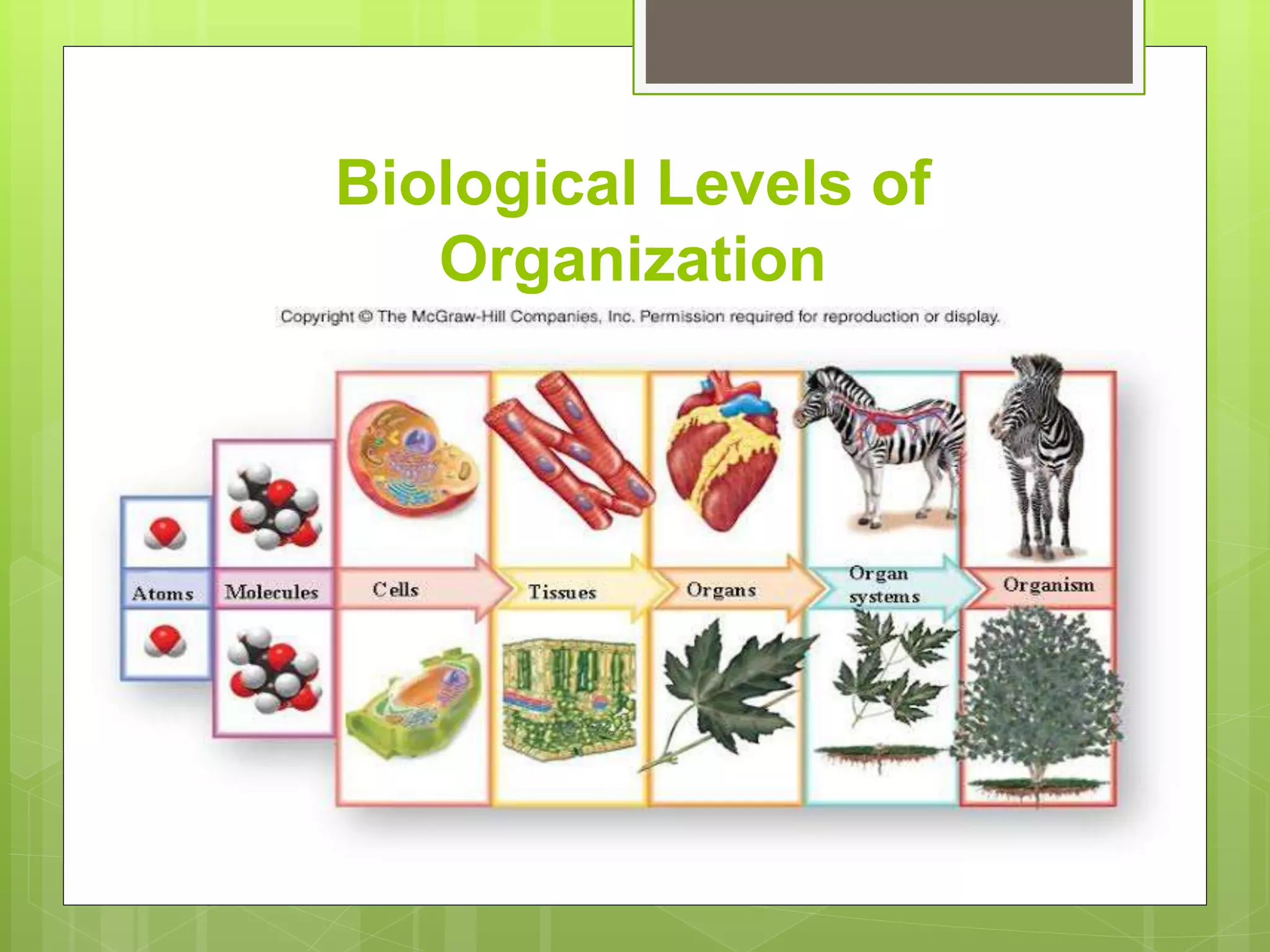
Biological Levels of
Organization
Four Main Types of Cells
 Epithelial Cells
 Connective Tissue Cells
 Muscle Cells
 Nerve Cells
Epithelial Tissue
 This type of tissue is commonly seen outside
the body as coverings or as linings of organs
and cavities.
 They are characterized by closely-joined cells
with tight junctions (i.e., a type of cell
modification).
 Being tightly packed, tight junctions serve as
barriers for pathogens, mechanical injuries,
and fluid loss.
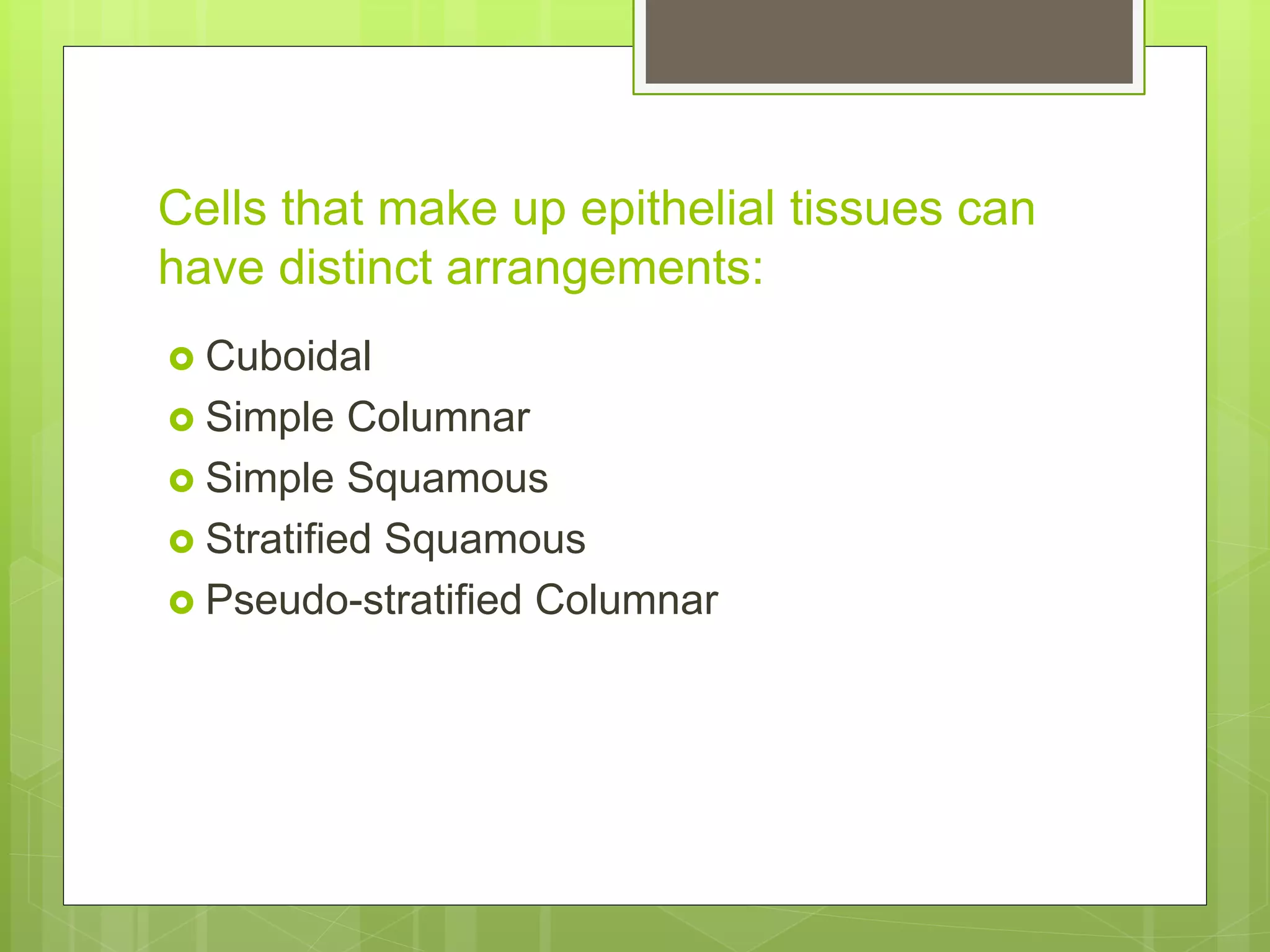
Cells that make up epithelial tissues can
have distinct arrangements:
 Cuboidal
 Simple Columnar
 Simple Squamous
 Stratified Squamous
 Pseudo-stratified Columnar
Cells that make up epithelial tissues can
have distinct arrangements:
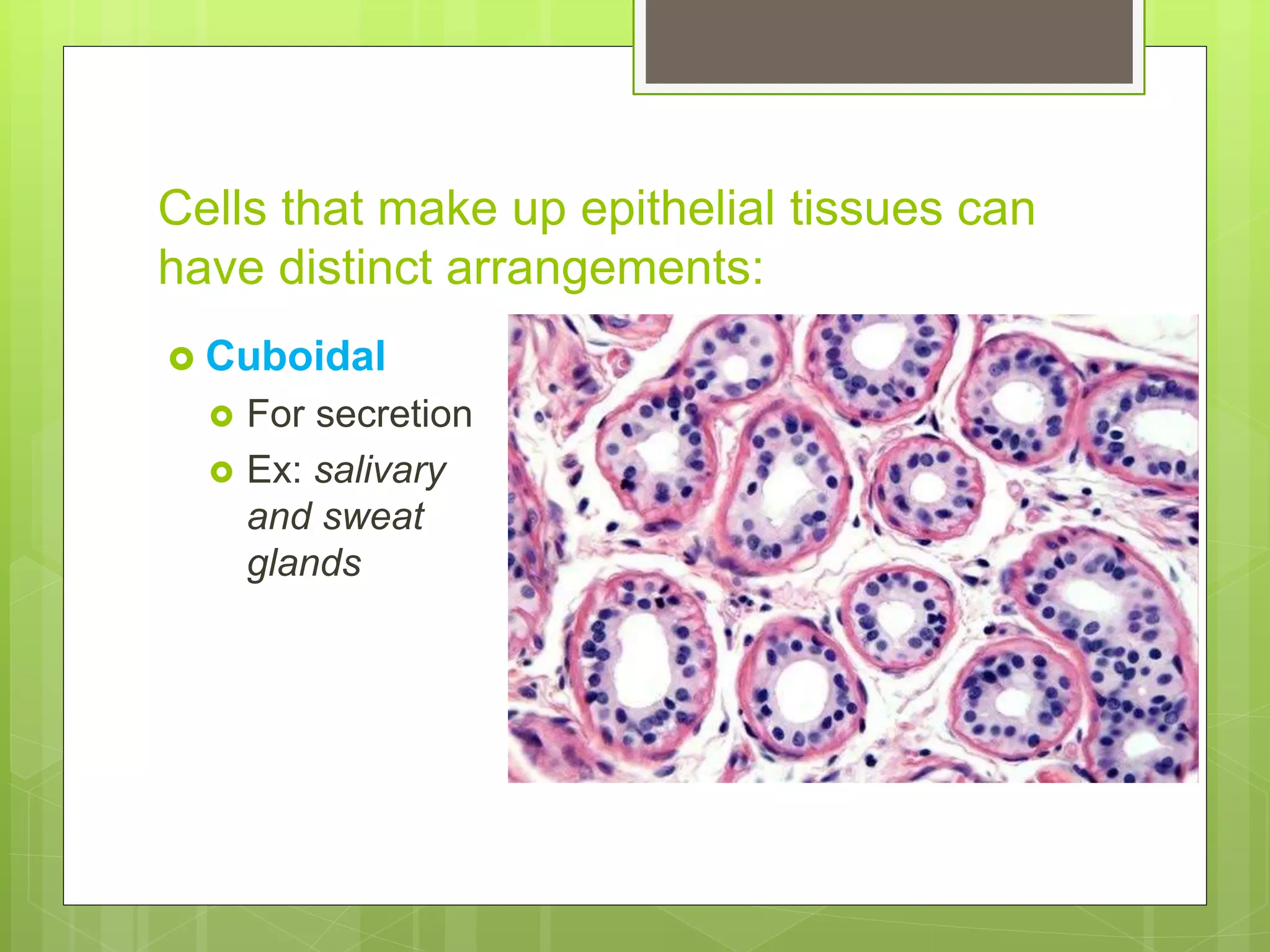
 Cuboidal
 For secretion
 Ex: salivary
and sweat
glands
Cells that make up epithelial tissues can
have distinct arrangements:
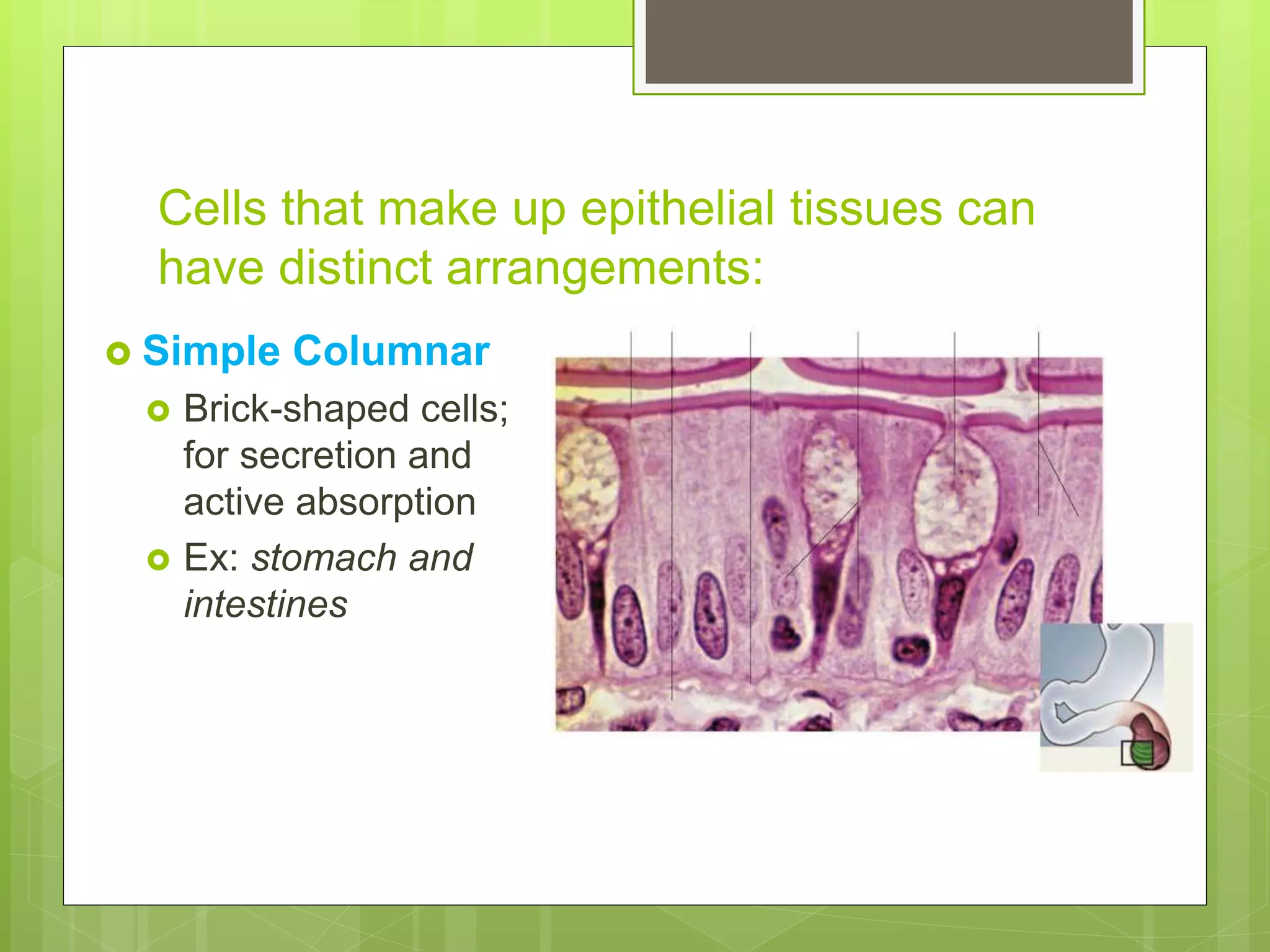
 Simple Columnar
 Brick-shaped cells;
for secretion and
active absorption
 Ex: stomach and
intestines
Cells that make up epithelial tissues can
have distinct arrangements:
 Simple
Squamous
 Plate-like cells; for
exchange of
material through
diffusion
 Ex: blood vessels
Cells that make up epithelial tissues can
have distinct arrangements:
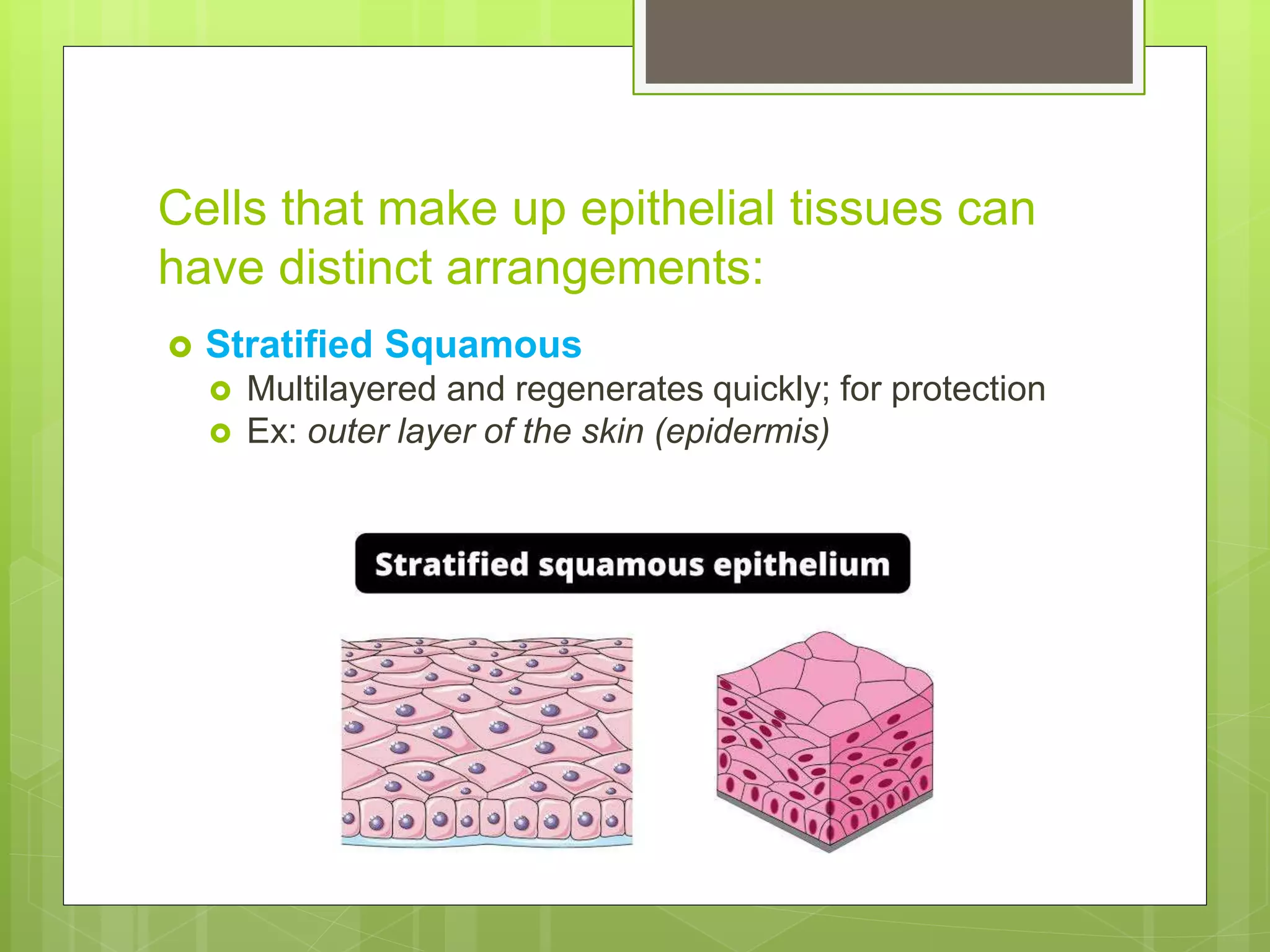
 Stratified Squamous
 Multilayered and regenerates quickly; for protection
 Ex: outer layer of the skin (epidermis)
Cells that make up epithelial tissues can
have distinct arrangements:
 Pseudo-stratified
Columnar
 Single layer of cells; may
just look stacked because
of varying height; for lining
of respiratory tract; usually
lined with cilia (i.e., a type
of cell modification that
sweeps the mucus).
Connective Tissue
 Blood
 Connective Tissue
Proper (CTP)
 Cartilage
 Bone
Connective Tissue
 Blood
 Made up of plasma;
contains water, salts, and
dissolved proteins;
erythrocytes that carry
oxygen (RBC), leukocytes
for defense (WBC), and
platelets for blood clotting.
Connective Tissue
 Connective Tissue Proper (CTP)
 Made up of loose connective tissue that is
found in the skin and fibrous connective tissue
that is made up of collagenous fibers found in
tendons and ligaments.
 Adipose tissues are also examples of loose
connective tissues that store fats which
functions to insulate the body and store energy.
Connective Tissue
 Connective Tissue
Proper (CTP)
Connective Tissue
 Cartilage
 Characterized by collagenous
fibers embedded in chondroitin
sulfate.
 Chondrocytes are the cells that
secrete collagen and
chondroitin sulfate.
 Cartilage functions as cushion
between bones.
Connective Tissue
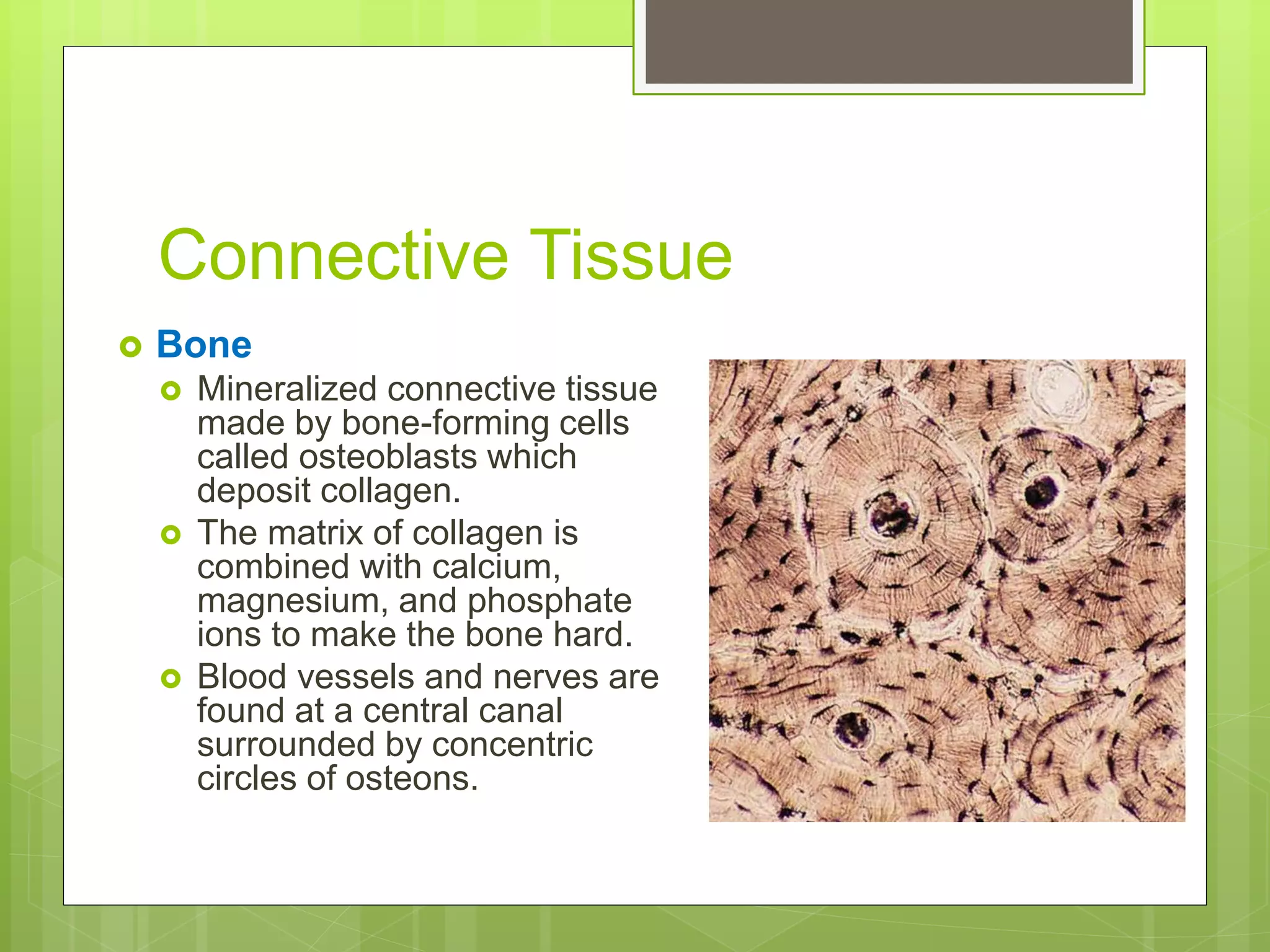
 Bone
 Mineralized connective tissue
made by bone-forming cells
called osteoblasts which
deposit collagen.
 The matrix of collagen is
combined with calcium,
magnesium, and phosphate
ions to make the bone hard.
 Blood vessels and nerves are
found at a central canal
surrounded by concentric
circles of osteons.
Muscle Tissue
 These tissues are composed of long cells
called muscle fibers that allow the body to
move voluntary or involuntary.
 Movement of muscles is a response to signals
coming from nerve cells.
Three Categories in Muscle
Tissue (In Vertebrates)
 Skeletal
 Cardiac
 Smooth
Three Categories in Muscle
Tissue (In Vertebrates)
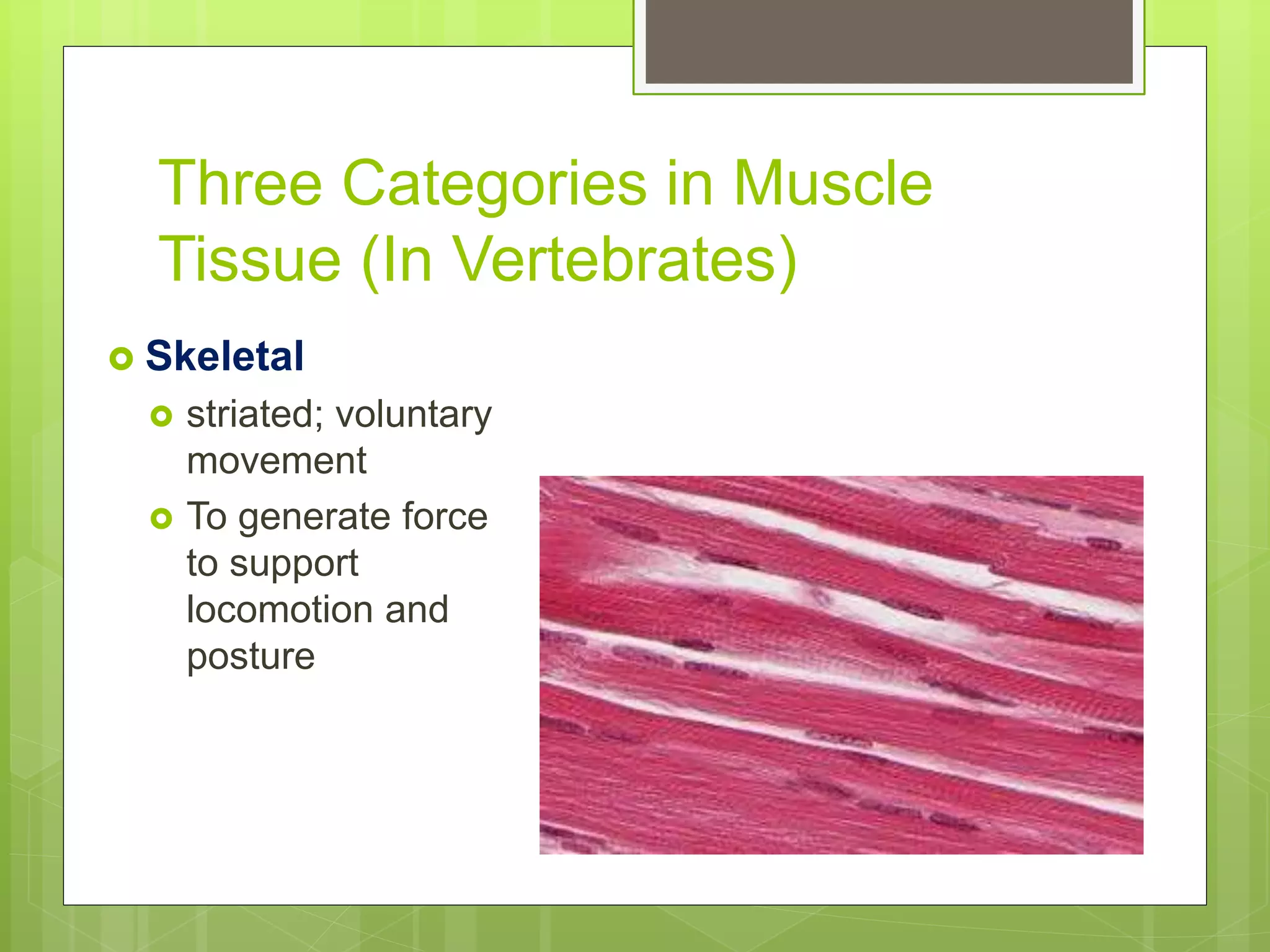
 Skeletal
 striated; voluntary
movement
 To generate force
to support
locomotion and
posture
Three Categories in Muscle
Tissue (In Vertebrates)
 Cardiac
 Striated with
intercalated
disk for
synchronized
heart
contraction;
involuntary.
 To pump blood
Three Categories in Muscle
Tissue (In Vertebrates)
 Smooth
 Not striated;
involuntary
 Can be found in
the intestines,
digestive tract
and blood
vessels
 For digestion
and nutrient
collection
Nervous Tissue
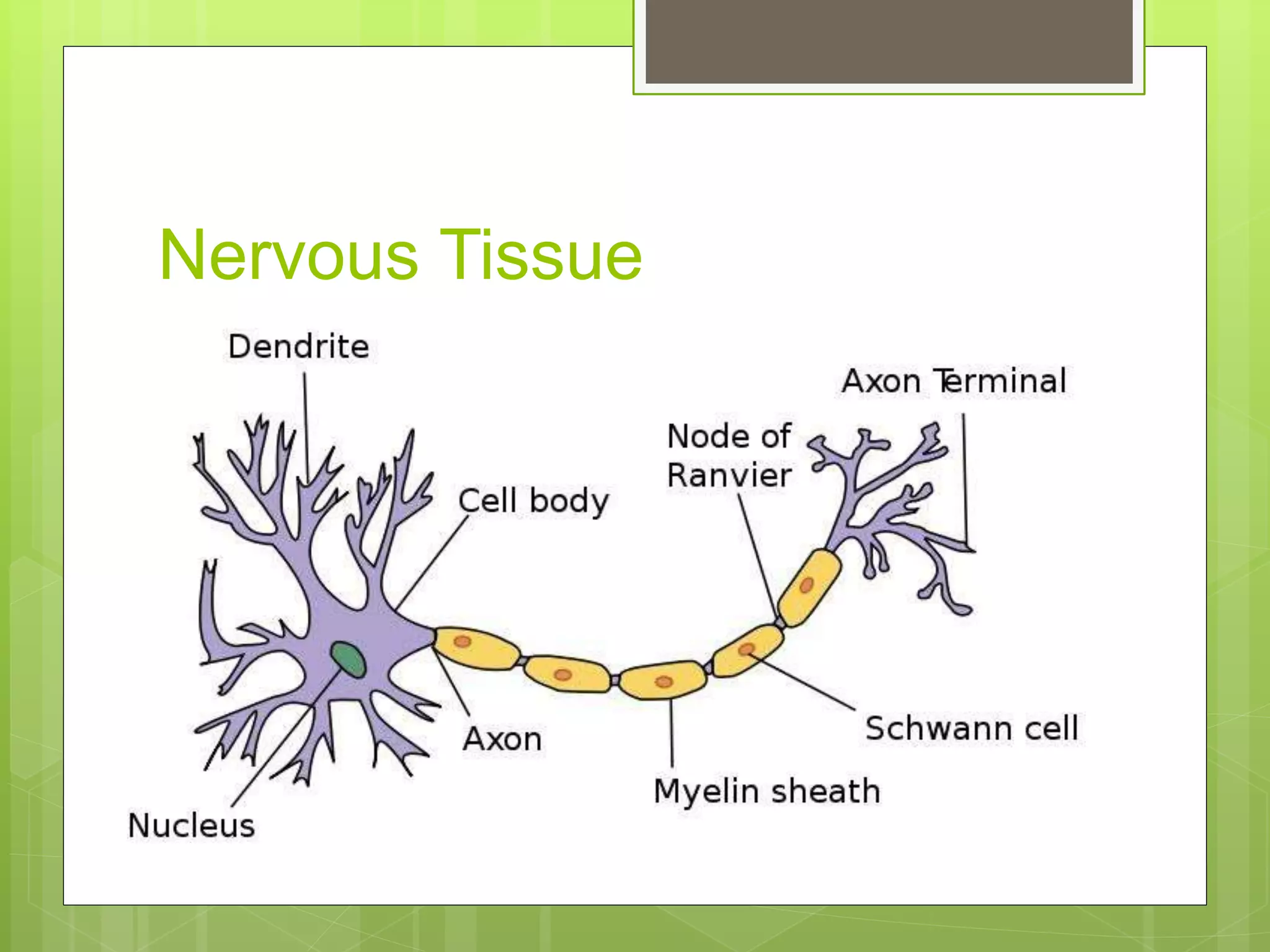
 These tissues are composed of nerve cells called
neurons and glial cells that function as support cells
 These neurons sense stimuli and transmit electrical
signals throughout the animal body.
 Neurons connect to other neurons to send signals.
 The dendrite is the part of the neuron that receives
impulses from other neurons while the axon is the part
where the impulse is transmitted to other neurons.
 Cell body – contains the nucleus and connects the
dendrites, which bring information into the neuron
Nervous Tissue
Direction: Match each general tissue category to the
appropriate feature. Write the letter of your choice before
each number.
A. Connective Tissue
B. Epithelium
C. Muscular Tissue
D. Nervous Tissue
_____1. A type of tissue that would make up the majority
of the brain and spinal cord.
_____2. Found in the epidermis and form the lining of
internal organs such as the intestines.
_____3. Form the ligaments, tendons, fat and bone
_____4. A type of tissue that makes up majority of the
heart.
Cell Types

  • 1.
  • 2.
    Instruction: Arrange the wordsaccording to the levels of biological organization. Organ system organism tissuecell
  • 3.
  • 4.
    Four Main Typesof Cells  Epithelial Cells  Connective Tissue Cells  Muscle Cells  Nerve Cells
  • 5.
    Epithelial Tissue  Thistype of tissue is commonly seen outside the body as coverings or as linings of organs and cavities.  They are characterized by closely-joined cells with tight junctions (i.e., a type of cell modification).  Being tightly packed, tight junctions serve as barriers for pathogens, mechanical injuries, and fluid loss.
  • 6.
    Cells that makeup epithelial tissues can have distinct arrangements:  Cuboidal  Simple Columnar  Simple Squamous  Stratified Squamous  Pseudo-stratified Columnar
  • 7.
    Cells that makeup epithelial tissues can have distinct arrangements:  Cuboidal  For secretion  Ex: salivary and sweat glands
  • 8.
    Cells that makeup epithelial tissues can have distinct arrangements:  Simple Columnar  Brick-shaped cells; for secretion and active absorption  Ex: stomach and intestines
  • 9.
    Cells that makeup epithelial tissues can have distinct arrangements:  Simple Squamous  Plate-like cells; for exchange of material through diffusion  Ex: blood vessels
  • 10.
    Cells that makeup epithelial tissues can have distinct arrangements:  Stratified Squamous  Multilayered and regenerates quickly; for protection  Ex: outer layer of the skin (epidermis)
  • 11.
    Cells that makeup epithelial tissues can have distinct arrangements:  Pseudo-stratified Columnar  Single layer of cells; may just look stacked because of varying height; for lining of respiratory tract; usually lined with cilia (i.e., a type of cell modification that sweeps the mucus).
  • 12.
    Connective Tissue  Blood Connective Tissue Proper (CTP)  Cartilage  Bone
  • 13.
    Connective Tissue  Blood Made up of plasma; contains water, salts, and dissolved proteins; erythrocytes that carry oxygen (RBC), leukocytes for defense (WBC), and platelets for blood clotting.
  • 14.
    Connective Tissue  ConnectiveTissue Proper (CTP)  Made up of loose connective tissue that is found in the skin and fibrous connective tissue that is made up of collagenous fibers found in tendons and ligaments.  Adipose tissues are also examples of loose connective tissues that store fats which functions to insulate the body and store energy.
  • 15.
  • 16.
    Connective Tissue  Cartilage Characterized by collagenous fibers embedded in chondroitin sulfate.  Chondrocytes are the cells that secrete collagen and chondroitin sulfate.  Cartilage functions as cushion between bones.
  • 17.
    Connective Tissue  Bone Mineralized connective tissue made by bone-forming cells called osteoblasts which deposit collagen.  The matrix of collagen is combined with calcium, magnesium, and phosphate ions to make the bone hard.  Blood vessels and nerves are found at a central canal surrounded by concentric circles of osteons.
  • 18.
    Muscle Tissue  Thesetissues are composed of long cells called muscle fibers that allow the body to move voluntary or involuntary.  Movement of muscles is a response to signals coming from nerve cells.
  • 19.
    Three Categories inMuscle Tissue (In Vertebrates)  Skeletal  Cardiac  Smooth
  • 20.
    Three Categories inMuscle Tissue (In Vertebrates)  Skeletal  striated; voluntary movement  To generate force to support locomotion and posture
  • 21.
    Three Categories inMuscle Tissue (In Vertebrates)  Cardiac  Striated with intercalated disk for synchronized heart contraction; involuntary.  To pump blood
  • 22.
    Three Categories inMuscle Tissue (In Vertebrates)  Smooth  Not striated; involuntary  Can be found in the intestines, digestive tract and blood vessels  For digestion and nutrient collection
  • 23.
    Nervous Tissue  Thesetissues are composed of nerve cells called neurons and glial cells that function as support cells  These neurons sense stimuli and transmit electrical signals throughout the animal body.  Neurons connect to other neurons to send signals.  The dendrite is the part of the neuron that receives impulses from other neurons while the axon is the part where the impulse is transmitted to other neurons.  Cell body – contains the nucleus and connects the dendrites, which bring information into the neuron
  • 24.
  • 25.
    Direction: Match eachgeneral tissue category to the appropriate feature. Write the letter of your choice before each number. A. Connective Tissue B. Epithelium C. Muscular Tissue D. Nervous Tissue _____1. A type of tissue that would make up the majority of the brain and spinal cord. _____2. Found in the epidermis and form the lining of internal organs such as the intestines. _____3. Form the ligaments, tendons, fat and bone _____4. A type of tissue that makes up majority of the heart.