UNIT4-CELL COMMUNICATION
& CELL SIGNALLING
CELL SIGNALLING –AN OVERVIEW
INTRODUCTION:
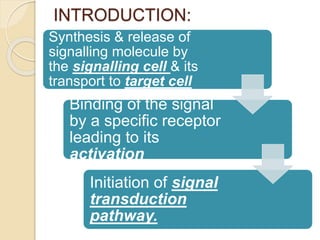
Synthesis & release of
signalling molecule by
the signalling cell & its
transport to target cell
Binding of the signal
by a specific receptor
leading to its
activation
Initiation of signal
transduction
pathway.
Types of signaling molecule-
1)MEMBRANE BOUND SIGNAL MOLECULE
–bound to membrane,contact dependent
signaling
2) SECRETORY SIGNAL MOLECULE –Signal
molecules secreted by signaling cells.
Fall in to two categories:
• Small lipophilic molecules that cross
membrane & interact with intercellular
receptors.
• Hydrophilic molecules that binds with cell
surface receptors.
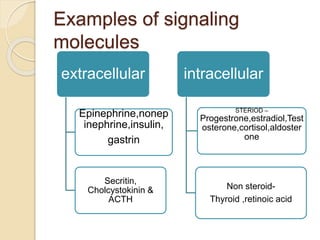
Examples of signaling
molecules
extracellular
Epinephrine,nonep
inephrine,insulin,
gastrin
Secritin,
Cholcystokinin &
ACTH
intracellular
STERIOD –
Progestrone,estradiol,Test
osterone,cortisol,aldoster
one
Non steroid-
Thyroid ,retinoic acid
Receptors :
 Binding of signaling molecule to the
receptor causes a conformational
change in the receptor ,which initiates a
sequence of events leading to a specific
cellular response.
 They are usually made up of glyco
proteins
 Signaling molecules are also called
LIGANDS.
 Two types based on their location:
1. Intracellular receptor(nuclear/cytosolic)
Cell surface
receptors/extracellular receptors-
 Hydrophilic signaling molecules & few
lipophilic signaling molecules bind to
cell surface receptors.
 Binding of ligands causes
conformational changes in receptors
,producing intracellular messengers
which stimulates effectors activating
cellular responses
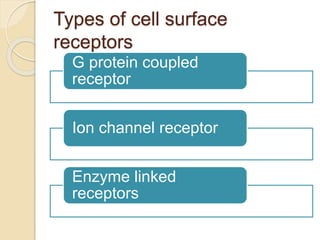
Types of cell surface
receptors
G protein coupled
receptor
Ion channel receptor
Enzyme linked
receptors
Thank
You

Cell signaling an over view

  • 1.
    UNIT4-CELL COMMUNICATION & CELLSIGNALLING CELL SIGNALLING –AN OVERVIEW
  • 2.
    INTRODUCTION: Synthesis & releaseof signalling molecule by the signalling cell & its transport to target cell Binding of the signal by a specific receptor leading to its activation Initiation of signal transduction pathway.
  • 5.
    Types of signalingmolecule- 1)MEMBRANE BOUND SIGNAL MOLECULE –bound to membrane,contact dependent signaling 2) SECRETORY SIGNAL MOLECULE –Signal molecules secreted by signaling cells. Fall in to two categories: • Small lipophilic molecules that cross membrane & interact with intercellular receptors. • Hydrophilic molecules that binds with cell surface receptors.
  • 6.
    Examples of signaling molecules extracellular Epinephrine,nonep inephrine,insulin, gastrin Secritin, Cholcystokinin& ACTH intracellular STERIOD – Progestrone,estradiol,Test osterone,cortisol,aldoster one Non steroid- Thyroid ,retinoic acid
  • 7.
    Receptors :  Bindingof signaling molecule to the receptor causes a conformational change in the receptor ,which initiates a sequence of events leading to a specific cellular response.  They are usually made up of glyco proteins  Signaling molecules are also called LIGANDS.  Two types based on their location: 1. Intracellular receptor(nuclear/cytosolic)
  • 10.
    Cell surface receptors/extracellular receptors- Hydrophilic signaling molecules & few lipophilic signaling molecules bind to cell surface receptors.  Binding of ligands causes conformational changes in receptors ,producing intracellular messengers which stimulates effectors activating cellular responses
  • 11.
    Types of cellsurface receptors G protein coupled receptor Ion channel receptor Enzyme linked receptors
  • 12.