
Cell Reproduction
 is the process of making a new cell
 when a single-celled organism
divides to make two new cells
TWO TYPES OF REPRODUCTION
 Asexual Reproduction
 the production of offspring without union of special sex
cells
 Clone
 a group of identical cells naturally derived from a common
parent cell
 Fission
 is the subdivision of a cell (or body, population, or species) into
two or more parts and the regeneration of those parts into
separate cells (bodies, populations, or species)
 Budding
 is a form of asexual reproduction in which a new organism
develops from an outgrowth or bud on another one.
 Sexual Reproduction
 involves the fusion or joining of two special cells
Gametes
 sexual reproductive cells
Fertilization
 the process of two gametes
zygote
 the cell produced by fertilization
egg
 a gamete from the female parent
sperm
 male parent produces gametes
CELL DIVISION
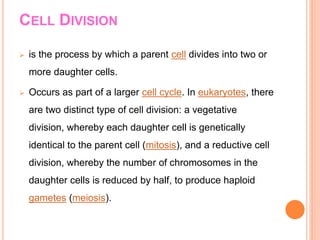
 is the process by which a parent cell divides into two or
more daughter cells.
 Occurs as part of a larger cell cycle. In eukaryotes, there
are two distinct type of cell division: a vegetative
division, whereby each daughter cell is genetically
identical to the parent cell (mitosis), and a reductive cell
division, whereby the number of chromosomes in the
daughter cells is reduced by half, to produce haploid
gametes (meiosis).
KINDS OF CELL DIVISION
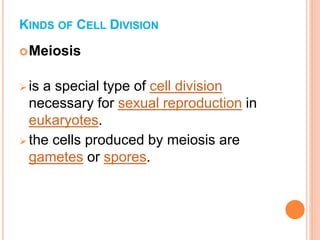
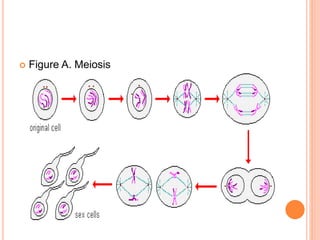
Meiosis
 is a special type of cell division
necessary for sexual reproduction in
eukaryotes.
 the cells produced by meiosis are
gametes or spores.
 Figure A. Meiosis
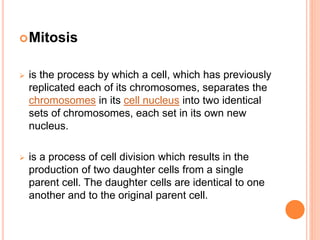
Mitosis
 is the process by which a cell, which has previously
replicated each of its chromosomes, separates the
chromosomes in its cell nucleus into two identical
sets of chromosomes, each set in its own new
nucleus.
 is a process of cell division which results in the
production of two daughter cells from a single
parent cell. The daughter cells are identical to one
another and to the original parent cell.
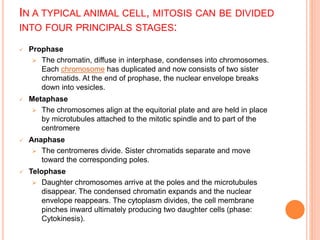
IN A TYPICAL ANIMAL CELL, MITOSIS CAN BE DIVIDED
INTO FOUR PRINCIPALS STAGES:
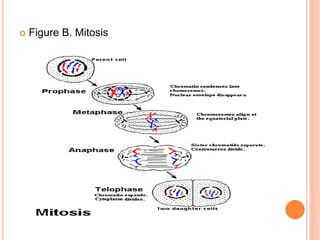
 Prophase
 The chromatin, diffuse in interphase, condenses into chromosomes.
Each chromosome has duplicated and now consists of two sister
chromatids. At the end of prophase, the nuclear envelope breaks
down into vesicles.
 Metaphase
 The chromosomes align at the equitorial plate and are held in place
by microtubules attached to the mitotic spindle and to part of the
centromere
 Anaphase
 The centromeres divide. Sister chromatids separate and move
toward the corresponding poles.
 Telophase
 Daughter chromosomes arrive at the poles and the microtubules
disappear. The condensed chromatin expands and the nuclear
envelope reappears. The cytoplasm divides, the cell membrane
pinches inward ultimately producing two daughter cells (phase:
Cytokinesis).
 Figure B. Mitosis
IMPORTANT KEY CONCEPTS:
 somatic cell - all body cells except reproductive cells
 gamete - reproductive cells (i.e. sperm & eggs)
 chromosome - elongate cellular structure composed of
DNA and protein - they are the vehicles which carry
DNA in cells
 diploid (2n) - cellular condition where each
chromosome type is represented by two homologous
chromosomes
 haploid (n) - cellular condition where each chromosome
type is represented by only one chromosome
 homologous chromosome - chromosome of the same
size and shape which carry the same type of genes
 chromatid - one of two duplicated chromosomes
connected at the centromere
 centromere - region of chromosome where
microtubules attach during mitosis and meio
THANK YOU 
Prepared by:
Espliguera, Analyn I.
BSED - 2

Cell Reproduction

  • 2.
    Cell Reproduction  isthe process of making a new cell  when a single-celled organism divides to make two new cells
  • 3.
    TWO TYPES OFREPRODUCTION  Asexual Reproduction  the production of offspring without union of special sex cells  Clone  a group of identical cells naturally derived from a common parent cell  Fission  is the subdivision of a cell (or body, population, or species) into two or more parts and the regeneration of those parts into separate cells (bodies, populations, or species)  Budding  is a form of asexual reproduction in which a new organism develops from an outgrowth or bud on another one.
  • 4.
     Sexual Reproduction involves the fusion or joining of two special cells Gametes  sexual reproductive cells Fertilization  the process of two gametes zygote  the cell produced by fertilization egg  a gamete from the female parent sperm  male parent produces gametes
  • 5.
    CELL DIVISION  isthe process by which a parent cell divides into two or more daughter cells.  Occurs as part of a larger cell cycle. In eukaryotes, there are two distinct type of cell division: a vegetative division, whereby each daughter cell is genetically identical to the parent cell (mitosis), and a reductive cell division, whereby the number of chromosomes in the daughter cells is reduced by half, to produce haploid gametes (meiosis).
  • 6.
    KINDS OF CELLDIVISION Meiosis  is a special type of cell division necessary for sexual reproduction in eukaryotes.  the cells produced by meiosis are gametes or spores.
  • 7.
  • 8.
    Mitosis  is theprocess by which a cell, which has previously replicated each of its chromosomes, separates the chromosomes in its cell nucleus into two identical sets of chromosomes, each set in its own new nucleus.  is a process of cell division which results in the production of two daughter cells from a single parent cell. The daughter cells are identical to one another and to the original parent cell.
  • 9.
    IN A TYPICALANIMAL CELL, MITOSIS CAN BE DIVIDED INTO FOUR PRINCIPALS STAGES:  Prophase  The chromatin, diffuse in interphase, condenses into chromosomes. Each chromosome has duplicated and now consists of two sister chromatids. At the end of prophase, the nuclear envelope breaks down into vesicles.  Metaphase  The chromosomes align at the equitorial plate and are held in place by microtubules attached to the mitotic spindle and to part of the centromere  Anaphase  The centromeres divide. Sister chromatids separate and move toward the corresponding poles.  Telophase  Daughter chromosomes arrive at the poles and the microtubules disappear. The condensed chromatin expands and the nuclear envelope reappears. The cytoplasm divides, the cell membrane pinches inward ultimately producing two daughter cells (phase: Cytokinesis).
  • 10.
  • 11.
    IMPORTANT KEY CONCEPTS: somatic cell - all body cells except reproductive cells  gamete - reproductive cells (i.e. sperm & eggs)  chromosome - elongate cellular structure composed of DNA and protein - they are the vehicles which carry DNA in cells  diploid (2n) - cellular condition where each chromosome type is represented by two homologous chromosomes  haploid (n) - cellular condition where each chromosome type is represented by only one chromosome  homologous chromosome - chromosome of the same size and shape which carry the same type of genes  chromatid - one of two duplicated chromosomes connected at the centromere  centromere - region of chromosome where microtubules attach during mitosis and meio
  • 12.
    THANK YOU  Preparedby: Espliguera, Analyn I. BSED - 2