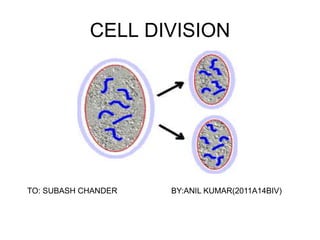

CELL DIVISION 
TO: SUBASH CHANDER BY:ANIL KUMAR(2011A14BIV)
CELL 
The cell (from Latin cella, meaning 
"small room") is the basic structural, 
functional, and biological unit of all 
known living organisms
DISCOVERY 
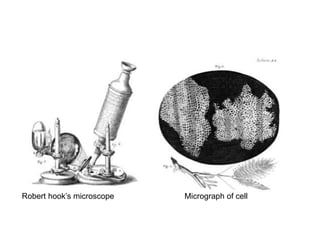
The cell was discovered by Robert Hooke in 
1665. 
His book Micrograhia 
Thin slices of bottle cork.
Robert hook’s microscope Micrograph of cell
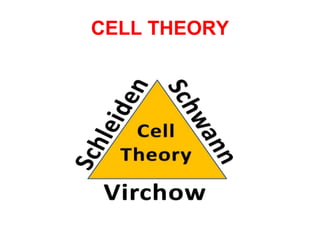
CELL THEORY
Cell theory has 3 basic points: 
• All living things are made of cells. 
• The cell is the smallest living thing that can 
perform all the functions of life. 
• All cells must come from pre-existing cells.
Cell division 
Binary fission 
Mitosis 
Meiosis
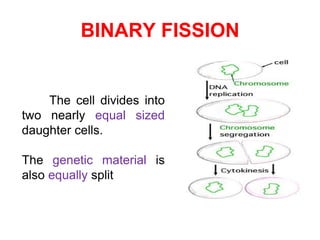
BINARY FISSION 
The cell divides into 
two nearly equal sized 
daughter cells. 
The genetic material is 
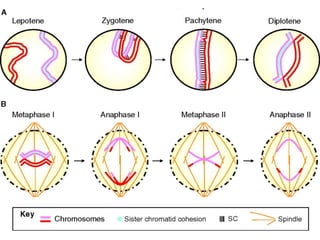
also equally split
MITOSIS 
Mitosis is the process by 
which chromosomes in a cell 
nucleus are separated into two 
identical sets of chromosomes, each 
in its own nucleus
DISCOVERY 
German zoologist Otto Bütschli 
1843-1905 
Term coined by Walther Flemming in 1882.
PHASES 
o Interphase 
o Prophase 
o Metaphase 
o Anaphase 
o Telophase 
o Cytokinesis
INTERPHASE 
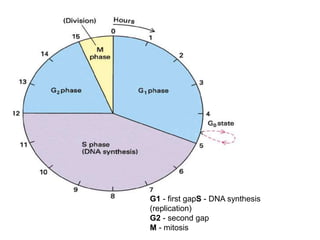
It is the longest phase. 
G1 
S 
G2
G1 - first gapS - DNA synthesis 
(replication) 
G2 - second gap 
M - mitosis
G1 (FIRST GAP) 
The cell grows and functions normally. 
A high amount of protein synthesis occurs . 
The volume of cytoplasm increases. 
Mitochondria and chloroplasts divide.
SYNTHESIS (S) 
The cell duplicates its DNA . 
This is also known as the 
Swanson phase.
G2 (Gap 2) 
The cell resumes its growth in 
preparation for division.
G0 (Gap zero) 
Some cells that do not divide often 
or ever, enter a stage called G0 . 
G0 phase semi-permanentally e.g., 
some liver, kidney, stomach 
cells.
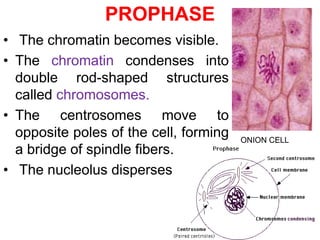
PROPHASE 
• The chromatin becomes visible. 
• The chromatin condenses into 
double rod-shaped structures 
called chromosomes. 
• The centrosomes move to 
opposite poles of the cell, forming 
a bridge of spindle fibers. 
• The nucleolus disperses. 
ONION CELL
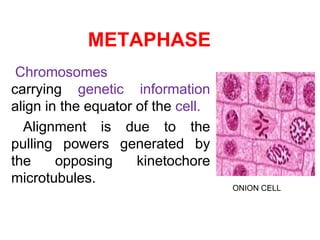
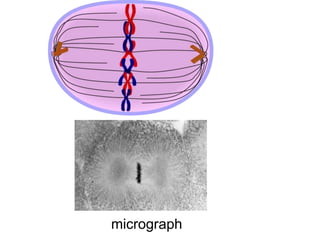
METAPHASE 
Chromosomes 
carrying genetic information 
align in the equator of the cell. 
Alignment is due to the 
pulling powers generated by 
the opposing kinetochore 
microtubules. 
ONION CELL
micrograph
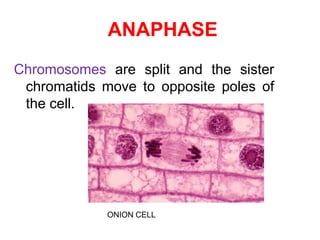
ANAPHASE 
Chromosomes are split and the sister 
chromatids move to opposite poles of 
the cell. 
ONION CELL
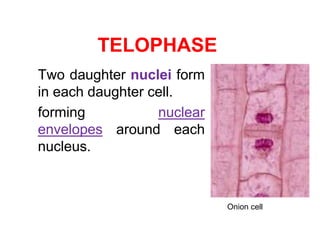
TELOPHASE 
Two daughter nuclei form 
in each daughter cell. 
forming nuclear 
envelopes around each 
nucleus. 
Onion cell
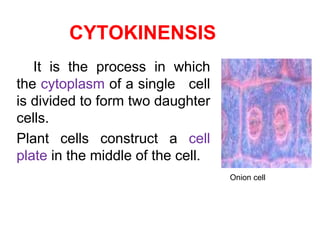
CYTOKINENSIS 
It is the process in which 
the cytoplasm of a single cell 
is divided to form two daughter 
cells. 
Plant cells construct a cell 
plate in the middle of the cell. 
Onion cell
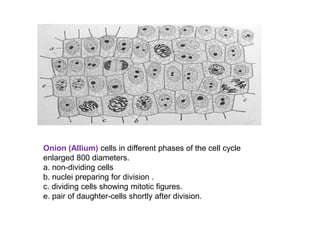
Onion (Allium) cells in different phases of the cell cycle 
enlarged 800 diameters. 
a. non-dividing cells 
b. nuclei preparing for division . 
c. dividing cells showing mitotic figures. 
e. pair of daughter-cells shortly after division.
MEIOSIS 
It is a specialized type of cell division which 
reduces the chromosome number by half. 
This process occurs in all sexually 
reproducing eukaryotes (both single-celled 
and multicellular) including animals, plants, 
and fungi.
HISTORY 
Meiosis was discovered and described 
for the first time in sea urchin eggs in 
1876 by the German biologist Oscar 
Hertwig. 
The term meiosis was introduced to 
biology by J.B. Farmer and J.E.S. 
Moore in 1905.
PHASES 
Meiosis I 
 Prophase I 
• Leptotene 
• Zygotene 
• Pachytene 
• Diplotene 
• Diakinesis 
 Metaphase I 
 Anaphase I 
 Telophase I 
Meiosis II
PROPHASE I 
Leptotene : 
Individual chromosomes—each 
consisting of two sister 
chromatids—condense from the 
diffuse interphase conformation 
into visible strands within the 
nucleus.
ZYGOTENE 
At this stage, the synapsis 
(pairing/coming together) of 
homologous chromosomes takes 
place. 
Synaptonemal complex
PCHYTENE 
It is the stage when chromosomal 
crossover (crossing over) occurs. 
Nonsister chromatids of homologous 
chromosomes may exchange 
segments over regions of homology. 
At the sites where exchange 
happens, chiasmata form
DEPLOTENE 
The synaptonemal complex degrades 
and homologous chromosomes separate 
. 
The chiasmata remain on the 
chromosomes until they are severed in 
anaphase I om one another a little.
DIAKINENSIS 
This is the first point in meiosis where the 
four parts of the tetrads are actually 
visible. 
The nucleoli disappear, the nuclear 
membrane disintegrates into vesicles, and 
the meiotic spindle begins to form.
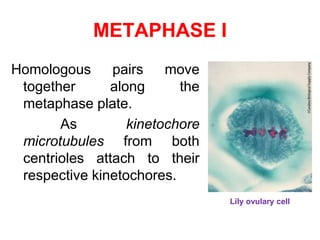
METAPHASE I 
Homologous pairs move 
together along the 
metaphase plate. 
As kinetochore 
microtubules from both 
centrioles attach to their 
respective kinetochores. 
Lily ovulary cell
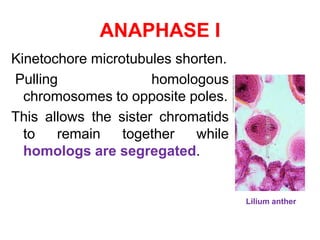
ANAPHASE I 
Kinetochore microtubules shorten. 
Pulling homologous 
chromosomes to opposite poles. 
This allows the sister chromatids 
to remain together while 
homologs are segregated. 
Lilium anther
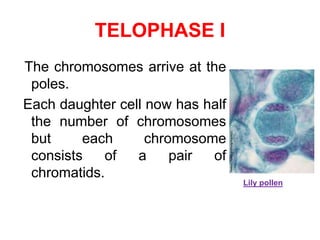
TELOPHASE I 
The chromosomes arrive at the 
poles. 
Each daughter cell now has half 
the number of chromosomes 
but each chromosome 
consists of a pair of 
chromatids. 
Lily pollen
MEIOSIS II 
 Prophase II 
 Metaphase II 
 Anaphase II 
 Telophase II
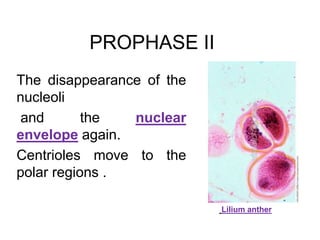
PROPHASE II 
The disappearance of the 
nucleoli 
and the nuclear 
envelope again. 
Centrioles move to the 
polar regions . 
Lilium anther
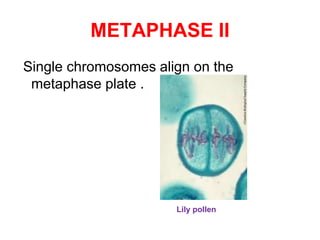
METAPHASE II 
Single chromosomes align on the 
metaphase plate . 
Lily pollen
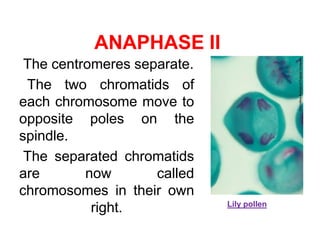
ANAPHASE II 
The centromeres separate. 
The two chromatids of 
each chromosome move to 
opposite poles on the 
spindle. 
The separated chromatids 
are now called 
chromosomes in their own 
right. Lily pollen
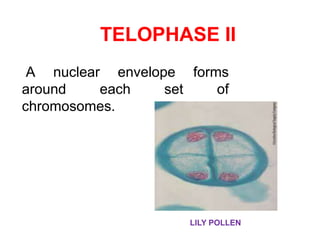
TELOPHASE II 
A nuclear envelope forms 
around each set of 
chromosomes. 
LILY POLLEN
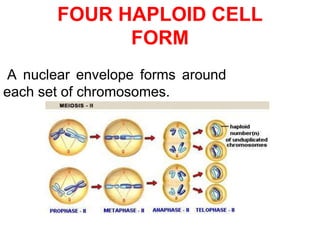
FOUR HAPLOID CELL 
FORM 
A nuclear envelope forms around 
each set of chromosomes.
THANKS

CELL DIVISION BY ; ANIL BL GATHER

  • 1.
    CELL DIVISION TO:SUBASH CHANDER BY:ANIL KUMAR(2011A14BIV)
  • 2.
    CELL The cell(from Latin cella, meaning "small room") is the basic structural, functional, and biological unit of all known living organisms
  • 3.
    DISCOVERY The cellwas discovered by Robert Hooke in 1665. His book Micrograhia Thin slices of bottle cork.
  • 4.
    Robert hook’s microscopeMicrograph of cell
  • 5.
  • 6.
    Cell theory has3 basic points: • All living things are made of cells. • The cell is the smallest living thing that can perform all the functions of life. • All cells must come from pre-existing cells.
  • 7.
    Cell division Binaryfission Mitosis Meiosis
  • 8.
    BINARY FISSION Thecell divides into two nearly equal sized daughter cells. The genetic material is also equally split
  • 9.
    MITOSIS Mitosis isthe process by which chromosomes in a cell nucleus are separated into two identical sets of chromosomes, each in its own nucleus
  • 10.
    DISCOVERY German zoologistOtto Bütschli 1843-1905 Term coined by Walther Flemming in 1882.
  • 11.
    PHASES o Interphase o Prophase o Metaphase o Anaphase o Telophase o Cytokinesis
  • 12.
    INTERPHASE It isthe longest phase. G1 S G2
  • 13.
    G1 - firstgapS - DNA synthesis (replication) G2 - second gap M - mitosis
  • 14.
    G1 (FIRST GAP) The cell grows and functions normally. A high amount of protein synthesis occurs . The volume of cytoplasm increases. Mitochondria and chloroplasts divide.
  • 15.
    SYNTHESIS (S) Thecell duplicates its DNA . This is also known as the Swanson phase.
  • 16.
    G2 (Gap 2) The cell resumes its growth in preparation for division.
  • 17.
    G0 (Gap zero) Some cells that do not divide often or ever, enter a stage called G0 . G0 phase semi-permanentally e.g., some liver, kidney, stomach cells.
  • 18.
    PROPHASE • Thechromatin becomes visible. • The chromatin condenses into double rod-shaped structures called chromosomes. • The centrosomes move to opposite poles of the cell, forming a bridge of spindle fibers. • The nucleolus disperses. ONION CELL
  • 19.
    METAPHASE Chromosomes carryinggenetic information align in the equator of the cell. Alignment is due to the pulling powers generated by the opposing kinetochore microtubules. ONION CELL
  • 20.
  • 21.
    ANAPHASE Chromosomes aresplit and the sister chromatids move to opposite poles of the cell. ONION CELL
  • 22.
    TELOPHASE Two daughternuclei form in each daughter cell. forming nuclear envelopes around each nucleus. Onion cell
  • 23.
    CYTOKINENSIS It isthe process in which the cytoplasm of a single cell is divided to form two daughter cells. Plant cells construct a cell plate in the middle of the cell. Onion cell
  • 24.
    Onion (Allium) cellsin different phases of the cell cycle enlarged 800 diameters. a. non-dividing cells b. nuclei preparing for division . c. dividing cells showing mitotic figures. e. pair of daughter-cells shortly after division.
  • 25.
    MEIOSIS It isa specialized type of cell division which reduces the chromosome number by half. This process occurs in all sexually reproducing eukaryotes (both single-celled and multicellular) including animals, plants, and fungi.
  • 26.
    HISTORY Meiosis wasdiscovered and described for the first time in sea urchin eggs in 1876 by the German biologist Oscar Hertwig. The term meiosis was introduced to biology by J.B. Farmer and J.E.S. Moore in 1905.
  • 27.
    PHASES Meiosis I  Prophase I • Leptotene • Zygotene • Pachytene • Diplotene • Diakinesis  Metaphase I  Anaphase I  Telophase I Meiosis II
  • 28.
    PROPHASE I Leptotene: Individual chromosomes—each consisting of two sister chromatids—condense from the diffuse interphase conformation into visible strands within the nucleus.
  • 29.
    ZYGOTENE At thisstage, the synapsis (pairing/coming together) of homologous chromosomes takes place. Synaptonemal complex
  • 30.
    PCHYTENE It isthe stage when chromosomal crossover (crossing over) occurs. Nonsister chromatids of homologous chromosomes may exchange segments over regions of homology. At the sites where exchange happens, chiasmata form
  • 31.
    DEPLOTENE The synaptonemalcomplex degrades and homologous chromosomes separate . The chiasmata remain on the chromosomes until they are severed in anaphase I om one another a little.
  • 32.
    DIAKINENSIS This isthe first point in meiosis where the four parts of the tetrads are actually visible. The nucleoli disappear, the nuclear membrane disintegrates into vesicles, and the meiotic spindle begins to form.
  • 34.
    METAPHASE I Homologouspairs move together along the metaphase plate. As kinetochore microtubules from both centrioles attach to their respective kinetochores. Lily ovulary cell
  • 35.
    ANAPHASE I Kinetochoremicrotubules shorten. Pulling homologous chromosomes to opposite poles. This allows the sister chromatids to remain together while homologs are segregated. Lilium anther
  • 36.
    TELOPHASE I Thechromosomes arrive at the poles. Each daughter cell now has half the number of chromosomes but each chromosome consists of a pair of chromatids. Lily pollen
  • 37.
    MEIOSIS II Prophase II  Metaphase II  Anaphase II  Telophase II
  • 38.
    PROPHASE II Thedisappearance of the nucleoli and the nuclear envelope again. Centrioles move to the polar regions . Lilium anther
  • 39.
    METAPHASE II Singlechromosomes align on the metaphase plate . Lily pollen
  • 40.
    ANAPHASE II Thecentromeres separate. The two chromatids of each chromosome move to opposite poles on the spindle. The separated chromatids are now called chromosomes in their own right. Lily pollen
  • 41.
    TELOPHASE II Anuclear envelope forms around each set of chromosomes. LILY POLLEN
  • 42.
    FOUR HAPLOID CELL FORM A nuclear envelope forms around each set of chromosomes.
  • 43.