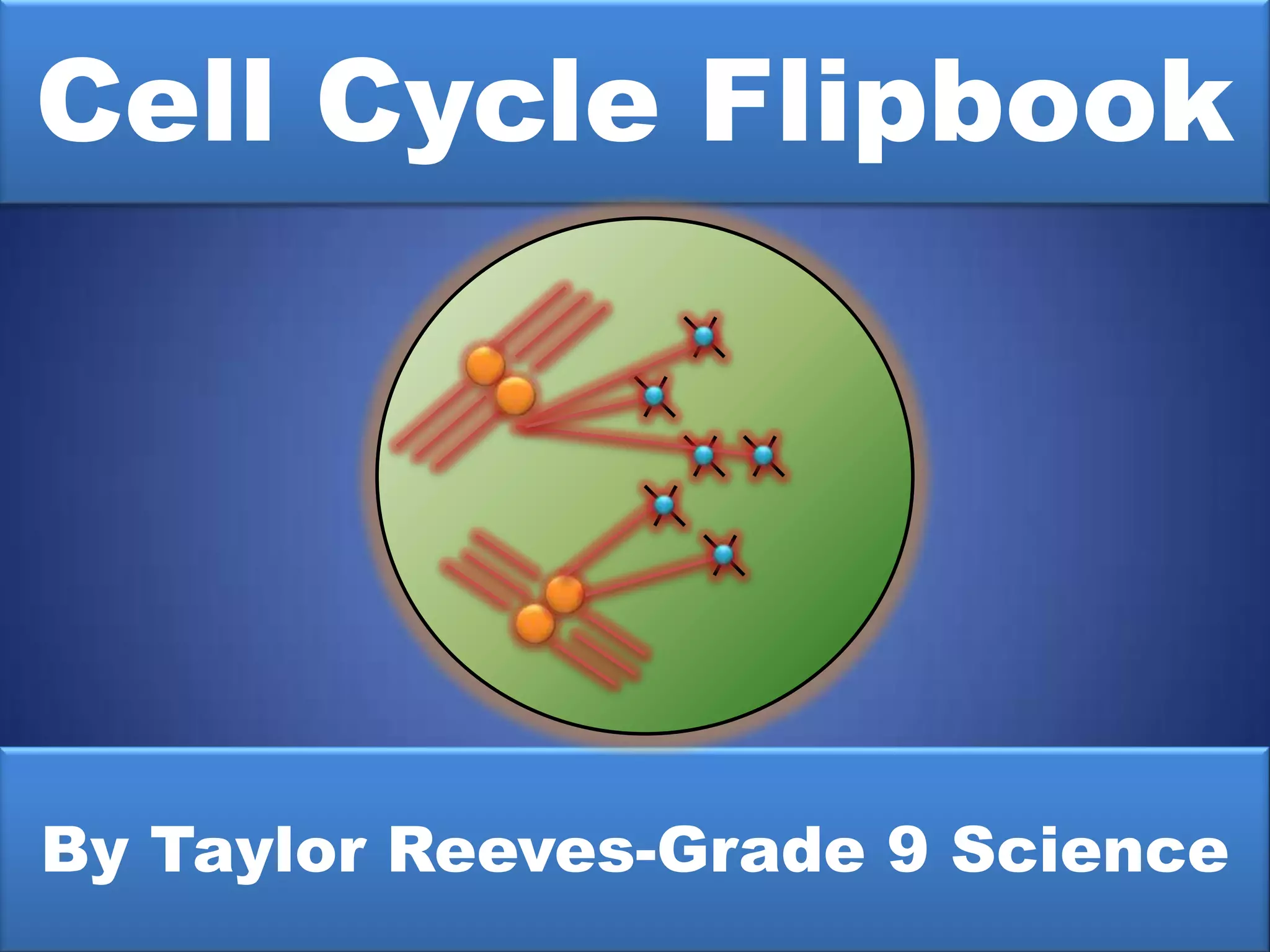
Cell Cycle FlipbookBy Taylor Reeves-Grade 9 Science
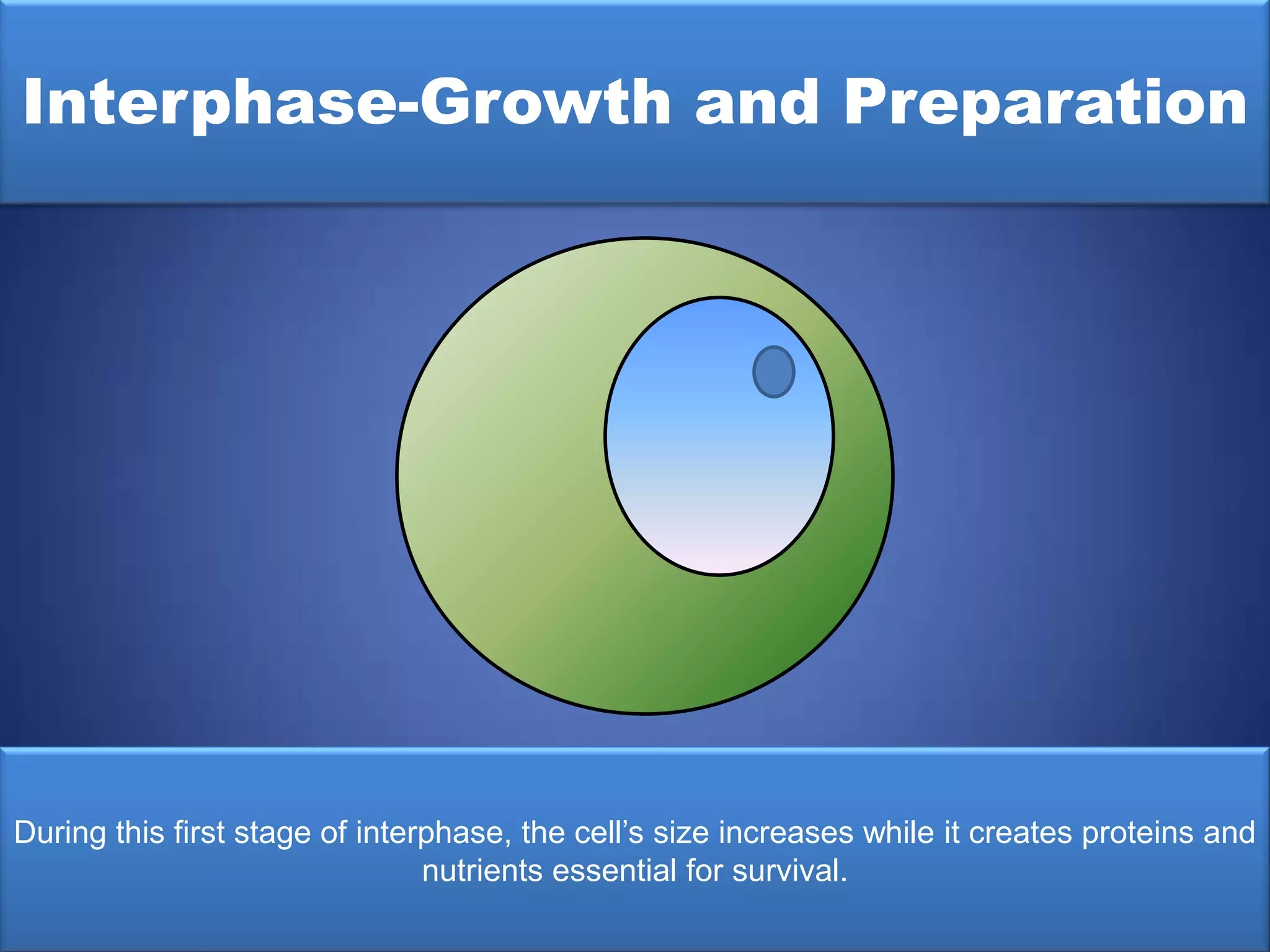
Interphase-Growth and PreparationDuring this first stage of interphase, the cell’s size increases while it creates proteins and nutrients essential for survival.
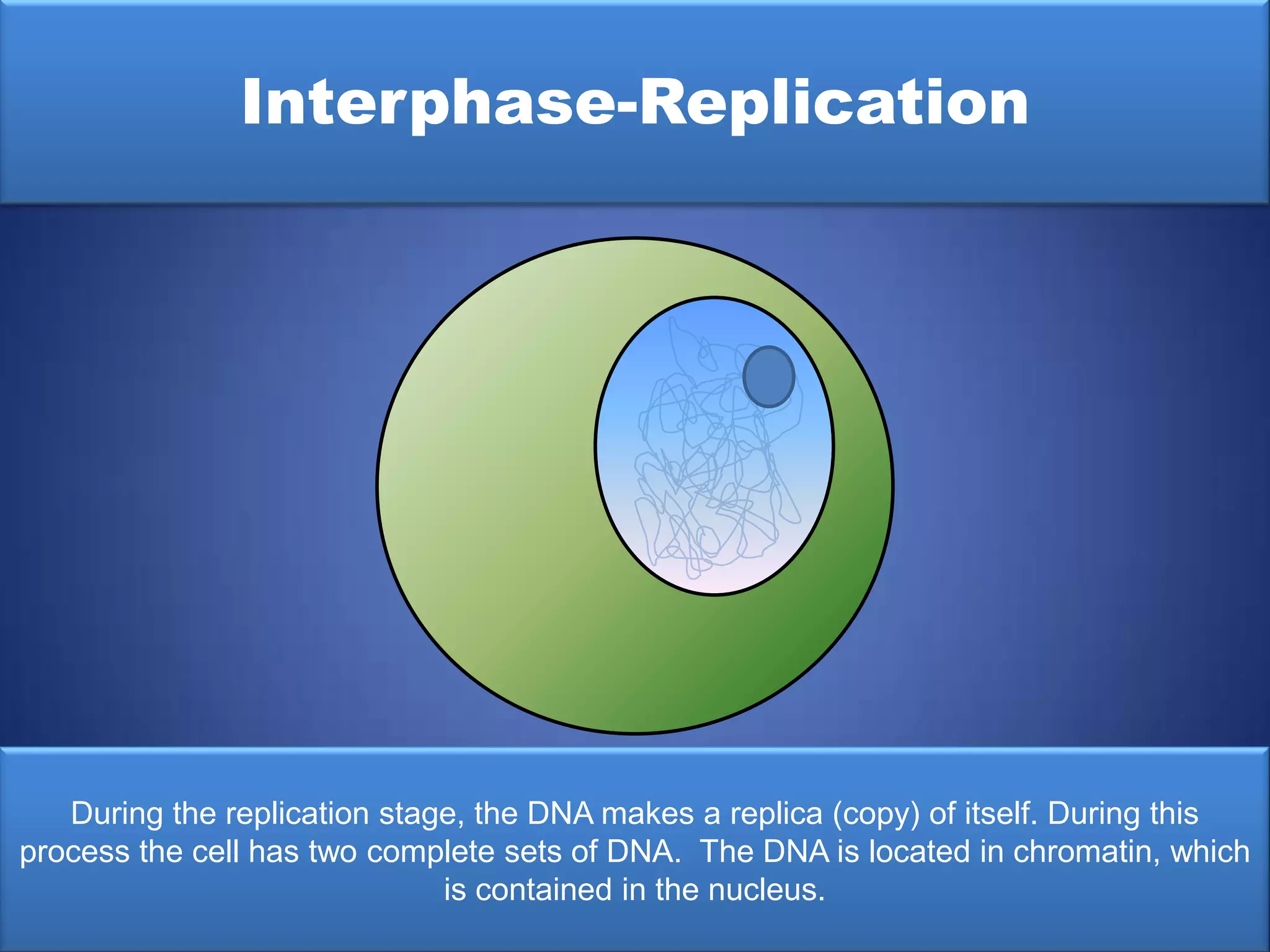
Interphase-ReplicationDuring the replication stage, the DNA makes a replica (copy) of itself. During this process the cell has two complete sets of DNA.  The DNA is located in chromatin, which is contained in the nucleus.
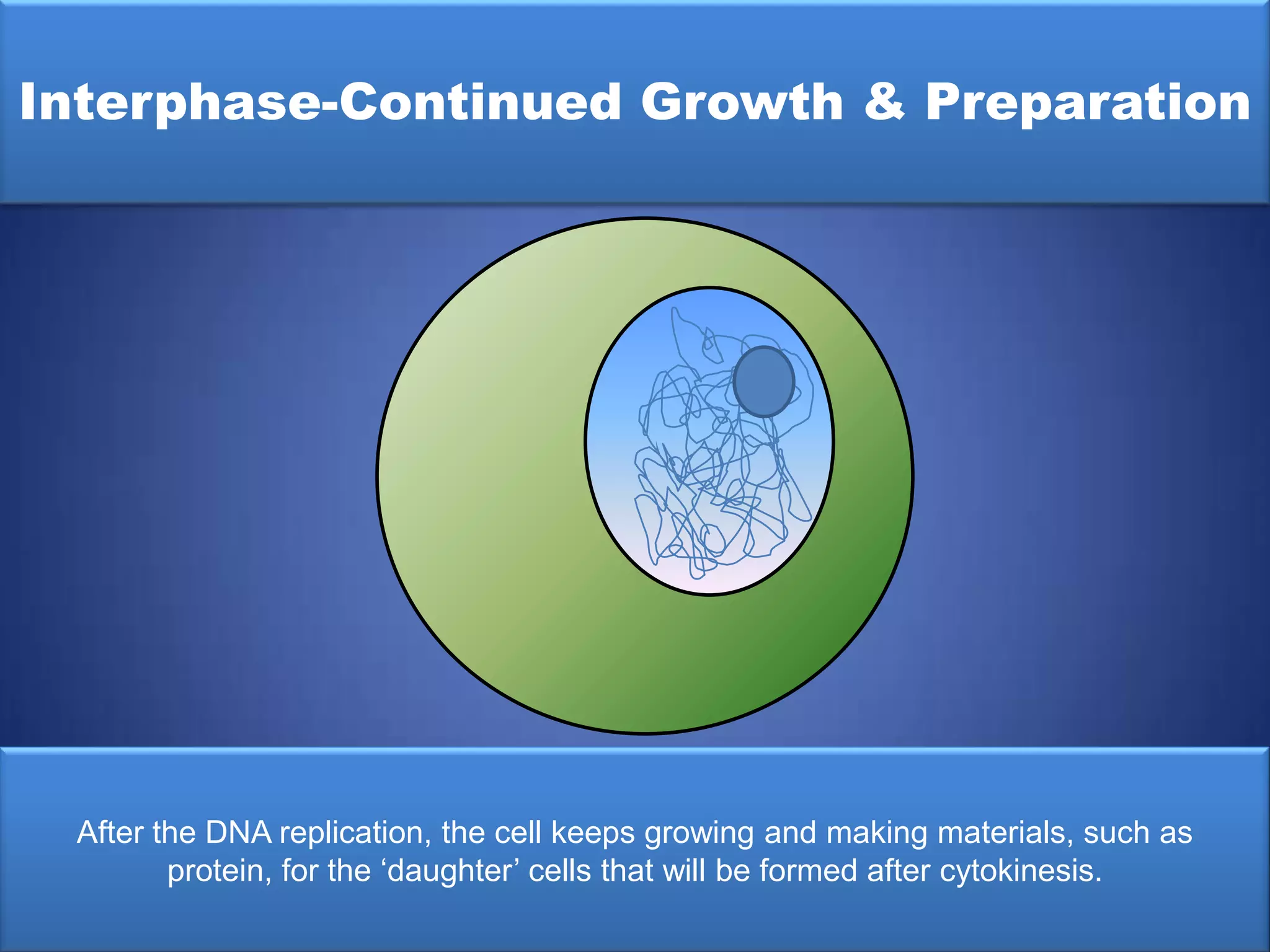
Interphase-Continued Growth & Preparation After the DNA replication, the cell keeps growing and making materials, such as protein, for the ‘daughter’ cells that will be formed after cytokinesis.
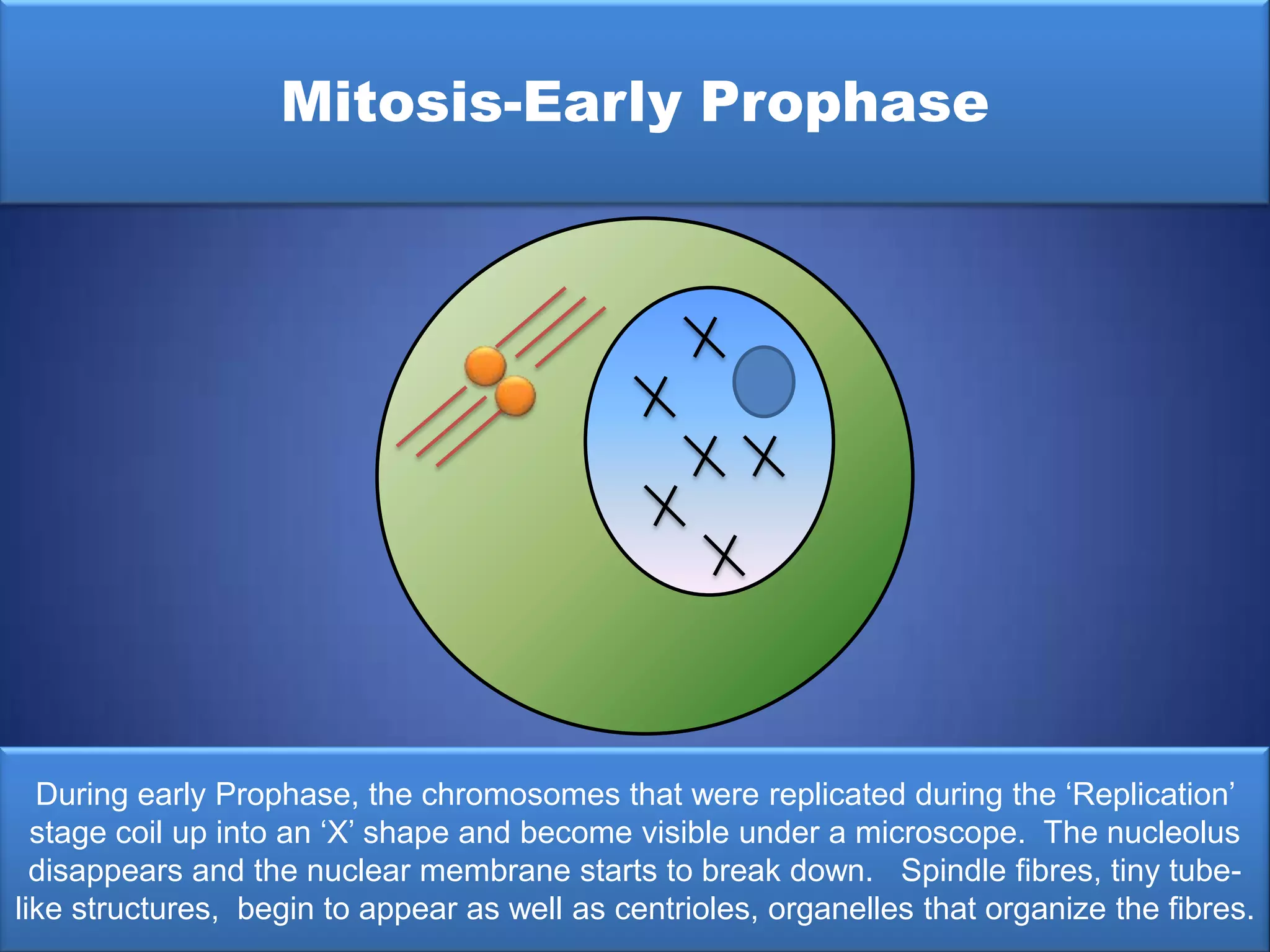
Mitosis-Early ProphaseDuring early Prophase, the chromosomes that were replicated during the ‘Replication’ stage coil up into an ‘X’ shape and become visible under a microscope.  The nucleolus disappears and the nuclear membrane starts to break down.   Spindle fibres, tiny tube-like structures,  begin to appear as well as centrioles, organelles that organize the fibres.
Mitosis-Late ProphaseIn late Prophase, the spindle fibres finish forming and attach their centromeres to the chromosomes.  The nuclear membrane disappears.
Mitosis-MetaphaseIn Metaphase, the spindle fibres pull the chromosomes into the middle of the cell.
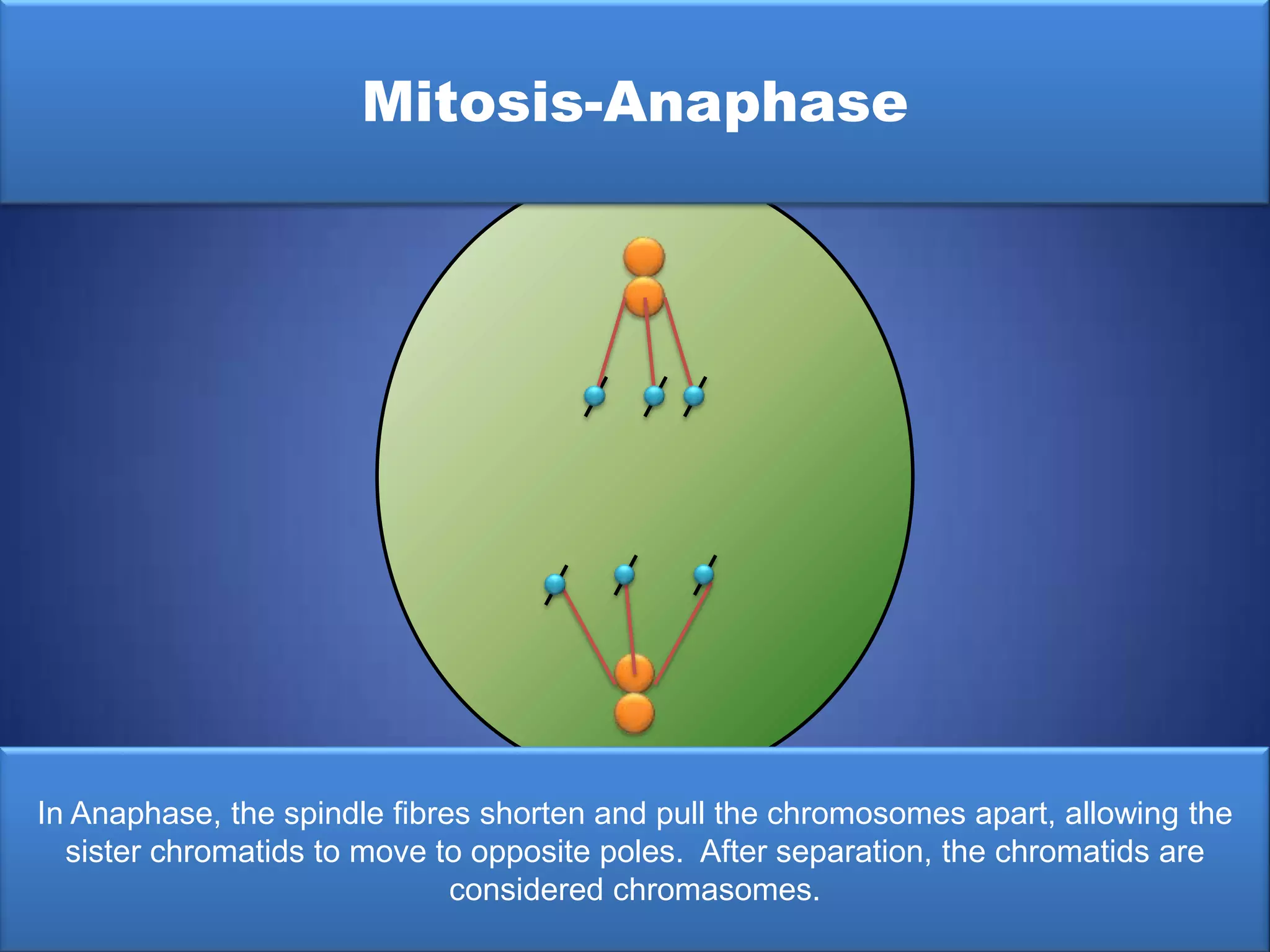
Mitosis-AnaphaseIn Anaphase, the spindle fibres shorten and pull the chromosomes apart, allowing the sister chromatids to move to opposite poles.  After separation, the chromatids are considered chromasomes.
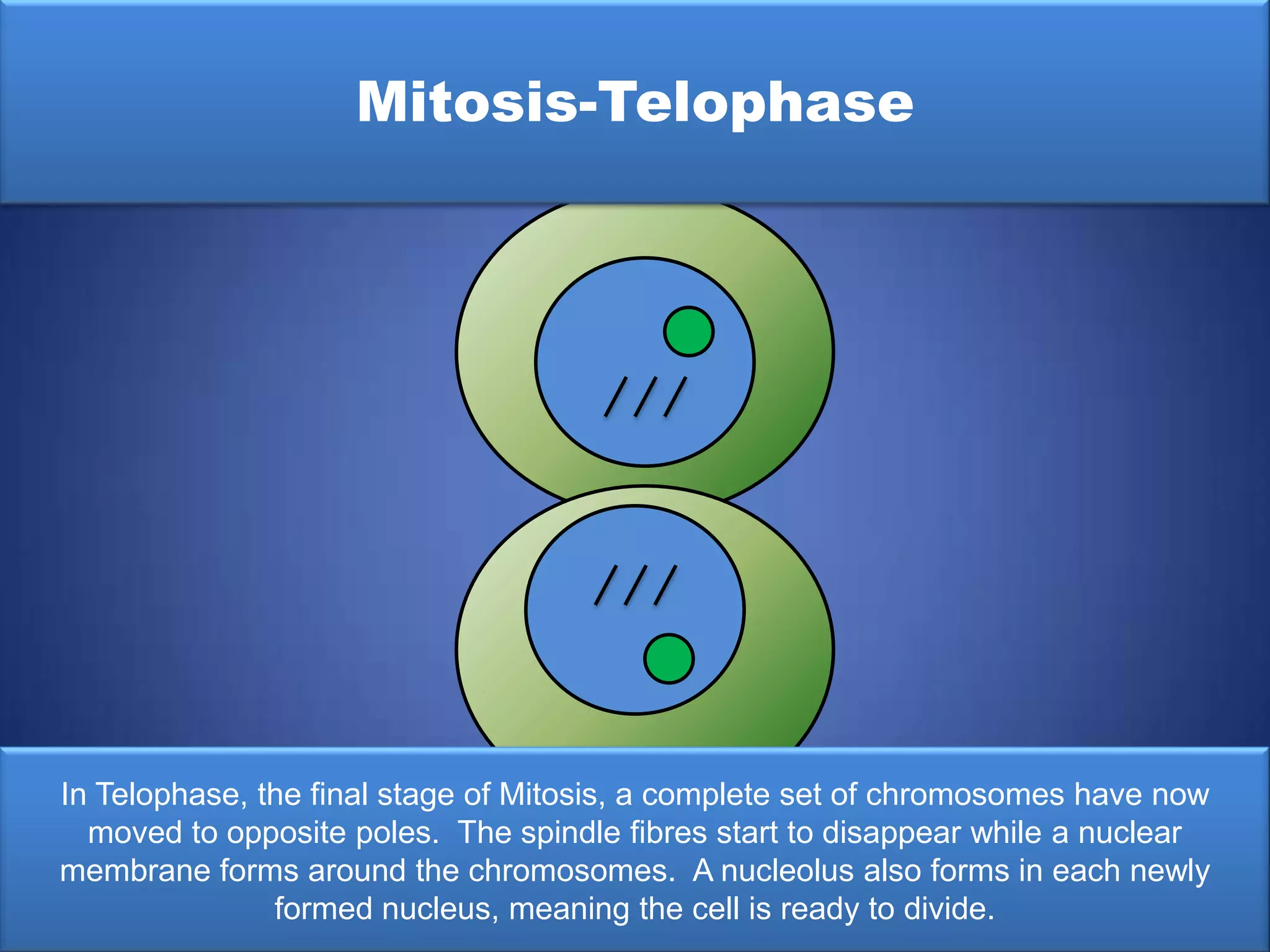
Mitosis-TelophaseIn Telophase, the final stage of Mitosis, a complete set of chromosomes have now moved to opposite poles.  The spindle fibres start to disappear while a nuclear membrane forms around the chromosomes.  A nucleolus also forms in each newly formed nucleus, meaning the cell is ready to divide.
CytokinesisThe final stage of the cell cycle, Cytokinesis, is when the cell finally divides.  The nuclei separate into two daughter cells.  The new cells are identical to the parent cells.  In animals, the membrane pinches together to form these daughter cells, while in plants a plate forms to divide the cell.
Thank you for watching!

Cell Cycle Flipbook

  • 1.
    Cell Cycle FlipbookByTaylor Reeves-Grade 9 Science
  • 2.
    Interphase-Growth and PreparationDuringthis first stage of interphase, the cell’s size increases while it creates proteins and nutrients essential for survival.
  • 4.
    Interphase-ReplicationDuring the replicationstage, the DNA makes a replica (copy) of itself. During this process the cell has two complete sets of DNA. The DNA is located in chromatin, which is contained in the nucleus.
  • 6.
    Interphase-Continued Growth &Preparation After the DNA replication, the cell keeps growing and making materials, such as protein, for the ‘daughter’ cells that will be formed after cytokinesis.
  • 10.
    Mitosis-Early ProphaseDuring earlyProphase, the chromosomes that were replicated during the ‘Replication’ stage coil up into an ‘X’ shape and become visible under a microscope. The nucleolus disappears and the nuclear membrane starts to break down. Spindle fibres, tiny tube-like structures, begin to appear as well as centrioles, organelles that organize the fibres.
  • 16.
    Mitosis-Late ProphaseIn lateProphase, the spindle fibres finish forming and attach their centromeres to the chromosomes. The nuclear membrane disappears.
  • 18.
    Mitosis-MetaphaseIn Metaphase, thespindle fibres pull the chromosomes into the middle of the cell.
  • 21.
    Mitosis-AnaphaseIn Anaphase, thespindle fibres shorten and pull the chromosomes apart, allowing the sister chromatids to move to opposite poles. After separation, the chromatids are considered chromasomes.
  • 30.
    Mitosis-TelophaseIn Telophase, thefinal stage of Mitosis, a complete set of chromosomes have now moved to opposite poles. The spindle fibres start to disappear while a nuclear membrane forms around the chromosomes. A nucleolus also forms in each newly formed nucleus, meaning the cell is ready to divide.
  • 32.
    CytokinesisThe final stageof the cell cycle, Cytokinesis, is when the cell finally divides. The nuclei separate into two daughter cells. The new cells are identical to the parent cells. In animals, the membrane pinches together to form these daughter cells, while in plants a plate forms to divide the cell.
  • 35.
    Thank you forwatching!