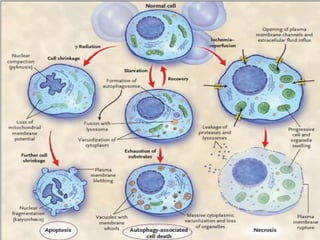
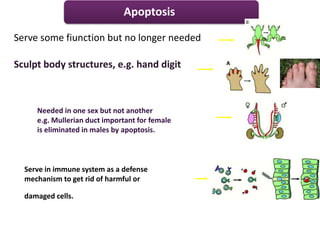
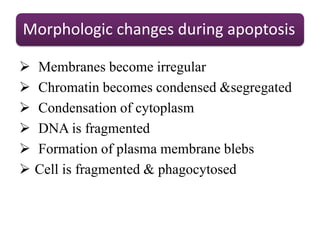
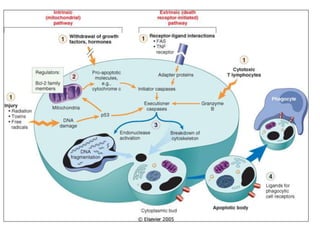
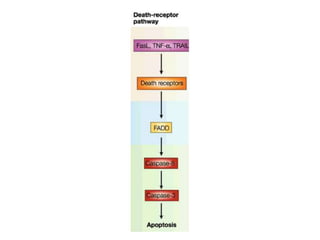
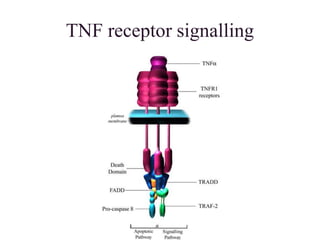
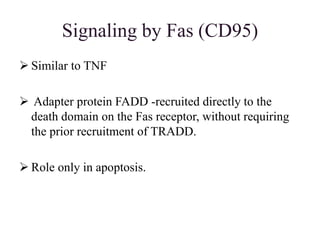
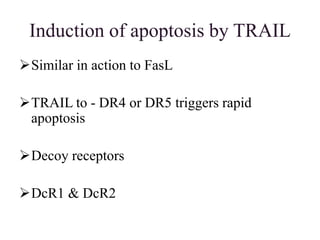
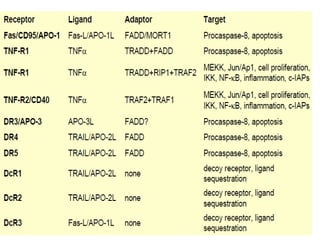
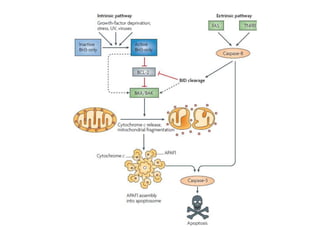
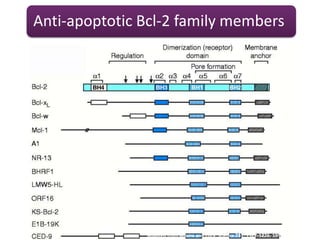
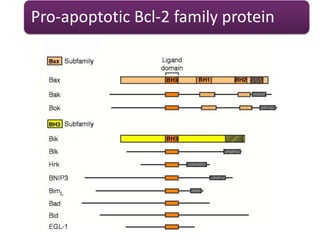
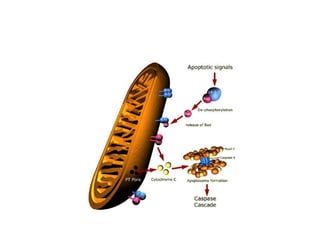
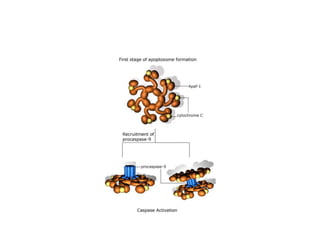
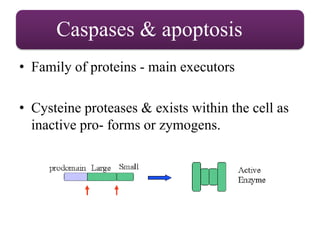
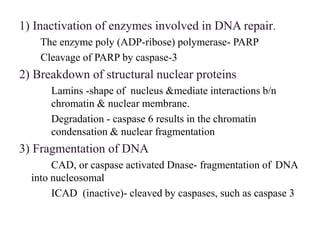
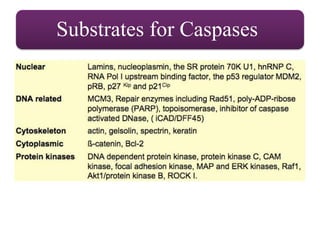
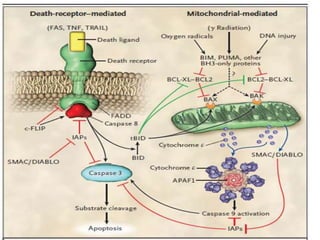
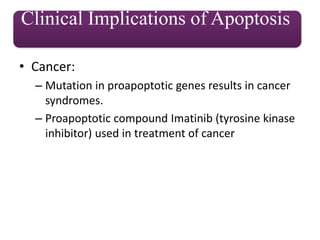
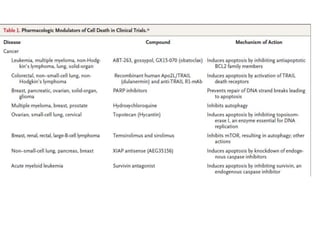
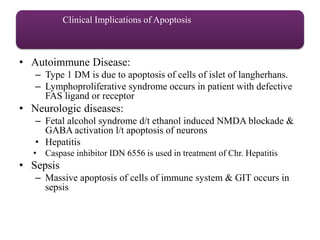
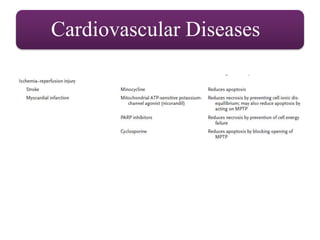
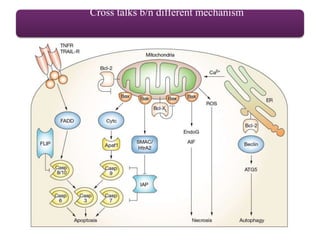
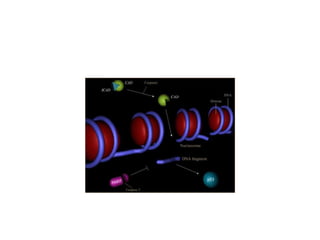
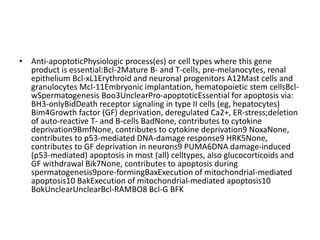
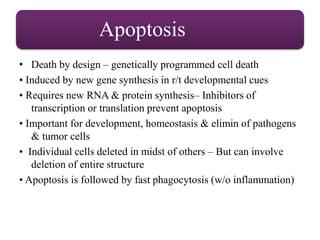
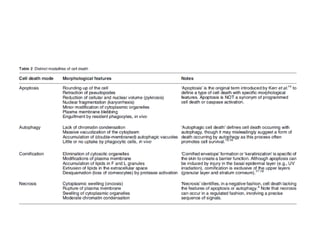
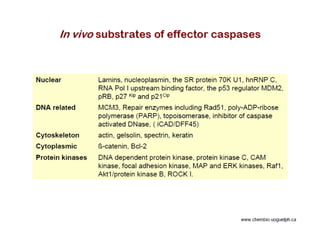
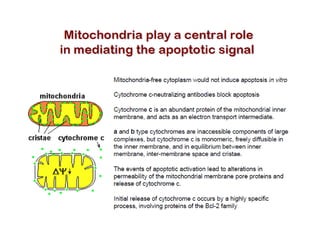
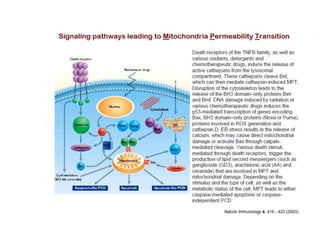
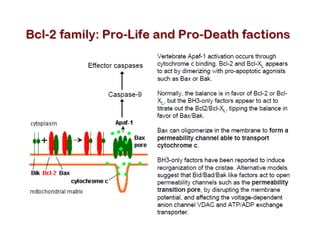
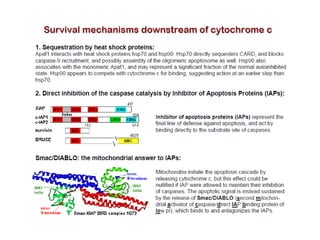
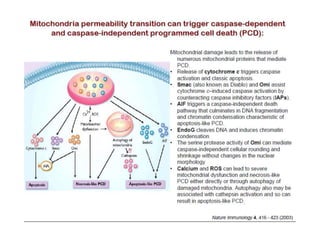
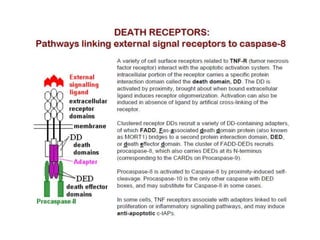
Apoptosis is a genetically programmed form of cell death that is essential for sculpting body structures during development, removing excess or harmful cells, and serving immune system functions. Key morphological changes during apoptosis include membrane blebbing, chromatin condensation, cytoplasmic condensation, DNA fragmentation, and the cell being phagocytosed. Signaling pathways such as TNF, Fas, and TRAIL induce apoptosis through caspase activation and regulation by pro-apoptotic and anti-apoptotic Bcl-2 family members. Apoptosis is important in many clinical contexts like cancer, autoimmune disease, and neurodegeneration.