Apoptosis:
Programmed Cell Death
Mahmood Khaleel Mahmood
Postgraduate Student– Soran University
Biology Dept. – Medical Physiology
24 November 2018 Saturday
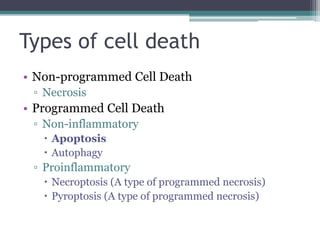
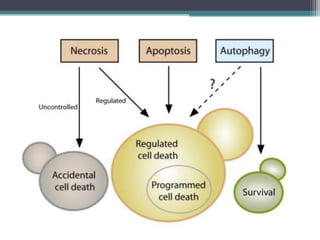
Types of cell death
• Non-programmed Cell Death
▫ Necrosis
• Programmed Cell Death
▫ Non-inflammatory
 Apoptosis
 Autophagy
▫ Proinflammatory
 Necroptosis (A type of programmed necrosis)
 Pyroptosis (A type of programmed necrosis)
Autophagy
• The word autophagy is derived from Greek words
“auto” meaning self and “phagy” meaning eating
• consumption of the body’s own tissue as a
metabolic process occurring in starvation and
certain diseases.
Necrosis
• Necrosis has been defined as a type of uncontrolled
cell death that can occur in response to infection,
toxins, chemicals, injury, or lack of blood supply.
• Morphologically, necrosis is associated with
cytoplasmic swelling (oncosis), rupture of the
plasma membrane, swelling of cytoplasmic
organelles, and moderate chromatin condensation.
Apoptosis
Individual cells are induced to
commit suicide
• Apoptosis refers to active, programmed cell
death.
Characteristics of Apoptosis
• Cell membrane blebbing
• Cell shrinkage
• Chromatin condensation
• Chromosomal DNA fragmentation.
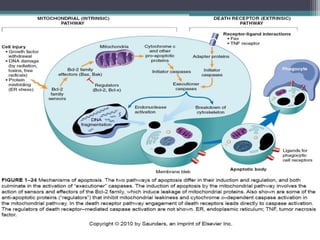
There are two basic apoptotic pathways
▫ Extrinsic pathways
▫ Intrinsic pathways
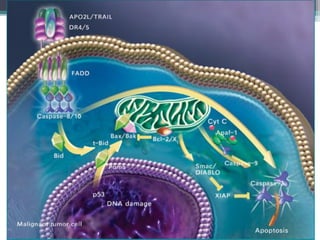
Extrinsic (membrane receptor) Pathway
• Initiated by the binding of death ligands (FasL,
TNFs(TRAIL, and TNF-α).
• Followed by death-inducing signaling complex (DISC)
which consist of Fas-associated death domain
(FADD) and procaspases-8/10.
• DISC activates downstream effector caspases (3, 6,
and 7)
• Directly induce cell death Or cleaves the Bcl-2 family
member Bid into tBid to activate intrinsic pathway.
Video URL: https://youtu.be/-vmtK-bAC5E?t=67 From 01:07 to 02:04
Intrinsic (mitochondrial) pathway
• Apoptosis can be activated by stimuli coming
within the cell, including cell stressors, such as
hypoxia or lack of nutrients, and agents that
cause damage of DNA or other cell structures
• Maintained between two group of proteins
(Anti-apoptotic proteins such as Bcl-2 and Bcl-x)
other one is (Pro-apoptotic proteins such as BAK
and BAX)
Video URL: https://youtu.be/-vmtK-bAC5E?t=130 From 02:10 to 03:18
Apoptosis has two biological processes
▫ Physiological process
▫ Pathological process
Physiological Apoptosis
• Embryology- fingers and toes
• Neutrophils (PMNs) disappear in acute
inflammation
• Cytotoxic T cells eliminate virus-infected cells
Pathological Apoptosis
• Radiation and anticancer drugs damage DNA
and apoptosis follows ( p53 expression)
• Hypoxia- apoptosis (if mild) or necrosis if the
hypoxia is severe or prolonged
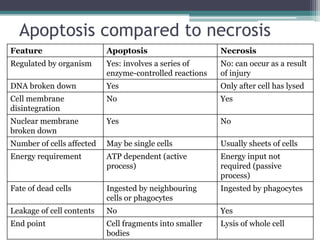
Apoptosis compared to necrosis
Feature Apoptosis Necrosis
Regulated by organism Yes: involves a series of
enzyme-controlled reactions
No: can occur as a result
of injury
DNA broken down Yes Only after cell has lysed
Cell membrane
disintegration
No Yes
Nuclear membrane
broken down
Yes No
Number of cells affected May be single cells Usually sheets of cells
Energy requirement ATP dependent (active
process)
Energy input not
required (passive
process)
Fate of dead cells Ingested by neighbouring
cells or phagocytes
Ingested by phagocytes
Leakage of cell contents No Yes
End point Cell fragments into smaller
bodies
Lysis of whole cell
Why do multicellular organisms need to
regulate the death of their cells?
 To allow body structures to grow and develop
correctly.
 To remove body structures that are no longer
required.
 To regulate the sizes of cell populations in adult
bodies cell proliferation must be balanced with cell
death.
 This allows organisms to precisely control the
sizes of their tissues and organs.
Thank you for attention!
mahmoud_pirani@yahoo.com
+964 (0) 750 412 8959
Any questions?
Contact information!
Mahmood Kh Pirani (M.Sc Student)

Apoptosis: Programmed Cell Death

  • 1.
    Apoptosis: Programmed Cell Death MahmoodKhaleel Mahmood Postgraduate Student– Soran University Biology Dept. – Medical Physiology 24 November 2018 Saturday
  • 2.
    Types of celldeath • Non-programmed Cell Death ▫ Necrosis • Programmed Cell Death ▫ Non-inflammatory  Apoptosis  Autophagy ▫ Proinflammatory  Necroptosis (A type of programmed necrosis)  Pyroptosis (A type of programmed necrosis)
  • 4.
    Autophagy • The wordautophagy is derived from Greek words “auto” meaning self and “phagy” meaning eating • consumption of the body’s own tissue as a metabolic process occurring in starvation and certain diseases.
  • 5.
    Necrosis • Necrosis hasbeen defined as a type of uncontrolled cell death that can occur in response to infection, toxins, chemicals, injury, or lack of blood supply. • Morphologically, necrosis is associated with cytoplasmic swelling (oncosis), rupture of the plasma membrane, swelling of cytoplasmic organelles, and moderate chromatin condensation.
  • 6.
    Apoptosis Individual cells areinduced to commit suicide • Apoptosis refers to active, programmed cell death.
  • 7.
    Characteristics of Apoptosis •Cell membrane blebbing • Cell shrinkage • Chromatin condensation • Chromosomal DNA fragmentation.
  • 8.
    There are twobasic apoptotic pathways ▫ Extrinsic pathways ▫ Intrinsic pathways
  • 10.
    Extrinsic (membrane receptor)Pathway • Initiated by the binding of death ligands (FasL, TNFs(TRAIL, and TNF-α). • Followed by death-inducing signaling complex (DISC) which consist of Fas-associated death domain (FADD) and procaspases-8/10. • DISC activates downstream effector caspases (3, 6, and 7) • Directly induce cell death Or cleaves the Bcl-2 family member Bid into tBid to activate intrinsic pathway.
  • 12.
  • 13.
    Intrinsic (mitochondrial) pathway •Apoptosis can be activated by stimuli coming within the cell, including cell stressors, such as hypoxia or lack of nutrients, and agents that cause damage of DNA or other cell structures • Maintained between two group of proteins (Anti-apoptotic proteins such as Bcl-2 and Bcl-x) other one is (Pro-apoptotic proteins such as BAK and BAX)
  • 15.
  • 16.
    Apoptosis has twobiological processes ▫ Physiological process ▫ Pathological process
  • 17.
    Physiological Apoptosis • Embryology-fingers and toes • Neutrophils (PMNs) disappear in acute inflammation • Cytotoxic T cells eliminate virus-infected cells
  • 20.
    Pathological Apoptosis • Radiationand anticancer drugs damage DNA and apoptosis follows ( p53 expression) • Hypoxia- apoptosis (if mild) or necrosis if the hypoxia is severe or prolonged
  • 21.
    Apoptosis compared tonecrosis Feature Apoptosis Necrosis Regulated by organism Yes: involves a series of enzyme-controlled reactions No: can occur as a result of injury DNA broken down Yes Only after cell has lysed Cell membrane disintegration No Yes Nuclear membrane broken down Yes No Number of cells affected May be single cells Usually sheets of cells Energy requirement ATP dependent (active process) Energy input not required (passive process) Fate of dead cells Ingested by neighbouring cells or phagocytes Ingested by phagocytes Leakage of cell contents No Yes End point Cell fragments into smaller bodies Lysis of whole cell
  • 22.
    Why do multicellularorganisms need to regulate the death of their cells?  To allow body structures to grow and develop correctly.  To remove body structures that are no longer required.  To regulate the sizes of cell populations in adult bodies cell proliferation must be balanced with cell death.  This allows organisms to precisely control the sizes of their tissues and organs.
  • 23.
    Thank you forattention! mahmoud_pirani@yahoo.com +964 (0) 750 412 8959 Any questions? Contact information! Mahmood Kh Pirani (M.Sc Student)