

TODAY’S AGENDA
SUB NETTING





WAQAS YOUSAF
ZAEEM HASSAN
WAQAS AKRAM
IRFAN MUNAIR

10-TE-12
10-TE-98
10-TE-64
10-TE-22


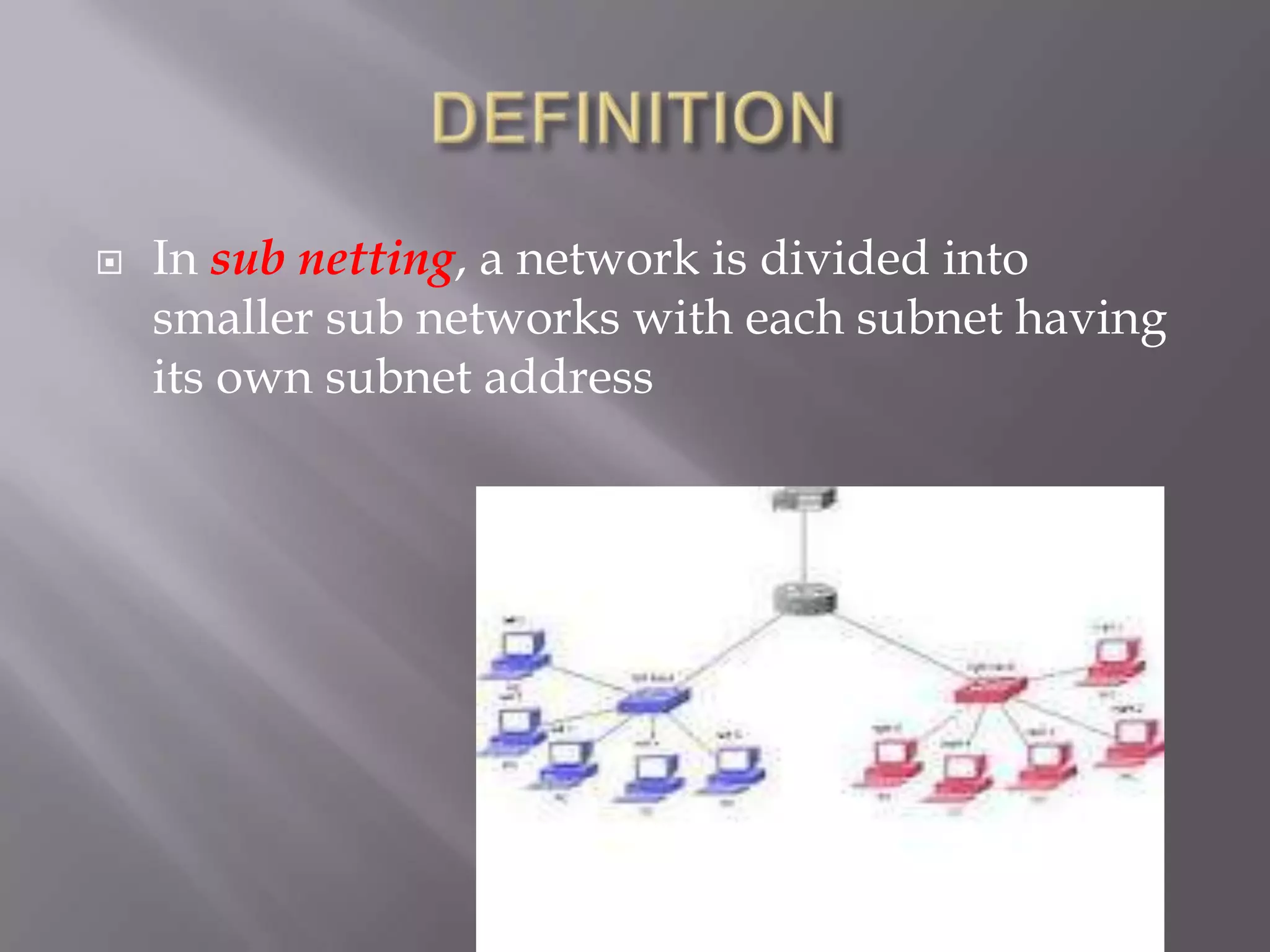
In sub netting, a network is divided into
smaller sub networks with each subnet having
its own subnet address


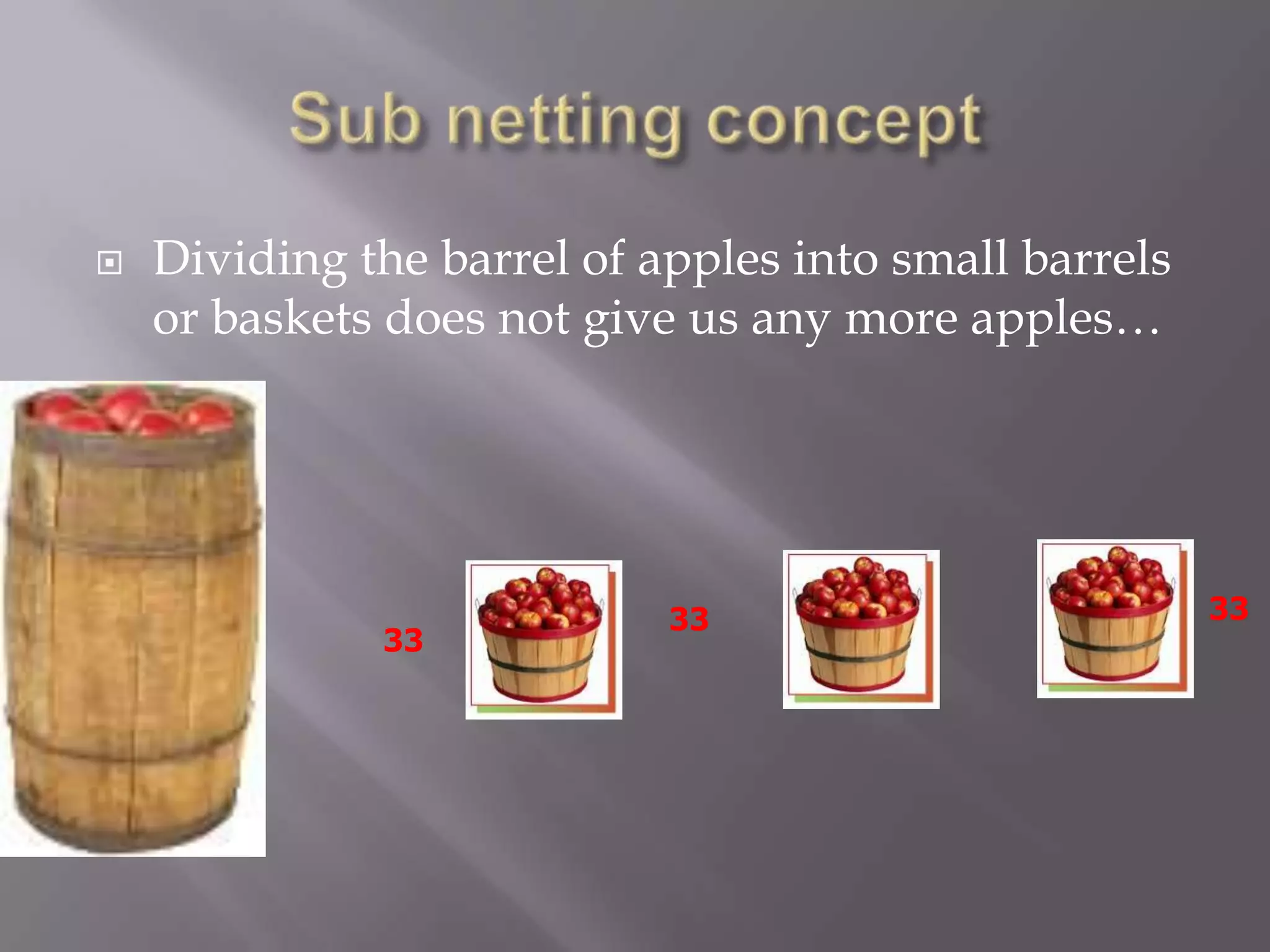
Dividing the barrel of apples into small barrels
or baskets does not give us any more apples…

33

33

33
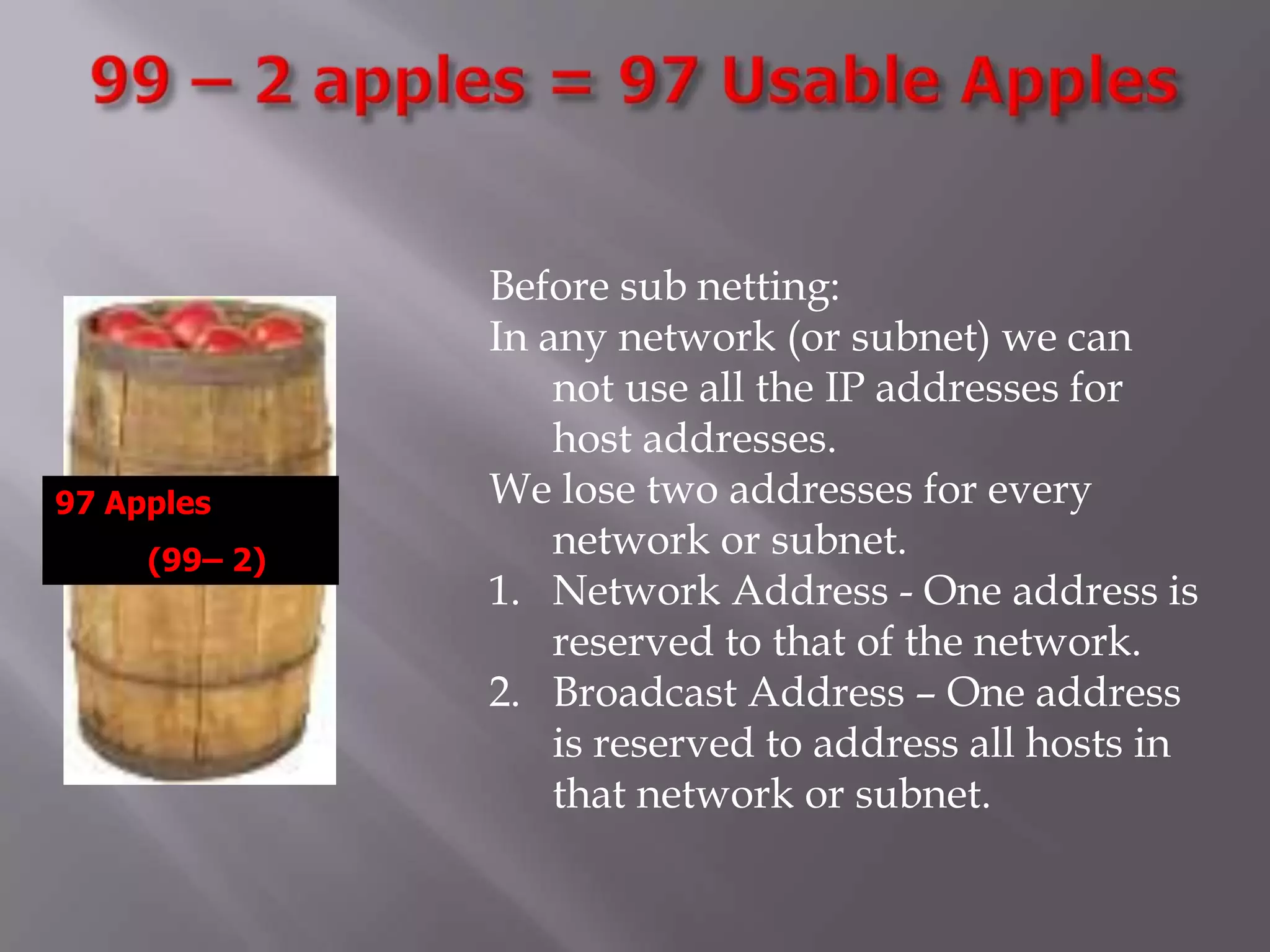
97 Apples

(99– 2)

Before sub netting:
In any network (or subnet) we can
not use all the IP addresses for
host addresses.
We lose two addresses for every
network or subnet.
1. Network Address - One address is
reserved to that of the network.
2. Broadcast Address – One address
is reserved to address all hosts in
that network or subnet.
Two parts of IP address
1. Net ID
2. Host ID
 To reach a host, we must first reach the
network using net id, then using host id to
reach the host.



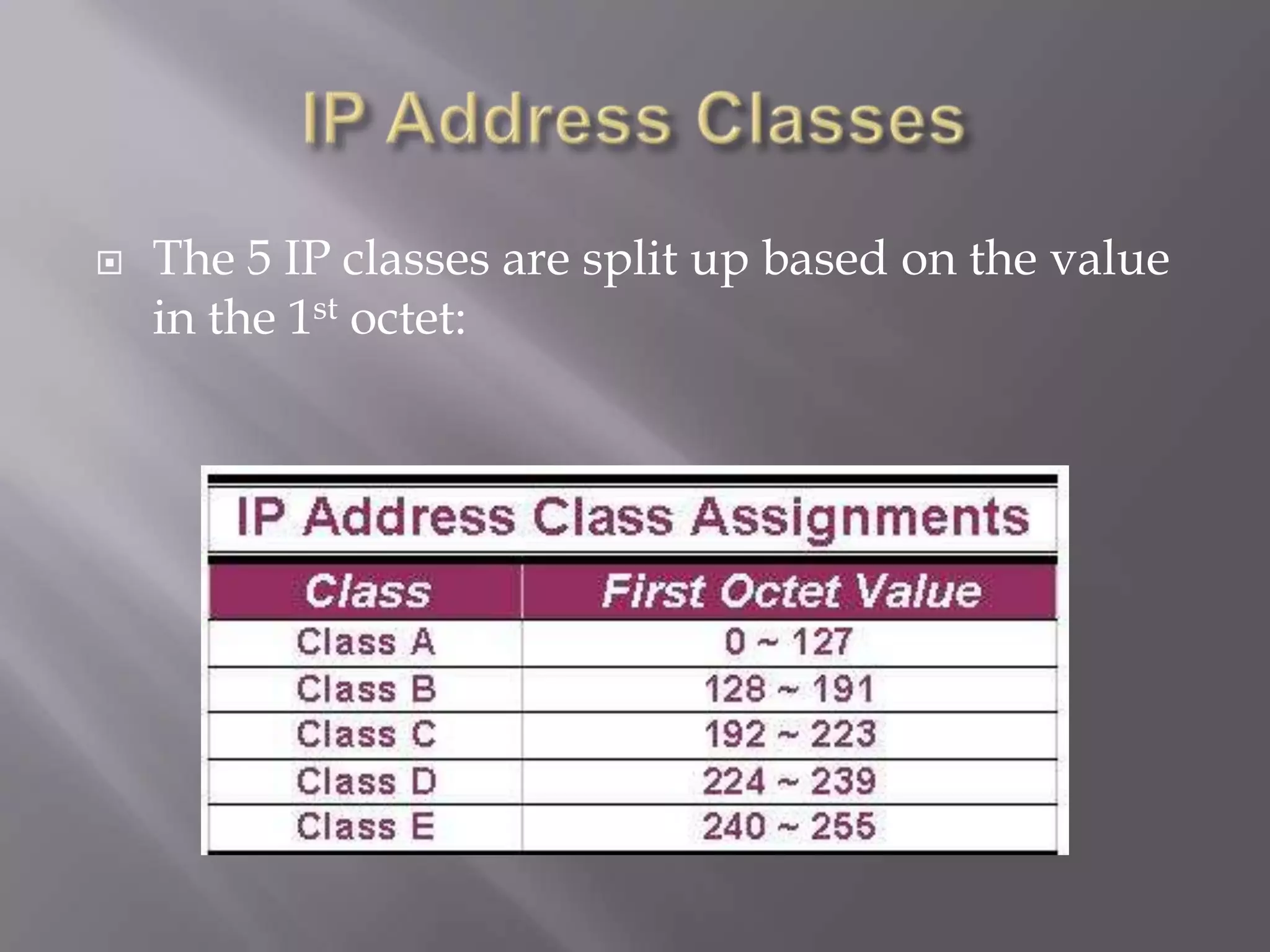
The 5 IP classes are split up based on the value
in the 1st octet:
Sometimes two level hierarchy is not enough.
For example:
An organization with a class B address. The
organization has two levels hierarchical
addressing, but it cannot have more than one
physical network.


•
•

The host cannot be grouped, and all of the
host has the same level
Solution  sub netting
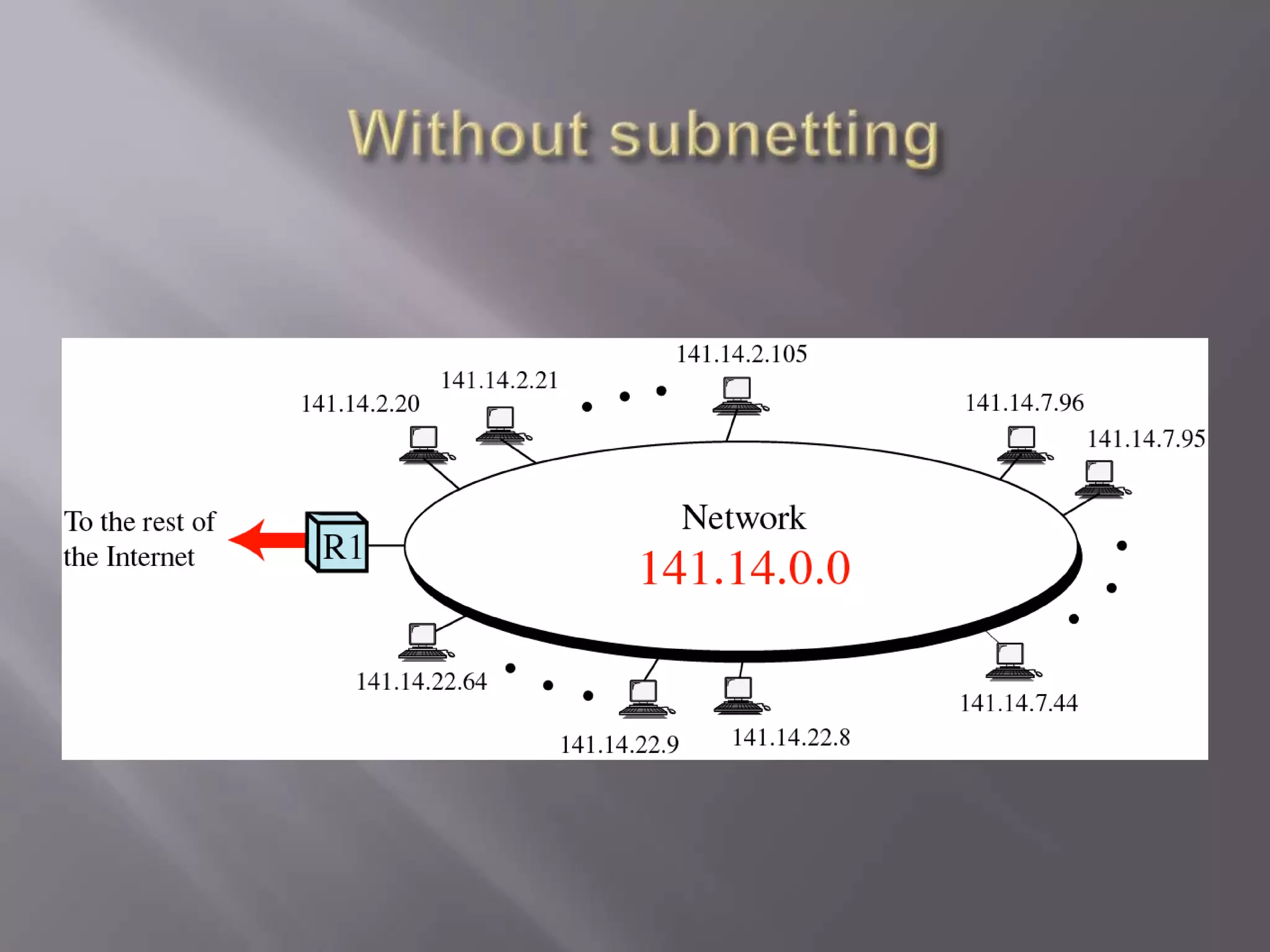
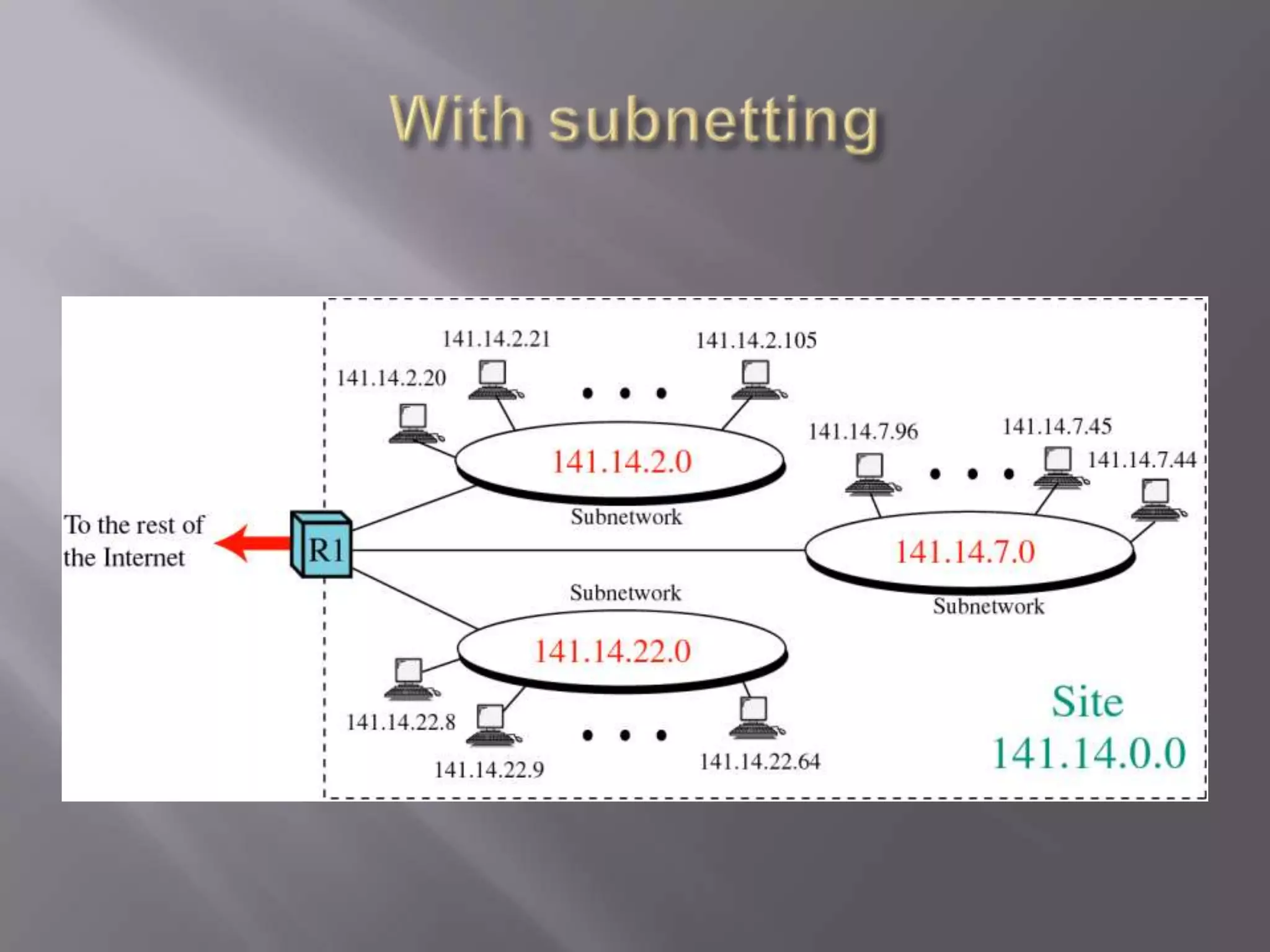
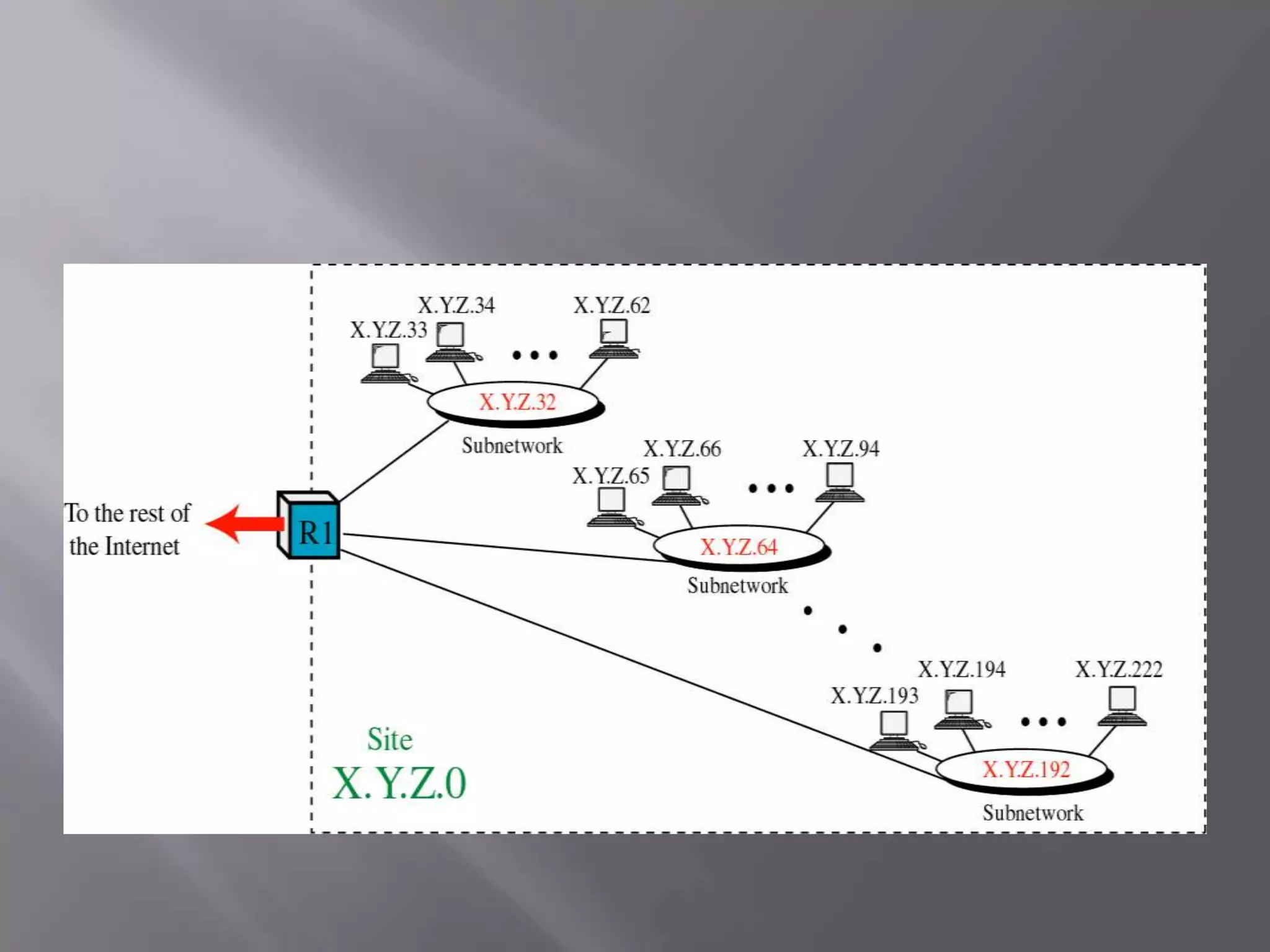
• In the above example,

 The rest of the internet is not aware that the network
is divided into three physical subnet.
 A packet destined for host 141.14.2.21 still reaches
router R1. The destination address of the IP datagram
is still a class B where
• 141.14 defines the net id
• And 2.21 defines the host

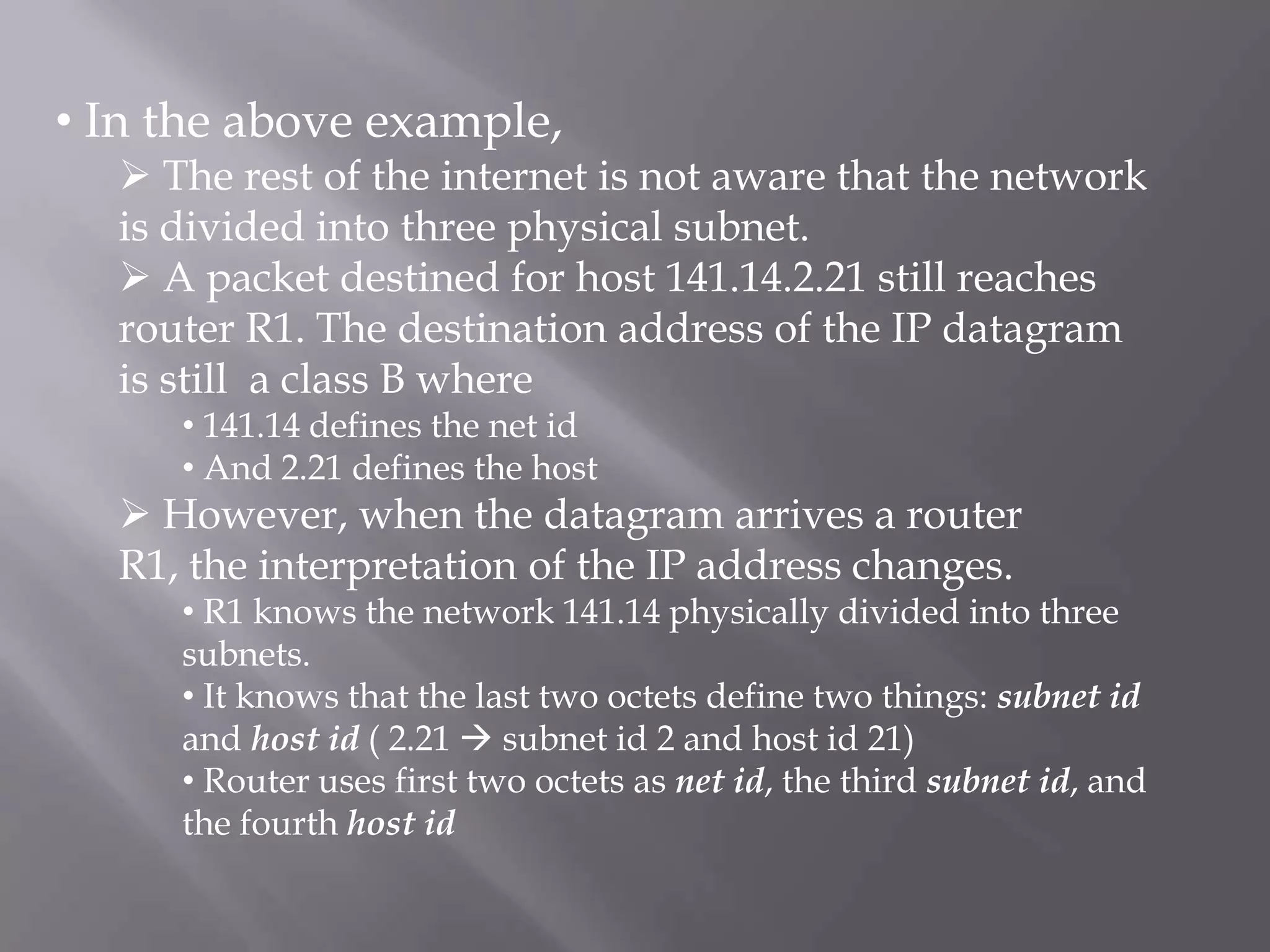
 However, when the datagram arrives a router
R1, the interpretation of the IP address changes.

• R1 knows the network 141.14 physically divided into three
subnets.
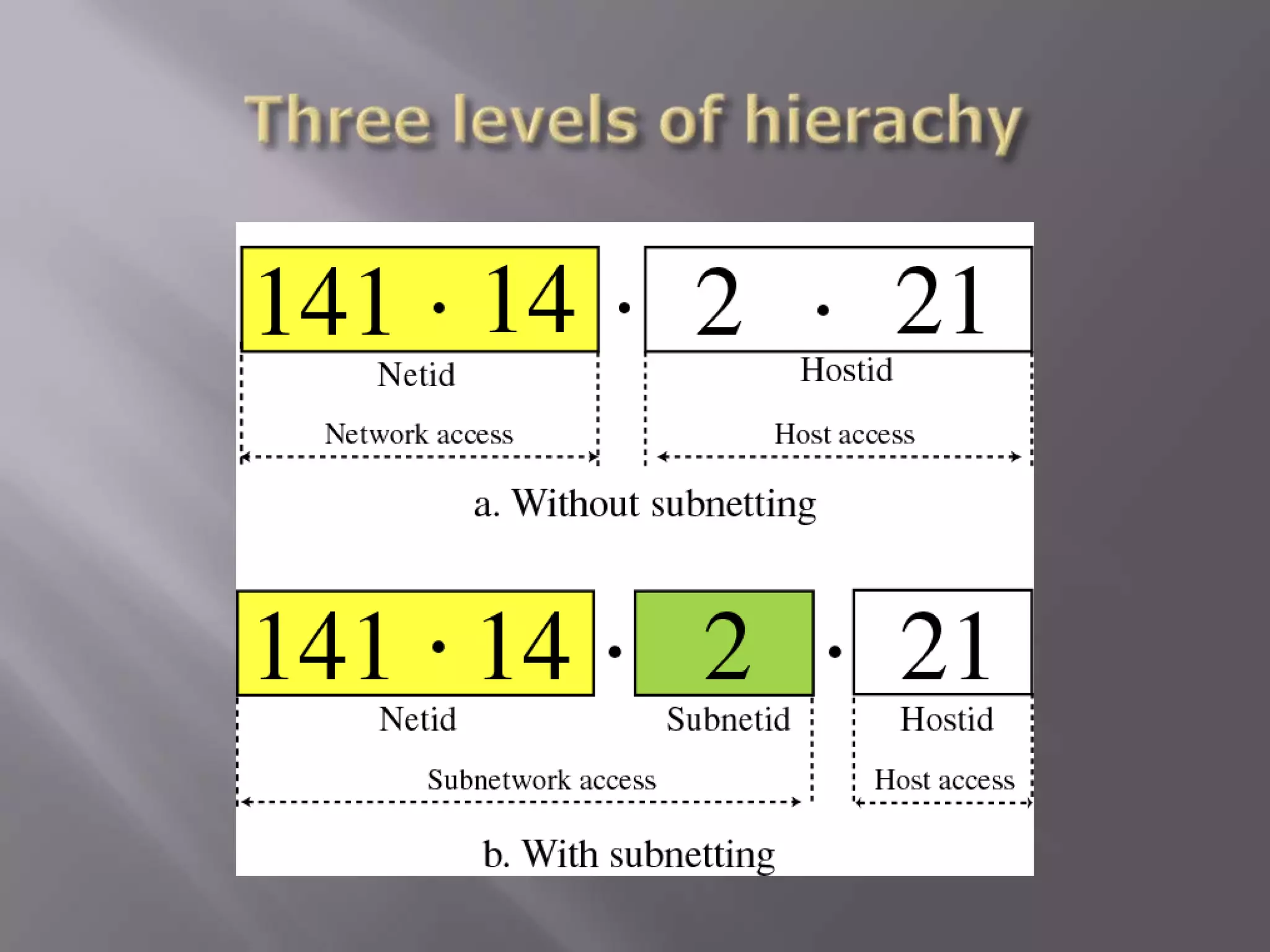
• It knows that the last two octets define two things: subnet id
and host id ( 2.21  subnet id 2 and host id 21)
• Router uses first two octets as net id, the third subnet id, and
the fourth host id


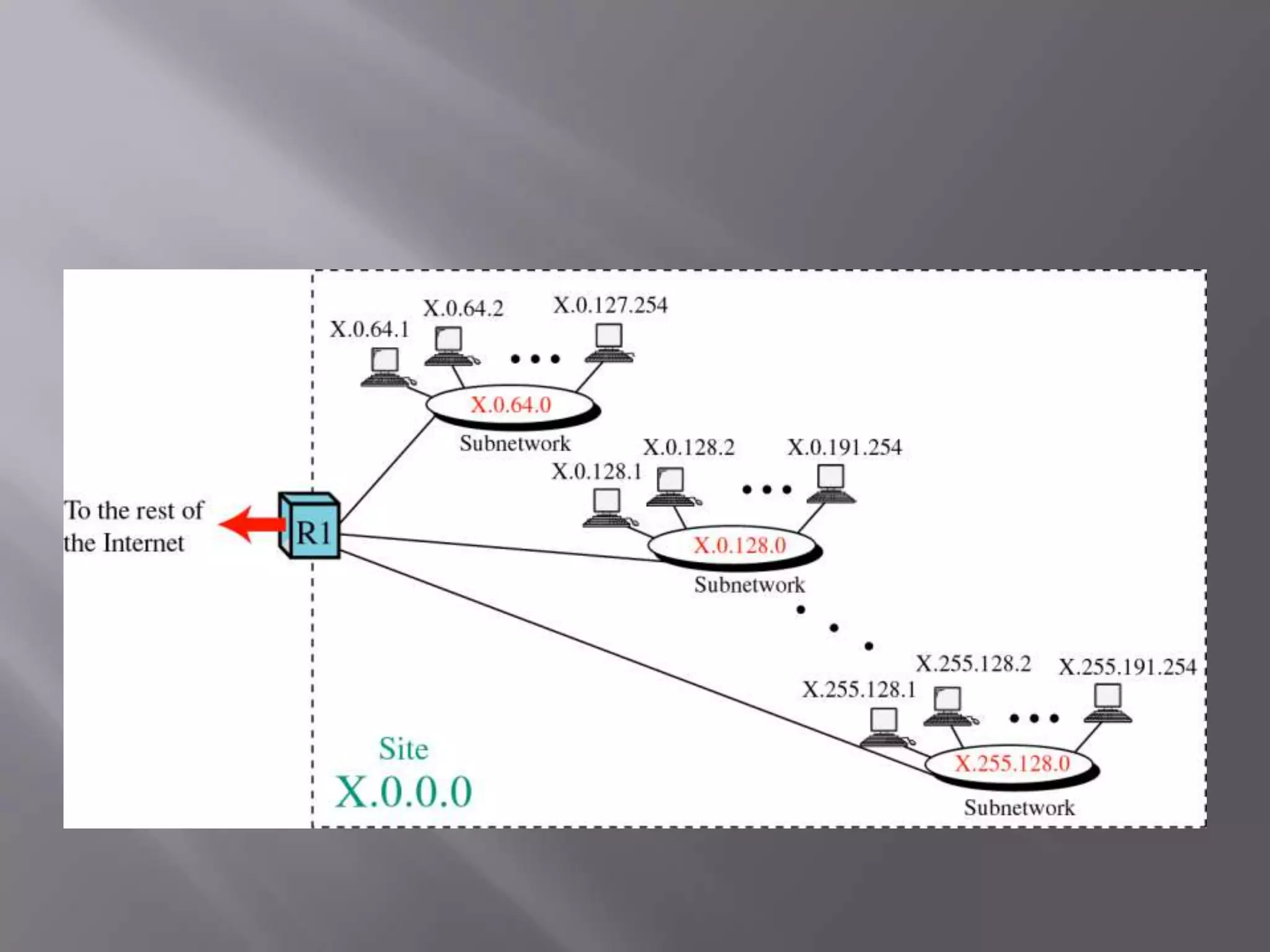
A class A address:




Is made of a one-byte net id and a three-byte host id
Can have one single physical network with up to
16,777,214 (224-2) users.
If we want more physical networks, we can divide
this one range into several smaller ranges


A class B:




Is made A two byte net id and two-byte host id
Can have one single physical network and up to
(216-2)=65,534 hosts on the network.
If we want more physical network, we can divide
this one big range into several smaller ranges.


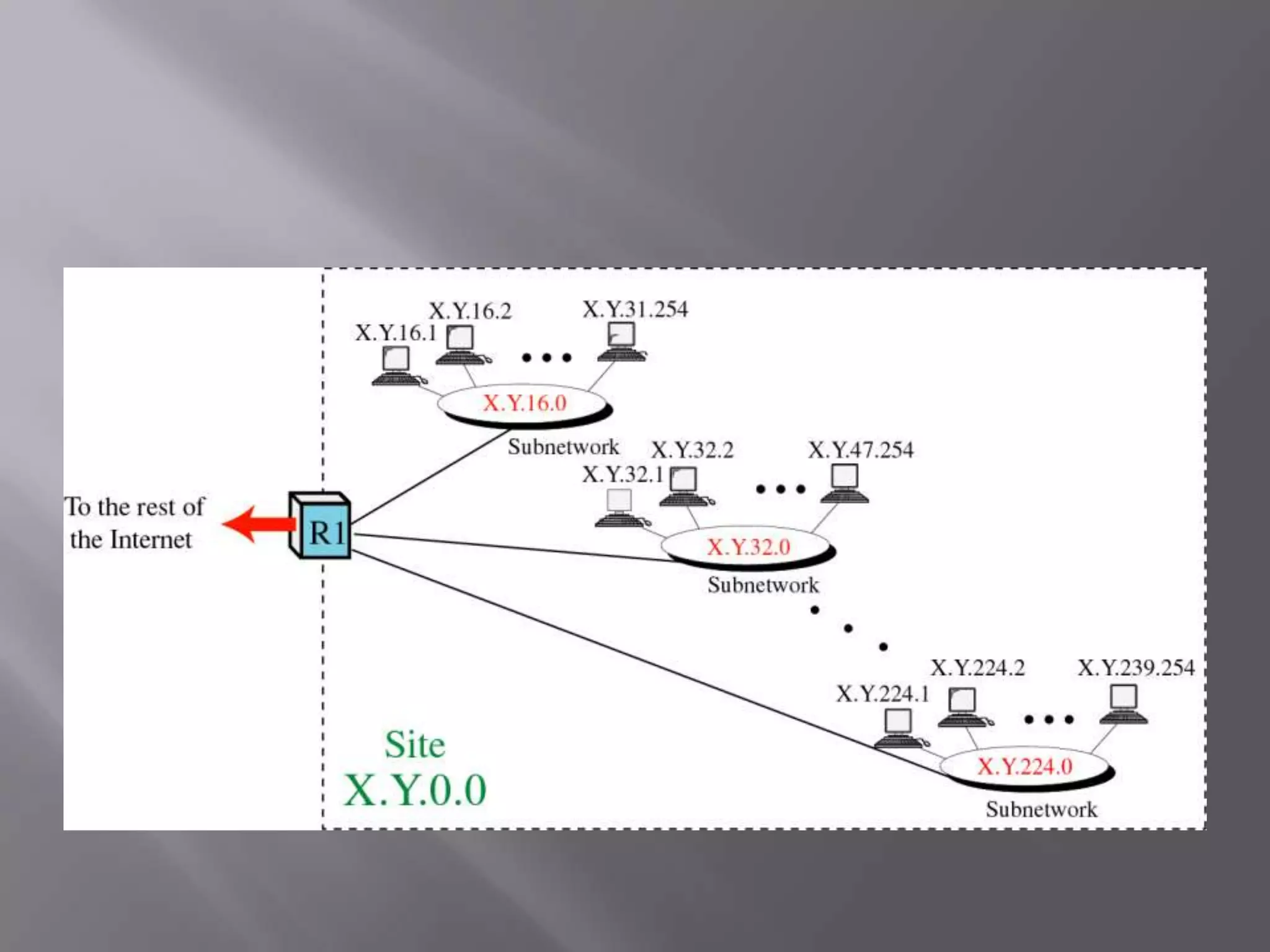
A class C address:




is made of a three byte net id and one-byte host id
Can have one single physical network and up to 254
(28 – 2) host on that network
If we want more physical network, we can divide
this one range into several smaller range.



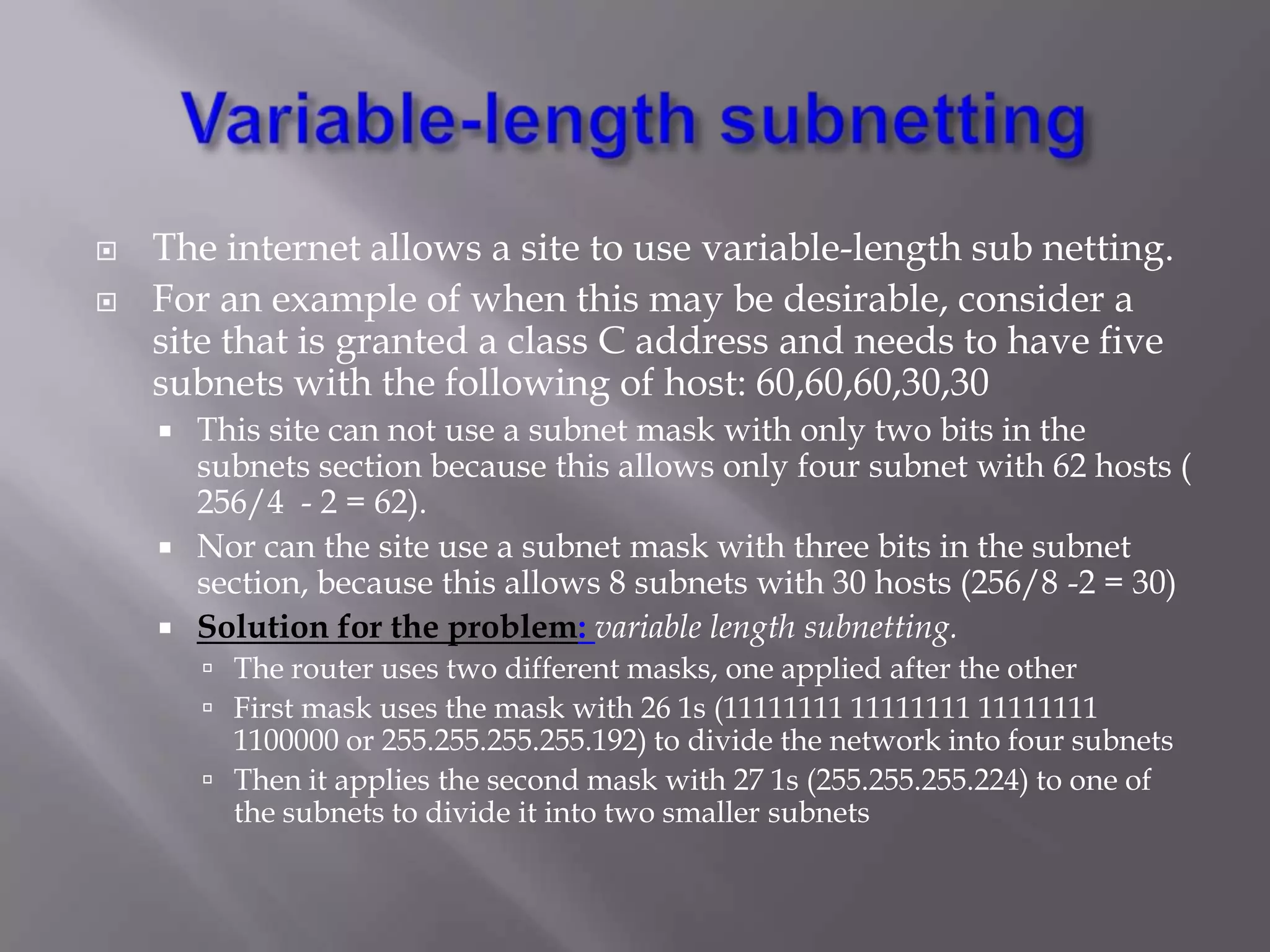
The internet allows a site to use variable-length sub netting.
For an example of when this may be desirable, consider a
site that is granted a class C address and needs to have five
subnets with the following of host: 60,60,60,30,30
This site can not use a subnet mask with only two bits in the
subnets section because this allows only four subnet with 62 hosts (
256/4 - 2 = 62).
 Nor can the site use a subnet mask with three bits in the subnet
section, because this allows 8 subnets with 30 hosts (256/8 -2 = 30)
 Solution for the problem: variable length subnetting.


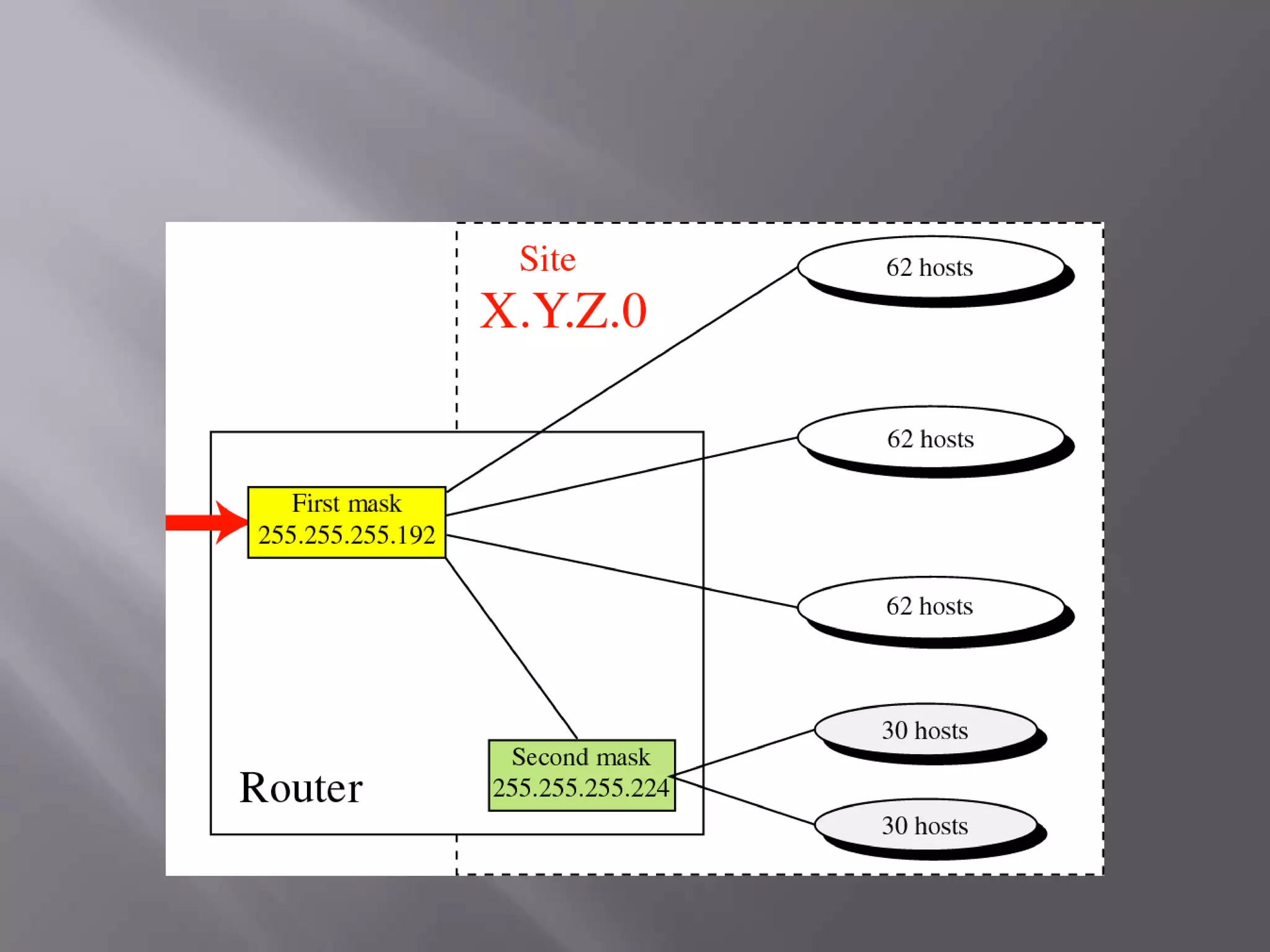
 The router uses two different masks, one applied after the other
 First mask uses the mask with 26 1s (11111111 11111111 11111111

1100000 or 255.255.255.255.192) to divide the network into four subnets
 Then it applies the second mask with 27 1s (255.255.255.224) to one of
the subnets to divide it into two smaller subnets


An IP address has 2 parts:







The Network identification.
The Host identification.

Frequently, the Network & Host portions of the
address need to be separately extracted.
In most cases, if you know the address class,
it’s easy to separate the 2 portions.


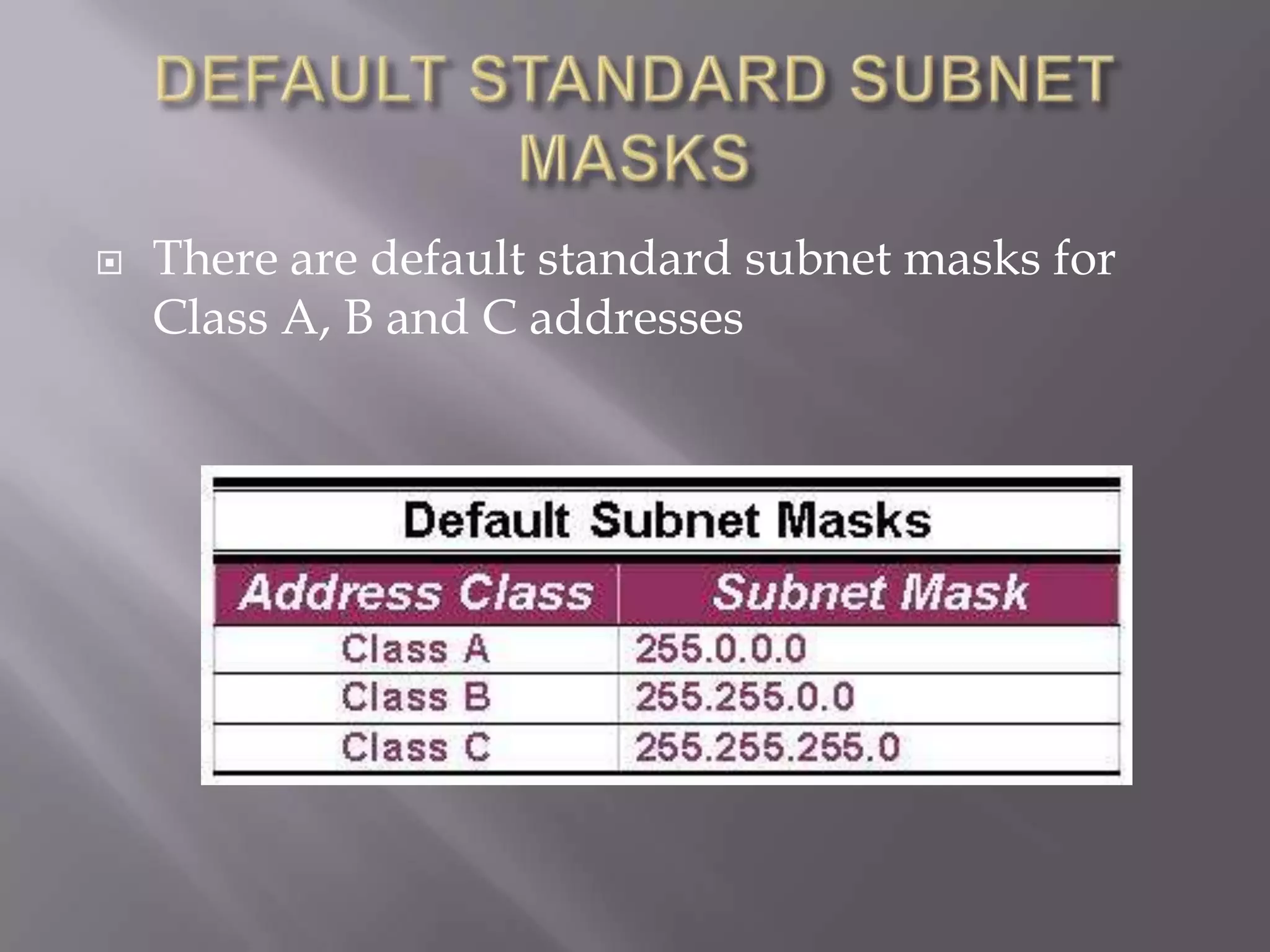
There are default standard subnet masks for
Class A, B and C addresses
Ccna ppt

Ccna ppt

  • 1.
  • 2.
        WAQAS YOUSAF ZAEEM HASSAN WAQASAKRAM IRFAN MUNAIR 10-TE-12 10-TE-98 10-TE-64 10-TE-22
  • 3.
     In sub netting,a network is divided into smaller sub networks with each subnet having its own subnet address
  • 4.
     Dividing the barrelof apples into small barrels or baskets does not give us any more apples… 33 33 33
  • 5.
    97 Apples (99– 2) Beforesub netting: In any network (or subnet) we can not use all the IP addresses for host addresses. We lose two addresses for every network or subnet. 1. Network Address - One address is reserved to that of the network. 2. Broadcast Address – One address is reserved to address all hosts in that network or subnet.
  • 6.
    Two parts ofIP address 1. Net ID 2. Host ID  To reach a host, we must first reach the network using net id, then using host id to reach the host. 
  • 7.
     The 5 IPclasses are split up based on the value in the 1st octet:
  • 8.
    Sometimes two levelhierarchy is not enough. For example: An organization with a class B address. The organization has two levels hierarchical addressing, but it cannot have more than one physical network.  • • The host cannot be grouped, and all of the host has the same level Solution  sub netting
  • 11.
    • In theabove example,  The rest of the internet is not aware that the network is divided into three physical subnet.  A packet destined for host 141.14.2.21 still reaches router R1. The destination address of the IP datagram is still a class B where • 141.14 defines the net id • And 2.21 defines the host  However, when the datagram arrives a router R1, the interpretation of the IP address changes. • R1 knows the network 141.14 physically divided into three subnets. • It knows that the last two octets define two things: subnet id and host id ( 2.21  subnet id 2 and host id 21) • Router uses first two octets as net id, the third subnet id, and the fourth host id
  • 13.
     A class Aaddress:    Is made of a one-byte net id and a three-byte host id Can have one single physical network with up to 16,777,214 (224-2) users. If we want more physical networks, we can divide this one range into several smaller ranges
  • 15.
     A class B:    Ismade A two byte net id and two-byte host id Can have one single physical network and up to (216-2)=65,534 hosts on the network. If we want more physical network, we can divide this one big range into several smaller ranges.
  • 17.
     A class Caddress:    is made of a three byte net id and one-byte host id Can have one single physical network and up to 254 (28 – 2) host on that network If we want more physical network, we can divide this one range into several smaller range.
  • 19.
      The internet allowsa site to use variable-length sub netting. For an example of when this may be desirable, consider a site that is granted a class C address and needs to have five subnets with the following of host: 60,60,60,30,30 This site can not use a subnet mask with only two bits in the subnets section because this allows only four subnet with 62 hosts ( 256/4 - 2 = 62).  Nor can the site use a subnet mask with three bits in the subnet section, because this allows 8 subnets with 30 hosts (256/8 -2 = 30)  Solution for the problem: variable length subnetting.   The router uses two different masks, one applied after the other  First mask uses the mask with 26 1s (11111111 11111111 11111111 1100000 or 255.255.255.255.192) to divide the network into four subnets  Then it applies the second mask with 27 1s (255.255.255.224) to one of the subnets to divide it into two smaller subnets
  • 21.
     An IP addresshas 2 parts:     The Network identification. The Host identification. Frequently, the Network & Host portions of the address need to be separately extracted. In most cases, if you know the address class, it’s easy to separate the 2 portions.
  • 22.
     There are defaultstandard subnet masks for Class A, B and C addresses