Ha
Ham
di
di tu
turkey - logis
ist
PULMONARY TUBERCULOSIS
Hamdi turkey -Pulmonologist
HI
AN
A
N
AN
A
N
STORY
OFOFT
OL
OLD
D
DISDISEE
O
L
O
L
D
D
DIDISESEA
B
AS
SE
E
SE
HISTORY OF TB
AN OLD DISEASE
AN OLD DISEASE
• May have evolved from M bovis; acquired
by humans from domesticated animals
~15,000 years ago
• Endemic in humans when stable networks
of 200-440 people established (villages) ~
10,000 years ago; Epidemic in Europe after
1600 (cities)
• 354-322 BC -Aristotle – “When one comes
near consumptives… one does contract their
disease… The reason is that the breath is
bad and heavy…In approaching the
consumptive, one breathes this pernicious
air. One takes the disease because in this
air there is something disease producing.”
TB is an ancient disease. Signs of skeletal TB (Pott disease) have been
found in remains from Europe from Neolithic times (8000 BCE), ancient
Egypt (1000 BCE), and the pre-Columbian New World.
TB was recognized as a contagious disease by the time of Hippocrates
(400 BCE), when it was termed "phthisis" (Greek from phthinein, to
waste away).
In English, pulmonary TB was long known by the term “consumption.”
German physician Robert Koch discovered and isolated M tuberculosis
in 1882.
H
AN
A
N
STORY
OF
OF OL
OLD
D
DISDISEEA
TB
T
B
SE
HISTORY OF TB
AN OLD DISEASE
PHTHI
HI
SI
SI
S
S
PHTHISIS
e
e
k
kpphhyssiicciiaannHHiippppoocrcraatteess
d
d
e
e
s
s f
fa
at
ta
al
l d
dis
isea
as
se o
of
f t
th
he
lu
lun
ng
gs
s p
pro
on
no
ou
un
nced
d
"TE"TEEE-sis"")),wh,whii
s
sc
cr
ri
ib
be
ed
d t
tu
ub
be
er
rc
cu
ul
lo
os
si
is
s
."
."T
Th
he G
Gree
eek
ks
ca
call
lled
d ch
h m
mea
an
ns
s
w
wa
as
sti
tin
ng
g o
or
In
In 46o
46o B
B..C
C.,th
.,the
e
G
G
r
r
e
e
aas a
a
n
n""aalmlmoostta
a
l
l
w
w
a
a
y
y
ththe ddisiseaassepphhtthhiisis((
ddeecaayy..
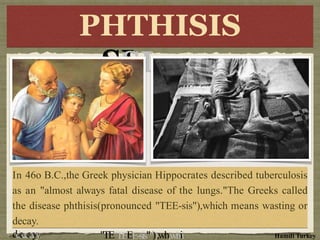
In 46o B.C.,the Greek physician Hippocrates described tuberculosis
as an "almost always fatal disease of the lungs."The Greeks called
the disease phthisis(pronounced "TEE-sis"),which means wasting or
decay.
Hamdi Turkey
C
D
De
e
lth
h
DCC
TubeTuberculrculoossisis
Cas
ef
fi
in
nit
iti
io
on
n f
for
or P
Pub
ubl
lic
ic H
e
a
Su
Surve
rvei
il
llance
lan
ce
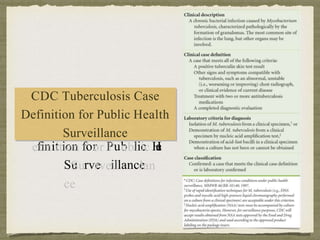
CDC Tuberculosis Case
Definition for Public Health
Surveillance
M
M
T
U
T
U
B
B
E
E
R
A
A
G
G
E
N
E
N
RC
CU
UL
LO
OS
SI
IS
S A
AS
S C
CA
A
T
T F
FO
OR
R
T
U
B
T
U
B
E
E
R
R
C
C
U
U
US
SA
ATI
TIVE
VE
LO
OS
SI
IS
S
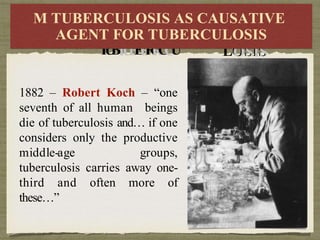
M TUBERCULOSIS AS CAUSATIVE
AGENT FOR TUBERCULOSIS
1882 – Robert Koch – “one
seventh of all human beings
die of tuberculosis and… if one
considers only the productive
middle-age groups,
tuberculosis carries away one-
third and often more of
these…”
OBJ
BJE
ECTI
C
TIV
VE
E
S
OBJECTIVES
The TB Scenario
Defining TB: Cause, Transmission, and
Manifestations
Risk of TB infection
Diagnosing Pulmonary Tuberculosis
TB Treatment and Cure
Preventing transmission
Proper Management of TB cases
THE
T
HE
B
BU
UR
RD
DE
EN
N O
OF
F
T
B
T
B
THE BURDEN OF TB
TB remains the leading cause of death worldwide from a
single infectious agent
It is estimated that between 2000-2020, nearly one billion
people will be newly infected, 200 million people will get
sick, and 35 million will die from TB- if control is not
further strengthened
With the increased incidence of AIDS, TB has become more a
problem in the US and the world
It is currently estimated that 1/2 of the world population (3.1
billion) is infected with TB
E
EP
PID
IDE
EMI
MIO
OL
LO
Y
EPIDEMIOLOGY
Tuberculosis (TB), which is caused by a complex of organisms, Mycobacterium
tuberculosis, Mycobacterium bovis, and Mycobacterium africanum, is an
ancient human disease.
Evidence of TB can be found in human remains dating back to Neolithic times.
The most recent World Health Organization data estimate that 1.86 billion
persons are currently infected with TB.
At any time, an estimated 16 million persons worldwide demonstrate active
disease, and 8 million new active cases develop each year, of which 3.5 million
manifest as the infectious pulmonary form of the disease.
This remarkable prevalence of disease is estimated to be responsible for at least
2 million deaths each year, making TB the most frequent infectious cause of
death in the world and the seventh most frequent cause of morbidity among all
diseases.
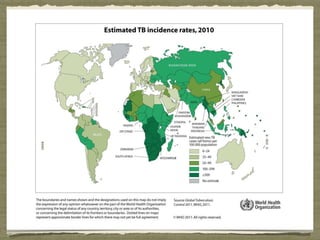
The World Health Organization declared TB a world
global emergency in 1993; however, economic and
political commitment to TB control programs is lacking
in many countries, and it is estimated that 95% of new
cases of TB occur in countries with limited resources.
This situation facilitates inappropriate or unsustained
TB therapy, which in turn has promoted a rise in the
rates of multidrug-resistant TB (MDR-TB)
E
E
P
I
D
D
E
E
M
M
I
O
L
OGY
Y
EPIDEMIOLOGY
E
ETI
TIO
OL
LOG
O
GY
Y
ETIOLOGY
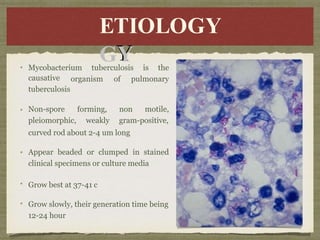
Mycobacterium tuberculosis is the
organism of pulmonary
causative
tuberculosis
Non-spore
pleiomorphic,
forming,
weakly
non motile,
gram-positive,
curved rod about 2-4 um long
Appear beaded or clumped in stained
clinical specimens or culture media
Grow best at 37-41 c
Grow slowly, their generation time being
12-24 hour
M
MO
OD
DE
E O
O
F
F
T
R
A
N
T
R
A
N
S
S
M
IS
SS
SI
IO
ON
N
MODE OF TRANSMISSION
Airway droplets: the main mode
of transmission from person
infected with pulmonary TB to
others by respiratory droplets.
Ingestion:
transmitted
Less frequently
by ingestion of
in
mycobacterium bovis found
unpasteurized milk products
Direct inoculation
Pulmonary TB is a disease of respiratory transmission,
patients with active disease expel bacilli into the air by:
Coughing
Sneezing
Shouting
Or any other way that will expel bacilli into the air
M
MODE
ODE
OFOF
T
R
A
N
T
R
A
N
S
S
M
M
I
IS
SS
SI
ION
O
N
MODE OF TRANSMISSION
Millions of tubercle bacilli in lungs
( mainly in cavities)
Coughing projects droplets nuclei
into the air that contain tubercle
bacilli
One cough can release 3,000
droplet nuclei
One sneeze can release tens of
thousands of droplet nuclei
As few as five M. tuberculosis
(MTB) bacilli are necessary for
human infection
M
MODE
ODE
OFOF
T
R
A
N
S
T
R
A
N
S
M
M
IS
ISS
SION
I
ON
MODE OF TRANSMISSION
Optimal conditions for transmission include:
Overcrowding
Poor personal hygiene
Poor public hygiene
M
MODE
ODE
OFOF
T
R
A
N
S
T
R
A
N
S
M
M
IS
ISS
SION
I
ON
MODE OF TRANSMISSION
F
F
A
A
T
E
T
E
O
O
F
FM
M.. TB
TB
A
E
R
A
E
R
O
OS
SO
OL
LS
S
FATE OF M. TB AEROSOLS
Large droplets settle to the ground quickly
Smaller droplets form " droplet nuclei" of 1-5 µm in
diameter, only TB-containing particles small enough to reach
the vulnerable environment of the alveolar space (typically
<5–10 µm) are considered infectious. After inhalation, these
infectious particles deposit preferentially in the dependent
lower half of the lung, where they subsequently initiate a
primary focus of infection.
Droplet nuclei can remain airborne
NOTNOT
E
E
V
V
E
E
R
R
Y
TB
TB WIL
ONE W
H
W
H
O
O
IS
IS
E L
BEBECOMCOMEE
INF
XPPOSEOSEDD
T
O
T
O
ECT
CTE
ED
D
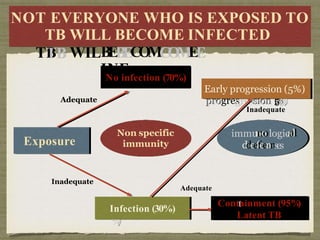
NOT EVERYONE WHO IS EXPOSED TO
TB WILL BECOME INFECTED
E
Ex
xp
po
os
su
ur
re
e
Exposure
InInffeeccttioionn(
3
0
(
3
0
%
%
)
)
Infection (30%)
No infection (70%
No infection (70%
)
No infection (70%)
Non specific
immunity
Adequate
Inadequate
Ea
Earl
rly
y
p
pr
ro
ogres
gress
si
io
on
n (
5
%
(
5
%
)
)
Early progression (5%)
Co inme t 95 )
Containmen (95%
Latent TB
Latent TB
Contt
ainmentt(95%
)
Latent TB
immu
n
no
ologic
a
all
ddeeffeennses
Adequate
Inadequate
H
I
H
I
G
G
H
H
R
R
I
I
SK
K F
FO
OR
R
P
P
R
R
O
G
O
G
R
RE
ESS
SSI
IO
ON
N
HIGH RISK FOR PROGRESSION
Persons more likely to progress from LTBI to TB disease includes:
HIV infected persons
Persons with a history of prior, untreated TB or fibrotic lesions on CXR
Recent TB infection (within the past 2 years)
Injection drug users
Age ( very young or very old)
Patients with certain medical conditions ( DM, chronic renal failure,
hemodialysis, solid organ transplantation, cancer, malnourished patient,
silicosis)
L
LTBI
TBI
V
VS
S TB
TB
D
I
D
I
S
EASE
A
SE
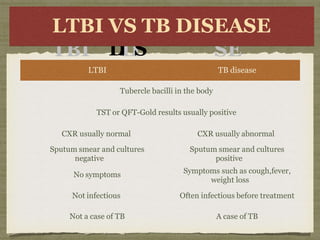
LTBI VS TB DISEASE
LTBI TB disease
Tubercle bacilli in the body
TST or QFT-Gold results usually positive
CXR usually normal CXR usually abnormal
Sputum smear and cultures
negative
No symptoms
Sputum smear and cultures
positive
Symptoms such as cough,fever,
weight loss
Not infectious Often infectious before treatment
Not a case of TB A case of TB
SPREA
PAR
D OF
OF
TB
TB T
TO
OO TS
S
OF
OF THE
THE
B
TH
HER
E
R ODY
Y
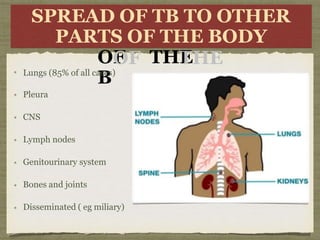
SPREAD OF TB TO OTHER
PARTS OF THE BODY
Lungs (85% of all cases)
Pleura
CNS
Lymph nodes
Genitourinary system
Bones and joints
Disseminated ( eg miliary)
TBTB
C
A
C
A
N
N
PPARTART
O
O
F
F
AFFFFECTECTA
A
N
N
Y
YTH
THE
E
B
B
O
O
D
D
Y
Y
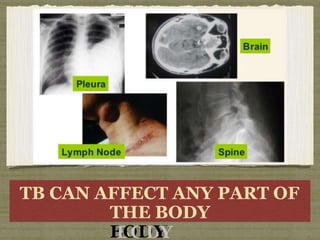
TB CAN AFFECT ANY PART OF
THE BODY
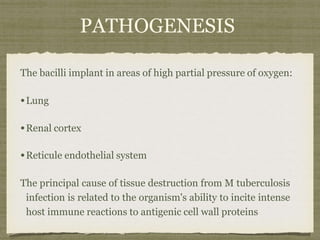
PATHOGENESIS
The bacilli implant in areas of high partial pressure of oxygen:
•Lung
•Renal cortex
•Reticule endothelial system
The principal cause of tissue destruction from M tuberculosis
infection is related to the organism's ability to incite intense
host immune reactions to antigenic cell wall proteins
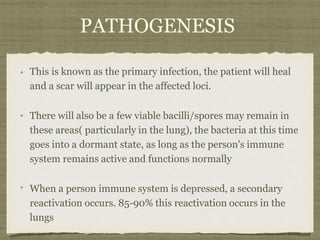
PATHOGENESIS
This is known as the primary infection, the patient will heal
and a scar will appear in the affected loci.
There will also be a few viable bacilli/spores may remain in
these areas( particularly in the lung), the bacteria at this time
goes into a dormant state, as long as the person's immune
system remains active and functions normally
When a person immune system is depressed, a secondary
reactivation occurs. 85-90% this reactivation occurs in the
lungs
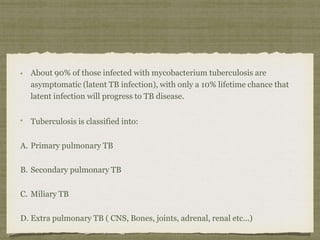
About 90% of those infected with mycobacterium tuberculosis are
asymptomatic (latent TB infection), with only a 10% lifetime chance that
latent infection will progress to TB disease.
Tuberculosis is classified into:
A. Primary pulmonary TB
B. Secondary pulmonary TB
C. Miliary TB
D. Extra pulmonary TB ( CNS, Bones, joints, adrenal, renal etc...)
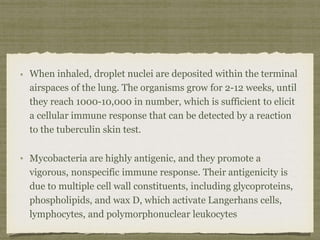
When inhaled, droplet nuclei are deposited within the terminal
airspaces of the lung. The organisms grow for 2-12 weeks, until
they reach 1000-10,000 in number, which is sufficient to elicit
a cellular immune response that can be detected by a reaction
to the tuberculin skin test.
Mycobacteria are highly antigenic, and they promote a
vigorous, nonspecific immune response. Their antigenicity is
due to multiple cell wall constituents, including glycoproteins,
phospholipids, and wax D, which activate Langerhans cells,
lymphocytes, and polymorphonuclear leukocytes
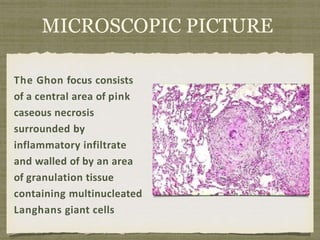
MICROSCOPIC PICTURE
The Ghon focus consists
of a central area of pink
caseous necrosis
surrounded by
inflammatory infiltrate
and walled of by an area
of granulation tissue
containing multinucleated
Langhans giant cells
FATE OF PRIMARY TB
This depends on:
Virulence of the organism
Dose of infection
Degree of resistance of the host
A.If the patient resistance is good and the organism is of low virulence, Ghon
complex undergo healing and over time usually evolve to fibrocalcific nodules
B.If the patient resistance is poor and/or the organism of high virulence,
progressive pulmonary tuberculosis will develop, the primary Ghon focus in the
lung enlarges rapidly, erodes the bronchial tree, and spread
HOST'S IMMUNE SYSTEM
AND TB DISEASE
More important than the virulence of the infecting strain, however, may
be genetic differences in the host’s immune system.
IL-12 is important for the development of cell-mediated immunity, and
defects in the IL-12 receptor have been associated with disseminated
mycobacterial infection following bacille Calmette-Guérin (BCG)
vaccination.
Tumor necrosis factor-α (TNF-α) is responsible for granuloma formation
and also for the production of reactive nitrogen intermediates needed to
kill intracellular bacilli, and high rates of active TB have been described
following the administration of anti–TNF-α antibodies.
IFN-α is necessary for the production of TNF-α by macrophages, and
genetic absence of the IFN-γ receptor has been associated with
disseminated nontuberculous mycobacterial infections in humans. Some
have hypothesized that subtle alterations in the IFN-γ receptor may be
responsible for
variations in susceptibility to the development of TB: variability in the
HLA-D gene locus, possibly related to a reduced affinity of the class II
major histocompatibility complex for mycobacterial antigens, in
addition to genetic polymorphisms in the natural resistance–associated
macrophage protein-1 (NRAMP-1) , have been associated with an
increased likelihood for the development of clinically apparent disease.
HOST'S IMMUNE SYSTEM
AND TB DISEASE
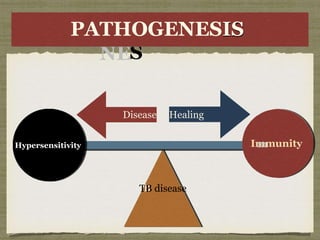
PATHOG
OGE
ENE
NES
IS
PATHOGENESIS
T
TB
B disease
Im
m
munity
y e s ns ti t
Hypersensitivi
i
ty
Hypersensitivity
Healing
Disease
Type IV hypersensitivity reaction:
T cells ----->macrophages----> granuloma
Activated macrophages -----> epithelioid cells
Self destruction by lysosomal enzymes
Infected macrophages secrete interleukin-12 (IL-12), which
promotes a nonspecific immune response mediated
primarily by natural killer cells and γ/δ T cells.
The nonspecific immune response may retard the local
infection but is usually unable to control it, and bacilli
spread to local lymph nodes, where they may enter the
blood (bacillemia). From this point, TB infection is a
systemic process characterized by lymphatic and
hematogenous spread and the deposition of bacilli in
multiple extrapulmonary sites (i.e., bones, meninges,
kidney, and the posterior apical segment of the lungs),
creating the potential for disease in virtually any anatomic
location.
MTB antigens in association with the class II major histocompatibility
complex are presented to naive CD4+ T cells, heralding the onset of
specific anti-TB cell-mediated immunity (T helper subset 1 [Th1] cell
immunity).
(a(a))seseccrerettiioonn ooff
IILL-2-2
t
th
he
ese
se ce
celllls
s t
to
o k
kiillll
o
o
(b(b))seseccrerettiioonn ooff
iinntteerr
a
allllo
ow
wiin
ng
g t
th
he
em
m t
to
o
kiki
susuppppoortrtss cytcytoottooxxiicc
T-l-lyympmphhooc
t
t
h
h
e
e
r
rcecellllss a
a
l
l
r
e
r
e
a
a
d
d
y
yi
i
n
n
f
f
e
e
c
c
t
t
e
e
d
d
w
w
i
i
t
t
h
ffeeroronn-γ-γ(I(IFN-γ)γ)
p
pr
ri
im
me
es
s u
un
niin
n llll t
th
he
e
iinnttraracecelllluullaarrp
p
a
a
t
t
h
h
o
o
g
g
e
e
n
n
eeff
ytee ffuunnctctiioonn,,a
a
l
l
l
l
o
o
w
w
i
i
n
n
g
h MT
MTB
B d
diire
rect
ctlly
y
f
f
e
e
c
c
t
t
e
e
d
d
m
m
a
a
c
r
o
c
r
o
p
p
h
h
a
a
g
g
e
e
s
,
s
ffiicicieennttlly.y.
Anti-TB CD4+ T cells coordinate the specific immune response by two
routes:
(a) secretion of IL-2 supports cytotoxic T-lymphocyte function, allowin g
these cells to kill other cells already infected with MTB directly
(b) secretion of interferon-γ (IFN-γ) primes uninfected macrophages,,
allowing them to kill the intracellular pathogen efficiently.
The onset of the cytotoxic T-lymphocyte response several weeks after
infection coincides with the development of caseous necrosis at the site of
primary infection and the development of delayed-type hypersensitivity
Primary pulmonary TB is an infection of persons who have
not had prior contact with the tubercle bacillus
Inhaled bacilli are commonly deposited in alveoli
immediately beneath the pleura, usually in the lower part
of the upper lobes or the upper part of the lower lobes
When inhaled, droplet nuclei are deposited in terminal
airspaces of the lung
Macrophages ingest the bacilli and transport them to
regional lymph nodes
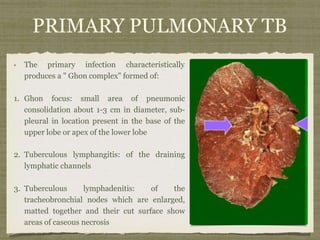
PRIMARY PULMONARY TB
The primary infection characteristically
produces a " Ghon complex" formed of:
1. Ghon focus: small area of pneumonic
consolidation about 1-3 cm in diameter, sub-
pleural in location present in the base of the
upper lobe or apex of the lower lobe
2. Tuberculous lymphangitis: of the draining
lymphatic channels
3. Tuberculous lymphadenitis: of the
tracheobronchial nodes which are enlarged,
matted together and their cut surface show
areas of caseous necrosis
PRIMA
P
P
A
Y P
P
U
L
M
O
U
L
M
O
N
THOGENE
O
GENES
S
ARYRY
T
B
T
BIS
IS
PRIMARY PULMONARY TB
PATHOGENESIS
Spread if infection will take place by:
A.Local spread: to the surrounding lung tissue and pleura
B.Lymphatic spread: along bronchi, leading to
tuberculous bronchopneumonia
C.Hematogenous spread: leading to miliary TB or
isolated organ TB or miliary TB of the lung
PRIMARY PULMONARY TB
• Most often a childhood infection in endemic settings
• Few clinical symptoms in immunocompetent hosts
•Lymphangitic spread to hilar and paratracheal nodes result
in enlargement of these structures
• Often the only residua of primary infection is a positive skin
test and the Ranke complex
•Primary progressive tuberculosis occurs in a minority of
cases
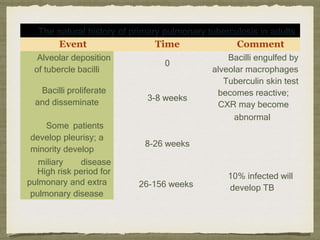
The natural history of primary pulmonary tuberculosis in adults
Event Time Comment
Alveolar deposition
of tubercle bacilli
0
3-8 weeks
8-26 weeks
26-156 weeks
Bacilli engulfed by
alveolar macrophages
Tuberculin skin test
becomes reactive;
CXR may become
abnormal
10% infected will
develop TB
Bacilli proliferate
and disseminate
Some patients
develop pleurisy; a
minority develop
miliary disease
High risk period for
pulmonary and extra
pulmonary disease
CO
CO
M
P
PRI
RIMA
MA
PLI
LICA
CATI
TI
ON
ON Y
T
U
T
U
B
E
R
C
B
E
R
C
U
S
S OF
OF
LO
OSIS
S
IS
COMPLICATIONS OF
PRIMARY TUBERCULOSIS
Collapse/ consolidation
Bronchiectasis
Obstructive emphysema
Broncholith
Erythema nodosum
Phlyctenular conjunctivitis
Pleural effusion
Miliary TB
Progressive primary tuberculosis
Secondary(cavitary) TB usually results from reactivation of a
dormant, endogenous tubercle bacilli in a sensitized patient
who has had previous contact with the tubercle bacillus
In some cases the disease is caused by reinfection with
exogenous bacilli
The lesion begins as a tubercle, the micro-organisms
searching for a high oxygen tension, usually settle in the
apical portion of one or both lungs
SE
SEC
CO
ON
D
P
P
A
ARY
Y P
P
U
L
M
O
U
L
M
O
N
THO
OGE
GENE
N
ES
NARYARY
T
B
T
B
S
SECONDARY PULMONARY TB
PATHOGENESIIS
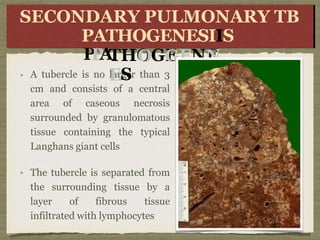
A tubercle is no larger than 3
cm and consists of a central
area of caseous necrosis
surrounded by granulomatous
tissue containing the typical
Langhans giant cells
The tubercle is separated from
the surrounding tissue by a
layer of fibrous tissue
infiltrated with lymphocytes
SE
SEC
CO
ON
D
P
P
A
ARY
Y P
P
U
L
M
O
U
L
M
O
N
THO
OGE
GENE
N
ES
NARYARY
T
B
T
B
S
SECONDARY PULMONARY TB
PATHOGENESIIS
FATE OF SECONDARY
PULMONARY TB
Healing by fibrosis with dystrophic calcification occurs in most
cases when the dose of infection is small, virulence of the
organism is low and the patient resistance is good
Spread of infection occurs when the patient resistance is poor
and the virulence of the organism is high, spread occurs
directly by lymphatic,natural passages and blood stream
Fibrocaseous tuberculosis with cavitation occurs with
moderate dose of the organism and moderate resistance of the
patient
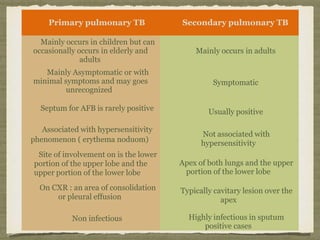
Primary pulmonary TB Secondary pulmonary TB
Mainly occurs in children but can
occasionally occurs in elderly and
adults
Mainly Asymptomatic or with
minimal symptoms and may goes
unrecognized
Septum for AFB is rarely positive
Associated with hypersensitivity
phenomenon ( erythema noduom)
Site of involvement on is the lower
portion of the upper lobe and the
upper portion of the lower lobe
On CXR : an area of consolidation
or pleural effusion
Non infectious
Mainly occurs in adults
Symptomatic
Usually positive
Not associated with
hypersensitivity
Apex of both lungs and the upper
portion of the lower lobe
Typically cavitary lesion over the
apex
Highly infectious in sputum
positive cases
FFIIBRO
C
CASE
ASEOU
O
US
S T
AVITATI
VI
TATIO
B
W
W
I
I
T
H
T
H
N
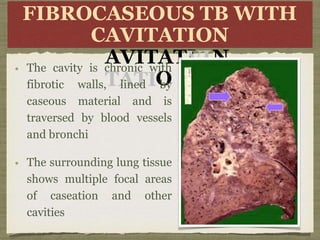
FIBROCASEOUS TB WITH
CAVITATION
The cavity is chronic with
fibrotic walls, lined by
caseous material and is
traversed by blood vessels
and bronchi
The surrounding lung tissue
shows multiple focal areas
of caseation and other
cavities
C
COM
F
FIB
I
B
LICATIO
CASE
ASE
OU
S
OF
OFS
TBTB
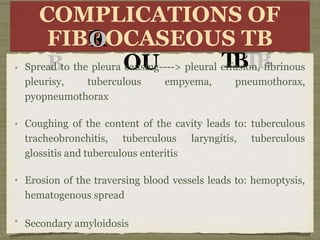
COMPLICATIONS OF
FIBR
O
R
OOCASEOUS TB
Spread to the pleura causing----> pleural effusion, fibrinous
pleurisy, tuberculous empyema, pneumothorax,
pyopneumothorax
Coughing of the content of the cavity leads to: tuberculous
tracheobronchitis, tuberculous laryngitis, tuberculous
glossitis and tuberculous enteritis
Erosion of the traversing blood vessels leads to: hemoptysis,
hematogenous spread
Secondary amyloidosis
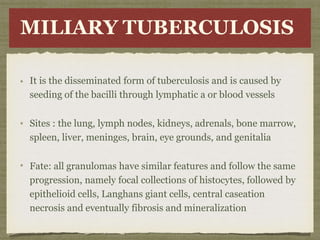
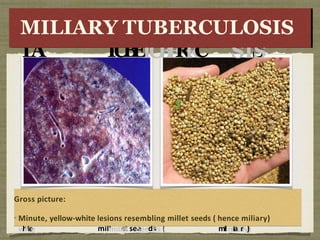
MILIARY TUBERCULOSIS
It is the disseminated form of tuberculosis and is caused by
seeding of the bacilli through lymphatic a or blood vessels
Sites : the lung, lymph nodes, kidneys, adrenals, bone marrow,
spleen, liver, meninges, brain, eye grounds, and genitalia
Fate: all granulomas have similar features and follow the same
progression, namely focal collections of histocytes, followed by
epithelioid cells, Langhans giant cells, central caseation
necrosis and eventually fibrosis and mineralization
G
Gr
ro
oss
ss p
piic
ct
tu
ur
re
e:
:
MinMinuuttee,,y
e
e
l
l
l
l
o
o
w
-
w
w
-
w
h
h
i
i
t
t
e
e
lleesisioonnss rreseesembmblliningg
mill
mille
et
t see
seeds
ds (
(
h
h
e
e
n
n
c
c
e
e
milmiliaiarry))
Gross picture:
Minute, yellow-white lesions resembling millet seeds ( hence miliary)
MI
MIL
L
IA
Y
T
U
B
E
T
U
B
E
R
R
C
LOSI
O
SIS
S
MILIARY TUBERCULOSIS
CLINICAL FEATURES
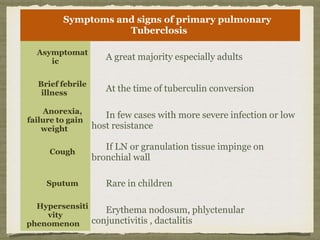
Symptoms and signs of primary pulmonary
Tuberclosis
Asymptomat
ic
A great majority especially adults
Brief febrile
illness At the time of tuberculin conversion
Anorexia,
failure to gain
weight
In few cases with more severe infection or low
host resistance
Cough
If LN or granulation tissue impinge on
bronchial wall
Sputum Rare in children
Hypersensiti
vity
phenomenon
Erythema nodosum, phlyctenular
conjunctivitis , dactalitis
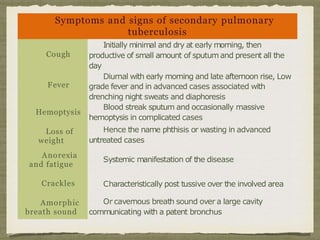
Symptoms and signs of secondary pulmonary
tuberculosis
Cough
Fever
Hemoptysis
Loss of
weight
Anorexia
and fatigue
Initially minimal and dry at early morning, then
productive of small amount of sputumand present all the
day
Diurnal with early morning and late afternoon rise, Low
grade fever and in advanced cases associated with
drenching night sweats and diaphoresis
Blood streak sputum and occasionally massive
hemoptysis in complicated cases
Hence the name phthisis or wasting in advanced
untreated cases
Systemic manifestation of the disease
Crackles
Amorphic
breath sound
Characteristically post tussive over the involved area
Or cavernous breath sound over a large cavity
communicating with a patent bronchus
DIAG
AGNO
SI
SI
S
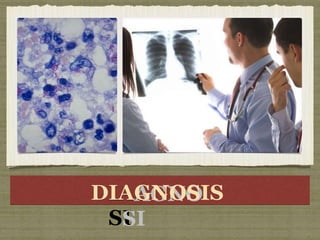
DIAGNOSIS
DIAGNOSIS
Any cough that persists more than 2 weeks should be
evaluated for pulmonary TB in the appropriate clinical
context ( poor patient, overcrowded, bad hygiene etc)
A full history and physical examination should be
undertaken
A minimum of 2 sputum samples, ( the first on spot and the
second in the early morning preferably fasting ) should be
examined, the sputum sample should be of a good quality
representative of lower respiratory tract.
RADIOLOGY
The following characteristics of chest radiograph favor the
diagnosis of tuberculosis
Shadows mainly in the upper zones
Patchy or nodular shadows
The presence of a cavity or cavities
The presence of calcification
Bilateral shadows especially if theses are in the upper zones
P
PRI
RIMA
MAR
Y
P
P
U
U
L
M
O
L
M
O
N
N
ARYRY
T
B
T
B
PRIMARY PULMONARY TB
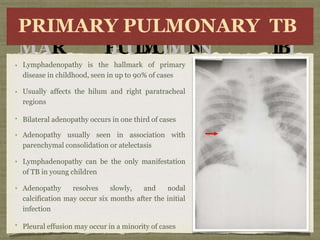
Lymphadenopathy is the hallmark of primary
disease in childhood, seen in up to 90% of cases
Usually affects the hilum and right paratracheal
regions
Bilateral adenopathy occurs in one third of cases
Adenopathy usually seen in association with
parenchymal consolidation or atelectasis
Lymphadenopathy can be the only manifestation
of TB in young children
Adenopathy resolves slowly, and nodal
calcification may occur six months after the initial
infection
Pleural effusion may occur in a minority of cases
R
RA
ADI
DI
O
PR
PRI
I
M
GRA
RAPHI
PHIC
C R
R
E
E
S
S
I
I
DARY
RY
PUL
PULMONA
MO
NA
D
U
A
U
A
L
LO
O
F
FRY
Y
TBTB
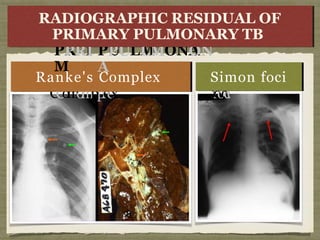
RADIOGRAPHIC RESIDUAL OF
PRIMARY PULMONARY TB
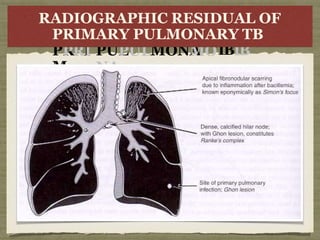
x
R annkkee'ss
C
C
o
m
o
m
p
l
p
l
e
e
x
SimSimonon
f
f
o
o
c
i
c
i
Ranke's Complex Simon foci
RA
RADI
DIO
PR
PRI
I
M
GR
RA
AP
PHI
HIC
C R
R
E
S
I
E
S
I
DAR
RY
Y
PU
PULM
LMONA
ON
A
U
A
A
L
L
O
F
O
F
R
RY
Y TBTB
RADIOGRAPHIC RESIDUAL OF
PRIMARY PULMONARY TB
POST PRIMARY PULMONARY
TB
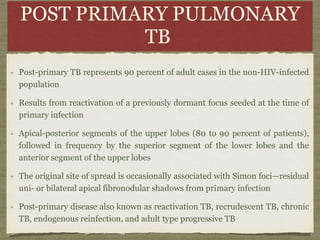
Post-primary TB represents 90 percent of adult cases in the non-HIV-infected
population
Results from reactivation of a previously dormant focus seeded at the time of
primary infection
Apical-posterior segments of the upper lobes (80 to 90 percent of patients),
followed in frequency by the superior segment of the lower lobes and the
anterior segment of the upper lobes
The original site of spread is occasionally associated with Simon foci—residual
uni- or bilateral apical fibronodular shadows from primary infection
Post-primary disease also known as reactivation TB, recrudescent TB, chronic
TB, endogenous reinfection, and adult type progressive TB
T
H
T
H
E
E
R
R
A
A
D
D
I
I
O
OF
F PO
OG
OGR
RA
APH
PHI
IC
C A
A
P
PT-
PRI
IMA
MARY
RY
DI
DI
EA
AR
RA
ANCE
NCE
SE
SEA
ASE
SE
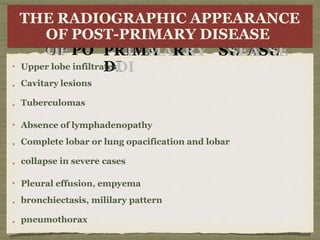
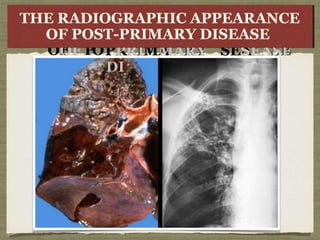
THE RADIOGRAPHIC APPEARANCE
OF POST-PRIMARY DISEASE
Upper lobe infiltrates
Cavitary lesions
Tuberculomas
Absence of lymphadenopathy
Complete lobar or lung opacification and lobar
collapse in severe cases
Pleural effusion, empyema
bronchiectasis, mililary pattern
pneumothorax
THETHE
R
A
R
A
D
I
D
I
OF
OF PO
O
OG
GRA
RAPHI
PHIC
CA
A
P
T-
-
PR
PRI
IMA
MAR
RY
Y
D
DI
I
EARA
RAN
NCE
CE
SEA
SEAS
SE
E
THE RADIOGRAPHIC APPEARANCE
OF POST-PRIMARY DISEASE
CA
CA
V
TARY
D
I
D
I
S
E
S
E
ASE
A
SE
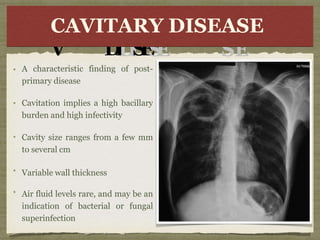
CAVITARY DISEASE
A characteristic finding of post-
primary disease
Cavitation implies a high bacillary
burden and high infectivity
Cavity size ranges from a few mm
to several cm
Variable wall thickness
Air fluid levels rare, and may be an
indication of bacterial or fungal
superinfection
-
B
Bi
il
la
at
te
er
ra
al
l u
up
pp
pe
er
r l
lob
obe
e
iinnvvololvveemmeenntt
s
s
e
e
e
e
n
ninintthihissppaattiieentntwiwitthh
p
p
o
s
o
s
t
tp
p
r
r
i
i
m
m
a
a
r
r
y
ydd
i
isseeaassee
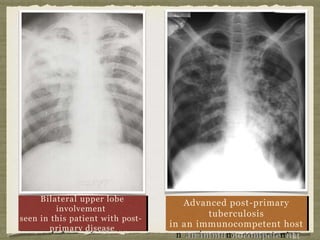
Bilateral upper lobe
involvement
seen in this patient with post-
primary disease i
i
A
A
d
v
d
v
a
a
n
n
c
c
e
e
d
dpoposstt-pri-
primmaaryry
ttuubbeercrcuulloossisis
n a
an
n i
im
mm
mu
uno
noc
co
om
mp
pe
et
te
ent
nt
ost
st
Advanced post-primary
tuberculosis
in an immunocompetent host
T B
E
C
C
U
U
L
L
O A
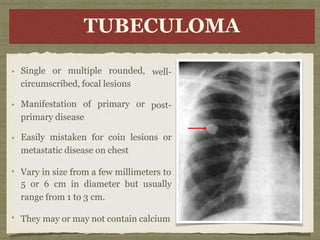
TUBECULOMA
well-
post-
Single or multiple rounded,
circumscribed, focal lesions
Manifestation of primary or
primary disease
Easily mistaken for coin lesions or
metastatic disease on chest
Vary in size from a few millimeters to
5 or 6 cm in diameter but usually
range from 1 to 3 cm.
They may or may not contain calcium
CH
CHE
EST
S
T C
T I
N
I
N
P
P
U
L
O
U
L
O
M
N
A
A
R
R
Y
Y
T
B
T
B
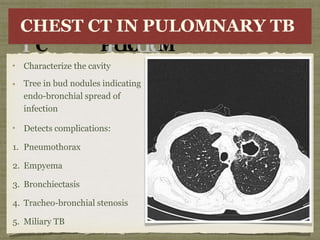
CHEST CT IN PULOMNARY TB
Characterize the cavity
Tree in bud nodules indicating
endo-bronchial spread of
infection
Detects complications:
1. Pneumothorax
2. Empyema
3. Bronchiectasis
4. Tracheo-bronchial stenosis
5. Miliary TB
SPUTUM EXAMINATION
For patients with suspected pulmonary TB, at least three
freshly expectorated first morning sputum samples should
be collected from a deep, productive cough in a sterile
container with a wide mouth. Ideally, the volume of each
sample should be more than 5 mL
Induction of sputum with aerosolized hypertonic saline
solution may be required if the patient is having difficulty
producing sputum; serial morning gastric lavage and
bronchoalveolar lavage are alternative methods of obtaining
clinical specimens.
Examination of stained smears for AFB remains the most rapid and inexpensive method for
detecting mycobacteria.
Both carbolfuchsin (Ziehl-Neelson or Kinyoun method) and fluorochrome (auramine–
rhodamine) stains are available, but fluorochrome staining is more sensitive and has
become the standard staining method used in the United States.
Staining techniques require the presence of at least 5,000 to 10,000 organisms for a
positive result. The reported sensitivity of the AFB smear for respiratory samples ranges
from 45% to 75%, and specificity is reported to be greater than 97% in most studies.
The yield of a single specimen is low and can be improved by submitting multiple samples
of adequate volume.
Patients with cavitary TB are more likely to have a positive AFB smear because of the high
number of organisms present in this form of TB, whereas a positive AFB smear is less likely
in most types of extrapulmonary disease given the relatively low numbers of organisms in
these forms of TB
STAINING FOR ACID-FAST
BACILLI
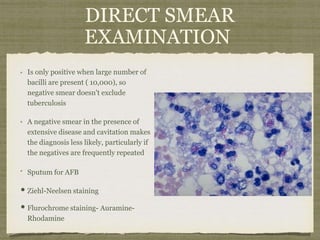
DIRECT SMEAR
EXAMINATION
Is only positive when large number of
bacilli are present ( 10,000), so
negative smear doesn't exclude
tuberculosis
A negative smear in the presence of
extensive disease and cavitation makes
the diagnosis less likely, particularly if
the negatives are frequently repeated
Sputum for AFB
• Ziehl-Neelsen staining
• Flurochrome staining- Auramine-
Rhodamine
CULTURE
The AFB smear is limited by its poor sensitivity and inability to differentiate between
MTB, nontuberculous mycobacterial species, and other acid-fast organisms.
Mycobacterial culture is able to detect as few as 10 organisms per milliliter and overcomes
many of the limitations of AFB staining.
Several types of culture media have been developed for the isolation of mycobacteria,
including agar-based media (Middlebrook 7H10-selective 7H11), egg-based media
(Lowenstein-Jensen), and liquid media (Middlebrook 7H12).
The development of automated broth culture systems, such as BACTEC 460, BACTEC 960
mycobacterial growth indicator tube (MGIT) systems, Septi-Check ESP, and MB/BacT,
has been a major step in accelerating the diagnosis of MTB
traditional solid media–based systems require 3 to 8 weeks for organism growth, whereas
broth culture methods require 1 to 3 weeks; however, because some species of the MTB
complex may grow only on solid media, inoculation of both types of media is
recommended
Even with the use of broth-based culture systems, confirming the
presence of MTB from the time of specimen collection takes at least a
week and more often 2 to 3 weeks.
Methods to detect the presence of TB directly from clinical specimens
more rapidly have been a significant advance in the treatment of TB.
Current direct methods are based on nucleic acid amplification
techniques, and two different tests are commercially available: a
transcription-mediated amplification method (Amplified
Mycobacterium tuberculosis Direct [MTD] Test) and a polymerase
chain reaction–based assay (Amplicor; Roche Diagnostic Systems)
DIRECT AMPLIFICATION
TECHNIQUE
The performance of nucleic acid amplification techniques has been most rigorously
evaluated in respiratory samples, in which both tests have a sensitivity of about 96%
and a specificity of 100% for AFB smear-positive samples when combined with
appropriate nucleic acid probes.
Their performance in AFB smear-negative specimens is significantly less
impressive, with sensitivities ranging from 48% to 53%, although their specificity
remains high, at 96% to 99%.
The accuracy of nucleic acid amplification testing may be reduced by the
concurrent use of antituberculous therapy, and inhibitors in the patient’s sputum
may also cause a false-negative result.
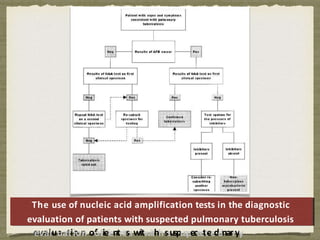
nucleic acid amplification tests offer the opportunity to diagnose pulmonary TB
within several hours, and their application to the first specimen of all clinically
suspected cases is recommended
DIRECT AMPLIFICATION
TECHNIQUE
Th
The
e u
us
se
e o
of
f
nunuccll
e
ev
va
allua
uat
tio
ion
n of
of
eeicicaaccididaampmpllifificicaattionion
t
t
e
s
t
e
s
t
s
s
tieientntsswitwithhssuspuspecectteedd
in
in t
th
he
e
diadiagngnoosstticic
narryy
The use of nucleic acid amplification tests in the diagnostic
evaluation of patients with suspected pulmonary tuberculosis
NUCLEIC ACID PROBES
Nucleic acid probes have been developed that can specifically
hybridize with DNA or RNA from MTB, M. avium, M.
intracellulare, M. kansasii, and M. gordonae. The rapidity of this
test allows for species identification within 2 hours and has a
sensitivity and specificity that approaches 100% for MTB
Although the test requires more than 105 organisms or the use
of an amplification technique to achieve an adequate yield, when
it is combined with automated broth culture methods, the time
for detecting and identifying MTB can be reduced to as little as 4
to 7 days
IDENTIFICATION OF
RESISTANCE
The identification of antimicrobial resistance among clinical isolates is necessary
to ensure optimal therapy and prevent the spread of these organisms to others.
Traditionally, agar- and broth-based methods have been used to detect drug
resistance.
In the agar-based method, organisms are allowed to grow on both a drug-
containing medium and a drug-free medium. Growth of the organisms on a
medium containing a drug that equals 1% or more of the growth of the organisms
on a medium without the drug indicates resistance to that drug
Broth-based radiometric methods use a similar process and correlate well with
agar-based methods (95%–100%) but allow resistance to be detected much earlier
than do solid media (4–7 days vs. 14–21 days). Because of the importance of
resistance, it is recommended that both media be used
ANTIGEN DETECTION
Tuberculostearic acid in sputum
Membrane antigens in CSF
Lipoarabinomannan in serum and sputum
INDIRECT TESTS
Tuberculin skin test
TB serological tests ( antibody detection )
Mycobacteriophage assays
Cytokine detection
Histopathology
ADENOSINE DEAMINASE
Adenosine deaminase is an enzyme produced by activated T
lymphocytes, and measurement of the adenosine deaminase level in
certain extrapulmonary body fluids (pleural fluid, ascitic fluid, CSF) has
been evaluated as a diagnostic test for TB. In several studies, the
sensitivity of the adenosine deaminase level in pleural fluid ranged from
83% to 99%, with a specificity that ranged from 89% to 97% when cutoff
levels of 45 to 60 U/L were used; however, many of these studies were
based on highly selected populations in areas where TB was endemic.
The positive predictive value of the test would be much lower in areas
like the United States, where the prevalence of TB and hence the pretest
probability are lower (e.g., the positive predictive value is 50% when the
pretest probability is 5%)
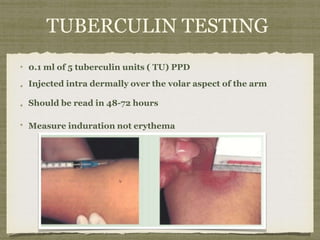
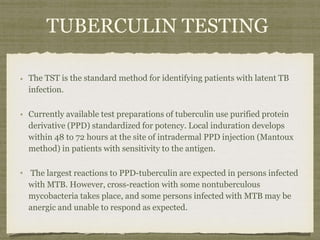
TUBERCULIN TESTING
0.1 ml of 5 tuberculin units ( TU) PPD
Injected intra dermally over the volar aspect of the arm
Should be read in 48-72 hours
Measure induration not erythema
The TST is the standard method for identifying patients with latent TB
infection.
Currently available test preparations of tuberculin use purified protein
derivative (PPD) standardized for potency. Local induration develops
within 48 to 72 hours at the site of intradermal PPD injection (Mantoux
method) in patients with sensitivity to the antigen.
The largest reactions to PPD-tuberculin are expected in persons infected
with MTB. However, cross-reaction with some nontuberculous
mycobacteria takes place, and some persons infected with MTB may be
anergic and unable to respond as expected.
TUBERCULIN TESTING
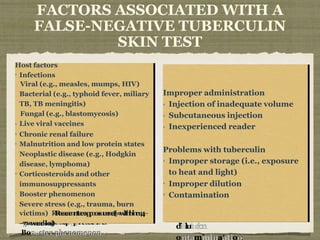
FACTORS ASSOCIATED WITH A
FALSE-NEGATIVE TUBERCULIN
SKIN TEST
H
I
osstt
f
f
a
c
a
c
t
t
o
o
r
r
s
s
n
f
f
e
e
c
c
t
t
i
i
o
o
n
n
s
s
ry
y
s
s
i
i
Viirralal((ee..g.g.,,m
m
e
e
a
a
s
s
l
e
l
e
s
s
,
,m
m
u
m
u
m
p
p
s
s
,
,
H
H
I
I
V
V
)
)
Bac
act
te
er
ri
ia
al
l (
(e
e.
.g.
g.,
, t
ty
yp
ph
ho
oi
id
d f
fe
ev
ve
er
r,
,
m
m
i
i
l
i
l
i
aT
B
B
,
,T
T
B
Bm
m
e
e
n
n
i
i
n
n
g
i
g
i
t
t
i
i
s
s
)
)
Fun
ungal
gal (
(e
e.
.g.
g.,
,
b
l
b
l
a
s
a
s
t
t
o
o
m
m
y
y
c
c
o
o
s
s
i
i
s
s
)
)L
i
i
v
v
e
evviirralal
v
v
a
c
a
c
c
c
i
i
n
n
e
e
s
s
Ch
hr
ro
on
ni
ic
c r
re
en
nal
al f
fai
ail
lur
ure
e
Maln
alnut
utr
ri
it
ti
io
on
n an
and
d l
lo
ow
w p
pr
ro
ot
te
ei
in
n
s
s
t
t
a
t
a
t
e
e
Neeopopllasasttiiccd
d
i
i
s
s
e
e
a
s
a
s
e
e(
(
e
e
.
.
g
g
.
.
,
,
H
H
o
o
d
g
k
i
d
g
k
i
n
nd
i
i
s
s
e
e
a
a
s
s
e
e
,
,l
y
l
y
m
m
p
p
h
h
o
o
m
m
a
)
a
)
Co
or
rt
ti
ic
co
os
st
te
er
ro
oi
id
ds
s an
and
d
o
t
o
t
h
h
e
e
r
r
m
m
m
m
u
n
u
n
o
o
s
s
u
p
u
p
p
p
r
r
e
e
s
s
s
s
a
a
n
n
t
t
s
s
Boo
oos
st
te
er
r p
ph
he
en
no
om
me
en
no
on
n
S
e
e
v
v
e
e
r
r
e
e
s
s
t
t
r
r
e
e
s
s
s
s
((ee..g.g.,,ttrraumauma,a,
b
b
u
r
u
r
n
n
v
i
i
c
t
c
t
i
i
m
m
s
s
)
)
•
v
•
Host factors
•
•
•
•
Infections
Viral (e.g., measles, mumps, HIV)
Bacterial (e.g., typhoid fever, miliary
TB, TB meningitis)
Fungal (e.g., blastomycosis)
Live viral vaccines
Chronic renal failure
Malnutrition and low protein states
Neoplastic disease (e.g., Hodgkin
disease, lymphoma)
Corticosteroids and other
immunosuppressants
Booster phenomenon
Severe stress (e.g., trauma, burn
victims) R
R
e
e
c
c
e
e
n
n
t
t
e
e
x
x
p
p
o
o
s
s
u
u
r
r
e
e
(
(
w
w
i
i
t
t
h
h
i
i
n
n
4
4
–
–
7
7
w
w
e
e
e
e
k
k
s
s
)
)
e
e
I
I
m
m
I
I
S
I
I
P
Pr
ro
I
I
tt
I
I
C
p
p
r
r
o
p
o
p
e
r
e
r
adadmiminniissttratratiionon
nj
je
ec
ct
ti
io
on
n o
of
f
i
in
nad
adequat
equate
e v
v
o
o
l
u
l
u
m
m
e
e
ubcut
cutan
aneous
eous
iinnjjectectiionon
nexp
exper
eri
ien
enced
ced re
reade
ader
r
ob
bl
lem
ems
s wi
wit
th
h t
tub
uber
ercu
culi
lin
n
mp
pro
rop
per
er s
st
to
ora
rage
ge (
(i
i.e
.e.,
.,
e
x
p
e
x
p
o
o
s
s
u
r
u
ro h
h
e
e
a
t
a
ta
n
a
n
d
dlliightght))
mp
pro
rop
per
er
di
di
lut
lut
i
i
o
o
n
n
ontami nat ion
Improper administration
Injection of inadequate volume
Subcutaneous injection
Inexperienced reader
Problems with tuberculin
Improper storage (i.e., exposure
to heat and light)
Improper dilution
Contamination
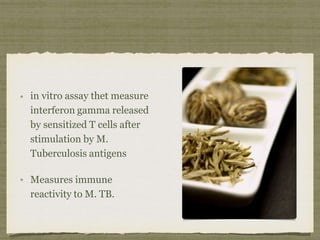
in vitro assay thet measure
interferon gamma released
by sensitized T cells after
stimulation by M.
Tuberculosis antigens
Measures immune
reactivity to M. TB.
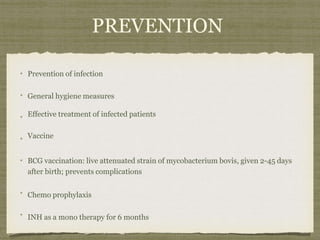
PREVENTION
Prevention of infection
General hygiene measures
Effective treatment of infected patients
Vaccine
BCG vaccination: live attenuated strain of mycobacterium bovis, given 2-45 days
after birth; prevents complications
Chemo prophylaxis
INH as a mono therapy for 6 months
t-140513165753-phpapp02.pptx

t-140513165753-phpapp02.pptx

  • 1.
    Ha Ham di di tu turkey -logis ist PULMONARY TUBERCULOSIS Hamdi turkey -Pulmonologist
  • 2.
    HI AN A N AN A N STORY OFOFT OL OLD D DISDISEE O L O L D D DIDISESEA B AS SE E SE HISTORY OF TB ANOLD DISEASE AN OLD DISEASE • May have evolved from M bovis; acquired by humans from domesticated animals ~15,000 years ago • Endemic in humans when stable networks of 200-440 people established (villages) ~ 10,000 years ago; Epidemic in Europe after 1600 (cities) • 354-322 BC -Aristotle – “When one comes near consumptives… one does contract their disease… The reason is that the breath is bad and heavy…In approaching the consumptive, one breathes this pernicious air. One takes the disease because in this air there is something disease producing.”
  • 3.
    TB is anancient disease. Signs of skeletal TB (Pott disease) have been found in remains from Europe from Neolithic times (8000 BCE), ancient Egypt (1000 BCE), and the pre-Columbian New World. TB was recognized as a contagious disease by the time of Hippocrates (400 BCE), when it was termed "phthisis" (Greek from phthinein, to waste away). In English, pulmonary TB was long known by the term “consumption.” German physician Robert Koch discovered and isolated M tuberculosis in 1882. H AN A N STORY OF OF OL OLD D DISDISEEA TB T B SE HISTORY OF TB AN OLD DISEASE
  • 4.
    PHTHI HI SI SI S S PHTHISIS e e k kpphhyssiicciiaannHHiippppoocrcraatteess d d e e s s f fa at ta al l d dis isea as seo of f t th he lu lun ng gs s p pro on no ou un nced d "TE"TEEE-sis"")),wh,whii s sc cr ri ib be ed d t tu ub be er rc cu ul lo os si is s ." ."T Th he G Gree eek ks ca call lled d ch h m mea an ns s w wa as sti tin ng g o or In In 46o 46o B B..C C.,th .,the e G G r r e e aas a a n n""aalmlmoostta a l l w w a a y y ththe ddisiseaassepphhtthhiisis(( ddeecaayy.. In 46o B.C.,the Greek physician Hippocrates described tuberculosis as an "almost always fatal disease of the lungs."The Greeks called the disease phthisis(pronounced "TEE-sis"),which means wasting or decay. Hamdi Turkey
  • 5.
    C D De e lth h DCC TubeTuberculrculoossisis Cas ef fi in nit iti io on n f for or P Pub ubl lic icH e a Su Surve rvei il llance lan ce CDC Tuberculosis Case Definition for Public Health Surveillance
  • 6.
    M M T U T U B B E E R A A G G E N E N RC CU UL LO OS SI IS S A AS S C CA A T TF FO OR R T U B T U B E E R R C C U U US SA ATI TIVE VE LO OS SI IS S M TUBERCULOSIS AS CAUSATIVE AGENT FOR TUBERCULOSIS 1882 – Robert Koch – “one seventh of all human beings die of tuberculosis and… if one considers only the productive middle-age groups, tuberculosis carries away one- third and often more of these…”
  • 7.
    OBJ BJE ECTI C TIV VE E S OBJECTIVES The TB Scenario DefiningTB: Cause, Transmission, and Manifestations Risk of TB infection Diagnosing Pulmonary Tuberculosis TB Treatment and Cure Preventing transmission Proper Management of TB cases
  • 8.
    THE T HE B BU UR RD DE EN N O OF F T B T B THE BURDENOF TB TB remains the leading cause of death worldwide from a single infectious agent It is estimated that between 2000-2020, nearly one billion people will be newly infected, 200 million people will get sick, and 35 million will die from TB- if control is not further strengthened With the increased incidence of AIDS, TB has become more a problem in the US and the world It is currently estimated that 1/2 of the world population (3.1 billion) is infected with TB
  • 9.
    E EP PID IDE EMI MIO OL LO Y EPIDEMIOLOGY Tuberculosis (TB), whichis caused by a complex of organisms, Mycobacterium tuberculosis, Mycobacterium bovis, and Mycobacterium africanum, is an ancient human disease. Evidence of TB can be found in human remains dating back to Neolithic times. The most recent World Health Organization data estimate that 1.86 billion persons are currently infected with TB. At any time, an estimated 16 million persons worldwide demonstrate active disease, and 8 million new active cases develop each year, of which 3.5 million manifest as the infectious pulmonary form of the disease. This remarkable prevalence of disease is estimated to be responsible for at least 2 million deaths each year, making TB the most frequent infectious cause of death in the world and the seventh most frequent cause of morbidity among all diseases.
  • 10.
    The World HealthOrganization declared TB a world global emergency in 1993; however, economic and political commitment to TB control programs is lacking in many countries, and it is estimated that 95% of new cases of TB occur in countries with limited resources. This situation facilitates inappropriate or unsustained TB therapy, which in turn has promoted a rise in the rates of multidrug-resistant TB (MDR-TB) E E P I D D E E M M I O L OGY Y EPIDEMIOLOGY
  • 12.
    E ETI TIO OL LOG O GY Y ETIOLOGY Mycobacterium tuberculosis isthe organism of pulmonary causative tuberculosis Non-spore pleiomorphic, forming, weakly non motile, gram-positive, curved rod about 2-4 um long Appear beaded or clumped in stained clinical specimens or culture media Grow best at 37-41 c Grow slowly, their generation time being 12-24 hour
  • 13.
    M MO OD DE E O O F F T R A N T R A N S S M IS SS SI IO ON N MODE OFTRANSMISSION Airway droplets: the main mode of transmission from person infected with pulmonary TB to others by respiratory droplets. Ingestion: transmitted Less frequently by ingestion of in mycobacterium bovis found unpasteurized milk products Direct inoculation
  • 14.
    Pulmonary TB isa disease of respiratory transmission, patients with active disease expel bacilli into the air by: Coughing Sneezing Shouting Or any other way that will expel bacilli into the air M MODE ODE OFOF T R A N T R A N S S M M I IS SS SI ION O N MODE OF TRANSMISSION
  • 15.
    Millions of tuberclebacilli in lungs ( mainly in cavities) Coughing projects droplets nuclei into the air that contain tubercle bacilli One cough can release 3,000 droplet nuclei One sneeze can release tens of thousands of droplet nuclei As few as five M. tuberculosis (MTB) bacilli are necessary for human infection M MODE ODE OFOF T R A N S T R A N S M M IS ISS SION I ON MODE OF TRANSMISSION
  • 16.
    Optimal conditions fortransmission include: Overcrowding Poor personal hygiene Poor public hygiene M MODE ODE OFOF T R A N S T R A N S M M IS ISS SION I ON MODE OF TRANSMISSION
  • 17.
    F F A A T E T E O O F FM M.. TB TB A E R A E R O OS SO OL LS S FATE OFM. TB AEROSOLS Large droplets settle to the ground quickly Smaller droplets form " droplet nuclei" of 1-5 µm in diameter, only TB-containing particles small enough to reach the vulnerable environment of the alveolar space (typically <5–10 µm) are considered infectious. After inhalation, these infectious particles deposit preferentially in the dependent lower half of the lung, where they subsequently initiate a primary focus of infection. Droplet nuclei can remain airborne
  • 18.
    NOTNOT E E V V E E R R Y TB TB WIL ONE W H W H O O IS IS EL BEBECOMCOMEE INF XPPOSEOSEDD T O T O ECT CTE ED D NOT EVERYONE WHO IS EXPOSED TO TB WILL BECOME INFECTED E Ex xp po os su ur re e Exposure InInffeeccttioionn( 3 0 ( 3 0 % % ) ) Infection (30%) No infection (70% No infection (70% ) No infection (70%) Non specific immunity Adequate Inadequate Ea Earl rly y p pr ro ogres gress si io on n ( 5 % ( 5 % ) ) Early progression (5%) Co inme t 95 ) Containmen (95% Latent TB Latent TB Contt ainmentt(95% ) Latent TB immu n no ologic a all ddeeffeennses Adequate Inadequate
  • 19.
    H I H I G G H H R R I I SK K F FO OR R P P R R O G O G R RE ESS SSI IO ON N HIGH RISKFOR PROGRESSION Persons more likely to progress from LTBI to TB disease includes: HIV infected persons Persons with a history of prior, untreated TB or fibrotic lesions on CXR Recent TB infection (within the past 2 years) Injection drug users Age ( very young or very old) Patients with certain medical conditions ( DM, chronic renal failure, hemodialysis, solid organ transplantation, cancer, malnourished patient, silicosis)
  • 20.
    L LTBI TBI V VS S TB TB D I D I S EASE A SE LTBI VSTB DISEASE LTBI TB disease Tubercle bacilli in the body TST or QFT-Gold results usually positive CXR usually normal CXR usually abnormal Sputum smear and cultures negative No symptoms Sputum smear and cultures positive Symptoms such as cough,fever, weight loss Not infectious Often infectious before treatment Not a case of TB A case of TB
  • 21.
    SPREA PAR D OF OF TB TB T TO OOTS S OF OF THE THE B TH HER E R ODY Y SPREAD OF TB TO OTHER PARTS OF THE BODY Lungs (85% of all cases) Pleura CNS Lymph nodes Genitourinary system Bones and joints Disseminated ( eg miliary)
  • 22.
  • 23.
    PATHOGENESIS The bacilli implantin areas of high partial pressure of oxygen: •Lung •Renal cortex •Reticule endothelial system The principal cause of tissue destruction from M tuberculosis infection is related to the organism's ability to incite intense host immune reactions to antigenic cell wall proteins
  • 24.
    PATHOGENESIS This is knownas the primary infection, the patient will heal and a scar will appear in the affected loci. There will also be a few viable bacilli/spores may remain in these areas( particularly in the lung), the bacteria at this time goes into a dormant state, as long as the person's immune system remains active and functions normally When a person immune system is depressed, a secondary reactivation occurs. 85-90% this reactivation occurs in the lungs
  • 25.
    About 90% ofthose infected with mycobacterium tuberculosis are asymptomatic (latent TB infection), with only a 10% lifetime chance that latent infection will progress to TB disease. Tuberculosis is classified into: A. Primary pulmonary TB B. Secondary pulmonary TB C. Miliary TB D. Extra pulmonary TB ( CNS, Bones, joints, adrenal, renal etc...)
  • 26.
    When inhaled, dropletnuclei are deposited within the terminal airspaces of the lung. The organisms grow for 2-12 weeks, until they reach 1000-10,000 in number, which is sufficient to elicit a cellular immune response that can be detected by a reaction to the tuberculin skin test. Mycobacteria are highly antigenic, and they promote a vigorous, nonspecific immune response. Their antigenicity is due to multiple cell wall constituents, including glycoproteins, phospholipids, and wax D, which activate Langerhans cells, lymphocytes, and polymorphonuclear leukocytes
  • 27.
    MICROSCOPIC PICTURE The Ghonfocus consists of a central area of pink caseous necrosis surrounded by inflammatory infiltrate and walled of by an area of granulation tissue containing multinucleated Langhans giant cells
  • 28.
    FATE OF PRIMARYTB This depends on: Virulence of the organism Dose of infection Degree of resistance of the host A.If the patient resistance is good and the organism is of low virulence, Ghon complex undergo healing and over time usually evolve to fibrocalcific nodules B.If the patient resistance is poor and/or the organism of high virulence, progressive pulmonary tuberculosis will develop, the primary Ghon focus in the lung enlarges rapidly, erodes the bronchial tree, and spread
  • 29.
    HOST'S IMMUNE SYSTEM ANDTB DISEASE More important than the virulence of the infecting strain, however, may be genetic differences in the host’s immune system. IL-12 is important for the development of cell-mediated immunity, and defects in the IL-12 receptor have been associated with disseminated mycobacterial infection following bacille Calmette-Guérin (BCG) vaccination. Tumor necrosis factor-α (TNF-α) is responsible for granuloma formation and also for the production of reactive nitrogen intermediates needed to kill intracellular bacilli, and high rates of active TB have been described following the administration of anti–TNF-α antibodies.
  • 30.
    IFN-α is necessaryfor the production of TNF-α by macrophages, and genetic absence of the IFN-γ receptor has been associated with disseminated nontuberculous mycobacterial infections in humans. Some have hypothesized that subtle alterations in the IFN-γ receptor may be responsible for variations in susceptibility to the development of TB: variability in the HLA-D gene locus, possibly related to a reduced affinity of the class II major histocompatibility complex for mycobacterial antigens, in addition to genetic polymorphisms in the natural resistance–associated macrophage protein-1 (NRAMP-1) , have been associated with an increased likelihood for the development of clinically apparent disease. HOST'S IMMUNE SYSTEM AND TB DISEASE
  • 31.
    PATHOG OGE ENE NES IS PATHOGENESIS T TB B disease Im m munity y es ns ti t Hypersensitivi i ty Hypersensitivity Healing Disease
  • 32.
    Type IV hypersensitivityreaction: T cells ----->macrophages----> granuloma Activated macrophages -----> epithelioid cells Self destruction by lysosomal enzymes
  • 33.
    Infected macrophages secreteinterleukin-12 (IL-12), which promotes a nonspecific immune response mediated primarily by natural killer cells and γ/δ T cells. The nonspecific immune response may retard the local infection but is usually unable to control it, and bacilli spread to local lymph nodes, where they may enter the blood (bacillemia). From this point, TB infection is a systemic process characterized by lymphatic and hematogenous spread and the deposition of bacilli in multiple extrapulmonary sites (i.e., bones, meninges, kidney, and the posterior apical segment of the lungs), creating the potential for disease in virtually any anatomic location.
  • 34.
    MTB antigens inassociation with the class II major histocompatibility complex are presented to naive CD4+ T cells, heralding the onset of specific anti-TB cell-mediated immunity (T helper subset 1 [Th1] cell immunity). (a(a))seseccrerettiioonn ooff IILL-2-2 t th he ese se ce celllls s t to o k kiillll o o (b(b))seseccrerettiioonn ooff iinntteerr a allllo ow wiin ng g t th he em m t to o kiki susuppppoortrtss cytcytoottooxxiicc T-l-lyympmphhooc t t h h e e r rcecellllss a a l l r e r e a a d d y yi i n n f f e e c c t t e e d d w w i i t t h ffeeroronn-γ-γ(I(IFN-γ)γ) p pr ri im me es s u un niin n llll t th he e iinnttraracecelllluullaarrp p a a t t h h o o g g e e n n eeff ytee ffuunnctctiioonn,,a a l l l l o o w w i i n n g h MT MTB B d diire rect ctlly y f f e e c c t t e e d d m m a a c r o c r o p p h h a a g g e e s , s ffiicicieennttlly.y. Anti-TB CD4+ T cells coordinate the specific immune response by two routes: (a) secretion of IL-2 supports cytotoxic T-lymphocyte function, allowin g these cells to kill other cells already infected with MTB directly (b) secretion of interferon-γ (IFN-γ) primes uninfected macrophages,, allowing them to kill the intracellular pathogen efficiently. The onset of the cytotoxic T-lymphocyte response several weeks after infection coincides with the development of caseous necrosis at the site of primary infection and the development of delayed-type hypersensitivity
  • 35.
    Primary pulmonary TBis an infection of persons who have not had prior contact with the tubercle bacillus Inhaled bacilli are commonly deposited in alveoli immediately beneath the pleura, usually in the lower part of the upper lobes or the upper part of the lower lobes When inhaled, droplet nuclei are deposited in terminal airspaces of the lung Macrophages ingest the bacilli and transport them to regional lymph nodes PRIMARY PULMONARY TB
  • 36.
    PRIMARY PULMONARY TB Theprimary infection characteristically produces a " Ghon complex" formed of: 1. Ghon focus: small area of pneumonic consolidation about 1-3 cm in diameter, sub- pleural in location present in the base of the upper lobe or apex of the lower lobe 2. Tuberculous lymphangitis: of the draining lymphatic channels 3. Tuberculous lymphadenitis: of the tracheobronchial nodes which are enlarged, matted together and their cut surface show areas of caseous necrosis
  • 37.
    PRIMA P P A Y P P U L M O U L M O N THOGENE O GENES S ARYRY T B T BIS IS PRIMARY PULMONARYTB PATHOGENESIS Spread if infection will take place by: A.Local spread: to the surrounding lung tissue and pleura B.Lymphatic spread: along bronchi, leading to tuberculous bronchopneumonia C.Hematogenous spread: leading to miliary TB or isolated organ TB or miliary TB of the lung
  • 38.
    PRIMARY PULMONARY TB •Most often a childhood infection in endemic settings • Few clinical symptoms in immunocompetent hosts •Lymphangitic spread to hilar and paratracheal nodes result in enlargement of these structures • Often the only residua of primary infection is a positive skin test and the Ranke complex •Primary progressive tuberculosis occurs in a minority of cases
  • 39.
    The natural historyof primary pulmonary tuberculosis in adults Event Time Comment Alveolar deposition of tubercle bacilli 0 3-8 weeks 8-26 weeks 26-156 weeks Bacilli engulfed by alveolar macrophages Tuberculin skin test becomes reactive; CXR may become abnormal 10% infected will develop TB Bacilli proliferate and disseminate Some patients develop pleurisy; a minority develop miliary disease High risk period for pulmonary and extra pulmonary disease
  • 40.
    CO CO M P PRI RIMA MA PLI LICA CATI TI ON ON Y T U T U B E R C B E R C U S S OF OF LO OSIS S IS COMPLICATIONSOF PRIMARY TUBERCULOSIS Collapse/ consolidation Bronchiectasis Obstructive emphysema Broncholith Erythema nodosum Phlyctenular conjunctivitis Pleural effusion Miliary TB Progressive primary tuberculosis
  • 41.
    Secondary(cavitary) TB usuallyresults from reactivation of a dormant, endogenous tubercle bacilli in a sensitized patient who has had previous contact with the tubercle bacillus In some cases the disease is caused by reinfection with exogenous bacilli The lesion begins as a tubercle, the micro-organisms searching for a high oxygen tension, usually settle in the apical portion of one or both lungs SE SEC CO ON D P P A ARY Y P P U L M O U L M O N THO OGE GENE N ES NARYARY T B T B S SECONDARY PULMONARY TB PATHOGENESIIS
  • 42.
    A tubercle isno larger than 3 cm and consists of a central area of caseous necrosis surrounded by granulomatous tissue containing the typical Langhans giant cells The tubercle is separated from the surrounding tissue by a layer of fibrous tissue infiltrated with lymphocytes SE SEC CO ON D P P A ARY Y P P U L M O U L M O N THO OGE GENE N ES NARYARY T B T B S SECONDARY PULMONARY TB PATHOGENESIIS
  • 43.
    FATE OF SECONDARY PULMONARYTB Healing by fibrosis with dystrophic calcification occurs in most cases when the dose of infection is small, virulence of the organism is low and the patient resistance is good Spread of infection occurs when the patient resistance is poor and the virulence of the organism is high, spread occurs directly by lymphatic,natural passages and blood stream Fibrocaseous tuberculosis with cavitation occurs with moderate dose of the organism and moderate resistance of the patient
  • 44.
    Primary pulmonary TBSecondary pulmonary TB Mainly occurs in children but can occasionally occurs in elderly and adults Mainly Asymptomatic or with minimal symptoms and may goes unrecognized Septum for AFB is rarely positive Associated with hypersensitivity phenomenon ( erythema noduom) Site of involvement on is the lower portion of the upper lobe and the upper portion of the lower lobe On CXR : an area of consolidation or pleural effusion Non infectious Mainly occurs in adults Symptomatic Usually positive Not associated with hypersensitivity Apex of both lungs and the upper portion of the lower lobe Typically cavitary lesion over the apex Highly infectious in sputum positive cases
  • 45.
    FFIIBRO C CASE ASEOU O US S T AVITATI VI TATIO B W W I I T H T H N FIBROCASEOUS TBWITH CAVITATION The cavity is chronic with fibrotic walls, lined by caseous material and is traversed by blood vessels and bronchi The surrounding lung tissue shows multiple focal areas of caseation and other cavities
  • 46.
    C COM F FIB I B LICATIO CASE ASE OU S OF OFS TBTB COMPLICATIONS OF FIBR O R OOCASEOUS TB Spreadto the pleura causing----> pleural effusion, fibrinous pleurisy, tuberculous empyema, pneumothorax, pyopneumothorax Coughing of the content of the cavity leads to: tuberculous tracheobronchitis, tuberculous laryngitis, tuberculous glossitis and tuberculous enteritis Erosion of the traversing blood vessels leads to: hemoptysis, hematogenous spread Secondary amyloidosis
  • 47.
    MILIARY TUBERCULOSIS It isthe disseminated form of tuberculosis and is caused by seeding of the bacilli through lymphatic a or blood vessels Sites : the lung, lymph nodes, kidneys, adrenals, bone marrow, spleen, liver, meninges, brain, eye grounds, and genitalia Fate: all granulomas have similar features and follow the same progression, namely focal collections of histocytes, followed by epithelioid cells, Langhans giant cells, central caseation necrosis and eventually fibrosis and mineralization
  • 48.
    G Gr ro oss ss p piic ct tu ur re e: : MinMinuuttee,,y e e l l l l o o w - w w - w h h i i t t e e lleesisioonnss rreseesembmblliningg mill mille et tsee seeds ds ( ( h h e e n n c c e e milmiliaiarry)) Gross picture: Minute, yellow-white lesions resembling millet seeds ( hence miliary) MI MIL L IA Y T U B E T U B E R R C LOSI O SIS S MILIARY TUBERCULOSIS
  • 49.
  • 50.
    Symptoms and signsof primary pulmonary Tuberclosis Asymptomat ic A great majority especially adults Brief febrile illness At the time of tuberculin conversion Anorexia, failure to gain weight In few cases with more severe infection or low host resistance Cough If LN or granulation tissue impinge on bronchial wall Sputum Rare in children Hypersensiti vity phenomenon Erythema nodosum, phlyctenular conjunctivitis , dactalitis
  • 51.
    Symptoms and signsof secondary pulmonary tuberculosis Cough Fever Hemoptysis Loss of weight Anorexia and fatigue Initially minimal and dry at early morning, then productive of small amount of sputumand present all the day Diurnal with early morning and late afternoon rise, Low grade fever and in advanced cases associated with drenching night sweats and diaphoresis Blood streak sputum and occasionally massive hemoptysis in complicated cases Hence the name phthisis or wasting in advanced untreated cases Systemic manifestation of the disease Crackles Amorphic breath sound Characteristically post tussive over the involved area Or cavernous breath sound over a large cavity communicating with a patent bronchus
  • 52.
  • 53.
    DIAGNOSIS Any cough thatpersists more than 2 weeks should be evaluated for pulmonary TB in the appropriate clinical context ( poor patient, overcrowded, bad hygiene etc) A full history and physical examination should be undertaken A minimum of 2 sputum samples, ( the first on spot and the second in the early morning preferably fasting ) should be examined, the sputum sample should be of a good quality representative of lower respiratory tract.
  • 54.
    RADIOLOGY The following characteristicsof chest radiograph favor the diagnosis of tuberculosis Shadows mainly in the upper zones Patchy or nodular shadows The presence of a cavity or cavities The presence of calcification Bilateral shadows especially if theses are in the upper zones
  • 55.
    P PRI RIMA MAR Y P P U U L M O L M O N N ARYRY T B T B PRIMARY PULMONARY TB Lymphadenopathyis the hallmark of primary disease in childhood, seen in up to 90% of cases Usually affects the hilum and right paratracheal regions Bilateral adenopathy occurs in one third of cases Adenopathy usually seen in association with parenchymal consolidation or atelectasis Lymphadenopathy can be the only manifestation of TB in young children Adenopathy resolves slowly, and nodal calcification may occur six months after the initial infection Pleural effusion may occur in a minority of cases
  • 56.
  • 57.
    x R annkkee'ss C C o m o m p l p l e e x SimSimonon f f o o c i c i Ranke's ComplexSimon foci RA RADI DIO PR PRI I M GR RA AP PHI HIC C R R E S I E S I DAR RY Y PU PULM LMONA ON A U A A L L O F O F R RY Y TBTB RADIOGRAPHIC RESIDUAL OF PRIMARY PULMONARY TB
  • 58.
    POST PRIMARY PULMONARY TB Post-primaryTB represents 90 percent of adult cases in the non-HIV-infected population Results from reactivation of a previously dormant focus seeded at the time of primary infection Apical-posterior segments of the upper lobes (80 to 90 percent of patients), followed in frequency by the superior segment of the lower lobes and the anterior segment of the upper lobes The original site of spread is occasionally associated with Simon foci—residual uni- or bilateral apical fibronodular shadows from primary infection Post-primary disease also known as reactivation TB, recrudescent TB, chronic TB, endogenous reinfection, and adult type progressive TB
  • 59.
    T H T H E E R R A A D D I I O OF F PO OG OGR RA APH PHI IC C A A P PT- PRI IMA MARY RY DI DI EA AR RA ANCE NCE SE SEA ASE SE THERADIOGRAPHIC APPEARANCE OF POST-PRIMARY DISEASE Upper lobe infiltrates Cavitary lesions Tuberculomas Absence of lymphadenopathy Complete lobar or lung opacification and lobar collapse in severe cases Pleural effusion, empyema bronchiectasis, mililary pattern pneumothorax
  • 60.
  • 61.
    CA CA V TARY D I D I S E S E ASE A SE CAVITARY DISEASE A characteristicfinding of post- primary disease Cavitation implies a high bacillary burden and high infectivity Cavity size ranges from a few mm to several cm Variable wall thickness Air fluid levels rare, and may be an indication of bacterial or fungal superinfection
  • 62.
    - B Bi il la at te er ra al l u up pp pe er r l lob obe e iinnvvololvveemmeenntt s s e e e e n ninintthihissppaattiieentntwiwitthh p p o s o s t tp p r r i i m m a a r r y ydd i isseeaassee Bilateralupper lobe involvement seen in this patient with post- primary disease i i A A d v d v a a n n c c e e d dpoposstt-pri- primmaaryry ttuubbeercrcuulloossisis n a an n i im mm mu uno noc co om mp pe et te ent nt ost st Advanced post-primary tuberculosis in an immunocompetent host
  • 63.
    T B E C C U U L L O A TUBECULOMA well- post- Singleor multiple rounded, circumscribed, focal lesions Manifestation of primary or primary disease Easily mistaken for coin lesions or metastatic disease on chest Vary in size from a few millimeters to 5 or 6 cm in diameter but usually range from 1 to 3 cm. They may or may not contain calcium
  • 64.
    CH CHE EST S T C T I N I N P P U L O U L O M N A A R R Y Y T B T B CHESTCT IN PULOMNARY TB Characterize the cavity Tree in bud nodules indicating endo-bronchial spread of infection Detects complications: 1. Pneumothorax 2. Empyema 3. Bronchiectasis 4. Tracheo-bronchial stenosis 5. Miliary TB
  • 65.
    SPUTUM EXAMINATION For patientswith suspected pulmonary TB, at least three freshly expectorated first morning sputum samples should be collected from a deep, productive cough in a sterile container with a wide mouth. Ideally, the volume of each sample should be more than 5 mL Induction of sputum with aerosolized hypertonic saline solution may be required if the patient is having difficulty producing sputum; serial morning gastric lavage and bronchoalveolar lavage are alternative methods of obtaining clinical specimens.
  • 66.
    Examination of stainedsmears for AFB remains the most rapid and inexpensive method for detecting mycobacteria. Both carbolfuchsin (Ziehl-Neelson or Kinyoun method) and fluorochrome (auramine– rhodamine) stains are available, but fluorochrome staining is more sensitive and has become the standard staining method used in the United States. Staining techniques require the presence of at least 5,000 to 10,000 organisms for a positive result. The reported sensitivity of the AFB smear for respiratory samples ranges from 45% to 75%, and specificity is reported to be greater than 97% in most studies. The yield of a single specimen is low and can be improved by submitting multiple samples of adequate volume. Patients with cavitary TB are more likely to have a positive AFB smear because of the high number of organisms present in this form of TB, whereas a positive AFB smear is less likely in most types of extrapulmonary disease given the relatively low numbers of organisms in these forms of TB STAINING FOR ACID-FAST BACILLI
  • 67.
    DIRECT SMEAR EXAMINATION Is onlypositive when large number of bacilli are present ( 10,000), so negative smear doesn't exclude tuberculosis A negative smear in the presence of extensive disease and cavitation makes the diagnosis less likely, particularly if the negatives are frequently repeated Sputum for AFB • Ziehl-Neelsen staining • Flurochrome staining- Auramine- Rhodamine
  • 68.
    CULTURE The AFB smearis limited by its poor sensitivity and inability to differentiate between MTB, nontuberculous mycobacterial species, and other acid-fast organisms. Mycobacterial culture is able to detect as few as 10 organisms per milliliter and overcomes many of the limitations of AFB staining. Several types of culture media have been developed for the isolation of mycobacteria, including agar-based media (Middlebrook 7H10-selective 7H11), egg-based media (Lowenstein-Jensen), and liquid media (Middlebrook 7H12). The development of automated broth culture systems, such as BACTEC 460, BACTEC 960 mycobacterial growth indicator tube (MGIT) systems, Septi-Check ESP, and MB/BacT, has been a major step in accelerating the diagnosis of MTB traditional solid media–based systems require 3 to 8 weeks for organism growth, whereas broth culture methods require 1 to 3 weeks; however, because some species of the MTB complex may grow only on solid media, inoculation of both types of media is recommended
  • 69.
    Even with theuse of broth-based culture systems, confirming the presence of MTB from the time of specimen collection takes at least a week and more often 2 to 3 weeks. Methods to detect the presence of TB directly from clinical specimens more rapidly have been a significant advance in the treatment of TB. Current direct methods are based on nucleic acid amplification techniques, and two different tests are commercially available: a transcription-mediated amplification method (Amplified Mycobacterium tuberculosis Direct [MTD] Test) and a polymerase chain reaction–based assay (Amplicor; Roche Diagnostic Systems) DIRECT AMPLIFICATION TECHNIQUE
  • 70.
    The performance ofnucleic acid amplification techniques has been most rigorously evaluated in respiratory samples, in which both tests have a sensitivity of about 96% and a specificity of 100% for AFB smear-positive samples when combined with appropriate nucleic acid probes. Their performance in AFB smear-negative specimens is significantly less impressive, with sensitivities ranging from 48% to 53%, although their specificity remains high, at 96% to 99%. The accuracy of nucleic acid amplification testing may be reduced by the concurrent use of antituberculous therapy, and inhibitors in the patient’s sputum may also cause a false-negative result. nucleic acid amplification tests offer the opportunity to diagnose pulmonary TB within several hours, and their application to the first specimen of all clinically suspected cases is recommended DIRECT AMPLIFICATION TECHNIQUE
  • 71.
    Th The e u us se e o of f nunuccll e ev va allua uat tio ion nof of eeicicaaccididaampmpllifificicaattionion t t e s t e s t s s tieientntsswitwithhssuspuspecectteedd in in t th he e diadiagngnoosstticic narryy The use of nucleic acid amplification tests in the diagnostic evaluation of patients with suspected pulmonary tuberculosis
  • 72.
    NUCLEIC ACID PROBES Nucleicacid probes have been developed that can specifically hybridize with DNA or RNA from MTB, M. avium, M. intracellulare, M. kansasii, and M. gordonae. The rapidity of this test allows for species identification within 2 hours and has a sensitivity and specificity that approaches 100% for MTB Although the test requires more than 105 organisms or the use of an amplification technique to achieve an adequate yield, when it is combined with automated broth culture methods, the time for detecting and identifying MTB can be reduced to as little as 4 to 7 days
  • 73.
    IDENTIFICATION OF RESISTANCE The identificationof antimicrobial resistance among clinical isolates is necessary to ensure optimal therapy and prevent the spread of these organisms to others. Traditionally, agar- and broth-based methods have been used to detect drug resistance. In the agar-based method, organisms are allowed to grow on both a drug- containing medium and a drug-free medium. Growth of the organisms on a medium containing a drug that equals 1% or more of the growth of the organisms on a medium without the drug indicates resistance to that drug Broth-based radiometric methods use a similar process and correlate well with agar-based methods (95%–100%) but allow resistance to be detected much earlier than do solid media (4–7 days vs. 14–21 days). Because of the importance of resistance, it is recommended that both media be used
  • 74.
    ANTIGEN DETECTION Tuberculostearic acidin sputum Membrane antigens in CSF Lipoarabinomannan in serum and sputum
  • 75.
    INDIRECT TESTS Tuberculin skintest TB serological tests ( antibody detection ) Mycobacteriophage assays Cytokine detection Histopathology
  • 76.
    ADENOSINE DEAMINASE Adenosine deaminaseis an enzyme produced by activated T lymphocytes, and measurement of the adenosine deaminase level in certain extrapulmonary body fluids (pleural fluid, ascitic fluid, CSF) has been evaluated as a diagnostic test for TB. In several studies, the sensitivity of the adenosine deaminase level in pleural fluid ranged from 83% to 99%, with a specificity that ranged from 89% to 97% when cutoff levels of 45 to 60 U/L were used; however, many of these studies were based on highly selected populations in areas where TB was endemic. The positive predictive value of the test would be much lower in areas like the United States, where the prevalence of TB and hence the pretest probability are lower (e.g., the positive predictive value is 50% when the pretest probability is 5%)
  • 77.
    TUBERCULIN TESTING 0.1 mlof 5 tuberculin units ( TU) PPD Injected intra dermally over the volar aspect of the arm Should be read in 48-72 hours Measure induration not erythema
  • 78.
    The TST isthe standard method for identifying patients with latent TB infection. Currently available test preparations of tuberculin use purified protein derivative (PPD) standardized for potency. Local induration develops within 48 to 72 hours at the site of intradermal PPD injection (Mantoux method) in patients with sensitivity to the antigen. The largest reactions to PPD-tuberculin are expected in persons infected with MTB. However, cross-reaction with some nontuberculous mycobacteria takes place, and some persons infected with MTB may be anergic and unable to respond as expected. TUBERCULIN TESTING
  • 79.
    FACTORS ASSOCIATED WITHA FALSE-NEGATIVE TUBERCULIN SKIN TEST H I osstt f f a c a c t t o o r r s s n f f e e c c t t i i o o n n s s ry y s s i i Viirralal((ee..g.g.,,m m e e a a s s l e l e s s , ,m m u m u m p p s s , , H H I I V V ) ) Bac act te er ri ia al l ( (e e. .g. g., , t ty yp ph ho oi id d f fe ev ve er r, , m m i i l i l i aT B B , ,T T B Bm m e e n n i i n n g i g i t t i i s s ) ) Fun ungal gal ( (e e. .g. g., , b l b l a s a s t t o o m m y y c c o o s s i i s s ) )L i i v v e evviirralal v v a c a c c c i i n n e e s s Ch hr ro on ni ic c r re en nal al f fai ail lur ure e Maln alnut utr ri it ti io on n an and d l lo ow w p pr ro ot te ei in n s s t t a t a t e e Neeopopllasasttiiccd d i i s s e e a s a s e e( ( e e . . g g . . , , H H o o d g k i d g k i n nd i i s s e e a a s s e e , ,l y l y m m p p h h o o m m a ) a ) Co or rt ti ic co os st te er ro oi id ds s an and d o t o t h h e e r r m m m m u n u n o o s s u p u p p p r r e e s s s s a a n n t t s s Boo oos st te er r p ph he en no om me en no on n S e e v v e e r r e e s s t t r r e e s s s s ((ee..g.g.,,ttrraumauma,a, b b u r u r n n v i i c t c t i i m m s s ) ) • v • Host factors • • • • Infections Viral (e.g., measles, mumps, HIV) Bacterial (e.g., typhoid fever, miliary TB, TB meningitis) Fungal (e.g., blastomycosis) Live viral vaccines Chronic renal failure Malnutrition and low protein states Neoplastic disease (e.g., Hodgkin disease, lymphoma) Corticosteroids and other immunosuppressants Booster phenomenon Severe stress (e.g., trauma, burn victims) R R e e c c e e n n t t e e x x p p o o s s u u r r e e ( ( w w i i t t h h i i n n 4 4 – – 7 7 w w e e e e k k s s ) ) e e I I m m I I S I I P Pr ro I I tt I I C p p r r o p o p e r e r adadmiminniissttratratiionon nj je ec ct ti io on n o of f i in nad adequat equate e v v o o l u l u m m e e ubcut cutan aneous eous iinnjjectectiionon nexp exper eri ien enced ced re reade ader r ob bl lem ems s wi wit th h t tub uber ercu culi lin n mp pro rop per er s st to ora rage ge ( (i i.e .e., ., e x p e x p o o s s u r u ro h h e e a t a ta n a n d dlliightght)) mp pro rop per er di di lut lut i i o o n n ontami nat ion Improper administration Injection of inadequate volume Subcutaneous injection Inexperienced reader Problems with tuberculin Improper storage (i.e., exposure to heat and light) Improper dilution Contamination
  • 81.
    in vitro assaythet measure interferon gamma released by sensitized T cells after stimulation by M. Tuberculosis antigens Measures immune reactivity to M. TB.
  • 82.
    PREVENTION Prevention of infection Generalhygiene measures Effective treatment of infected patients Vaccine BCG vaccination: live attenuated strain of mycobacterium bovis, given 2-45 days after birth; prevents complications Chemo prophylaxis INH as a mono therapy for 6 months