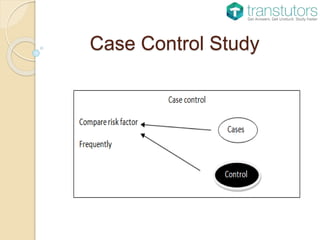
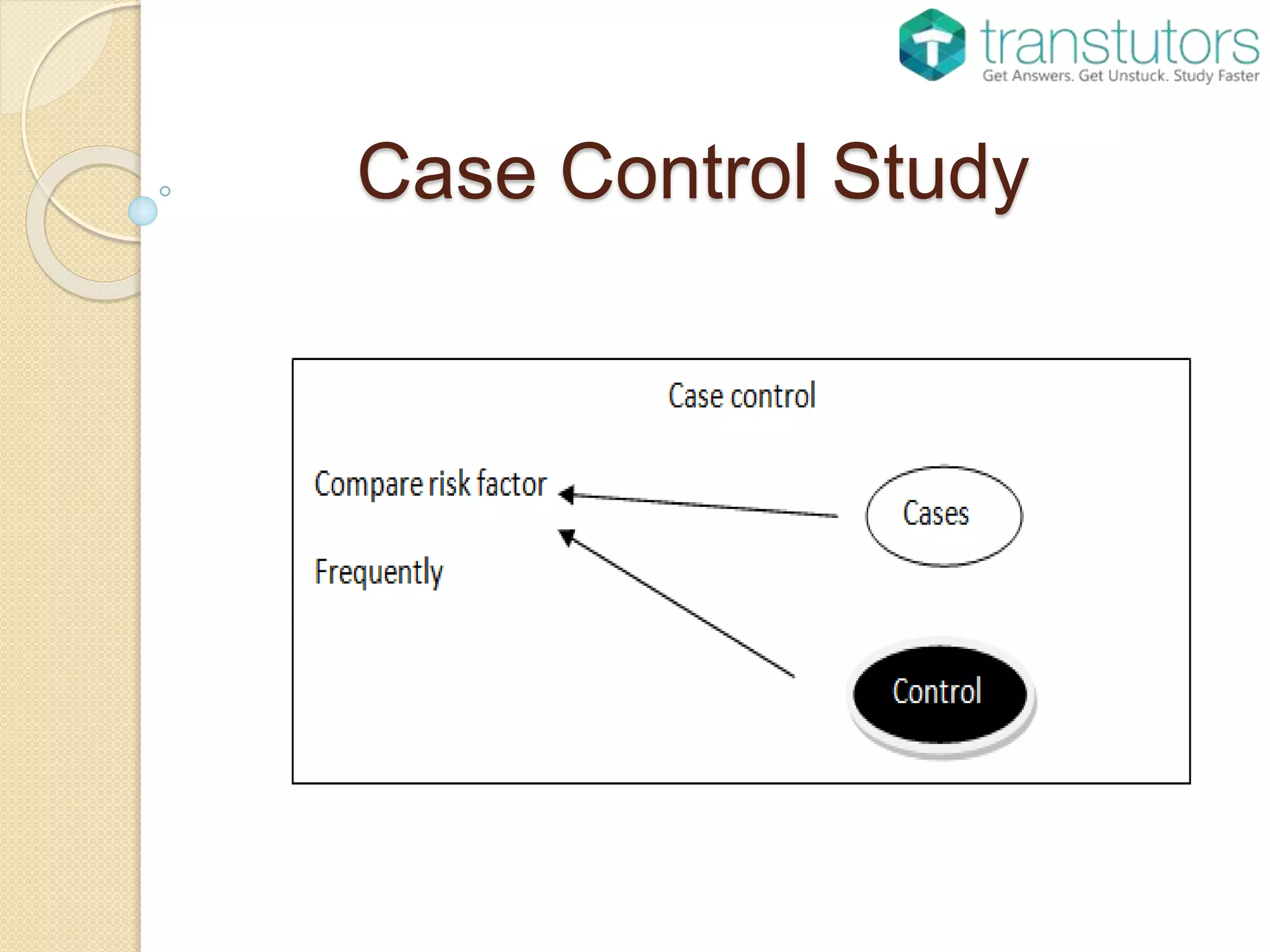

Case Control Study
Introduction
 Epidemiology and cause of disease is understood and
determined by two types of study-cohort study and case-control
study. Case control study is a type of observational or
ecological study where two existing groups are compared on
the basis of certain attributes
 It is a type of epidemiological observational study that is used in
the field of medicine. It is frequently compared with cohort
studies which will be discussed further. As it is an
epidemiological study, it increases the power of study
 Case control study is initially analyzed by testing various factors
like relative risk, odds ratio and also disease assumptions
Cohort Study
 Cohort study is a type of medical research used to analyze the cause of disease and
establishing the links between risk factors and health outcomes
 Cohort studies are also known as “prospective” studies i.e., they are planned in advance
and carried out in future for a period of time. To tell in general, this study is projected
towards future. Cohort studies are forward-looking
 In this type of study, researchers raise a research question and thus find a hypothesis
about the causes of the disease. Then, they observe a group of people over a certain
period of time, collect data and detect the changes that happen within them. Cohort
studies are used by epidemiologists looking into the factors that affect individual health
and illness
 Some of the terms that describe cohort studies include incidence, longitudinal, historic
and forward-looking. This study finds the cause and roots of the particular disease and
hence proved to be more advantageous
Cohort Study Vs Case Control
Study
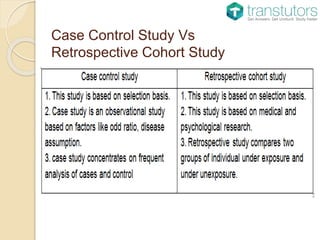
Case Control Study Vs
Retrospective Cohort Study
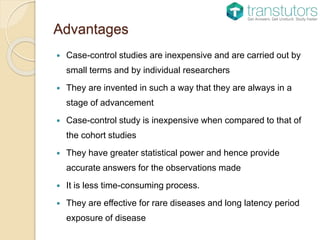
Advantages
 Case-control studies are inexpensive and are carried out by
small terms and by individual researchers
 They are invented in such a way that they are always in a
stage of advancement
 Case-control study is inexpensive when compared to that of
the cohort studies
 They have greater statistical power and hence provide
accurate answers for the observations made
 It is less time-consuming process.
 They are effective for rare diseases and long latency period
exposure of disease
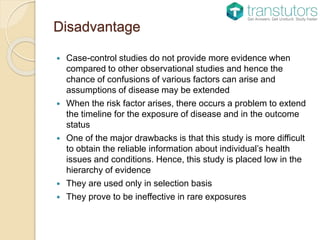
Disadvantage
 Case-control studies do not provide more evidence when
compared to other observational studies and hence the
chance of confusions of various factors can arise and
assumptions of disease may be extended
 When the risk factor arises, there occurs a problem to extend
the timeline for the exposure of disease and in the outcome
status
 One of the major drawbacks is that this study is more difficult
to obtain the reliable information about individual’s health
issues and conditions. Hence, this study is placed low in the
hierarchy of evidence
 They are used only in selection basis
 They prove to be ineffective in rare exposures
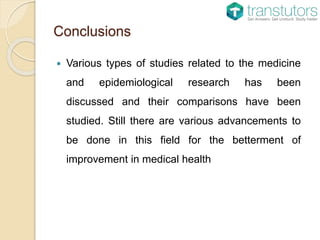
Conclusions
 Various types of studies related to the medicine
and epidemiological research has been
discussed and their comparisons have been
studied. Still there are various advancements to
be done in this field for the betterment of
improvement in medical health
Hey Friends,
This was just a summary on Case Study Control.
For more detailed information on this topic, please
type the link given below or copy it from the
description of this PPT and open it in a new browser
window.
http://www.transtutors.com/homework-
help/statistics/case-study-control.aspx

Case Study Control | Statistics

  • 1.
  • 2.
    Introduction  Epidemiology andcause of disease is understood and determined by two types of study-cohort study and case-control study. Case control study is a type of observational or ecological study where two existing groups are compared on the basis of certain attributes  It is a type of epidemiological observational study that is used in the field of medicine. It is frequently compared with cohort studies which will be discussed further. As it is an epidemiological study, it increases the power of study  Case control study is initially analyzed by testing various factors like relative risk, odds ratio and also disease assumptions
  • 3.
    Cohort Study  Cohortstudy is a type of medical research used to analyze the cause of disease and establishing the links between risk factors and health outcomes  Cohort studies are also known as “prospective” studies i.e., they are planned in advance and carried out in future for a period of time. To tell in general, this study is projected towards future. Cohort studies are forward-looking  In this type of study, researchers raise a research question and thus find a hypothesis about the causes of the disease. Then, they observe a group of people over a certain period of time, collect data and detect the changes that happen within them. Cohort studies are used by epidemiologists looking into the factors that affect individual health and illness  Some of the terms that describe cohort studies include incidence, longitudinal, historic and forward-looking. This study finds the cause and roots of the particular disease and hence proved to be more advantageous
  • 4.
    Cohort Study VsCase Control Study
  • 5.
    Case Control StudyVs Retrospective Cohort Study
  • 6.
    Advantages  Case-control studiesare inexpensive and are carried out by small terms and by individual researchers  They are invented in such a way that they are always in a stage of advancement  Case-control study is inexpensive when compared to that of the cohort studies  They have greater statistical power and hence provide accurate answers for the observations made  It is less time-consuming process.  They are effective for rare diseases and long latency period exposure of disease
  • 7.
    Disadvantage  Case-control studiesdo not provide more evidence when compared to other observational studies and hence the chance of confusions of various factors can arise and assumptions of disease may be extended  When the risk factor arises, there occurs a problem to extend the timeline for the exposure of disease and in the outcome status  One of the major drawbacks is that this study is more difficult to obtain the reliable information about individual’s health issues and conditions. Hence, this study is placed low in the hierarchy of evidence  They are used only in selection basis  They prove to be ineffective in rare exposures
  • 8.
    Conclusions  Various typesof studies related to the medicine and epidemiological research has been discussed and their comparisons have been studied. Still there are various advancements to be done in this field for the betterment of improvement in medical health
  • 9.
    Hey Friends, This wasjust a summary on Case Study Control. For more detailed information on this topic, please type the link given below or copy it from the description of this PPT and open it in a new browser window. http://www.transtutors.com/homework- help/statistics/case-study-control.aspx