

Accurate Record Keeping
&
Proper Care and Handling
Dr. Qazi Muhammad Awais
RCVetS, Lahore.
Keeping records is an important part of
any livestock operation/project.
Accurate records let you identify
specific animals for medication, analyze
your efficiency, and find changes you
could make to improve your
operation/project.
Any records kept are better than no
records at all.
Keeping Records
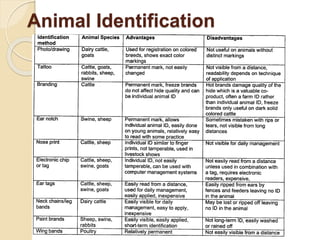
Animal Identification
Proper identification is key to good
management. If each animal is clearly
identified, keeping records on
treatments becomes a lot easier.
 Ear tag at county weight in
 Ear notch and/or tag – Swine
 Tattoo – Breeding Beef
Animal Identification
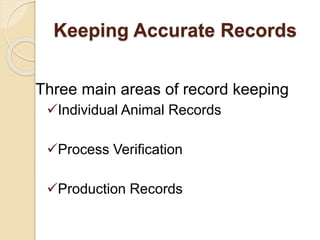
Keeping Accurate Records
Three main areas of record keeping
Individual Animal Records
Process Verification
Production Records
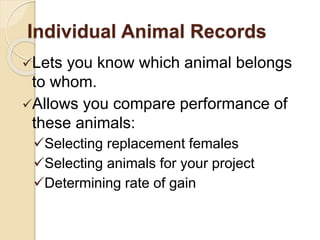
Individual Animal Records
Lets you know which animal belongs
to whom.
Allows you compare performance of
these animals:
Selecting replacement females
Selecting animals for your project
Determining rate of gain
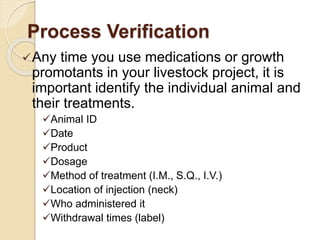
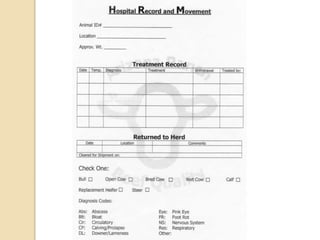
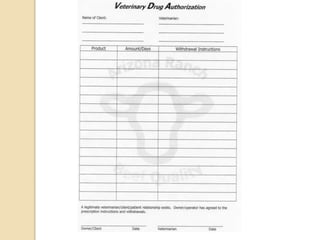
Process Verification
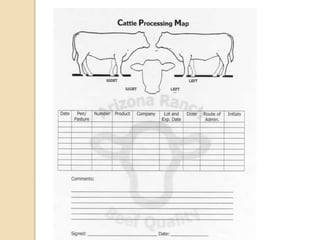
Any time you use medications or growth
promotants in your livestock project, it is
important identify the individual animal and
their treatments.
Animal ID
Date
Product
Dosage
Method of treatment (I.M., S.Q., I.V.)
Location of injection (neck)
Who administered it
Withdrawal times (label)
Feed Records
It is very important to read your feed
labels and keep copies of your feed
labels.
Keep records on how much you feed an
individual animal. (production records)
Production Records
Production records let you
measure animal and business
performance.
Examples:
Average daily gain
Weaning weights
Litter weights
Pounds of milk in dairy cattle
Production Records
Business records can show how
profitable the operation is.
Records from different years can be
compared to see how your livestock
project has progressed.
Care and Handling
The way you care for your animals can
have a big impact on how they will
grow and how they will behave.
Animal Needs
Three basic needs all animals
have.
Feed
Water
Environment
Feed
Feed will be covered in more
detail a little later, but you need to
be sure they have the proper
ration for the kind of growth you
expect.
Water
Make sure water is clean and
fresh.
Would you rather drink clean or
muddy water?
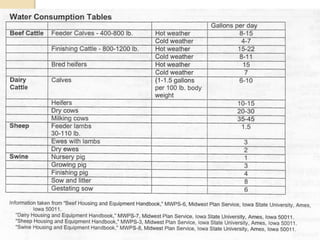
Make sure they have enough
water everyday.
Water is critical for survival and
growth.
Environment
Animal Environment Includes:
Space
Temperature
Cleanliness
Space
Is there enough space for the
animal to eat, sleep and exercise?
Use space requirement tables to
determine how much space an
animal needs.references upon request
Environment
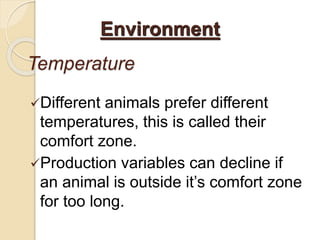
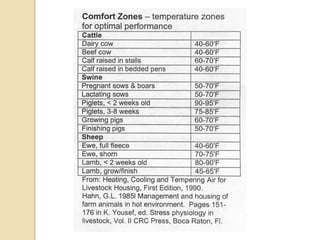
Temperature
Different animals prefer different
temperatures, this is called their
comfort zone.
Production variables can decline if
an animal is outside it’s comfort zone
for too long.
Environment
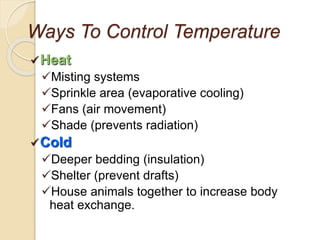
Ways To Control Temperature
Heat
Misting systems
Sprinkle area (evaporative cooling)
Fans (air movement)
Shade (prevents radiation)
Cold
Deeper bedding (insulation)
Shelter (prevent drafts)
House animals together to increase body
heat exchange.
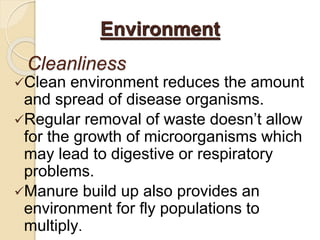
Cleanliness
Clean environment reduces the amount
and spread of disease organisms.
Regular removal of waste doesn’t allow
for the growth of microorganisms which
may lead to digestive or respiratory
problems.
Manure build up also provides an
environment for fly populations to
multiply.
Environment
Handling
Handling animals carefully is another
way to prevent injury or physical
contamination of meat (bruising,etc.).
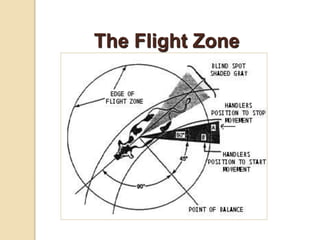
Animals two main instincts are fight or
flight.
Slow quiet movements.
Reduce the use of buzzers and prods.
Interaction at feeding time.
The Flight Zone
Stress
Heat, cold or excitement can all cause
stress.
Changes in feed, illness or movement
can also cause stress.
Stress can ultimately reduce appetite,
production and also effect the quality
of meat they produce.
Reducing Stress
Have animal well broke to reduce
excitement of the show.
Keep animals on regular feeding and
exercise schedule.
Get animals accustomed to strange or
flavored water.
Try not to mix animals at shows to
avoid fighting.
1. Accurate records are essential for
tracking medications given and
performance characteristics in
livestock projects.
2. Proper care and handling of livestock
animals ensures the safety and well
being of both you and your animal.
Conclusion
Record keeping

Record keeping

  • 2.
    Accurate Record Keeping & ProperCare and Handling Dr. Qazi Muhammad Awais RCVetS, Lahore.
  • 3.
    Keeping records isan important part of any livestock operation/project. Accurate records let you identify specific animals for medication, analyze your efficiency, and find changes you could make to improve your operation/project. Any records kept are better than no records at all. Keeping Records
  • 4.
    Animal Identification Proper identificationis key to good management. If each animal is clearly identified, keeping records on treatments becomes a lot easier.  Ear tag at county weight in  Ear notch and/or tag – Swine  Tattoo – Breeding Beef
  • 5.
  • 6.
    Keeping Accurate Records Threemain areas of record keeping Individual Animal Records Process Verification Production Records
  • 7.
    Individual Animal Records Letsyou know which animal belongs to whom. Allows you compare performance of these animals: Selecting replacement females Selecting animals for your project Determining rate of gain
  • 8.
    Process Verification Any timeyou use medications or growth promotants in your livestock project, it is important identify the individual animal and their treatments. Animal ID Date Product Dosage Method of treatment (I.M., S.Q., I.V.) Location of injection (neck) Who administered it Withdrawal times (label)
  • 12.
    Feed Records It isvery important to read your feed labels and keep copies of your feed labels. Keep records on how much you feed an individual animal. (production records)
  • 13.
    Production Records Production recordslet you measure animal and business performance. Examples: Average daily gain Weaning weights Litter weights Pounds of milk in dairy cattle
  • 14.
    Production Records Business recordscan show how profitable the operation is. Records from different years can be compared to see how your livestock project has progressed.
  • 15.
    Care and Handling Theway you care for your animals can have a big impact on how they will grow and how they will behave.
  • 16.
    Animal Needs Three basicneeds all animals have. Feed Water Environment
  • 17.
    Feed Feed will becovered in more detail a little later, but you need to be sure they have the proper ration for the kind of growth you expect.
  • 18.
    Water Make sure wateris clean and fresh. Would you rather drink clean or muddy water? Make sure they have enough water everyday. Water is critical for survival and growth.
  • 20.
  • 21.
    Space Is there enoughspace for the animal to eat, sleep and exercise? Use space requirement tables to determine how much space an animal needs.references upon request Environment
  • 22.
    Temperature Different animals preferdifferent temperatures, this is called their comfort zone. Production variables can decline if an animal is outside it’s comfort zone for too long. Environment
  • 24.
    Ways To ControlTemperature Heat Misting systems Sprinkle area (evaporative cooling) Fans (air movement) Shade (prevents radiation) Cold Deeper bedding (insulation) Shelter (prevent drafts) House animals together to increase body heat exchange.
  • 25.
    Cleanliness Clean environment reducesthe amount and spread of disease organisms. Regular removal of waste doesn’t allow for the growth of microorganisms which may lead to digestive or respiratory problems. Manure build up also provides an environment for fly populations to multiply. Environment
  • 26.
    Handling Handling animals carefullyis another way to prevent injury or physical contamination of meat (bruising,etc.). Animals two main instincts are fight or flight. Slow quiet movements. Reduce the use of buzzers and prods. Interaction at feeding time.
  • 27.
  • 28.
    Stress Heat, cold orexcitement can all cause stress. Changes in feed, illness or movement can also cause stress. Stress can ultimately reduce appetite, production and also effect the quality of meat they produce.
  • 29.
    Reducing Stress Have animalwell broke to reduce excitement of the show. Keep animals on regular feeding and exercise schedule. Get animals accustomed to strange or flavored water. Try not to mix animals at shows to avoid fighting.
  • 30.
    1. Accurate recordsare essential for tracking medications given and performance characteristics in livestock projects. 2. Proper care and handling of livestock animals ensures the safety and well being of both you and your animal. Conclusion