CardiovascularHealth
By Lisa Scharff MICP Pogo Mine Site Paramedic
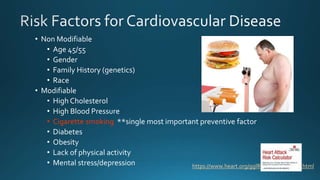
• Non Modifiable
• Age 45/55
• Gender
• Family History (genetics)
• Race
• Modifiable
• High Cholesterol
• High Blood Pressure
• Cigarette smoking **single most important preventive factor
• Diabetes
• Obesity
• Lack of physical activity
• Mental stress/depression https://www.heart.org/gglRisk/main_en_US.html
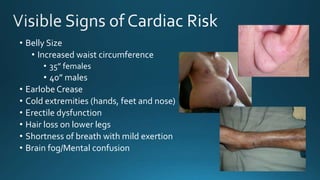
• Belly Size
• Increased waist circumference
• 35” females
• 40” males
• Earlobe Crease
• Cold extremities (hands, feet and nose)
• Erectile dysfunction
• Hair loss on lower legs
• Shortness of breath with mild exertion
• Brain fog/Mental confusion
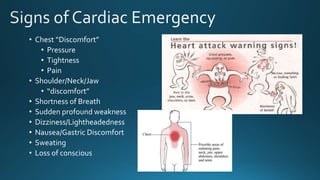
• Chest “Discomfort”
• Pressure
• Tightness
• Pain
• Shoulder/Neck/Jaw
• “discomfort”
• Shortness of Breath
• Sudden profound weakness
• Dizziness/Lightheadedness
• Nausea/Gastric Discomfort
• Sweating
• Loss of conscious
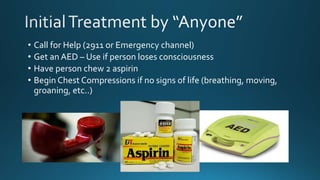
• Call for Help (2911 or Emergency channel)
• Get an AED – Use if person loses consciousness
• Have person chew 2 aspirin
• Begin Chest Compressions if no signs of life (breathing, moving,
groaning, etc..)
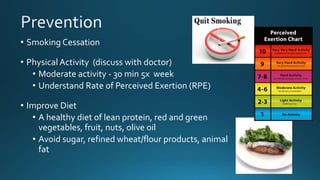
• Smoking Cessation
• Physical Activity (discuss with doctor)
• Moderate activity - 30 min 5x week
• Understand Rate of Perceived Exertion (RPE)
• Improve Diet
• A healthy diet of lean protein, red and green
vegetables, fruit, nuts, olive oil
• Avoid sugar, refined wheat/flour products, animal
fat
• Decrease stress (relaxation techniques, quality sleep)
• Consider aspirin regimen (discuss with doctor)
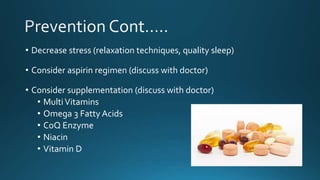
• Consider supplementation (discuss with doctor)
• MultiVitamins
• Omega 3 Fatty Acids
• CoQ Enzyme
• Niacin
• Vitamin D
Cardiovascular Health Presentation

Cardiovascular Health Presentation

  • 1.
    CardiovascularHealth By Lisa ScharffMICP Pogo Mine Site Paramedic
  • 8.
    • Non Modifiable •Age 45/55 • Gender • Family History (genetics) • Race • Modifiable • High Cholesterol • High Blood Pressure • Cigarette smoking **single most important preventive factor • Diabetes • Obesity • Lack of physical activity • Mental stress/depression https://www.heart.org/gglRisk/main_en_US.html
  • 10.
    • Belly Size •Increased waist circumference • 35” females • 40” males • Earlobe Crease • Cold extremities (hands, feet and nose) • Erectile dysfunction • Hair loss on lower legs • Shortness of breath with mild exertion • Brain fog/Mental confusion
  • 11.
    • Chest “Discomfort” •Pressure • Tightness • Pain • Shoulder/Neck/Jaw • “discomfort” • Shortness of Breath • Sudden profound weakness • Dizziness/Lightheadedness • Nausea/Gastric Discomfort • Sweating • Loss of conscious
  • 12.
    • Call forHelp (2911 or Emergency channel) • Get an AED – Use if person loses consciousness • Have person chew 2 aspirin • Begin Chest Compressions if no signs of life (breathing, moving, groaning, etc..)
  • 13.
    • Smoking Cessation •Physical Activity (discuss with doctor) • Moderate activity - 30 min 5x week • Understand Rate of Perceived Exertion (RPE) • Improve Diet • A healthy diet of lean protein, red and green vegetables, fruit, nuts, olive oil • Avoid sugar, refined wheat/flour products, animal fat
  • 14.
    • Decrease stress(relaxation techniques, quality sleep) • Consider aspirin regimen (discuss with doctor) • Consider supplementation (discuss with doctor) • MultiVitamins • Omega 3 Fatty Acids • CoQ Enzyme • Niacin • Vitamin D

Editor's Notes

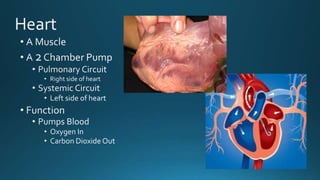
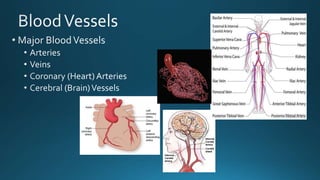
  • #4 Every body sytem has a “structure” and a “function” associated with it……. The CV function is to ……. The CV is made up of the heart, the blood vessels and the blood that travels through them
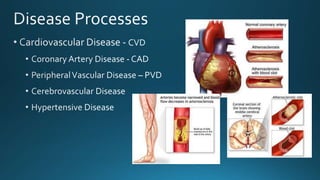
  • #7 Defining Terms CVD - Cardiovascular Disease Refers to any disease that affects the cardiovascular system Coronary artery disease CAD - Coronary Artery Disease Arteries that supply blood to heart muscle become hardened and narrowed due to the buildup of cholesterol and other material, called plaque, on their inner walls. This buildup is called atherosclerosis. As it grows less blood can flow through the arteries and as a result the heart muscle can't get the blood or oxygen it needs. Hypertensive heart disease - diseases of the heart secondary to high blood pressure “enlarged heart” Cerebrovascular disease - disease of blood vessels that supplies to the brain Peripheral arterial disease - disease of blood vessels that supplies to the arms and legs   About 20% of patients with mild PVD may be asymptomatic; other symptoms include:[1] Pain, weakness, numbness, or cramping in muscles due to decreased blood flow (claudation) Sores, wounds, or ulcers that heal slowly or not at all Noticeable change in color (blueness or paleness) or temperature (coolness) when compared to the other limb (termed unilateral dependent rubor; when both limbs are affected this is termed bilateral dependent rubor) Diminished hair and nail growth on affected limb and digits
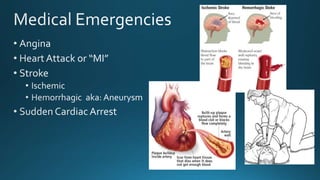
  • #8 Angina Chest pain relieved by rest and or medication   MI - Myocardial Infarction “heart attack” Sudden blockage of blood flow in the heart CVA – Stroke Sudden interruption of blood supply to the brain SCA - Sudden Cardiac Arrest Heart rhythm
  • #9 Risk Factors Modifiable vs Non Modifiable Non Modifiable Age 45/55 Gender Family History (genes) Race Modifiable High Cholesterol High Blood Pressure Cigarette smoking **single most important preventive Diabetes Obesity Lack of physical activity Mental stress/depression Arteriosclerosis is the thickening, hardening and loss of elasticity of the walls of arteries.[1] The word arteriosclerosis is a general term describing any hardening (and loss of elasticity) of medium or large arteries (from the Greek αρτηρία, meaning artery, and σκληρωτικός, meaning hardened). It should not be confused with atherosclerosis, which is a specific form of arteriosclerosis caused by the buildup of fatty plaques and cholesterol in the artery. Atherosclerosis (also known as arteriosclerotic vascular disease or ASVD) is a specific form of arteriosclerosis in which an artery wall thickens as a result of the accumulation of calcium and fatty materials such as cholesterol and triglyceride. It reduces the elasticity of the artery walls and therefore allows less blood to travel through. This also increases blood pressure
  • #11 Outward Signs Of Cardiac Risk Belly Size Increased waist circumference = increased visceral fat stores 35” females 40” males Earlobe Crease Cold extremities (hands, feet and nose) Erectile dysfunction Hair loss on lower legs Shortness of breath with mild exertion Brain fog/Mental confusion  
  • #12 Signs of Cardiac Emergency Chest “discomfort” Pain Tightness Pressure Shoulder/Shoulder/Jaw “discomfort” Sudden profound weakness Dizziness Nausea/Vomiting Sweating Persistent Fatigue not relieved by rest Loss of conscious
  • #13 Initial Treatment Call for Help (2911 or Emergency channel) Get an AED – Use if person loses consciousness Have patient chew 1 aspirin Begin Chest Compressions if no signs of life (breathing, moving, groaning, etc..)
  • #14 Prevention A healthy diet is one of the best weapons you have to fight cardiovascular disease. The food you eat (and the amount) can affect other controllable risk factors: cholesterol, blood pressure, diabetes and overweight. Choose nutrient-rich foods — which have vitamins, minerals, fiber and other nutrients but are lower in calories — over nutrient-poor foods. A diet rich in vegetables, fruits, whole-grain and high-fiber foods, fish, lean protein and fat-free or low-fat dairy products is the key. And to maintain a healthy weight, coordinate your diet with your physical activity level so you're using up as many calories as you take in.
  • #15 Omega 3 Fatty Acids lower Blood fat (triglycerides).  Coenzyme Q-10 is an important vitamin-like substance required for the proper function of many organs and chemical reactions in the body. It helps provide energy to cells. Coenzyme Q-10 also seems to have antioxidant activity. Niacin might help people with heart disease because of its beneficial effects on clotting. It may also improve levels of a certain type of fat called triglycerides in the blood. A growing number of studies point to vitamin D deficiency as a risk factor for heart attacks, congestive heart failure, peripheral arterial disease (PAD), strokes, and the conditions associated with cardiovascular disease, such as high blood pressure and diabetes. A direct link has yet to be formed between higher vitamin D levels and lower cardiovascular risk