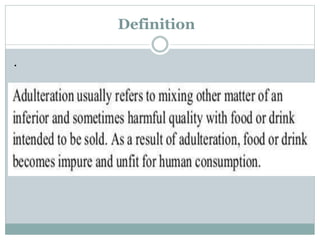
Definition
.
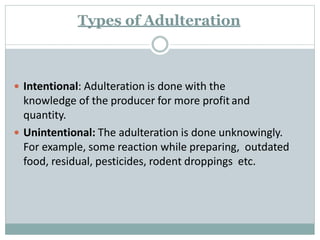
Types of Adulteration
 Intentional: Adulteration is done with the
knowledge of the producer for more profit and
quantity.
 Unintentional: The adulteration is done unknowingly.
For example, some reaction while preparing, outdated
food, residual, pesticides, rodent droppings etc.
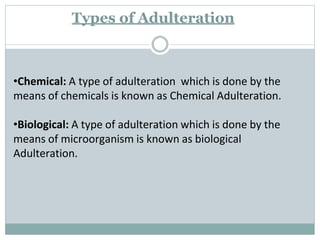
•Chemical: A type of adulteration which is done by the
means of chemicals is known as Chemical Adulteration.
•Biological: A type of adulteration which is done by the
means of microorganism is known as biological
Adulteration.
Types of Adulteration
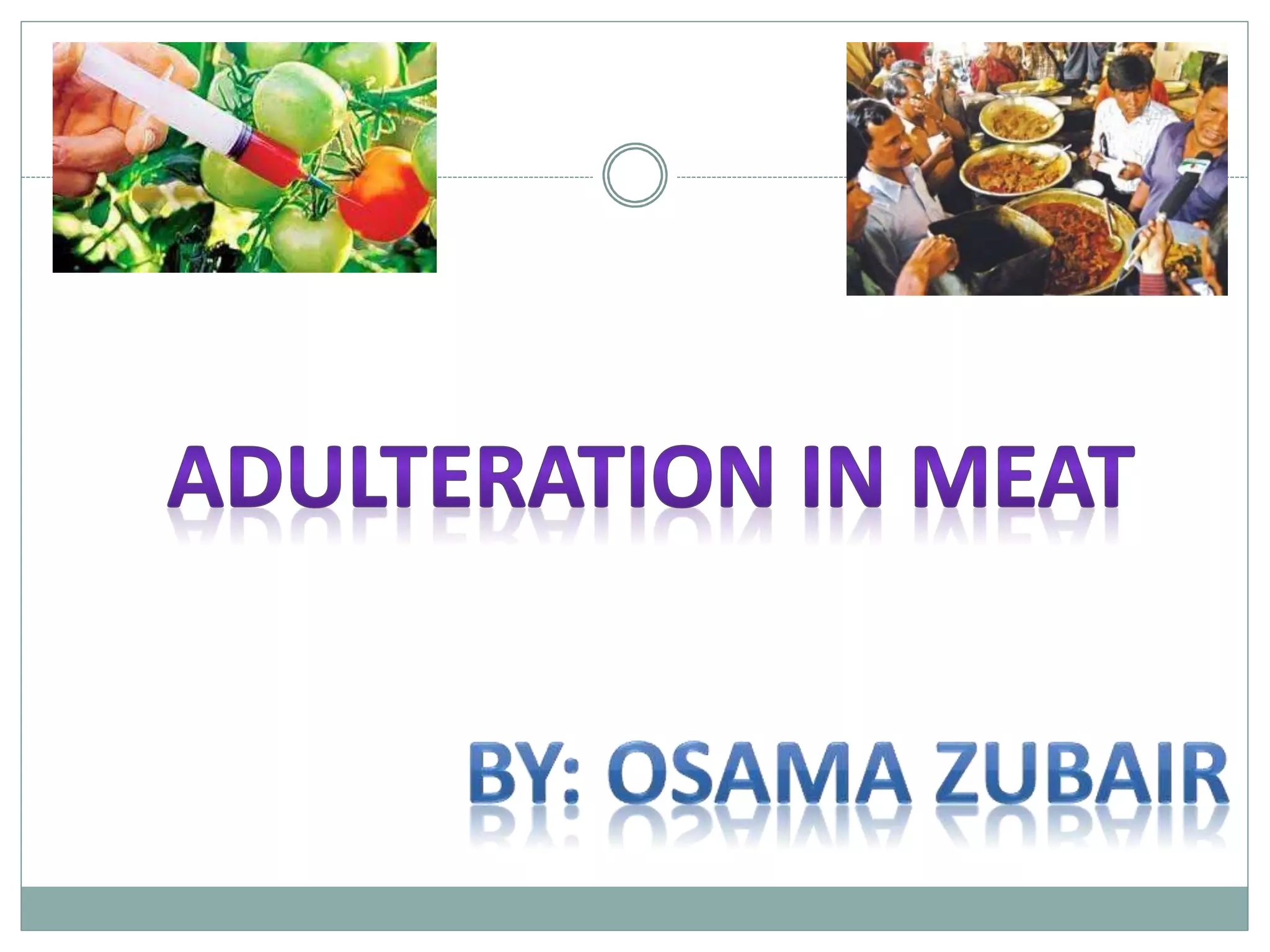
Adulteration In Meat
There are various kind of adulteration which we can see
in meat and meat products.
• Addition of water
• Addition of ice.
• Dead animal meat.
• Haram animal meat.
• Meat imitation.
• Mixing of different organ in Sausages/Nuggets.
• Unhealthy animal meat.
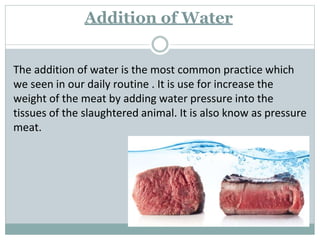
Addition of Water
The addition of water is the most common practice which
we seen in our daily routine . It is use for increase the
weight of the meat by adding water pressure into the
tissues of the slaughtered animal. It is also know as pressure
meat.
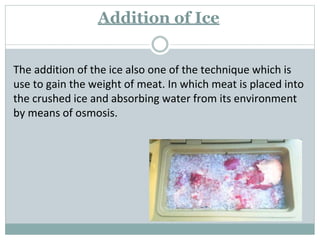
Addition of Ice
The addition of the ice also one of the technique which is
use to gain the weight of meat. In which meat is placed into
the crushed ice and absorbing water from its environment
by means of osmosis.
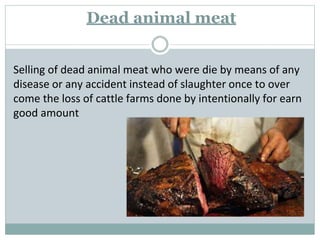
Dead animal meat
Selling of dead animal meat who were die by means of any
disease or any accident instead of slaughter once to over
come the loss of cattle farms done by intentionally for earn
good amount
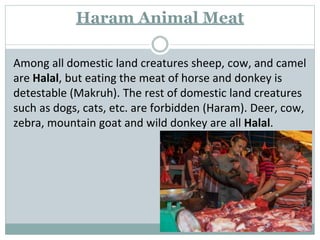
Haram Animal Meat
Among all domestic land creatures sheep, cow, and camel
are Halal, but eating the meat of horse and donkey is
detestable (Makruh). The rest of domestic land creatures
such as dogs, cats, etc. are forbidden (Haram). Deer, cow,
zebra, mountain goat and wild donkey are all Halal.
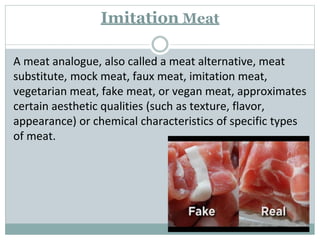
Imitation Meat
A meat analogue, also called a meat alternative, meat
substitute, mock meat, faux meat, imitation meat,
vegetarian meat, fake meat, or vegan meat, approximates
certain aesthetic qualities (such as texture, flavor,
appearance) or chemical characteristics of specific types
of meat.
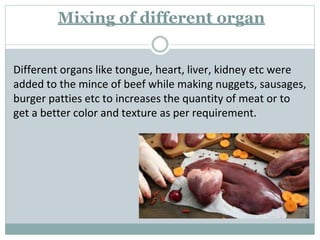
Mixing of different organ
Different organs like tongue, heart, liver, kidney etc were
added to the mince of beef while making nuggets, sausages,
burger patties etc to increases the quantity of meat or to
get a better color and texture as per requirement.
Causes of Adulteration
 High demand
 Lowering the cost of the product to compete with
the market.
 To gain profit
 Lack of trained men
 Outdated processing techniques
 Not aware of its effects
Effects of Adulteration
 It is injurious to health.
 It causes many diseases.
 It also causes deficiency diseases as it disables us to
get the real nutrients of the quality products.
 It causes children deficiency in health and mental
ability.
 It causes new diseases in our body like cancer,
damage to digestive tract, liver and stomach
disorders.
 It doesn't allow to enhance the product.
Laws against Adulteration
 The Federal food and cosmetic drug act of 1938 first
introduced the idea of prevention of food
adulteration.
 In 1954,The Prevention of Food Adulteration act was
passed which enforced the previous laws which was
against adulteration.
 In 2004,these laws were again enforced and the
punishments were increased.
Adulteration in meat

Adulteration in meat

  • 2.
  • 3.
    Types of Adulteration Intentional: Adulteration is done with the knowledge of the producer for more profit and quantity.  Unintentional: The adulteration is done unknowingly. For example, some reaction while preparing, outdated food, residual, pesticides, rodent droppings etc.
  • 4.
    •Chemical: A typeof adulteration which is done by the means of chemicals is known as Chemical Adulteration. •Biological: A type of adulteration which is done by the means of microorganism is known as biological Adulteration. Types of Adulteration
  • 5.
    Adulteration In Meat Thereare various kind of adulteration which we can see in meat and meat products. • Addition of water • Addition of ice. • Dead animal meat. • Haram animal meat. • Meat imitation. • Mixing of different organ in Sausages/Nuggets. • Unhealthy animal meat.
  • 6.
    Addition of Water Theaddition of water is the most common practice which we seen in our daily routine . It is use for increase the weight of the meat by adding water pressure into the tissues of the slaughtered animal. It is also know as pressure meat.
  • 7.
    Addition of Ice Theaddition of the ice also one of the technique which is use to gain the weight of meat. In which meat is placed into the crushed ice and absorbing water from its environment by means of osmosis.
  • 8.
    Dead animal meat Sellingof dead animal meat who were die by means of any disease or any accident instead of slaughter once to over come the loss of cattle farms done by intentionally for earn good amount
  • 9.
    Haram Animal Meat Amongall domestic land creatures sheep, cow, and camel are Halal, but eating the meat of horse and donkey is detestable (Makruh). The rest of domestic land creatures such as dogs, cats, etc. are forbidden (Haram). Deer, cow, zebra, mountain goat and wild donkey are all Halal.
  • 10.
    Imitation Meat A meatanalogue, also called a meat alternative, meat substitute, mock meat, faux meat, imitation meat, vegetarian meat, fake meat, or vegan meat, approximates certain aesthetic qualities (such as texture, flavor, appearance) or chemical characteristics of specific types of meat.
  • 11.
    Mixing of differentorgan Different organs like tongue, heart, liver, kidney etc were added to the mince of beef while making nuggets, sausages, burger patties etc to increases the quantity of meat or to get a better color and texture as per requirement.
  • 12.
    Causes of Adulteration High demand  Lowering the cost of the product to compete with the market.  To gain profit  Lack of trained men  Outdated processing techniques  Not aware of its effects
  • 13.
    Effects of Adulteration It is injurious to health.  It causes many diseases.  It also causes deficiency diseases as it disables us to get the real nutrients of the quality products.  It causes children deficiency in health and mental ability.  It causes new diseases in our body like cancer, damage to digestive tract, liver and stomach disorders.  It doesn't allow to enhance the product.
  • 14.
    Laws against Adulteration The Federal food and cosmetic drug act of 1938 first introduced the idea of prevention of food adulteration.  In 1954,The Prevention of Food Adulteration act was passed which enforced the previous laws which was against adulteration.  In 2004,these laws were again enforced and the punishments were increased.