What is Greenhouse Effect ?
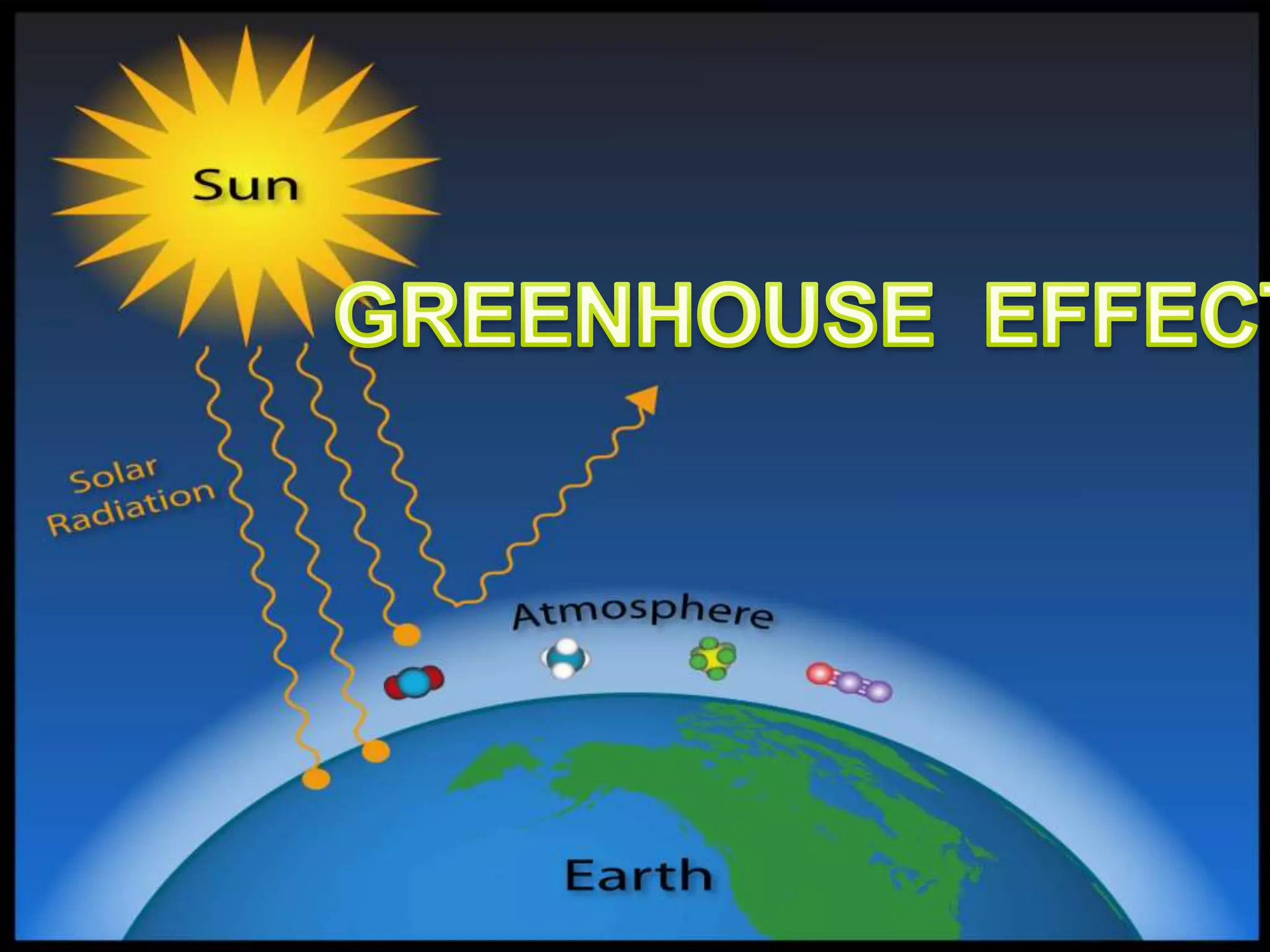
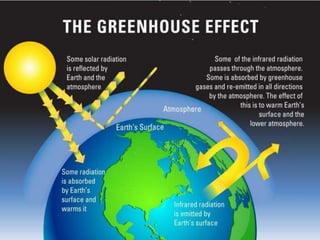
O The greenhouse effect is a natural
process that warms the Earth’s surface.
When the Sun’s energy reaches the
Earth’s atmosphere, some of it is reflected
back to space and the rest is absorbed
and re-radiated by greenhouse gases.
Some Works on Greenhouse
Effect
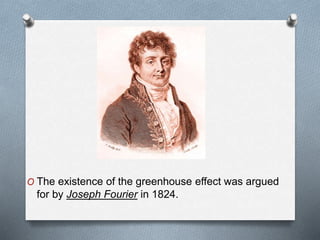
O The existence of the greenhouse effect was argued
for by Joseph Fourier in 1824.
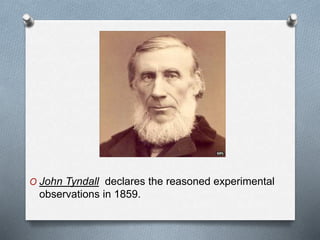
O John Tyndall declares the reasoned experimental
observations in 1859.
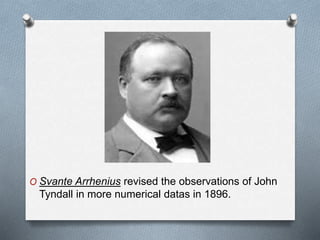
O Svante Arrhenius revised the observations of John
Tyndall in more numerical datas in 1896.
O Global warming refers to a rise in the temperature of
the surface of the earth
O An increase in the concentration of greenhouse gases
leads to an increase in the magnitude of the
greenhouse effect ( called enhanced greenhouse effect
Causes of Greenhouse Effect
OGreenhouse Gases: By their percentage
contribution to the greenhouse effect on Earth the four
major gases are:
water vapor, 36–70%
carbon dioxide, 9–26%
methane, 4–9%
ozone, 3–7%
O Ozone Layer Depletion: A variety of biological
consequences such as increases in sunburn, skin
cancer, cataracts, damage to plants, and reduction
of plankton populations in the ocean's photic zonemay
result from the increased UV exposure due to ozone
depletion.
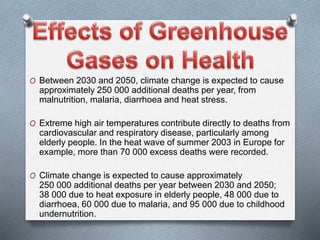
O Between 2030 and 2050, climate change is expected to cause
approximately 250 000 additional deaths per year, from
malnutrition, malaria, diarrhoea and heat stress.
O Extreme high air temperatures contribute directly to deaths from
cardiovascular and respiratory disease, particularly among
elderly people. In the heat wave of summer 2003 in Europe for
example, more than 70 000 excess deaths were recorded.
O Climate change is expected to cause approximately
250 000 additional deaths per year between 2030 and 2050;
38 000 due to heat exposure in elderly people, 48 000 due to
diarrhoea, 60 000 due to malaria, and 95 000 due to childhood
undernutrition.
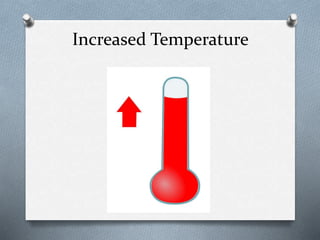
Increased Temperature
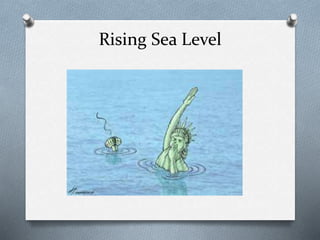
Rising Sea Level
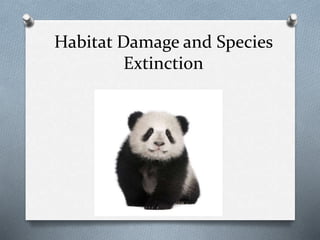
Habitat Damage and Species
Extinction
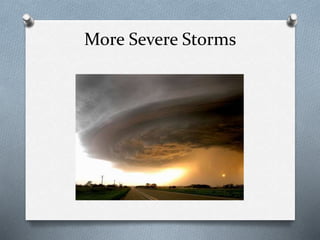
More Severe Storms
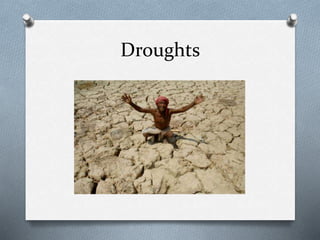
Droughts
Reduce, Reuse, Recycle
Buying products with minimal packaging will
help to reduce waste. By recycling half of
your household waste, you can save 2,400
pounds of carbon dioxide annually
Replace Your Light Bulbs
Wherever practical, replace regular light bulbs
with compact florescent light (CFL) bulbs.
Replacing just one 60-watt incandescent light
bulb with a CFL will save you $30 over the life of
the bulb. CFLs also last 10 times longer than
incandescent bulbs, use two-thirds less energy,
and give off 70 percent less heat. If every
Canadian family replaced one regular light bulb
with a CFL, it would eliminate 90 billion pounds
of greenhouse gases, the same as taking 7.5
million cars off the road.
Use the "Off" Switch
Save electricity and reduce global warming by
turning off lights when you leave a room, and
using only as much light as you need. And
remember to turn off your television, stereo and
computer when you're not using them. It’s also a
good idea to turn off the water when you’re not
using it. While brushing your teeth, shampooing
the dog or washing your car, turn off the water
until you actually need it for rinsing.
Plant a Tree
If you have the means to plant a tree, start
digging. Trees absorb carbon dioxide and
give off oxygen. A single tree will absorb
approximately one ton of carbon dioxide
during its lifetime.
Encourage Others to
Conserve
Share information about recycling and
energy conservation with your friends,
neighbors and co-workers, and take
opportunities to encourage public officials to
establish programs and policies that are
good for the environment.
Not All Scientists Agree
While the majority of mainstream scientists
agree that global warming is a serious
problem that is growing steadily worse,
there are some who disagree.
John Christy, a professor and director of the
Earth System Science Center at the
University of Alabama in Huntsville is
a respected climatologist who argues that
global warming isn't worth worrying about.
Christy reached that opinion after analyzing
millions of measurements from weather
satellites in an effort to find a global
temperature trend. He found no sign of
global warming in the satellite data, and now
believes that predictions of global warming
by as much as 10 degrees Fahrenheit by
the end of the 21st century are incorrect.
Greenhouse Effect

Greenhouse Effect

  • 2.
    What is GreenhouseEffect ? O The greenhouse effect is a natural process that warms the Earth’s surface. When the Sun’s energy reaches the Earth’s atmosphere, some of it is reflected back to space and the rest is absorbed and re-radiated by greenhouse gases.
  • 4.
    Some Works onGreenhouse Effect
  • 5.
    O The existenceof the greenhouse effect was argued for by Joseph Fourier in 1824.
  • 6.
    O John Tyndalldeclares the reasoned experimental observations in 1859.
  • 7.
    O Svante Arrheniusrevised the observations of John Tyndall in more numerical datas in 1896.
  • 8.
    O Global warmingrefers to a rise in the temperature of the surface of the earth O An increase in the concentration of greenhouse gases leads to an increase in the magnitude of the greenhouse effect ( called enhanced greenhouse effect
  • 9.
    Causes of GreenhouseEffect OGreenhouse Gases: By their percentage contribution to the greenhouse effect on Earth the four major gases are: water vapor, 36–70% carbon dioxide, 9–26% methane, 4–9% ozone, 3–7% O Ozone Layer Depletion: A variety of biological consequences such as increases in sunburn, skin cancer, cataracts, damage to plants, and reduction of plankton populations in the ocean's photic zonemay result from the increased UV exposure due to ozone depletion.
  • 10.
    O Between 2030and 2050, climate change is expected to cause approximately 250 000 additional deaths per year, from malnutrition, malaria, diarrhoea and heat stress. O Extreme high air temperatures contribute directly to deaths from cardiovascular and respiratory disease, particularly among elderly people. In the heat wave of summer 2003 in Europe for example, more than 70 000 excess deaths were recorded. O Climate change is expected to cause approximately 250 000 additional deaths per year between 2030 and 2050; 38 000 due to heat exposure in elderly people, 48 000 due to diarrhoea, 60 000 due to malaria, and 95 000 due to childhood undernutrition.
  • 12.
  • 13.
  • 14.
    Habitat Damage andSpecies Extinction
  • 15.
  • 16.
  • 18.
    Reduce, Reuse, Recycle Buyingproducts with minimal packaging will help to reduce waste. By recycling half of your household waste, you can save 2,400 pounds of carbon dioxide annually
  • 19.
    Replace Your LightBulbs Wherever practical, replace regular light bulbs with compact florescent light (CFL) bulbs. Replacing just one 60-watt incandescent light bulb with a CFL will save you $30 over the life of the bulb. CFLs also last 10 times longer than incandescent bulbs, use two-thirds less energy, and give off 70 percent less heat. If every Canadian family replaced one regular light bulb with a CFL, it would eliminate 90 billion pounds of greenhouse gases, the same as taking 7.5 million cars off the road.
  • 20.
    Use the "Off"Switch Save electricity and reduce global warming by turning off lights when you leave a room, and using only as much light as you need. And remember to turn off your television, stereo and computer when you're not using them. It’s also a good idea to turn off the water when you’re not using it. While brushing your teeth, shampooing the dog or washing your car, turn off the water until you actually need it for rinsing.
  • 21.
    Plant a Tree Ifyou have the means to plant a tree, start digging. Trees absorb carbon dioxide and give off oxygen. A single tree will absorb approximately one ton of carbon dioxide during its lifetime.
  • 22.
    Encourage Others to Conserve Shareinformation about recycling and energy conservation with your friends, neighbors and co-workers, and take opportunities to encourage public officials to establish programs and policies that are good for the environment.
  • 23.
    Not All ScientistsAgree While the majority of mainstream scientists agree that global warming is a serious problem that is growing steadily worse, there are some who disagree. John Christy, a professor and director of the Earth System Science Center at the University of Alabama in Huntsville is a respected climatologist who argues that global warming isn't worth worrying about.
  • 24.
    Christy reached thatopinion after analyzing millions of measurements from weather satellites in an effort to find a global temperature trend. He found no sign of global warming in the satellite data, and now believes that predictions of global warming by as much as 10 degrees Fahrenheit by the end of the 21st century are incorrect.