Photosynthesis

The Big Picture
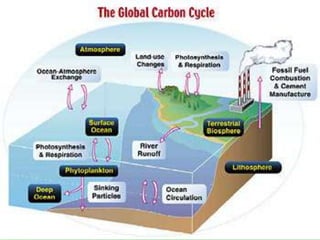
Carbon cycle
  Process by which carbon moves from organic
   to inorganic compounds and back
  Producers convert inorganic carbon (CO2) into
   organic carbon compounds (glucose)
  Primary Consumers obtain organic compounds
   by eating producers
  Secondary consumers obtain organic carbon
   by eating primary consumers
  Cellular Respiration by producers and
   consumers return CO2 to atmosphere
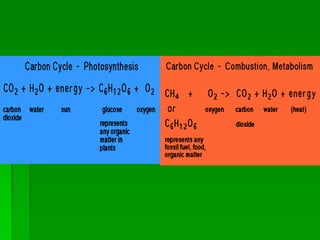
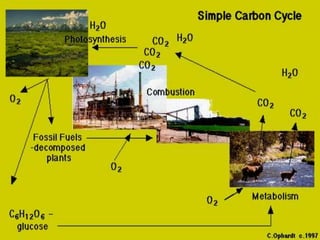
 In the natural carbon cycle, there are two
  main processes which occur
   Photosynthesis
   Metabolism/Cellular Respiration
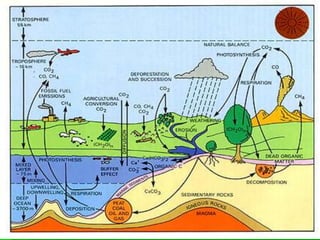
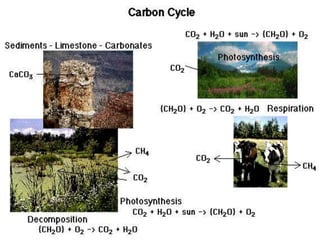
Carbon in Ocean and
   Sediments
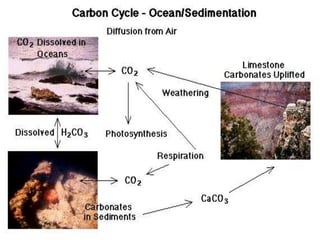
 CO2 is slightly soluble
 Can be absorbed into water
 Some of the dissolved CO2 remains in the water, the warmer the water the
  less carbon dioxide remains in the water
 Some CO2 is used by algae and phytoplankton through the process of
  photosynthesis
 Coral and shelled marine organisms take up CO2 from the water and
  convert it into calcium carbonate
    When these organisms die pieces of shells/coral fall to ocean floor and make
     sediments
 The carbonate sediments are constantly being formed and redissolved in the
  bottom of the ocean
 Over long periods of time, the sediments may be raised up as dry land or
  into mountains
 This type of sedimentary rock is called limestone
 The carbonates can redissolve releasing carbon dioxide back to the air or
  water
Humans and the Carbon
 Cycle
 Combustion of any type of fossil fuel, which may
  include oil, coal, or natural gas
 Fossil Fuels formed thousands of years ago from
  plant or animal remains that were buried,
  compressed, and transformed into oil, coal, or
  natural gas
 This carbon is said to be "fixed" in place and is
  essentially locked out of the natural carbon cycle
 Humans intervene during by burning the fossil fuels
   During combustion in the presence of O2, CO2 and water
    molecules are released into the atmosphere
Photosynthesis and Global
     Climate
   CO2 makes up 0.03 percent of Earth’s atmosphere
      300 parts per million
   Greenhouse Effect
        CO2 traps heat from sun in Earth’s atmosphere (otherwise it would escape into space)
        Not a bad thing
        Keeps world climate warm enough to sustain life
        Keeps Earth 10% warmer than it would be without CO2
   Currently CO2 in atmosphere is rising
      360 parts per million
   Burning fossil fuels
   Deforestation
   Natural Causes
        Photosynthesis
        Cellular respiration
        Decomposition
        Volcanic eruptions
        Ocean/limestone
   Global Warming
      Overall rise in Earth’s average temperature over a period of time

Photosynthesis part 3

  • 1.
  • 2.
    Carbon cycle Process by which carbon moves from organic to inorganic compounds and back  Producers convert inorganic carbon (CO2) into organic carbon compounds (glucose)  Primary Consumers obtain organic compounds by eating producers  Secondary consumers obtain organic carbon by eating primary consumers  Cellular Respiration by producers and consumers return CO2 to atmosphere
  • 3.
     In thenatural carbon cycle, there are two main processes which occur  Photosynthesis  Metabolism/Cellular Respiration
  • 8.
    Carbon in Oceanand Sediments  CO2 is slightly soluble  Can be absorbed into water  Some of the dissolved CO2 remains in the water, the warmer the water the less carbon dioxide remains in the water  Some CO2 is used by algae and phytoplankton through the process of photosynthesis  Coral and shelled marine organisms take up CO2 from the water and convert it into calcium carbonate  When these organisms die pieces of shells/coral fall to ocean floor and make sediments  The carbonate sediments are constantly being formed and redissolved in the bottom of the ocean  Over long periods of time, the sediments may be raised up as dry land or into mountains  This type of sedimentary rock is called limestone  The carbonates can redissolve releasing carbon dioxide back to the air or water
  • 11.
    Humans and theCarbon Cycle  Combustion of any type of fossil fuel, which may include oil, coal, or natural gas  Fossil Fuels formed thousands of years ago from plant or animal remains that were buried, compressed, and transformed into oil, coal, or natural gas  This carbon is said to be "fixed" in place and is essentially locked out of the natural carbon cycle  Humans intervene during by burning the fossil fuels  During combustion in the presence of O2, CO2 and water molecules are released into the atmosphere
  • 12.
    Photosynthesis and Global Climate  CO2 makes up 0.03 percent of Earth’s atmosphere  300 parts per million  Greenhouse Effect  CO2 traps heat from sun in Earth’s atmosphere (otherwise it would escape into space)  Not a bad thing  Keeps world climate warm enough to sustain life  Keeps Earth 10% warmer than it would be without CO2  Currently CO2 in atmosphere is rising  360 parts per million  Burning fossil fuels  Deforestation  Natural Causes  Photosynthesis  Cellular respiration  Decomposition  Volcanic eruptions  Ocean/limestone  Global Warming  Overall rise in Earth’s average temperature over a period of time