Building Cancer
Immunity with
Radiotherapy
Gorby Castillo 5380253
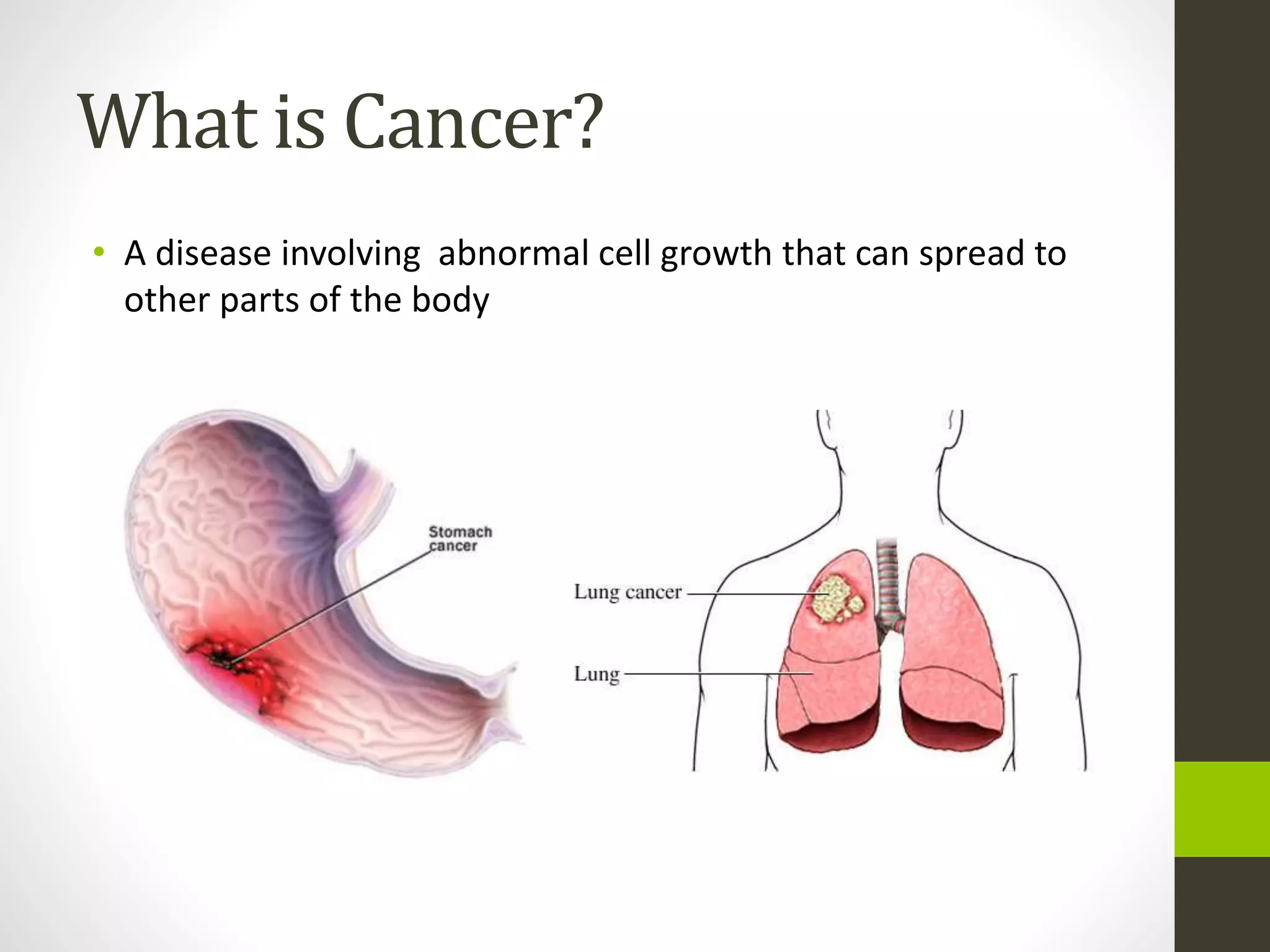
What is Cancer?
• A disease involving abnormal cell growth that can spread to
other parts of the body
Causes/Symptoms
• Causes
• 90% Environmental (carcinogens from tobacco/food, radiation,
infection, lifestyle)
• 10% Genetic/hereditary
• Symptoms
• Dependent on cancer type
Treatments
• Surgery
• Radiotherapy
• Chemotherapy
• Immunotherapy
Surgery
• Direct tumor removal
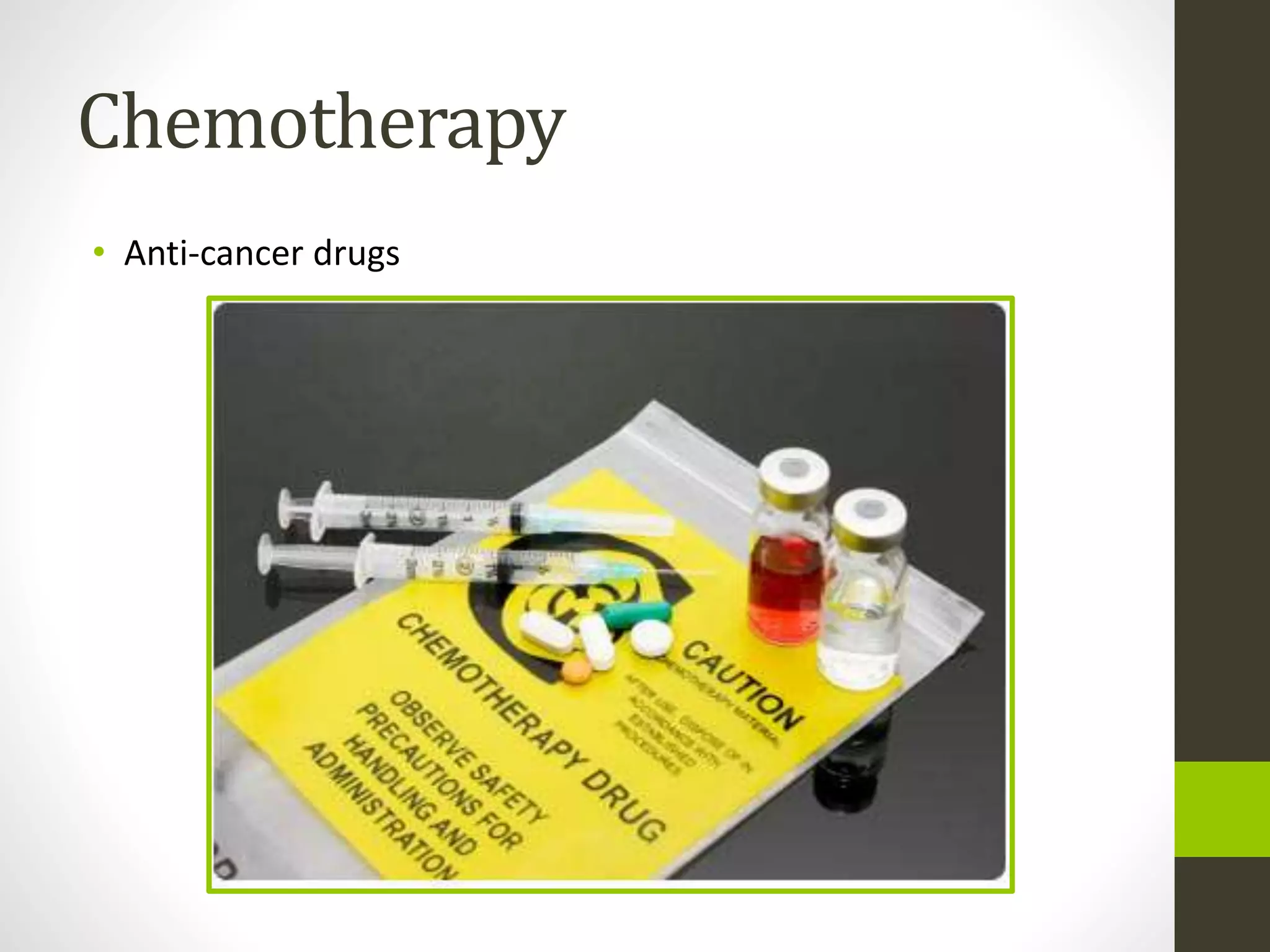
Chemotherapy
• Anti-cancer drugs
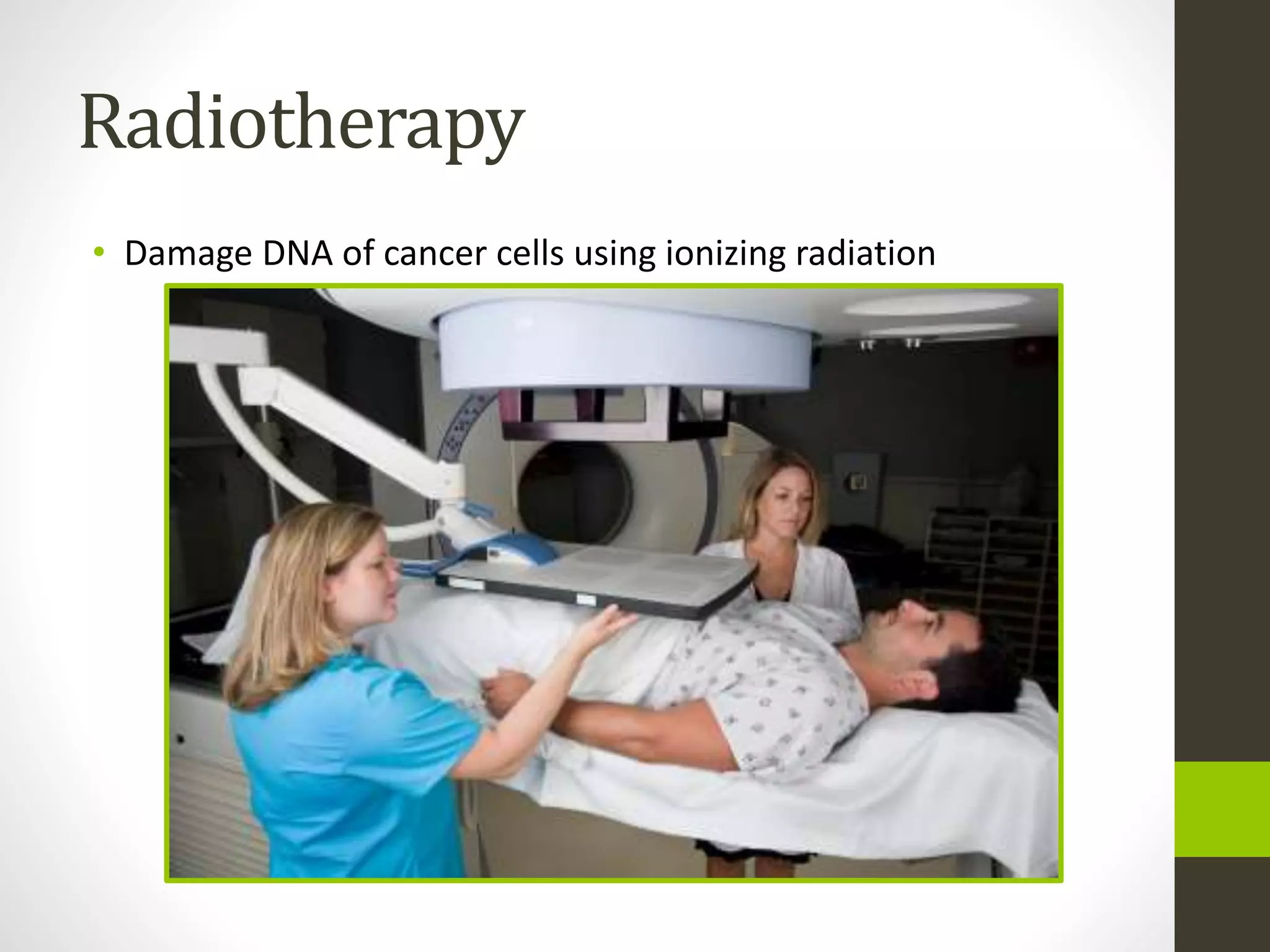
Radiotherapy
• Damage DNA of cancer cells using ionizing radiation
Immunotherapy
• Use the body’s immune system to fight cancer cells
Radiotherapy: Mechanism
• DNA/Membrane Damage
Cell Death from Radiation
• Mitotic catastrophe
• Apoptosis
• Necrosis
• Autophagy
• Senescence
Mitotic Catastrophe
• Premature mitosis
Apoptosis
• Programmed cell death
Necrosis
• Loss of cell membrane integrity/DNA degradation
Autophagy
• Excessive catabolism of components, eating itself
Senescence
• Permanent cell cycle arrest
Closer look: Radiotherapy
• Can damage normal cells
• Different cancer types have different radiosensitivity
• High (leukemia, lymphoma, ovarian/testicular), ~30 Gy
• Moderate (breast, prostate, lung, colon), ~70 Gy
• Low (skin, kidney), too high to be safe
• Curability is usually reverse of radiosensitivity
• Therefore usually requires chemotherapy
• Intensity vs exposure constraint
Advances in Radiotherapy
• Advanced image guiding systems – higher precision
• SABR (stereotactic ablative body radiation)
• Synchrotron MRT (microbeam radiotherapy)
• Pre-clinical testing due to unknown reason for low local tissue
sensitivity
SABR
• Daily, minute, precise doses of radiation (2 Gy)
Synchrotron MRT
• High flux X-rays segmented into a lattice of micro-planar
beams separated by plains of low dose radiation, allowing very
high doses (over 100 Gy) of radiation
Immunotherapy: Mechanism
• White blood cells will attack targeted cancer cells
Closer Look: Immunotherapy
• Mechanism: body’s immune system will fight cancer cells
• Three “E”’s of immunoediting
• Elimination
• Equilibrium
• Escape
• Limited to cancer cells which release high immunoactivators
• Cancer cells which release little/no immunoactivators are not
affected
Elimination
• Cancer cells release immunoactivators which act as receptors
for white blood cells to target
Equilibrium
• Surviving cancer cells grow and multiply/improve their
resistance to white blood cells
Escape
• New cancer cell variants continue to attack the body without
resistance from immune system
Combining Radiotherapy and
Immunotherapy
• Positive Effects (2-15 Gy)
• Irradiated cancer cells are a good source of diverse
immunoactivators
• Radiation activates MHC class I receptors in cancer cells, releasing
more immunoactivators
• New immunoactivators are memorized and used for secondary
cancers
• Negative Effects (Over 15 Gy)
• Cancer cells enters “wound healing” state when dosage is too
high, releasing immunosupressant chemicals
• Immunosupressant chemicals prevent/inhibit release of
immunoactivators such has MHC class I receptors
Radiotherapy +
Immunotherapy
Conclusion
• Radiotherapy has become more precise due to technological
advancement
• Immunotherapy is limited to cancer cells which release
enough immunoactivators
• Radiotherapy can allow utilization of irradiated cancer cells in
immunotherapy to increase effectiveness, with low radiation
doses more effective in this case
References
• http://www.sciencedirect.com/science/article/pii/S03043835
15000300
• http://www.annualreviews.org/doi/abs/10.1146/annurev.imm
unol.22.012703.104803
• http://www.cancernetwork.com/cancer-management
• http://www.who.int/mediacentre/factsheets/fs297/en/

Cancer radiotherapy