1/11/2013


BEENISH     CANCER
SARFRAZ     IMMUNOTHERAPY


      BIOTECHNOLOGY AND MICROBIOLOGY
    LAHORE COLLGE FOR WOMEN UNIVERSITY.
CANCER IMMUNOTHERAPY
IMMUNOTHERAPY
Immunotherapy is also sometimes called biologic therapy or biotherapy. It is treatment that uses
certain parts of the immune system to fight diseases such as cancer. This can be done in a couple of
ways:
  Stimulating your own immune system to work harder or smarter to attack cancer cells

  Giving you immune system components, such as man-made immune system proteins

CANCER IMMUNOTHERAPY
Cancer immunotherapy is the use of the immune system to reject cancer. The main premise is
stimulating the patient's immune system to attack the malignant tumor cells that are responsible for the
disease. This can be either through immunization of the patient (e.g., by administering a cancer vaccine,
such as Dendreon's Provenge), in which case the patient's own immune system is trained to recognize
tumor cells as targets to be destroyed, or through the administration of therapeutic antibodies as drugs, in
which case the patient's immune system is recruited to destroy tumor cells by the therapeutic antibodies.

HISTORY
Dr William Coley, MD, a New York surgeon, first noted that getting an infection after surgery seemed to
help some cancer patients. In the late 1800s, he began treating cancer patients by infecting them with
certain kinds of bacteria, which came to be known as Coley toxins. Although he had some success, his
technique was overshadowed when other forms of cancer treatment, such as radiation therapy, came into
use.

TYPES OF IMMUNOTHERAPY
The main types of immunotherapy now being used to treat cancer are discussed in the following sections.
They include:

  Monoclonal antibodies: These are man-made versions of immune system proteins. Antibodies can be
  very useful in treating cancer because they can be designed to attack a very specific part of a cancer
  cell.
  Cancer vaccines: Vaccines are substances put into the body to start an immune response against
  certain diseases. We usually think of them as being given to healthy people to help prevent infections.
  But some vaccines may help prevent or treat cancer.
  Non-specific immune therapies: These treatments boost the immune system in a very general way,
  but this may still result in more activity against cancer cells.


1. Monoclonal antibodies
One way the immune system normally attacks foreign substances in the body is by making large numbers
of different antibodies. An antibody is a “sticky” protein that targets a specific antigen. Antibodies circulate
in the body until they find and attach to the antigen. Once attached, they recruit other parts of the immune
system to destroy the cells containing the antigen.Many copies of a specific antibody can be made in the
lab. These are known as monoclonal antibodies (mAbs or moAbs). These antibodies can be useful in
fighting diseases because they can be designed specifically to only target a certain antigen, such as one
that is found on cancer cells.

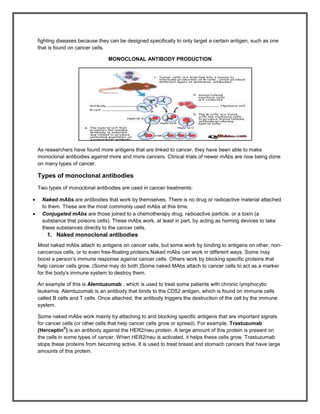
                               MONOCLONAL ANTIBODY PRODUCTION


As researchers have found more antigens that are linked to cancer, they have been able to make
monoclonal antibodies against more and more cancers. Clinical trials of newer mAbs are now being done
on many types of cancer.

Types of monoclonal antibodies
Two types of monoclonal antibodies are used in cancer treatments:

 Naked mAbs are antibodies that work by themselves. There is no drug or radioactive material attached
 to them. These are the most commonly used mAbs at this time.
 Conjugated mAbs are those joined to a chemotherapy drug, radioactive particle, or a toxin (a
 substance that poisons cells). These mAbs work, at least in part, by acting as homing devices to take
 these substances directly to the cancer cells.
    1. Naked monoclonal antibodies
Most naked mAbs attach to antigens on cancer cells, but some work by binding to antigens on other, non-
cancerous cells, or to even free-floating proteins.Naked mAbs can work in different ways. Some may
boost a person’s immune response against cancer cells. Others work by blocking specific proteins that
help cancer cells grow. (Some may do both.)Some naked MAbs attach to cancer cells to act as a marker
for the body's immune system to destroy them.

An example of this is Alemtuzumab , which is used to treat some patients with chronic lymphocytic
leukemia. Alemtuzumab is an antibody that binds to the CD52 antigen, which is found on immune cells
called B cells and T cells. Once attached, the antibody triggers the destruction of the cell by the immune
system.

Some naked mAbs work mainly by attaching to and blocking specific antigens that are important signals
for cancer cells (or other cells that help cancer cells grow or spread). For example, Trastuzumab
             ®
(Herceptin ) is an antibody against the HER2/neu protein. A large amount of this protein is present on
the cells in some types of cancer. When HER2/neu is activated, it helps these cells grow. Trastuzumab
stops these proteins from becoming active. It is used to treat breast and stomach cancers that have large
amounts of this protein.
2. Conjugated Monoclonal Antibodies
Monoclonal antibodies attached to a radioactive substance, drug, or toxin, are called conjugated mAbs.
The mAb is used as a homing device to take one of these substances directly to the cancer cells. The
mAb circulates in the body until it can find and hook onto the target antigen. It then delivers the toxic
substance where it is needed most. This lessens the damage to normal cells in other parts of the body.
Conjugated mAbs are also sometimes referred to as tagged, labeled, or loaded antibodies. They can
be divided into groups depending on what they are linked to.
  mAbs with radioactive particles attached are referred to as Radiolabeled, and treatment with this type
  of antibody is known as radioimmunotherapy (RIT).
  mAbs with chemotherapy drugs attached are referred to as Chemolabeled.
  mAbs attached to cell toxins are called Immunotoxins.

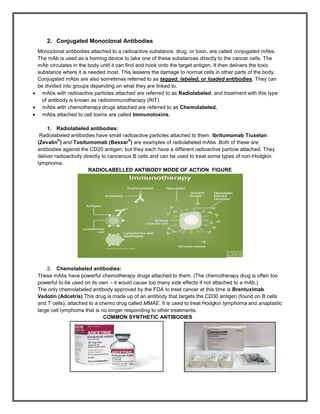
     1. Radiolabeled antibodies:
 Radiolabeled antibodies have small radioactive particles attached to them. Ibritumomab Tiuxetan
         ®                                ®
(Zevalin ) and Tositumomab (Bexxar ) are examples of radiolabeled mAbs. Both of these are
antibodies against the CD20 antigen, but they each have a different radioactive particle attached. They
deliver radioactivity directly to cancerous B cells and can be used to treat some types of non-Hodgkin
lymphoma.
                        RADIOLABELLED ANTIBODY MODE OF ACTION FIGURE


    2. Chemolabeled antibodies:
These mAbs have powerful chemotherapy drugs attached to them. (The chemotherapy drug is often too
powerful to be used on its own – it would cause too many side effects if not attached to a mAb.)
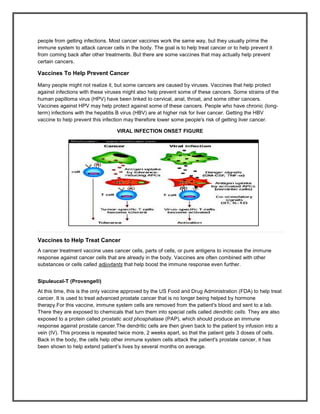
The only chemolabeled antibody approved by the FDA to treat cancer at this time is Brentuximab
Vedotin (Adcetris).This drug is made up of an antibody that targets the CD30 antigen (found on B cells
and T cells), attached to a chemo drug called MMAE. It is used to treat Hodgkin lymphoma and anaplastic
large cell lymphoma that is no longer responding to other treatments.
                             COMMON SYNTHETIC ANTIBODIES
3. Immunotoxins:
 These mAbs have cell poisons (toxins) attached to them, which makes them similar in many ways to
chemolabeled mAbs. At this time no immunotoxins are approved to treat cancer, although many are
                                                                             ®
being studied.However, a related drug known as denileukin diftitox (Ontak ) is being used to treat some
cancers. It consists of an immune system protein known as interleukin-2 (IL-2) attached to a toxin from
the germ that causes diphtheria. Although it’s not an mAb, IL-2 normally attaches to certain cells in the
body that contain the CD25 antigen, which makes it useful for delivering the toxin to these cells.


Possible side effects of monoclonal antibodies
Monoclonal antibodies are given intravenously (injected into a vein). Compared with the side effects of
chemotherapy, the side effects of naked mAbs are usually fairly mild and are often more like an allergic
reaction. These are more common while the drug is first being given. Possible side effects can
include:Fever,Chills,Weakness,Headache,Nausea,Vomiting,Diarrhea,Low blood pressure and Rashes.


                                                                             [2]
                             Cancer immunotherapy:Monoclonal antibodies


                  Brand      Approval
   Antibody                                Type            Target                  Approved treatment(s)
                  name         date


Alemtuzumab     Campath     2001        humanized CD52                     Chronic lymphocytic leukemia


                                                    vascular endothelial
Bevacizumab     Avastin     2004        humanized                          colorectal cancer
                                                    growth factor


Brentuximab                                                                Hodgkin lymphoma, Anaplastic
                Adcetris    2011        chimeric    CD30
vedotin                                                                    large-cell lymphoma


Cetuximab       Erbitux                 chimeric    epidermal growth
                            2004                                           colorectal cancer
                                                    factor receptor


Trastuzumab     Herceptin   1998        humanized ErbB2                    breast cancer


2. Cancer Vaccines
Most of us know about vaccines given to healthy people to help prevent infections, such as measles and
mumps. These vaccines use weakened or killed germs like viruses or bacteria to start an immune
response in the body. Getting the immune system ready to defend against these germs helps keep
people from getting infections. Most cancer vaccines work the same way, but they usually prime the
immune system to attack cancer cells in the body. The goal is to help treat cancer or to help prevent it
from coming back after other treatments. But there are some vaccines that may actually help prevent
certain cancers.

Vaccines To Help Prevent Cancer

Many people might not realize it, but some cancers are caused by viruses. Vaccines that help protect
against infections with these viruses might also help prevent some of these cancers. Some strains of the
human papilloma virus (HPV) have been linked to cervical, anal, throat, and some other cancers.
Vaccines against HPV may help protect against some of these cancers. People who have chronic (long-
term) infections with the hepatitis B virus (HBV) are at higher risk for liver cancer. Getting the HBV
vaccine to help prevent this infection may therefore lower some people's risk of getting liver cancer.

                                   VIRAL INFECTION ONSET FIGURE


Vaccines to Help Treat Cancer
A cancer treatment vaccine uses cancer cells, parts of cells, or pure antigens to increase the immune
response against cancer cells that are already in the body. Vaccines are often combined with other
substances or cells called adjuvtants that help boost the immune response even further.


Sipuleucel-T (Provenge®)
At this time, this is the only vaccine approved by the US Food and Drug Administration (FDA) to help treat
cancer. It is used to treat advanced prostate cancer that is no longer being helped by hormone
therapy.For this vaccine, immune system cells are removed from the patient's blood and sent to a lab.
There they are exposed to chemicals that turn them into special cells called dendritic cells. They are also
exposed to a protein called prostatic acid phosphatase (PAP), which should produce an immune
response against prostate cancer.The dendritic cells are then given back to the patient by infusion into a
vein (IV). This process is repeated twice more, 2 weeks apart, so that the patient gets 3 doses of cells.
Back in the body, the cells help other immune system cells attack the patient's prostate cancer, it has
been shown to help extend patient’s lives by several months on average.
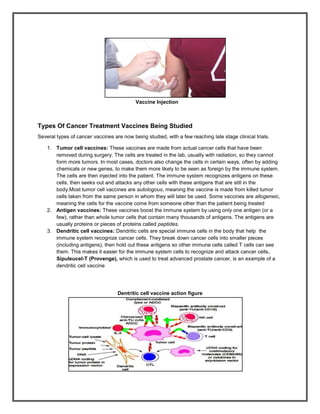
Vaccine Injection


Types Of Cancer Treatment Vaccines Being Studied
Several types of cancer vaccines are now being studied, with a few reaching late stage clinical trials.

    1. Tumor cell vaccines: These vaccines are made from actual cancer cells that have been
       removed during surgery. The cells are treated in the lab, usually with radiation, so they cannot
       form more tumors. In most cases, doctors also change the cells in certain ways, often by adding
       chemicals or new genes, to make them more likely to be seen as foreign by the immune system.
       The cells are then injected into the patient. The immune system recognizes antigens on these
       cells, then seeks out and attacks any other cells with these antigens that are still in the
       body.Most tumor cell vaccines are autologous, meaning the vaccine is made from killed tumor
       cells taken from the same person in whom they will later be used. Some vaccines are allogeneic,
       meaning the cells for the vaccine come from someone other than the patient being treated
    2. Antigen vaccines: These vaccines boost the immune system by using only one antigen (or a
       few), rather than whole tumor cells that contain many thousands of antigens. The antigens are
       usually proteins or pieces of proteins called peptides.
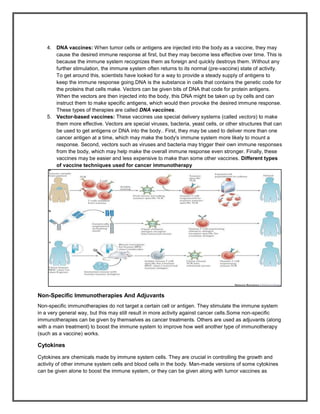
    3. Dendritic cell vaccines: Dendritic cells are special immune cells in the body that help the
       immune system recognize cancer cells. They break down cancer cells into smaller pieces
       (including antigens), then hold out these antigens so other immune cells called T cells can see
       them. This makes it easier for the immune system cells to recognize and attack cancer cells.
       Sipuleucel-T (Provenge), which is used to treat advanced prostate cancer, is an example of a
       dendritic cell vaccine


                                   Dentritic cell vaccine action figure
4. DNA vaccines: When tumor cells or antigens are injected into the body as a vaccine, they may
       cause the desired immune response at first, but they may become less effective over time. This is
       because the immune system recognizes them as foreign and quickly destroys them. Without any
       further stimulation, the immune system often returns to its normal (pre-vaccine) state of activity.
       To get around this, scientists have looked for a way to provide a steady supply of antigens to
       keep the immune response going.DNA is the substance in cells that contains the genetic code for
       the proteins that cells make. Vectors can be given bits of DNA that code for protein antigens.
       When the vectors are then injected into the body, this DNA might be taken up by cells and can
       instruct them to make specific antigens, which would then provoke the desired immune response.
       These types of therapies are called DNA vaccines.
    5. Vector-based vaccines: These vaccines use special delivery systems (called vectors) to make
       them more effective. Vectors are special viruses, bacteria, yeast cells, or other structures that can
       be used to get antigens or DNA into the body.. First, they may be used to deliver more than one
       cancer antigen at a time, which may make the body's immune system more likely to mount a
       response. Second, vectors such as viruses and bacteria may trigger their own immune responses
       from the body, which may help make the overall immune response even stronger. Finally, these
       vaccines may be easier and less expensive to make than some other vaccines. Different types
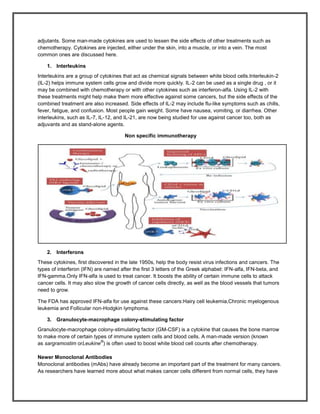
       of vaccine techniques used for cancer immunotherapy


Non-Specific Immunotherapies And Adjuvants
Non-specific immunotherapies do not target a certain cell or antigen. They stimulate the immune system
in a very general way, but this may still result in more activity against cancer cells.Some non-specific
immunotherapies can be given by themselves as cancer treatments. Others are used as adjuvants (along
with a main treatment) to boost the immune system to improve how well another type of immunotherapy
(such as a vaccine) works.

Cytokines

Cytokines are chemicals made by immune system cells. They are crucial in controlling the growth and
activity of other immune system cells and blood cells in the body. Man-made versions of some cytokines
can be given alone to boost the immune system, or they can be given along with tumor vaccines as
adjutants. Some man-made cytokines are used to lessen the side effects of other treatments such as
chemotherapy. Cytokines are injected, either under the skin, into a muscle, or into a vein. The most
common ones are discussed here.

    1. Interleukins
Interleukins are a group of cytokines that act as chemical signals between white blood cells.Interleukin-2
(IL-2) helps immune system cells grow and divide more quickly. IL-2 can be used as a single drug , or it
may be combined with chemotherapy or with other cytokines such as interferon-alfa. Using IL-2 with
these treatments might help make them more effective against some cancers, but the side effects of the
combined treatment are also increased. Side effects of IL-2 may include flu-like symptoms such as chills,
fever, fatigue, and confusion. Most people gain weight. Some have nausea, vomiting, or diarrhea. Other
interleukins, such as IL-7, IL-12, and IL-21, are now being studied for use against cancer too, both as
adjuvants and as stand-alone agents.

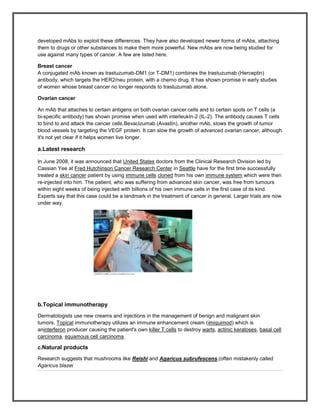
                                      Non specific immunotherapy


    2. Interferons
These cytokines, first discovered in the late 1950s, help the body resist virus infections and cancers. The
types of interferon (IFN) are named after the first 3 letters of the Greek alphabet: IFN-alfa, IFN-beta, and
IFN-gamma.Only IFN-alfa is used to treat cancer. It boosts the ability of certain immune cells to attack
cancer cells. It may also slow the growth of cancer cells directly, as well as the blood vessels that tumors
need to grow.

The FDA has approved IFN-alfa for use against these cancers:Hairy cell leukemia,Chronic myelogenous
leukemia and Follicular non-Hodgkin lymphoma.

    3. Granulocyte-macrophage colony-stimulating factor
Granulocyte-macrophage colony-stimulating factor (GM-CSF) is a cytokine that causes the bone marrow
to make more of certain types of immune system cells and blood cells. A man-made version (known
                           ®
as sargramostim orLeukine ) is often used to boost white blood cell counts after chemotherapy.

Newer Monoclonal Antibodies
Monoclonal antibodies (mAbs) have already become an important part of the treatment for many cancers.
As researchers have learned more about what makes cancer cells different from normal cells, they have
developed mAbs to exploit these differences. They have also developed newer forms of mAbs, attaching
them to drugs or other substances to make them more powerful. New mAbs are now being studied for
use against many types of cancer. A few are listed here.

Breast cancer
A conjugated mAb known as trastuzumab-DM1 (or T-DM1) combines the trastuzumab (Herceptin)
antibody, which targets the HER2/neu protein, with a chemo drug. It has shown promise in early studies
of women whose breast cancer no longer responds to trastuzumab alone.

Ovarian cancer

An mAb that attaches to certain antigens on both ovarian cancer cells and to certain spots on T cells (a
bi-specific antibody) has shown promise when used with interleukin-2 (IL-2). The antibody causes T cells
to bind to and attack the cancer cells.Bevacizumab (Avastin), another mAb, slows the growth of tumor
blood vessels by targeting the VEGF protein. It can slow the growth of advanced ovarian cancer, although
it's not yet clear if it helps women live longer.

a.Latest research

In June 2008, it was announced that United States doctors from the Clinical Research Division led by
Cassian Yee at Fred Hutchinson Cancer Research Center in Seattle have for the first time successfully
treated a skin cancer patient by using immune cells cloned from his own immune system which were then
re-injected into him. The patient, who was suffering from advanced skin cancer, was free from tumours
within eight weeks of being injected with billions of his own immune cells in the first case of its kind.
Experts say that this case could be a landmark in the treatment of cancer in general. Larger trials are now
under way.


b.Topical immunotherapy
Dermatologists use new creams and injections in the management of benign and malignant skin
tumors. Topical immunotherapy utilizes an immune enhancement cream (imiquimod) which is
aninterferon producer causing the patient's own killer T cells to destroy warts, actinic keratoses, basal cell
carcinoma, squamous cell carcinoma.

c.Natural products

Research suggests that mushrooms like Reishi and Agaricus subrufescens,(often mistakenly called
Agaricus blazei
Agaricus subrufescens figure

may be able to stimulate the immune system. Research has shown that Agaricus subrufescens may be a
                                          [16]
potent stimulator of natural killer cells. Agaricus subrufescens is rich in proteoglucans and beta-
                                                         [17]
glucans, which are potent stimulators of macrophages. . Beta-glucans are known as "biological
response modifiers", and their ability to activate the immune system is well documented.

CONCLUSION
Cancer immunotherapy is important phenomena to help in the treatment of cancer.by applying different
immune system components we can cure this disease and can save the lives of many cancer patients
who really want to live.


REFRENCES

      www.wikipedia.com
      www.lifescience.com
      www.naturereview.com
      www.google.com

cancer immunotherapy

  • 1.
    1/11/2013 BEENISH CANCER SARFRAZ IMMUNOTHERAPY BIOTECHNOLOGY AND MICROBIOLOGY LAHORE COLLGE FOR WOMEN UNIVERSITY.
  • 2.
    CANCER IMMUNOTHERAPY IMMUNOTHERAPY Immunotherapy isalso sometimes called biologic therapy or biotherapy. It is treatment that uses certain parts of the immune system to fight diseases such as cancer. This can be done in a couple of ways: Stimulating your own immune system to work harder or smarter to attack cancer cells Giving you immune system components, such as man-made immune system proteins CANCER IMMUNOTHERAPY Cancer immunotherapy is the use of the immune system to reject cancer. The main premise is stimulating the patient's immune system to attack the malignant tumor cells that are responsible for the disease. This can be either through immunization of the patient (e.g., by administering a cancer vaccine, such as Dendreon's Provenge), in which case the patient's own immune system is trained to recognize tumor cells as targets to be destroyed, or through the administration of therapeutic antibodies as drugs, in which case the patient's immune system is recruited to destroy tumor cells by the therapeutic antibodies. HISTORY Dr William Coley, MD, a New York surgeon, first noted that getting an infection after surgery seemed to help some cancer patients. In the late 1800s, he began treating cancer patients by infecting them with certain kinds of bacteria, which came to be known as Coley toxins. Although he had some success, his technique was overshadowed when other forms of cancer treatment, such as radiation therapy, came into use. TYPES OF IMMUNOTHERAPY The main types of immunotherapy now being used to treat cancer are discussed in the following sections. They include: Monoclonal antibodies: These are man-made versions of immune system proteins. Antibodies can be very useful in treating cancer because they can be designed to attack a very specific part of a cancer cell. Cancer vaccines: Vaccines are substances put into the body to start an immune response against certain diseases. We usually think of them as being given to healthy people to help prevent infections. But some vaccines may help prevent or treat cancer. Non-specific immune therapies: These treatments boost the immune system in a very general way, but this may still result in more activity against cancer cells. 1. Monoclonal antibodies One way the immune system normally attacks foreign substances in the body is by making large numbers of different antibodies. An antibody is a “sticky” protein that targets a specific antigen. Antibodies circulate in the body until they find and attach to the antigen. Once attached, they recruit other parts of the immune system to destroy the cells containing the antigen.Many copies of a specific antibody can be made in the lab. These are known as monoclonal antibodies (mAbs or moAbs). These antibodies can be useful in
  • 3.
    fighting diseases becausethey can be designed specifically to only target a certain antigen, such as one that is found on cancer cells. MONOCLONAL ANTIBODY PRODUCTION As researchers have found more antigens that are linked to cancer, they have been able to make monoclonal antibodies against more and more cancers. Clinical trials of newer mAbs are now being done on many types of cancer. Types of monoclonal antibodies Two types of monoclonal antibodies are used in cancer treatments: Naked mAbs are antibodies that work by themselves. There is no drug or radioactive material attached to them. These are the most commonly used mAbs at this time. Conjugated mAbs are those joined to a chemotherapy drug, radioactive particle, or a toxin (a substance that poisons cells). These mAbs work, at least in part, by acting as homing devices to take these substances directly to the cancer cells. 1. Naked monoclonal antibodies Most naked mAbs attach to antigens on cancer cells, but some work by binding to antigens on other, non- cancerous cells, or to even free-floating proteins.Naked mAbs can work in different ways. Some may boost a person’s immune response against cancer cells. Others work by blocking specific proteins that help cancer cells grow. (Some may do both.)Some naked MAbs attach to cancer cells to act as a marker for the body's immune system to destroy them. An example of this is Alemtuzumab , which is used to treat some patients with chronic lymphocytic leukemia. Alemtuzumab is an antibody that binds to the CD52 antigen, which is found on immune cells called B cells and T cells. Once attached, the antibody triggers the destruction of the cell by the immune system. Some naked mAbs work mainly by attaching to and blocking specific antigens that are important signals for cancer cells (or other cells that help cancer cells grow or spread). For example, Trastuzumab ® (Herceptin ) is an antibody against the HER2/neu protein. A large amount of this protein is present on the cells in some types of cancer. When HER2/neu is activated, it helps these cells grow. Trastuzumab stops these proteins from becoming active. It is used to treat breast and stomach cancers that have large amounts of this protein.
  • 4.
    2. Conjugated MonoclonalAntibodies Monoclonal antibodies attached to a radioactive substance, drug, or toxin, are called conjugated mAbs. The mAb is used as a homing device to take one of these substances directly to the cancer cells. The mAb circulates in the body until it can find and hook onto the target antigen. It then delivers the toxic substance where it is needed most. This lessens the damage to normal cells in other parts of the body. Conjugated mAbs are also sometimes referred to as tagged, labeled, or loaded antibodies. They can be divided into groups depending on what they are linked to. mAbs with radioactive particles attached are referred to as Radiolabeled, and treatment with this type of antibody is known as radioimmunotherapy (RIT). mAbs with chemotherapy drugs attached are referred to as Chemolabeled. mAbs attached to cell toxins are called Immunotoxins. 1. Radiolabeled antibodies: Radiolabeled antibodies have small radioactive particles attached to them. Ibritumomab Tiuxetan ® ® (Zevalin ) and Tositumomab (Bexxar ) are examples of radiolabeled mAbs. Both of these are antibodies against the CD20 antigen, but they each have a different radioactive particle attached. They deliver radioactivity directly to cancerous B cells and can be used to treat some types of non-Hodgkin lymphoma. RADIOLABELLED ANTIBODY MODE OF ACTION FIGURE 2. Chemolabeled antibodies: These mAbs have powerful chemotherapy drugs attached to them. (The chemotherapy drug is often too powerful to be used on its own – it would cause too many side effects if not attached to a mAb.) The only chemolabeled antibody approved by the FDA to treat cancer at this time is Brentuximab Vedotin (Adcetris).This drug is made up of an antibody that targets the CD30 antigen (found on B cells and T cells), attached to a chemo drug called MMAE. It is used to treat Hodgkin lymphoma and anaplastic large cell lymphoma that is no longer responding to other treatments. COMMON SYNTHETIC ANTIBODIES
  • 5.
    3. Immunotoxins: ThesemAbs have cell poisons (toxins) attached to them, which makes them similar in many ways to chemolabeled mAbs. At this time no immunotoxins are approved to treat cancer, although many are ® being studied.However, a related drug known as denileukin diftitox (Ontak ) is being used to treat some cancers. It consists of an immune system protein known as interleukin-2 (IL-2) attached to a toxin from the germ that causes diphtheria. Although it’s not an mAb, IL-2 normally attaches to certain cells in the body that contain the CD25 antigen, which makes it useful for delivering the toxin to these cells. Possible side effects of monoclonal antibodies Monoclonal antibodies are given intravenously (injected into a vein). Compared with the side effects of chemotherapy, the side effects of naked mAbs are usually fairly mild and are often more like an allergic reaction. These are more common while the drug is first being given. Possible side effects can include:Fever,Chills,Weakness,Headache,Nausea,Vomiting,Diarrhea,Low blood pressure and Rashes. [2] Cancer immunotherapy:Monoclonal antibodies Brand Approval Antibody Type Target Approved treatment(s) name date Alemtuzumab Campath 2001 humanized CD52 Chronic lymphocytic leukemia vascular endothelial Bevacizumab Avastin 2004 humanized colorectal cancer growth factor Brentuximab Hodgkin lymphoma, Anaplastic Adcetris 2011 chimeric CD30 vedotin large-cell lymphoma Cetuximab Erbitux chimeric epidermal growth 2004 colorectal cancer factor receptor Trastuzumab Herceptin 1998 humanized ErbB2 breast cancer 2. Cancer Vaccines Most of us know about vaccines given to healthy people to help prevent infections, such as measles and mumps. These vaccines use weakened or killed germs like viruses or bacteria to start an immune response in the body. Getting the immune system ready to defend against these germs helps keep
  • 6.
    people from gettinginfections. Most cancer vaccines work the same way, but they usually prime the immune system to attack cancer cells in the body. The goal is to help treat cancer or to help prevent it from coming back after other treatments. But there are some vaccines that may actually help prevent certain cancers. Vaccines To Help Prevent Cancer Many people might not realize it, but some cancers are caused by viruses. Vaccines that help protect against infections with these viruses might also help prevent some of these cancers. Some strains of the human papilloma virus (HPV) have been linked to cervical, anal, throat, and some other cancers. Vaccines against HPV may help protect against some of these cancers. People who have chronic (long- term) infections with the hepatitis B virus (HBV) are at higher risk for liver cancer. Getting the HBV vaccine to help prevent this infection may therefore lower some people's risk of getting liver cancer. VIRAL INFECTION ONSET FIGURE Vaccines to Help Treat Cancer A cancer treatment vaccine uses cancer cells, parts of cells, or pure antigens to increase the immune response against cancer cells that are already in the body. Vaccines are often combined with other substances or cells called adjuvtants that help boost the immune response even further. Sipuleucel-T (Provenge®) At this time, this is the only vaccine approved by the US Food and Drug Administration (FDA) to help treat cancer. It is used to treat advanced prostate cancer that is no longer being helped by hormone therapy.For this vaccine, immune system cells are removed from the patient's blood and sent to a lab. There they are exposed to chemicals that turn them into special cells called dendritic cells. They are also exposed to a protein called prostatic acid phosphatase (PAP), which should produce an immune response against prostate cancer.The dendritic cells are then given back to the patient by infusion into a vein (IV). This process is repeated twice more, 2 weeks apart, so that the patient gets 3 doses of cells. Back in the body, the cells help other immune system cells attack the patient's prostate cancer, it has been shown to help extend patient’s lives by several months on average.
  • 7.
    Vaccine Injection Types OfCancer Treatment Vaccines Being Studied Several types of cancer vaccines are now being studied, with a few reaching late stage clinical trials. 1. Tumor cell vaccines: These vaccines are made from actual cancer cells that have been removed during surgery. The cells are treated in the lab, usually with radiation, so they cannot form more tumors. In most cases, doctors also change the cells in certain ways, often by adding chemicals or new genes, to make them more likely to be seen as foreign by the immune system. The cells are then injected into the patient. The immune system recognizes antigens on these cells, then seeks out and attacks any other cells with these antigens that are still in the body.Most tumor cell vaccines are autologous, meaning the vaccine is made from killed tumor cells taken from the same person in whom they will later be used. Some vaccines are allogeneic, meaning the cells for the vaccine come from someone other than the patient being treated 2. Antigen vaccines: These vaccines boost the immune system by using only one antigen (or a few), rather than whole tumor cells that contain many thousands of antigens. The antigens are usually proteins or pieces of proteins called peptides. 3. Dendritic cell vaccines: Dendritic cells are special immune cells in the body that help the immune system recognize cancer cells. They break down cancer cells into smaller pieces (including antigens), then hold out these antigens so other immune cells called T cells can see them. This makes it easier for the immune system cells to recognize and attack cancer cells. Sipuleucel-T (Provenge), which is used to treat advanced prostate cancer, is an example of a dendritic cell vaccine Dentritic cell vaccine action figure
  • 8.
    4. DNA vaccines:When tumor cells or antigens are injected into the body as a vaccine, they may cause the desired immune response at first, but they may become less effective over time. This is because the immune system recognizes them as foreign and quickly destroys them. Without any further stimulation, the immune system often returns to its normal (pre-vaccine) state of activity. To get around this, scientists have looked for a way to provide a steady supply of antigens to keep the immune response going.DNA is the substance in cells that contains the genetic code for the proteins that cells make. Vectors can be given bits of DNA that code for protein antigens. When the vectors are then injected into the body, this DNA might be taken up by cells and can instruct them to make specific antigens, which would then provoke the desired immune response. These types of therapies are called DNA vaccines. 5. Vector-based vaccines: These vaccines use special delivery systems (called vectors) to make them more effective. Vectors are special viruses, bacteria, yeast cells, or other structures that can be used to get antigens or DNA into the body.. First, they may be used to deliver more than one cancer antigen at a time, which may make the body's immune system more likely to mount a response. Second, vectors such as viruses and bacteria may trigger their own immune responses from the body, which may help make the overall immune response even stronger. Finally, these vaccines may be easier and less expensive to make than some other vaccines. Different types of vaccine techniques used for cancer immunotherapy Non-Specific Immunotherapies And Adjuvants Non-specific immunotherapies do not target a certain cell or antigen. They stimulate the immune system in a very general way, but this may still result in more activity against cancer cells.Some non-specific immunotherapies can be given by themselves as cancer treatments. Others are used as adjuvants (along with a main treatment) to boost the immune system to improve how well another type of immunotherapy (such as a vaccine) works. Cytokines Cytokines are chemicals made by immune system cells. They are crucial in controlling the growth and activity of other immune system cells and blood cells in the body. Man-made versions of some cytokines can be given alone to boost the immune system, or they can be given along with tumor vaccines as
  • 9.
    adjutants. Some man-madecytokines are used to lessen the side effects of other treatments such as chemotherapy. Cytokines are injected, either under the skin, into a muscle, or into a vein. The most common ones are discussed here. 1. Interleukins Interleukins are a group of cytokines that act as chemical signals between white blood cells.Interleukin-2 (IL-2) helps immune system cells grow and divide more quickly. IL-2 can be used as a single drug , or it may be combined with chemotherapy or with other cytokines such as interferon-alfa. Using IL-2 with these treatments might help make them more effective against some cancers, but the side effects of the combined treatment are also increased. Side effects of IL-2 may include flu-like symptoms such as chills, fever, fatigue, and confusion. Most people gain weight. Some have nausea, vomiting, or diarrhea. Other interleukins, such as IL-7, IL-12, and IL-21, are now being studied for use against cancer too, both as adjuvants and as stand-alone agents. Non specific immunotherapy 2. Interferons These cytokines, first discovered in the late 1950s, help the body resist virus infections and cancers. The types of interferon (IFN) are named after the first 3 letters of the Greek alphabet: IFN-alfa, IFN-beta, and IFN-gamma.Only IFN-alfa is used to treat cancer. It boosts the ability of certain immune cells to attack cancer cells. It may also slow the growth of cancer cells directly, as well as the blood vessels that tumors need to grow. The FDA has approved IFN-alfa for use against these cancers:Hairy cell leukemia,Chronic myelogenous leukemia and Follicular non-Hodgkin lymphoma. 3. Granulocyte-macrophage colony-stimulating factor Granulocyte-macrophage colony-stimulating factor (GM-CSF) is a cytokine that causes the bone marrow to make more of certain types of immune system cells and blood cells. A man-made version (known ® as sargramostim orLeukine ) is often used to boost white blood cell counts after chemotherapy. Newer Monoclonal Antibodies Monoclonal antibodies (mAbs) have already become an important part of the treatment for many cancers. As researchers have learned more about what makes cancer cells different from normal cells, they have
  • 10.
    developed mAbs toexploit these differences. They have also developed newer forms of mAbs, attaching them to drugs or other substances to make them more powerful. New mAbs are now being studied for use against many types of cancer. A few are listed here. Breast cancer A conjugated mAb known as trastuzumab-DM1 (or T-DM1) combines the trastuzumab (Herceptin) antibody, which targets the HER2/neu protein, with a chemo drug. It has shown promise in early studies of women whose breast cancer no longer responds to trastuzumab alone. Ovarian cancer An mAb that attaches to certain antigens on both ovarian cancer cells and to certain spots on T cells (a bi-specific antibody) has shown promise when used with interleukin-2 (IL-2). The antibody causes T cells to bind to and attack the cancer cells.Bevacizumab (Avastin), another mAb, slows the growth of tumor blood vessels by targeting the VEGF protein. It can slow the growth of advanced ovarian cancer, although it's not yet clear if it helps women live longer. a.Latest research In June 2008, it was announced that United States doctors from the Clinical Research Division led by Cassian Yee at Fred Hutchinson Cancer Research Center in Seattle have for the first time successfully treated a skin cancer patient by using immune cells cloned from his own immune system which were then re-injected into him. The patient, who was suffering from advanced skin cancer, was free from tumours within eight weeks of being injected with billions of his own immune cells in the first case of its kind. Experts say that this case could be a landmark in the treatment of cancer in general. Larger trials are now under way. b.Topical immunotherapy Dermatologists use new creams and injections in the management of benign and malignant skin tumors. Topical immunotherapy utilizes an immune enhancement cream (imiquimod) which is aninterferon producer causing the patient's own killer T cells to destroy warts, actinic keratoses, basal cell carcinoma, squamous cell carcinoma. c.Natural products Research suggests that mushrooms like Reishi and Agaricus subrufescens,(often mistakenly called Agaricus blazei
  • 11.
    Agaricus subrufescens figure maybe able to stimulate the immune system. Research has shown that Agaricus subrufescens may be a [16] potent stimulator of natural killer cells. Agaricus subrufescens is rich in proteoglucans and beta- [17] glucans, which are potent stimulators of macrophages. . Beta-glucans are known as "biological response modifiers", and their ability to activate the immune system is well documented. CONCLUSION Cancer immunotherapy is important phenomena to help in the treatment of cancer.by applying different immune system components we can cure this disease and can save the lives of many cancer patients who really want to live. REFRENCES  www.wikipedia.com  www.lifescience.com  www.naturereview.com  www.google.com