The role of Nuclear Power in
Climate Mitigation
Yenning Lee 5580798
 Mitigation [mit-i-gey-shuh n]
“the act of making a condition or
consequence less severe”
 Greenhouse gases are attributed to
Climate Change
 Carbon Dioxide seen as main culprit of
man-made climate change – especially
from heat and electricity production
 To keep global warming under 2 degrees
Celsius we must reduce greenhouse gas
emission 50% by the mid century and
continue the reduction afterwards.
 Therefore, it is important to reduce
Carbon Dioxide emission if we want to
control the effects of climate change.
 How would this be achieved?
What is climate mitigation?
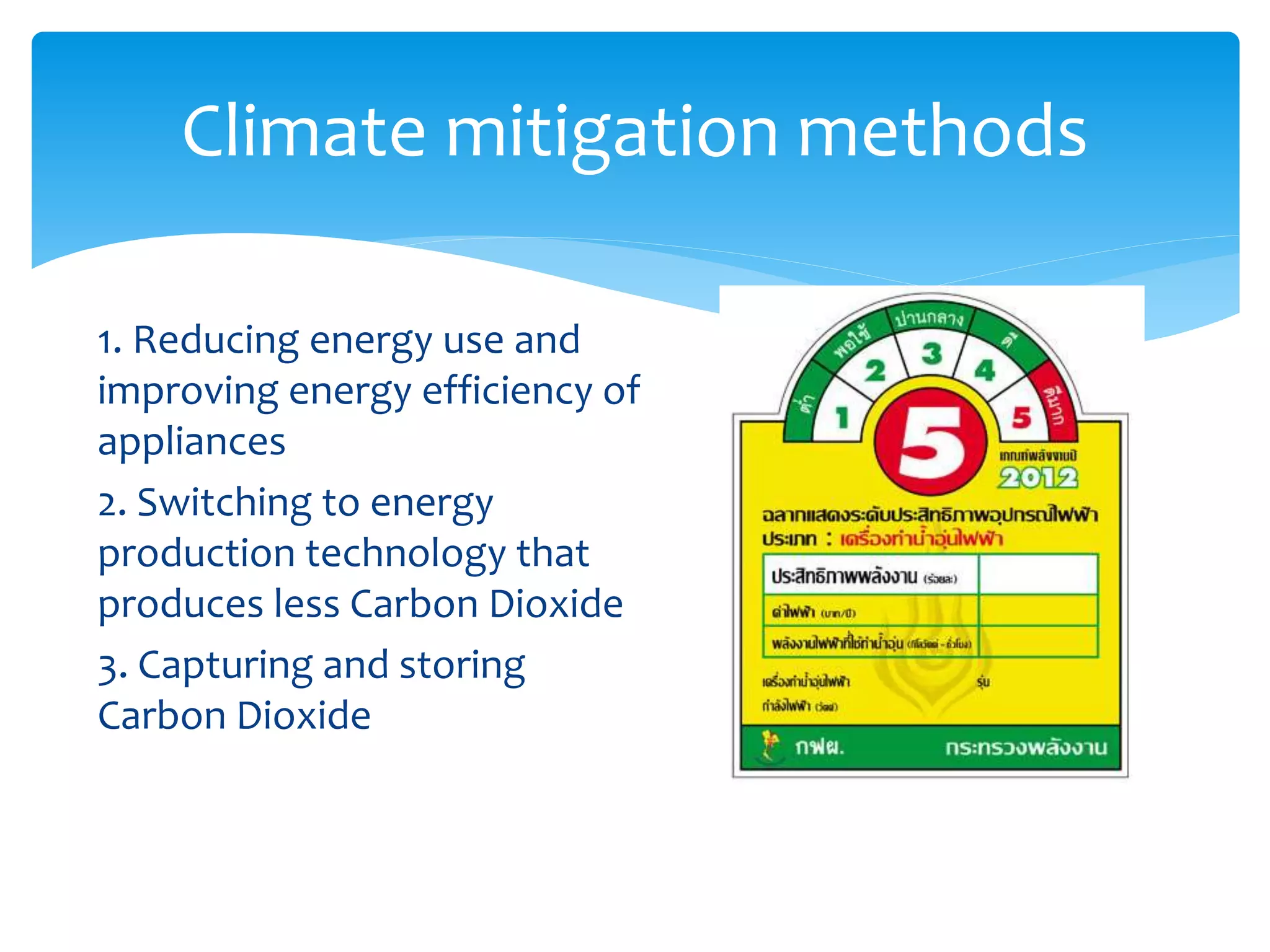
1. Reducing energy use and
improving energy efficiency of
appliances
2. Switching to energy
production technology that
produces less Carbon Dioxide
3. Capturing and storing
Carbon Dioxide
Climate mitigation methods
 Fossil Fuels
 Renewable: Solar Photovaltics, Wind power,
Hydroelectricity
 Biomass
 Nuclear Power
 Modern day shares of Energy Production: Fossil Fuels:
86.4% (2007 values) , Hydroelectric: 6.3%, Nuclear: 8.5%,
Solar, Wind, Biomass and others: 0.9% (2006 values)
Choices in Energy Production
 Currently the dominant
source for energy production
in the world
 Fuel created from
decomposition of long dead
organisms
 Includes Petroleum, Coal and
Natural Gas
 Non-renewable, take millions
of years to form
 An estimated 3.2 billion metric
tons of Carbon Dioxide are
added to our atmosphere
every year from burning Fossil
Fuels
Fossil Fuels
 Also known as Solar PV system
 Uses solar panels to absorb sunlight and
convert it to usable electricity
 Silent and creates no emitted waste,
completely renewable
 Costs have rapidly declined in recent years
to as low as 0.70 US dollars/watt in 2012
 Concentrated Solar Power: Utilizes mirrors
or lenses to concentrate large amount of
sunlight to one area
 Light converts to heat which is used to drive
heat engine and generate electricity
 Spain is currently the world leader with total
capacity of 2,650 Megawatts
Solar Photovaltic
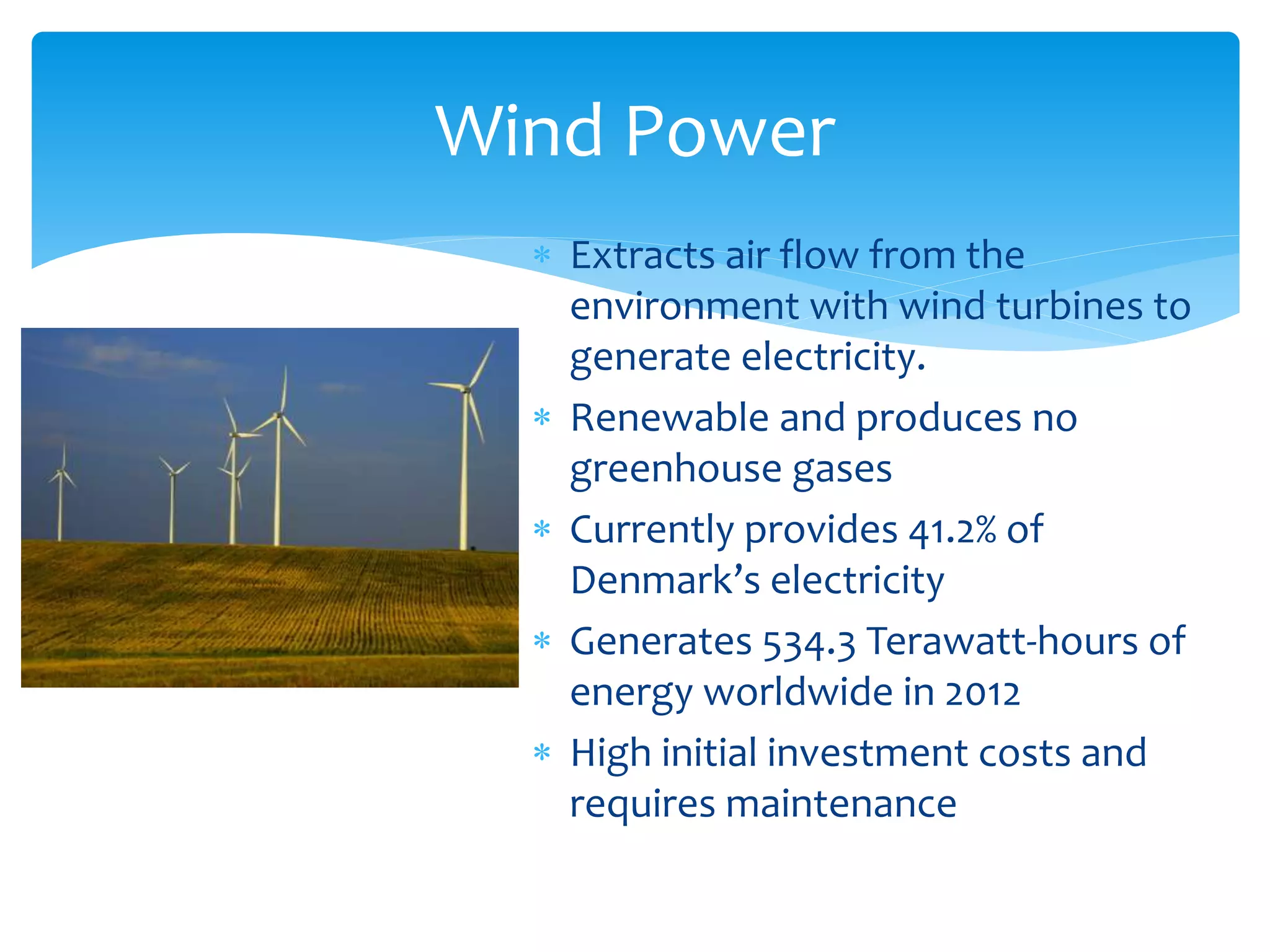
 Extracts air flow from the
environment with wind turbines to
generate electricity.
 Renewable and produces no
greenhouse gases
 Currently provides 41.2% of
Denmark’s electricity
 Generates 534.3 Terawatt-hours of
energy worldwide in 2012
 High initial investment costs and
requires maintenance
Wind Power
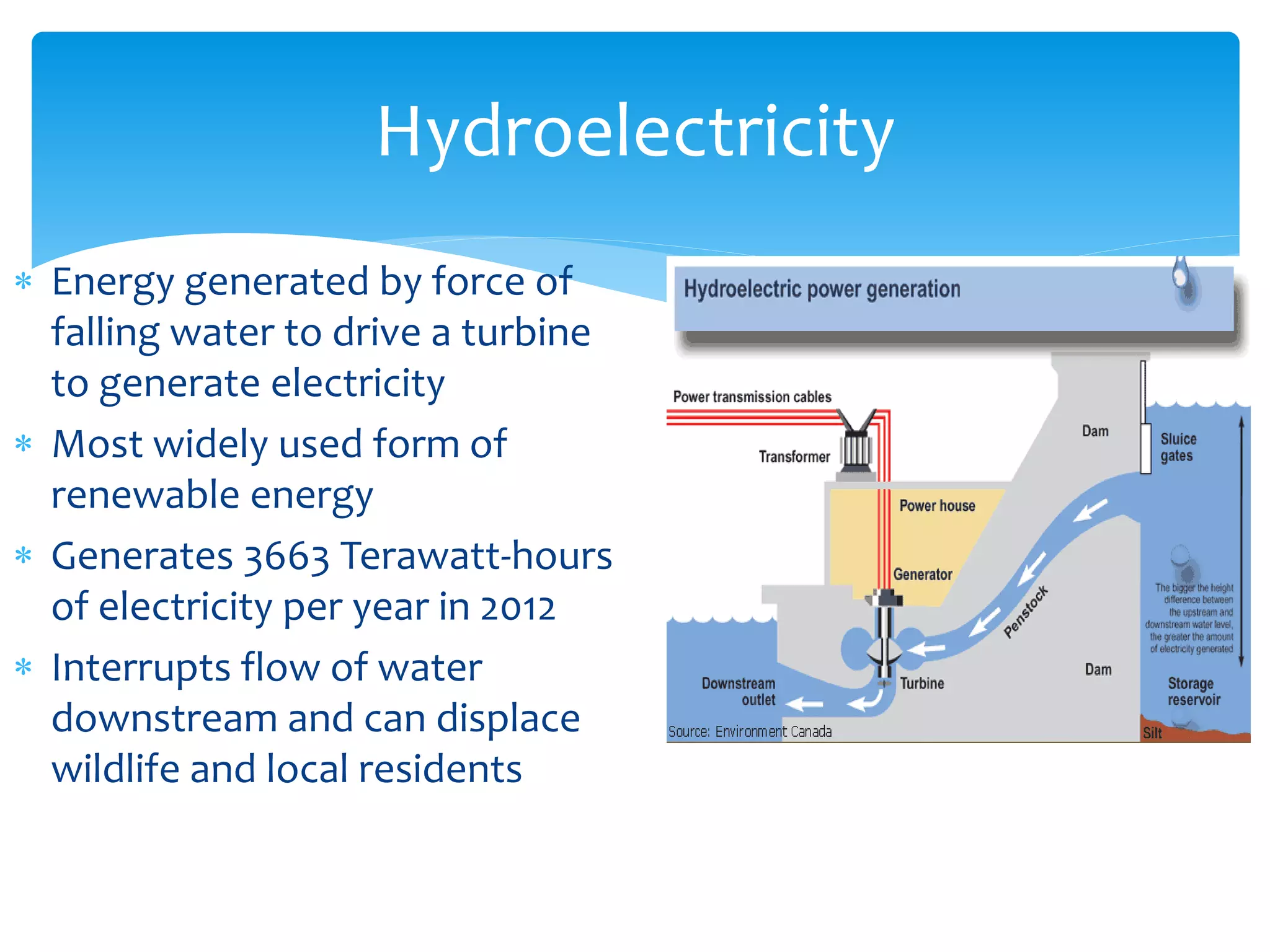
 Energy generated by force of
falling water to drive a turbine
to generate electricity
 Most widely used form of
renewable energy
 Generates 3663 Terawatt-hours
of electricity per year in 2012
 Interrupts flow of water
downstream and can displace
wildlife and local residents
Hydroelectricity
 Biological material that can
be combusted or converted
to fuel to generate
electricity
 Can be grown from plants
or collected from wastes
(solid and biogas)
 Algae is of interest because
it can be grown quickly and
made into biodiesel
 Combustion of biomass
creates greenhouse gases
 About twice as expensive as
natural gas
Biomass
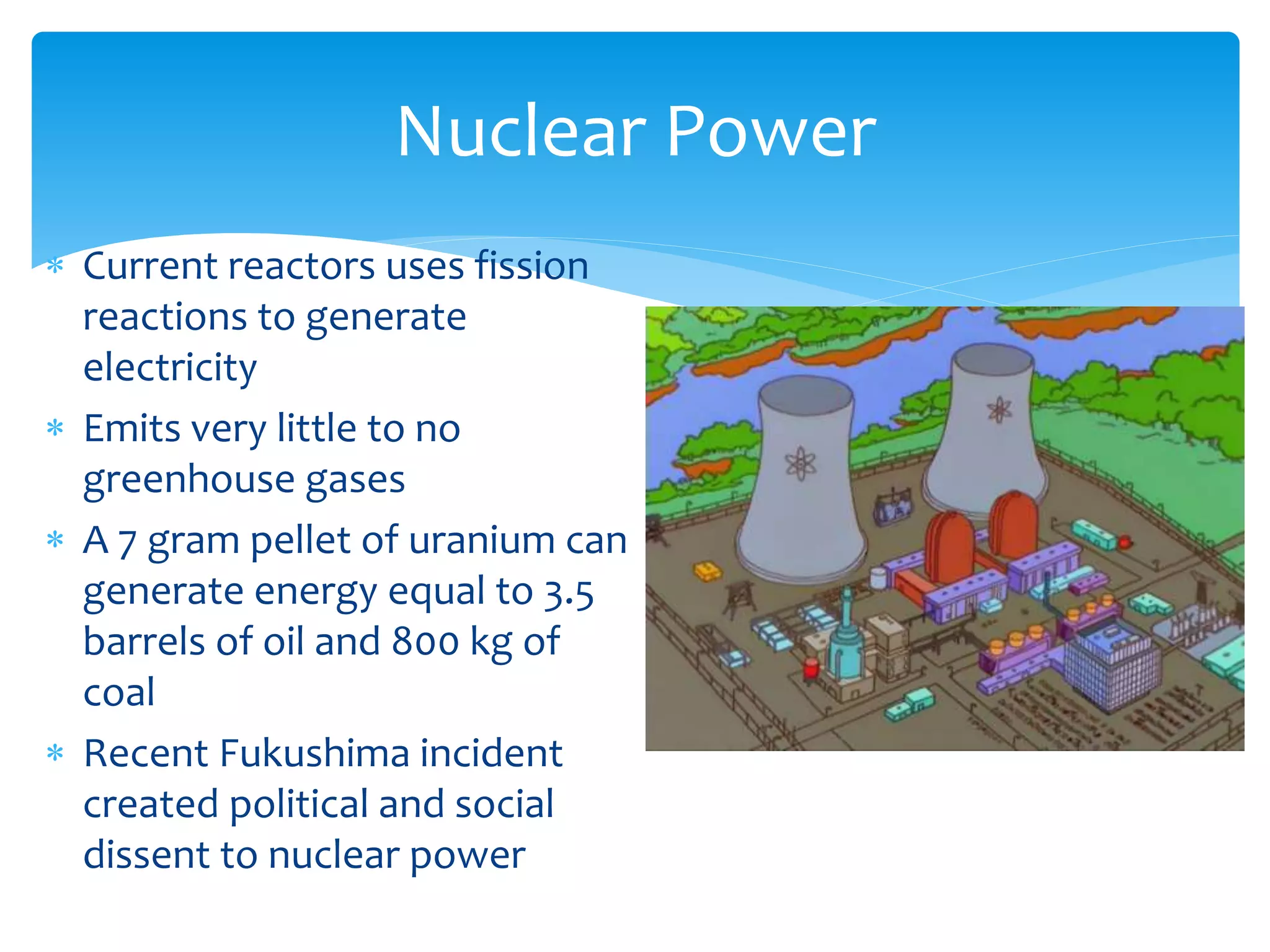
 Current reactors uses fission
reactions to generate
electricity
 Emits very little to no
greenhouse gases
 A 7 gram pellet of uranium can
generate energy equal to 3.5
barrels of oil and 800 kg of
coal
 Recent Fukushima incident
created political and social
dissent to nuclear power
Nuclear Power
Energy Source Advantage Disadvantage
Fossil Fuel - Matured technology
- Relatively cheap
- Readily available as of now
- Generates greenhouse gases that
can pollute environment
- Unsustainable
Solar PV - Can be installed in homes and
standalone appliances
- Clean and renewable
- Relatively cheap
- Inefficient in electricity
generation
- Efficiency depends on weather
conditions
Wind Power - Clean and renewable
- Cheap electricity after initial start
up cost
- High investment costs
- Inefficient with current
technology
- Efficiency depends on weather
conditions
Hydroelectricity - Matured technology
- Renewable and clean
- Efficient
- Displaces wildlife and local
residents
- Can cause droughts or flooding in
surrounding areas
Biomass - Renewable
- Good way to reuse waste
products
- Creates greenhouse gases
- Expensive
- Competes with food production
Nuclear Power - Efficient in generating electricity
- No greenhouse gas emission
- All produced wastes are
contained
- Potential for radiation disasters,
weapon proliferation
- Poor reputation in politics and
society
 Captures Carbon Dioxide waste
and transfers it to a storage site
(generally underground) to
prevent release into atmosphere
 Cost for transport and storage of
captured CO2 is about 10$ per ton
of CO2
 Max capacity worldwide: 2000
gigatons
Carbon Capture and Storage (CCS)
Technology in Climate Mitigation
 Nuclear power generates no Carbon
Dioxide
 Potential to reduce climate mitigation
costs from the baseline
 Nuclear power vs CCS technology?
 Must estimate effects of nuclear
power expansion in the future and
effect on mitigation cost
 Understand costs of climate mitigation
from Nuclear Power vs other methods
Nuclear Power in Climate Mitigation
 GET model = Global Energy Transition Model
 Used simulation to predict results over a 100 year
period (2000 – 2100)
 Objectives: Meet energy production quota while
limiting carbon emission
 Evaluates costs, efficiency, and carbon emission from
all above mentioned energy technologies
Research Procedure: GET Model
 Safety standards are being raised continuously, makes
nuclear power more expensive.
 Mature investment costs in nuclear technology is
estimated from 2050 dollars to 8850 US dollars per kW.
 Investment cost of nuclear power greatly effects its
efficiency
 Higher investment = more research = lower cost of energy
production
Limitations of Nuclear Power
 Can only be used at large industrial plants, no more than
50% of industrial heat and no more than 70% of residential
heat production can be used with CCS.
 Research shows CCS cannot capture 100% of released CO2
 Maximum capture of 95%
 Some CO2 will still get into the atmosphere
 Requires physical landmass to store Carbon Dioxide
 Cannot store CO2 in certain areas such as natural reserves
 Storage sites may devalue price of land. General public may
oppose this method
 Unsustainable, eventually we will run out of storage sites.
Limitations of CCS
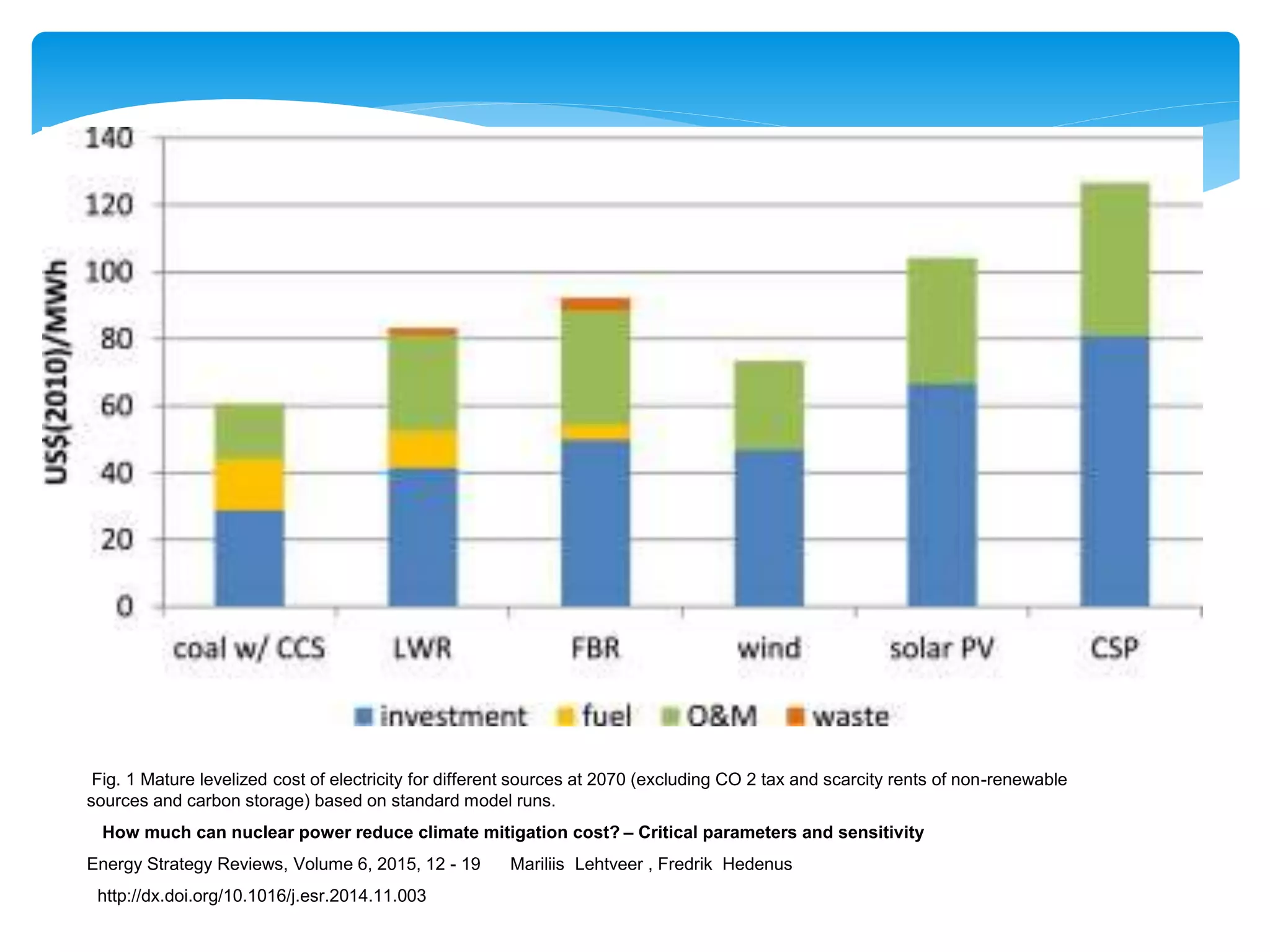
Fig. 1 Mature levelized cost of electricity for different sources at 2070 (excluding CO 2 tax and scarcity rents of non-renewable
sources and carbon storage) based on standard model runs.
Mariliis Lehtveer , Fredrik Hedenus
How much can nuclear power reduce climate mitigation cost? – Critical parameters and sensitivity
Energy Strategy Reviews, Volume 6, 2015, 12 - 19
http://dx.doi.org/10.1016/j.esr.2014.11.003
 Coal with CCS is the cheapest at the point of equal maturity
for all technologies (2070)
 Still many deposits of fossil fuel and CCS storage space left at
this point
 Because of its investment costs, Nuclear technologies are still
not as competitive
 In the coming decades, price of Coal with CCS will grow as
easy to access fossil fuel deposits are depleted and available
storage land becomes scarce
Data Analysis
1. No Nuclear
 No new reactors built after 2020, all existing reactors
phased out by 2040.
2. Conventional Nuclear
 Only technologies commercially available today will be
used in the future.
3. Advanced Nuclear
 Assumes technology will develop in the future. Fast
Breeding Reactors (better fuel economy than
conventional reactors) and alternative source Uranium
extraction (such as extracting uranium from sea water)
available.
3 Nuclear Scenarios
Fig. 3 Electricity supply in standard scenarios with 3 °C climate sensitivity per doubling of atmospheric CO 2 .
Mariliis Lehtveer , Fredrik Hedenus
How much can nuclear power reduce climate mitigation cost? – Critical parameters and sensitivity
Energy Strategy Reviews, Volume 6, 2015, 12 - 19
http://dx.doi.org/10.1016/j.esr.2014.11.003
 For comparison, in baseline scenario where there is no
carbon restriction fossil fuels continue to be used and no
alternative energy methods are significant.
 Depletion of fossil fuels estimated at after year 2050.
 In no nuclear scenario, renewable energy becomes
dominant after depletion of fossil fuels.
 In both nuclear allowed scenarios, nuclear power does not
become competitive until after 2040.
Data Analysis
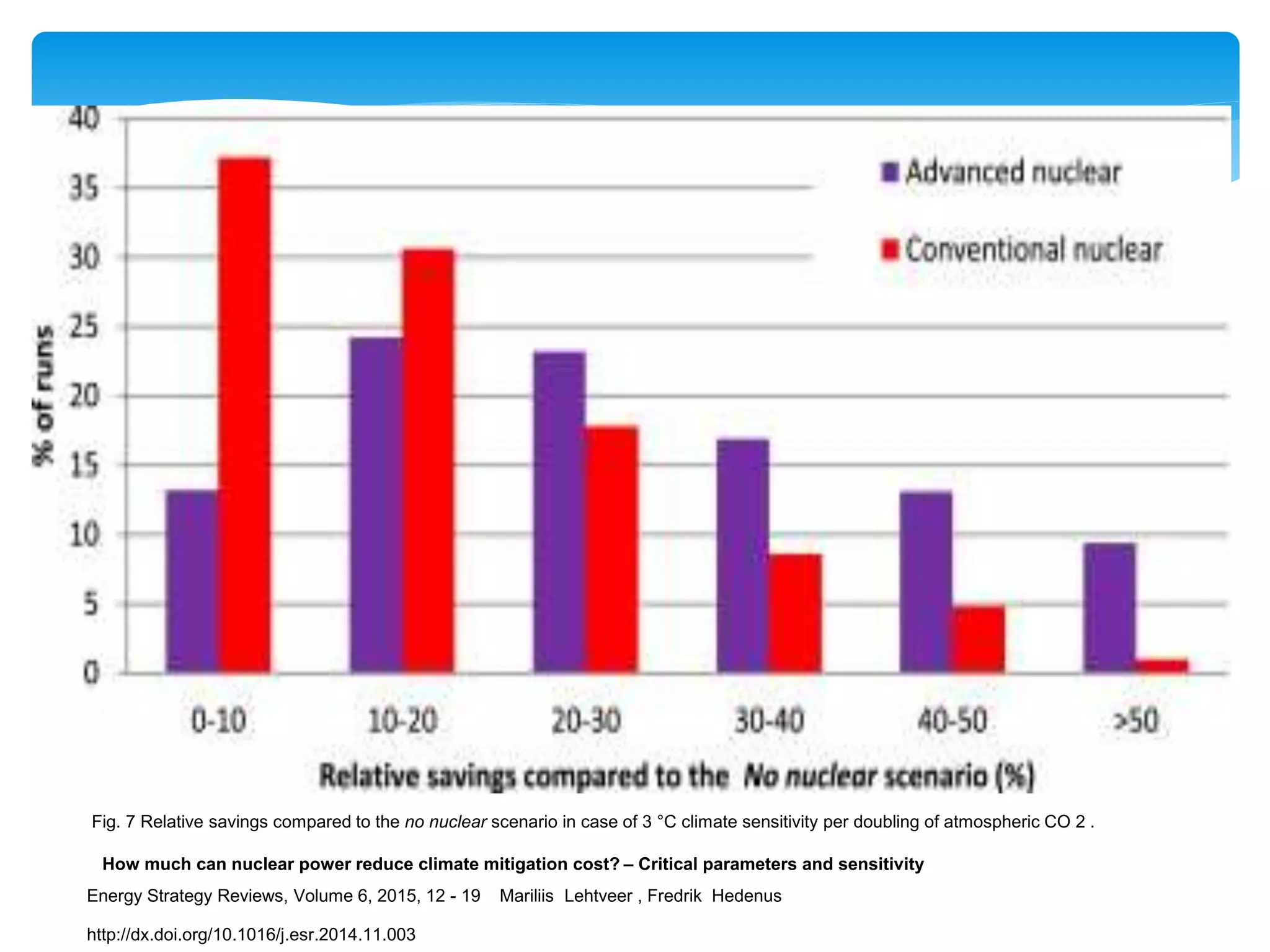
Fig. 7 Relative savings compared to the no nuclear scenario in case of 3 °C climate sensitivity per doubling of atmospheric CO 2 .
Mariliis Lehtveer , Fredrik Hedenus
How much can nuclear power reduce climate mitigation cost? – Critical parameters and sensitivity
Energy Strategy Reviews, Volume 6, 2015, 12 - 19
http://dx.doi.org/10.1016/j.esr.2014.11.003
 According to simulation, probability that over 50% savings
from mitigation costs in the no nuclear scenario can be
achieved by 9% of advanced nuclear scenario.
 Highest probability of savings between conventional and
advanced scenario is in the 10-20% cost reduction range.
 In both nuclear technology allowed cases, significant cost
reduction for Climate Mitigation can be achieved.
Data Analysis
Fig. 8 Abatement cost for different carbon storage capacities and scenarios.
Mariliis Lehtveer , Fredrik Hedenus
How much can nuclear power reduce climate mitigation cost? – Critical parameters and sensitivity
Energy Strategy Reviews, Volume 6, 2015, 12 - 19
http://dx.doi.org/10.1016/j.esr.2014.11.003
 Max CCS capacity set at 4000 gigatons of Carbon
Dioxide.
 Advanced nuclear technology can cut abatement
costs by almost 50%.
 Even in Advanced nuclear scenario, CCS gives larger
savings.
 CCS is still the best option for reducing carbon
abatement costs, nuclear technology is irrelevant if
large amounts of storage space is still available.
Data Analysis
 Current conventional nuclear technology can save 10% in climate
mitigation cost, 20% if nuclear technology is allowed to develop.
 Savings from nuclear technology relies heavily on availability of
CCS technology. Can only exhibit significant savings if CCS is not
available.
 Before 2040, nuclear power is not a viable option for energy
production because other options are cheaper.
 Although renewable energy seems like a good solution for
climate mitigation, it is impossible to generate enough cheap
energy
Conclusion

Role of nuclear power in carbon dioxide mitigation

  • 1.
    The role ofNuclear Power in Climate Mitigation Yenning Lee 5580798
  • 2.
     Mitigation [mit-i-gey-shuhn] “the act of making a condition or consequence less severe”  Greenhouse gases are attributed to Climate Change  Carbon Dioxide seen as main culprit of man-made climate change – especially from heat and electricity production  To keep global warming under 2 degrees Celsius we must reduce greenhouse gas emission 50% by the mid century and continue the reduction afterwards.  Therefore, it is important to reduce Carbon Dioxide emission if we want to control the effects of climate change.  How would this be achieved? What is climate mitigation?
  • 3.
    1. Reducing energyuse and improving energy efficiency of appliances 2. Switching to energy production technology that produces less Carbon Dioxide 3. Capturing and storing Carbon Dioxide Climate mitigation methods
  • 4.
     Fossil Fuels Renewable: Solar Photovaltics, Wind power, Hydroelectricity  Biomass  Nuclear Power  Modern day shares of Energy Production: Fossil Fuels: 86.4% (2007 values) , Hydroelectric: 6.3%, Nuclear: 8.5%, Solar, Wind, Biomass and others: 0.9% (2006 values) Choices in Energy Production
  • 5.
     Currently thedominant source for energy production in the world  Fuel created from decomposition of long dead organisms  Includes Petroleum, Coal and Natural Gas  Non-renewable, take millions of years to form  An estimated 3.2 billion metric tons of Carbon Dioxide are added to our atmosphere every year from burning Fossil Fuels Fossil Fuels
  • 6.
     Also knownas Solar PV system  Uses solar panels to absorb sunlight and convert it to usable electricity  Silent and creates no emitted waste, completely renewable  Costs have rapidly declined in recent years to as low as 0.70 US dollars/watt in 2012  Concentrated Solar Power: Utilizes mirrors or lenses to concentrate large amount of sunlight to one area  Light converts to heat which is used to drive heat engine and generate electricity  Spain is currently the world leader with total capacity of 2,650 Megawatts Solar Photovaltic
  • 7.
     Extracts airflow from the environment with wind turbines to generate electricity.  Renewable and produces no greenhouse gases  Currently provides 41.2% of Denmark’s electricity  Generates 534.3 Terawatt-hours of energy worldwide in 2012  High initial investment costs and requires maintenance Wind Power
  • 8.
     Energy generatedby force of falling water to drive a turbine to generate electricity  Most widely used form of renewable energy  Generates 3663 Terawatt-hours of electricity per year in 2012  Interrupts flow of water downstream and can displace wildlife and local residents Hydroelectricity
  • 9.
     Biological materialthat can be combusted or converted to fuel to generate electricity  Can be grown from plants or collected from wastes (solid and biogas)  Algae is of interest because it can be grown quickly and made into biodiesel  Combustion of biomass creates greenhouse gases  About twice as expensive as natural gas Biomass
  • 10.
     Current reactorsuses fission reactions to generate electricity  Emits very little to no greenhouse gases  A 7 gram pellet of uranium can generate energy equal to 3.5 barrels of oil and 800 kg of coal  Recent Fukushima incident created political and social dissent to nuclear power Nuclear Power
  • 11.
    Energy Source AdvantageDisadvantage Fossil Fuel - Matured technology - Relatively cheap - Readily available as of now - Generates greenhouse gases that can pollute environment - Unsustainable Solar PV - Can be installed in homes and standalone appliances - Clean and renewable - Relatively cheap - Inefficient in electricity generation - Efficiency depends on weather conditions Wind Power - Clean and renewable - Cheap electricity after initial start up cost - High investment costs - Inefficient with current technology - Efficiency depends on weather conditions Hydroelectricity - Matured technology - Renewable and clean - Efficient - Displaces wildlife and local residents - Can cause droughts or flooding in surrounding areas Biomass - Renewable - Good way to reuse waste products - Creates greenhouse gases - Expensive - Competes with food production Nuclear Power - Efficient in generating electricity - No greenhouse gas emission - All produced wastes are contained - Potential for radiation disasters, weapon proliferation - Poor reputation in politics and society
  • 12.
     Captures CarbonDioxide waste and transfers it to a storage site (generally underground) to prevent release into atmosphere  Cost for transport and storage of captured CO2 is about 10$ per ton of CO2  Max capacity worldwide: 2000 gigatons Carbon Capture and Storage (CCS) Technology in Climate Mitigation
  • 13.
     Nuclear powergenerates no Carbon Dioxide  Potential to reduce climate mitigation costs from the baseline  Nuclear power vs CCS technology?  Must estimate effects of nuclear power expansion in the future and effect on mitigation cost  Understand costs of climate mitigation from Nuclear Power vs other methods Nuclear Power in Climate Mitigation
  • 14.
     GET model= Global Energy Transition Model  Used simulation to predict results over a 100 year period (2000 – 2100)  Objectives: Meet energy production quota while limiting carbon emission  Evaluates costs, efficiency, and carbon emission from all above mentioned energy technologies Research Procedure: GET Model
  • 15.
     Safety standardsare being raised continuously, makes nuclear power more expensive.  Mature investment costs in nuclear technology is estimated from 2050 dollars to 8850 US dollars per kW.  Investment cost of nuclear power greatly effects its efficiency  Higher investment = more research = lower cost of energy production Limitations of Nuclear Power
  • 16.
     Can onlybe used at large industrial plants, no more than 50% of industrial heat and no more than 70% of residential heat production can be used with CCS.  Research shows CCS cannot capture 100% of released CO2  Maximum capture of 95%  Some CO2 will still get into the atmosphere  Requires physical landmass to store Carbon Dioxide  Cannot store CO2 in certain areas such as natural reserves  Storage sites may devalue price of land. General public may oppose this method  Unsustainable, eventually we will run out of storage sites. Limitations of CCS
  • 17.
    Fig. 1 Maturelevelized cost of electricity for different sources at 2070 (excluding CO 2 tax and scarcity rents of non-renewable sources and carbon storage) based on standard model runs. Mariliis Lehtveer , Fredrik Hedenus How much can nuclear power reduce climate mitigation cost? – Critical parameters and sensitivity Energy Strategy Reviews, Volume 6, 2015, 12 - 19 http://dx.doi.org/10.1016/j.esr.2014.11.003
  • 18.
     Coal withCCS is the cheapest at the point of equal maturity for all technologies (2070)  Still many deposits of fossil fuel and CCS storage space left at this point  Because of its investment costs, Nuclear technologies are still not as competitive  In the coming decades, price of Coal with CCS will grow as easy to access fossil fuel deposits are depleted and available storage land becomes scarce Data Analysis
  • 19.
    1. No Nuclear No new reactors built after 2020, all existing reactors phased out by 2040. 2. Conventional Nuclear  Only technologies commercially available today will be used in the future. 3. Advanced Nuclear  Assumes technology will develop in the future. Fast Breeding Reactors (better fuel economy than conventional reactors) and alternative source Uranium extraction (such as extracting uranium from sea water) available. 3 Nuclear Scenarios
  • 20.
    Fig. 3 Electricitysupply in standard scenarios with 3 °C climate sensitivity per doubling of atmospheric CO 2 . Mariliis Lehtveer , Fredrik Hedenus How much can nuclear power reduce climate mitigation cost? – Critical parameters and sensitivity Energy Strategy Reviews, Volume 6, 2015, 12 - 19 http://dx.doi.org/10.1016/j.esr.2014.11.003
  • 21.
     For comparison,in baseline scenario where there is no carbon restriction fossil fuels continue to be used and no alternative energy methods are significant.  Depletion of fossil fuels estimated at after year 2050.  In no nuclear scenario, renewable energy becomes dominant after depletion of fossil fuels.  In both nuclear allowed scenarios, nuclear power does not become competitive until after 2040. Data Analysis
  • 22.
    Fig. 7 Relativesavings compared to the no nuclear scenario in case of 3 °C climate sensitivity per doubling of atmospheric CO 2 . Mariliis Lehtveer , Fredrik Hedenus How much can nuclear power reduce climate mitigation cost? – Critical parameters and sensitivity Energy Strategy Reviews, Volume 6, 2015, 12 - 19 http://dx.doi.org/10.1016/j.esr.2014.11.003
  • 23.
     According tosimulation, probability that over 50% savings from mitigation costs in the no nuclear scenario can be achieved by 9% of advanced nuclear scenario.  Highest probability of savings between conventional and advanced scenario is in the 10-20% cost reduction range.  In both nuclear technology allowed cases, significant cost reduction for Climate Mitigation can be achieved. Data Analysis
  • 24.
    Fig. 8 Abatementcost for different carbon storage capacities and scenarios. Mariliis Lehtveer , Fredrik Hedenus How much can nuclear power reduce climate mitigation cost? – Critical parameters and sensitivity Energy Strategy Reviews, Volume 6, 2015, 12 - 19 http://dx.doi.org/10.1016/j.esr.2014.11.003
  • 25.
     Max CCScapacity set at 4000 gigatons of Carbon Dioxide.  Advanced nuclear technology can cut abatement costs by almost 50%.  Even in Advanced nuclear scenario, CCS gives larger savings.  CCS is still the best option for reducing carbon abatement costs, nuclear technology is irrelevant if large amounts of storage space is still available. Data Analysis
  • 26.
     Current conventionalnuclear technology can save 10% in climate mitigation cost, 20% if nuclear technology is allowed to develop.  Savings from nuclear technology relies heavily on availability of CCS technology. Can only exhibit significant savings if CCS is not available.  Before 2040, nuclear power is not a viable option for energy production because other options are cheaper.  Although renewable energy seems like a good solution for climate mitigation, it is impossible to generate enough cheap energy Conclusion