OPEN	
  EDUCATIONAL	
  PRACTICES
@thatpsychprof
Serving SOCIAL	
  JUSTICE	
  &
PEDAGOGICAL	
  INNOVATION through
University	
   Teaching	
  Fellow,	
  Kwantlen	
  Polytechnic	
  University
Senior	
  Open	
  Education	
  Advocacy	
  &	
  Research	
  Fellow,	
  BCcampus
Associate	
  Editor,	
  Psychology	
  Learning	
  and	
  Teaching
Rajiv	
  Jhangiani,	
  Ph.D.
“higher education
shall be equally
accessible to all”
2.4 million
low & moderate-income college-qualified
high school graduates could not complete college
(2001-10)
The Advisory Committee on StudentFinancial Assistance http://files.eric.ed.gov/fulltext/ED529499.pdf
http://www.sheeo.org
$1,000
$2,000
$3,000
$4,000
$5,000
$6,000
$7,000
$8,000
$9,000
$10,000
$11,000
$12,000
1990 1992 1994 1996 1998 2000 2002 2004 2006 2008 2010 2012 2014
US	
  Higher	
  Education	
  Funding	
  -­‐ $/FTE
State Funding Tuition Revenue
$1,000
$2,000
$3,000
$4,000
$5,000
$6,000
$7,000
$8,000
$9,000
$10,000
$11,000
$12,000
1990 1992 1994 1996 1998 2000 2002 2004 2006 2008 2010 2012 2014
New	
  Hampshire	
  Education	
  Funding	
  -­‐ $/FTE
State Funding Tuition Revenue
http://www.sheeo.org
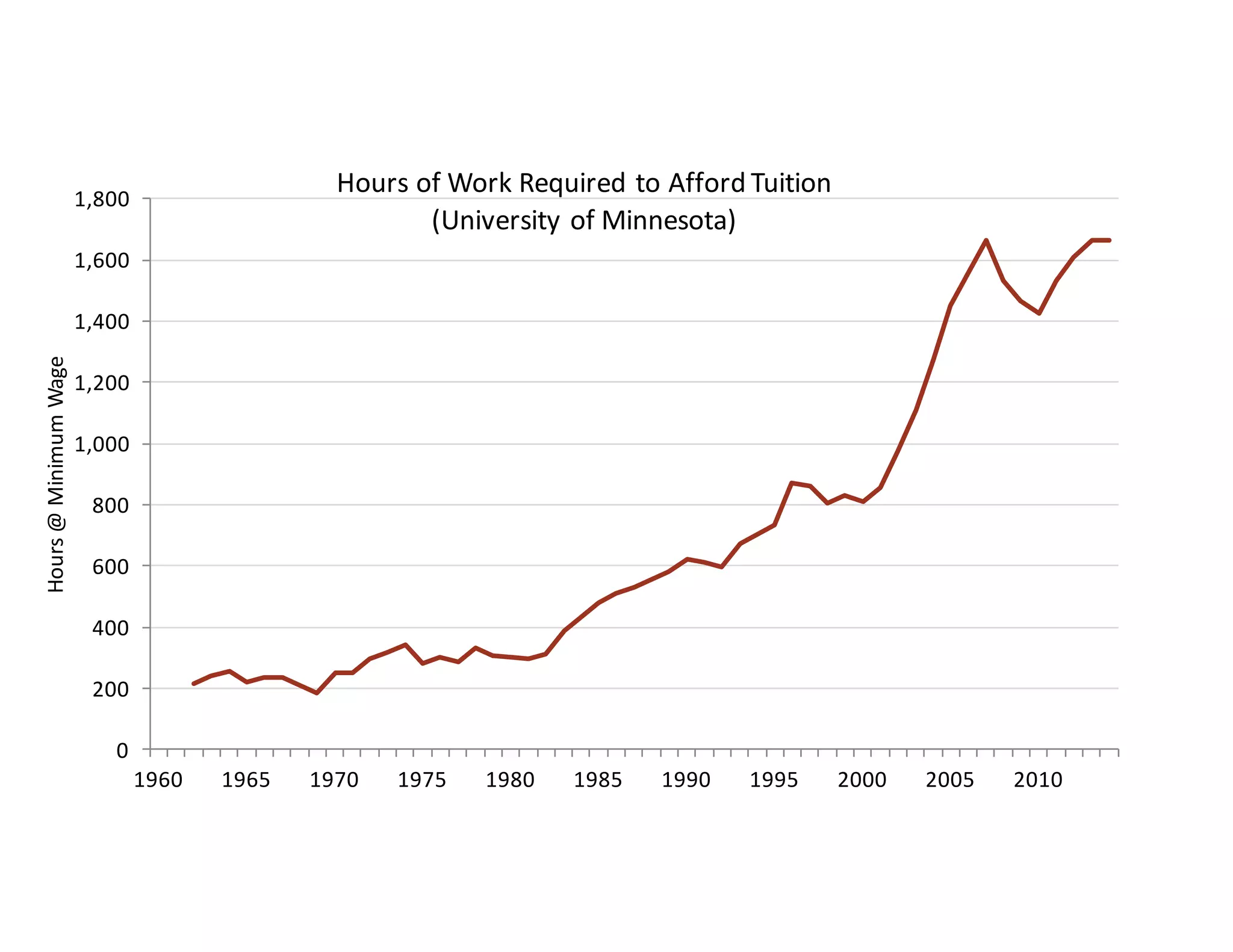
0
200
400
600
800
1,000
1,200
1,400
1,600
1,800
1960 1965 1970 1975 1980 1985 1990 1995 2000 2005 2010
Hours	
  @	
  Minimum	
  Wage
Hours	
  of	
  Work	
  Required	
  to	
  Afford	
  Tuition
(University	
  of	
  Minnesota)
In-­‐State	
  Tuition	
  
&	
  Fees
Required	
  Hours
of Work	
  at	
  
Minimum	
  Wage
Plymouth	
  State $13,128 1,811
Keene	
  State $13,868 1,913
Granite	
  State $8,265 1,140
University	
  of	
  
New	
  Hampshire
$18,067 2,492
http://ticas.org/posd/map-­‐state-­‐data
What  can  YOU  do?
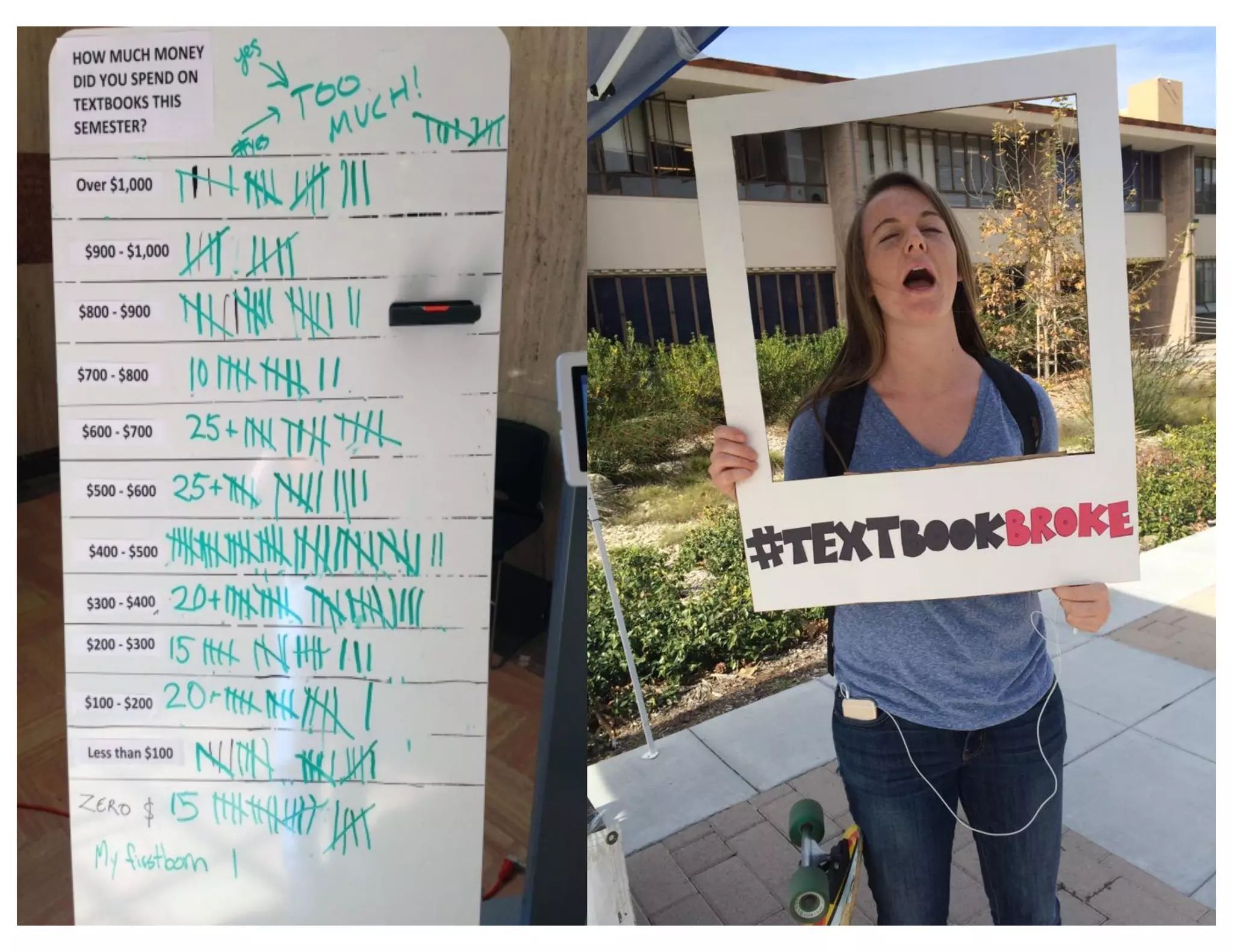
• Survey  your  student  body
• #textbookbroke campaign
• Presentations  
• Utilize  visuals,  create  displays
• Speak  directly  to  faculty  &  admin
• Suggest  that  faculty  review  a  textbook
• Showcase  examples
• Form  a  student-­led  OER  group
• Connect.  Collaborate.
Buy used (if possible)
Resell (if possible)
Buy online
Rent
Shared purchase
(Inter)library loans
Photocopy
International edition
Old edition
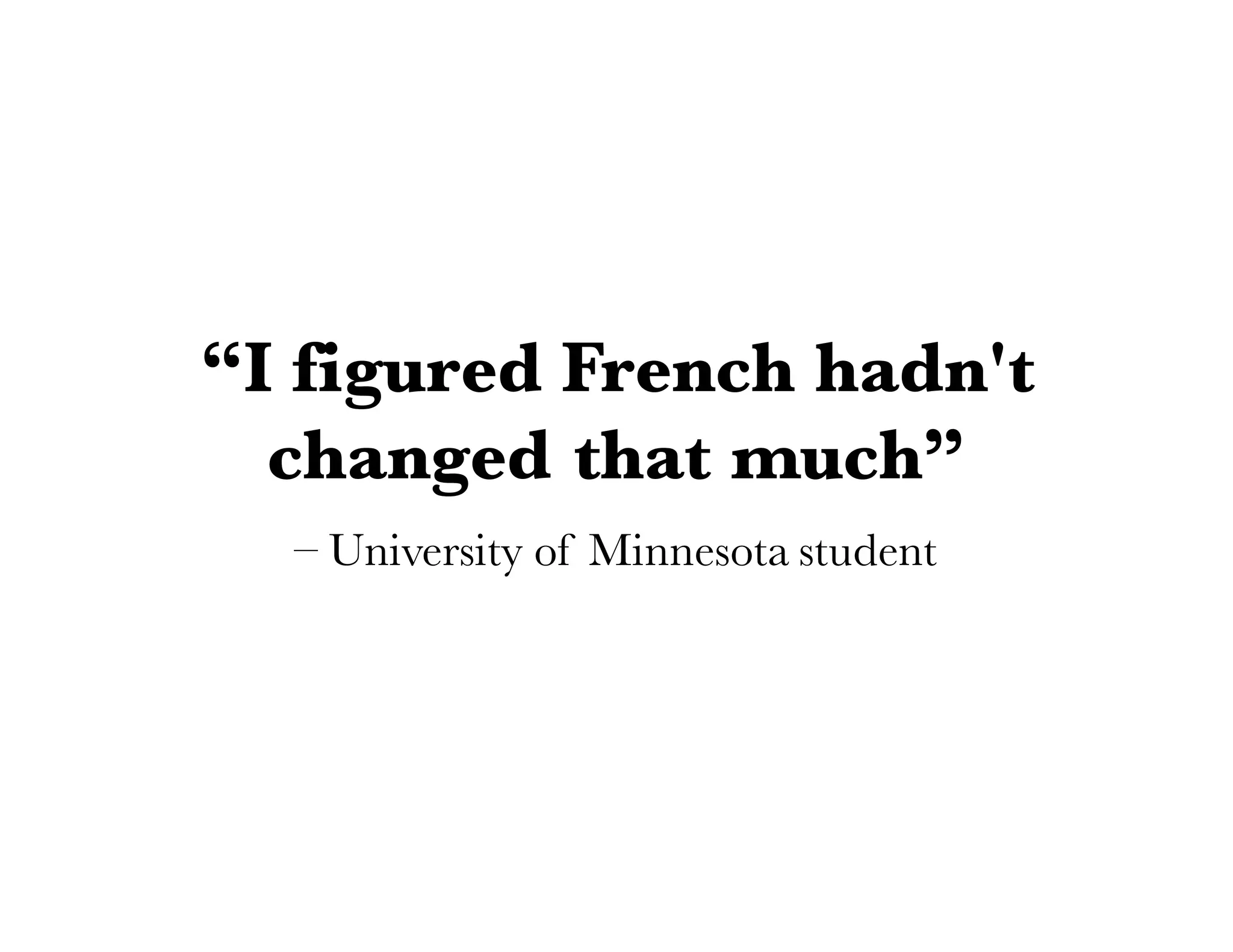
– University of Minnesota student
“I figured French hadn't
changed that much”
66.5% Do not	
  purchase	
  a	
  req'd	
  textbook
47.6% Take	
  fewer	
  courses
45.5% Do	
  not	
  register	
  for	
  a	
  specific	
  course
37.6% Earn	
  a	
  poor	
  grade
26.1% Drop	
  a	
  course
19.8% Fail	
  a	
  course
€€€
€€€
€€
€€
€
€
Florida	
  Virtual	
  Campus.	
  (2016).	
  2016	
  student	
  textbook	
  and	
  course	
  materials	
  survey.	
  Tallahassee,	
  FL:	
  Author.
1
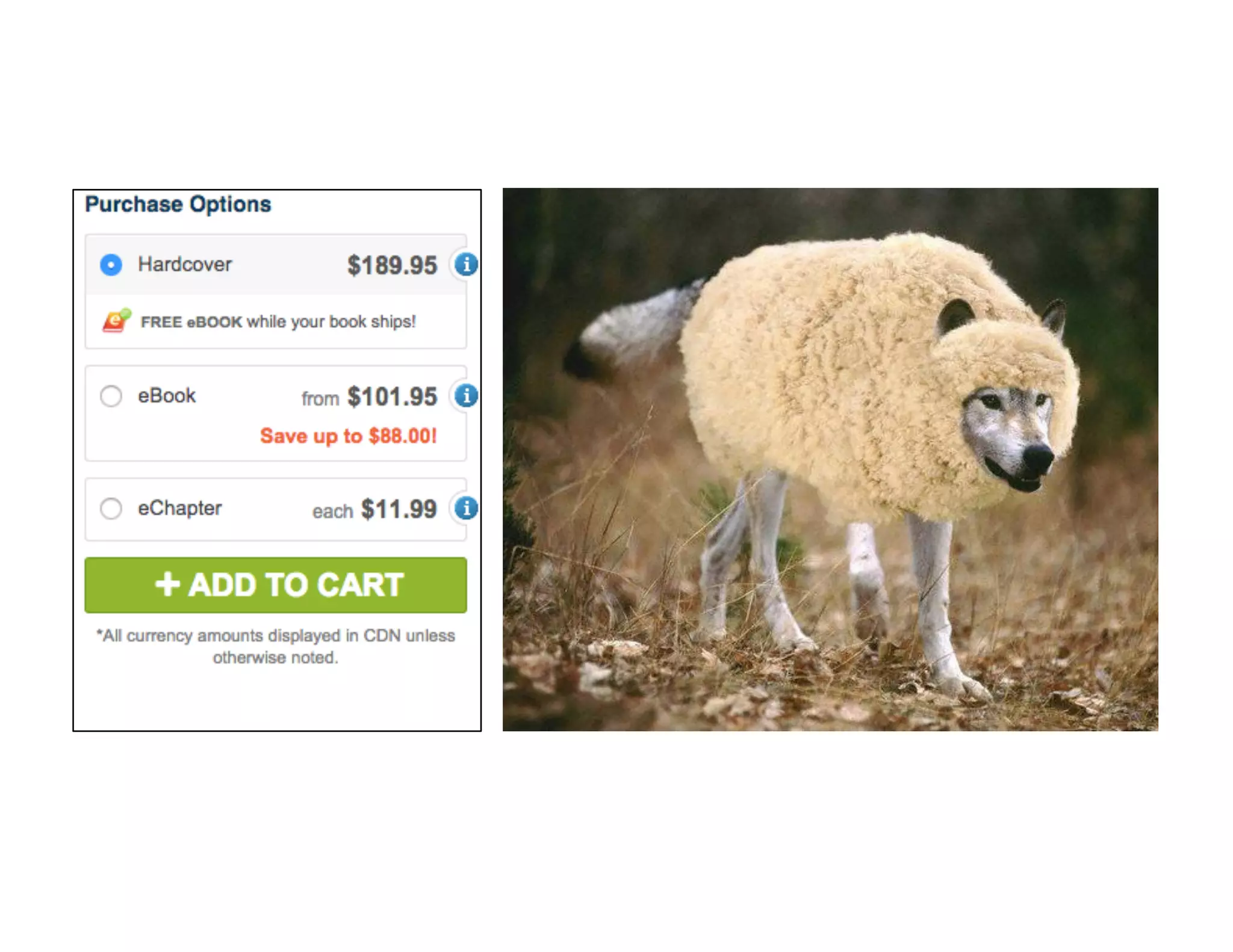
An  approach  that  preys  
on  our  most  vulnerable
constituents  is  not  
innovative.
It  is  exploitative.
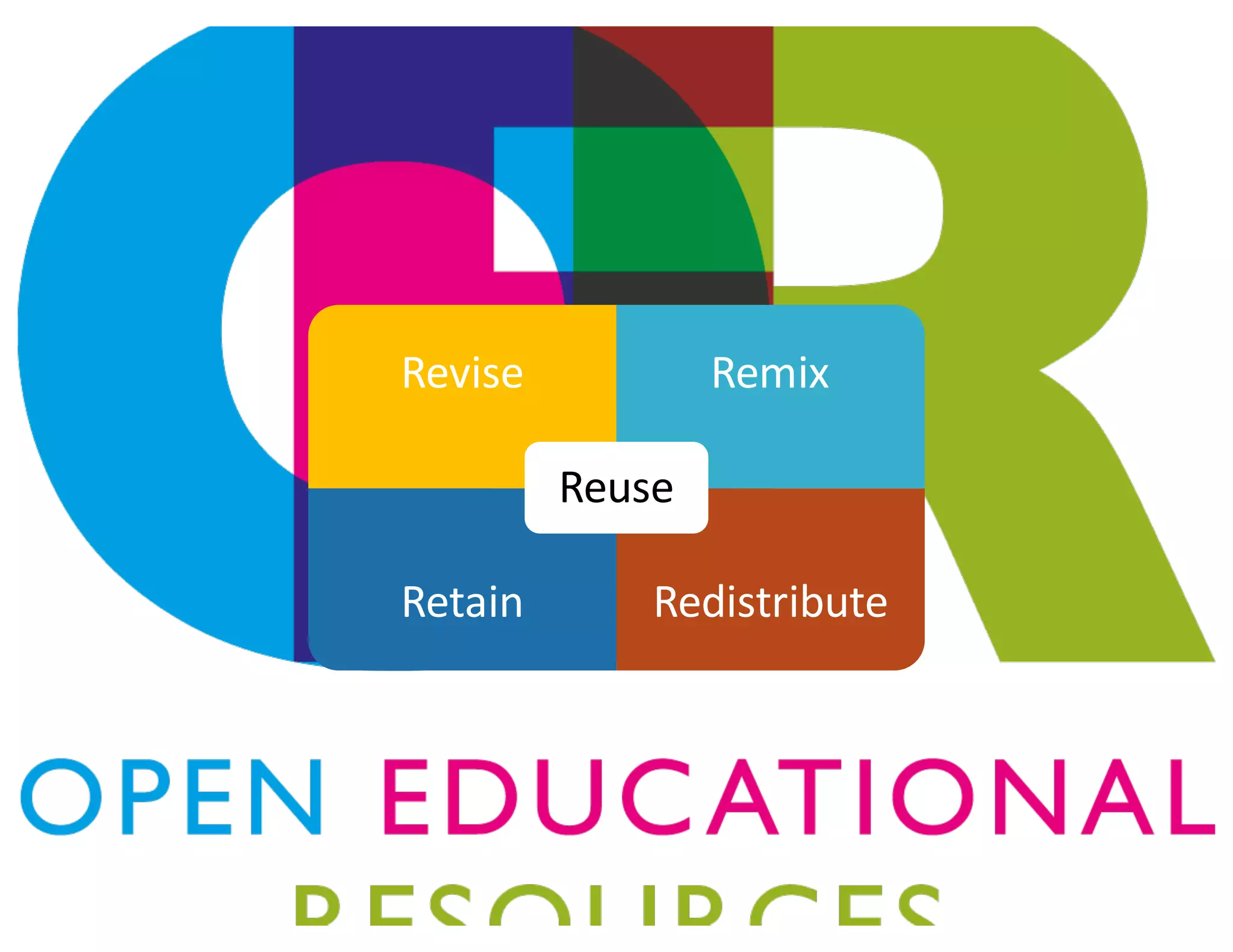
Revise Remix
Retain Redistribute
Reuse
Source:	
  Creative	
  Commons,	
  2015	
  State	
  of	
  the	
  Commons	
  report
flickr.com/creativecommons
unsplash.com
unsplash.com
rijksmuseum.nl
ted.com
ed.ted.com
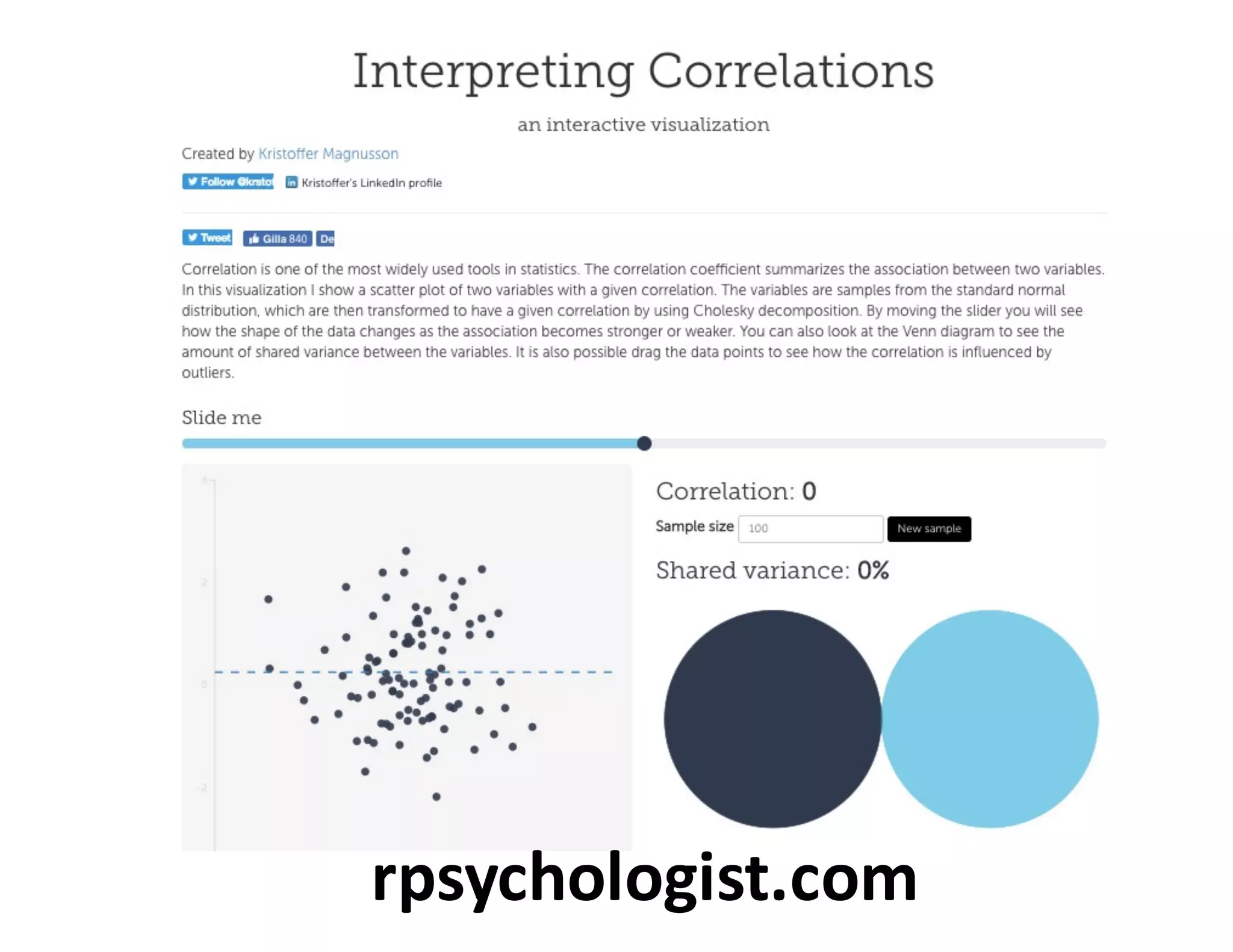
rpsychologist.com
gutenberg.org
Not just free or low-cost textbooks
Not just digital textbooks
open.bccampus.ca
openstax.org
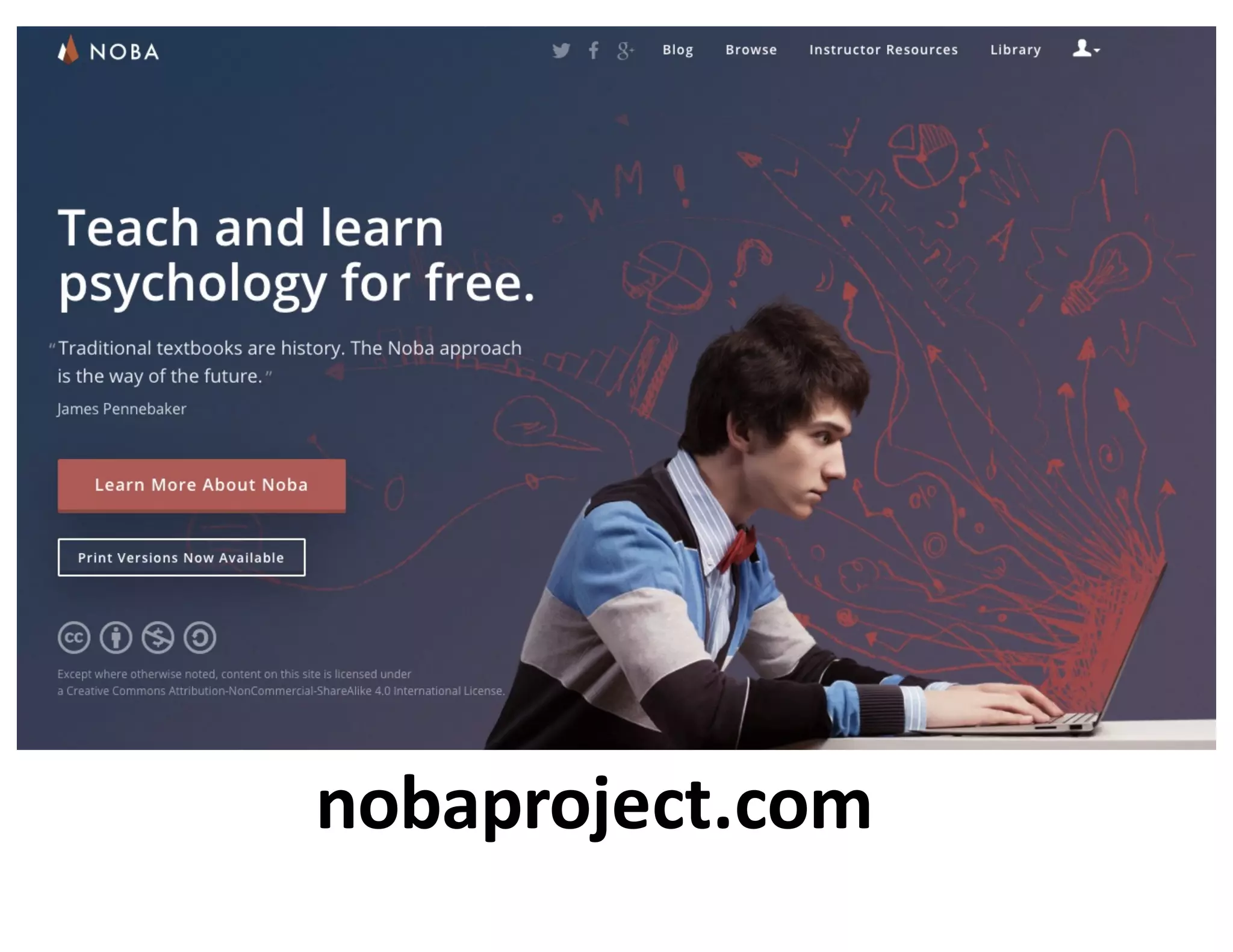
nobaproject.com
Source:	
  Creative	
  Commons,	
  2015	
  State	
  of	
  the	
  Commons	
  report
Jennifer	
  Purrenhage
NR	
  435:	
  Contemporary	
  Conservation	
  Issues
Cost	
  of	
  commercial	
  textbook:	
  $155.20
Enrolment:	
  272	
  students
Total	
  student	
  savings:	
  $42,214
Performance	
  gain:	
  72.64%	
  to	
  81.72%
Jesse	
  Stabile	
  Morrell
NUTR	
  400:	
  Nutrition	
  Health	
  &	
  Well	
  Being
Cost	
  of	
  commercial	
  textbook:	
  $105.75
Enrolment:	
  441	
  students
Total	
  student	
  savings:	
  $46,635
Performance	
  gain:	
  77%	
  to	
  82.49%
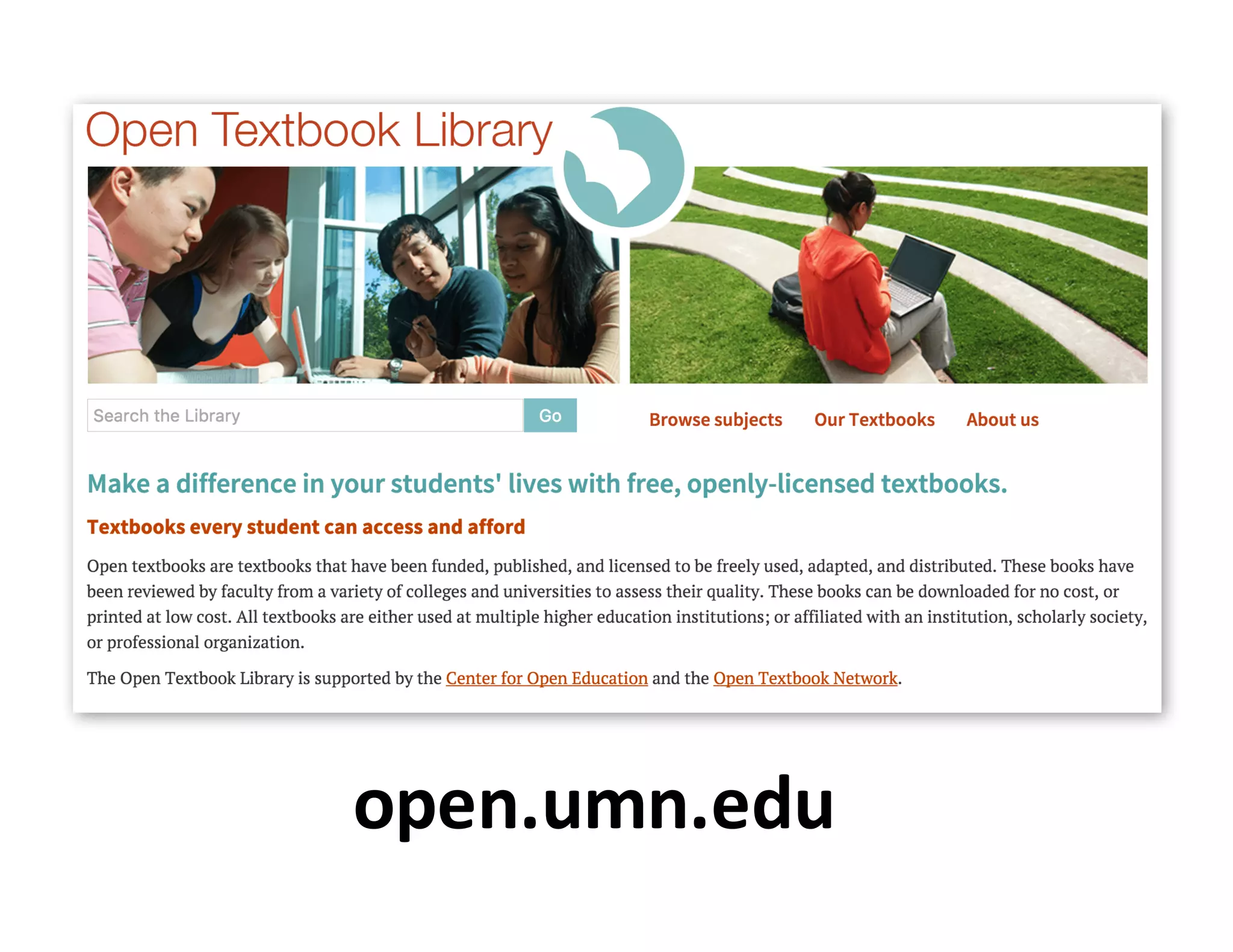
open.umn.edu
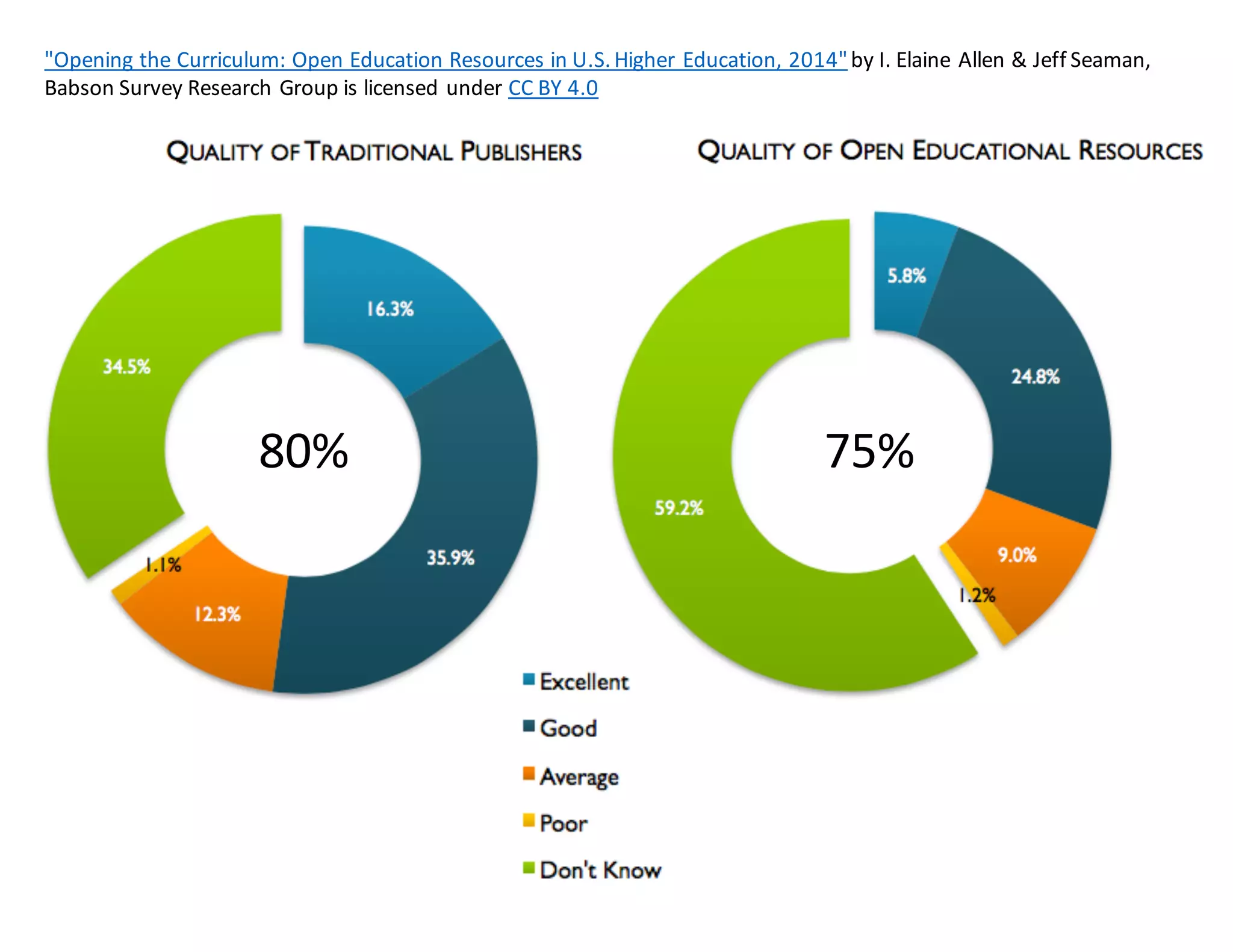
"Opening	
  the	
  Curriculum:	
  Open	
  Education	
  Resources	
  in	
  U.S.	
  Higher	
  Education,	
  2014"by I.	
  Elaine	
  Allen	
  &	
  Jeff	
  Seaman,	
  
Babson	
  Survey	
  Research	
  Group is	
  licensed	
  under CC	
  BY	
  4.0
80% 75%
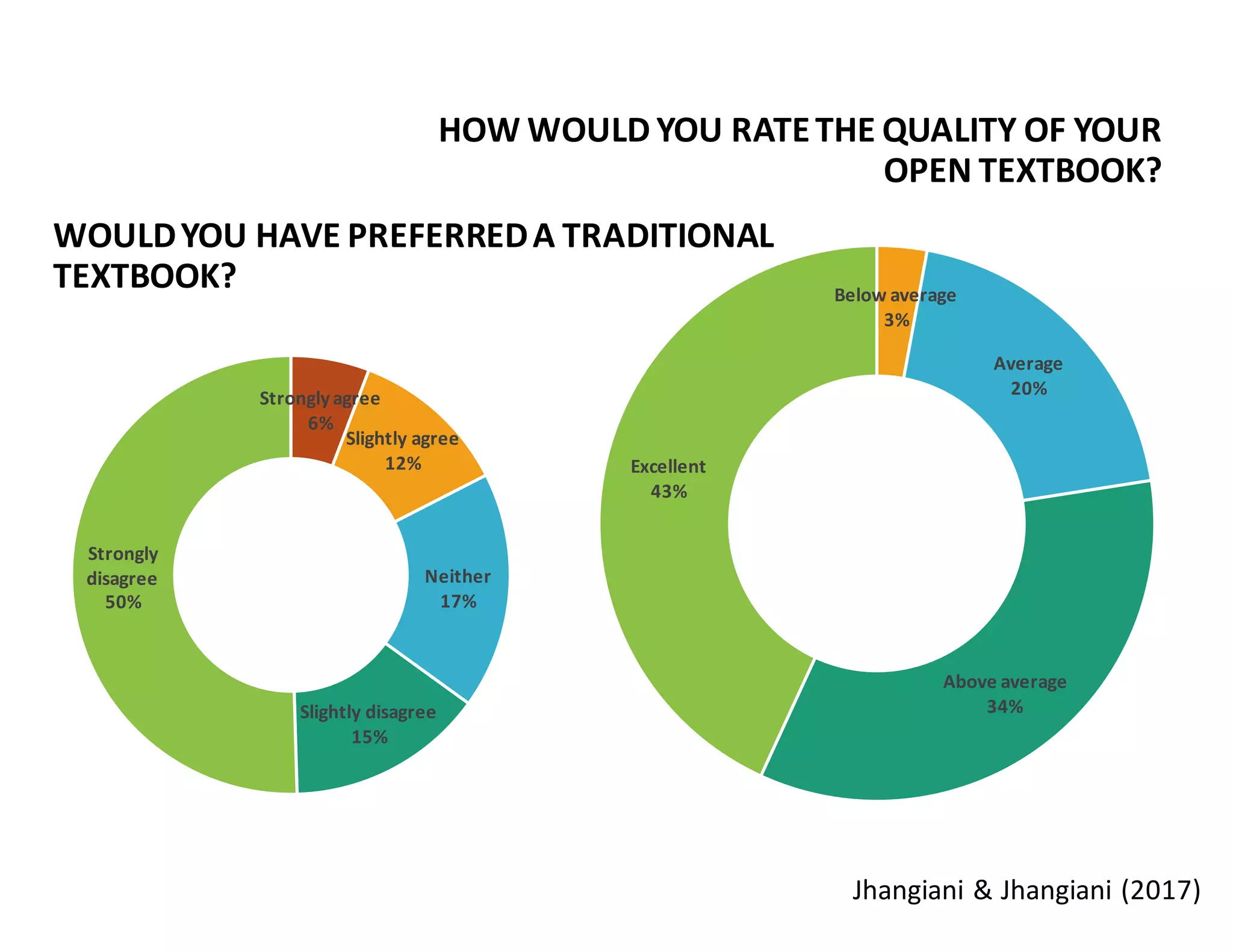
Below	
  average
3%
Average
20%
Above	
  average
34%
Excellent
43%
HOW	
  WOULD	
  YOU	
  RATE	
  THE	
  QUALITY	
  OF	
  YOUR	
  
OPEN	
  TEXTBOOK?
Strongly	
  agree
6%
Slightly	
  agree
12%
Neither
17%
Slightly	
  disagree
15%
Strongly	
  
disagree
50%
WOULD	
  YOU	
  HAVE	
  PREFERRED	
  A	
  TRADITIONAL	
  
TEXTBOOK?
Jhangiani	
  &	
  Jhangiani	
  (2017)
I	
  would	
  not	
  have	
  bought	
  the	
  text	
  book	
  for	
  
this	
  course	
  because	
  it's	
  an	
  elective.	
  I	
  
would	
  have	
  possibly	
  walked	
  away	
  with	
  a	
  
C,	
  now	
  I	
  might	
  actually	
  get	
  an	
  A-­‐
It	
  is	
  easily	
  accessible	
   and	
  convenient.	
  
Material	
  is	
  easy	
  to	
  understand	
   and	
  follow
I	
  personally	
  really	
  like	
  the	
  convenience	
   of	
  having	
  the	
  
complete	
  set	
  of	
  chapters	
  on	
  my	
  computer	
  and	
  even	
  
accessible	
   from	
  my	
  phone	
  if	
  I	
  need	
  it.	
  I	
  like	
  that	
  I	
  don't	
  
have	
  to	
  lug	
  around	
  another	
   text	
  book
It's	
  free	
  and	
  it's	
  a	
  great	
  money	
  saver
13 Peer	
  Reviewed	
  Studies	
  of	
  Efficacy
http://openedgroup.org/	
  
119,720 Students
http://openedgroup.org/	
  
95%	
  Same	
  or	
  Better Outcomes
http://openedgroup.org/	
  
openedgroup.org/review
“Mad” “Glad”
“Sad” “Rad”
Cost
Completing	
  with	
  C	
  or	
  Better
Student	
  Success	
  per	
  Dollar
0 100%
$400
“Mad” “Glad”
“Sad” “Rad”
Cost
Completing	
  with	
  C	
  or	
  Better
Commercial
Student	
  Success	
  per	
  Dollar
0 100%
$400
“Mad” “Glad”
“Sad” “Rad”
Cost
Completing	
  with	
  C	
  or	
  Better
Commercial
OER
Student	
  Success	
  per	
  Dollar
0 100%
$400
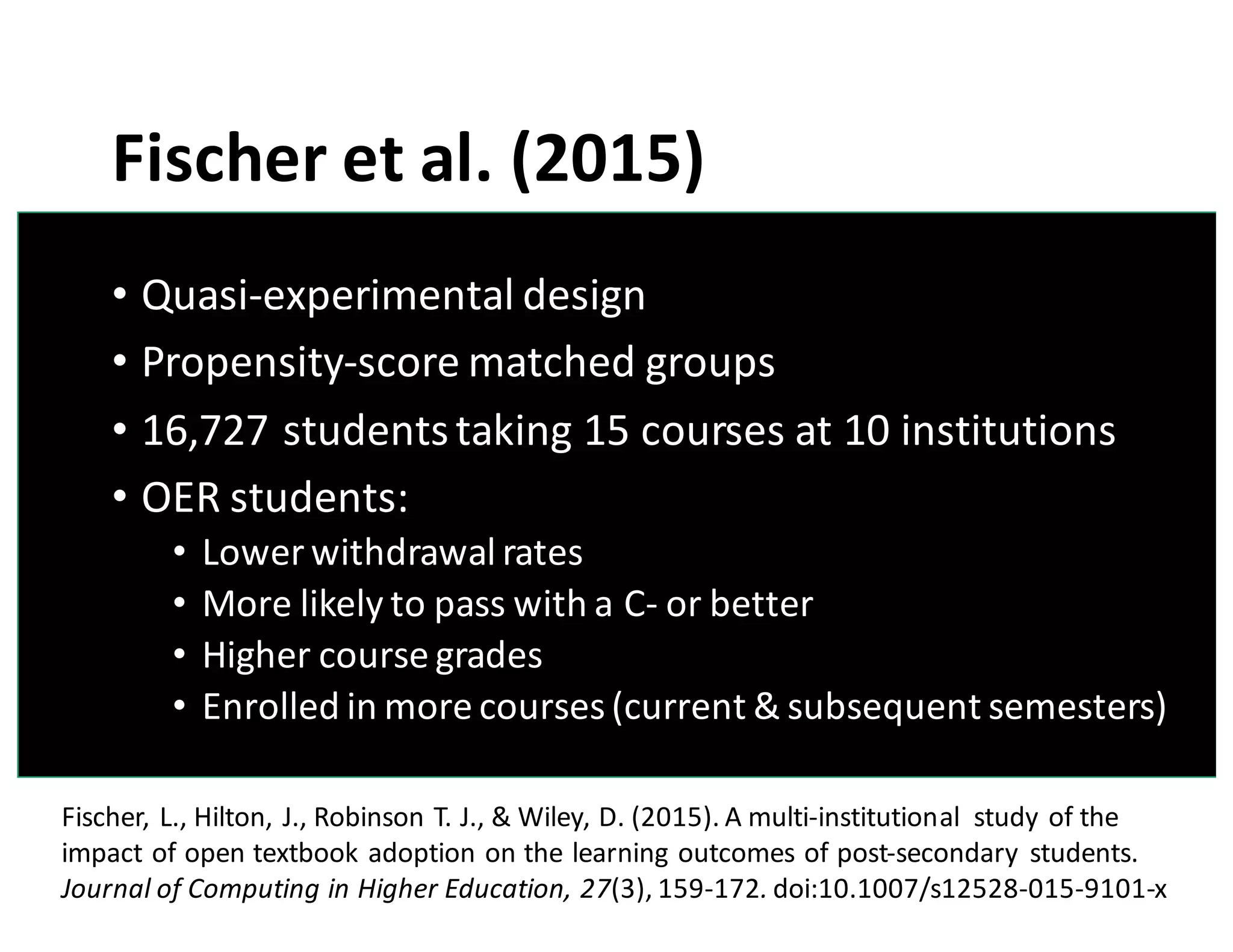
Fischer	
  et	
  al.	
  (2015)
• Quasi-­‐experimental	
  design
• Propensity-­‐score	
  matched	
  groups
• 16,727	
  students	
  taking	
  15	
  courses	
  at	
  10	
  institutions
• OER	
  students:
• Lower	
  withdrawal	
  rates
• More	
  likely	
  to	
  pass	
  with	
  a	
  C-­‐ or	
  better
• Higher	
  course	
  grades
• Enrolled	
  in	
  more	
  courses	
  (current	
  &	
  subsequent	
  semesters)
Fischer,	
  L.,	
  Hilton,	
  J.,	
  Robinson	
  T.	
  J.,	
  &	
  Wiley,	
  D.	
  (2015).	
  A	
  multi-­‐institutional	
   study	
  of	
  the	
  
impact	
  of	
  open	
  textbook	
  adoption	
  on	
  the	
  learning	
  outcomes	
  of	
  post-­‐secondary	
  students.	
  
Journal	
  of	
  Computing	
  in	
  Higher	
  Education,	
  27(3),	
  159-­‐172. doi:10.1007/s12528-­‐015-­‐9101-­‐x
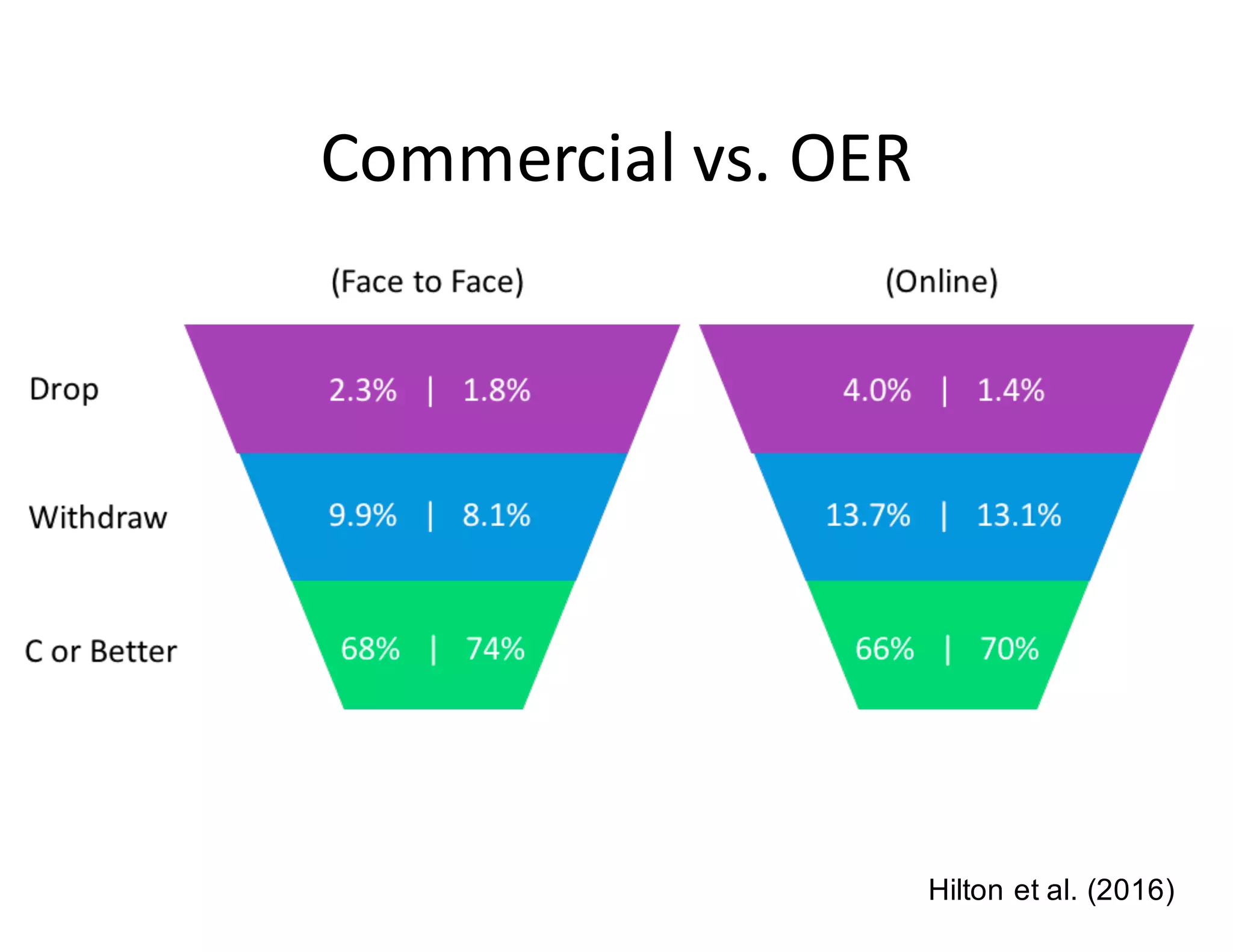
Commercial	
  vs.	
  OER
Hilton  et  al.  (2016)
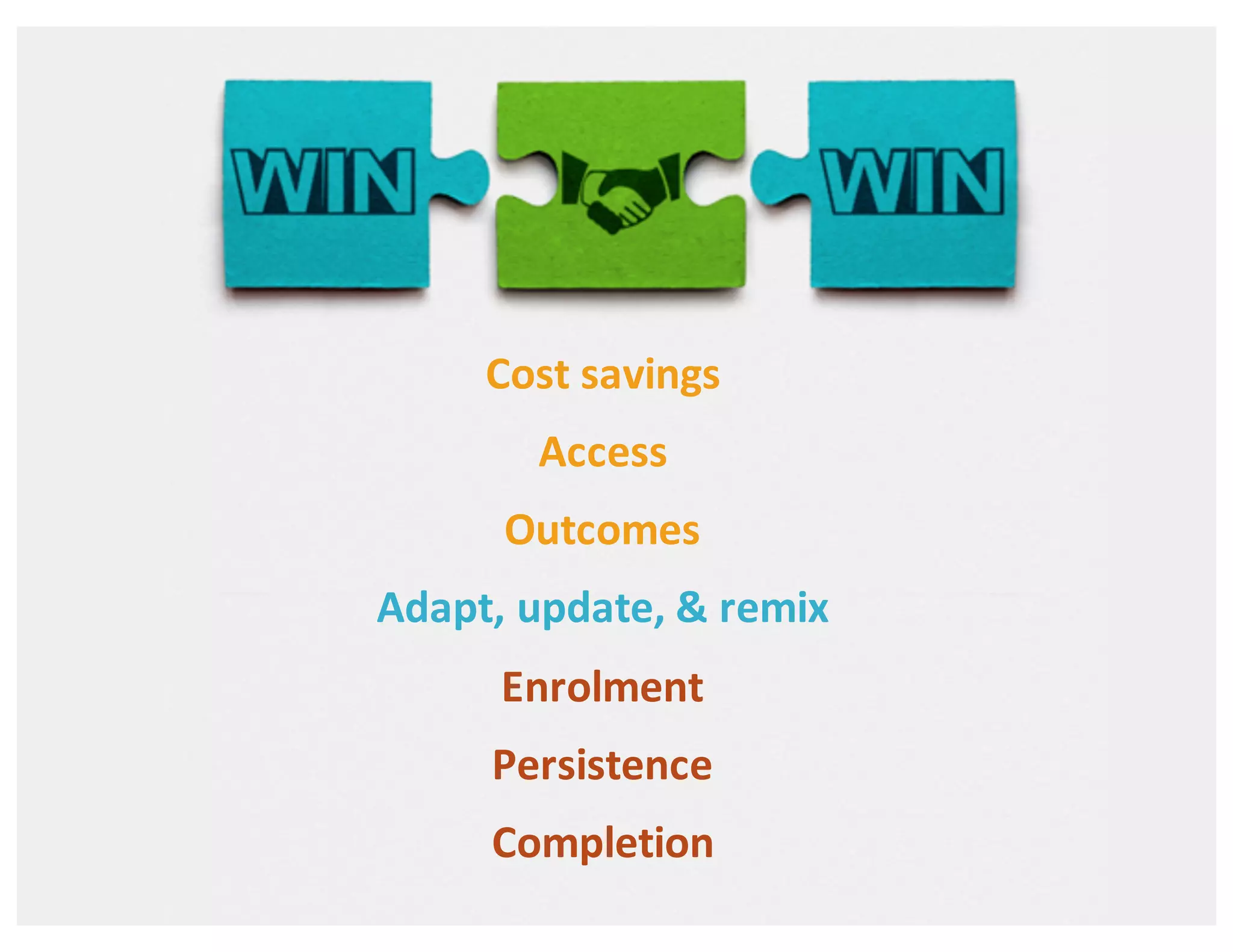
Cost	
  savings
Access
Outcomes
Adapt,	
  update,	
  &	
  remix
Enrolment
Persistence
Completion
"Recycling	
  Water	
  Bottles" by Mr.TinDC is	
  licensed	
  under CC	
  BY-­‐ND	
  2.0
Open	
  Pedagogy:	
  
HOW
Deeper	
  learning(Farzan &	
  Kraut,	
  2013)
Evaluate	
  and	
  defend	
  credibility	
  of	
  
sources	
  (Marentette,	
  2014)
Write	
  more	
  concisely	
  and	
  think	
  
more	
  critically	
  (Farzan &	
  Kraut,	
  2013)
Collaborate	
  with	
  students	
  from	
  
around	
  the	
  world(Karney,	
  2012)
Provide	
  and	
  receive	
  constructive	
  
feedback(Ibrahim,	
  2012)
Enhance	
  digital	
  literacy	
  (Silton,	
  2012)
Communicate	
  ideas	
  to	
  a	
  general	
  
audience	
  (APS,	
  2013)
22,000
37,000+
97%
Students	
  who	
  have	
  taken	
  on	
  
Wikipedia	
  assignments	
  since	
  2010
New	
  articles	
  that	
  students	
  have	
  
created
Instructors	
  who	
  say	
  they	
  will,	
  or	
  
plan	
  to,	
  teach	
  with	
  Wikipedia	
  again
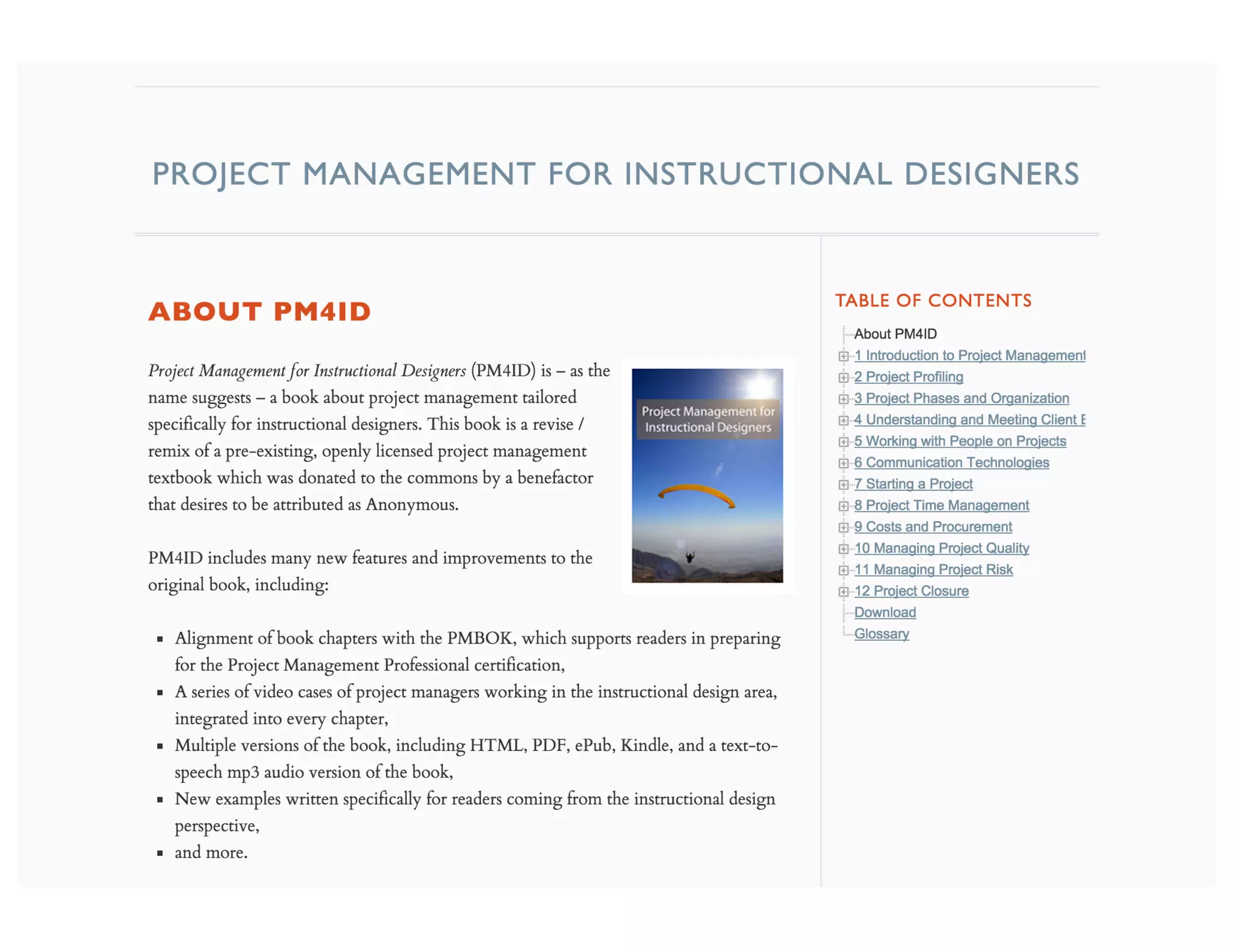
PM4ID
Why	
  have	
  students	
  
answer	
  questions	
  when	
  
they	
  can	
  write them?
Students
Topics
Questions
35
10
1400
"GB	
  Airways	
  A320"by Tony	
  Evans is	
  licensed	
  under CC	
  BY-­‐ND	
  2.0
"IMG_1007"by Erica is	
  licensed	
  under CC	
  BY	
  2.0
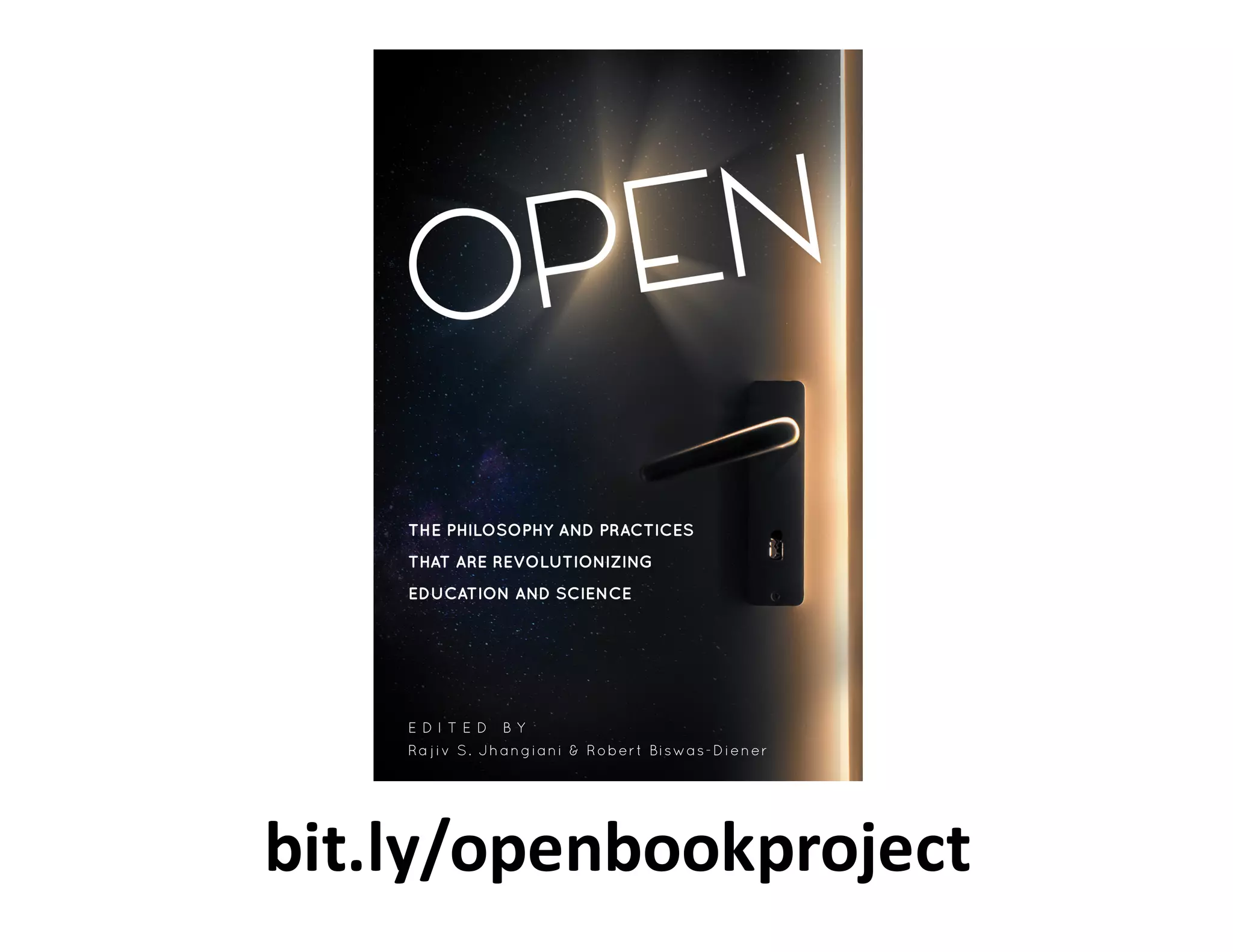
bit.ly/openbookproject
@thatpsychprof
Rajiv@kpu.ca
slideshare.net/thatpsychprofWWW

Camp Open (2017 Academic Technology Institute) #UNSHshare