

• PAS 7, paragraph 18, provides that an
entity shall report cash flows fro operating
activities using either the direct method or
indirect method.
• It shows in detail or itemizes the major classes of gross
cash receipts and gross cash payments.
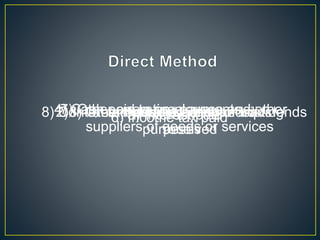
1) Cash collected from customers2) Interest, fees, royalties and dividends
received
3) Other operating cash receipts4) Cash paid to employees and other
suppliers of goods or services
5) Interest paid6) Income tax paid
7) Other operating payments8) Contracts held for dealing or trading
purposes
Income
Statement
Accounts
Adjustments
Cash Flows from
Operating
Activities
Sales
revenue
+ Decrease in Accounts Receivable
- Increase in Accounts Receivable
+ Increase in deferred revenue
- Decrease in deferred revenue
Collection from
customers
Income
Statement
Accounts
Adjustments
Cash Flows from
Operating
Activities
Interest
revenue and
dividend
revenue
+ Decrease in Interest Receivable
- Increase in Interest Receivable
+ Amortization of premium on investment
in bonds
- Amortization of discount on investment in
bonds
Interest and
dividends collected
Income
Statement
Accounts
Adjustments Cash Flows from
Operating
Activities
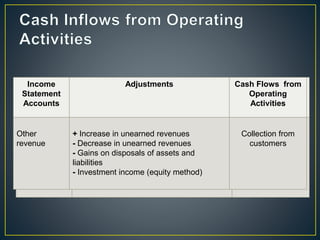
Other
revenue
+ Increase in unearned revenues
- Decrease in unearned revenues
- Gains on disposals of assets and
liabilities
- Investment income (equity method)
Collection from
customers
Income
Statement
Accounts
Adjustments
Cash Flows
from
Operating
Activities
Cost of goods
sold
+ Increase in inventory
- Decrease in inventory
- Decrease in accounts payable
- Increase in accounts payable
Payments to
suppliers
Income
Statement
Accounts
Adjustments Cash Flows
from
Operating
Activities
Selling and
administrative
expenses
- Depreciation, depletion and amortization
expense
+ Decrease in accrued expenses
- Increase in accrued expenses
+ Increase in prepaid expenses
- Increase in prepaid expenses
Payments of
operating
expenses
Income
Statement
Accounts
Adjustments Cash Flows
from
Operating
Activities
Interest
expense
+ Decrease in Interest payable
- Increase in Interest payable
+ Amortization of premium on bonds payable
- Amortization of discount on bonds payable
Payments of
Interest
Income
Statement
Accounts
Adjustments Cash Flows from
Operating
Activities
Other
expense
- Losses on disposals of assets and
liabilities
- Investment loss (equity method)
Other operating
payments
Income
Statement
Accounts
Adjustments Cash Flows
from
Operating
Activities
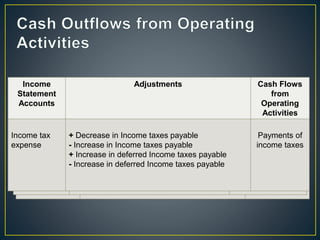
Income tax
expense
+ Decrease in Income taxes payable
- Increase in Income taxes payable
+ Increase in deferred Income taxes payable
- Increase in deferred Income taxes payable
Payments of
income taxes
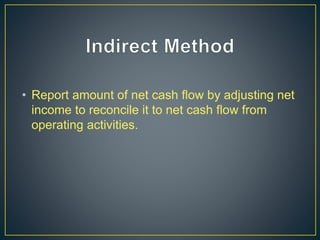
• Report amount of net cash flow by adjusting net
income to reconcile it to net cash flow from
operating activities.
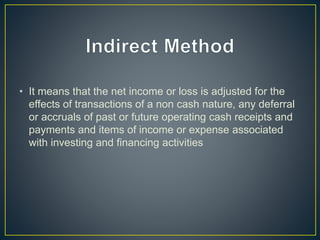
• It means that the net income or loss is adjusted for the
effects of transactions of a non cash nature, any deferral
or accruals of past or future operating cash receipts and
payments and items of income or expense associated
with investing and financing activities
• Decreases in current assets
 Interest taxes
Plus
 Increases in current liabilities
 Depreciation, depletion and amortization
expense
 Amortization of discount on bonds payable Amortization of premium on investment in
bonds
 Increase in deferred income taxes Subsidiary loss under the equity method Interest expense
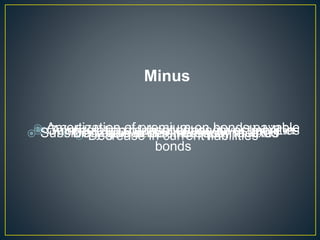
• Increase in current assets
Minus
 Decrease in current liabilities
 Amortization of premium on bonds payable Amortization of discount on investment in
bonds
 Decrease in deferred income taxes Gain(net) on disposal of assets or liabilities Subsidiary gain under the equity method
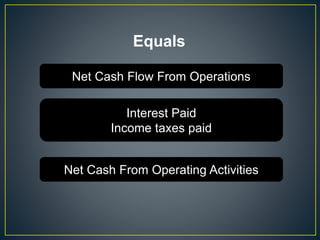
Net Cash Flow From Operations
Equals
Interest Paid
Income taxes paid
Net Cash From Operating Activities

Calculating cash flow from operating activities

  • 2.
    • PAS 7,paragraph 18, provides that an entity shall report cash flows fro operating activities using either the direct method or indirect method.
  • 3.
    • It showsin detail or itemizes the major classes of gross cash receipts and gross cash payments.
  • 4.
    1) Cash collectedfrom customers2) Interest, fees, royalties and dividends received 3) Other operating cash receipts4) Cash paid to employees and other suppliers of goods or services 5) Interest paid6) Income tax paid 7) Other operating payments8) Contracts held for dealing or trading purposes
  • 6.
    Income Statement Accounts Adjustments Cash Flows from Operating Activities Sales revenue +Decrease in Accounts Receivable - Increase in Accounts Receivable + Increase in deferred revenue - Decrease in deferred revenue Collection from customers Income Statement Accounts Adjustments Cash Flows from Operating Activities Interest revenue and dividend revenue + Decrease in Interest Receivable - Increase in Interest Receivable + Amortization of premium on investment in bonds - Amortization of discount on investment in bonds Interest and dividends collected Income Statement Accounts Adjustments Cash Flows from Operating Activities Other revenue + Increase in unearned revenues - Decrease in unearned revenues - Gains on disposals of assets and liabilities - Investment income (equity method) Collection from customers
  • 7.
    Income Statement Accounts Adjustments Cash Flows from Operating Activities Cost ofgoods sold + Increase in inventory - Decrease in inventory - Decrease in accounts payable - Increase in accounts payable Payments to suppliers Income Statement Accounts Adjustments Cash Flows from Operating Activities Selling and administrative expenses - Depreciation, depletion and amortization expense + Decrease in accrued expenses - Increase in accrued expenses + Increase in prepaid expenses - Increase in prepaid expenses Payments of operating expenses Income Statement Accounts Adjustments Cash Flows from Operating Activities Interest expense + Decrease in Interest payable - Increase in Interest payable + Amortization of premium on bonds payable - Amortization of discount on bonds payable Payments of Interest Income Statement Accounts Adjustments Cash Flows from Operating Activities Other expense - Losses on disposals of assets and liabilities - Investment loss (equity method) Other operating payments Income Statement Accounts Adjustments Cash Flows from Operating Activities Income tax expense + Decrease in Income taxes payable - Increase in Income taxes payable + Increase in deferred Income taxes payable - Increase in deferred Income taxes payable Payments of income taxes
  • 8.
    • Report amountof net cash flow by adjusting net income to reconcile it to net cash flow from operating activities.
  • 9.
    • It meansthat the net income or loss is adjusted for the effects of transactions of a non cash nature, any deferral or accruals of past or future operating cash receipts and payments and items of income or expense associated with investing and financing activities
  • 11.
    • Decreases incurrent assets  Interest taxes Plus  Increases in current liabilities  Depreciation, depletion and amortization expense  Amortization of discount on bonds payable Amortization of premium on investment in bonds  Increase in deferred income taxes Subsidiary loss under the equity method Interest expense
  • 12.
    • Increase incurrent assets Minus  Decrease in current liabilities  Amortization of premium on bonds payable Amortization of discount on investment in bonds  Decrease in deferred income taxes Gain(net) on disposal of assets or liabilities Subsidiary gain under the equity method
  • 13.
    Net Cash FlowFrom Operations Equals Interest Paid Income taxes paid Net Cash From Operating Activities