
CASH 
FLOW
What Is Cash 
Flow 
Statement ???
 Cash-Flow statement may be 
defined as a “ summary of receipts 
and disbursements of cash for a 
particular period of time. “ 
 It also explains reasons for the 
changes in cash position of the 
firm.
…conti… 
 Transactions which increase 
the cash position of the entity 
are called as inflows of cash . 
 Transactions which decrease 
the cash position as outflows of 
cash.
Objectives Of Cash Flow 
Statement :- 
 For to highlighting the cash generated from 
operating activities . 
 For to planning the repayment of loan 
schedule and replacement of fixed assets, etc. 
 For to the projection of future investing and 
financing plans of the enterprise. 
 For to efficient and effective management of 
cash.
…conti… 
 For to ascertain the liquid position of the firm in a 
better manner. 
 Banks and financial institutions mostly prefer 
cash flow statement to analyse liquidity of the 
borrowing firm. 
 For to understand the internally generated cash 
 For to evaluation of cash position of a firm.
Cash and 
relevant 
terms as per 
AS-3 
(revised) :-
1. (a) Cash fund : 
 Cash Fund includes 
 (i) Cash in hand 
 (ii) Demand deposits with banks, and 
 (iii) cash equivalents . 
 (b) Cash equivalents are short-term, highly 
liquid investments, readily convertible into cash 
and which are subject to insignificant risk of 
changes in values.
2. Cash Flows are inflows and 
outflows of cash and cash 
equivalents. 
 The statement of cash flow shows three main 
categories of cash inflows and cash outflows, 
nameOlype: rating Activities 
Investing Activities 
Financing Activities
A . Operating Activities 
 Cash flow from operating activities are primarily 
derived from the principal revenue generating 
activities of the enterprise. 
 A few items of cash flows from operating activities 
are 
 Cash receipt from the sale of goods and rendering 
services. 
 Cash receipts from royalties, fee, Commissions and 
other revenue. 
 Cash payments to suppliers for goods and services. 
 Cash payment to employees
Inflows And Outflows Of Operating 
Activities :- 
CASH INFLOW CASH OUTFLOW 
 Cash sale 
 Cash received from 
debtors 
 Cash received from 
commission and 
fees 
 Royalty and other 
revenues 
 Cash purchase 
 Payment to creditors 
 Cash operating 
expenses 
 Payment of wages
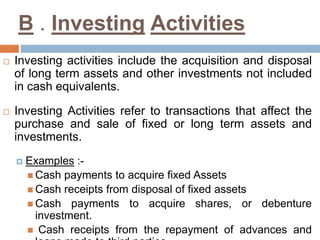
B . Investing Activities 
 Investing activities include the acquisition and disposal 
of long term assets and other investments not included 
in cash equivalents. 
 Investing Activities refer to transactions that affect the 
purchase and sale of fixed or long term assets and 
investments. 
 Examples :- 
 Cash payments to acquire fixed Assets 
 Cash receipts from disposal of fixed assets 
 Cash payments to acquire shares, or debenture 
investment. 
 Cash receipts from the repayment of advances and 
loans made to third parties.
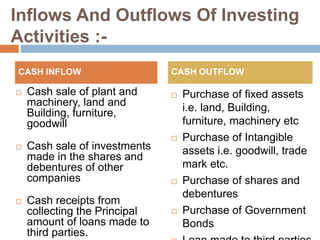
Inflows And Outflows Of Investing 
Activities :- 
CASH INFLOW CASH OUTFLOW 
 Cash sale of plant and 
machinery, land and 
Building, furniture, 
goodwill 
 Cash sale of investments 
made in the shares and 
debentures of other 
companies 
 Cash receipts from 
collecting the Principal 
amount of loans made to 
third parties. 
 Purchase of fixed assets 
i.e. land, Building, 
furniture, machinery etc 
 Purchase of Intangible 
assets i.e. goodwill, trade 
mark etc. 
 Purchase of shares and 
debentures 
 Purchase of Government 
Bonds 
 Loan made to third parties
C . Financing Activities 
 Financing activities are activities that result in 
change in the size and composition of the owner’s 
capital (including Preference share capital in the 
case of a company) and borrowings of the 
enterprise. 
 The third section of the cash flow statement reports 
the cash paid and received from activities with non-current 
or long term liabilities and shareholders 
Capital. 
 Examples :- 
 Cash proceeds from issue of shares or other similar 
instruments.
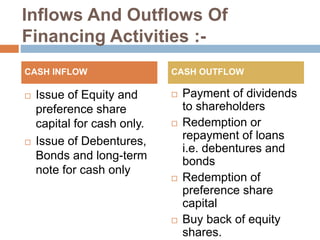
Inflows And Outflows Of 
Financing Activities :- 
CASH INFLOW CASH OUTFLOW 
 Issue of Equity and 
preference share 
capital for cash only. 
 Issue of Debentures, 
Bonds and long-term 
note for cash only 
 Payment of dividends 
to shareholders 
 Redemption or 
repayment of loans 
i.e. debentures and 
bonds 
 Redemption of 
preference share 
capital 
 Buy back of equity 
shares.
Some Rules Of Increasing And 
Decreasing 
 Cash flow decrease due to increase in the current 
asset. 
 Ex . Purchase of stock , increase in debtors etc . 
 Cash flow increase due to decrease in current asset 
. 
 Ex . Sale of goods , decrease in debtors etc . 
 Cash flow increase due to increase in current 
liabilities . 
 Ex . Increase in creditors , bills payable , prepaid 
expenses
THANK 
YOU 
   

Cash flow

  • 1.
  • 2.
    What Is Cash Flow Statement ???
  • 3.
     Cash-Flow statementmay be defined as a “ summary of receipts and disbursements of cash for a particular period of time. “  It also explains reasons for the changes in cash position of the firm.
  • 4.
    …conti…  Transactionswhich increase the cash position of the entity are called as inflows of cash .  Transactions which decrease the cash position as outflows of cash.
  • 5.
    Objectives Of CashFlow Statement :-  For to highlighting the cash generated from operating activities .  For to planning the repayment of loan schedule and replacement of fixed assets, etc.  For to the projection of future investing and financing plans of the enterprise.  For to efficient and effective management of cash.
  • 6.
    …conti…  Forto ascertain the liquid position of the firm in a better manner.  Banks and financial institutions mostly prefer cash flow statement to analyse liquidity of the borrowing firm.  For to understand the internally generated cash  For to evaluation of cash position of a firm.
  • 7.
    Cash and relevant terms as per AS-3 (revised) :-
  • 8.
    1. (a) Cashfund :  Cash Fund includes  (i) Cash in hand  (ii) Demand deposits with banks, and  (iii) cash equivalents .  (b) Cash equivalents are short-term, highly liquid investments, readily convertible into cash and which are subject to insignificant risk of changes in values.
  • 9.
    2. Cash Flowsare inflows and outflows of cash and cash equivalents.  The statement of cash flow shows three main categories of cash inflows and cash outflows, nameOlype: rating Activities Investing Activities Financing Activities
  • 10.
    A . OperatingActivities  Cash flow from operating activities are primarily derived from the principal revenue generating activities of the enterprise.  A few items of cash flows from operating activities are  Cash receipt from the sale of goods and rendering services.  Cash receipts from royalties, fee, Commissions and other revenue.  Cash payments to suppliers for goods and services.  Cash payment to employees
  • 11.
    Inflows And OutflowsOf Operating Activities :- CASH INFLOW CASH OUTFLOW  Cash sale  Cash received from debtors  Cash received from commission and fees  Royalty and other revenues  Cash purchase  Payment to creditors  Cash operating expenses  Payment of wages
  • 12.
    B . InvestingActivities  Investing activities include the acquisition and disposal of long term assets and other investments not included in cash equivalents.  Investing Activities refer to transactions that affect the purchase and sale of fixed or long term assets and investments.  Examples :-  Cash payments to acquire fixed Assets  Cash receipts from disposal of fixed assets  Cash payments to acquire shares, or debenture investment.  Cash receipts from the repayment of advances and loans made to third parties.
  • 13.
    Inflows And OutflowsOf Investing Activities :- CASH INFLOW CASH OUTFLOW  Cash sale of plant and machinery, land and Building, furniture, goodwill  Cash sale of investments made in the shares and debentures of other companies  Cash receipts from collecting the Principal amount of loans made to third parties.  Purchase of fixed assets i.e. land, Building, furniture, machinery etc  Purchase of Intangible assets i.e. goodwill, trade mark etc.  Purchase of shares and debentures  Purchase of Government Bonds  Loan made to third parties
  • 14.
    C . FinancingActivities  Financing activities are activities that result in change in the size and composition of the owner’s capital (including Preference share capital in the case of a company) and borrowings of the enterprise.  The third section of the cash flow statement reports the cash paid and received from activities with non-current or long term liabilities and shareholders Capital.  Examples :-  Cash proceeds from issue of shares or other similar instruments.
  • 15.
    Inflows And OutflowsOf Financing Activities :- CASH INFLOW CASH OUTFLOW  Issue of Equity and preference share capital for cash only.  Issue of Debentures, Bonds and long-term note for cash only  Payment of dividends to shareholders  Redemption or repayment of loans i.e. debentures and bonds  Redemption of preference share capital  Buy back of equity shares.
  • 16.
    Some Rules OfIncreasing And Decreasing  Cash flow decrease due to increase in the current asset.  Ex . Purchase of stock , increase in debtors etc .  Cash flow increase due to decrease in current asset .  Ex . Sale of goods , decrease in debtors etc .  Cash flow increase due to increase in current liabilities .  Ex . Increase in creditors , bills payable , prepaid expenses
  • 17.
    THANK YOU   