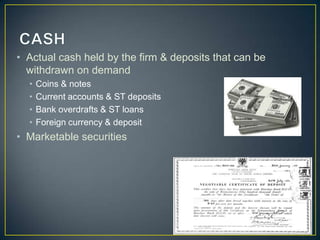
• Actual cash held by the firm & deposits that can be
withdrawn on demand
•
•
•
•

Coins & notes
Current accounts & ST deposits
Bank overdrafts & ST loans
Foreign currency & deposit

• Marketable securities
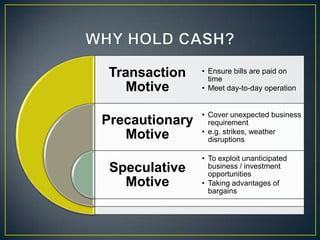
Transaction
Motive

Precautionary
Motive
Speculative
Motive

• Ensure bills are paid on
time
• Meet day-to-day operation
• Cover unexpected business
requirement
• e.g. strikes, weather
disruptions
• To exploit unanticipated
business / investment
opportunities
• Taking advantages of
bargains
• Refers to the practices & techniques designed to
accelerate & control collections, ensure prompt
deposit of receipts, improve control over payments
methods, eliminate idle cash balance
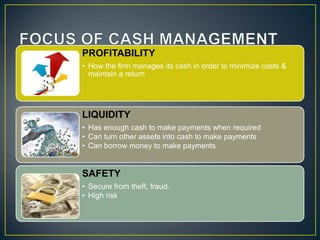
PROFITABILITY
• How the firm manages its cash in order to minimize costs &
maintain a return

LIQUIDITY
• Has enough cash to make payments when required
• Can turn other assets into cash to make payments
• Can borrow money to make payments

SAFETY
• Secure from theft, fraud.
• High risk
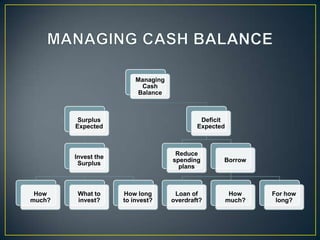
Managing
Cash
Balance

Surplus
Expected

Deficit
Expected

Reduce
spending
plans

Invest the
Surplus

How
much?

What to
invest?

How long
to invest?

Borrow

Loan of
overdraft?

How
much?

For how
long?
•
•
•
•
•
•

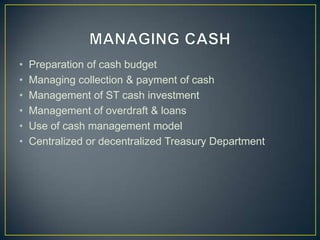
Preparation of cash budget
Managing collection & payment of cash
Management of ST cash investment
Management of overdraft & loans
Use of cash management model
Centralized or decentralized Treasury Department
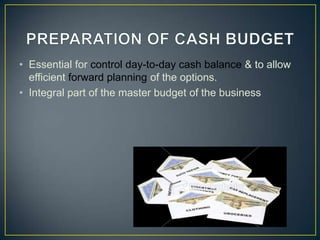
• Essential for control day-to-day cash balance & to allow
efficient forward planning of the options.
• Integral part of the master budget of the business
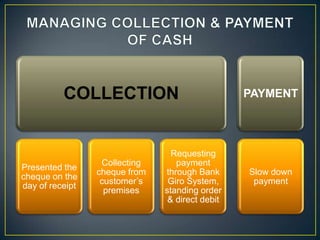
COLLECTION

Presented the
cheque on the
day of receipt

Collecting
cheque from
customer’s
premises

Requesting
payment
through Bank
Giro System,
standing order
& direct debit

PAYMENT

Slow down
payment
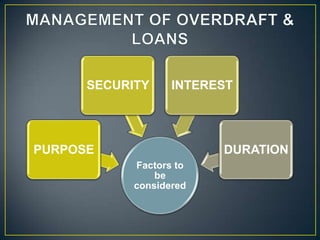
SECURITY

INTEREST

PURPOSE

DURATION
Factors to
be
considered
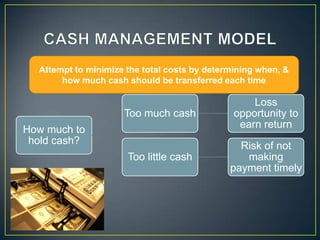
Attempt to minimize the total costs by determining when, &
how much cash should be transferred each time

Too much cash

Loss
opportunity to
earn return

Too little cash

Risk of not
making
payment timely

How much to
hold cash?
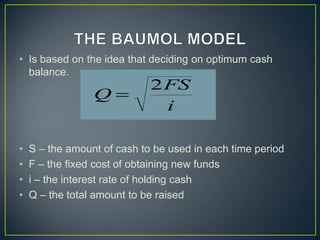
• Is based on the idea that deciding on optimum cash
balance.

Q

•
•
•
•

2 FS
i

S – the amount of cash to be used in each time period
F – the fixed cost of obtaining new funds
i – the interest rate of holding cash
Q – the total amount to be raised
• Introduced by William Baumol
• Assumption:
•
•
•
•
•
•

Able to forecast cash need with certainty
Cash payments occur uniformly over a period of time
No cash receipts during the projected period
No safety reserve
Opportunity costs of holding cash is known & fixed
Incur the same transaction costs
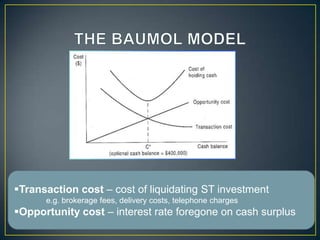
Transaction cost – cost of liquidating ST investment
e.g. brokerage fees, delivery costs, telephone charges

Opportunity cost – interest rate foregone on cash surplus
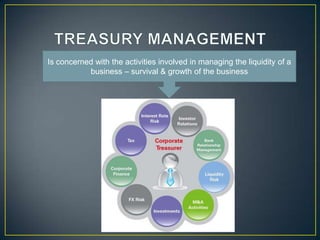
Is concerned with the activities involved in managing the liquidity of a
business – survival & growth of the business
Large & multinational companies
• Transactions will be very complex & large scale

Companies are involved in currency, debt
& security markets
Business transactions are becoming very
sophisticated
• Can be aided by modern communications – treasury
dept’s staff are equipped to handle
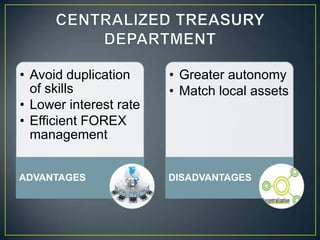
• Avoid duplication
of skills
• Lower interest rate
• Efficient FOREX
management

• Greater autonomy
• Match local assets

ADVANTAGES

DISADVANTAGES

C3 cash management

  • 2.
    • Actual cashheld by the firm & deposits that can be withdrawn on demand • • • • Coins & notes Current accounts & ST deposits Bank overdrafts & ST loans Foreign currency & deposit • Marketable securities
  • 3.
    Transaction Motive Precautionary Motive Speculative Motive • Ensure billsare paid on time • Meet day-to-day operation • Cover unexpected business requirement • e.g. strikes, weather disruptions • To exploit unanticipated business / investment opportunities • Taking advantages of bargains
  • 4.
    • Refers tothe practices & techniques designed to accelerate & control collections, ensure prompt deposit of receipts, improve control over payments methods, eliminate idle cash balance
  • 5.
    PROFITABILITY • How thefirm manages its cash in order to minimize costs & maintain a return LIQUIDITY • Has enough cash to make payments when required • Can turn other assets into cash to make payments • Can borrow money to make payments SAFETY • Secure from theft, fraud. • High risk
  • 6.
  • 7.
    • • • • • • Preparation of cashbudget Managing collection & payment of cash Management of ST cash investment Management of overdraft & loans Use of cash management model Centralized or decentralized Treasury Department
  • 8.
    • Essential forcontrol day-to-day cash balance & to allow efficient forward planning of the options. • Integral part of the master budget of the business
  • 9.
    COLLECTION Presented the cheque onthe day of receipt Collecting cheque from customer’s premises Requesting payment through Bank Giro System, standing order & direct debit PAYMENT Slow down payment
  • 10.
  • 11.
    Attempt to minimizethe total costs by determining when, & how much cash should be transferred each time Too much cash Loss opportunity to earn return Too little cash Risk of not making payment timely How much to hold cash?
  • 12.
    • Is basedon the idea that deciding on optimum cash balance. Q • • • • 2 FS i S – the amount of cash to be used in each time period F – the fixed cost of obtaining new funds i – the interest rate of holding cash Q – the total amount to be raised
  • 13.
    • Introduced byWilliam Baumol • Assumption: • • • • • • Able to forecast cash need with certainty Cash payments occur uniformly over a period of time No cash receipts during the projected period No safety reserve Opportunity costs of holding cash is known & fixed Incur the same transaction costs
  • 14.
    Transaction cost –cost of liquidating ST investment e.g. brokerage fees, delivery costs, telephone charges Opportunity cost – interest rate foregone on cash surplus
  • 15.
    Is concerned withthe activities involved in managing the liquidity of a business – survival & growth of the business
  • 16.
    Large & multinationalcompanies • Transactions will be very complex & large scale Companies are involved in currency, debt & security markets Business transactions are becoming very sophisticated • Can be aided by modern communications – treasury dept’s staff are equipped to handle
  • 17.
    • Avoid duplication ofskills • Lower interest rate • Efficient FOREX management • Greater autonomy • Match local assets ADVANTAGES DISADVANTAGES