LOOSE SMUT OF WHEAT
DR. RAJBIR SINGH
Assistant Professor
Department of Plant Pathology
Gochar Mahavidyalaya, Rampur Maniharan, Saharanpur (UP), India
Affiliated to Ch. Charan Singh University, Meerut (UP), India
Email: rajbir25805@yahoo.com, rajbirsingh2810@gmail.com
Cell No. 91-9456613374
Loose Smut of Wheat
• All wheat growing regions of
India
• Loss – 30%
• Symptoms:
• Symptoms appear after ear
emergence
• Diseased ear emerged first
than normal in some varieties
• Mostly all ears in a stool
affected
• Less tillering
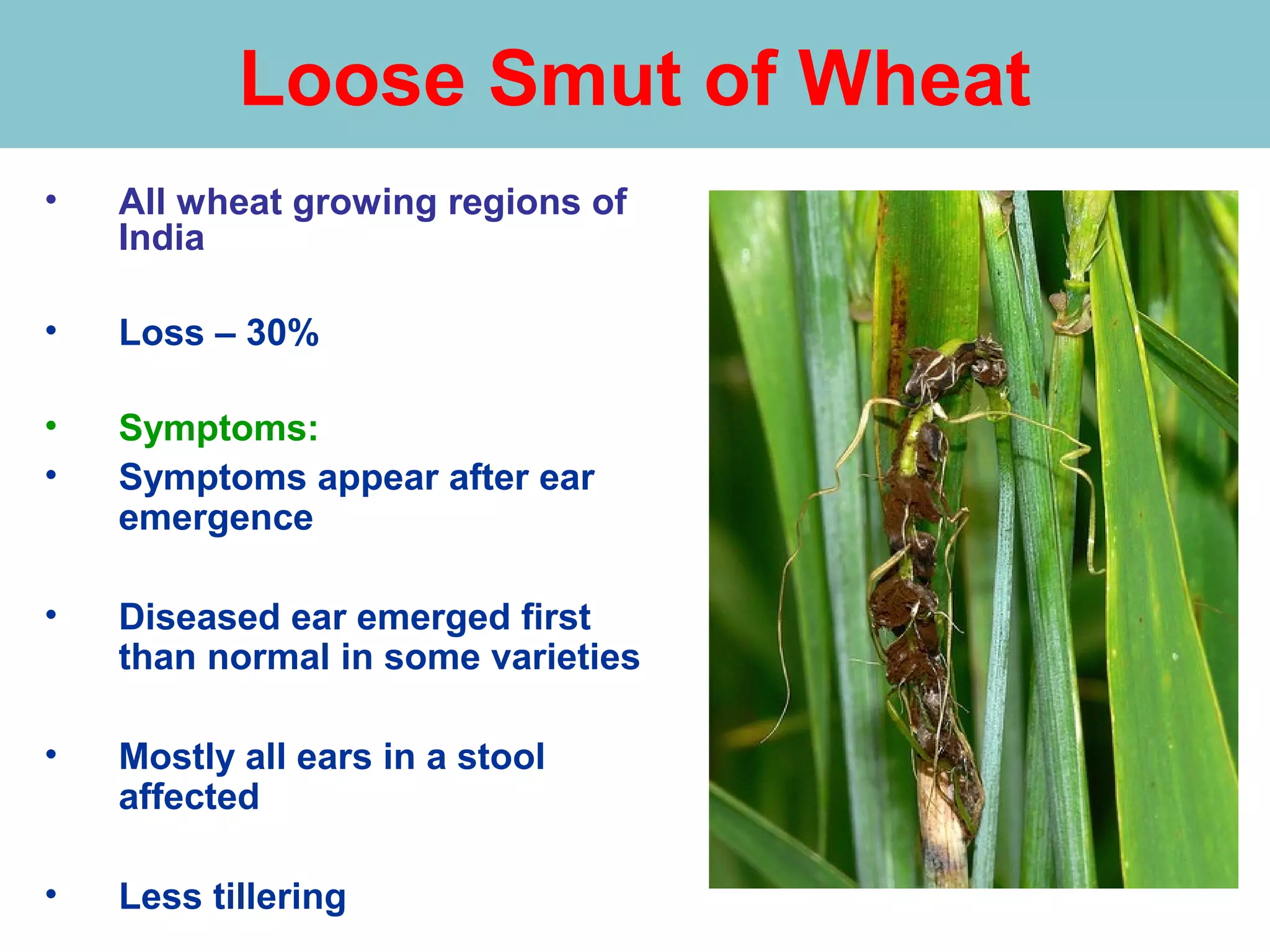
• Except awns all parts of ear
converted into smut spore
• Black powder in ear – covered
by slivery membrane
• Membrane burst later & smut
spore release
• Rachis
• Group of smut spore called -
sorus
• ↑ Respiration
• ↓ Dry weight of plant
Pathogen – Ustilago segetum
Ustilago tritici
• Disease is internally seed borne
• Pathogen survive in embryo as secondary mycelium
• Infection – systemic
• Tem. – 23° C
• Smut spore – 18 - 20° C
• R. H. – 60 - 85%
Systemic Position
Kingdom – Mycota/ Fungi
Division – Eumycota
Sub division – Basidiomycotina
Class – Teliomycetes
Order – Ustilaginales
Family – Ustilaginaceae
Genus – Ustilago
Species - segetum
Fungi Species- tritici
Spores of Ustilago segatum
Disease Management
• Use of healthy Seed for sowing.
• Seed treatment – Vitavax @ 2.5 gm/ kg seed.
• Hot water treatment- (1). Seed dip in cold water – 4 hrs – 64-85° F
(2). Seed dip in hot water –132° F-10 minutes
(3). Drying of seed
• Solar treatment- by Luthra, 1953
In May- June- seed dip in cold water – 8-12 O’clock - 4 hrs
seed drying in sun light – 12- 4 O’ clock- 4 hrs
• Dis. Res. Var.- DWR-59, PBW- 213, HD- 2221, HD- 2203, Kalyan
Thank You
Thank You

Loose smut of wheat

  • 1.
    LOOSE SMUT OFWHEAT DR. RAJBIR SINGH Assistant Professor Department of Plant Pathology Gochar Mahavidyalaya, Rampur Maniharan, Saharanpur (UP), India Affiliated to Ch. Charan Singh University, Meerut (UP), India Email: rajbir25805@yahoo.com, rajbirsingh2810@gmail.com Cell No. 91-9456613374
  • 2.
    Loose Smut ofWheat • All wheat growing regions of India • Loss – 30% • Symptoms: • Symptoms appear after ear emergence • Diseased ear emerged first than normal in some varieties • Mostly all ears in a stool affected • Less tillering
  • 3.
    • Except awnsall parts of ear converted into smut spore • Black powder in ear – covered by slivery membrane • Membrane burst later & smut spore release • Rachis • Group of smut spore called - sorus • ↑ Respiration • ↓ Dry weight of plant
  • 4.
    Pathogen – Ustilagosegetum Ustilago tritici • Disease is internally seed borne • Pathogen survive in embryo as secondary mycelium • Infection – systemic • Tem. – 23° C • Smut spore – 18 - 20° C • R. H. – 60 - 85%
  • 5.
    Systemic Position Kingdom –Mycota/ Fungi Division – Eumycota Sub division – Basidiomycotina Class – Teliomycetes Order – Ustilaginales Family – Ustilaginaceae Genus – Ustilago Species - segetum Fungi Species- tritici
  • 6.
  • 8.
    Disease Management • Useof healthy Seed for sowing. • Seed treatment – Vitavax @ 2.5 gm/ kg seed. • Hot water treatment- (1). Seed dip in cold water – 4 hrs – 64-85° F (2). Seed dip in hot water –132° F-10 minutes (3). Drying of seed • Solar treatment- by Luthra, 1953 In May- June- seed dip in cold water – 8-12 O’clock - 4 hrs seed drying in sun light – 12- 4 O’ clock- 4 hrs • Dis. Res. Var.- DWR-59, PBW- 213, HD- 2221, HD- 2203, Kalyan
  • 9.
  • 10.