The Byzantine Empire
One God, One Empire, One Religion
The Eastern Empire
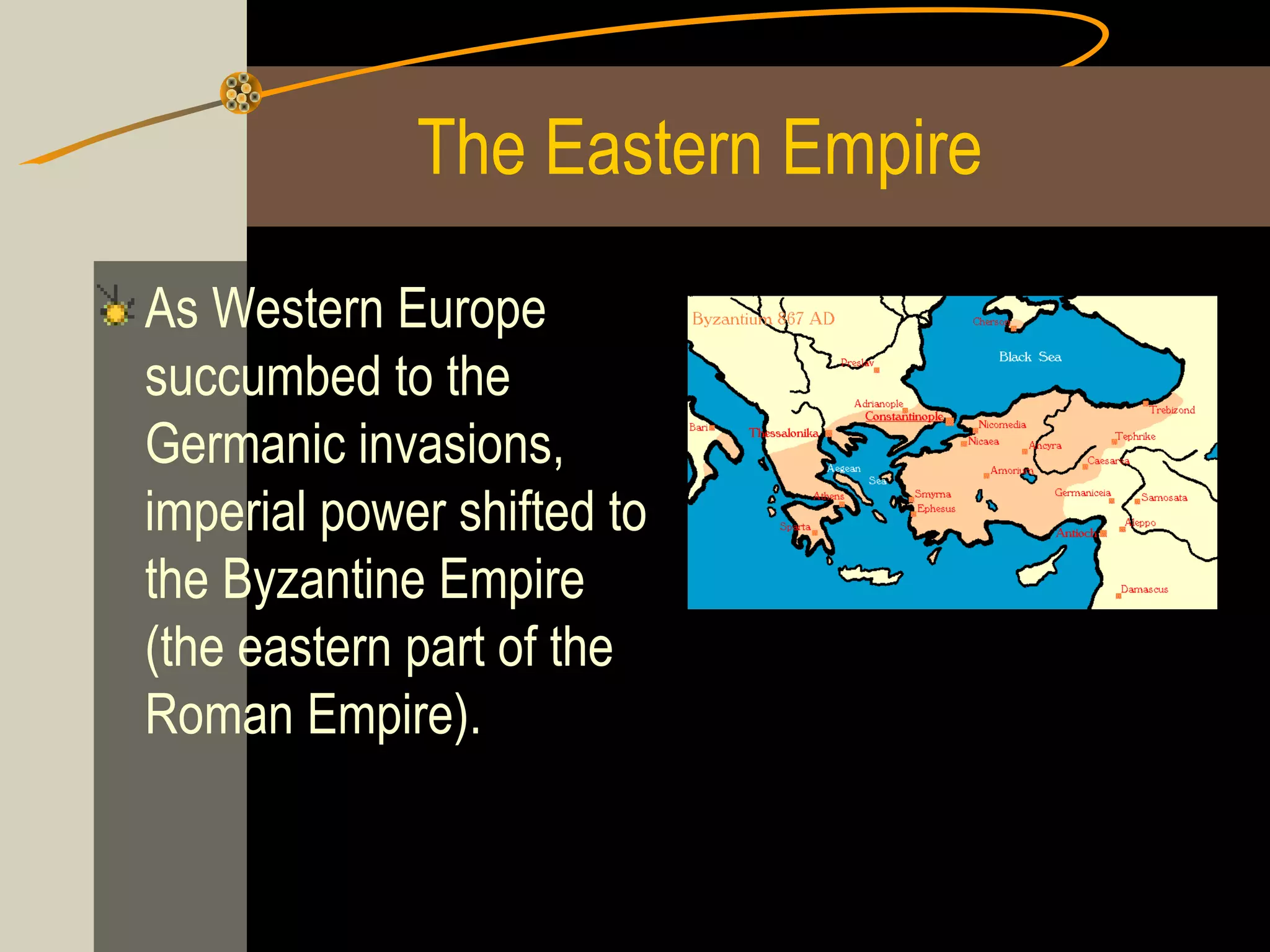
As Western Europe
succumbed to the
Germanic invasions,
imperial power shifted to
the Byzantine Empire
(the eastern part of the
Roman Empire).
Constantinople
Constantinople
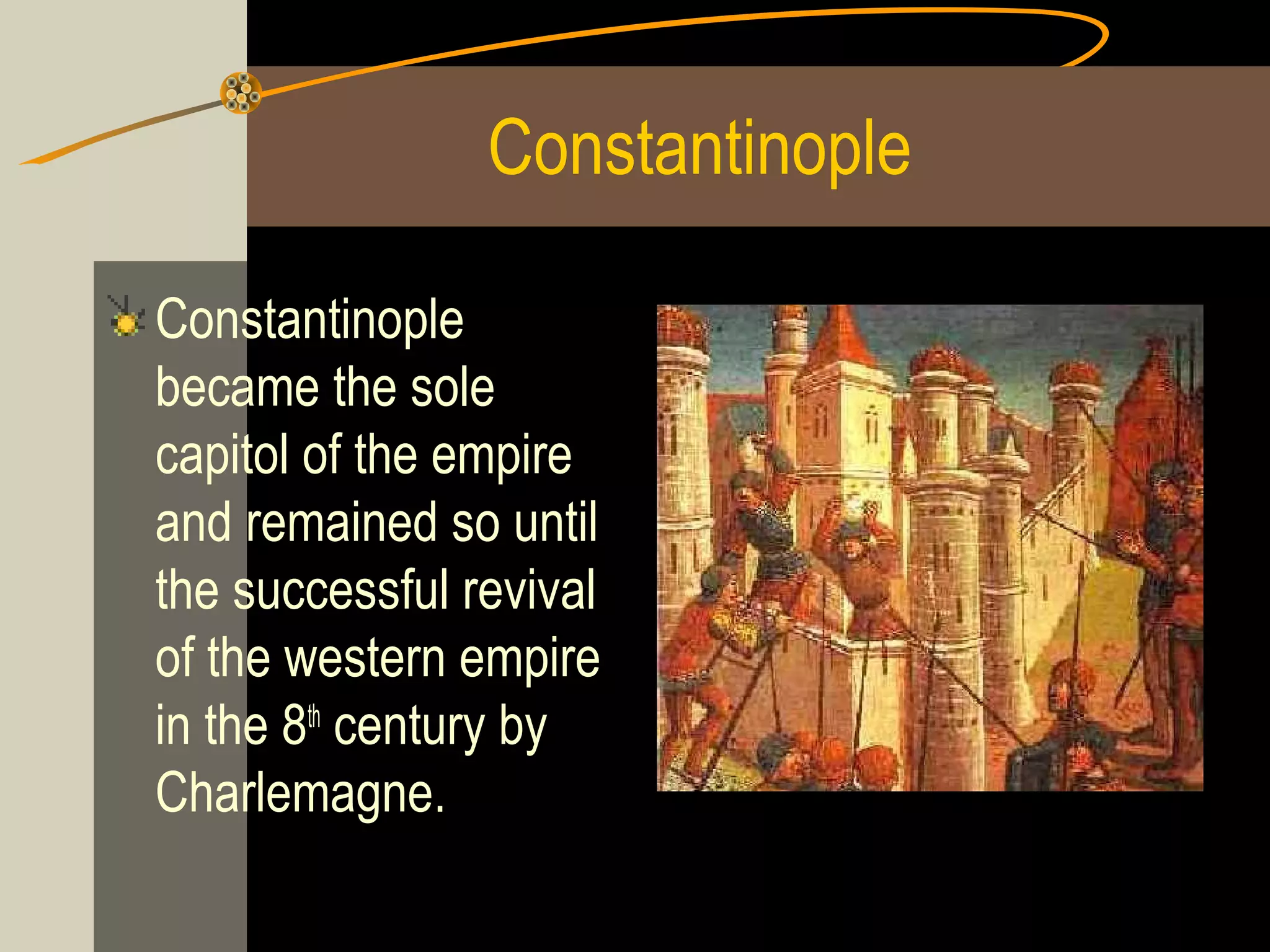
became the sole
capitol of the empire
and remained so until
the successful revival
of the western empire
in the 8th century by
Charlemagne.
The Reign of Justinian

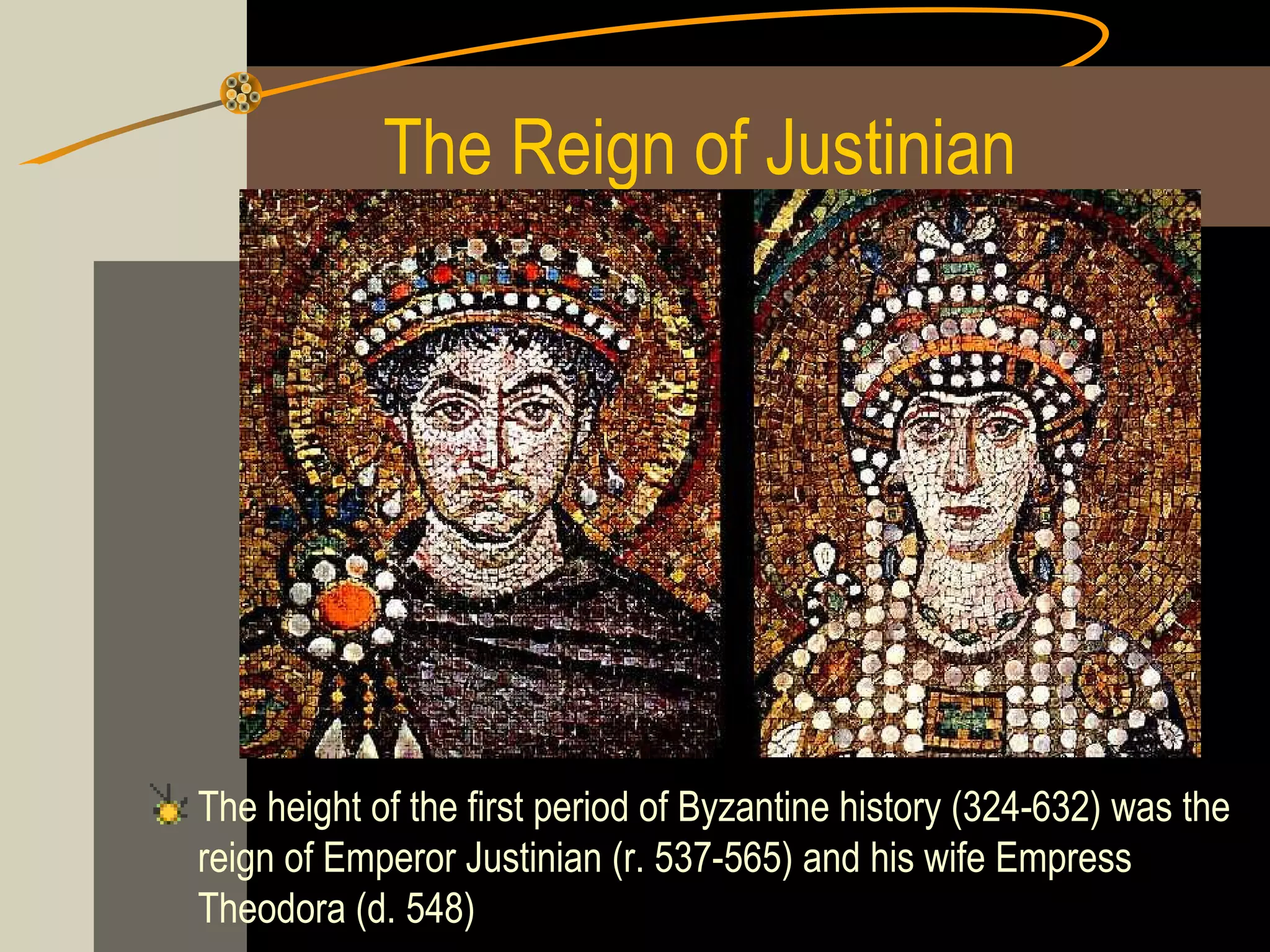
The height of the first period of Byzantine history (324-632) was the
reign of Emperor Justinian (r. 537-565) and his wife Empress
Theodora (d. 548)
The Imperial Goal: Unity
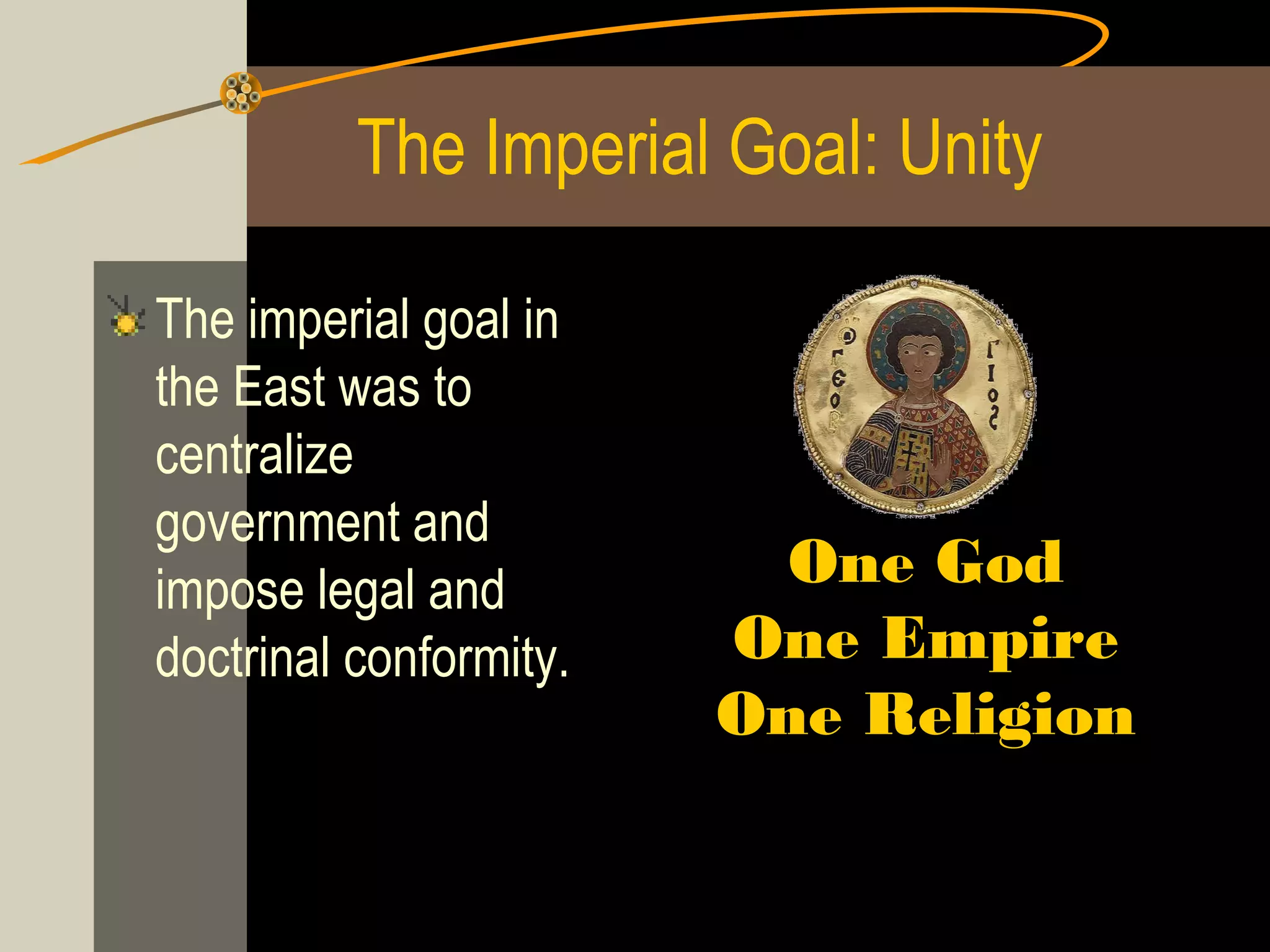
The imperial goal in
the East was to
centralize
government and
impose legal and
doctrinal conformity.

One God
One Empire
One Religion
1st Method: Law
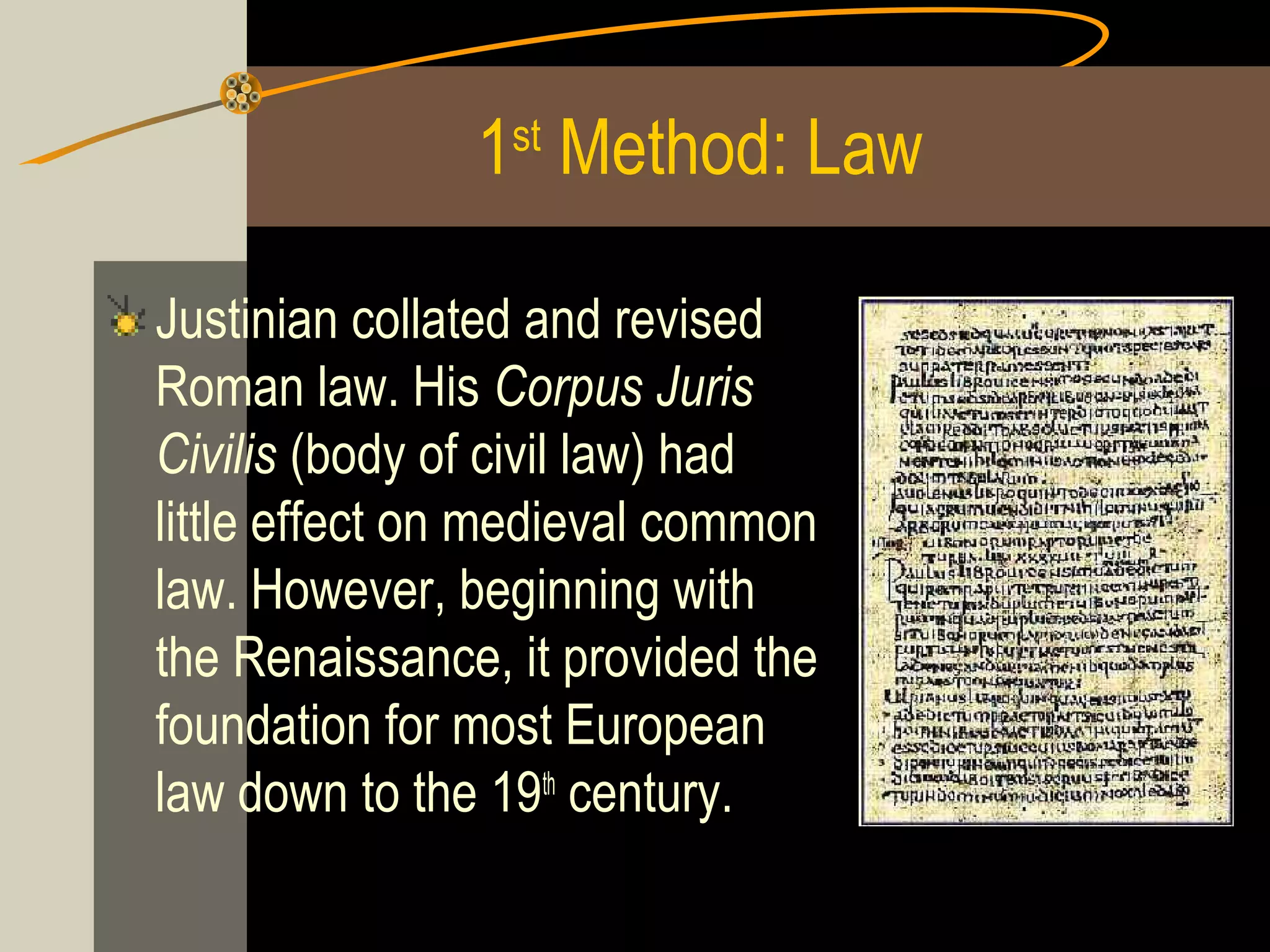
Justinian collated and revised
Roman law. His Corpus Juris
Civilis (body of civil law) had
little effect on medieval common
law. However, beginning with
the Renaissance, it provided the
foundation for most European
law down to the 19th century.
2nd Method: Religion
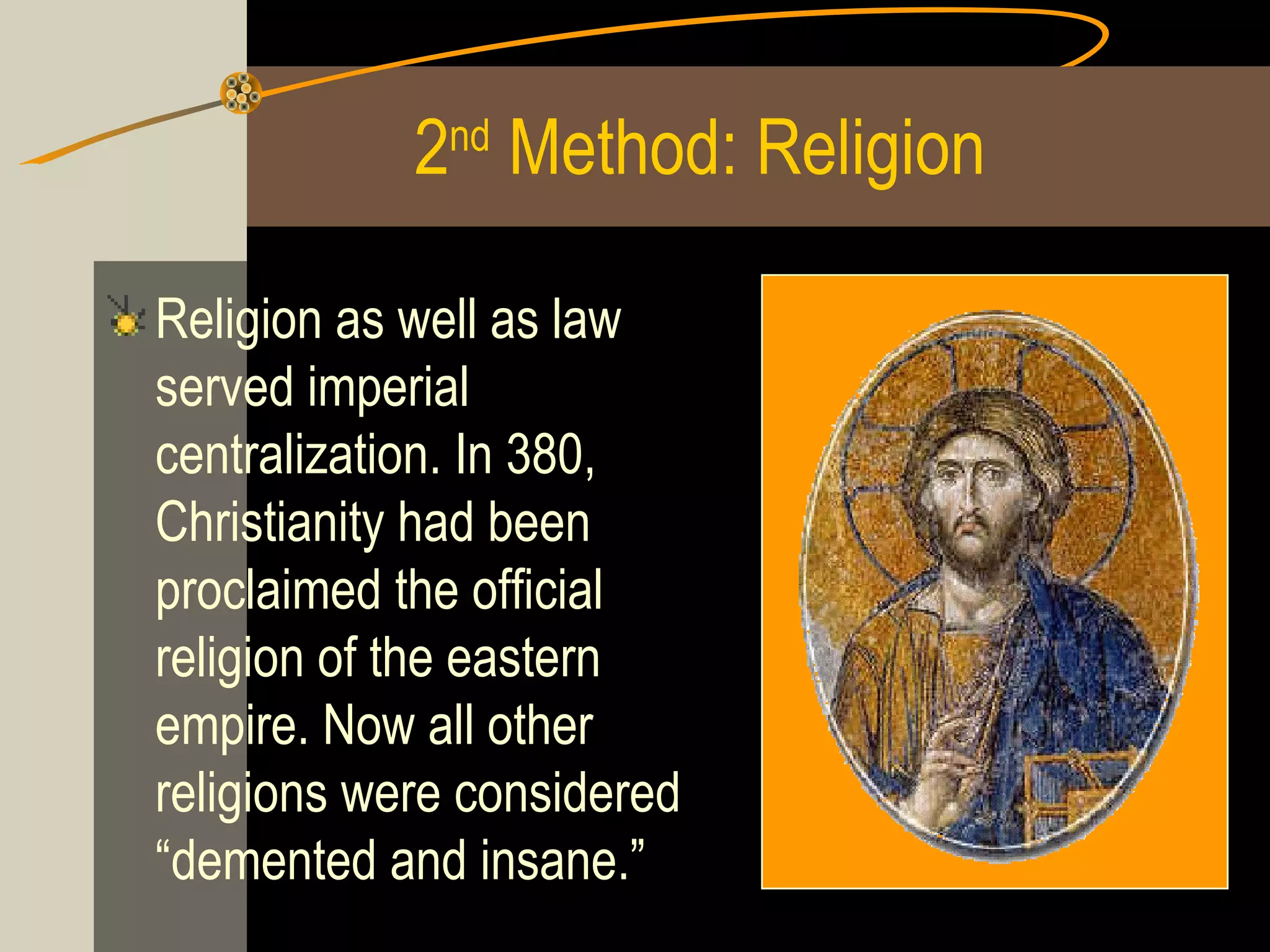
Religion as well as law
served imperial
centralization. In 380,
Christianity had been
proclaimed the official
religion of the eastern
empire. Now all other
religions were considered
“demented and insane.”
Increase in Church Wealth
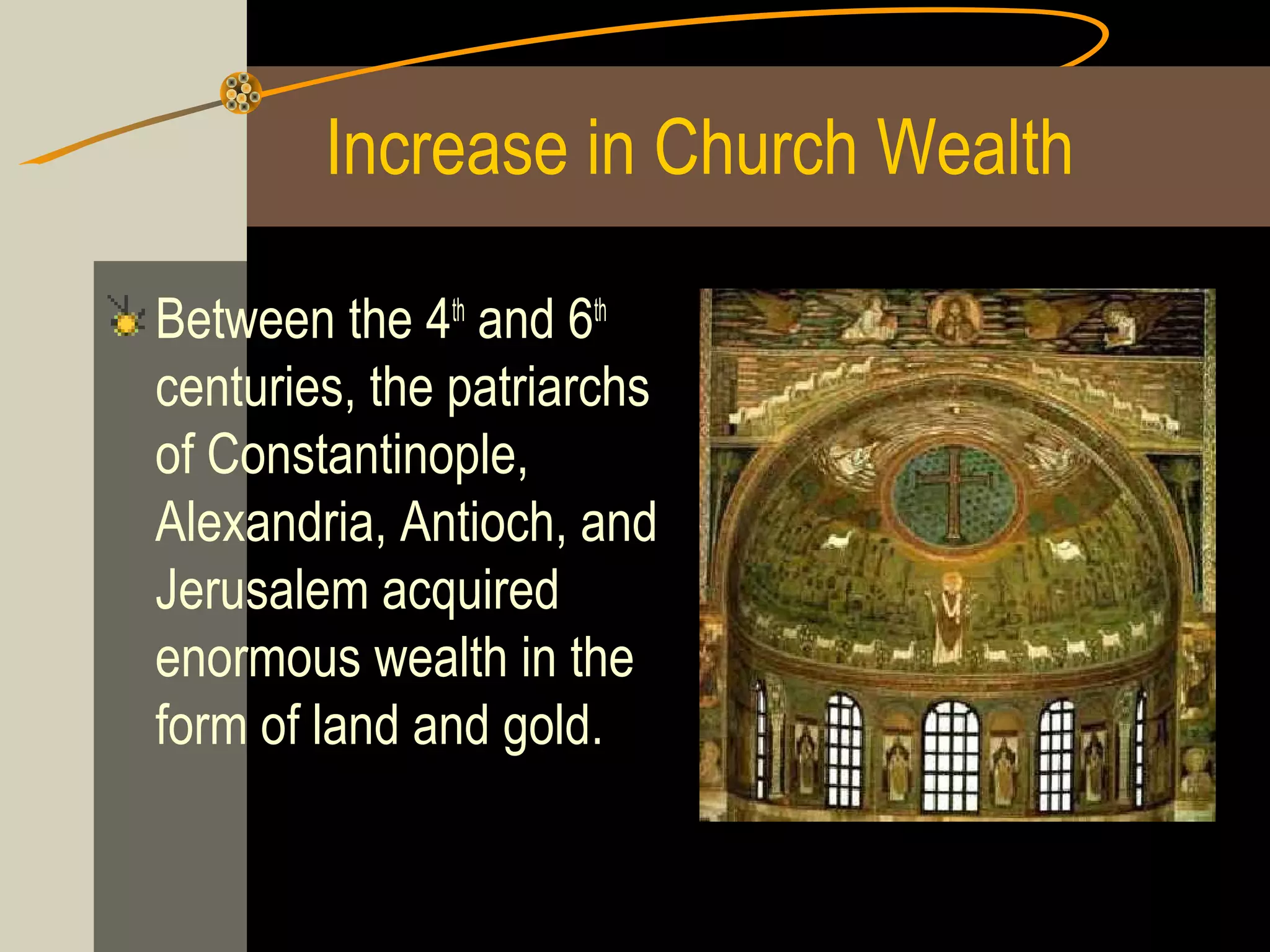
Between the 4th and 6th
centuries, the patriarchs
of Constantinople,
Alexandria, Antioch, and
Jerusalem acquired
enormous wealth in the
form of land and gold.
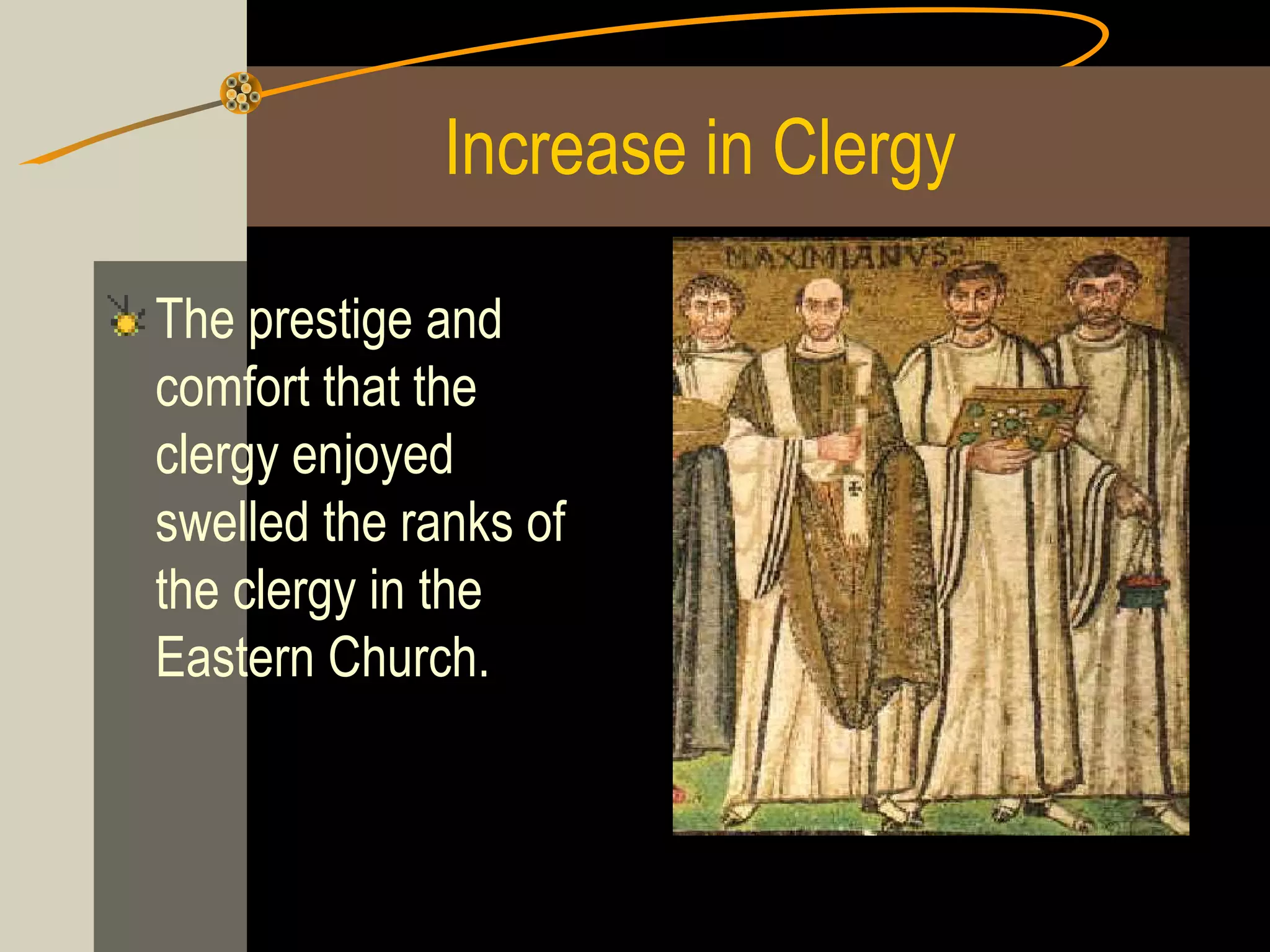
Increase in Clergy
The prestige and
comfort that the
clergy enjoyed
swelled the ranks of
the clergy in the
Eastern Church.
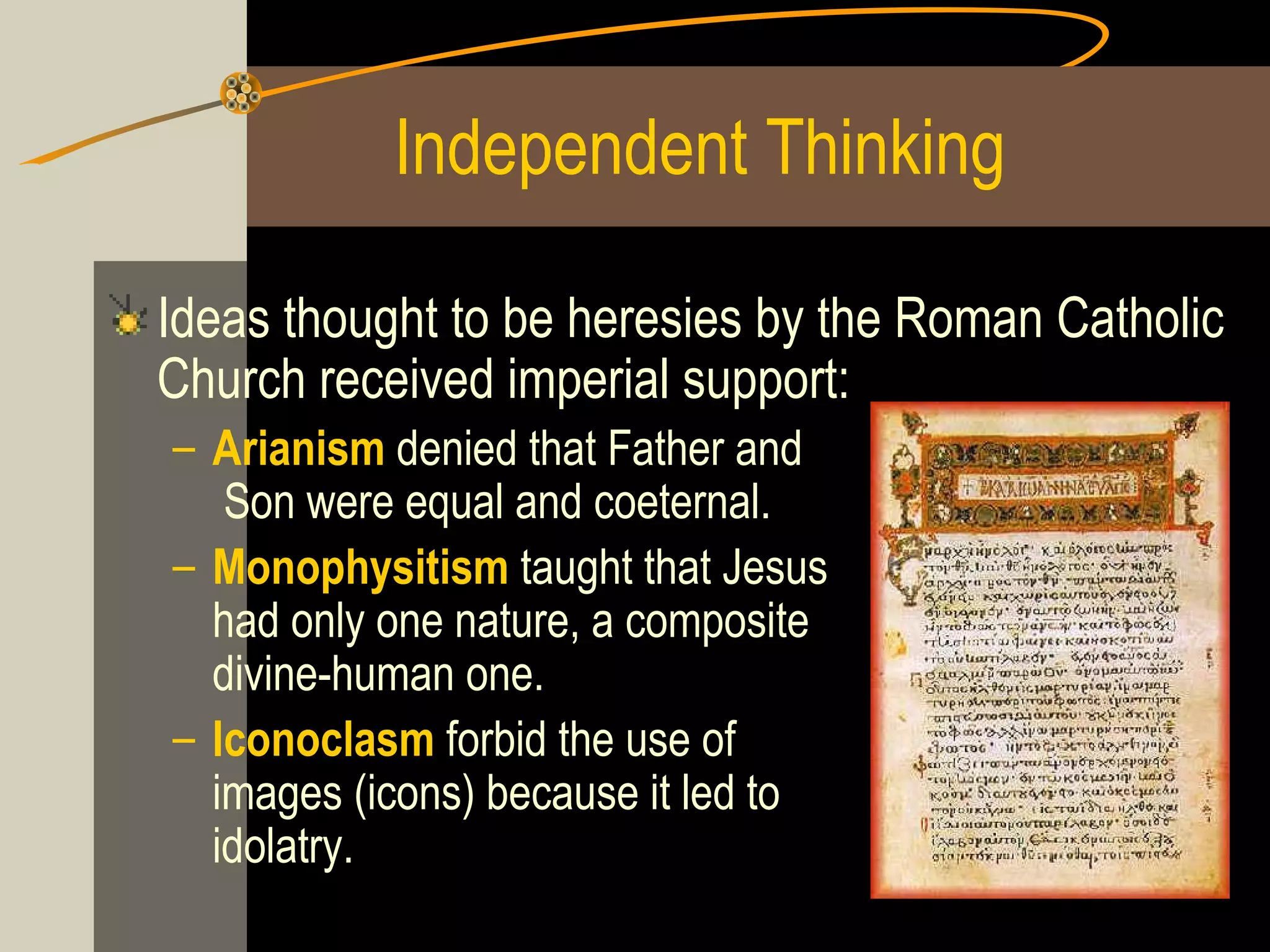
Independent Thinking
Ideas thought to be heresies by the Roman Catholic
Church received imperial support:
– Arianism denied that Father and
Son were equal and coeternal.
– Monophysitism taught that Jesus
had only one nature, a composite
divine-human one.
– Iconoclasm forbid the use of
images (icons) because it led to
idolatry.
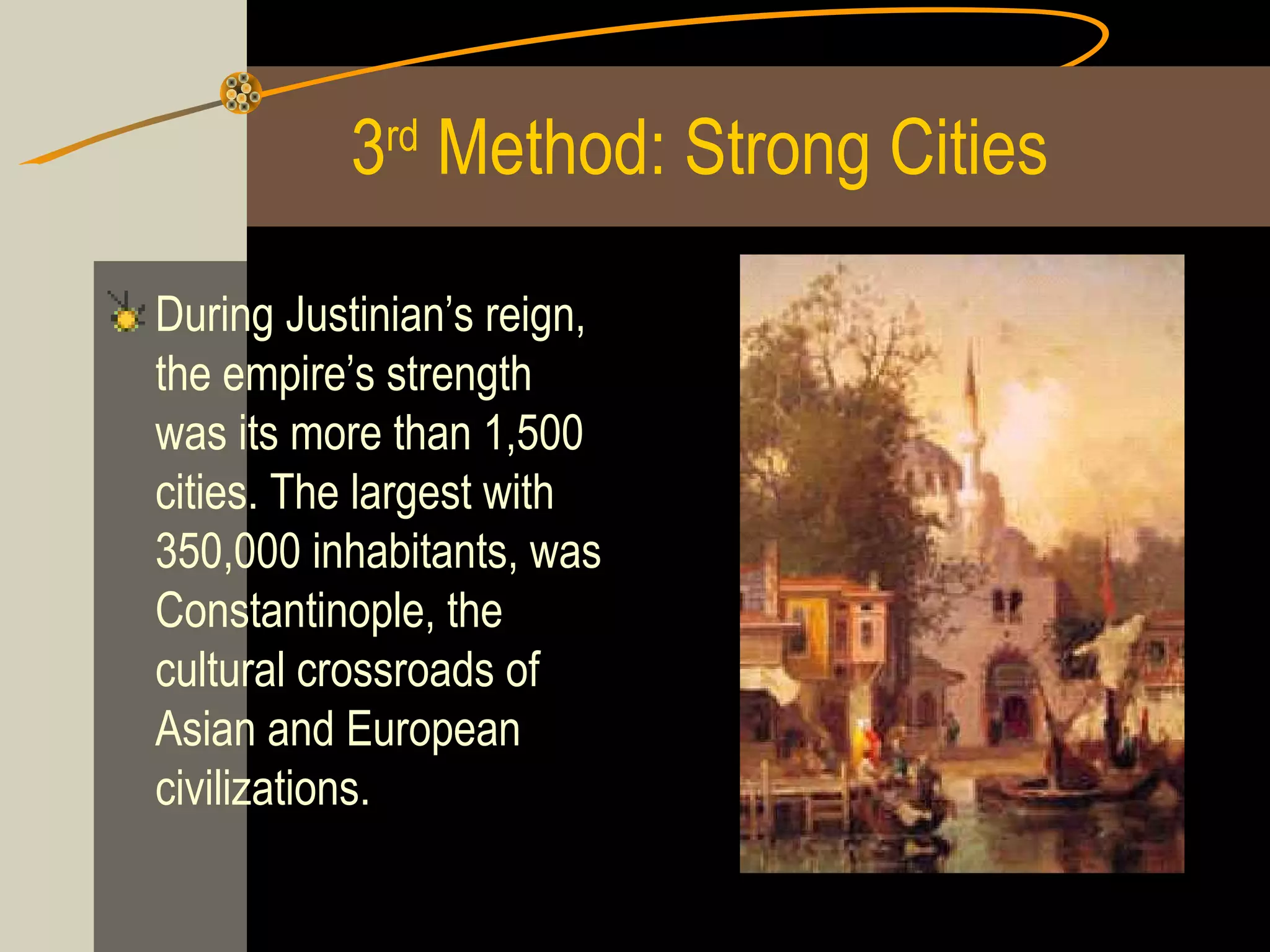
3rd Method: Strong Cities
During Justinian’s reign,
the empire’s strength
was its more than 1,500
cities. The largest with
350,000 inhabitants, was
Constantinople, the
cultural crossroads of
Asian and European
civilizations.
"Not since the world was made was

there . . . so much wealth as was
found in Constantinople. For the
Greeks say that two-thirds of the
wealth of this world is in
Constantinople and the other third
scattered throughout the world."
--Robert of Clari, a French crusader who witnessed the
pillage of the city in 1204, describing Constantinople.
Loyal Governors and Bishops
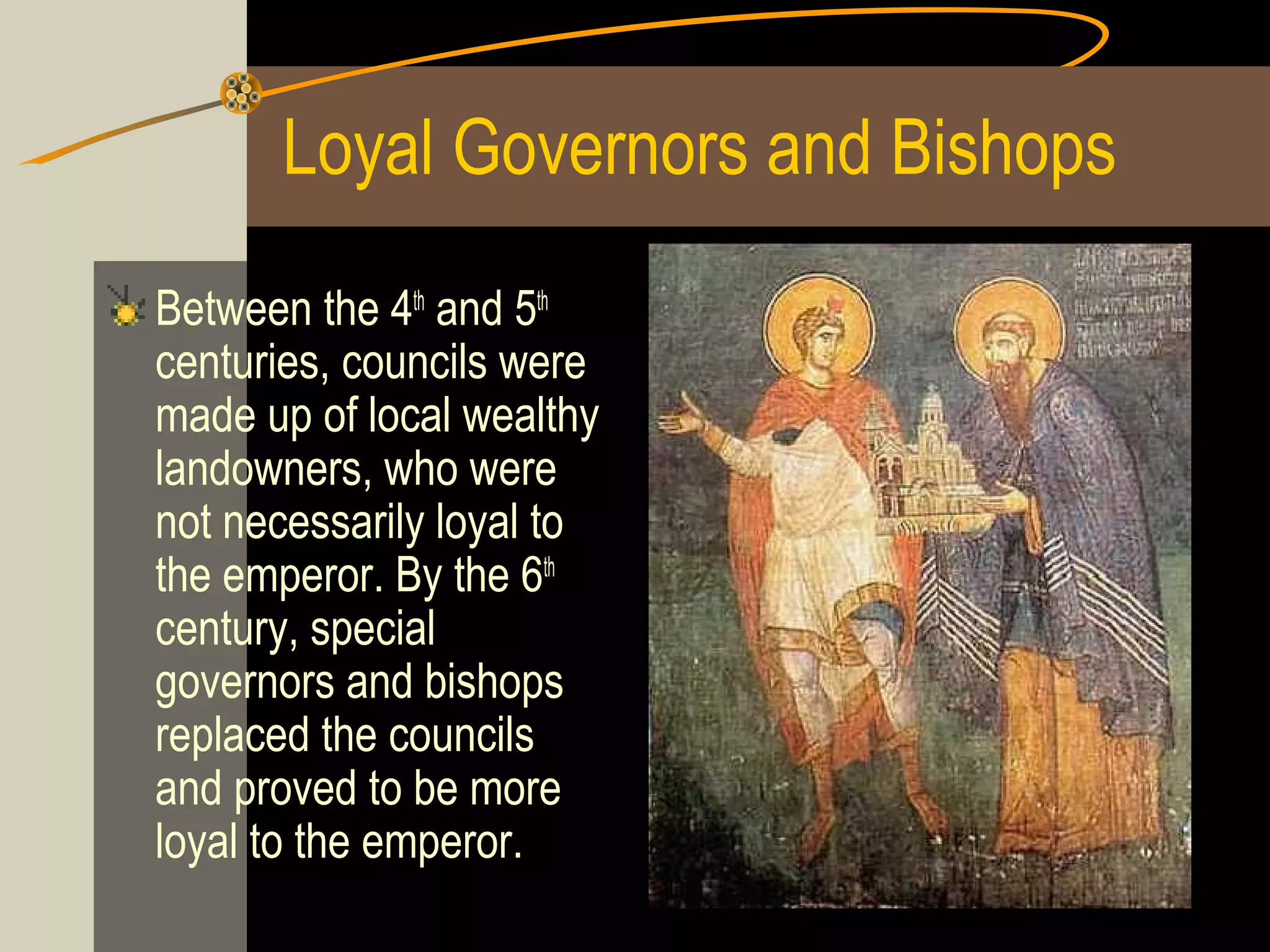
Between the 4th and 5th
centuries, councils were
made up of local wealthy
landowners, who were
not necessarily loyal to
the emperor. By the 6th
century, special
governors and bishops
replaced the councils
and proved to be more
loyal to the emperor.
Extensive Building Plans

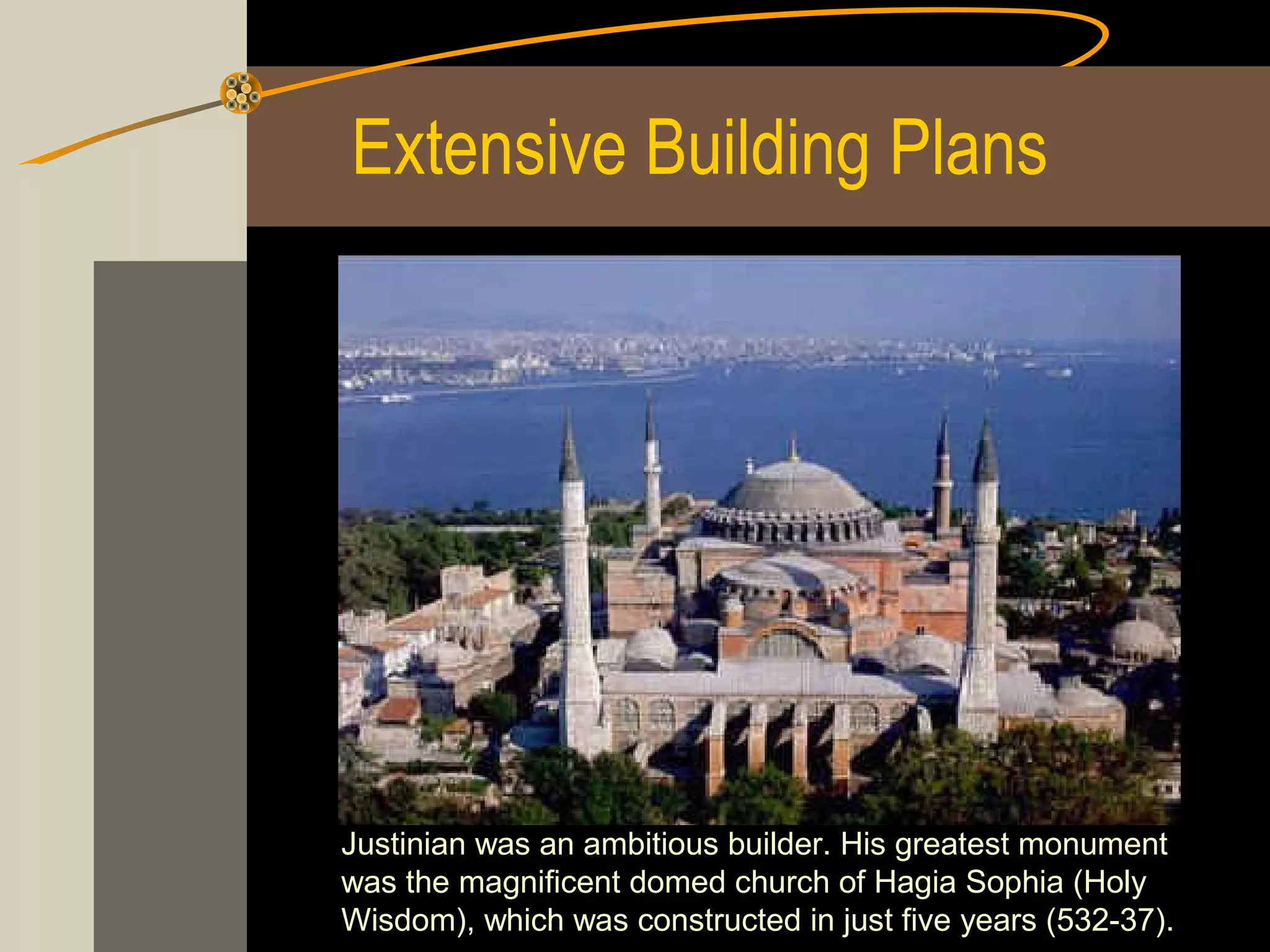
Justinian was an ambitious builder. His greatest monument
was the magnificent domed church of Hagia Sophia (Holy
Wisdom), which was constructed in just five years (532­37).
The Empire at Its Height

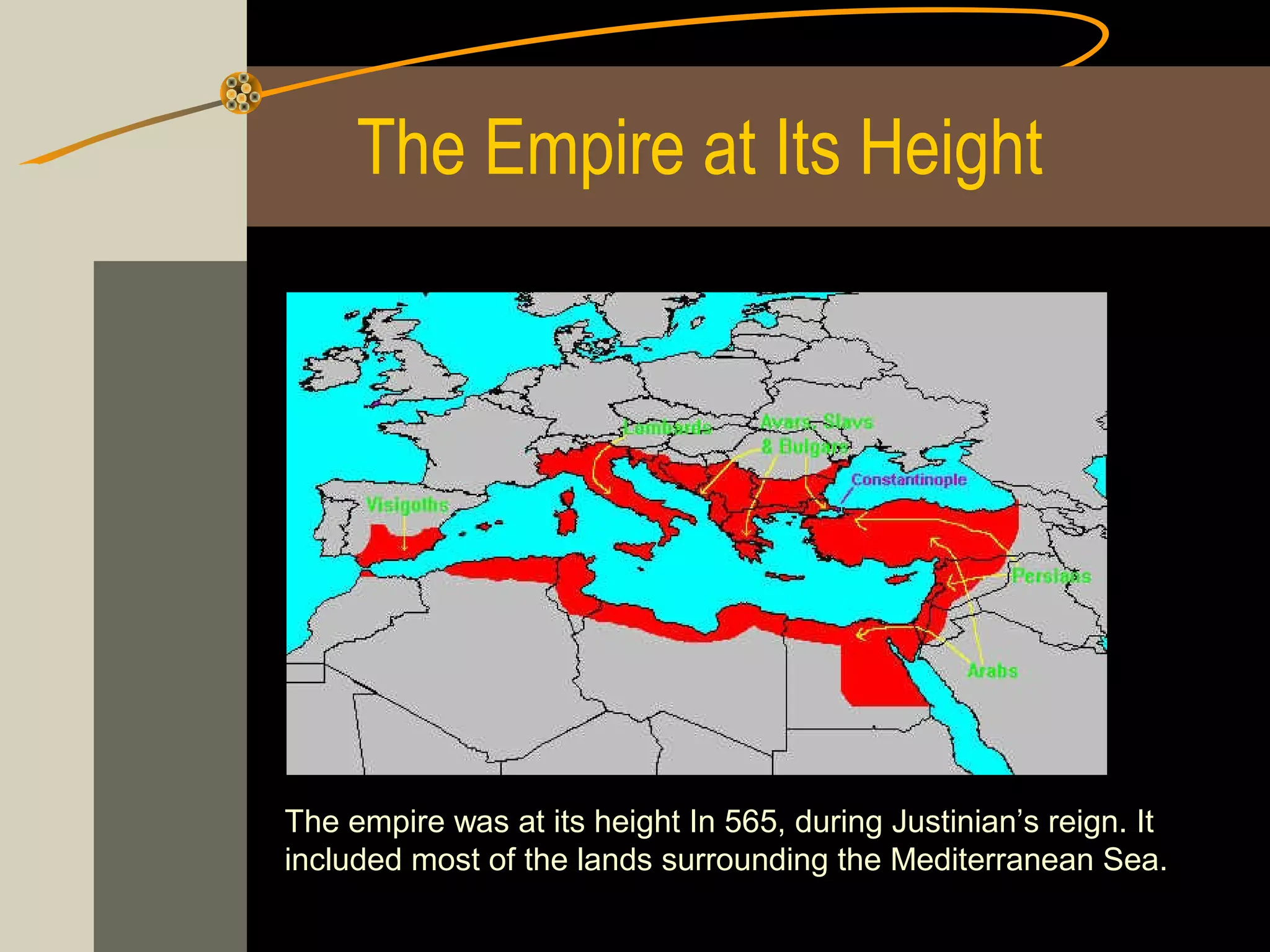
The empire was at its height In 565, during Justinian’s reign. It
included most of the lands surrounding the Mediterranean Sea.
Decline in the 7th Century
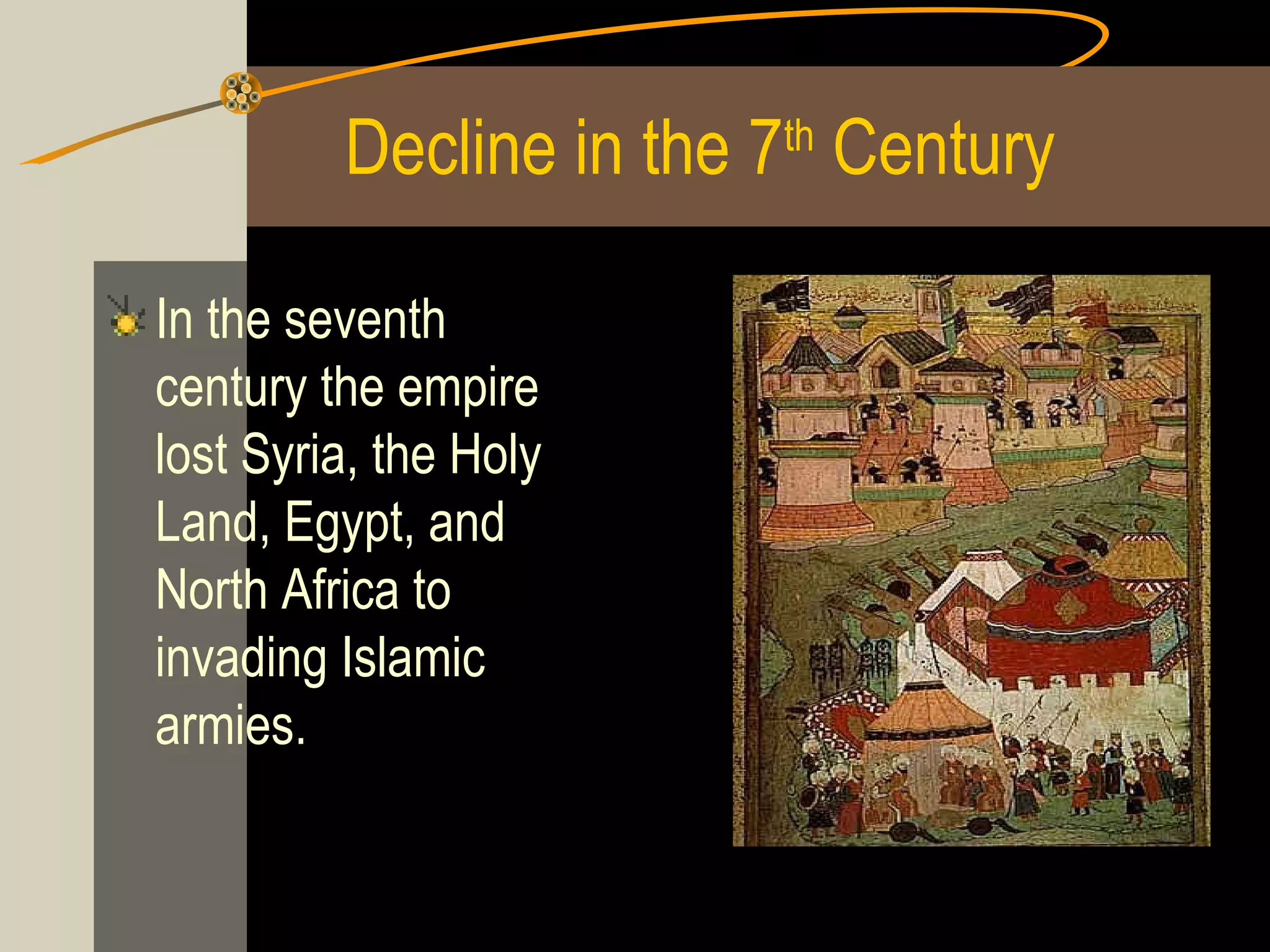
In the seventh
century the empire
lost Syria, the Holy
Land, Egypt, and
North Africa to
invading Islamic
armies.
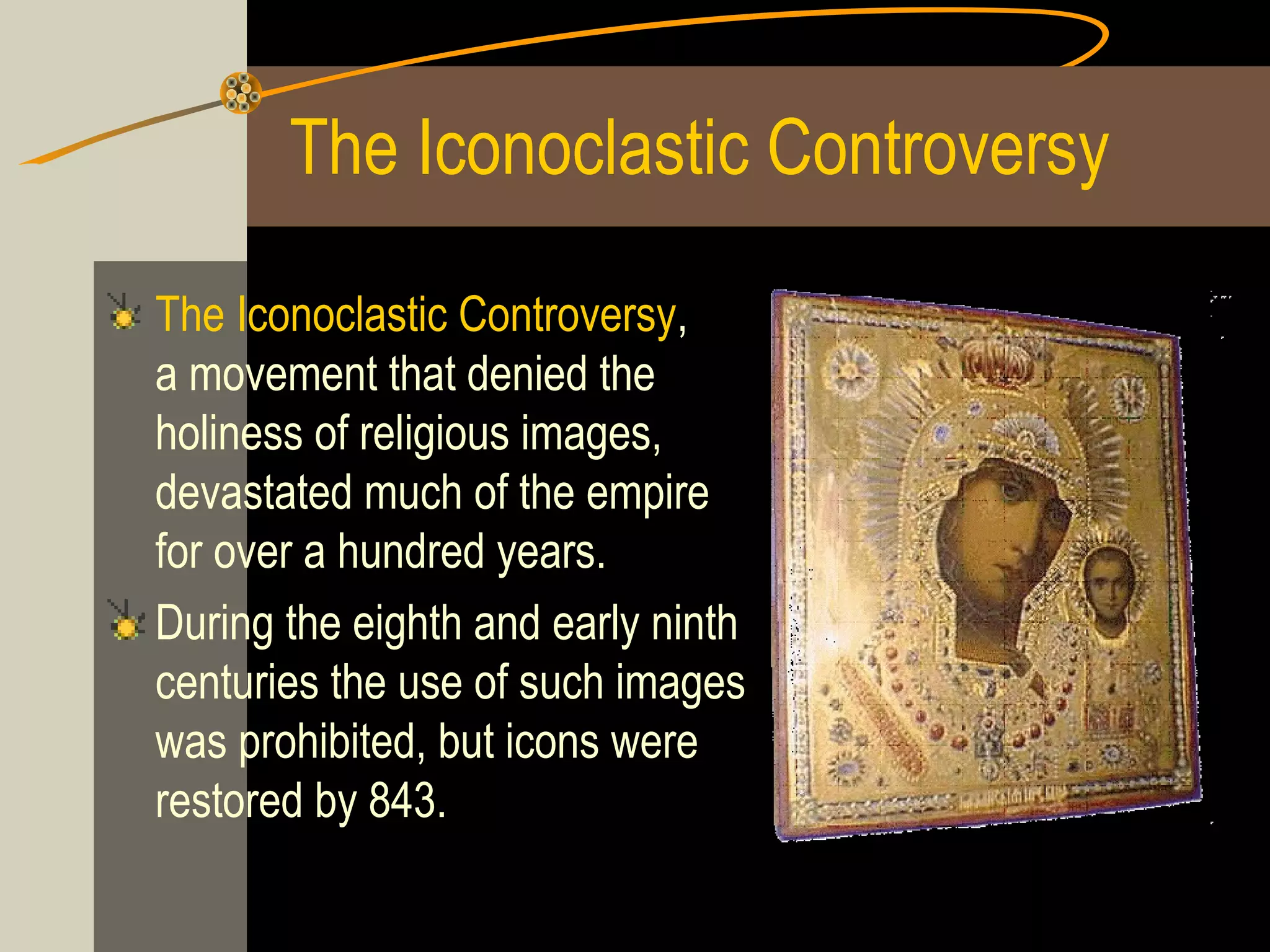
The Iconoclastic Controversy
The Iconoclastic Controversy,
a movement that denied the
holiness of religious images,
devastated much of the empire
for over a hundred years.
During the eighth and early ninth
centuries the use of such images
was prohibited, but icons were
restored by 843.
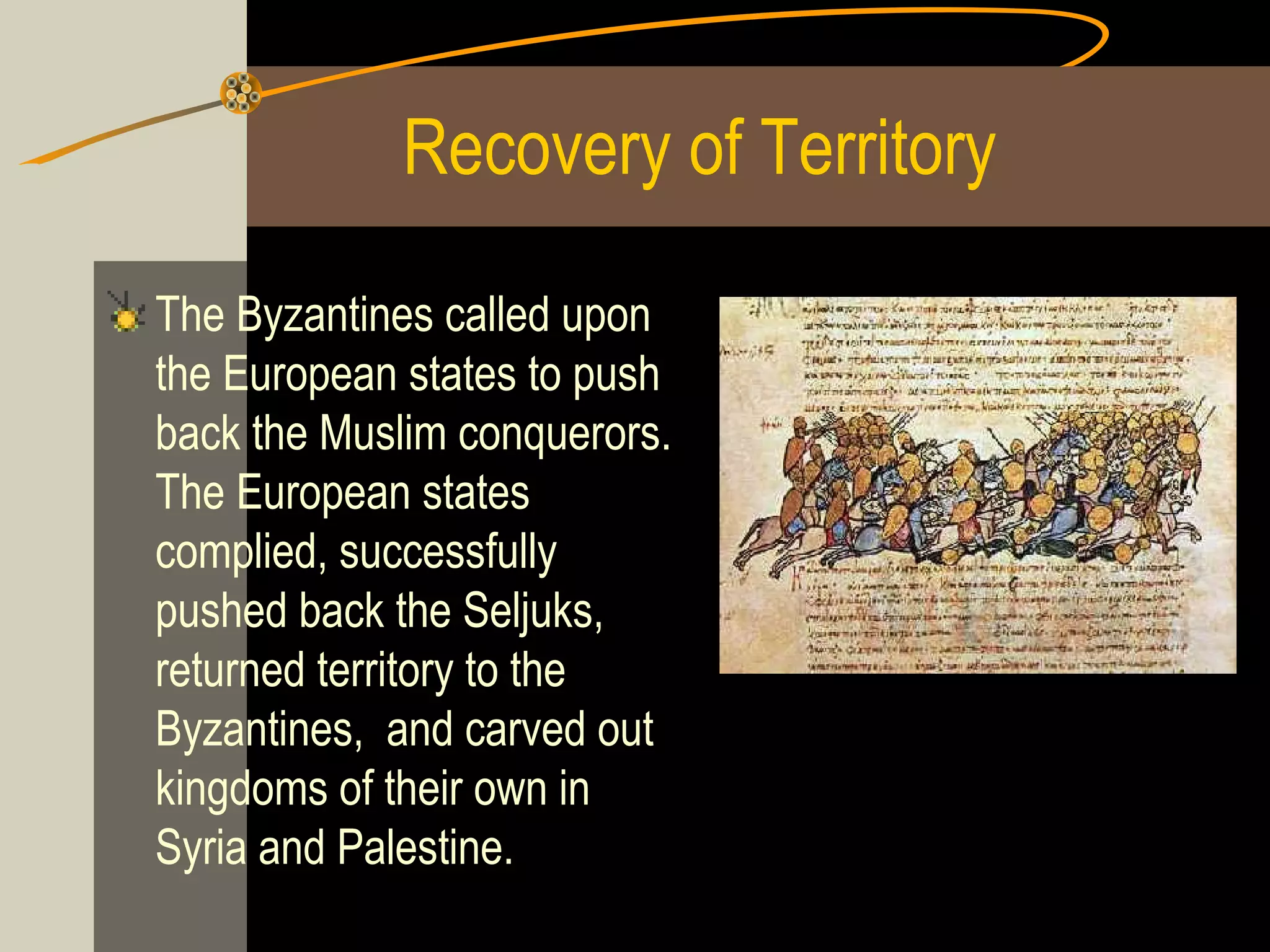
Recovery of Territory
The Byzantines called upon
the European states to push
back the Muslim conquerors.
The European states
complied, successfully
pushed back the Seljuks,
returned territory to the
Byzantines, and carved out
kingdoms of their own in
Syria and Palestine.
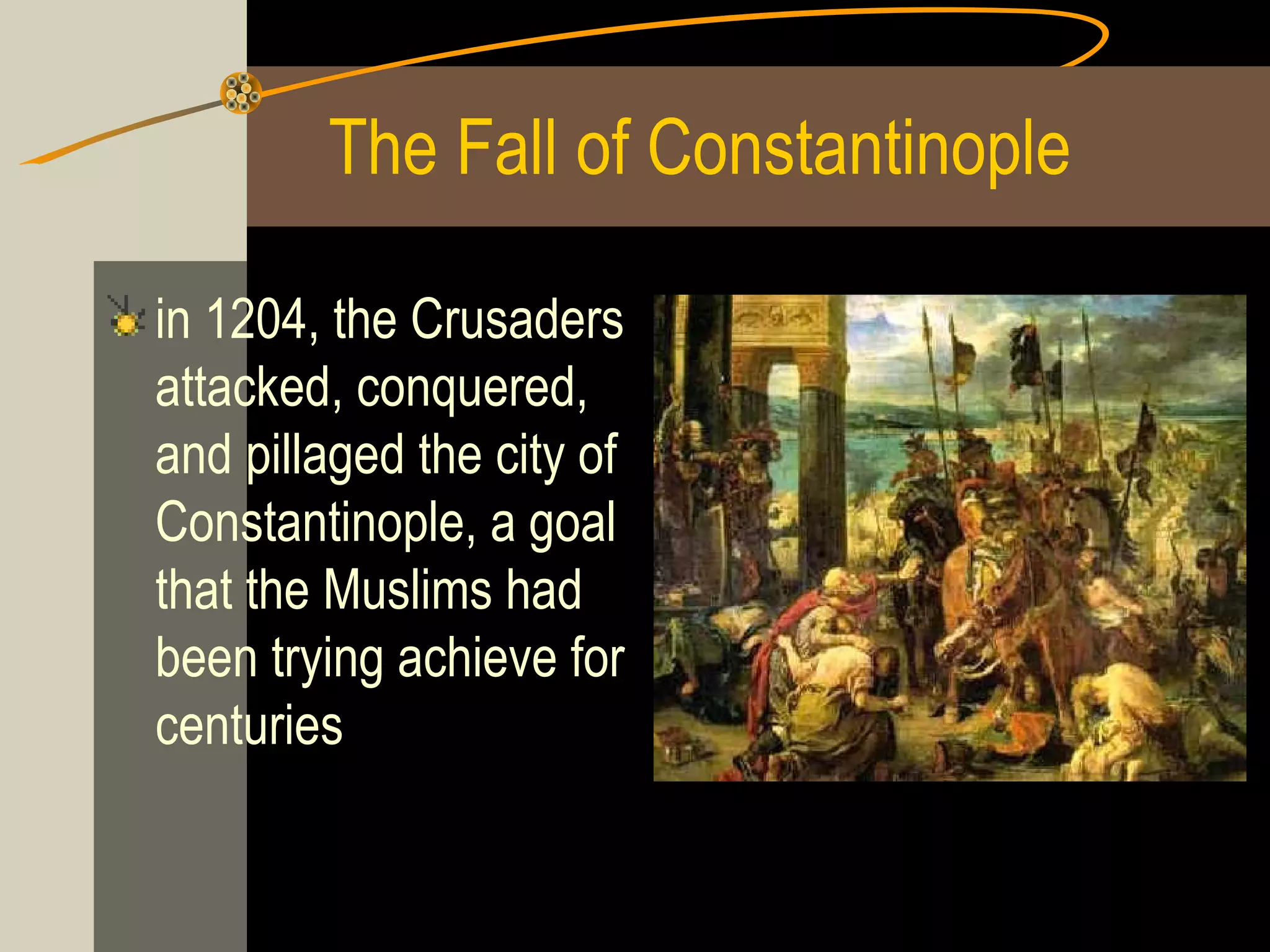
The Fall of Constantinople
in 1204, the Crusaders
attacked, conquered,
and pillaged the city of
Constantinople, a goal
that the Muslims had
been trying achieve for
centuries
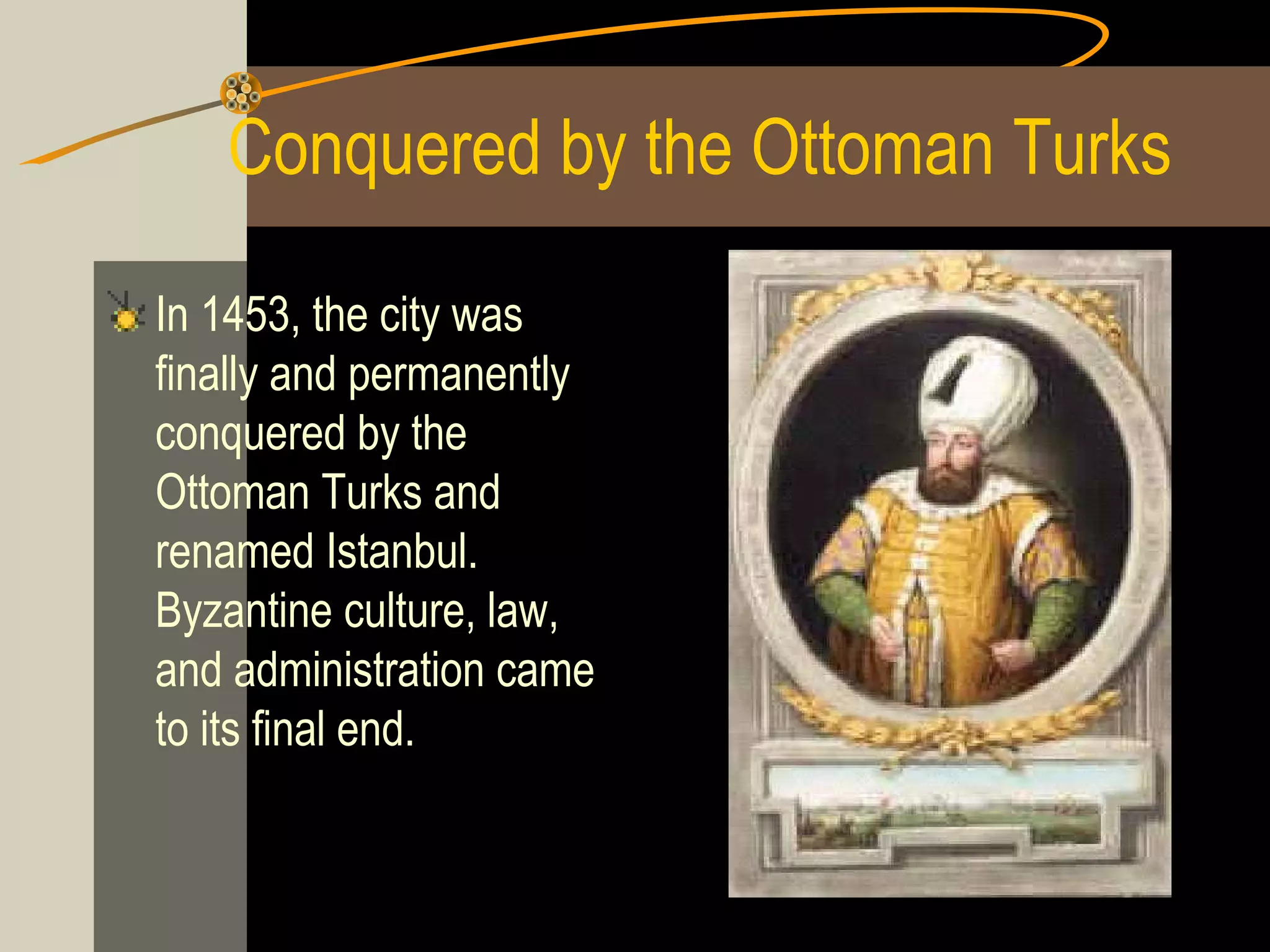
Conquered by the Ottoman Turks
In 1453, the city was
finally and permanently
conquered by the
Ottoman Turks and
renamed Istanbul.
Byzantine culture, law,
and administration came
to its final end.
Contribution to Western Civilization
Throughout the early Middle Ages, the Byzantine
Empire remained a protective barrier between
western Europe and hostile Persian, Arab, and
Turkish armies.
The Byzantines were also a major conduit of
classical learning and science into the West down to
the Renaissance. While western Europeans were
fumbling to create a culture of their own, the cities of
the Byzantine Empire provided them a model of a
civilized society.

The byzantine-empire

  • 1.
    The Byzantine Empire OneGod, One Empire, One Religion
  • 2.
    The Eastern Empire AsWestern Europe succumbed to the Germanic invasions, imperial power shifted to the Byzantine Empire (the eastern part of the Roman Empire).
  • 3.
    Constantinople Constantinople became the sole capitolof the empire and remained so until the successful revival of the western empire in the 8th century by Charlemagne.
  • 4.
    The Reign ofJustinian The height of the first period of Byzantine history (324-632) was the reign of Emperor Justinian (r. 537-565) and his wife Empress Theodora (d. 548)
  • 5.
    The Imperial Goal:Unity The imperial goal in the East was to centralize government and impose legal and doctrinal conformity. One God One Empire One Religion
  • 6.
    1st Method: Law Justiniancollated and revised Roman law. His Corpus Juris Civilis (body of civil law) had little effect on medieval common law. However, beginning with the Renaissance, it provided the foundation for most European law down to the 19th century.
  • 7.
    2nd Method: Religion Religionas well as law served imperial centralization. In 380, Christianity had been proclaimed the official religion of the eastern empire. Now all other religions were considered “demented and insane.”
  • 8.
    Increase in ChurchWealth Between the 4th and 6th centuries, the patriarchs of Constantinople, Alexandria, Antioch, and Jerusalem acquired enormous wealth in the form of land and gold.
  • 9.
    Increase in Clergy Theprestige and comfort that the clergy enjoyed swelled the ranks of the clergy in the Eastern Church.
  • 10.
    Independent Thinking Ideas thoughtto be heresies by the Roman Catholic Church received imperial support: – Arianism denied that Father and Son were equal and coeternal. – Monophysitism taught that Jesus had only one nature, a composite divine-human one. – Iconoclasm forbid the use of images (icons) because it led to idolatry.
  • 11.
    3rd Method: StrongCities During Justinian’s reign, the empire’s strength was its more than 1,500 cities. The largest with 350,000 inhabitants, was Constantinople, the cultural crossroads of Asian and European civilizations.
  • 12.
    "Not since theworld was made was there . . . so much wealth as was found in Constantinople. For the Greeks say that two-thirds of the wealth of this world is in Constantinople and the other third scattered throughout the world." --Robert of Clari, a French crusader who witnessed the pillage of the city in 1204, describing Constantinople.
  • 13.
    Loyal Governors andBishops Between the 4th and 5th centuries, councils were made up of local wealthy landowners, who were not necessarily loyal to the emperor. By the 6th century, special governors and bishops replaced the councils and proved to be more loyal to the emperor.
  • 14.
    Extensive Building Plans Justinianwas an ambitious builder. His greatest monument was the magnificent domed church of Hagia Sophia (Holy Wisdom), which was constructed in just five years (532­37).
  • 15.
    The Empire atIts Height The empire was at its height In 565, during Justinian’s reign. It included most of the lands surrounding the Mediterranean Sea.
  • 16.
    Decline in the7th Century In the seventh century the empire lost Syria, the Holy Land, Egypt, and North Africa to invading Islamic armies.
  • 17.
    The Iconoclastic Controversy TheIconoclastic Controversy, a movement that denied the holiness of religious images, devastated much of the empire for over a hundred years. During the eighth and early ninth centuries the use of such images was prohibited, but icons were restored by 843.
  • 18.
    Recovery of Territory TheByzantines called upon the European states to push back the Muslim conquerors. The European states complied, successfully pushed back the Seljuks, returned territory to the Byzantines, and carved out kingdoms of their own in Syria and Palestine.
  • 19.
    The Fall ofConstantinople in 1204, the Crusaders attacked, conquered, and pillaged the city of Constantinople, a goal that the Muslims had been trying achieve for centuries
  • 20.
    Conquered by theOttoman Turks In 1453, the city was finally and permanently conquered by the Ottoman Turks and renamed Istanbul. Byzantine culture, law, and administration came to its final end.
  • 21.
    Contribution to WesternCivilization Throughout the early Middle Ages, the Byzantine Empire remained a protective barrier between western Europe and hostile Persian, Arab, and Turkish armies. The Byzantines were also a major conduit of classical learning and science into the West down to the Renaissance. While western Europeans were fumbling to create a culture of their own, the cities of the Byzantine Empire provided them a model of a civilized society.