BUSINESS ANALYST
There are two types of IT companies 
Who is Business Analyst? 
What is Business Analysis?
– Roles & Responsibilities of BA 
• Identifying stake holders 
• Gathering requirements from stakeholders 
• Preparations documentation (BRD, FSD etc.) 
• Preparation of proto types 
• Clarifying Blocking/Issues raised by Technical Team 
• Preparing User manuals 
• User training to end User Product 
– Do’s and Don’ts of BA 
• Never Say to NO to Client, always be diplomatic 
• Never assume or imagine of your own 
• Every communication should be made through official Email Id
BA 
Skills required for BA 
Functional Knowledge 
BA Skills 
Knowledge Areas 
SDLC 
Methodolgies & Models 
Technical Knowledge & Tools
• Communication. 
• Analytical skills. 
• Problem solving capability. 
• Negotiation skills. 
BA SKILLs 
Analysing Business 
• Gap analysis. 
• SWOT analysis. 
• Comparative analysis.
Requirement Elicitation 
• Interview. 
• Questionnaire. 
• Brainstorming. 
• Prototype. 
• JAD/RAD Sessions.
• Business Requirement Document 
BRD contains the detailed business requirement. 
• The Format of BRD is as follows 
• Introduction 
• Requirement Scope 
• Functional requirement 
• Non Functional requirement 
• User interface requirement 
• Appendix and Business glossary 
• 
Functional Speciation Document 
FSD contains the behavior aspects of system requirements in 
terms of Operations. 
Non Functional Specification Document 
NFSD contains the performance aspects of the system (i.e. Time 
frame, Response Time etc.)
SOFTWARE DEVELOPMENT LIFE CYCLE 
SDLC LIFE CYCLE 
SDLC PHASE Outcome of Each Phase 
Requirement Gathering & analyzing 
Design Phase 
Development Phase 
Testing Phase 
Implementation or Deployment 
Maintenance Phase 
Business Requirement Document 
GUI,DFD,ER 
Working Software is developed 
Bug Free Software 
Hosted/Delivered it to client 
Provide Support
METHODOLOGIES & MODELS 
• Waterfall model 
• Spiral model 
• Iterative model 
• Agile methodology
AGILE METHODOLOGY 
The advantages of agile methodology are 
i) Faster in terms of delivery 
ii) This can be implemented even during the scope creep or even at the 
beginning of a project 
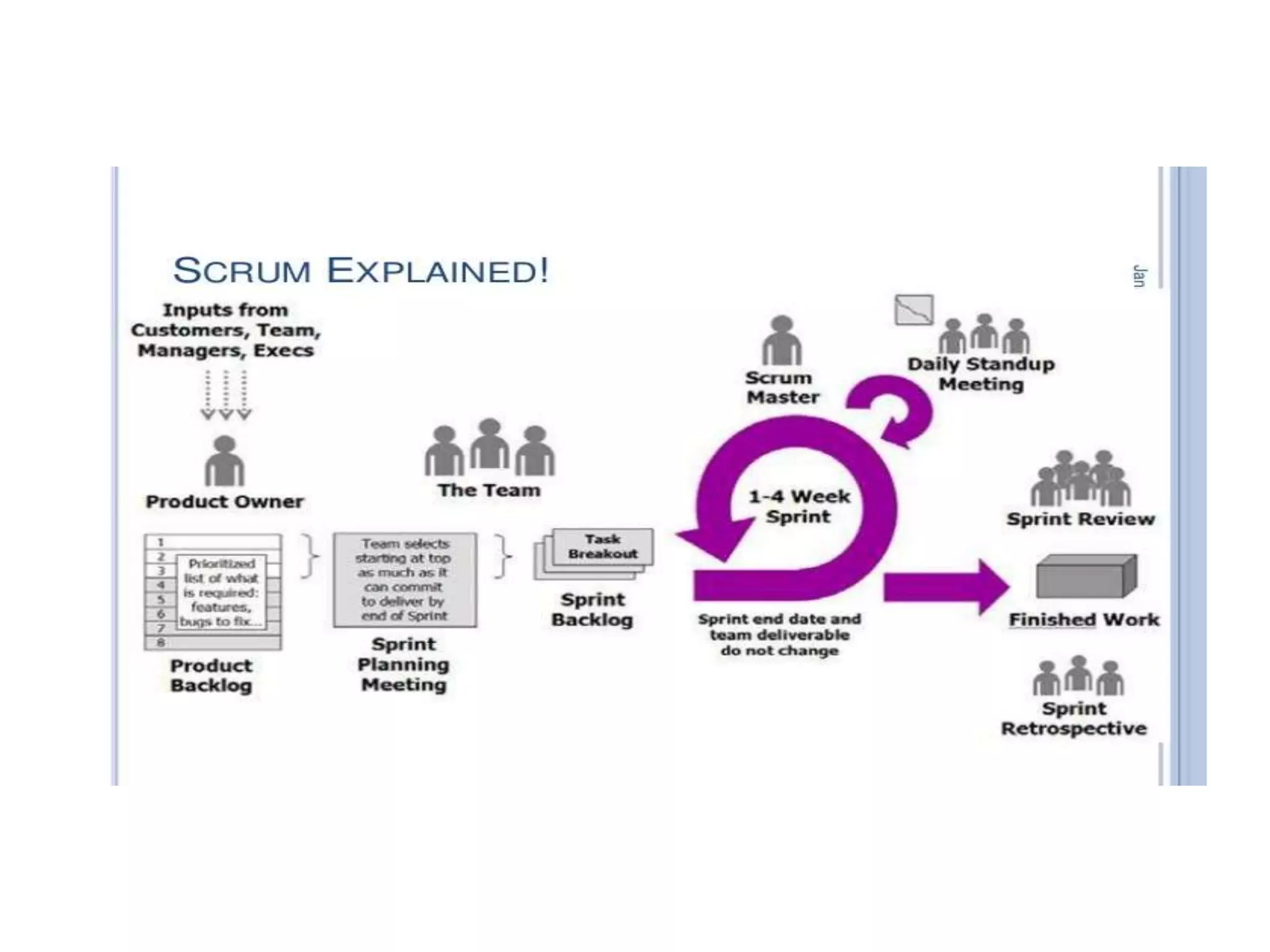
The agile methodology consists of Scrum Model and Extreme Programing 
a) Scrum master (Project Manager) 
b) Product owner (Business Analyst) 
c) Scrum meeting (Daily Stand up, achievements from last scrum to present) 
d) Sprint meeting (functionalities have to be achieved in sprint durations) 
e) Sprint backlog 
f) Product backlog 
g) Sprint retrospective meeting
 EXTREME PROGRAMMING 
PLANNING 
Requirements are gathered from different stake holders and written in 
the form of stories and are prioritized. 
SIMPLE DESIGN 
Writing the code in the most simple manner. 
PAIR PROGRAMMING 
Two programmers working on one requirement. 
TEST DRIVEN DEVELOPMENT 
Identifying the problems even before they are executed. 
REFACTORING 
Continuous development and testing.
UML DIAGRAMS 
Modeling Language is where pictographic represented is used. 
There are Nine UML Diagrams that are used 
1. Use case Diagram. 
2. Class diagram 
3. Component diagram 
4. Package diagram 
5. Deployment diagram 
6. Sequential diagram 
7. Activity diagram 
8. Collaboration diagram 
9. State Chart diagram.
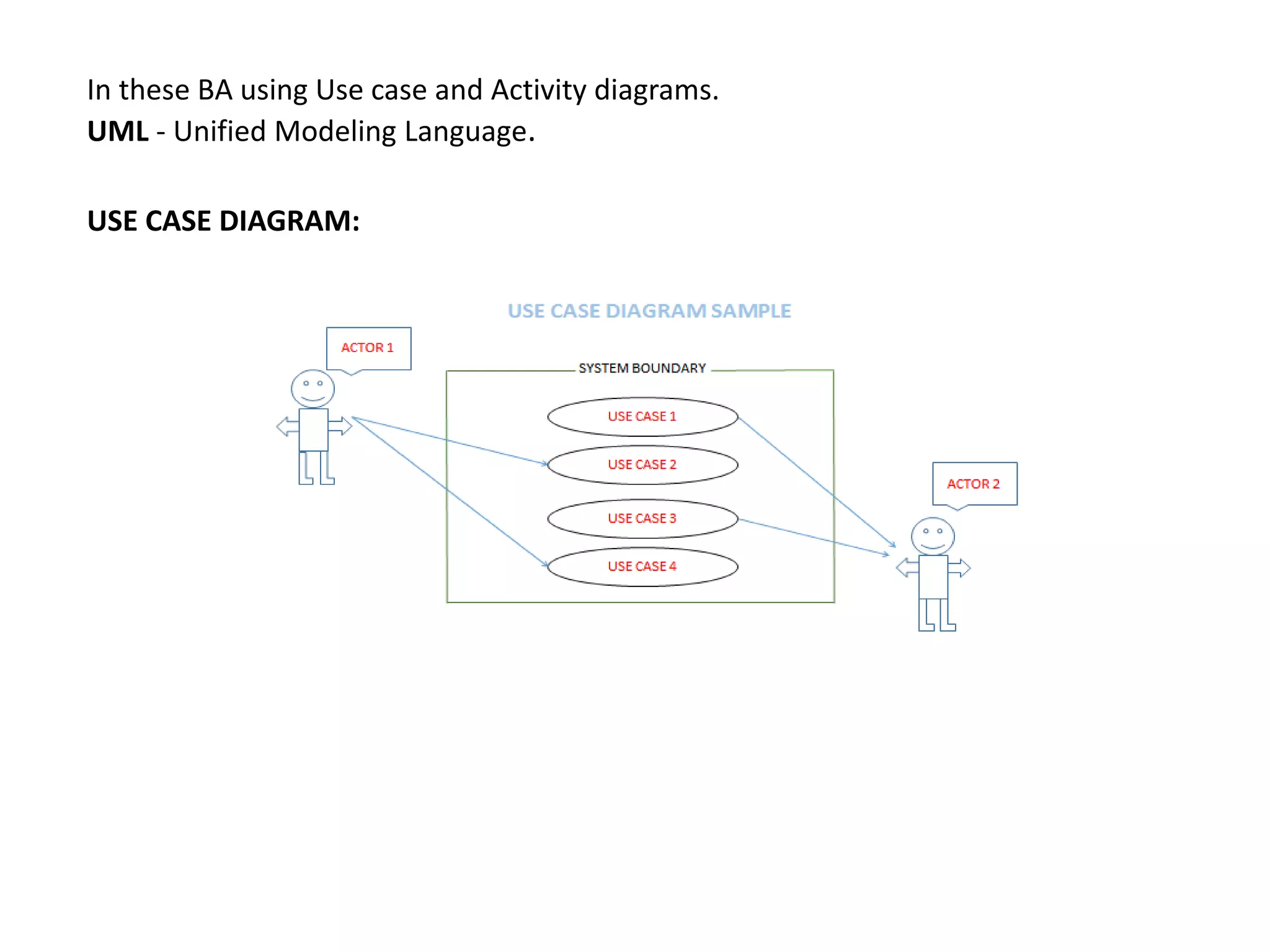
In these BA using Use case and Activity diagrams. 
UML - Unified Modeling Language. 
USE CASE DIAGRAM:
USE CASE DESCRIPTION DOCUMENT 
Every use case description document must have the following: 
Content of the use case description document as follows: 
• Use case name 
• Use case description 
• Actor present 
• Basic flow or (+ve ) work flow 
• Alternate flow 
• Exceptional flow (Ex: wrong user id and password) 
• Precondition (Ex: should be registered) 
• Post condition (Ex: Should access the account) 
• Business rules (Ex: only 5 transactions)
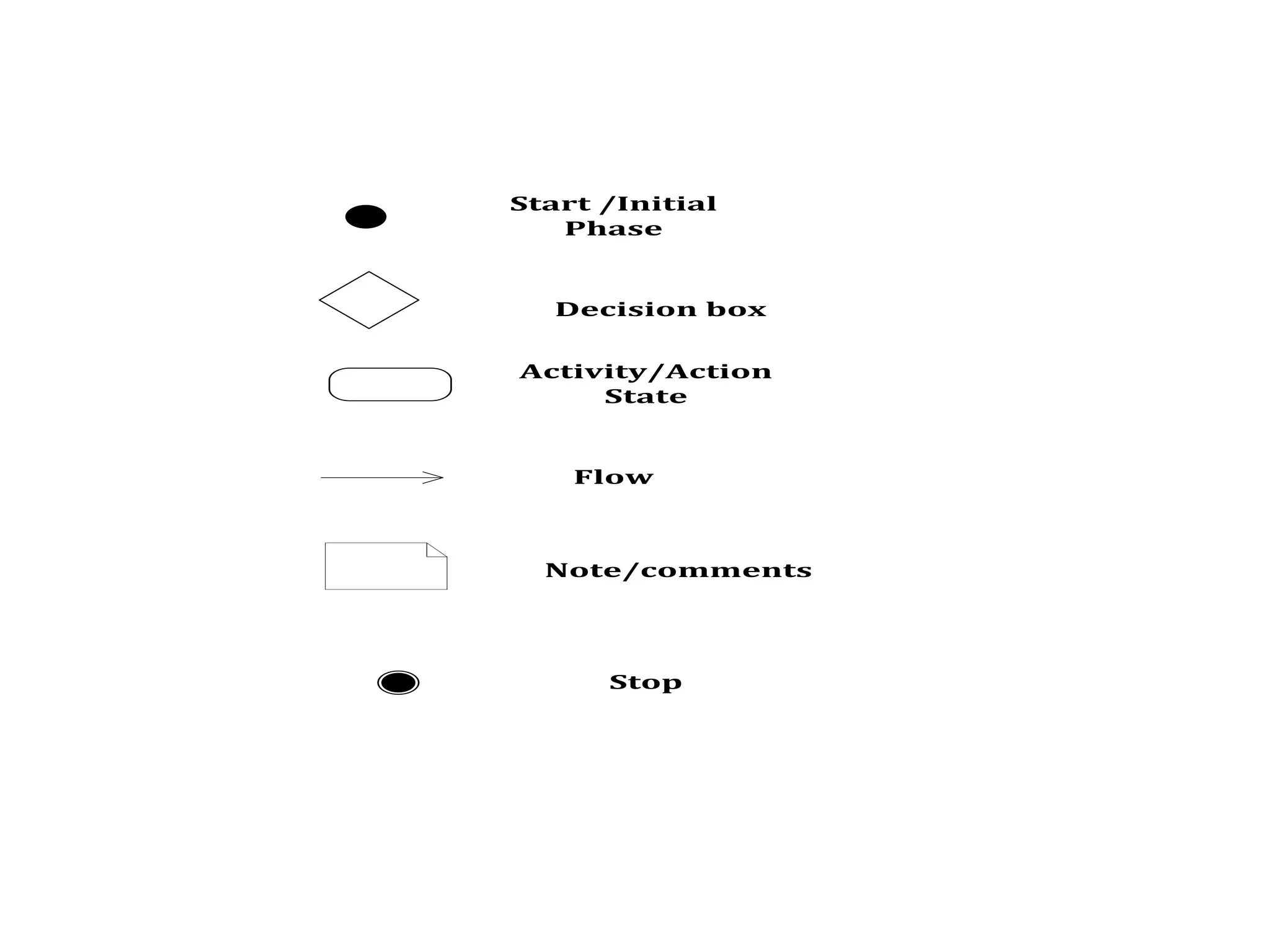
ACTIVITY DIAGRAM: 
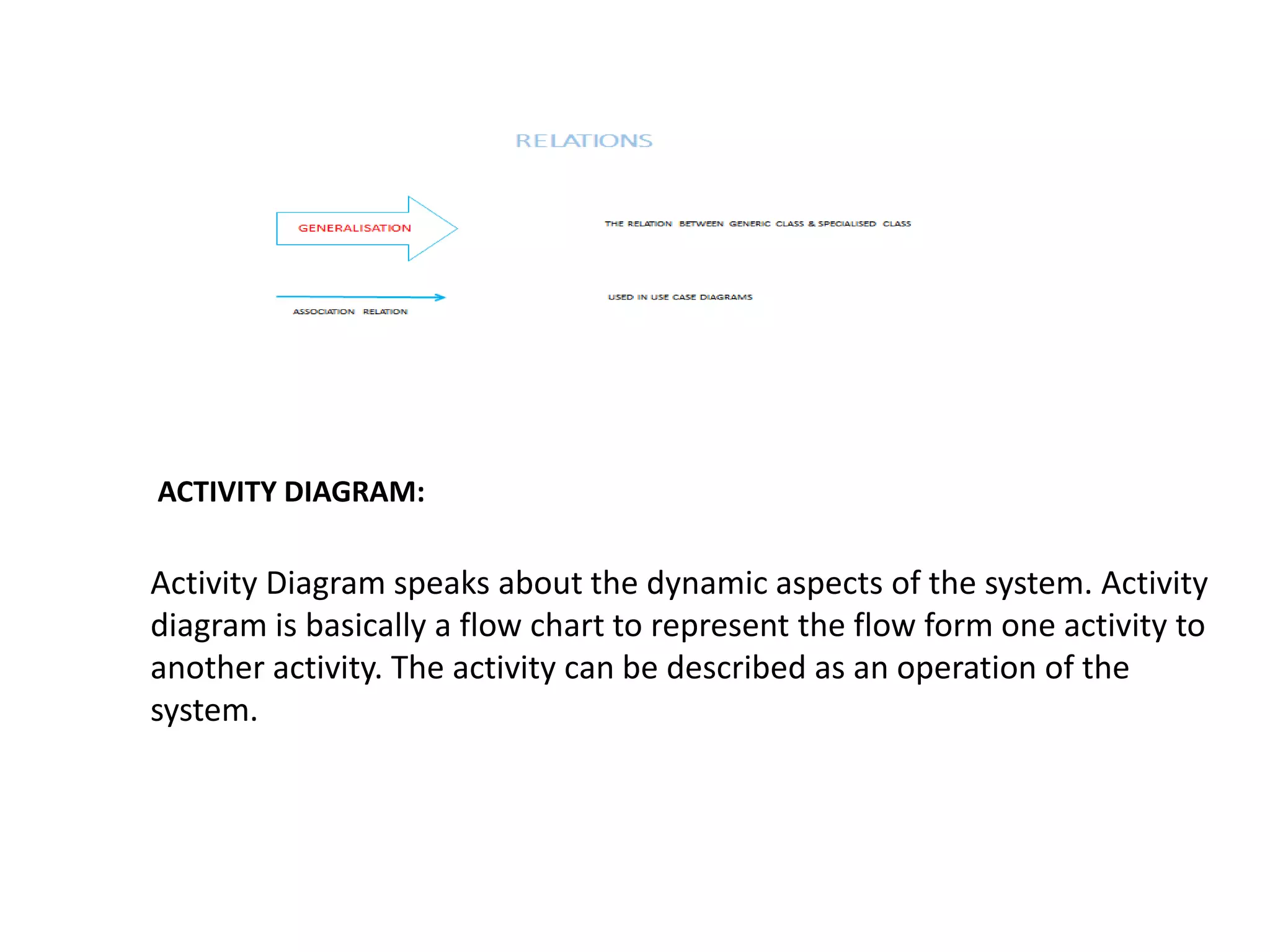
Activity Diagram speaks about the dynamic aspects of the system. Activity 
diagram is basically a flow chart to represent the flow form one activity to 
another activity. The activity can be described as an operation of the 
system.
Start /Initial 
Phase 
Decision box 
Activity/Action 
State 
Flow 
Note/comments 
Stop

Business analyst ppt

  • 1.
  • 2.
    There are twotypes of IT companies Who is Business Analyst? What is Business Analysis?
  • 3.
    – Roles &Responsibilities of BA • Identifying stake holders • Gathering requirements from stakeholders • Preparations documentation (BRD, FSD etc.) • Preparation of proto types • Clarifying Blocking/Issues raised by Technical Team • Preparing User manuals • User training to end User Product – Do’s and Don’ts of BA • Never Say to NO to Client, always be diplomatic • Never assume or imagine of your own • Every communication should be made through official Email Id
  • 4.
    BA Skills requiredfor BA Functional Knowledge BA Skills Knowledge Areas SDLC Methodolgies & Models Technical Knowledge & Tools
  • 5.
    • Communication. •Analytical skills. • Problem solving capability. • Negotiation skills. BA SKILLs Analysing Business • Gap analysis. • SWOT analysis. • Comparative analysis.
  • 6.
    Requirement Elicitation •Interview. • Questionnaire. • Brainstorming. • Prototype. • JAD/RAD Sessions.
  • 7.
    • Business RequirementDocument BRD contains the detailed business requirement. • The Format of BRD is as follows • Introduction • Requirement Scope • Functional requirement • Non Functional requirement • User interface requirement • Appendix and Business glossary • Functional Speciation Document FSD contains the behavior aspects of system requirements in terms of Operations. Non Functional Specification Document NFSD contains the performance aspects of the system (i.e. Time frame, Response Time etc.)
  • 8.
    SOFTWARE DEVELOPMENT LIFECYCLE SDLC LIFE CYCLE SDLC PHASE Outcome of Each Phase Requirement Gathering & analyzing Design Phase Development Phase Testing Phase Implementation or Deployment Maintenance Phase Business Requirement Document GUI,DFD,ER Working Software is developed Bug Free Software Hosted/Delivered it to client Provide Support
  • 9.
    METHODOLOGIES & MODELS • Waterfall model • Spiral model • Iterative model • Agile methodology
  • 10.
    AGILE METHODOLOGY Theadvantages of agile methodology are i) Faster in terms of delivery ii) This can be implemented even during the scope creep or even at the beginning of a project The agile methodology consists of Scrum Model and Extreme Programing a) Scrum master (Project Manager) b) Product owner (Business Analyst) c) Scrum meeting (Daily Stand up, achievements from last scrum to present) d) Sprint meeting (functionalities have to be achieved in sprint durations) e) Sprint backlog f) Product backlog g) Sprint retrospective meeting
  • 13.
     EXTREME PROGRAMMING PLANNING Requirements are gathered from different stake holders and written in the form of stories and are prioritized. SIMPLE DESIGN Writing the code in the most simple manner. PAIR PROGRAMMING Two programmers working on one requirement. TEST DRIVEN DEVELOPMENT Identifying the problems even before they are executed. REFACTORING Continuous development and testing.
  • 14.
    UML DIAGRAMS ModelingLanguage is where pictographic represented is used. There are Nine UML Diagrams that are used 1. Use case Diagram. 2. Class diagram 3. Component diagram 4. Package diagram 5. Deployment diagram 6. Sequential diagram 7. Activity diagram 8. Collaboration diagram 9. State Chart diagram.
  • 15.
    In these BAusing Use case and Activity diagrams. UML - Unified Modeling Language. USE CASE DIAGRAM:
  • 16.
    USE CASE DESCRIPTIONDOCUMENT Every use case description document must have the following: Content of the use case description document as follows: • Use case name • Use case description • Actor present • Basic flow or (+ve ) work flow • Alternate flow • Exceptional flow (Ex: wrong user id and password) • Precondition (Ex: should be registered) • Post condition (Ex: Should access the account) • Business rules (Ex: only 5 transactions)
  • 17.
    ACTIVITY DIAGRAM: ActivityDiagram speaks about the dynamic aspects of the system. Activity diagram is basically a flow chart to represent the flow form one activity to another activity. The activity can be described as an operation of the system.
  • 18.
    Start /Initial Phase Decision box Activity/Action State Flow Note/comments Stop