EXCEPTIONS: 
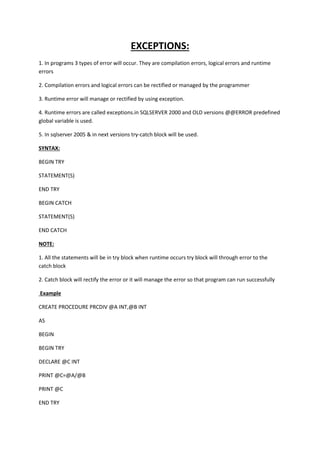
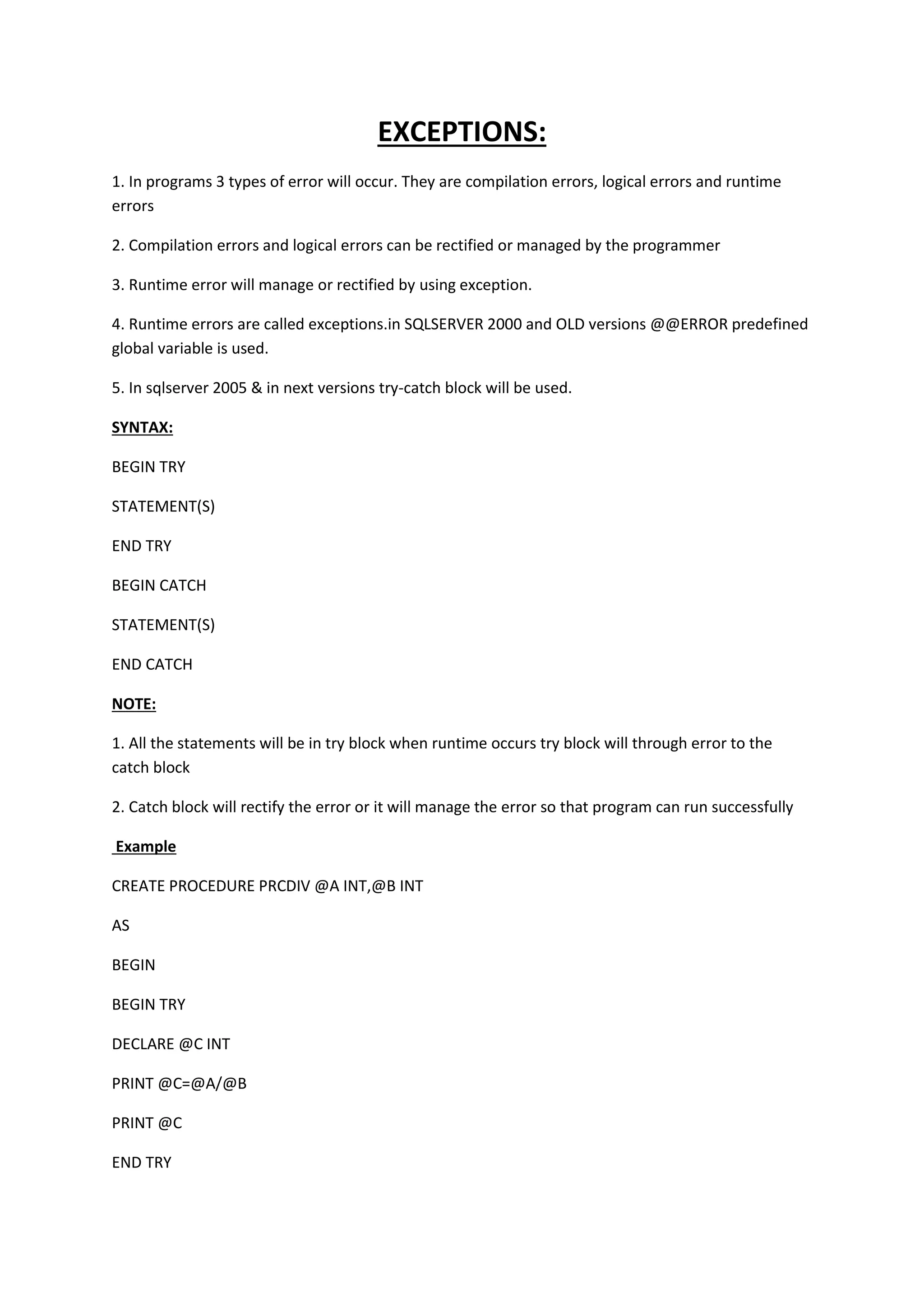
1. In programs 3 types of error will occur. They are compilation errors, logical errors and runtime 
errors 
2. Compilation errors and logical errors can be rectified or managed by the programmer 
3. Runtime error will manage or rectified by using exception. 
4. Runtime errors are called exceptions.in SQLSERVER 2000 and OLD versions @@ERROR predefined 
global variable is used. 
5. In sqlserver 2005 & in next versions try-catch block will be used. 
SYNTAX: 
BEGIN TRY 
STATEMENT(S) 
END TRY 
BEGIN CATCH 
STATEMENT(S) 
END CATCH 
NOTE: 
1. All the statements will be in try block when runtime occurs try block will through error to the 
catch block 
2. Catch block will rectify the error or it will manage the error so that program can run successfully 
Example 
CREATE PROCEDURE PRCDIV @A INT,@B INT 
AS 
BEGIN 
BEGIN TRY 
DECLARE @C INT 
PRINT @C=@A/@B 
PRINT @C 
END TRY
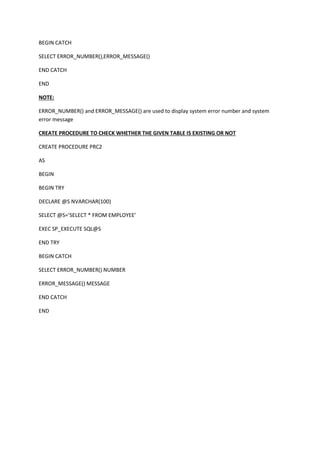
BEGIN CATCH 
SELECT ERROR_NUMBER(),ERROR_MESSAGE() 
END CATCH 
END 
NOTE: 
ERROR_NUMBER() and ERROR_MESSAGE() are used to display system error number and system 
error message 
CREATE PROCEDURE TO CHECK WHETHER THE GIVEN TABLE IS EXISTING OR NOT 
CREATE PROCEDURE PRC2 
AS 
BEGIN 
BEGIN TRY 
DECLARE @S NVARCHAR(100) 
SELECT @S=’SELECT * FROM EMPLOYEE’ 
EXEC SP_EXECUTE SQL@S 
END TRY 
BEGIN CATCH 
SELECT ERROR_NUMBER() NUMBER 
ERROR_MESSAGE() MESSAGE 
END CATCH 
END

Exceptions in SQL Server

  • 1.
    EXCEPTIONS: 1. Inprograms 3 types of error will occur. They are compilation errors, logical errors and runtime errors 2. Compilation errors and logical errors can be rectified or managed by the programmer 3. Runtime error will manage or rectified by using exception. 4. Runtime errors are called exceptions.in SQLSERVER 2000 and OLD versions @@ERROR predefined global variable is used. 5. In sqlserver 2005 & in next versions try-catch block will be used. SYNTAX: BEGIN TRY STATEMENT(S) END TRY BEGIN CATCH STATEMENT(S) END CATCH NOTE: 1. All the statements will be in try block when runtime occurs try block will through error to the catch block 2. Catch block will rectify the error or it will manage the error so that program can run successfully Example CREATE PROCEDURE PRCDIV @A INT,@B INT AS BEGIN BEGIN TRY DECLARE @C INT PRINT @C=@A/@B PRINT @C END TRY
  • 2.
    BEGIN CATCH SELECTERROR_NUMBER(),ERROR_MESSAGE() END CATCH END NOTE: ERROR_NUMBER() and ERROR_MESSAGE() are used to display system error number and system error message CREATE PROCEDURE TO CHECK WHETHER THE GIVEN TABLE IS EXISTING OR NOT CREATE PROCEDURE PRC2 AS BEGIN BEGIN TRY DECLARE @S NVARCHAR(100) SELECT @S=’SELECT * FROM EMPLOYEE’ EXEC SP_EXECUTE SQL@S END TRY BEGIN CATCH SELECT ERROR_NUMBER() NUMBER ERROR_MESSAGE() MESSAGE END CATCH END