Information Management & Marketing Research
Chapter Objectives Explain the concept of the marketing information system, emphasising ways of assessing information needs, the sources used for developing information and ways of distributing information. Outline the marketing research process, including defining the problem and research objectives and developing the research plan. Discuss the key issues of planning primary data collection, implementing the research plan and interpreting and reporting the findings.
The need for Information To deliver superior value and satisfaction to the firm’s customers, marketing managers need information on a regular basis, including: the marketing environment customers/ end-users  resellers competitors  government regulations other forces in the marketplace
Marketing Information System (MIS) An MIS consists of people; equipment; and procedures to gather; sort; analyse; evaluate; and distribute accurate information to marketing decision makers. MIS distributes information to managers in the right form and at the right time to help them make better marketing decisions .
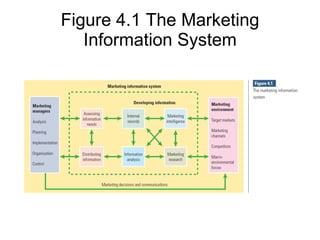
The Marketing Information System Obtaining Information Internal records Marketing Intelligence  (publicly  available) Marketing Research  (gathered  specifically) Information Analysis   (answers  =  decisions) Distributing Information   (for  implementation) The cost of information should relate to the benefit achieved .  (nice to have / need to have).
Figure 4.1 The Marketing Information System
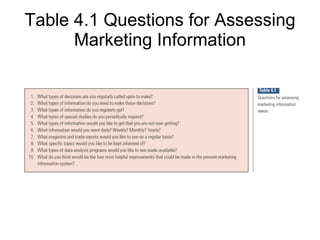
Table 4.1 Questions for Assessing Marketing Information
Internal Records Information gathered from sources within the company to evaluate marketing performance and identify any marketing problems and opportunities. Internal records can be obtained more quickly and cheaply than other information, but may be incomplete or in the wrong form for making marketing decisions.
Marketing Intelligence (MI) Everyday information about developments in the marketing environment that helps managers prepare and adjust marketing plans. MI is important and can be gathered from many sources including the organisation’s own personnel. Sometimes staff are too busy, and will often fail to pass on important information unless there is a formal process for doing so. The organisation needs important intelligence from suppliers; resellers; and customers.
Marketing Research (MR) Marketing research is the function that links consumers; customers; and the public to the marketer through information. Marketing research is used to: identify & define marketing opportunities/ problems Generate; refine; and evaluate marketing actions monitor marketing performance improve understanding of the marketing process.
MR Cont’d Qualitative Research Studies involving a small number of individuals, such as focus groups or in-depth one-to-one interviews. The primary tool in qualitative research is the focus group, including online focus groups/ teleconferences. One-on-one interviews used to delve more deeply into the topic.  Quantitative Research Studies involving ‘a lot’ of people. Uses statistical average techniques such as mean ratings, and statistical tools such as sampling error and standard error to analyse data. There is no stated number of people who must be interviewed to make a study quantitative, but samples of 100 or more are usually considered quantitative.
Information Analysis Questions that may need to be answered: What are the major variables affecting my sales, and how important is each one? What are the best variables for segmenting my market, and how many segments exist? What are the best predictors of which consumers are likely to buy my brand versus competitor’s brand? If I raised my price by X% and increased advertising expenditures by Y%, what would happen to sales?
Distributing Information Information must be distributed to the right managers at the right time. Centralised marketing information systems (MIS) often provide regular performance reports, intelligence updates, and study reports to managers. Developments in technology have caused a revolution in information distribution. Increased use of Decision Support Systems
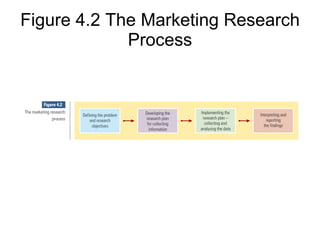
Figure 4.2 The Marketing Research Process
1. Defining the Problem and the Research Objectives This involves close cooperation between marketing managers and researchers. Defining the problem can be difficult as the manager may know there is a problem without knowing or understanding the cause. Three types of MR objectives arising from problem definition: Exploratory:  gather preliminary info to better define the problem and suggest answers  Descriptive: better definition of the problem by describing the actual situation Causal: identify cause and likely effect Often the most difficult step in research process
__________ data is the data that was gathered for another purpose and already exists. Primary  Descriptive  Causal  Secondary  Observational
2. Developing the Research Plan The second step is to determine  what information  is needed; develop a plan for gathering the info efficiently; and producing the research design. Secondary data  is research date that already exists somewhere, having been collected for another purpose e.g. internal sources; government publications; business periodicals and books; purchase of commercial data. Primary data  consist of information collected for the specific research purpose at hand.
Planning Primary Data Collection Secondary data will not usually satisfy all of a firm’s research needs, so primary data has to be collected. Good decisions require good data, and great care must be taken to ensure the primary data collected provide marketing decision makers with relevant; accurate; current; and unbiased information.
The first step in the marketing research process is the: development of the research plan survey of stakeholders to determine if problems exist decision regarding the research tools and target group collection of the available sources for needed information  definition of the problem and research objectives
Research Approaches Observational research Mechanical People meters  (TV audiences) Checkout scanners Single-source data systems Survey research Structured (set questions) or Unstructured Use of Direct or Indirect questions Experimental research  (cause and effect)
Contact Methods Personal interviewing Telephone interviewing Mail questionnaire  has many advantages. can be used to collect large amounts of information at lower cost however, doesn’t have the same level of flexibility, and rate of response is often very low.
Contact Methods Online survey methods  May involve observation, experiments, focus groups or surveys using email. Online survey methods offer speed. Many people dislike unsolicited emails which may be dismissed as ‘spam’. Privacy of information may concern respondents, due to fear of computer worms and viruses. Cost of developing the Software can be high.
Sampling Plans (1) A sample is a subset of the population that has been selected to represent the population as a whole. Probability Sample A sample in which every element in the population has a known statistical chance of being selected Non-probability Sample Any sample in which little/no attempt has been made to reach a representative cross-section of the particular population
Cont’d Probability Samples Simple Random – known and equal chance Stratified Random – within a specific group Cluster – a selection of groups Non-probability Samples Convenience – the easiest approach Judgement – prior experience of researcher Quota – a set number of respondents
Sampling Plans (2) Research Instruments Questionnaire  -  most popular method Closed-end questions  (pre-set answers) Open-end questions  (answer in own words) Mechanical devices Galvanometer  -  emotional reaction Tachistoscope  -  level of recall Eye cameras  -  eye movement/ reaction
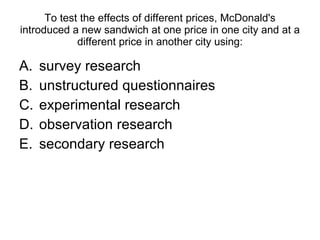
To test the effects of different prices, McDonald's introduced a new sandwich at one price in one city and at a different price in another city using: survey research unstructured questionnaires  experimental research observation research secondary research
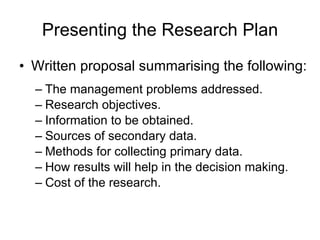
Presenting the Research Plan Written proposal summarising the following: The management problems addressed. Research objectives. Information to be obtained. Sources of secondary data. Methods for collecting primary data. How results will help in the decision making. Cost of the research.
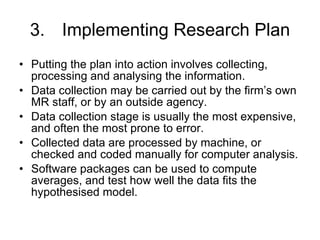
3. Implementing Research Plan Putting the plan into action involves collecting, processing and analysing the information. Data collection may be carried out by the firm’s own MR staff, or by an outside agency. Data collection stage is usually the most expensive, and often the most prone to error. Collected data are processed by machine, or checked and coded manually for computer analysis. Software packages can be used to compute averages, and test how well the data fits the hypothesised model.
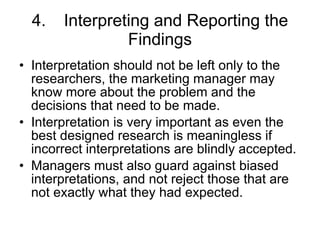
4. Interpreting and Reporting the Findings Interpretation should not be left only to the researchers, the marketing manager may know more about the problem and the decisions that need to be made. Interpretation is very important as even the best designed research is meaningless if incorrect interpretations are blindly accepted. Managers must also guard against biased interpretations, and not reject those that are not exactly what they had expected.
MR in Small Business  and Non-Profit Organisations Managers often think that marketing research can be undertaken only by large companies with big research budgets.  But many MR techniques can also be used by smaller organisations in a less formal manner and at little or no expense. Informal surveys using small convenience samples . Meaningful marketing information can be obtained simply by observing what is happening.   Managers can conduct their own simple experiments.   Small organisations can obtain most of the secondary data available to large businesses.
International Marketing Research International marketing research follows the same steps as domestic research. International markets will generally present more problems because they often vary greatly in areas such as, economic development; cultures and customs; and buying patterns. Good secondary data is often more difficult to obtain in these situations.
Public Policy and Ethics in Marketing Research When properly used, marketing research benefits both the sponsoring company and its customers. It helps the company to make better marketing decisions, which in turn results in products and services that meet the needs of consumer more effectively. However, when misused, marketing research can also abuse and annoy customers e.g.  Intrusions on consumer privacy. Misuse of research findings (used selectively).  In many countries codes of practice outline researchers’ responsibilities to the general public.

Bus169 Kotler Chapter 04

  • 1.
    Information Management &Marketing Research
  • 2.
    Chapter Objectives Explainthe concept of the marketing information system, emphasising ways of assessing information needs, the sources used for developing information and ways of distributing information. Outline the marketing research process, including defining the problem and research objectives and developing the research plan. Discuss the key issues of planning primary data collection, implementing the research plan and interpreting and reporting the findings.
  • 3.
    The need forInformation To deliver superior value and satisfaction to the firm’s customers, marketing managers need information on a regular basis, including: the marketing environment customers/ end-users resellers competitors government regulations other forces in the marketplace
  • 4.
    Marketing Information System(MIS) An MIS consists of people; equipment; and procedures to gather; sort; analyse; evaluate; and distribute accurate information to marketing decision makers. MIS distributes information to managers in the right form and at the right time to help them make better marketing decisions .
  • 5.
    The Marketing InformationSystem Obtaining Information Internal records Marketing Intelligence (publicly available) Marketing Research (gathered specifically) Information Analysis (answers = decisions) Distributing Information (for implementation) The cost of information should relate to the benefit achieved . (nice to have / need to have).
  • 6.
    Figure 4.1 TheMarketing Information System
  • 7.
    Table 4.1 Questionsfor Assessing Marketing Information
  • 8.
    Internal Records Informationgathered from sources within the company to evaluate marketing performance and identify any marketing problems and opportunities. Internal records can be obtained more quickly and cheaply than other information, but may be incomplete or in the wrong form for making marketing decisions.
  • 9.
    Marketing Intelligence (MI)Everyday information about developments in the marketing environment that helps managers prepare and adjust marketing plans. MI is important and can be gathered from many sources including the organisation’s own personnel. Sometimes staff are too busy, and will often fail to pass on important information unless there is a formal process for doing so. The organisation needs important intelligence from suppliers; resellers; and customers.
  • 10.
    Marketing Research (MR)Marketing research is the function that links consumers; customers; and the public to the marketer through information. Marketing research is used to: identify & define marketing opportunities/ problems Generate; refine; and evaluate marketing actions monitor marketing performance improve understanding of the marketing process.
  • 11.
    MR Cont’d QualitativeResearch Studies involving a small number of individuals, such as focus groups or in-depth one-to-one interviews. The primary tool in qualitative research is the focus group, including online focus groups/ teleconferences. One-on-one interviews used to delve more deeply into the topic. Quantitative Research Studies involving ‘a lot’ of people. Uses statistical average techniques such as mean ratings, and statistical tools such as sampling error and standard error to analyse data. There is no stated number of people who must be interviewed to make a study quantitative, but samples of 100 or more are usually considered quantitative.
  • 12.
    Information Analysis Questionsthat may need to be answered: What are the major variables affecting my sales, and how important is each one? What are the best variables for segmenting my market, and how many segments exist? What are the best predictors of which consumers are likely to buy my brand versus competitor’s brand? If I raised my price by X% and increased advertising expenditures by Y%, what would happen to sales?
  • 13.
    Distributing Information Informationmust be distributed to the right managers at the right time. Centralised marketing information systems (MIS) often provide regular performance reports, intelligence updates, and study reports to managers. Developments in technology have caused a revolution in information distribution. Increased use of Decision Support Systems
  • 14.
    Figure 4.2 TheMarketing Research Process
  • 15.
    1. Defining theProblem and the Research Objectives This involves close cooperation between marketing managers and researchers. Defining the problem can be difficult as the manager may know there is a problem without knowing or understanding the cause. Three types of MR objectives arising from problem definition: Exploratory: gather preliminary info to better define the problem and suggest answers Descriptive: better definition of the problem by describing the actual situation Causal: identify cause and likely effect Often the most difficult step in research process
  • 16.
    __________ data isthe data that was gathered for another purpose and already exists. Primary Descriptive Causal Secondary Observational
  • 17.
    2. Developing theResearch Plan The second step is to determine what information is needed; develop a plan for gathering the info efficiently; and producing the research design. Secondary data is research date that already exists somewhere, having been collected for another purpose e.g. internal sources; government publications; business periodicals and books; purchase of commercial data. Primary data consist of information collected for the specific research purpose at hand.
  • 18.
    Planning Primary DataCollection Secondary data will not usually satisfy all of a firm’s research needs, so primary data has to be collected. Good decisions require good data, and great care must be taken to ensure the primary data collected provide marketing decision makers with relevant; accurate; current; and unbiased information.
  • 19.
    The first stepin the marketing research process is the: development of the research plan survey of stakeholders to determine if problems exist decision regarding the research tools and target group collection of the available sources for needed information definition of the problem and research objectives
  • 20.
    Research Approaches Observationalresearch Mechanical People meters (TV audiences) Checkout scanners Single-source data systems Survey research Structured (set questions) or Unstructured Use of Direct or Indirect questions Experimental research (cause and effect)
  • 21.
    Contact Methods Personalinterviewing Telephone interviewing Mail questionnaire has many advantages. can be used to collect large amounts of information at lower cost however, doesn’t have the same level of flexibility, and rate of response is often very low.
  • 22.
    Contact Methods Onlinesurvey methods May involve observation, experiments, focus groups or surveys using email. Online survey methods offer speed. Many people dislike unsolicited emails which may be dismissed as ‘spam’. Privacy of information may concern respondents, due to fear of computer worms and viruses. Cost of developing the Software can be high.
  • 23.
    Sampling Plans (1)A sample is a subset of the population that has been selected to represent the population as a whole. Probability Sample A sample in which every element in the population has a known statistical chance of being selected Non-probability Sample Any sample in which little/no attempt has been made to reach a representative cross-section of the particular population
  • 24.
    Cont’d Probability SamplesSimple Random – known and equal chance Stratified Random – within a specific group Cluster – a selection of groups Non-probability Samples Convenience – the easiest approach Judgement – prior experience of researcher Quota – a set number of respondents
  • 25.
    Sampling Plans (2)Research Instruments Questionnaire - most popular method Closed-end questions (pre-set answers) Open-end questions (answer in own words) Mechanical devices Galvanometer - emotional reaction Tachistoscope - level of recall Eye cameras - eye movement/ reaction
  • 26.
    To test theeffects of different prices, McDonald's introduced a new sandwich at one price in one city and at a different price in another city using: survey research unstructured questionnaires experimental research observation research secondary research
  • 27.
    Presenting the ResearchPlan Written proposal summarising the following: The management problems addressed. Research objectives. Information to be obtained. Sources of secondary data. Methods for collecting primary data. How results will help in the decision making. Cost of the research.
  • 28.
    3. Implementing ResearchPlan Putting the plan into action involves collecting, processing and analysing the information. Data collection may be carried out by the firm’s own MR staff, or by an outside agency. Data collection stage is usually the most expensive, and often the most prone to error. Collected data are processed by machine, or checked and coded manually for computer analysis. Software packages can be used to compute averages, and test how well the data fits the hypothesised model.
  • 29.
    4. Interpreting andReporting the Findings Interpretation should not be left only to the researchers, the marketing manager may know more about the problem and the decisions that need to be made. Interpretation is very important as even the best designed research is meaningless if incorrect interpretations are blindly accepted. Managers must also guard against biased interpretations, and not reject those that are not exactly what they had expected.
  • 30.
    MR in SmallBusiness and Non-Profit Organisations Managers often think that marketing research can be undertaken only by large companies with big research budgets. But many MR techniques can also be used by smaller organisations in a less formal manner and at little or no expense. Informal surveys using small convenience samples . Meaningful marketing information can be obtained simply by observing what is happening. Managers can conduct their own simple experiments. Small organisations can obtain most of the secondary data available to large businesses.
  • 31.
    International Marketing ResearchInternational marketing research follows the same steps as domestic research. International markets will generally present more problems because they often vary greatly in areas such as, economic development; cultures and customs; and buying patterns. Good secondary data is often more difficult to obtain in these situations.
  • 32.
    Public Policy andEthics in Marketing Research When properly used, marketing research benefits both the sponsoring company and its customers. It helps the company to make better marketing decisions, which in turn results in products and services that meet the needs of consumer more effectively. However, when misused, marketing research can also abuse and annoy customers e.g. Intrusions on consumer privacy. Misuse of research findings (used selectively). In many countries codes of practice outline researchers’ responsibilities to the general public.

Editor's Notes

  • #4 Relates to Objective 1.
  • #5 Relates to Objective 1.
  • #6 Relates to Objective 1.
  • #7 Relates to Objective 1.
  • #8 Relates to Objective 1.
  • #9 Relates to Objective 1.
  • #10 Relates to Objective 1.
  • #11 Relates to Objective 2
  • #12 Relates to Objective 2
  • #13 Relates to Objective 2
  • #14 Relates to Objective 2
  • #15 Relates to Objective 2
  • #16 Relates to Objective 2
  • #17 D. Is the correct answer.
  • #18 Relates to Objective 2
  • #19 Relates to Objectives 2 and 3
  • #20 E. Is the correct answer. MR cannot be conducted successfully if the problem and objectives have not been properly defined. Relates to Objectives 2 and 3
  • #21 Relates to Objectives 2 and 3
  • #22 Relates to objective 3
  • #23 Relates to objective 3
  • #25 Relates to objective 3
  • #26 Relates to objective 3
  • #27 C. Is the correct answer. Experimental research involves the manipulation of conditions to test for different responses. Relates to objective 3
  • #28 Relates to objective 3
  • #29 Relates to objective 3
  • #30 Relates to objective 3
  • #31 Relates to objective 3
  • #32 Relates to objective 3
  • #33 Relates to all objectives.