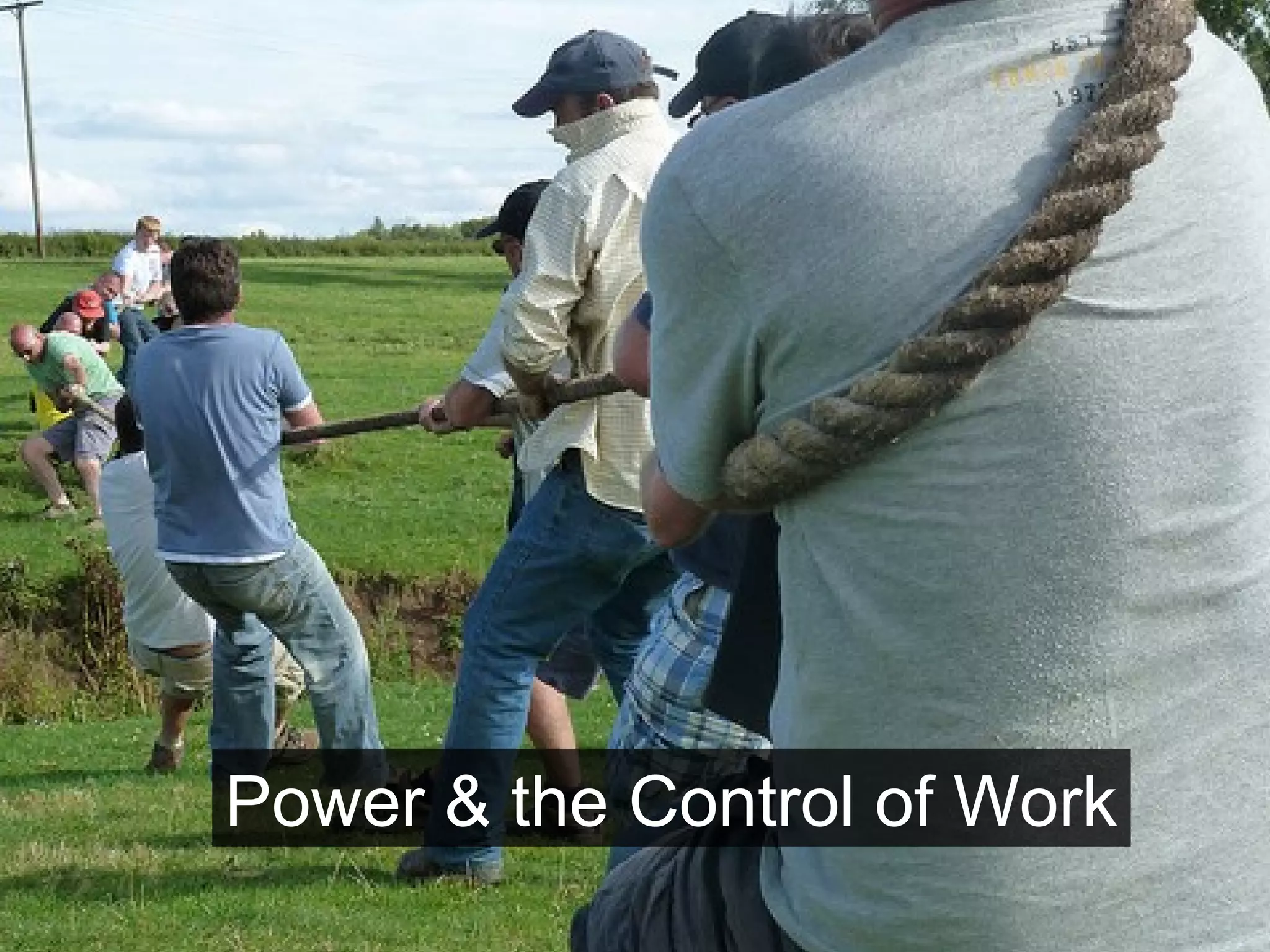
Power & the Control of Work
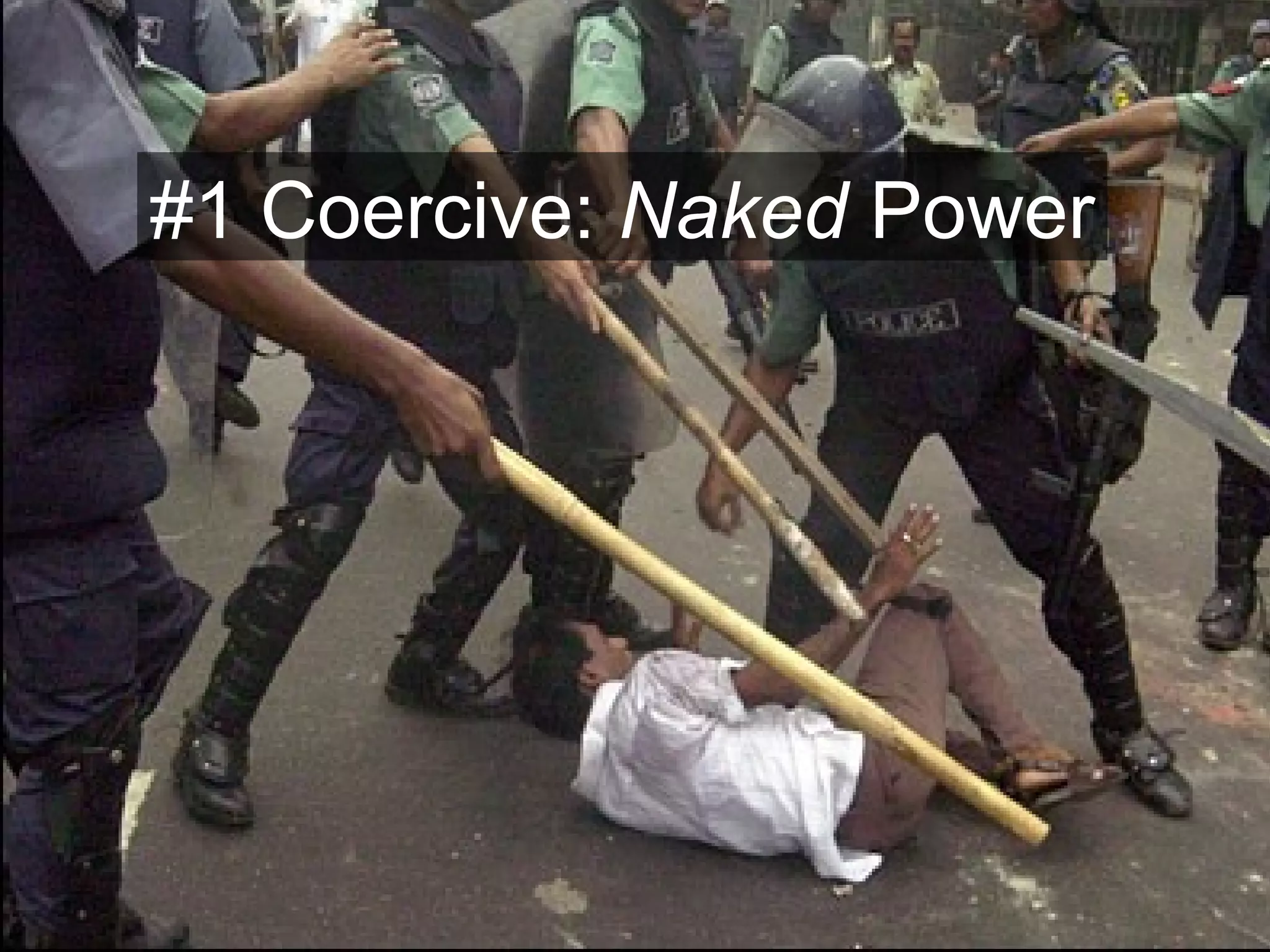
#1 Coercive: Naked Power
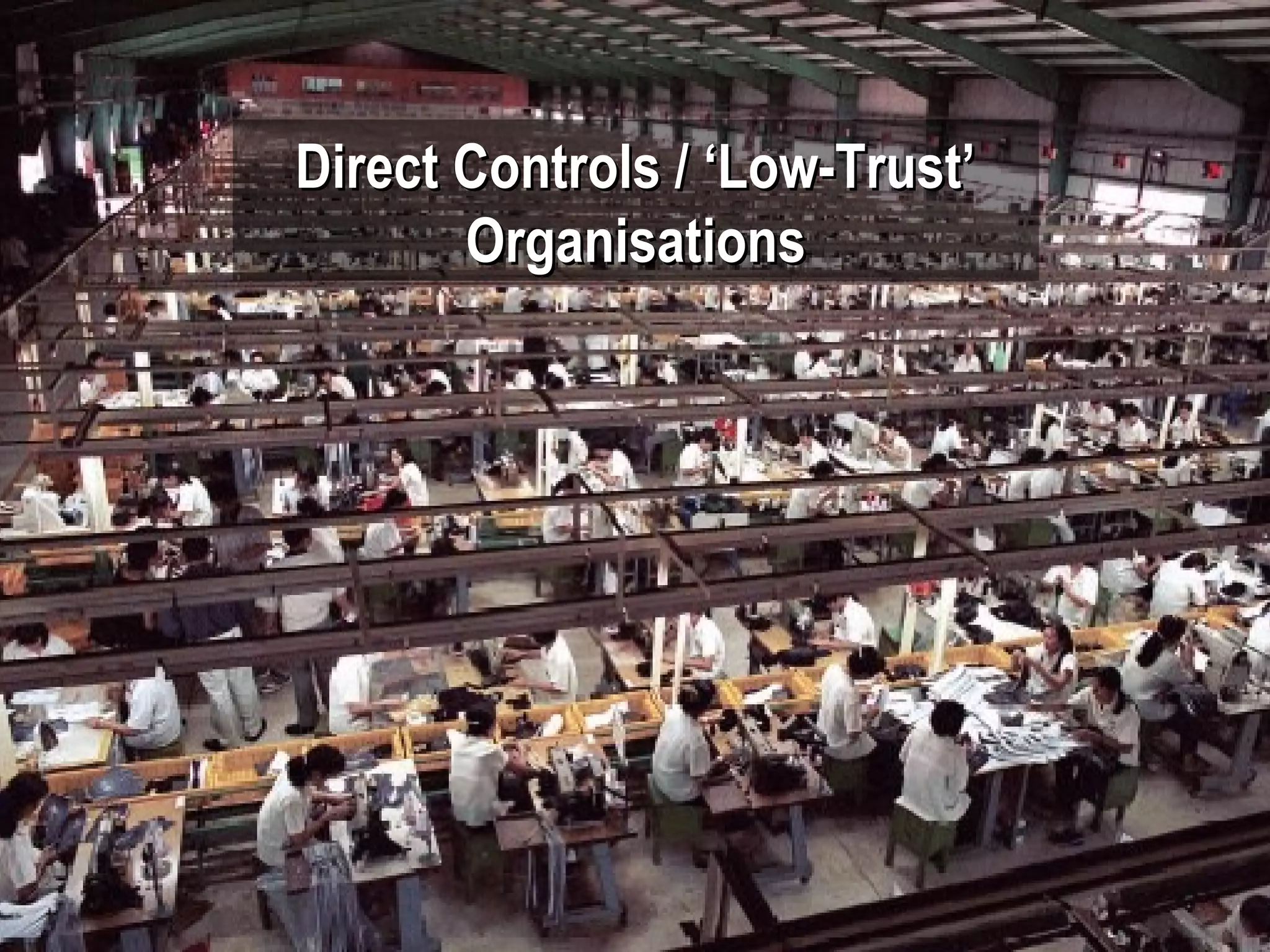
Direct Controls / ‘Low-Trust’
       Organisations
Here are some of the
working conditions the
labourers must
endure…
Iris Fashions


Hours Per
             72-80. 12-15 hour shifts; 6 days a week.
Week
Wages Per    $0.20
Hour
Conditions   No union; workers paid a $0.06 an hour
             premium for overtime;$0.02 for each
             shirt collar sewn.

You Li Fashion factory

Hours Per    93. 7.30-midnight. 7 days a week.
Week
Wages Per    $0.13
Hour
Conditions   No overtime pay; no benefits;
             sometimes employees need to work 24-
             hour shifts, 6-8 people to a dorm room;
             dorm is dark and dirty; workers afraid;
             under constant surveillance; no
             Corporate Code of Conduct
Yue Yuen Factory

Hours Per
             77-84. 11-12 hour shifts; 7 days a week.
Week
Wages Per    $0.19
Hour
Conditions   Forced overtime, no overtime premium
             paid; excessive noise pollution; fumes
             in factory; no Code of Conduct
No Mums Allowed!
• Pregnancy tests
• Contraceptive pills
• Forced abortions
• Mistreatment designed to compel
  resignations
• Sanitary pad check and 28-day contracts
• Denied time-off for medical
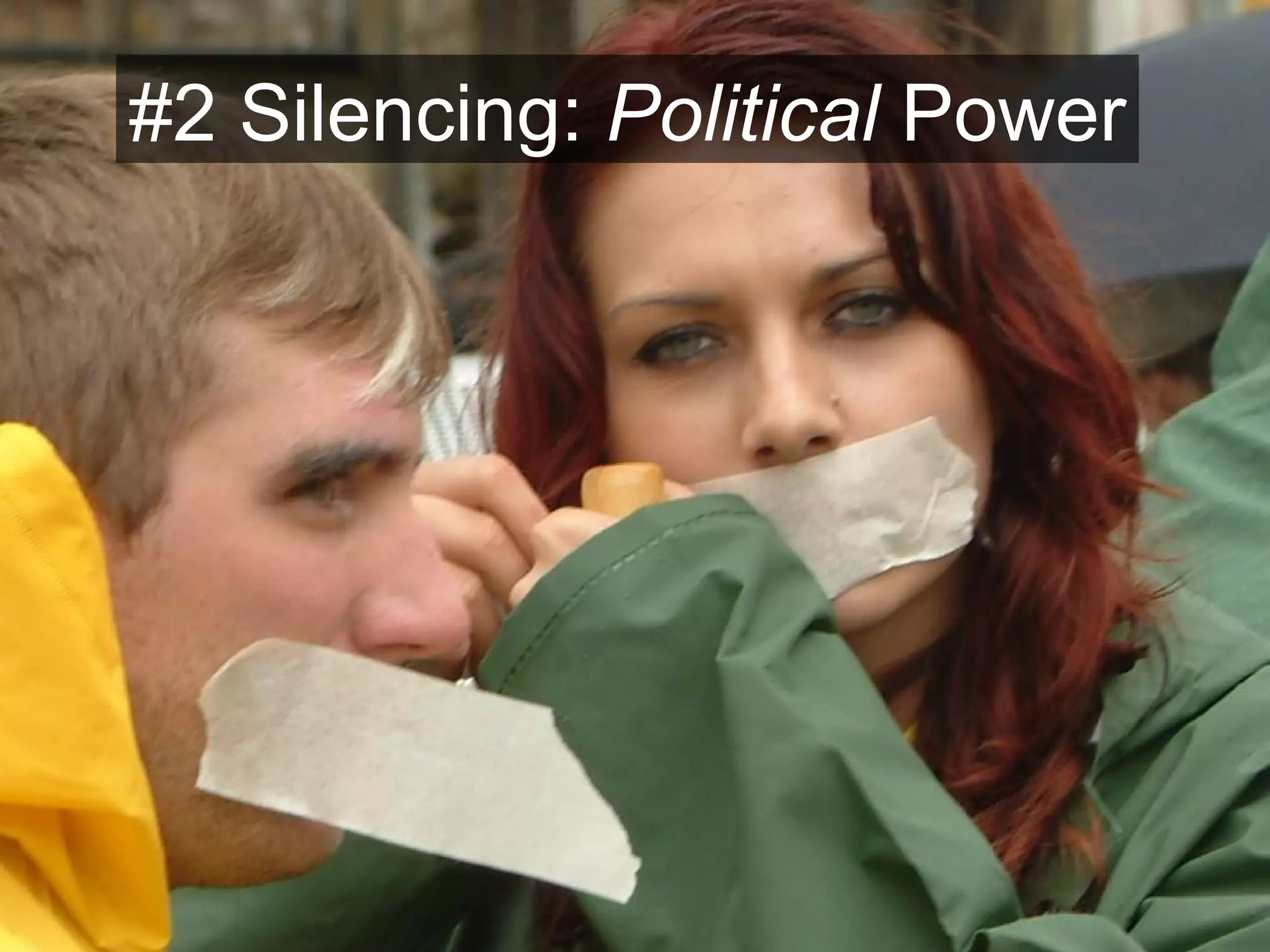
#2 Silencing: Political Power
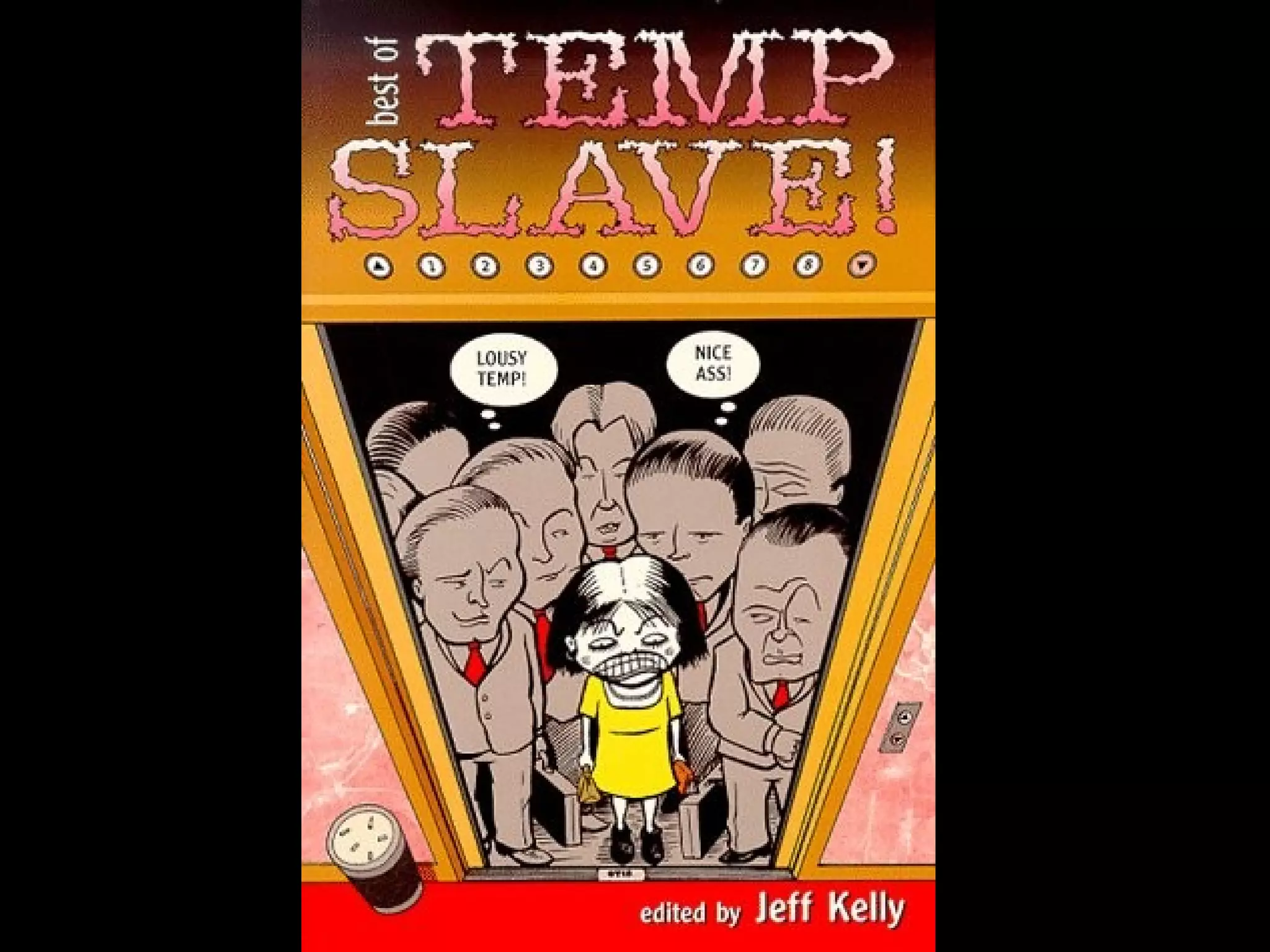
Part-Timers, Temps
 and Outsourcing
“Starbucks…created a software program called
STAR LABOR that allows head office maximum
control over the schedules of its clerks down to
the minute. They give an arbitrary skill number
from 1 to 9 and they plug in when you’re
available, how long you’ve been there, when
customers come in and when more staff is
needed, and the computer spits our the
schedule based on that. For some employees it
means starting work at 5a.m. only to leave at
9.30a.m.”
Free Work!
“Unpaid interns contribute five or six
thousand       dollars’       worth    of
uncompensated work to various media
conglomerates, who insist they are
generously offering young people
precious     experience     in   a   hard
employment market. Besides, they say,
the interns don’t really need the money.”
“These companies all have the
formula. They don’t take you on
full time. They don’t pay
benefits. Then their profits go
through the roof.”

Laura Pisciotti,
UPS Worker on strike
“More companies are outsourcing entire
functions and divisions to outside agencies
charged not only with staffing – just like the
EPZ factories - but administration and
maintenance.

“In 1993, American Airlines outsourced the
ticket counters at 28 U.S. airports to outside
agencies. Around 550 ticketing agent jobs
went temp and some workers who had earned
$40,000 were offered their same job back at
$16,000.”
Microsoft - The
    ‘Employee-less’ Corporation!
• Core: permanent jobs, benefits, stock-
  options, youthful corporate ‘campus’
• Periphery:
  – Not on payroll
  – Contractors
  – Flexibility to be sent home
  – Tax-free
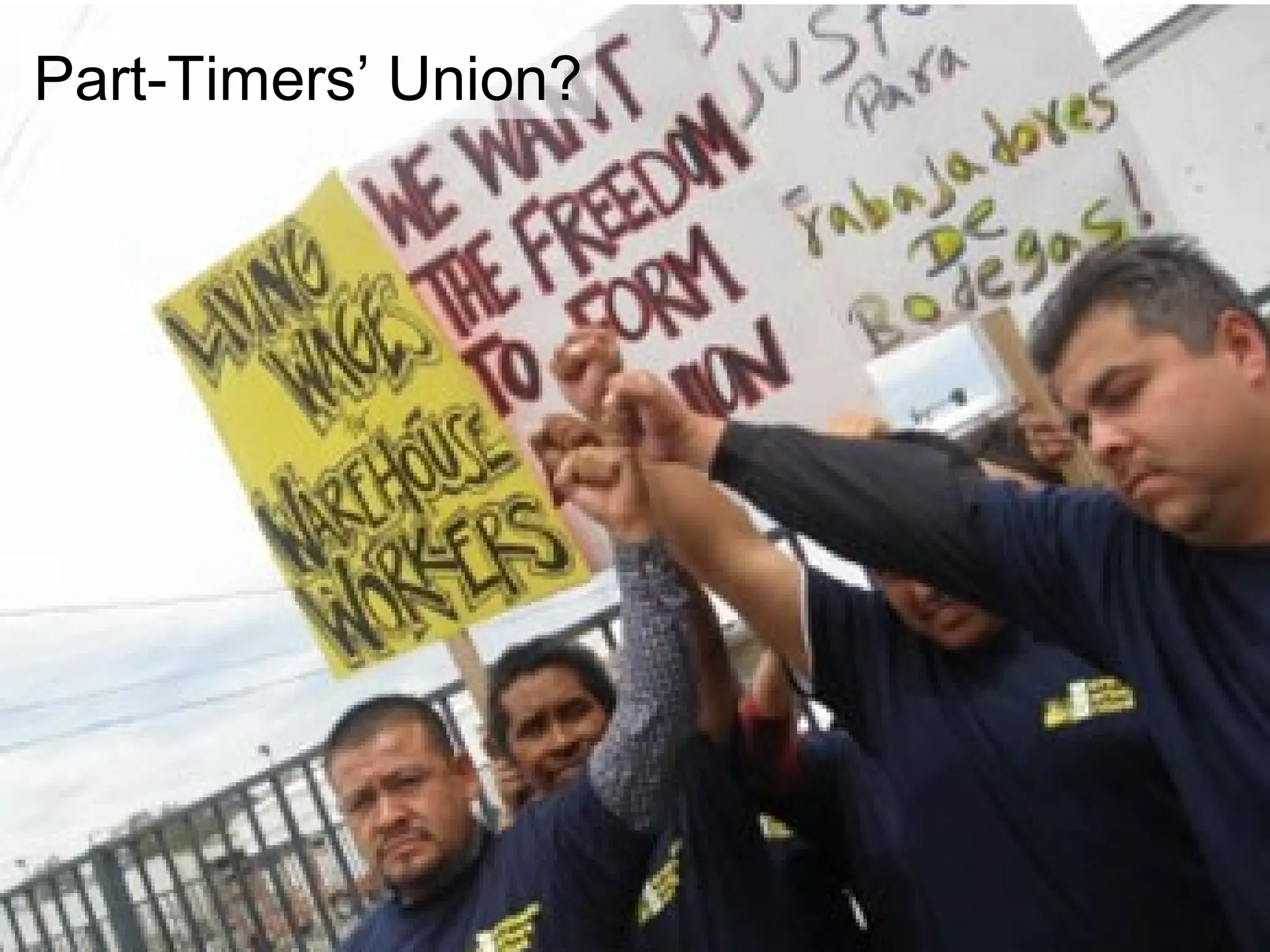
Part-Timers’ Union?
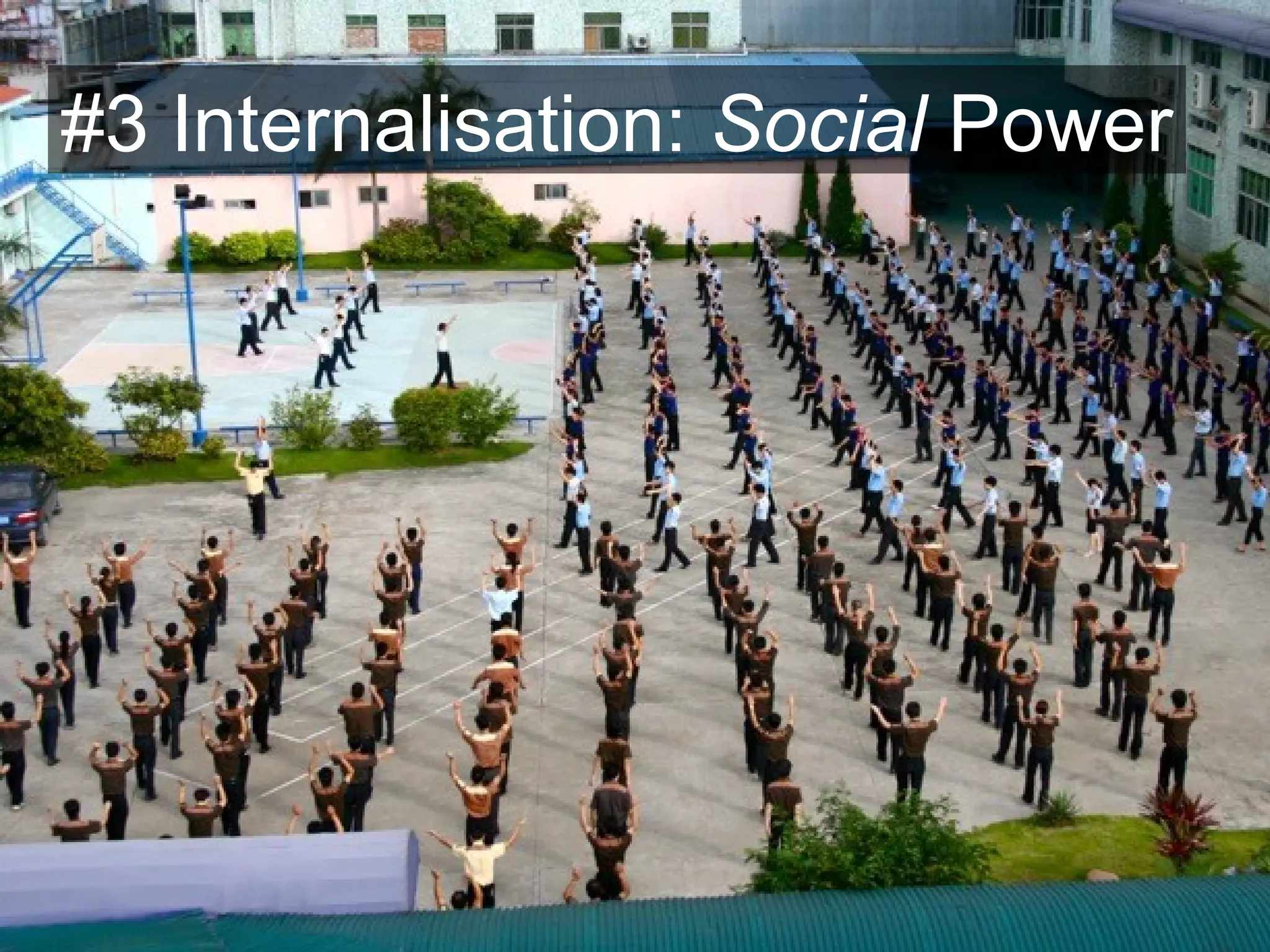
#3 Internalisation: Social Power
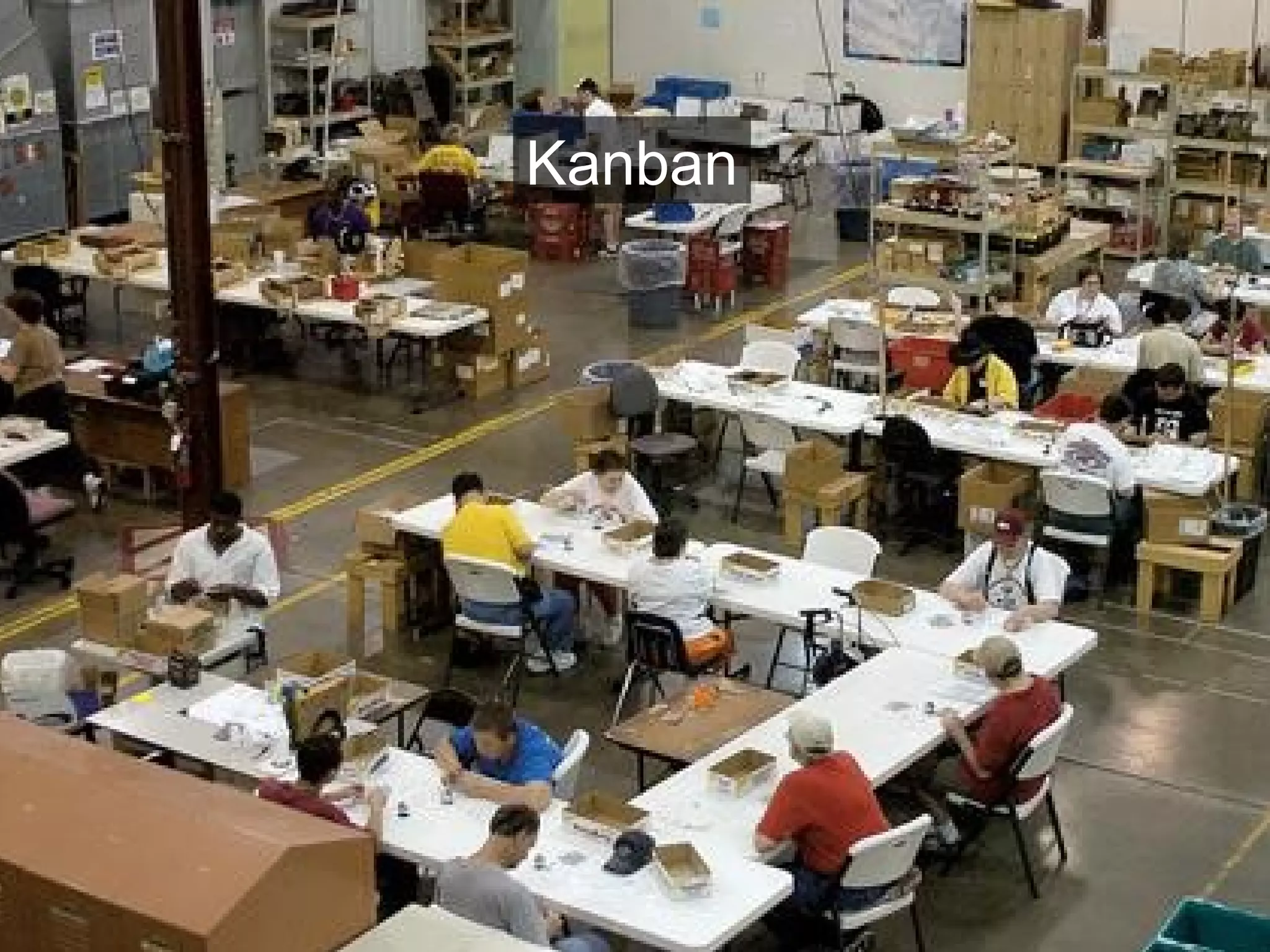
Kanban
Greater ‘Visibility’
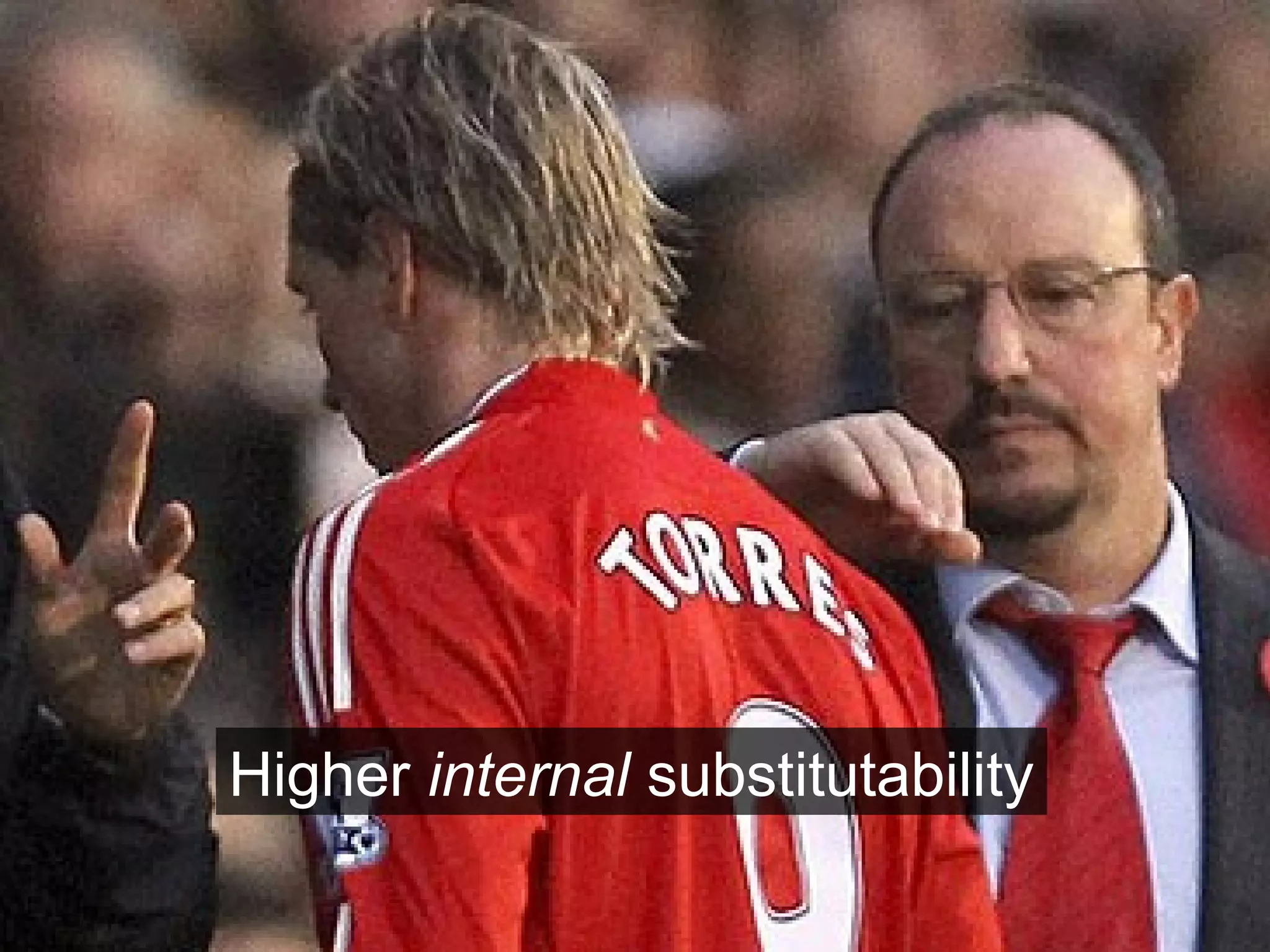
Higher internal substitutability
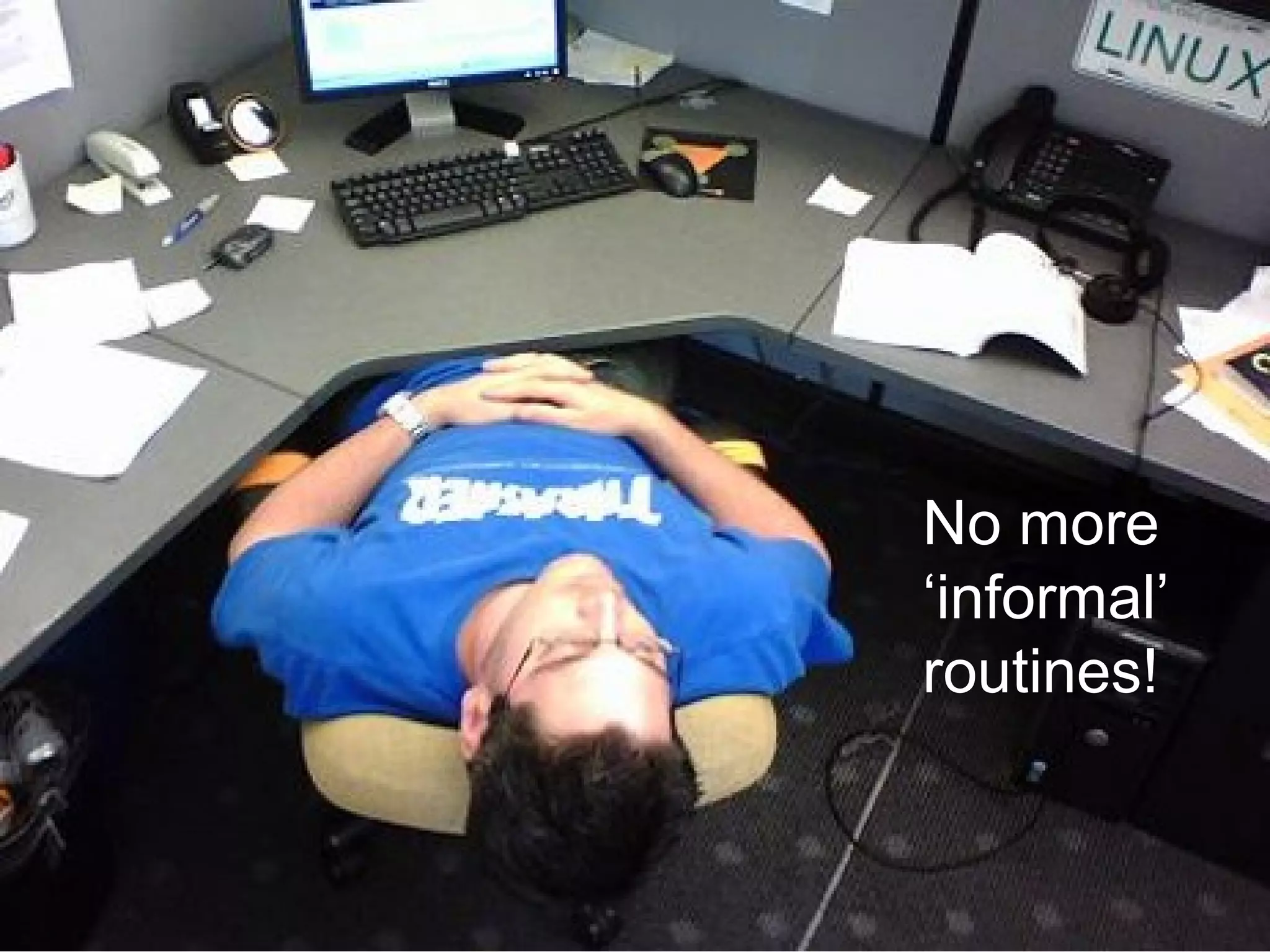
No more
‘informal’
routines!
How else can organisations exert
power over highly-skilled workers?
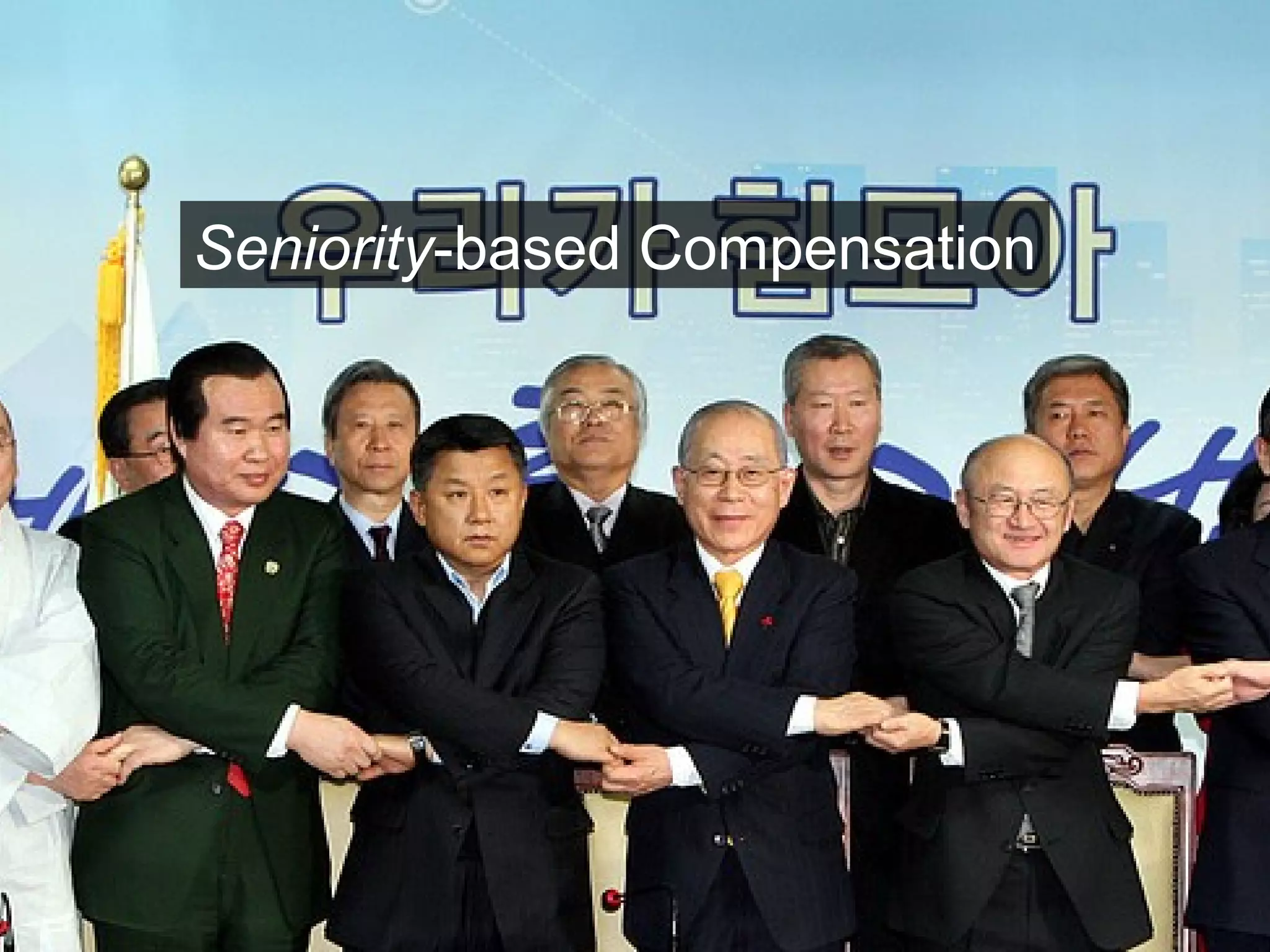
Seniority-based Compensation
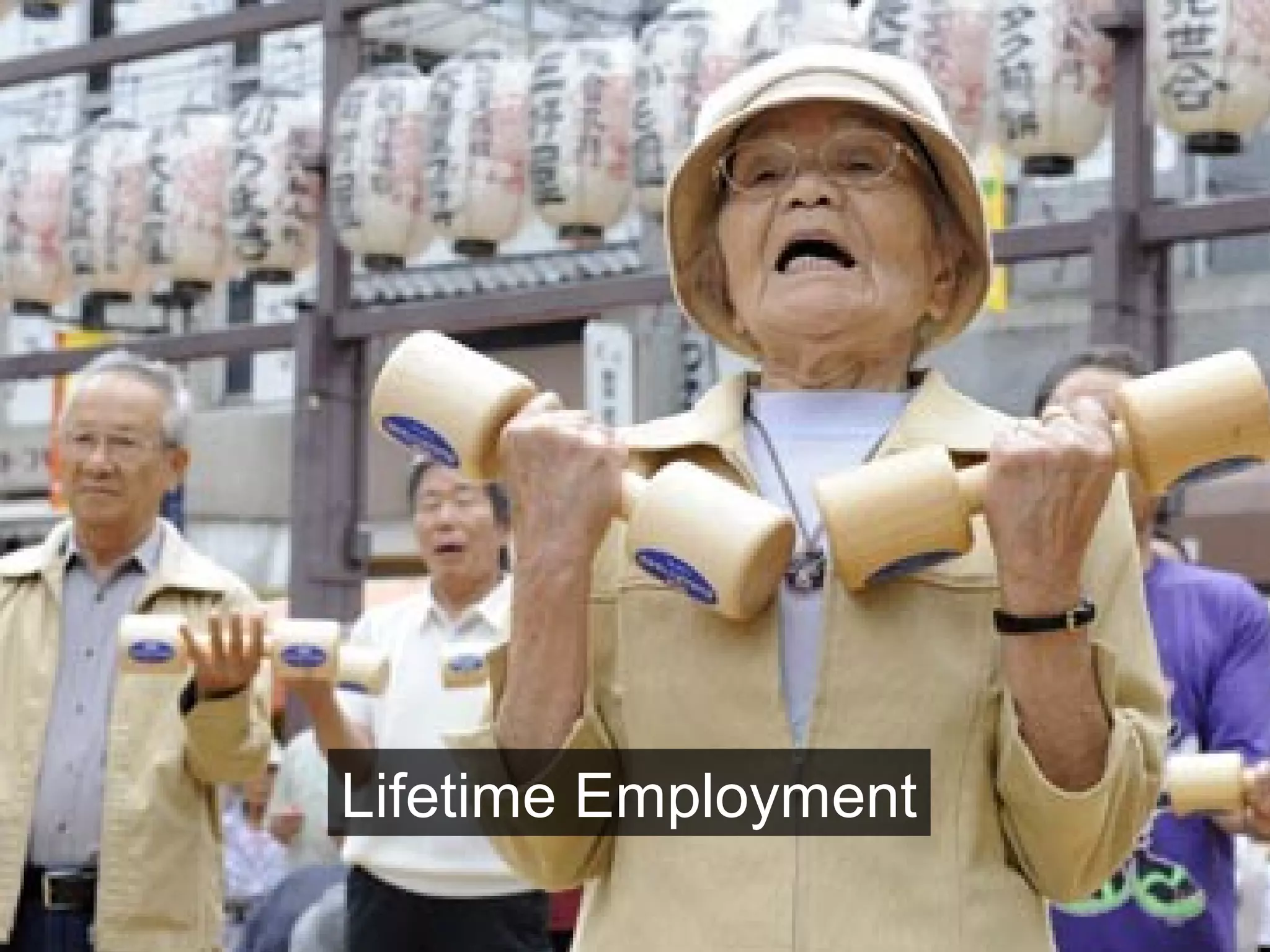
Lifetime Employment
How do workers become
 DEPENDENT on the
    organisation?
Lifestyle
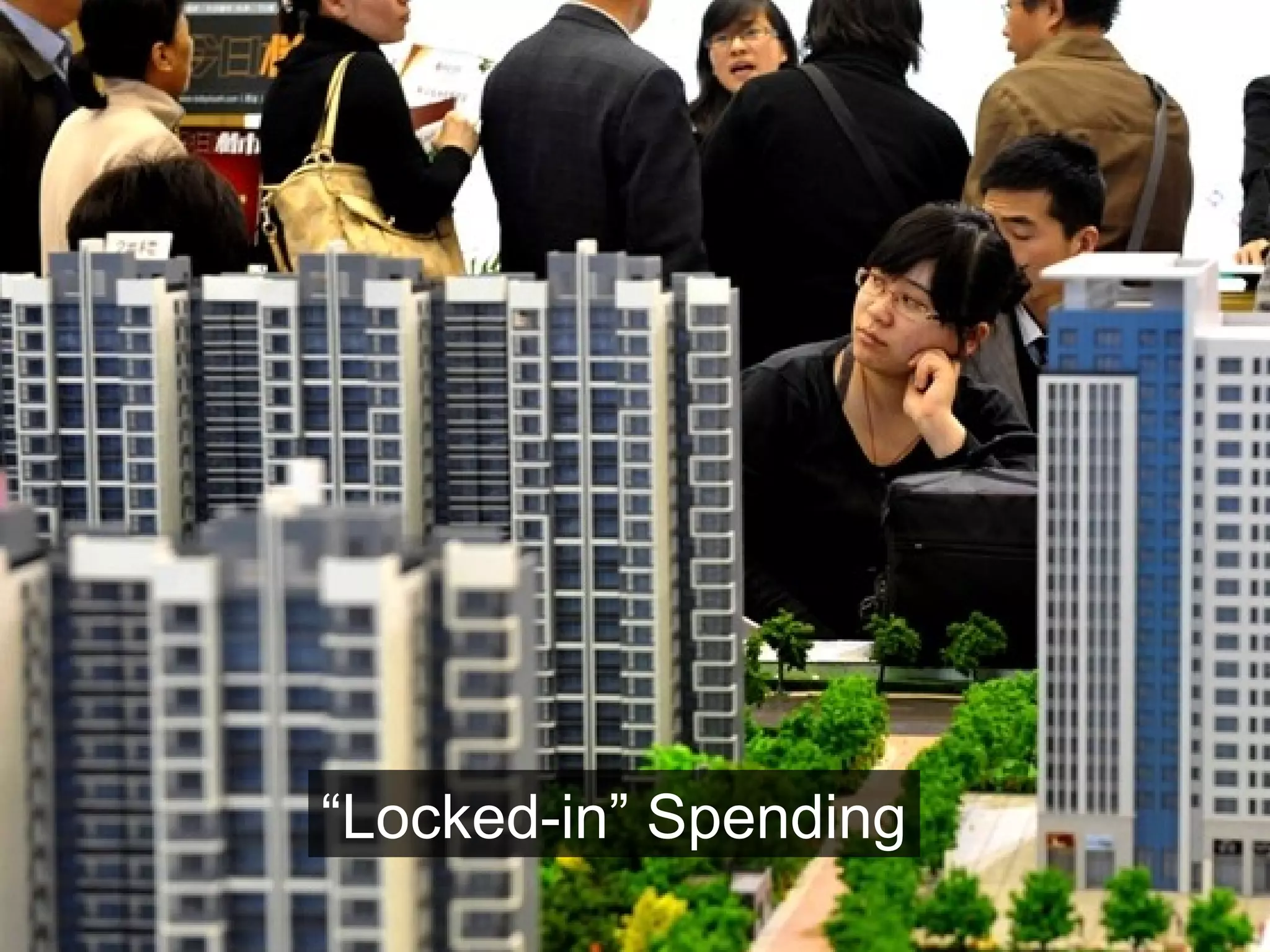
“Locked-in” Spending
Lecture 6

Lecture 6

  • 1.
    Power & theControl of Work
  • 2.
  • 3.
    Direct Controls /‘Low-Trust’ Organisations
  • 7.
    Here are someof the working conditions the labourers must endure…
  • 8.
    Iris Fashions Hours Per 72-80. 12-15 hour shifts; 6 days a week. Week Wages Per $0.20 Hour Conditions No union; workers paid a $0.06 an hour premium for overtime;$0.02 for each shirt collar sewn.
  • 9.
    You Li Fashionfactory Hours Per 93. 7.30-midnight. 7 days a week. Week Wages Per $0.13 Hour Conditions No overtime pay; no benefits; sometimes employees need to work 24- hour shifts, 6-8 people to a dorm room; dorm is dark and dirty; workers afraid; under constant surveillance; no Corporate Code of Conduct
  • 10.
    Yue Yuen Factory HoursPer 77-84. 11-12 hour shifts; 7 days a week. Week Wages Per $0.19 Hour Conditions Forced overtime, no overtime premium paid; excessive noise pollution; fumes in factory; no Code of Conduct
  • 11.
    No Mums Allowed! •Pregnancy tests • Contraceptive pills • Forced abortions • Mistreatment designed to compel resignations • Sanitary pad check and 28-day contracts • Denied time-off for medical
  • 12.
  • 13.
  • 15.
    “Starbucks…created a softwareprogram called STAR LABOR that allows head office maximum control over the schedules of its clerks down to the minute. They give an arbitrary skill number from 1 to 9 and they plug in when you’re available, how long you’ve been there, when customers come in and when more staff is needed, and the computer spits our the schedule based on that. For some employees it means starting work at 5a.m. only to leave at 9.30a.m.”
  • 17.
  • 18.
    “Unpaid interns contributefive or six thousand dollars’ worth of uncompensated work to various media conglomerates, who insist they are generously offering young people precious experience in a hard employment market. Besides, they say, the interns don’t really need the money.”
  • 19.
    “These companies allhave the formula. They don’t take you on full time. They don’t pay benefits. Then their profits go through the roof.” Laura Pisciotti, UPS Worker on strike
  • 20.
    “More companies areoutsourcing entire functions and divisions to outside agencies charged not only with staffing – just like the EPZ factories - but administration and maintenance. “In 1993, American Airlines outsourced the ticket counters at 28 U.S. airports to outside agencies. Around 550 ticketing agent jobs went temp and some workers who had earned $40,000 were offered their same job back at $16,000.”
  • 22.
    Microsoft - The ‘Employee-less’ Corporation! • Core: permanent jobs, benefits, stock- options, youthful corporate ‘campus’ • Periphery: – Not on payroll – Contractors – Flexibility to be sent home – Tax-free
  • 24.
  • 25.
  • 26.
  • 28.
  • 29.
  • 30.
  • 31.
    How else canorganisations exert power over highly-skilled workers?
  • 32.
  • 33.
  • 37.
    How do workersbecome DEPENDENT on the organisation?
  • 38.
  • 40.