Learning Process Theory


                 Elizabeth P. Burns
                 Walden University
Richard W. Riley School of Education and Leadership
              Adult Education Program
                     Click Here


                                                      1
Learning Objectives
   Define Jarvis’ Learning Process
    Theory.
   Who influenced Jarvis' Learning
    Process.
   The major components of the
    learning process.
   The three stages of learning.
   How does Jarvis’ Process relate to
    adult learners & educators.

                                         2
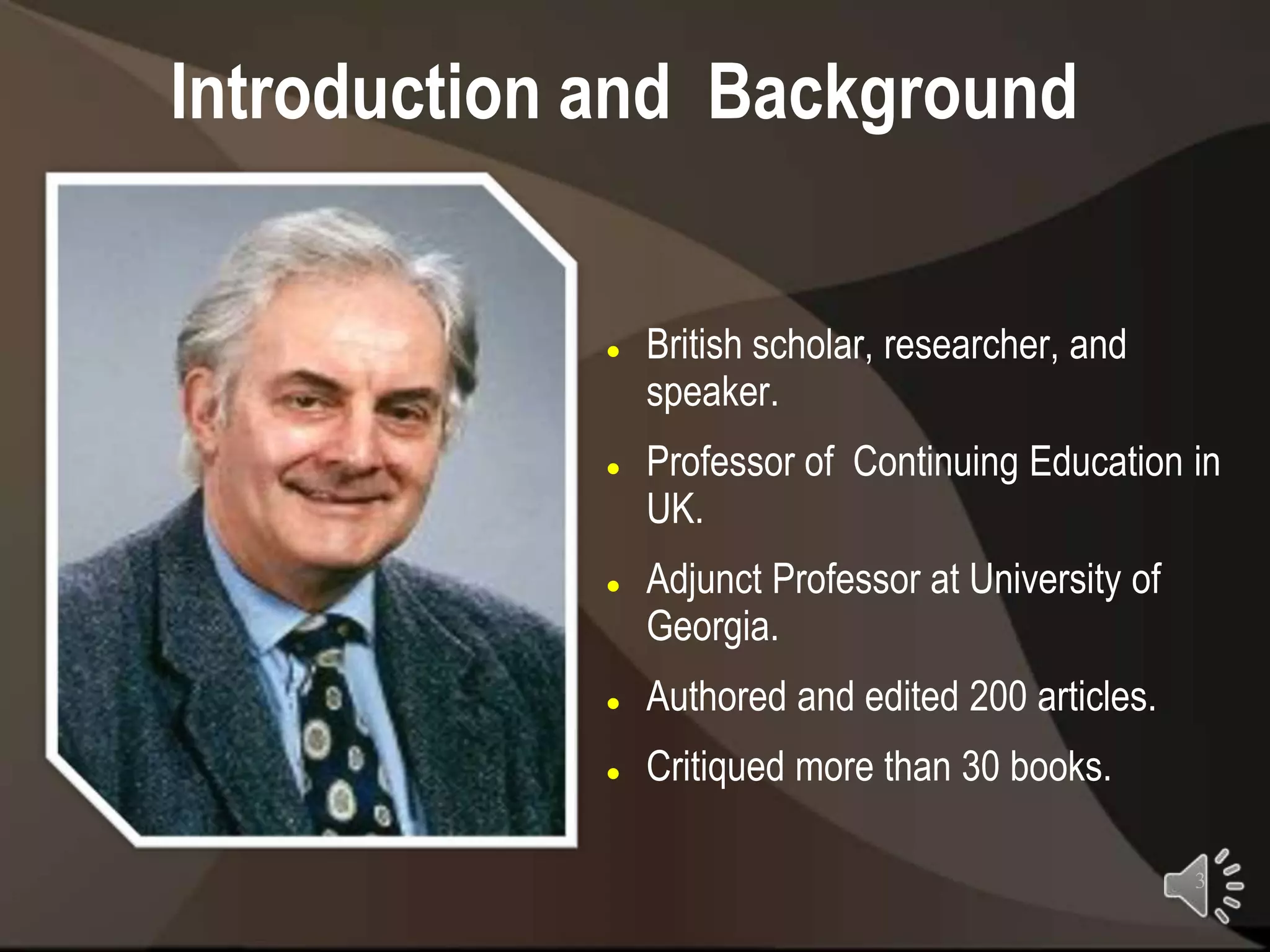
Introduction and Background


               British scholar, researcher, and
                speaker.
               Professor of Continuing Education in
                UK.
               Adjunct Professor at University of
                Georgia.
               Authored and edited 200 articles.
               Critiqued more than 30 books.

                                                     3
Reflections


              4
Life Situation
            Reflect on a
            time in your life
            when you were
            faced with a
            situation you
            were
            unprepared to
            handle.
Right or Wrong Decision
             Did the reflection
             or situation lead
             you to think you
             made the right or
             the wrong
             decision?


                                  6
Emotions


What emotion(s) did you feel from this reflection?
                                                     7
Change

     Did your
     reflection change
     your behavior
     and how you
     now view the
     world?

                         8
New Learning

Did you learn
something that
would be useful
later in life?


                         9
Role of the Adult Learner

Adults learn as a whole person.
Adults bring prior knowledge, experience,
 and personal history.
Adults understand the “whys” of life.
Adults are able to make sense of life
 situations.

                                            10
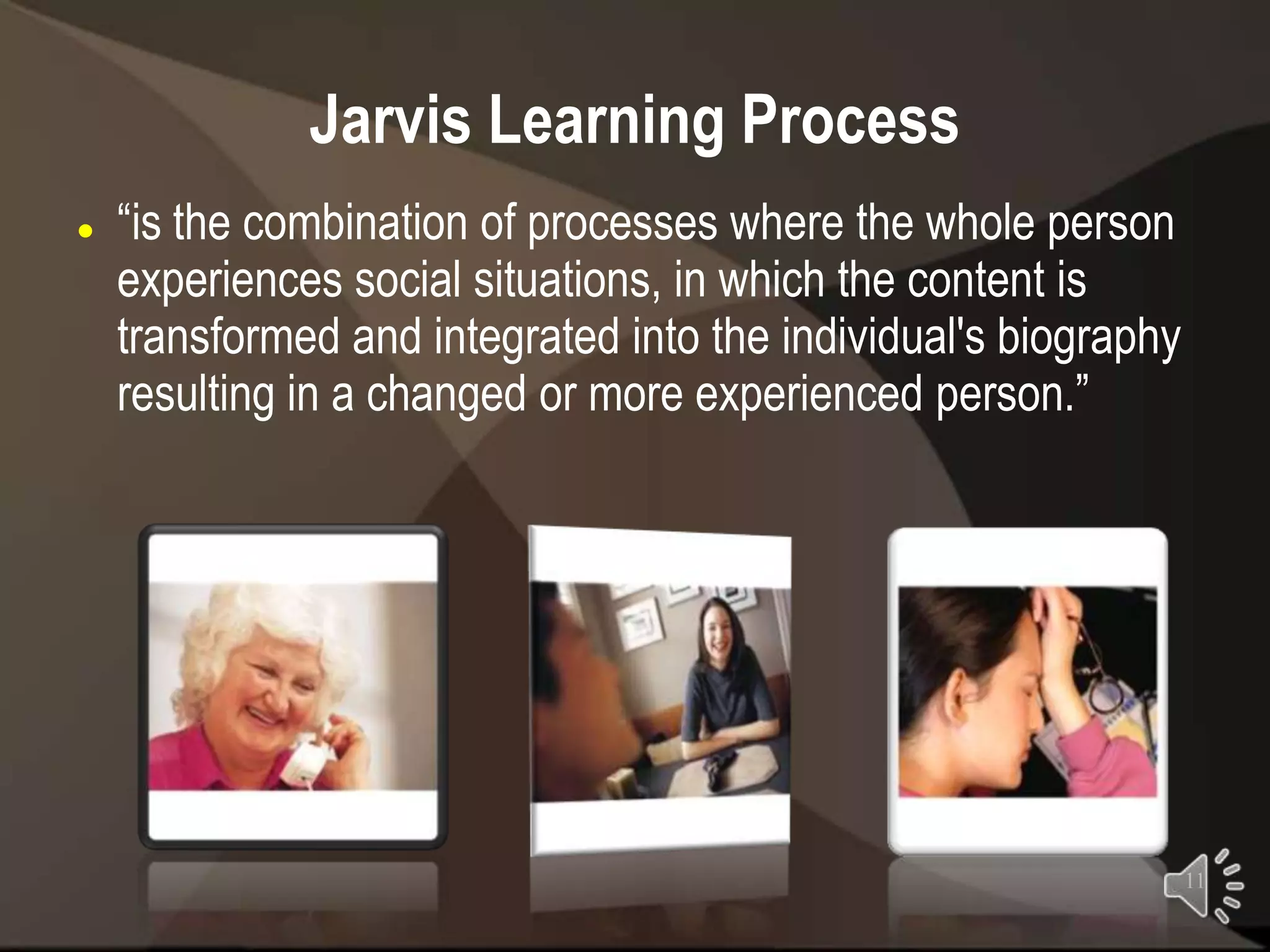
Jarvis Learning Process
   “is the combination of processes where the whole person
    experiences social situations, in which the content is
    transformed and integrated into the individual's biography
    resulting in a changed or more experienced person.”


                                                                 11
Who influenced Jarvis Learning Process
               Model?
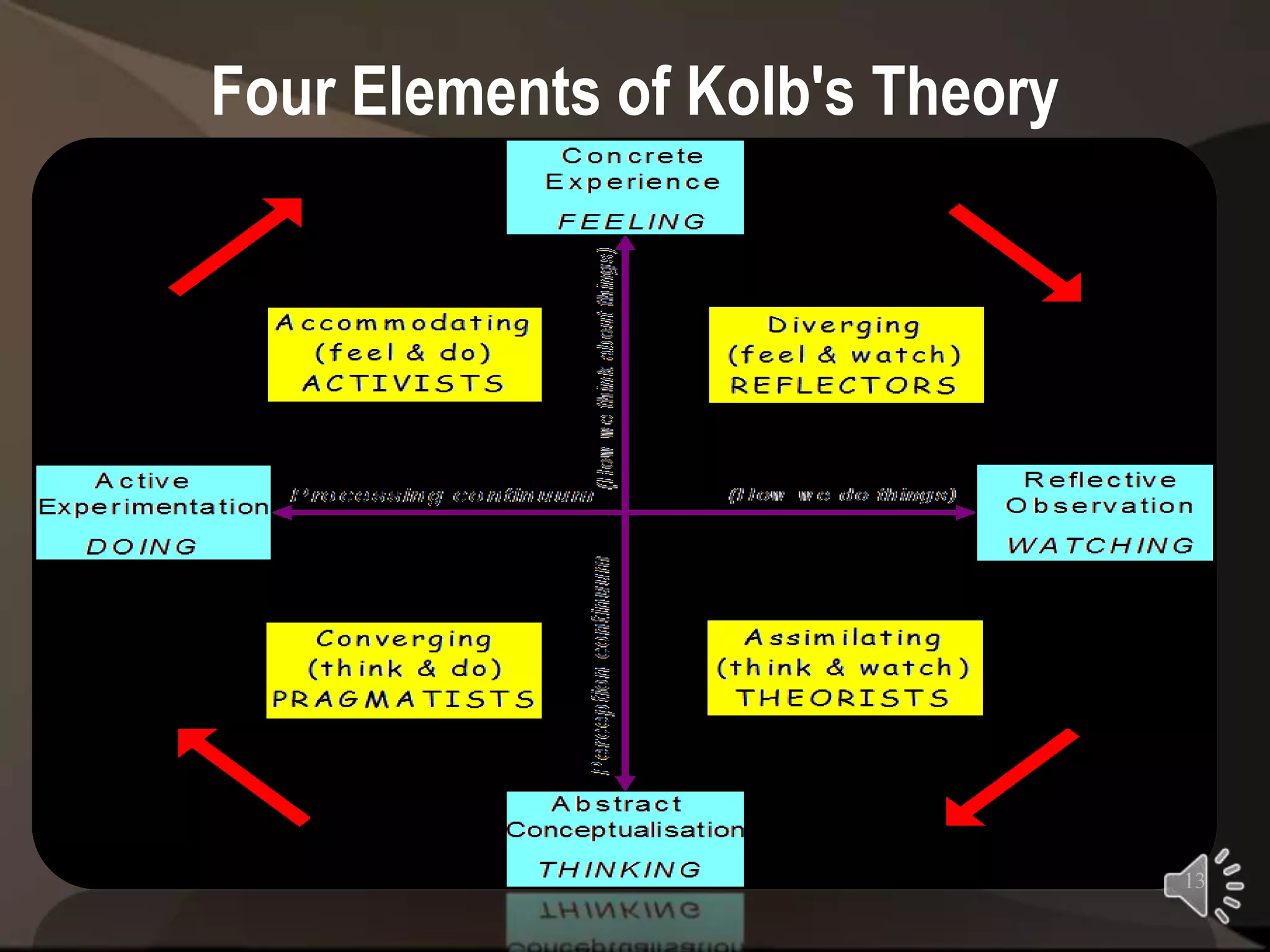
 David Kolb's Experiential Learning Theory
 Learning entails four elements:


        Concrete experience
        Observation and reflection
        Formation of abstract concepts
        Testing in new situation

                                              12
Four Elements of Kolb's Theory


                                 13
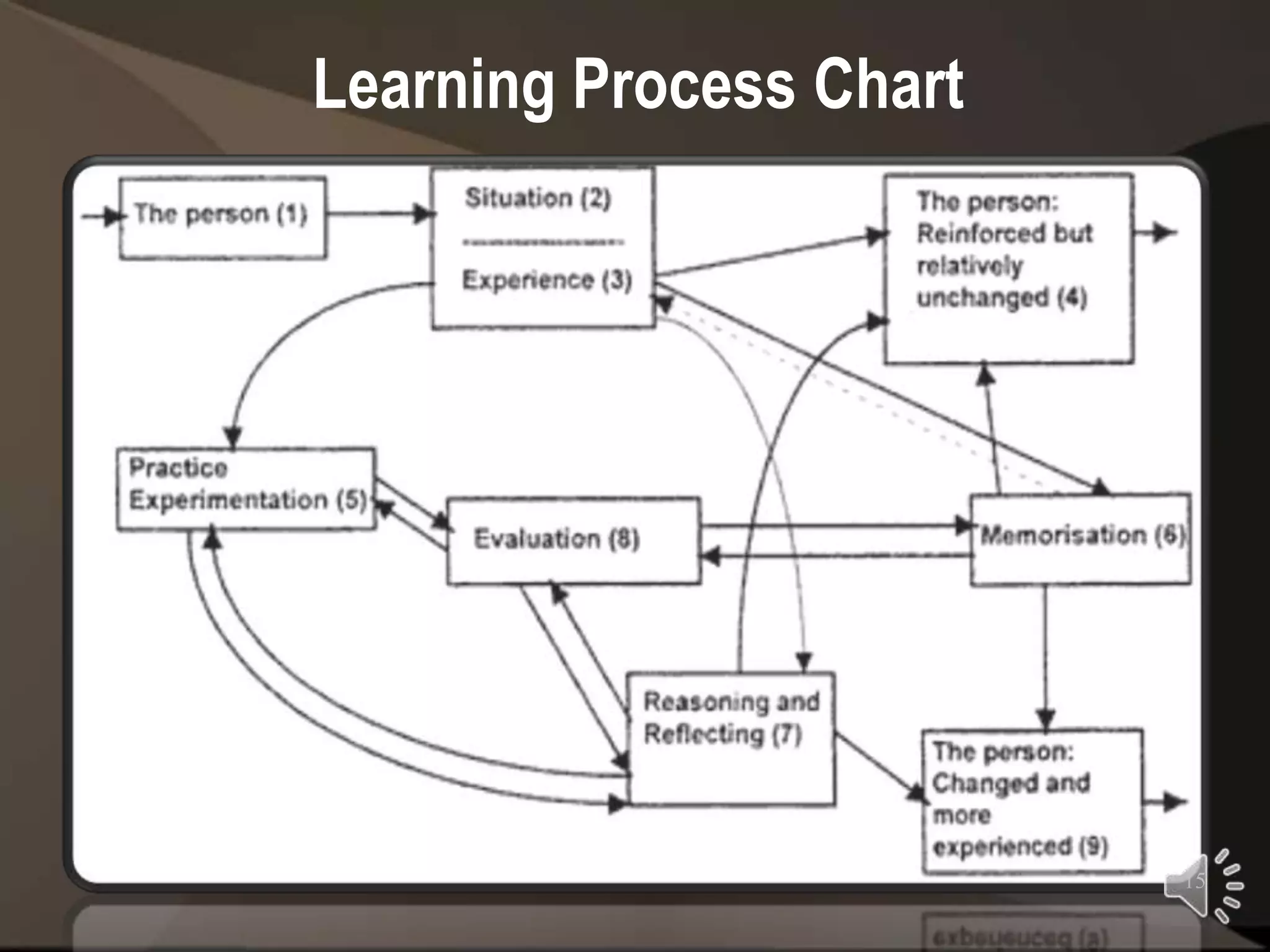
Jarvis’s Learning Process Model

   Built on foundation from Kolb's theory.
   Begins with adult life experience or life situation.
   Links the whole person.
       – mind, body, self, and life history
   Causes a disjuncture between person's biography and
    the experience.


                                                           14
Learning Process Chart


                         15
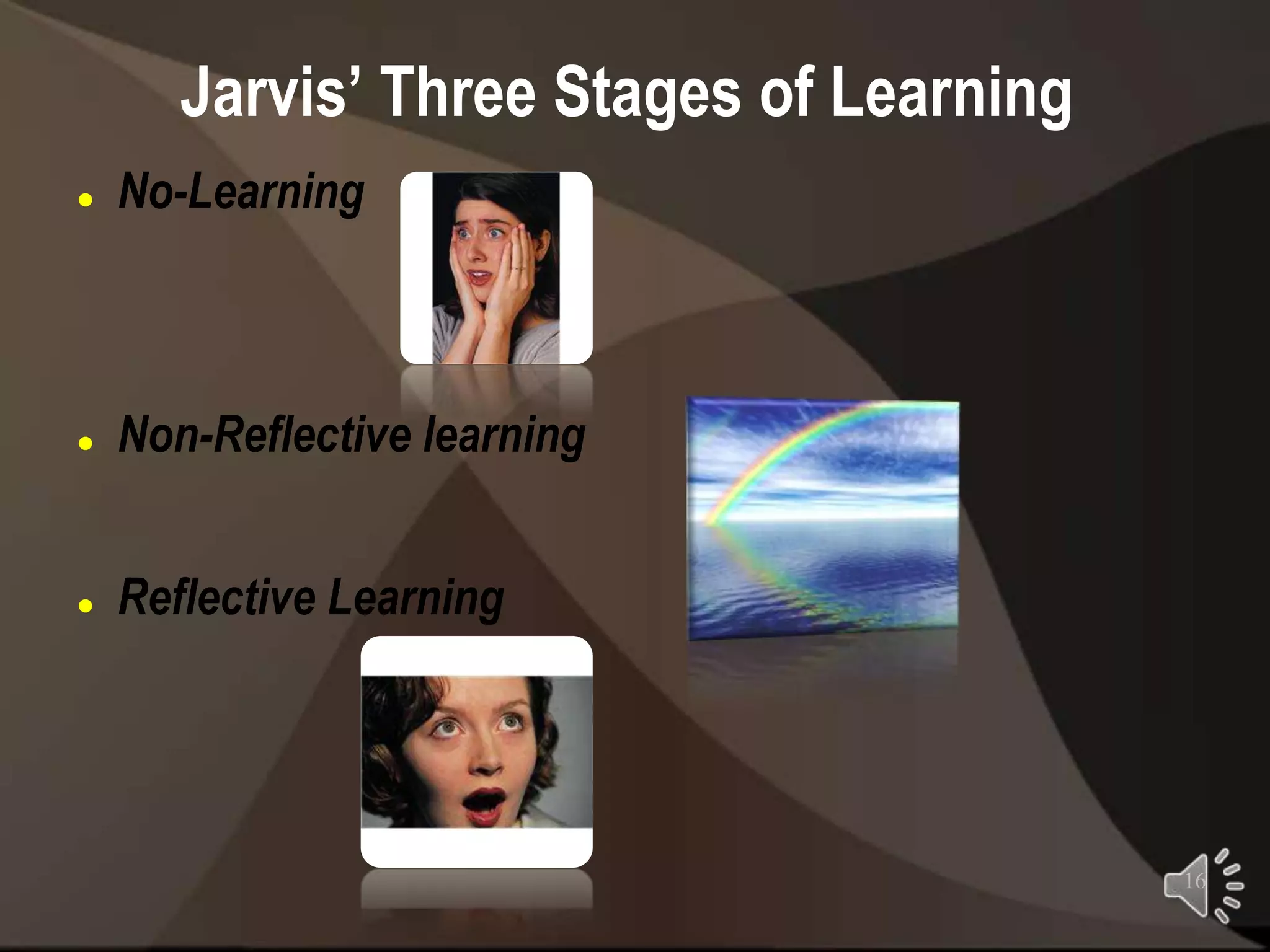
Jarvis’ Three Stages of Learning
   No-Learning


   Non-Reflective learning


   Reflective Learning


                                          16
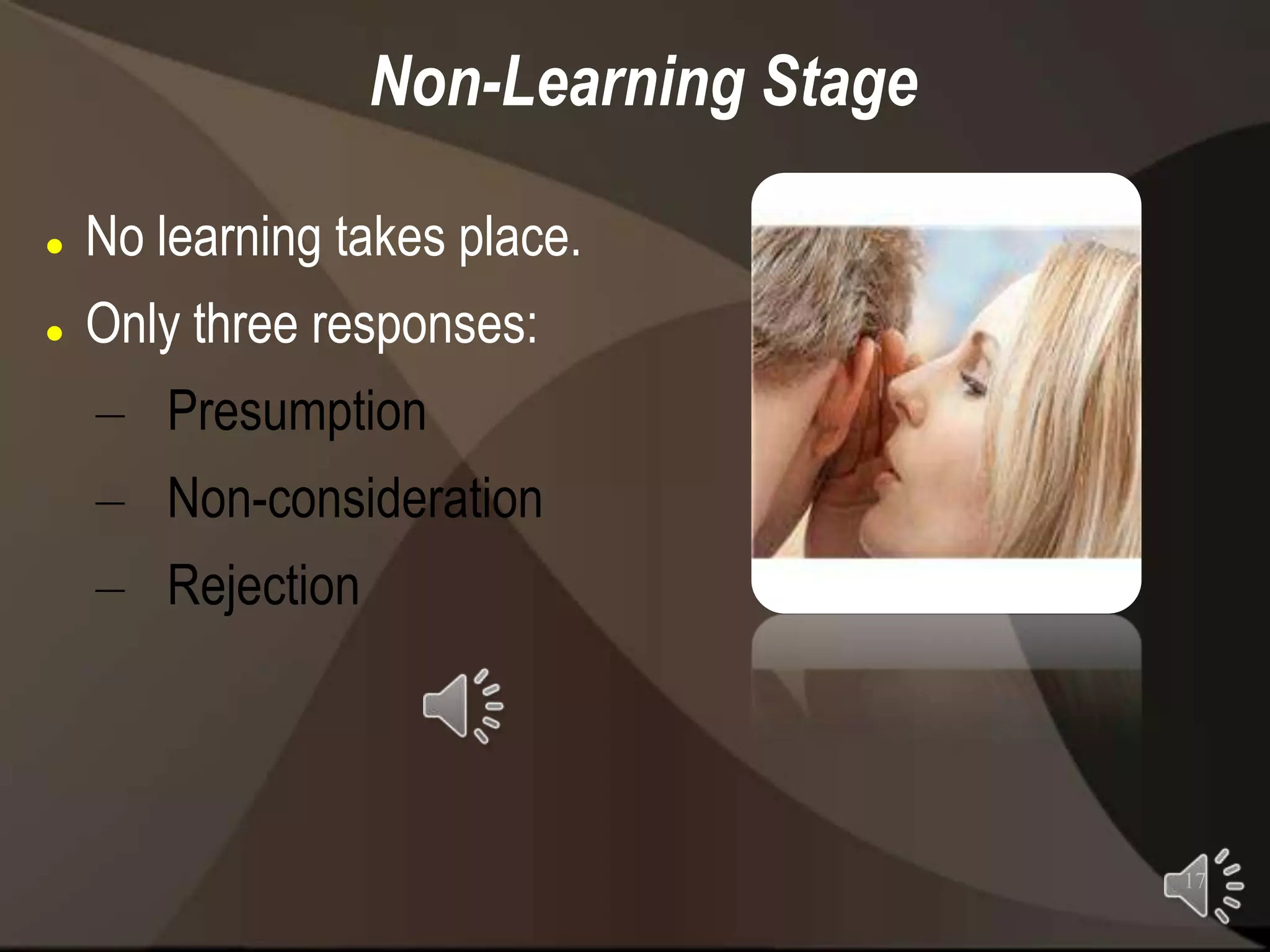
Non-Learning Stage

   No learning takes place.
   Only three responses:
    – Presumption
    – Non-consideration
    – Rejection


                                       17
Non-Reflective Stage
   Some learning occurs. The
    person:
    – experiences pre-
      conscious
    – practices the
      experience
    – memorizes the
      experience or new
      information
Reflective Learning Stage

   The learner now reflects
    on what has taken place.
    Three types
    -Contemplation
    -Reflective
    -Experiential


                                        19
Reflective Stage – “Life Experience”


                                       20
How does Jarvis Model relates to adult
                 learners?
 Affects person positively or negatively .
 Person learns new meaning of the world

  and events.
 Person has changed, become more

  experienced, more able to cope with life
  situations or problems.
                                              21
Role of the Educator

Help adults make sense of daily life.
Link explanations and illustrations.
Link activities to experiences.
Be creative.


                                        22
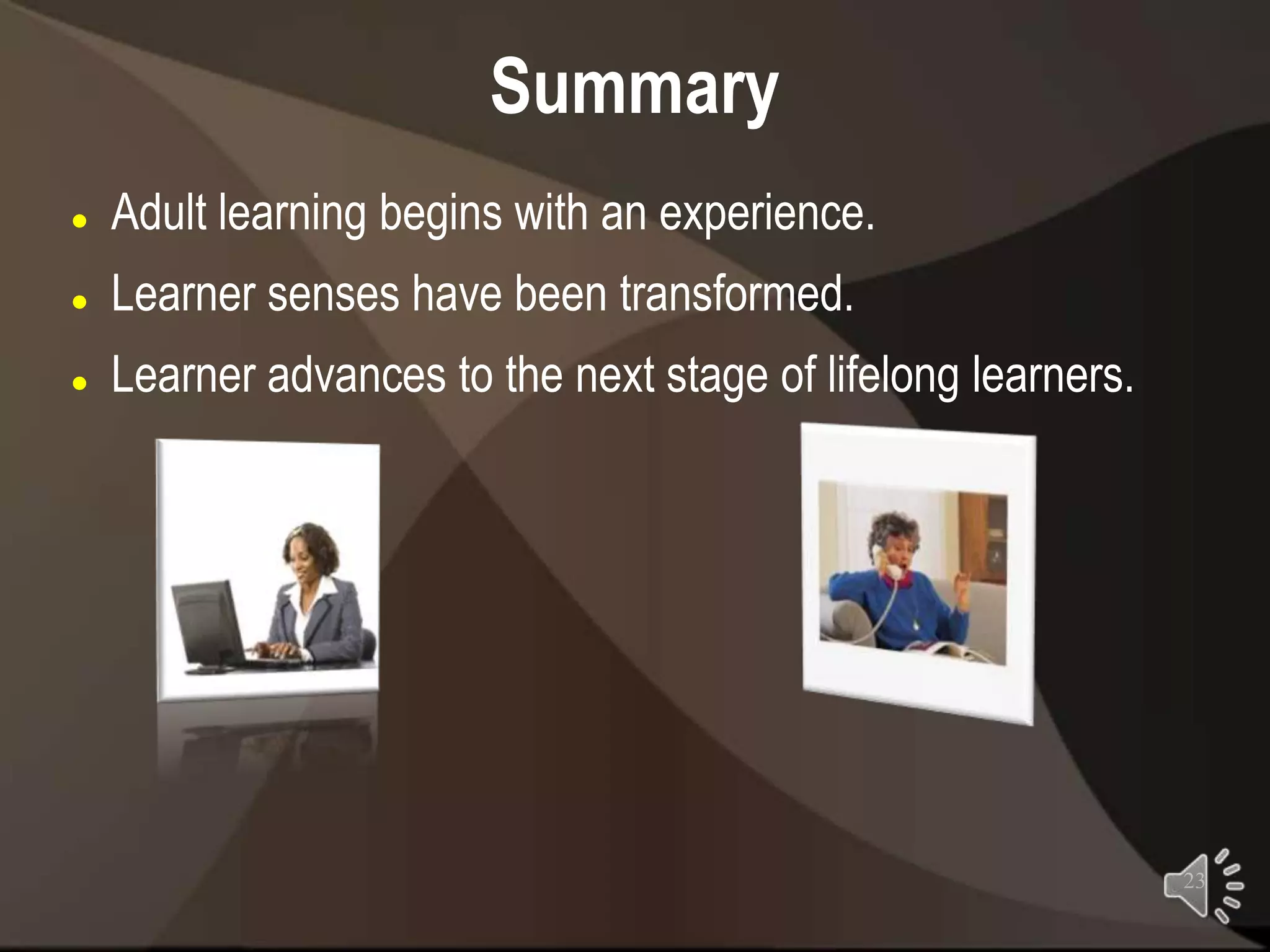
Summary
   Adult learning begins with an experience.
   Learner senses have been transformed.
   Learner advances to the next stage of lifelong learners.


                                                               23
References
International Adult and Continuing Education Hall of Fame. Retrieved
   February 12, 2013 from
    http://www.halloffame.outreach.ou.edu/1997/jarvis.html.
Jarvis, P. (1987). Adult learning in the social context. New York: Croom Helm
   (Retrieved 3/7/2013 from www.adulteducation.wikibook.us/index
Jarvis, P. (2006). Towards a comprehensive theory of human learning:
   Lifelong learning and the learning society (Vol. 1). London & New York:
   Routledge.
Jarvis, P. Retrieved from www.infed.org/biblio/b-explrn.htm
Kolb, D. A. (1984). http://en.wikipedia.org/wiki/Experiential_learning.


                                                                          24
References (con’t)
Merriam, S. B., Caffarella, R. S., & Baumgartner, L. M. (2007).
 Learning in adulthood: A comprehensive guide (3rd ed.). San
 Francisco: Jossey-Bass

Picture retrieved from
  http://www2.surrey.ac.uk/politics/images/staffprofileimages/p
  eter_jarvis.jpg on 3/20/2013.

Video clips retrieved from www.movieclips.com on 3/29/2013.


                                                              25

Burns ppt--jarvis

  • 1.
    Learning Process Theory Elizabeth P. Burns Walden University Richard W. Riley School of Education and Leadership Adult Education Program Click Here 1
  • 2.
    Learning Objectives  Define Jarvis’ Learning Process Theory.  Who influenced Jarvis' Learning Process.  The major components of the learning process.  The three stages of learning.  How does Jarvis’ Process relate to adult learners & educators. 2
  • 3.
    Introduction and Background  British scholar, researcher, and speaker.  Professor of Continuing Education in UK.  Adjunct Professor at University of Georgia.  Authored and edited 200 articles.  Critiqued more than 30 books. 3
  • 4.
  • 5.
    Life Situation Reflect on a time in your life when you were faced with a situation you were unprepared to handle.
  • 6.
    Right or WrongDecision Did the reflection or situation lead you to think you made the right or the wrong decision? 6
  • 7.
    Emotions What emotion(s) didyou feel from this reflection? 7
  • 8.
    Change Did your reflection change your behavior and how you now view the world? 8
  • 9.
    New Learning Did youlearn something that would be useful later in life? 9
  • 10.
    Role of theAdult Learner Adults learn as a whole person. Adults bring prior knowledge, experience, and personal history. Adults understand the “whys” of life. Adults are able to make sense of life situations. 10
  • 11.
    Jarvis Learning Process  “is the combination of processes where the whole person experiences social situations, in which the content is transformed and integrated into the individual's biography resulting in a changed or more experienced person.” 11
  • 12.
    Who influenced JarvisLearning Process Model?  David Kolb's Experiential Learning Theory  Learning entails four elements: Concrete experience Observation and reflection Formation of abstract concepts Testing in new situation 12
  • 13.
    Four Elements ofKolb's Theory 13
  • 14.
    Jarvis’s Learning ProcessModel  Built on foundation from Kolb's theory.  Begins with adult life experience or life situation.  Links the whole person. – mind, body, self, and life history  Causes a disjuncture between person's biography and the experience. 14
  • 15.
  • 16.
    Jarvis’ Three Stagesof Learning  No-Learning  Non-Reflective learning  Reflective Learning 16
  • 17.
    Non-Learning Stage  No learning takes place.  Only three responses: – Presumption – Non-consideration – Rejection 17
  • 18.
    Non-Reflective Stage  Some learning occurs. The person: – experiences pre- conscious – practices the experience – memorizes the experience or new information
  • 19.
    Reflective Learning Stage  The learner now reflects on what has taken place. Three types -Contemplation -Reflective -Experiential 19
  • 20.
    Reflective Stage –“Life Experience” 20
  • 21.
    How does JarvisModel relates to adult learners?  Affects person positively or negatively .  Person learns new meaning of the world and events.  Person has changed, become more experienced, more able to cope with life situations or problems. 21
  • 22.
    Role of theEducator Help adults make sense of daily life. Link explanations and illustrations. Link activities to experiences. Be creative. 22
  • 23.
    Summary  Adult learning begins with an experience.  Learner senses have been transformed.  Learner advances to the next stage of lifelong learners. 23
  • 24.
    References International Adult andContinuing Education Hall of Fame. Retrieved February 12, 2013 from http://www.halloffame.outreach.ou.edu/1997/jarvis.html. Jarvis, P. (1987). Adult learning in the social context. New York: Croom Helm (Retrieved 3/7/2013 from www.adulteducation.wikibook.us/index Jarvis, P. (2006). Towards a comprehensive theory of human learning: Lifelong learning and the learning society (Vol. 1). London & New York: Routledge. Jarvis, P. Retrieved from www.infed.org/biblio/b-explrn.htm Kolb, D. A. (1984). http://en.wikipedia.org/wiki/Experiential_learning. 24
  • 25.
    References (con’t) Merriam, S.B., Caffarella, R. S., & Baumgartner, L. M. (2007). Learning in adulthood: A comprehensive guide (3rd ed.). San Francisco: Jossey-Bass Picture retrieved from http://www2.surrey.ac.uk/politics/images/staffprofileimages/p eter_jarvis.jpg on 3/20/2013. Video clips retrieved from www.movieclips.com on 3/29/2013. 25

Editor's Notes

  • #5  (Click video clip) Thought provoking clip----Reflecting on Life.
  • #6 Engaging the audience:Say---after viewing the video clip, think about aLife Situation /Experience.Say--Take a moment and reflect on a time in your life when you were faced with a situation/experience that you were unprepared to handle. (20 to 30 sec.)
  • #7 “Right or Wrong Decision”(Say) Did the reflection of situation/experience lead you to think you made the right or the wrong decision? (20 – 30 sec.)
  • #8 “Emotions”(Say) How did you feel? What emotions did you feel from this reflection?(20-30 sec.)
  • #9 “Change”(Say)Did your reflection change your behavior and how you now view the world? (20-30 sec.)
  • #10 “New Learning”(Say)Did you learn something that would be useful later in life? (20-30 sec.)
  • #11 Role of the adult learner:In this learning segment, we will explore the Peter Jarvis Learning Process Theory in which the whole person is engaged in assimilating and understanding information. When adults learn, they learn as a “whole person” in which the five senses (sound, smell, sight, taste, and touch) are part of the person’s learning process. Adults have a wealth of knowledge, with experience, and bring a history including present and future connections all of which contributes to the learning process. All of this helps us understand the “whys” of life including expected and unexpected situations. Once we understand why something is the way it is, weare able to make sense of life situations and decide whether or not it is beneficial for us.
  • #21 Carter has died and Edward is speaking at his funeral---learned through experience or life altering situation.
  • #23 Role of the EducatorExploring the role of experience in learning has a long history. We as educators continue to study or research the connections between adult learning and experience, and how to assistadults in both formal and informal setting so to capture the richness of learning from adult experiences (p. 185).Learning is about the continuing process of making sense of our everyday experiences (p. 425)Page 144-145 textOur concerns areHelp adults make sense of their daily lives.Link explanations and illustrations to adults previous or prior reservoir of knowledgeLink learning activities to adult learner’s current experiencesBe creative—create activities such as games, simulations, role-plays, etc. to help learnersmake critical reflection of assumptions
  • #25 ReferencesInternational Adult and Continuing Education Hall of Fame. Retrieved February 12, 2013 from http://www.halloffame.outreach.ou.edu/1997/jarvis.html.Jarvis, P. (1987). Adult learning in the social context. New York: Croom Helm (Retrieved 3/7/2013 from www.adulteducation.wikibook.us/indexJarvis, P. (2006). Towards a comprehensive theory of human learning: Lifelong learning and the learning society (Vol. 1). London & New York: Routledge.Kolb, D. A. (1984). http://en.wikipedia.org/wiki/Experiential_learning. Merriam, S. B., Caffarella, R. S., & Baumgartner, L. M. (2007). Learning in adulthood: A comprehensive guide (3rd ed.). San Francisco: Jossey-Bass.Smith, M. K. (2001). “David A. Kolb on experiential learning.” The Encyclopedia of Informal Education. Retrieved 2/1/2013 from http://www.infed.org/biblio/b-explrn.htm
  • #26 References (con’t)Picture retrieved from http://www2.surrey.ac.uk/politics/images/staffprofileimages/peter_jarvis.jpg on 3/20/2013.Video clips retrieved from www.movieclips.comon 3/29/2013. (The Bucket List from youtube