Building Fundamental
Wealth
Stress Reduction Through Mindfulness
RUBEN LOPEZ, CECELIA CORDRAY, & TAMMY BRANDNER
What is Mindfulness?
 The quality or state of being conscious or aware
of something
 Mindfulness also involves acceptance, meaning
that we pay attention to our thoughts and
feelings without judging them
 Mindfulness practices include three
components: intention, attention, and attitude
Benefits of Mindfulness
 Improvements in psychological functioning
 Promotes positive adaptive patterns of emotional
experiences
 Reduced reactivity to external emotional stressors
 Individuals who are more mindful tend to have less
stressful outcomes
 Listen more attentively & acting with compassion
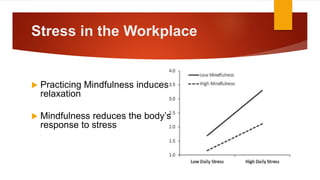
Stress in the Workplace
 Practicing Mindfulness induces
relaxation
 Mindfulness reduces the body’s
response to stress
 P
Factual Evidence
 Reduced rumination
 Stress reduction
 Boosts working memory
 More cognitive flexibility
 Less emotional reactivity
 Relationship satisfaction
 P
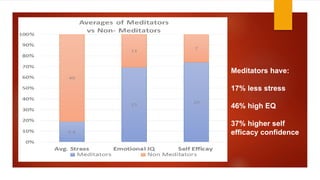
Meditators have:
17% less stress
46% high EQ
37% higher self
efficacy confidence
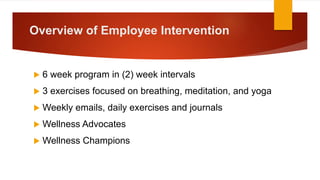
Overview of Employee Intervention
 6 week program in (2) week intervals
 3 exercises focused on breathing, meditation, and yoga
 Weekly emails, daily exercises and journals
 Wellness Advocates
 Wellness Champions
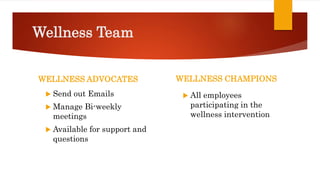
Wellness Team
WELLNESS ADVOCATES
 Send out Emails
 Manage Bi-weekly
meetings
 Available for support and
questions
WELLNESS CHAMPIONS
 All employees
participating in the
wellness intervention
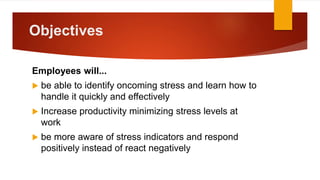
Objectives
Employees will...
 be able to identify oncoming stress and learn how to
handle it quickly and effectively
 Increase productivity minimizing stress levels at
work
 be more aware of stress indicators and respond
positively instead of react negatively
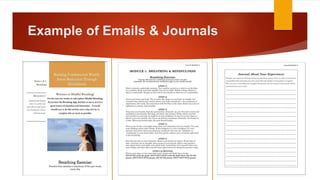
Example of Emails & Journals
Module 1:
Breathing
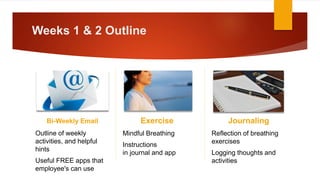
Weeks 1 & 2 Outline
Bi-Weekly Email
Outline of weekly
activities, and helpful
hints
Useful FREE apps that
employee's can use
Exercise
Mindful Breathing
Instructions
in journal and app
Journaling
Reflection of breathing
exercises
Logging thoughts and
activities
Module 2:
Meditation
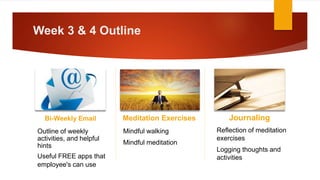
Week 3 & 4 Outline
Bi-Weekly Email
Outline of weekly
activities, and helpful
hints
Useful FREE apps that
employee's can use
Meditation Exercises
Mindful walking
Mindful meditation
Journaling
Reflection of meditation
exercises
Logging thoughts and
activities
Module 3:
Yoga
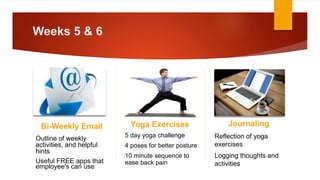
Weeks 5 & 6
Bi-Weekly Email
Outline of weekly
activities, and helpful
hints
Useful FREE apps that
employee's can use
Yoga Exercises
5 day yoga challenge
4 poses for better posture
10 minute sequence to
ease back pain
Journaling
Reflection of yoga
exercises
Logging thoughts and
activities
Impact Statements
 Reduces stress within the workplace
 Gives employees positive stress management skills
 Reduces healthcare cost because of increased
employee well-being
 Employee are more satisfied within the workplace
 Employee's are more loyal because they are taken
care of
Questions?
Thank you!!
References
Cohen-Meitar, R., Carmeli, A., & Waldman, D. A. (2009). Linking Meaningfulness in the Workplace to Employee Creativity: The Intervening Role of Organizational Identification and Positive
Psychological Experiences. Creativity Research Journal, 21(4), 361-375. doi:10.1080/10400410902969910
Davis, D. M., & Hayes, J. A. (2011). What are the benefits of mindfulness? A practice review of psychotherapy-related research. Psychotherapy, 48(2), 198.
Epstein RM. (1999). Mindful Practice. JAMA. 282(9):833-839. doi:10.1001/jama.282.9.833
Gotink, R. A., Meijboom, R., Vernooij, M. W., Smits, M., & Hunink, M. M. (2016). 8-week Mindfulness Based Stress Reduction induces brain changes similar to traditional long-term meditation
practice - A systematic review. Brain & Cognition, 10832-41. doi:10.1016/j.bandc.2016.07.001
Grossmeier, J., Fabius, R., Flynn, J. P., Noeldner, S. P., Fabius, D., Goetzel, R. Z., & Anderson, D. R. (2016). Linking Workplace Health Promotion Best Practices and Organizational Financial
Performance. Journal Of Occupational & Environmental Medicine, 58(1), 16-23. doi: 10.1097/JOM.0000000000000631
Linnemann, A., Ditzen, B., Strahler, J., Doerr, J. M., & Nater, U. M. (2015). Music listening as a means of stress reduction in daily life. Psychoneuroendocrinology, 6082-90.
doi:10.1016/j.psyneuen.2015.06.008
Linnemann, A., Strahler, J., & Nater, U. M. (2016). The stress-reducing effect of music listening varies depending on the social context. Psychoneuroendocrinology, 7297-105.
doi:10.1016/j.psyneuen.2016.06.003
Mayer, J. D., Salovey, P., & Caruso, D. R. (2004). Target Articles: Emotional Intelligence: Theory, Findings, and Implications. Psychological inquiry, 15(3), 197-215.
Pescud, M., Teal, R., Shilton, T., Slevin, T., Ledger, M., Waterworth, P., Rosenberg, M. (2015). Employers’ views on the promotion of workplace health and wellbeing: a qualitative study. BMC Public
Health, 5:642 doi: 10.1186/s12889-015-2029-2
Shapiro, S. L., Oman, D., Thoresen, C. E., Plante, T. G., & Flinders, T. (2008). Cultivating mindfulness: effects on well‐being. Journal of clinical psychology, 64(7), 840-862.

Building Fundament Wealth PowerPoint

  • 1.
    Building Fundamental Wealth Stress ReductionThrough Mindfulness RUBEN LOPEZ, CECELIA CORDRAY, & TAMMY BRANDNER
  • 2.
    What is Mindfulness? The quality or state of being conscious or aware of something  Mindfulness also involves acceptance, meaning that we pay attention to our thoughts and feelings without judging them  Mindfulness practices include three components: intention, attention, and attitude
  • 3.
    Benefits of Mindfulness Improvements in psychological functioning  Promotes positive adaptive patterns of emotional experiences  Reduced reactivity to external emotional stressors  Individuals who are more mindful tend to have less stressful outcomes  Listen more attentively & acting with compassion
  • 4.
    Stress in theWorkplace  Practicing Mindfulness induces relaxation  Mindfulness reduces the body’s response to stress  P
  • 5.
    Factual Evidence  Reducedrumination  Stress reduction  Boosts working memory  More cognitive flexibility  Less emotional reactivity  Relationship satisfaction  P
  • 6.
    Meditators have: 17% lessstress 46% high EQ 37% higher self efficacy confidence
  • 7.
    Overview of EmployeeIntervention  6 week program in (2) week intervals  3 exercises focused on breathing, meditation, and yoga  Weekly emails, daily exercises and journals  Wellness Advocates  Wellness Champions
  • 8.
    Wellness Team WELLNESS ADVOCATES Send out Emails  Manage Bi-weekly meetings  Available for support and questions WELLNESS CHAMPIONS  All employees participating in the wellness intervention
  • 9.
    Objectives Employees will...  beable to identify oncoming stress and learn how to handle it quickly and effectively  Increase productivity minimizing stress levels at work  be more aware of stress indicators and respond positively instead of react negatively
  • 10.
  • 11.
  • 12.
    Weeks 1 &2 Outline Bi-Weekly Email Outline of weekly activities, and helpful hints Useful FREE apps that employee's can use Exercise Mindful Breathing Instructions in journal and app Journaling Reflection of breathing exercises Logging thoughts and activities
  • 13.
  • 14.
    Week 3 &4 Outline Bi-Weekly Email Outline of weekly activities, and helpful hints Useful FREE apps that employee's can use Meditation Exercises Mindful walking Mindful meditation Journaling Reflection of meditation exercises Logging thoughts and activities
  • 15.
  • 16.
    Weeks 5 &6 Bi-Weekly Email Outline of weekly activities, and helpful hints Useful FREE apps that employee's can use Yoga Exercises 5 day yoga challenge 4 poses for better posture 10 minute sequence to ease back pain Journaling Reflection of yoga exercises Logging thoughts and activities
  • 17.
    Impact Statements  Reducesstress within the workplace  Gives employees positive stress management skills  Reduces healthcare cost because of increased employee well-being  Employee are more satisfied within the workplace  Employee's are more loyal because they are taken care of
  • 18.
  • 19.
  • 20.
    References Cohen-Meitar, R., Carmeli,A., & Waldman, D. A. (2009). Linking Meaningfulness in the Workplace to Employee Creativity: The Intervening Role of Organizational Identification and Positive Psychological Experiences. Creativity Research Journal, 21(4), 361-375. doi:10.1080/10400410902969910 Davis, D. M., & Hayes, J. A. (2011). What are the benefits of mindfulness? A practice review of psychotherapy-related research. Psychotherapy, 48(2), 198. Epstein RM. (1999). Mindful Practice. JAMA. 282(9):833-839. doi:10.1001/jama.282.9.833 Gotink, R. A., Meijboom, R., Vernooij, M. W., Smits, M., & Hunink, M. M. (2016). 8-week Mindfulness Based Stress Reduction induces brain changes similar to traditional long-term meditation practice - A systematic review. Brain & Cognition, 10832-41. doi:10.1016/j.bandc.2016.07.001 Grossmeier, J., Fabius, R., Flynn, J. P., Noeldner, S. P., Fabius, D., Goetzel, R. Z., & Anderson, D. R. (2016). Linking Workplace Health Promotion Best Practices and Organizational Financial Performance. Journal Of Occupational & Environmental Medicine, 58(1), 16-23. doi: 10.1097/JOM.0000000000000631 Linnemann, A., Ditzen, B., Strahler, J., Doerr, J. M., & Nater, U. M. (2015). Music listening as a means of stress reduction in daily life. Psychoneuroendocrinology, 6082-90. doi:10.1016/j.psyneuen.2015.06.008 Linnemann, A., Strahler, J., & Nater, U. M. (2016). The stress-reducing effect of music listening varies depending on the social context. Psychoneuroendocrinology, 7297-105. doi:10.1016/j.psyneuen.2016.06.003 Mayer, J. D., Salovey, P., & Caruso, D. R. (2004). Target Articles: Emotional Intelligence: Theory, Findings, and Implications. Psychological inquiry, 15(3), 197-215. Pescud, M., Teal, R., Shilton, T., Slevin, T., Ledger, M., Waterworth, P., Rosenberg, M. (2015). Employers’ views on the promotion of workplace health and wellbeing: a qualitative study. BMC Public Health, 5:642 doi: 10.1186/s12889-015-2029-2 Shapiro, S. L., Oman, D., Thoresen, C. E., Plante, T. G., & Flinders, T. (2008). Cultivating mindfulness: effects on well‐being. Journal of clinical psychology, 64(7), 840-862.

Editor's Notes

  • #2 Ruben: Our  program is  Building Fundamental Wealth Building Fundamental Wealth is an intervention program that helps employees reduce stress within the workplace   
  • #3 Cecilia: So What is Mindfulness? Mindfulness is defined as a state of awareness.  Its looking at your situation objectively without judging it or get your emotions involved
  • #4 Cecilia: There are a variety of benefits for mindfulness These benefits include: Employees will have better communication skills Reduced emotional reactivity  to work related stress Increased productivity in the workplace  Increased employee well-being
  • #5 Cecilia: When practiced over time Employees will be better equiped to handle stressful work demands  Employees will be more productive because they have more energy  Team synergy will be increased because individuals will be focused on solution based outcomes 
  • #6 So what? Should be more story telling. Consider the audience Ex. Reduced rumination by 10%
  • #8 Tammy: Our intervention is a 6 week long program  This program includes 3 exercises that will be practiced two weeks at a time The exercises include: Breathing,Meditation, and Yoga
  • #9 Goal: target immediate improvements in overall mindfulness by providing powerful tools to drastically reduce stress levels while in the workplace 
  • #10 Goal: target immediate improvements in overall mindfulness by providing powerful tools to drastically reduce stress levels while in the workplace