Buddhist
Architecture
Origin of Buddhism
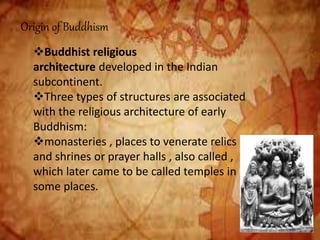
Buddhist religious
architecture developed in the Indian
subcontinent.
Three types of structures are associated
with the religious architecture of early
Buddhism:
monasteries , places to venerate relics ,
and shrines or prayer halls , also called ,
which later came to be called temples in
some places.
introduction
The Buddhist architecture began with the
development of various symbols ,representing aspects
of Buddha's life that is from 563BCE to 483BCE
Indian emperor Asoka ,not only established
Buddhism as the state religion of his large Magadha
empire, but also opted for the Architectural
monuments to spread Buddhism in different places
Buddhist culture and art forms are famous enough
all over the world.
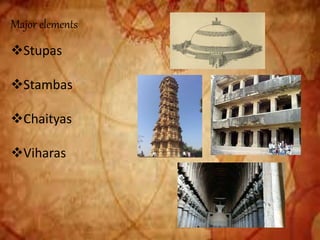
Major elements
Stupas
Stambas
Chaityas
Viharas
Stupas
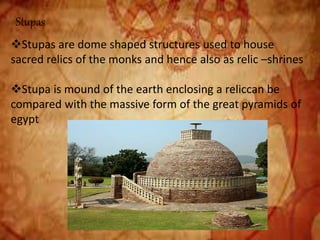
Stupas are dome shaped structures used to house
sacred relics of the monks and hence also as relic –shrines
Stupa is mound of the earth enclosing a reliccan be
compared with the massive form of the great pyramids of
egypt
hvj
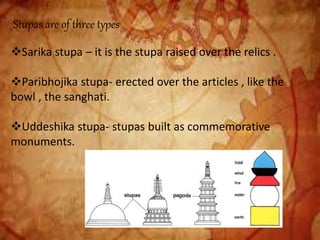
Stupas are of three types
Sarika stupa – it is the stupa raised over the relics .
Paribhojika stupa- erected over the articles , like the
bowl , the sanghati.
Uddeshika stupa- stupas built as commemorative
monuments.
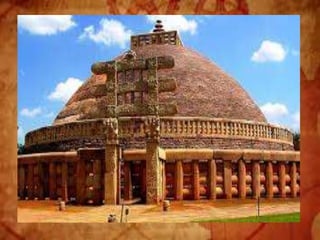
Example of stupa – sanchi stupa
Sanchi stupa is located 40km north east of bhopal ,
and 10km from besnager and vidisha inthe central part
of the state of madya pradesh
Sanchi stupa was built by emperor ashoka
It is located on the top of the sanchi hill, which raise
about 100m high above the plan
The ‘Great Stupa’ at the sanchi the oldest stone
structure in india.
Structural features
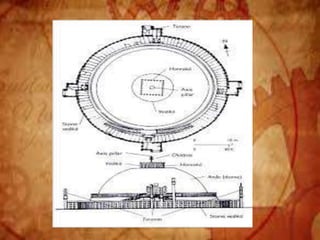
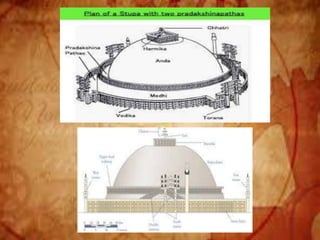
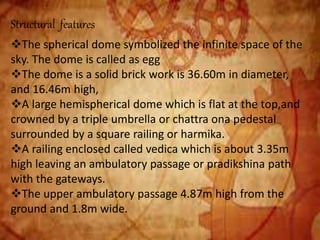
The spherical dome symbolized the infinite space of the
sky. The dome is called as egg
The dome is a solid brick work is 36.60m in diameter,
and 16.46m high,
A large hemispherical dome which is flat at the top,and
crowned by a triple umbrella or chattra ona pedestal
surrounded by a square railing or harmika.
A railing enclosed called vedica which is about 3.35m
high leaving an ambulatory passage or pradikshina path
with the gateways.
The upper ambulatory passage 4.87m high from the
ground and 1.8m wide.
stambhas
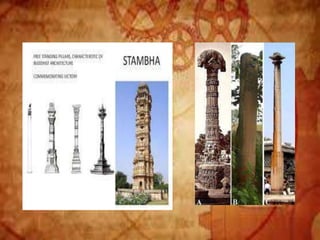
In the context of hindu mythology,stamba is believed to
be cosmic column.
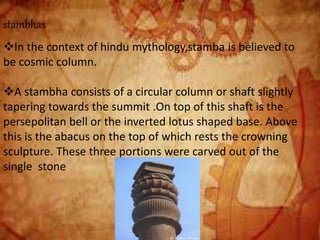
A stambha consists of a circular column or shaft slightly
tapering towards the summit .On top of this shaft is the
persepolitan bell or the inverted lotus shaped base. Above
this is the abacus on the top of which rests the crowning
sculpture. These three portions were carved out of the
single stone
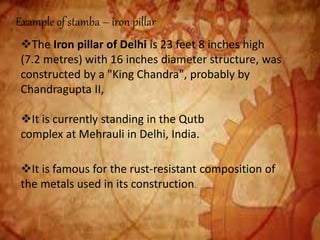
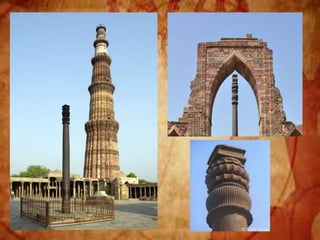
Example of stamba – iron pillar
The Iron pillar of Delhi is 23 feet 8 inches high
(7.2 metres) with 16 inches diameter structure, was
constructed by a "King Chandra", probably by
Chandragupta II,
It is currently standing in the Qutb
complex at Mehrauli in Delhi, India.
It is famous for the rust-resistant composition of
the metals used in its construction.
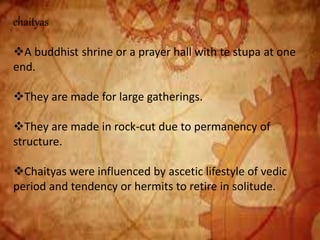
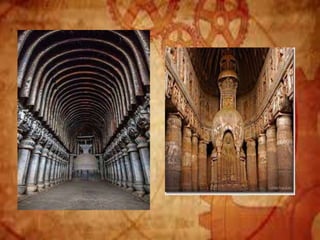
chaityas
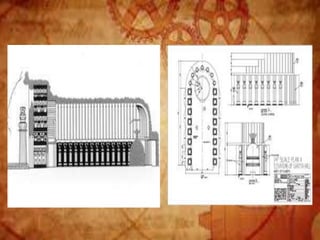
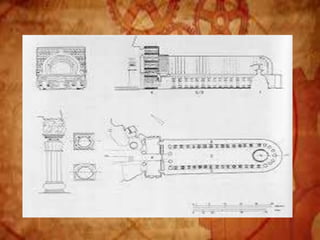
A buddhist shrine or a prayer hall with te stupa at one

end.
They are made for large gatherings.
They are made in rock-cut due to permanency of
structure.
Chaityas were influenced by ascetic lifestyle of vedic
period and tendency or hermits to retire in solitude.
Basic characteristics
Accommodates stupa
Apsidal plan
No division between nave and chaitya. i.e., space for
congregational service not clearly defined.
Vaulted hall
Colonnades
Side aisles
Architectural features
Wooden construction inspired from vedic period
imitated in natural rock.
Supplemented with wooden surfaces for e.g. Screens or
half timber construction.
Shows similarities to Roman concept of column and
arch , but no evidence of any relation.
Well proportioned pillars with capitals.
Rectangular halls with finely polished interior walls.
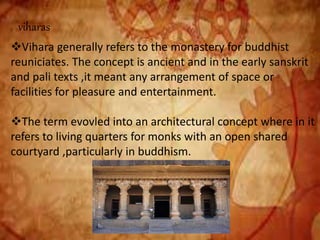
viharas
Vihara generally refers to the monastery for buddhist
reuniciates. The concept is ancient and in the early sanskrit
and pali texts ,it meant any arrangement of space or
facilities for pleasure and entertainment.
The term evovled into an architectural concept where in it
refers to living quarters for monks with an open shared
courtyard ,particularly in buddhism.
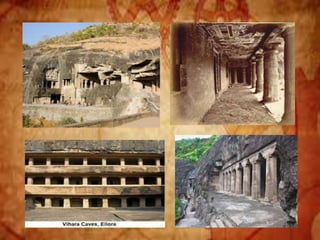
Basics characteristics
Quadrangular court for gathering
Surrounded by small cells
Front wall incorporated a shrine for image of budda
Cells had rock cut plateforms for beds
Doorways were sides of the walls of the main hall
Construction and materials
Rockcut architecture basically used wooden
construction down to joinery details.
In brick, corbelled arches are used ,and very large bricks
to for large span.
Months used floral patterns , animals etc.
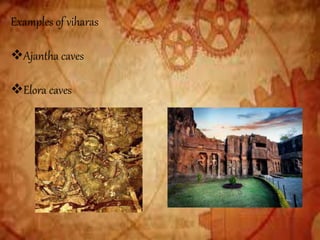
Examples of viharas
Ajantha caves
Elora caves
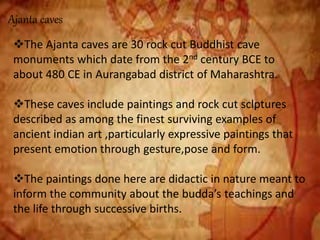
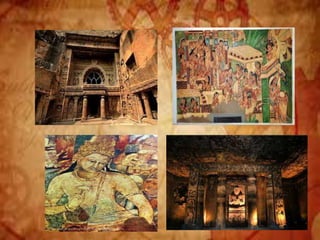
Ajanta caves
The Ajanta caves are 30 rock cut Buddhist cave
monuments which date from the 2nd century BCE to
about 480 CE in Aurangabad district of Maharashtra.
These caves include paintings and rock cut sclptures
described as among the finest surviving examples of
ancient indian art ,particularly expressive paintings that
present emotion through gesture,pose and form.
The paintings done here are didactic in nature meant to
inform the community about the budda’s teachings and
the life through successive births.
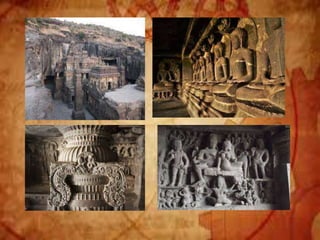
Ellora caves
Ellora is a UNESCO world heritage site located in the
aurangabad district of Maharashtra,India.
It is one of the largest rock-cut monastery temple cave
complexes in the world featuring buddhist,hindu and jain
monuments.
There are over 100 caves at the site,all excavated from the
basalt cliffs in the charanandri hills.
The carvings of ellora were at one time profusely
painted.the rock was covered with a lime plaster whaich was
painted. The plaster and the paint has survived in places.
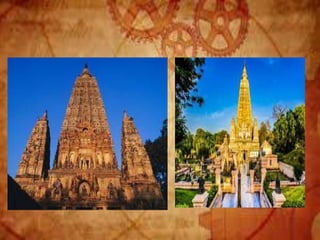
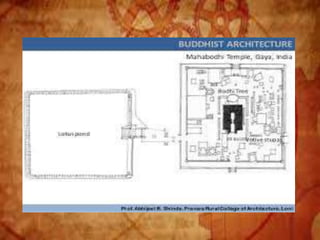
Mahabodhi temple
The mahabodhi temple is a buddhist temple in
bodh gaya ,marking the location where buddha,is said to
have attained enlightment . Bodh gaya is located about
96km from patna ;bihar.
Next to the temple on its western side ,is a holy
Bodhi tree and the monastery there the bodhimanda
vihara . The tallest tower is 55 metres tall is located
Thank you

Buddhist Architecture

  • 1.
  • 2.
    Origin of Buddhism Buddhistreligious architecture developed in the Indian subcontinent. Three types of structures are associated with the religious architecture of early Buddhism: monasteries , places to venerate relics , and shrines or prayer halls , also called , which later came to be called temples in some places.
  • 4.
    introduction The Buddhist architecturebegan with the development of various symbols ,representing aspects of Buddha's life that is from 563BCE to 483BCE Indian emperor Asoka ,not only established Buddhism as the state religion of his large Magadha empire, but also opted for the Architectural monuments to spread Buddhism in different places Buddhist culture and art forms are famous enough all over the world.
  • 6.
  • 7.
    Stupas Stupas are domeshaped structures used to house sacred relics of the monks and hence also as relic –shrines Stupa is mound of the earth enclosing a reliccan be compared with the massive form of the great pyramids of egypt
  • 8.
    hvj Stupas are ofthree types Sarika stupa – it is the stupa raised over the relics . Paribhojika stupa- erected over the articles , like the bowl , the sanghati. Uddeshika stupa- stupas built as commemorative monuments.
  • 9.
    Example of stupa– sanchi stupa Sanchi stupa is located 40km north east of bhopal , and 10km from besnager and vidisha inthe central part of the state of madya pradesh Sanchi stupa was built by emperor ashoka It is located on the top of the sanchi hill, which raise about 100m high above the plan The ‘Great Stupa’ at the sanchi the oldest stone structure in india.
  • 13.
    Structural features The sphericaldome symbolized the infinite space of the sky. The dome is called as egg The dome is a solid brick work is 36.60m in diameter, and 16.46m high, A large hemispherical dome which is flat at the top,and crowned by a triple umbrella or chattra ona pedestal surrounded by a square railing or harmika. A railing enclosed called vedica which is about 3.35m high leaving an ambulatory passage or pradikshina path with the gateways. The upper ambulatory passage 4.87m high from the ground and 1.8m wide.
  • 14.
    stambhas In the contextof hindu mythology,stamba is believed to be cosmic column. A stambha consists of a circular column or shaft slightly tapering towards the summit .On top of this shaft is the persepolitan bell or the inverted lotus shaped base. Above this is the abacus on the top of which rests the crowning sculpture. These three portions were carved out of the single stone
  • 16.
    Example of stamba– iron pillar The Iron pillar of Delhi is 23 feet 8 inches high (7.2 metres) with 16 inches diameter structure, was constructed by a "King Chandra", probably by Chandragupta II, It is currently standing in the Qutb complex at Mehrauli in Delhi, India. It is famous for the rust-resistant composition of the metals used in its construction.
  • 18.
    chaityas A buddhist shrineor a prayer hall with te stupa at one end. They are made for large gatherings. They are made in rock-cut due to permanency of structure. Chaityas were influenced by ascetic lifestyle of vedic period and tendency or hermits to retire in solitude.
  • 20.
    Basic characteristics Accommodates stupa Apsidalplan No division between nave and chaitya. i.e., space for congregational service not clearly defined. Vaulted hall Colonnades Side aisles
  • 23.
    Architectural features Wooden constructioninspired from vedic period imitated in natural rock. Supplemented with wooden surfaces for e.g. Screens or half timber construction. Shows similarities to Roman concept of column and arch , but no evidence of any relation. Well proportioned pillars with capitals. Rectangular halls with finely polished interior walls.
  • 24.
    viharas Vihara generally refersto the monastery for buddhist reuniciates. The concept is ancient and in the early sanskrit and pali texts ,it meant any arrangement of space or facilities for pleasure and entertainment. The term evovled into an architectural concept where in it refers to living quarters for monks with an open shared courtyard ,particularly in buddhism.
  • 25.
    Basics characteristics Quadrangular courtfor gathering Surrounded by small cells Front wall incorporated a shrine for image of budda Cells had rock cut plateforms for beds Doorways were sides of the walls of the main hall
  • 27.
    Construction and materials Rockcutarchitecture basically used wooden construction down to joinery details. In brick, corbelled arches are used ,and very large bricks to for large span. Months used floral patterns , animals etc.
  • 28.
    Examples of viharas Ajanthacaves Elora caves
  • 29.
    Ajanta caves The Ajantacaves are 30 rock cut Buddhist cave monuments which date from the 2nd century BCE to about 480 CE in Aurangabad district of Maharashtra. These caves include paintings and rock cut sclptures described as among the finest surviving examples of ancient indian art ,particularly expressive paintings that present emotion through gesture,pose and form. The paintings done here are didactic in nature meant to inform the community about the budda’s teachings and the life through successive births.
  • 31.
    Ellora caves Ellora isa UNESCO world heritage site located in the aurangabad district of Maharashtra,India. It is one of the largest rock-cut monastery temple cave complexes in the world featuring buddhist,hindu and jain monuments. There are over 100 caves at the site,all excavated from the basalt cliffs in the charanandri hills. The carvings of ellora were at one time profusely painted.the rock was covered with a lime plaster whaich was painted. The plaster and the paint has survived in places.
  • 33.
    Mahabodhi temple The mahabodhitemple is a buddhist temple in bodh gaya ,marking the location where buddha,is said to have attained enlightment . Bodh gaya is located about 96km from patna ;bihar. Next to the temple on its western side ,is a holy Bodhi tree and the monastery there the bodhimanda vihara . The tallest tower is 55 metres tall is located
  • 36.